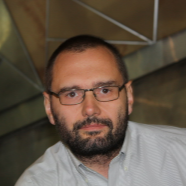
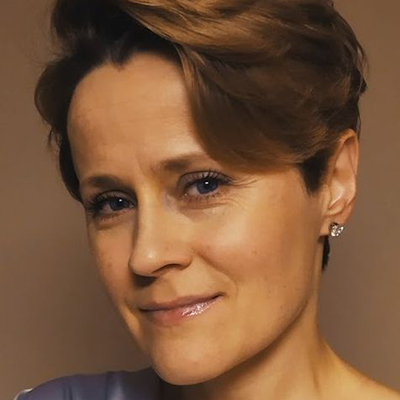
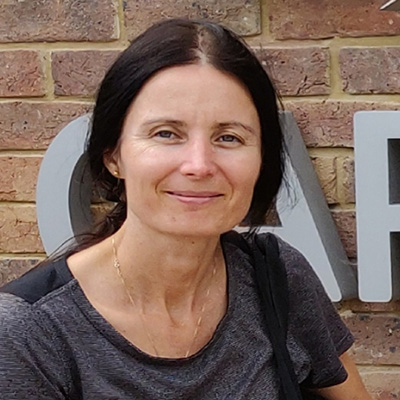
Monika Gabryś-Sławińska is a Professor at the Department of Polish Literary History , part of the Faculty of Languages, Literatures and Cultures at the University of Maria Curie-Skłodowska (UMCS). Her research spans 19th- and 20th-century Polish literature , focusing on Stefan Żeromski , historical journalism , text editing , voice emission , and museology . MA in Polish Philology (1998, UMCS) PhD in Literary Studies (2007, UMCS) Habilitation in Literary Studies (2016, UMCS) Her research interests include political commentary in historical press , media's role in cultural identity , and sociolinguistic trends . She has edited over 29 academic volumes and authored 5 monographs. Scientific awards: Bronze Cross of Merit KEN Medals (Bronze, Silver) 8 Rector's Awards (UMCS) Lublin Mayor's Medal (2019) She has participated in 5 research grants , organized 35 academic conferences , and contributed extensively to Annales UMCS as a scientific editor.
Kamil Glinka is an Associate Professor and Deputy Director of the Institute of Political Science for Science and Development at the University of Wrocław, specializing in public governance, urban policy, and political marketing. His work focuses on municipal self-governments in Visegrad Group countries and their responses to crises like the COVID-19 pandemic. His research interests span public governance , theory and practice of local development , urban policy , public communication , and political and territorial marketing . Glinka examines how cities navigate crises, implement strategic planning, and develop effective communication strategies with citizens. His recent publications reveal a strong focus on urban responses to the pandemic across Visegrad countries, with particular attention to municipal governance models, post-pandemic recovery strategies, and the impact of crises on urban democracy. His work bridges theoretical frameworks with practical policy applications in Central and Eastern Europe. Scientific Awards: Visegrad Fellowship Program (2024) laureate Multiple Rector's Awards from University of Wrocław (2020-2024) for scientific, teaching, and organizational achievements Bernard Steinacher Fellowship 2022-2023 from METREX Network IDUB program awards for academic excellence Glinka leads numerous international research projects including 'Urban Post-COVID Recovery in the V4 Countries' (2022-2025), 'Urban energy transition in Czechia' (2025), and 'Urban policy under ten pressure of the crisis' (2024). His work involves substantial collaboration with institutions across Visegrad countries and beyond. As a member of the Steering Committee of the European Consortium for Political Research's Standing Group on Central and East European Politics and active participant in METREX and IPSA, Glinka contributes significantly to international academic networks focused on urban governance and political science.
Professor Vasyl Stepanovych Kravtsiv is a distinguished academic and researcher at the Institute of Regional Studies named after M. I. Dolishnyi, part of the National Academy of Sciences of Ukraine. He serves as both the Director of the Institute (from 2014 to July 2025) and Head of the Department of Regional Environmental Policy and Nature Management. With a career spanning over four decades in regional studies, environmental policy, and economic development, Professor Kravtsiv has established himself as a leading expert in regional economics and environmental management in Ukraine. Professor Kravtsiv's educational background includes a degree in Geography from Ivan Franko Lviv State University (1980). His academic achievements include becoming a Candidate of Economic Sciences (1987), Senior Researcher (1994), Doctor of Economic Sciences (2007), and Professor (2010). He has also been honored as a 'Honored Worker of Science and Technology of Ukraine' for his significant contributions to the field. His scholarly work examines the theoretical and practical aspects of regional environmental policy formation, particularly during Ukraine's transition to a market economy. Professor Kravtsiv's research primarily focuses on regional economics, environmental policy, spatial development, and cross-border cooperation. His work examines the intersection of economic development and environmental sustainability, with particular emphasis on the Carpathian region of Ukraine. He pioneered economic methods of environmental quality management in Ukraine, which now operate as pollution fees. Professor Kravtsiv has developed numerous regional environmental safety programs approved by Western Ukrainian authorities and contributed significantly to Ukraine's State Regional Policy Concept. His recent publications address contemporary challenges including the impact of the war and pandemic on tourism, spatial economic development amid European integration, and sustainable growth in decentralization contexts. His scholarly contributions include over 100 scientific works, with 18 monographs exploring regional development, environmental policy, and cross-border cooperation. Professor Kravtsiv's work demonstrates consistent evolution from theoretical foundations to practical policy implementation, with recent publications showing adaptation to Ukraine's wartime conditions and European integration requirements. Honored Worker of Science and Technology of Ukraine Editor-in-chief of the journal 'Regional Economy' Editor-in-chief of the collection 'Socio-economic problems of the modern period of Ukraine' Author of over 100 scientific works including 18 monographs Key contributor to Ukraine's environmental policy framework As Director of the Institute of Regional Studies, Professor Kravtsiv oversees extensive research activities, coordinates international collaborations through Erasmus+ and Visegrad Fund programs, and guides scholarly publication efforts. His leadership has positioned the Institute as a key contributor to Ukraine's regional development policies and environmental management strategies. He actively participates in developing Ukraine's adaptation to European standards and contributes to reconstruction planning amid wartime conditions, demonstrating both academic rigor and practical policy relevance.
Dr. Damian Mazurek, M.A., is a researcher at the Department of Rural Geography and Local Development, Institute of Geography and Spatial Organization (Polish Academy of Sciences). He holds a Master's degree in Geography from Maria Curie-Skłodowska University (2015), specializing in regional development and geoinformatics. Research Focus: Application of GIS in regional development analysis, methodological approaches to identifying regional specializations, and spatial planning for rural areas. Key Contributions: Co-author of 15+ publications (2017-2025) addressing peri-urban dynamics, small town typologies, waste management systems, and digital accessibility in rural Poland. Notable work includes mapping suburban zones using diagnostic indicators and analyzing Wi-Fi distribution patterns. Collaborative Projects: Regular contributor to cross-border initiatives like the PL-SK 2007-2013 program and co-PI on National Science Centre (NCN) grants. Active participant in international conferences (IGU, European Geographical Society).
Prof. Jerzy Bański is a retired Professor and former Head of the Department of Rural Geography and Local Development at the University of Warsaw's Faculty of Geography and Regional Studies. His academic career spans over three decades with a PhD (1996) and post-doctoral degree (2000) in Earth Sciences, specializing in economic and rural geography. He has led 48 research projects and supervised 5 PhD and 43 MSc students at Maria Curie-Skłodowska University in Lublin. His research focuses on land use dynamics, rural development, spatial planning, and socioeconomic processes in Central and Eastern Europe. Notable contributions include analyzing post-socialist agricultural transformations, village decline, and pandemic spatial impacts. He authored 421 publications, including 151 in English, and received the Jan Olaf Chmielewski Science Award (2001) and Honorary Membership in the Bulgarian Scientific Society. Key projects include classifying rural areas for territorial policy, assessing pandemic geography, and evaluating agricultural land ownership changes. His work frequently intersects with policy design, institutional analysis, and interdisciplinary collaboration in academia. Awards: Jan Olaf Chmielewski Science Award (2001), Honorary Membership (Bulgarian Scientific Society) Grants: 48 projects led, including EU and national funding Education: MA (University of Warsaw), postgraduate studies in scientific photography
Dr. Joanna Macalik is a Lecturer in the Department of Marketing Management at Wrocław University of Economics. Her academic work focuses on the intersection of marketing theory and practical applications across multiple domains including personal branding, museum marketing, and regional branding. Dr. Macalik's research interests span several interconnected domains of modern marketing. She has made significant contributions to understanding personal branding, particularly among startup leaders and young professionals. Her work examines how individuals construct and leverage their personal brands to enhance business performance and career advancement. Additionally, she has conducted extensive research on museum marketing, investigating how cultural institutions communicate with their audiences and contribute to regional branding efforts. Her studies on influencer marketing, particularly during the COVID-19 pandemic, demonstrate her ability to address timely and relevant marketing challenges. Analysis of Dr. Macalik's publication record reveals a clear trajectory of research focused on branding across different contexts. Her work consistently bridges theoretical marketing concepts with practical applications, often using empirical research methods. The publications show a progression from traditional marketing communication topics toward more contemporary digital and social media applications. Notably, her research frequently employs case study methodologies, with a particular focus on the Wroclaw region in Poland, suggesting strong local engagement alongside broader theoretical contributions. Dr. Macalik has advised numerous students and contributed to various research projects, though specific details about her mentoring activities are not widely publicized. Her work has likely contributed to curriculum development in marketing communication, personal branding, and digital marketing within her department.
Prof. Ewa Szostak holds a professorial position at Wrocław University of Economics (UEW), serving as BIPS Program Coordinator. Her work focuses on EU policy analysis, regional development dynamics, innovation economics, and sustainable urban planning. Key research interests include Poland's EU integration trajectory, post-1989 educational reforms, energy transition strategies, and socio-economic challenges posed by aging populations. Her publications span topics such as territorial cohesion, smart specialization strategies, and the impact of migration on transportation networks. Notable works include analyses of Lower Silesia's regional infrastructure, smart city development challenges in Poland, and the decarbonization of inland navigation systems. Methodologically, her research combines policy evaluation with case studies examining institutional effectiveness and spatial planning. Laboratory/Team Affiliations: While specific lab names aren't listed, her role as a professor at UEW implies involvement in the university's economic policy research units. Her work frequently engages with EU-funded regional development projects and policy implementation frameworks.
Dr. Grzegorz Gil is a Lecturer at the Department of International Security , Maria Curie-Skłodowska University in Lublin , Faculty of Political Science and Journalism. Holds a PhD in Political Science (2010) and MA in International Relations (2005) from UMCS. Research focuses on state failure , post-conflict recovery , and international security with regional expertise on Africa , Middle East , and Pacific states . Teaches courses on: International relations Humanitarian operations Australian foreign policy Economic diplomacy Publications (over 15 works) analyze state collapse (Somalia, Yemen, Colombia), military interventions , and regional integration (EU-ASEAN relations). Currently serves as expert for Team Europe Direct (2023–present) and juror in Academic Polish Oxford Debating Championships .
Dr. Andrzej Ożadowicz is a University Professor at the Department of Power Electronics and Automation of Energy Conversion Systems within the Faculty of Electrical Engineering, Automatics, Computer Science and Biomedical Engineering at AGH University of Science and Technology in Kraków, Poland. His office is located in room 510, building C-1, with contact details including phone +48 12 617 50 11 and email ozadow@agh.edu.pl. He holds PhD, DSc, and Engineering degrees, reflecting his dual expertise in academic research and practical engineering applications. His research spans Power Electronics, Building Automation, Smart Grids, and IoT-driven energy systems. Key interests include energy efficiency optimization through digital twins and BIM, distributed energy resource integration , and AI-enhanced demand management . Notably, he pioneers applications of deep reinforcement learning in home energy systems and develops frameworks for Smart Readiness Indicator implementation. His work bridges theoretical innovation with practical case studies in building thermal modeling and dynamic façade systems. Recent publications (2021-2025) reveal three dominant trends: (1) Convergence of digital twin technology with building automation for real-time energy management; (2) Critical analysis of IoT security and interoperability in smart infrastructure; (3) Pedagogical innovations in engineering education through blended learning methodologies post-COVID-19. His scholarly output demonstrates consistent focus on energy transition challenges and smart grid evolution. Professor Ożadowicz actively contributes to the Discipline Council for Automation, Electronics, Electrical Engineering and Space Technologies at AGH. He is instrumental in the AutBudNet initiative —a network of certified laboratories for energy efficiency assessment that implements "learning by doing" principles in building automation education. His work with this consortium emphasizes practical validation of smart grid technologies and demand response systems.
Prof. Piotr Lorens is a distinguished academic at Gdańsk University of Technology, where he serves as Professor and Head of the Department of Urban and Regional Planning within the Faculty of Architecture. With extensive expertise in urban planning and spatial development, he leads significant research projects including ENACT 15mC focused on the 15-minute city concept and community co-creation. His academic credentials include: dr hab. inż. arch. (2007) from the Faculty of Architecture of Warsaw University of Technology dr inż. arch. (2001) from the Faculty of Architecture Prof. Lorens specializes in urban and spatial planning , with particular focus on urban regeneration and public space design . His research addresses critical issues in post-socialist urban development, waterfront regeneration, and the evolving concept of the 15-minute city. He has made significant contributions to understanding how historical contexts shape contemporary urban planning approaches in Central and Eastern Europe. His recent publications demonstrate a strong focus on urban identity, planning instruments for the 15-minute city concept, and post-war reconstruction of Polish cities. His work often bridges theoretical urban planning concepts with practical case studies from Gdańsk and other post-socialist cities, examining how political, economic, and environmental factors influence urban development trajectories. Prof. Lorens leads the ENACT 15mC project focused on shaping neighborhoods and co-creating thriving local communities in the context of the 15-minute city concept, funded by the Driving Urban Transitions Partnership. He has also contributed to the TELOS project on sustainable urban development and led initiatives to develop new educational offerings in spatial management at the Faculty of Architecture.
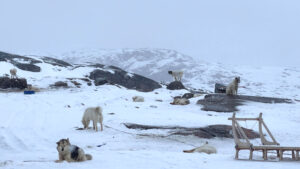
Dr. Sonia Rammer is a Professor at the University of Arts in Poznań, serving as Head of the Art Studio in an Intercultural Perspective at the Faculty of Artistic Education and Curating. She also holds significant administrative positions including Vice-Dean of the Faculty and Member of the Scientific Council. Her work uniquely bridges artistic practice with psychological insights, creating an interdisciplinary approach to art creation and education. Dr. Rammer's educational background demonstrates her dual expertise in both psychology and fine arts. She completed psychology studies at Adam Mickiewicz University (2003-2010), specializing in clinical psychology, alongside concurrent studies in painting and art education at the Academy of Fine Arts in Poznań. She earned her habilitation degree in visual arts and art conservation in 2019. Her research interests focus on the psychological dimensions of creativity, cross-cultural artistic exchange, and posthumanist perspectives. Rammer critically examines anthropocentric views through works that explore interspecies relationships and the fluid boundaries between human and non-human entities. Her art often emerges from international residencies in extreme environments like Greenland, Nepal, and Iceland, where she engages with local cultures and ecological contexts. Her recent artistic output shows a consistent exploration of Arctic themes, cultural translation, and identity transformation. The 'Woman Who Thought She Was a Dog' series (2022-2024) from her Greenland residency exemplifies her approach, using minimalist video installations to provoke reflection on species boundaries and human exceptionalism. Her work spans performance, video, photography, and installation, often incorporating cross-cultural misunderstandings as conceptual frameworks. As an educator since 2011, Rammer teaches psychology and psychology of creativity while mentoring students through her studio practice. Her leadership roles include chairing the Faculty Recruitment Committee and serving on the University Senate, demonstrating her commitment to academic development. Dr. Rammer maintains active international collaborations through prestigious residencies including Arctic Culture Lab (Greenland), Marpha Foundation (Nepal), and Baer Art Center (Iceland). She also collaborates with the Faculty of Geographical and Geological Sciences of Adam Mickiewicz University on artistic research in Spitsbergen, reflecting her commitment to interdisciplinary work.
Magdalena Grabowska is a Tutor at the Institute of Applied Linguistics within the Faculty of Philology at the University of Gdańsk. She holds a doctorate and specializes in tutoring and coaching, emphasizing personalized development and trust-building with students. Her academic work bridges linguistics, religious studies, and social identity. Research Focus: Her interdisciplinary interests include: Linguistic behavior in Polish evangelical communities (e.g., Baptist and charismatic groups) Discourse at the intersection of religious identity, sexuality, and LGBT+ experiences Media analysis of human rights debates (abortion, feminism, cultural wars) Narrative methodologies in ethnolinguistics and duoethnography Publication Trends: Her recent articles (2017-2024) cluster around three themes: Religious transitions: Apostasy narratives, ritual studies, and identity shifts in evangelical communities Marginalized identities: Non-heteronormative experiences in Catholic/Protestant contexts and exclusion-inclusion dynamics Discourse analysis: Prayer pragmatics, dialogicality boundaries, and semantic valuation in religious language She predominantly uses qualitative methods like case studies, fieldwork, and narrative analysis. Advising & Service: She mentors students on communication, feminism, and sexuality topics but supervises no formal advisees. No grants, awards, or lab affiliations are documented.
Professor Lucyna Przybylska is a social scientist affiliated with the University of Gdańsk's Faculty of Social Sciences, Department of Spatial Economy. Her work focuses on sacralization processes, public space dynamics, and the interplay between religion, tourism, and urban development. A graduate of geography and theology, she employs observational methods and digital tools to explore topics like roadside memorials, flag displays, and pilgrimage practices. Her research projects include long-term studies on 'Sacralization of Public Spaces in Poland' and 'Accident Crosses on Polish Roads,' with Gdynia frequently serving as a case study. She emphasizes critical source analysis and visual literacy in her pedagogy, guiding students through essay and photo-essay projects. Recent publications analyze the proliferation of roadside memorials and crosses in post-communist Poland, flag symbolism in urban landscapes, and the socio-spatial functions of maritime pilgrimages. Her work bridges cultural geography with sociology, offering insights into how communities negotiate meaning in shared spaces.
Dr. Weronika Mazurkiewicz is an Assistant Professor at the Department of Urban Design and Regional Planning within the Faculty of Architecture at Gdańsk University of Technology. Her work focuses on urban planning, geographic information systems (GIS), and space syntax analysis. She actively contributes to projects like DigiClimAct, addressing climate action through digital tools. Education: PhD in Architecture and Urban Planning from Gdańsk University of Technology (2019). Research interests include marketplace regeneration, elderly-friendly public spaces, hospital design for oncology patients, and sustainable urban development strategies. She has pioneered studies on outdoor gyms for seniors and spatial cognition in healthcare environments. Publications emphasize GIS integration in education, 15-minute city planning instruments, and participatory design approaches. Her work bridges theoretical urban concepts with practical policy implementation, particularly in revitalizing public spaces and enhancing urban accessibility. Grants/Projects: Project Manager for DigiClimAct (EU-funded), focusing on digital climate action in Baltic cities. Collaborates with teams on placemaking, market regeneration, and participatory urban planning methodologies. Labs/Teams: Active in the Department of Urban Design and Regional Planning, leading research groups on urban sustainability and spatial analysis techniques.
Dr hab. Wojciech Janicki is a full Professor at the Institute of Social and Economic Geography and Spatial Management within the Faculty of Earth Sciences and Spatial Management at Maria Curie-Skłodowska University (UMCS) in Lublin, Poland. He serves as Director of the Institute and Head of the Department of Social and Economic Geography. Current affiliations: Governmental Council on Population (since 2024), Polish Academy of Sciences Committee on Demographic Sciences (since 2019), Polish Geopolitical Society Scientific Council (since 2024) Editorial role: Global Population Perspectives (since 2025) Research interests focus on political geography, demography, and regional development , with particular emphasis on migration studies, national/ethnic minorities, international border conflicts, and global population challenges. His work addresses demographic policy formation, migration management, and the socioeconomic impacts of population shifts in Eastern and Central-Eastern Europe. Recent publications demonstrate interdisciplinary engagement with migration policy implementation (2025), adaptive geofencing technology for transport security (2024), and demographic anxiety analysis through edited volumes (2024). Article trends show consistent focus on EU integration challenges, borderland development, and population policy contradictions. Scientific recognition includes: Governmental Council on Population membership Polish Academy of Sciences demography committee Editorial board of international journal Strategic advisory roles Advising involves directing research on migration legality frameworks, coal region transitions, and spatial management projects. Grants likely relate to EU cohesion policy and cross-border development initiatives given his publication patterns.

.jpg)