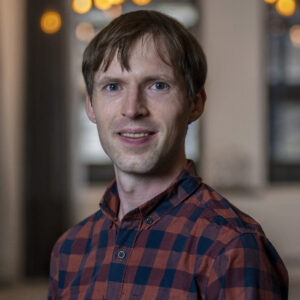
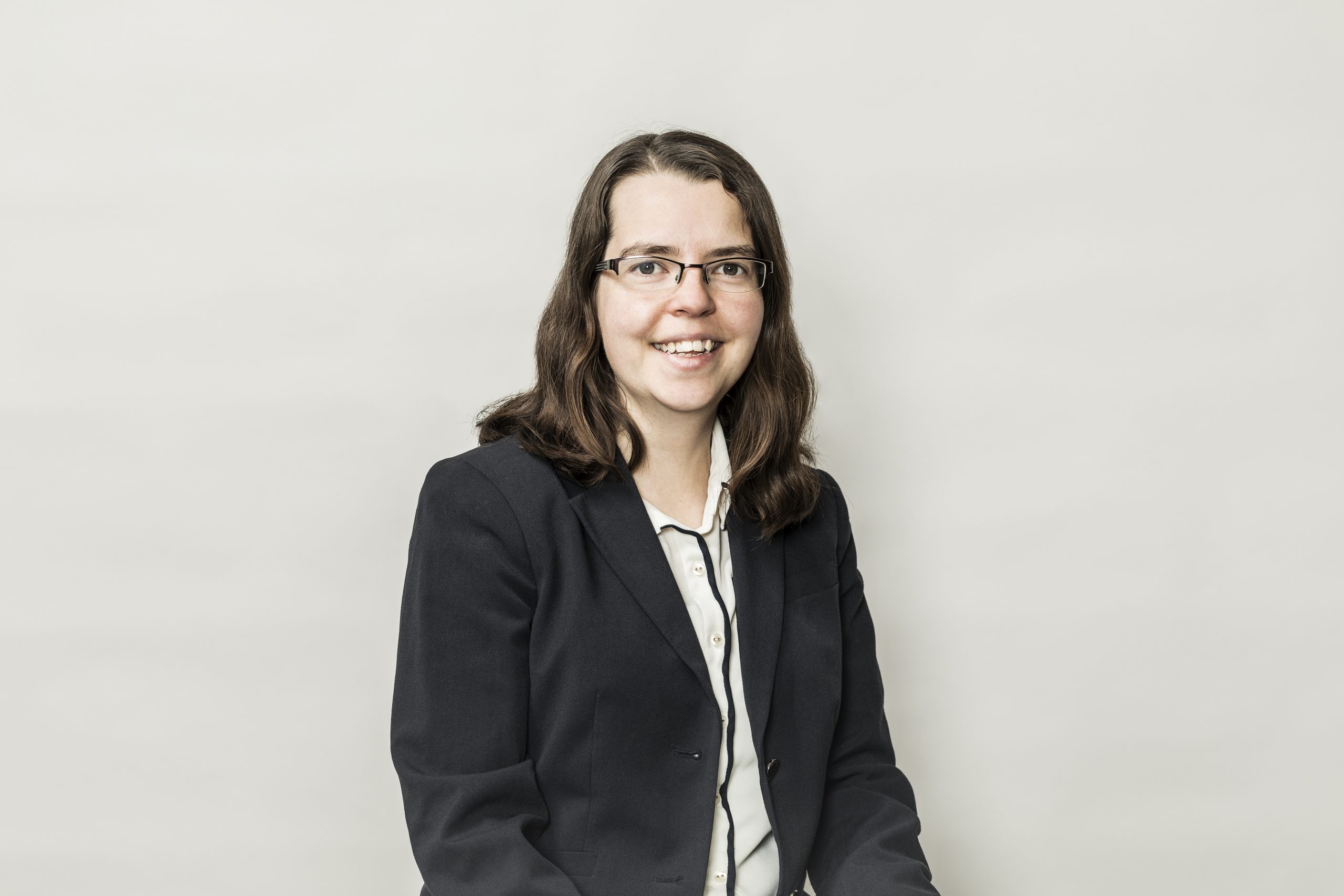
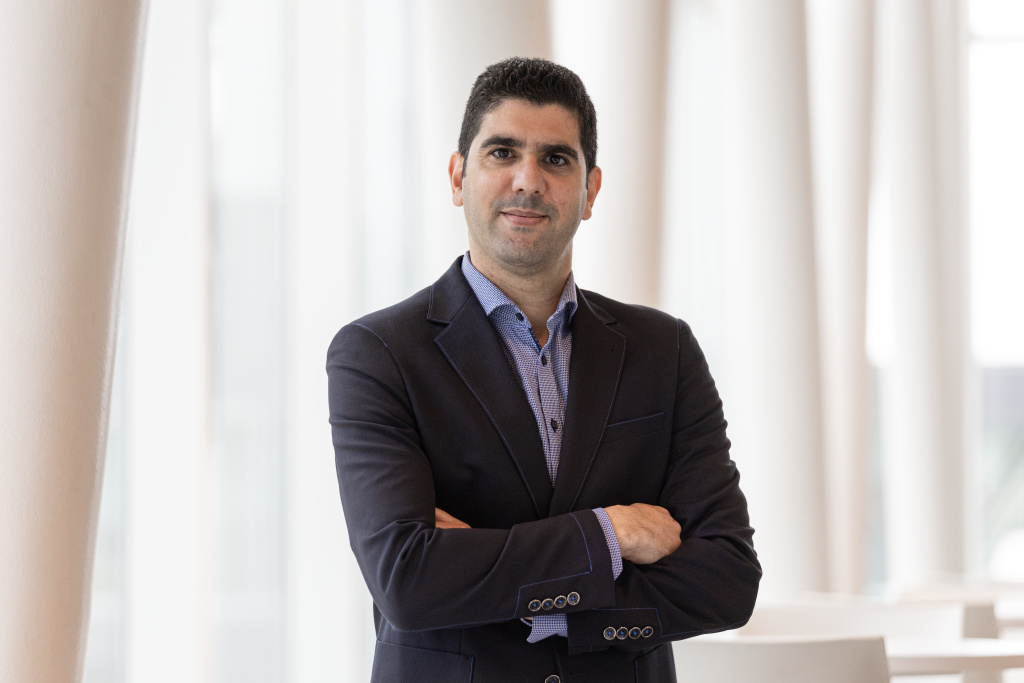
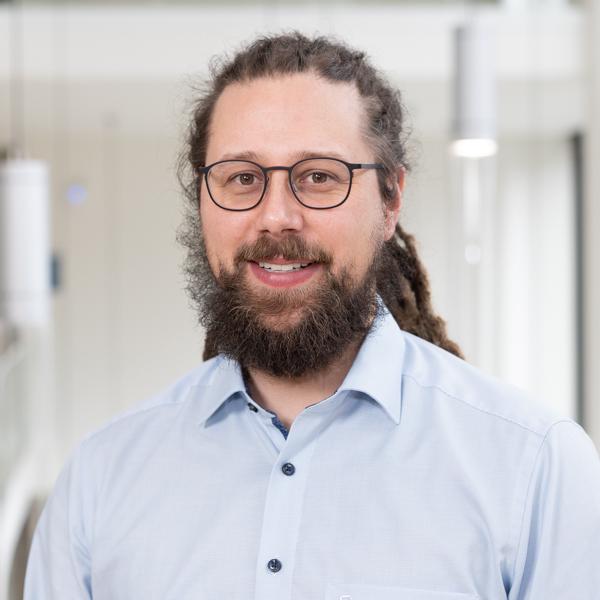
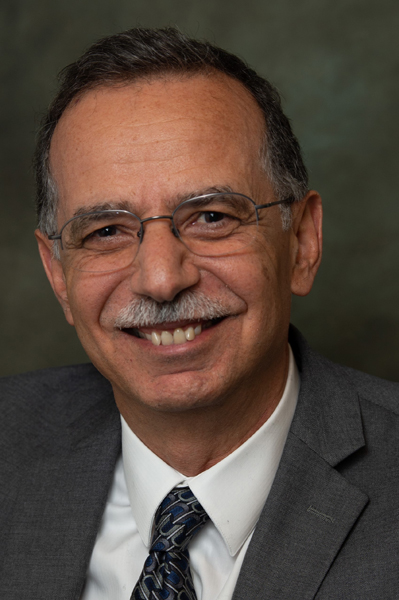
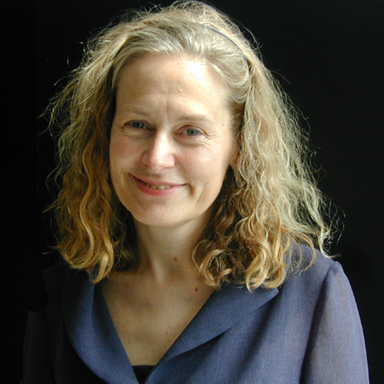
Vladimir Zhdankin is an Assistant Professor of Physics at the University of Wisconsin-Madison , where he leads the Zhdankin Group. He received his Ph.D. and B.S. in Physics from UW-Madison in 2015 and 2011, respectively. His career includes postdoctoral appointments as a NASA Einstein Postdoctoral Fellow (2018-2021) and Flatiron Research Fellow (2021-2023). Research Interests : Theoretical and computational plasma physics Relativistic plasma turbulence and instabilities Nonthermal particle acceleration and radiative processes Nonequilibrium statistical mechanics of collisionless plasmas Coherent structures in astrophysical systems Scientific Awards : NASA Einstein Postdoctoral Fellowship Flatiron Research Fellowship Advising & Collaborations : Current group members: Braden Buck, Miguel Castelan Tanner, Petr Ugarov, Cristian Vega (joint with Prof. Rogerio Jorge), Louis Henderson Collaborators: Dmitri Uzdensky, Matthew Kunz, Alexander Philippov, Stanislav Boldyrev
Giovanni Petri is a Professor in the Network Science Institute at Northeastern University London, where he joined in June 2023. Previously, he held positions at CENTAI as a Principal Researcher and at IMT Lucca as a Guest Scholar, with earlier affiliations at ISI Foundation and Imperial College London. His educational background includes a PhD in Complex Networks from Imperial College London (2012), an MSc in Theoretical Physics from the University of Pisa (2008), and a BSc in Physics from the University of Pisa (2005). Petri's research spans the analysis of neuroimaging data and AI systems with topological techniques, the formalization of cognitive control models with tools of statistical mechanics and network theory, and the study of the predictability of socio-technical systems. His work in Topological Neuroscience explores brain architecture using algebraic topology, while his research in Cognitive Neuroscience focuses on neural mechanisms underlying human cognition. He is particularly known for his work on higher-order networks, using mathematical frameworks like hypergraphs and simplicial complexes to model systems with multi-way interactions. His recent publications (2023-2025) demonstrate a strong focus on higher-order network theory applied to neuroscience, with particular emphasis on topological approaches to brain connectivity, social contagion models, and the physics of complex systems. These works reveal consistent themes in understanding how multi-body interactions shape system dynamics across biological, social, and technological domains. European Research Council Consolidator Grant (RUNES: Reconstruction and unification of neural and ecological systems, 2024) As Principal Investigator of the NPLab, Petri advises numerous PhD and postdoctoral researchers including Marilyn Gatica, Andrea Santoro, and Simone Poetto. His RUNES project, funded by the ERC Consolidator Grant, represents a significant research initiative. The lab maintains active collaborations with CENTAI, Project CETI (Cetacean Translation Initiative), and various international institutions. The NPLab investigates the role of topology and geometry in the collective dynamics of complex systems, ranging from neuroscience to society, using statistical mechanics, algebraic topology, and innovative computational approaches. Current projects include Topological Neuroscience, Cognitive Neuroscience, Higher-order Networks, Project CETI, and RUNES.
Marina Freire-Gormaly is an Assistant Professor in the Mechanical Engineering Department at York University's Lassonde School of Engineering. Her research focuses on renewable energy-powered water treatment systems, machine learning for smart design, advanced manufacturing, and sustainable engineering solutions for remote communities. She holds a PhD and M.A.Sc. from the University of Toronto, specializing in carbon capture and storage technologies. She has worked on nuclear energy projects at Ontario Power Generation and contributed to World Bank sustainability assessments. She currently chairs the Canadian Society of Mechanical Engineers' Student and Young Professional Affairs committee. Education: PhD in Mechanical Engineering, University of Toronto M.A.Sc. in Mechanical Engineering, University of Toronto Research Interests: She pioneers solar-powered reverse osmosis systems, energy recovery mechanisms, and IoT-driven smart systems. Her lab explores nanotechnology applications in environmental sustainability, including carbon capture and aquatic remediation. She integrates machine learning for optimizing energy-water nexus challenges in off-grid regions. Key Contributions: Developed models for membrane fouling in desalination systems, advanced pore network characterization for geologic CO2 storage, and designed automated renewable energy systems. Her work bridges engineering innovation with global sustainability goals. Grants & Collaborations: Engages with industries like Honda Canada and Trane Canada on sustainability initiatives. Supervises graduate students in emerging areas like nanobubble technology and direct air capture systems. Lab Activities: The Freire-Gormaly Lab focuses on clean energy-water systems, with current projects involving nano-technology for space applications (Canadian Space Agency collaboration) and life cycle assessments of carbon storage technologies.
Kengo Deguchi is a Senior Lecturer in the School of Mathematics at Monash University. His research focuses on fluid dynamics, magnetohydrodynamics, and turbulence phenomena. He leads and collaborates on ARC-funded projects exploring flow control via topography, vortex dynamics in complex flows, and mathematical descriptions of magneto-hydrodynamic turbulence. Notable awards include the 2018 Faculty of Science Research Excellence Award and Vice-Chancellor’s Early Career Excellence Award. Education: Doctorate in Fluid Dynamics (details not specified in text) His research interests emphasize nonlinear instabilities, vortex dynamics, and coherent structures in shear flows. Recent work investigates Taylor-Couette flow chaos, subcritical transitions, and MHD dynamos. Over 40 publications span topics like turbulence statistics, chaotic patterns, and fluid instabilities. Key projects include investigating vortex persistence in counter-rotating systems and developing mathematical frameworks for MHD turbulence. He has secured funding through ARC grants (2017-2026) and collaborates internationally with experts like Prof. Hall and Prof. Blackburn. Grants: $A 2.6M+ in ARC funding (2017-2026) Labs/Teams: Collaborative fluid dynamics research groups focused on experimental and computational turbulence studies
Dr. Farzaneh Derakhshan is an Assistant Professor in the Computer Science Department at Illinois Institute of Technology (Illinois Tech), where she explores logical foundations of concurrency and develops formal methods for program verification. She earned her Ph.D. in Pure and Applied Logic from Carnegie Mellon University in 2021 under Frank Pfenning, followed by a postdoctoral fellowship at CMU with Limin Jia and Stephanie Balzer. Current affiliation: Illinois Tech (since ~2021) Previous affiliation: Carnegie Mellon University (Ph.D. and postdoc) Research focus: Type theory, logical verification, and security for concurrent systems Teaching: Courses on programming languages, type systems, and security Her research addresses fundamental challenges in concurrent programming, including: Developing modal logic frameworks for system verification Designing type systems for intermittent computing Creating behavioral type systems for security guarantees Applying relational logic to GPU security and secure compilation Investigating logical foundations of session-typed processes Formal verification of cyclic process networks Current research trends include: Hybrid dynamic verification for parallel systems Logical approaches to side-channel security Formal methods for cyber-physical systems Crash-resilient computing models Security verification in decentralized applications Noninterference proofs in session-typed concurrency Scientific recognition: NSF SaTC CORE Collaborative Award #2350217 Organizing committee member at Dagstuhl Seminar 26071 Professional leadership: Program committee co-chair for PLACES 2025 Committee roles at LICS 2026, ESOP 2026, ICFP 2025, and ECOOP 2025 Regular reviewer for ACM Transactions journals Laboratory involvement: Co-director of behavioral types research at Illinois Tech Collaboration with Carnegie Mellon's formal verification group Key participant in the FACCT workshop
Dr. Boyin Ding is an Associate Professor at the University of Adelaide , serving as Academic Director at Haide College and researcher in the Mechanical Engineering department within the Faculty of Sciences, Engineering and Technology. He leads the Wave Energy Research initiative established in 2014, while also contributing to Robotics and Biomechanics through his work with the Flinders Medical Device Research Institute. Research Areas: Ocean Wave Energy Harvesting Control Systems for Renewable Energy 6DOF Robotic Testing Spine Biomechanics Transnational Education Programs Key Collaborations: Australia-China Joint Research Centre for Offshore Wind & Wave Energy Acoustics, Vibration and Control Research Group Scientific Awards: Australian Endeavour Fellowship Malcolm Kinnaird Engineering Excellence Award (2012) His recent publications focus on hybrid offshore energy systems, nonlinear hydrodynamics in wave energy converters, and biomechanical testing technologies. He has developed control algorithms for floating offshore wind-wave systems and pioneered 6DOF robotic platforms for medical applications. As an eligible PhD supervisor, he actively collaborates with global industries and academic institutions.
Professor Steven Armfield is a faculty member at the University of Sydney's School of Aerospace, Mechanical and Mechatronic Engineering. He holds a BSc in Applied Mathematics from Flinders University and a PhD from the University of Sydney. His research focuses on fluid mechanics, particularly buoyancy-driven flows, computational modeling, and thermal convection in environmental and industrial contexts. He has led major projects on river management strategies, building ventilation systems, and large-scale fluid dynamics models. As FluD Director, he leads fluid dynamics research initiatives. Education: BSc Applied Mathematics, Flinders University PhD, University of Sydney Research Interests: Professor Armfield's work spans computational fluid dynamics (CFD), natural convection boundary layers, turbulent mixing in stratified flows, and heat transfer applications. His studies address environmental challenges (e.g., river stratification) and engineering systems (e.g., HVAC efficiency). He employs experimental, theoretical, and numerical methods to advance understanding of complex fluid behaviors. Publications: His recent work emphasizes parameterization of turbulent flows, buoyancy effects in stratified systems, and scaling laws for natural convection. Key themes include improving predictive models for environmental and industrial fluid dynamics. Awards: Australian National Research Fellowship Stanford University UPS Visiting Professorship Saitama University Visiting Scholarship Shundoh International Foundation Research Scholarship Advising & Grants: Supervises PhD students in topics like urban fluid dispersion and Navier-Stokes solvers. Secured funding for projects involving CFD analysis of data centers and thermal stratification in open channels. Labs/Teams: Led the School of Aerospace, Mechanical and Mechatronic Engineering (2008–2015) and currently directs the Fluid Dynamics (FluD) research group.
Dr. Yinghe Qi is a Professor in the Department of Experimental Fluid Dynamics at ETH Zürich, Switzerland. His research focuses on multiphase flows, turbulence, and free-surface dynamics, with applications in aerospace, marine engineering, and computational fluid dynamics. He has contributed extensively to understanding bubble dynamics, flow instabilities, and turbulence modulation through experimental and phenomenological studies. Research Interests: Dr. Qi’s work addresses complex phenomena in multiphase flow instabilities free-surface turbulence deformable bubble dynamics supersonic jet interactions vortex-induced fragmentation machine learning in fluid dynamics Recent Publications: His recent studies (2023–2025) explore multiscale bubble deformation, free-surface turbulence structure, and supersonic jet-plume interactions. Key themes include turbulent fragmentation, vortex-bubble coupling, and novel computational methodologies. Laboratory Affiliations: He collaborates with the Coletti Group, Jenny Group, and Supponen Group at ETH Zürich, advancing experimental and computational techniques in fluid dynamics.
Fotios Petropoulos is a Professor at the University of Bath, holding the Management Chair in Management Science within the School of Management's Information, Decisions & Operations department. He also served as the Spyros Makridakis Chair in Forecasting at the University of Nicosia (2023–2023). His research focuses on time series forecasting, judgmental approaches, and integrating statistical and human judgment in decision-making processes. He has contributed to improving forecasting accuracy through temporal aggregation and hierarchical methods. Petropoulos holds a Doctor of Engineering (2012) and Bachelor of Engineering (2007) from the National Technical University of Athens. Editor of the International Journal of Forecasting (2020–present) Associate Editor of Foresight: The International Journal of Applied Forecasting (2015–2022) Director of the International Institute of Forecasters (2016–2018) His research interests emphasize forecasting processes, model selection, and the role of judgment in statistical models. Key areas include temporal aggregation, forecast reconciliation, and behavioral operations analytics. He has published over 100 peer-reviewed articles, focusing on topics like computational cost optimization, probabilistic forecasting, and scalable reconciliation methods. His work contributes to Sustainable Development Goals related to education and innovation. Recent articles highlight advancements in univariate forecasting efficiency, forecast selection criteria, and dynamic reconciliation. Petropoulos is a member of the Smart Warehousing and Logistics Systems group and actively participates in editorial boards of leading forecasting journals. His academic and professional roles bridge theoretical research and practical applications in operational decision-making.
Waël Jaafar is a Professor in the Department of Software Engineering and IT at École de technologie supérieure (ETS), a constituent school of the Université du Québec system in Montreal, Canada. His research spans multiple critical domains in modern communications and computing infrastructure, with a particular focus on next-generation wireless networks and intelligent systems. Dr. Jaafar holds a B.Eng. from Sup'Com Tunisie, and both M.Sc.A. and Ph.D. degrees from Polytechnique Montréal. His academic background provides a strong foundation for his interdisciplinary research that bridges theoretical concepts with practical engineering solutions. His research interests center around wireless communications systems, with particular emphasis on 5G/6G networks, UAV communications, space telecommunications, and machine learning applications for networking. He has developed significant expertise in federated learning techniques for distributed networks, cybersecurity applications for next-generation mobile systems, and edge computing architectures. His work frequently explores the intersection of communication theory, artificial intelligence, and network security, with applications ranging from industrial IoT to public safety communications. Analysis of his recent publications reveals a strong trend toward integrating artificial intelligence with wireless networking infrastructure, particularly focusing on UAV-assisted communications, federated learning approaches for distributed networks, and security enhancements for 5G/6G systems. His research demonstrates increasing emphasis on practical implementation challenges including energy efficiency, communication overhead reduction, and reliability in non-ideal network conditions. As an academic supervisor, Dr. Jaafar actively mentors numerous graduate students across various projects. He currently supervises doctoral candidates working on blockchain-enhanced security for 5G networks, green network slice orchestration, and federated learning approaches for Open RAN architecture. His master's students are engaged in diverse topics including LiDAR-based power line monitoring, multimodal behavioral authentication, and 5G/6G security using AI techniques. Dr. Jaafar is affiliated with two prominent research laboratories at ETS: LASI (Computer System Architecture Research Laboratory) and LACIME (Communications and Microelectronic Integration Laboratory). At LASI, he contributes to research in AI-based systems engineering, resource orchestration in edge/cloud environments, and intelligent network design. Through LACIME, he engages with broader communications research spanning from microelectronic components to complex communication systems, with particular focus on wireless networks and signal processing applications.
Associate Professor Joshua San Miguel leads research in computer architecture and systems at the University of Wisconsin-Madison, with an affiliate role in Computer Sciences. His work focuses on energy-efficient computing for IoT devices, microarchitecture innovations, and networks-on-chip. He holds a PhD (2017) and BASc (2012) from the University of Toronto. Education: PhD in Electrical & Computer Engineering, University of Toronto (2017) BASc in Engineering Science (ECE), University of Toronto (2012) Research Interests: Approximate computing for energy harvesting systems Branch prediction and value prediction in processors Cache architectures and networks-on-chip for many-core processors Intermittent computing resilience His recent work emphasizes value-level parallelism (Carat/uSystolic), RTL simulation acceleration (TaroRTL), and personalized neural network inference (CAP’NN). His research has been recognized with the NSF CAREER Award (2021) and multiple IEEE Micro Top Picks. Grants & Advising: Active in supervising advanced independent studies and master’s/dissertation research. Extensive grant funding includes the NSF CAREER Award and the Grainger Faculty Scholarship. Labs & Teams: Leads research groups focused on approximate computing and energy-efficient architectures within the Electrical & Computer Engineering department.
Sebastian Stich is a tenured faculty member at the CISPA Helmholtz Center for Information Security , where he leads research in Trustworthy Information Processing . He has been a tenure-track faculty since 2021 and was promoted to tenured professor in 2025. He is also a member of the European Lab for Learning and Intelligent Systems (ELLIS) . Education: PhD in Computer Science, ETH Zurich (2010–2014) MSc and BSc in Mathematics, ETH Zurich (2005–2010) Research Scientist, EPFL (2016–2021) Research at CORE/ICTEAM, UCLouvain (2014–2016) His research centers on optimization for machine learning , with a focus on federated, decentralized, and distributed learning . He investigates methods for communication efficiency , adaptive stochastic optimization , privacy-preserving training , and generalization theory . His work bridges theoretical guarantees with practical scalability. His recent publications (2023–2025) consistently address gradient compression , error feedback , local updates , and decentralized consensus , demonstrating a strong trend toward making distributed learning more efficient, robust, and scalable—especially under heterogeneous data and limited bandwidth. Scientific Awards: ERC Consolidator Grant 2024 (CollectiveMinds) Google Research Scholar Award (2023) Meta Privacy-Enhancing Technologies Research Award (2022) Sebastian Stich actively advises PhD students and postdocs, including Anton Rodomanov , Xiaowen Jiang , and Yuan Gao . He has secured competitive grants such as the ERC CollectiveMinds project, supporting collaborative research on scalable federated learning. He teaches advanced courses at Saarland University and serves as an area chair for NeurIPS, ICML, and ICLR. He leads a research group at CISPA focused on trustworthy and efficient machine learning systems , contributing to both foundational theory and real-world applications in privacy and security.
Prof. Dr. Michael Kramer is a Professor of Astrophysics at the University of Manchester and a Scientific Member (Managing Director) at the Max Planck Institute for Radio Astronomy. He leads the COMPACT Research Group and specializes in radio astronomical fundamental physics. University of Manchester: Professor for Astrophysics Max Planck Institute for Radio Astronomy: Managing Director, Radio Astronomical Fundamental Physics Research Interests: Dr. Kramer focuses on pulsars , neutron stars , and gravitational physics , using these as tools to test general relativity , detect gravitational waves , and study transients in the Milky Way. Recent Research Trends: His 15 most recent publications emphasize fast radio bursts (FRBs) , axion dark matter searches , black hole imaging , and pulsar timing arrays for gravitational wave detection. Studies include the M87 jet, Galactic Center magnetars, and MeerKAT telescope optimizations.
Mostafa Ammar is a Regents' Professor and Interim Chair of the School of Computer Science at the Georgia Institute of Technology. He has held leadership roles including Associate Chair (2006–2012) and has been a faculty member since 1985. His research focuses on network architectures, protocols, and services, with contributions to mobile cloud computing, network virtualization, and disruption-tolerant networks. He has advised 39 Ph.D. students and secured funding from agencies like NSF, DARPA, and industry partners such as Cisco and IBM. Education : S.B. and S.M. from MIT, Ph.D. from the University of Waterloo. Research Interests : Network architectures, mobile cloud computing, overlay networks, video streaming, and network simulation. His work bridges theoretical advancements with practical implementations, emphasizing scalable and efficient network solutions. Publications : Over 214 publications with a focus on network virtualization, mobile edge computing, and distributed systems. Recent work explores encrypted traffic analysis and femto-cloud resource sharing. Awards : ACM/IEEE Fellowships (2002–2003), Best Paper Awards (2012, 2018), and multiple teaching excellence recognitions. Service : Editor-in-Chief of IEEE/ACM Transactions on Networking (1999–2003), conference co-chair roles, and steering committee memberships. Advising & Grants : Mentored 39 Ph.D. students and secured multi-million-dollar grants. His research has influenced industry standards and academic curricula. Labs/Teams : Active in Georgia Tech’s networking research groups, contributing to open-source network simulators and collaborative projects with global institutions.
Marie Farge is a distinguished French mathematician and physicist currently serving as Directrice de Recherche 1ère classe at the French National Center for Scientific Research (CNRS) since 2008. She maintains strong affiliations with École Normale Supérieure in Paris where she has been based since 1981, and teaches at multiple institutions including Institut des Etudes Politiques (IEP) in Paris since 2011. Her extensive academic career includes visiting positions at prestigious institutions worldwide including Cambridge University, Harvard University, and the Max Planck Institute. Dr. Farge's research focuses on the intersection of mathematics and physics, with particular emphasis on wavelets , turbulence , and computational fluid dynamics . Her pioneering work has established wavelet analysis as a fundamental tool for studying turbulent flows and extracting coherent structures. She has developed the Coherent Vortex Simulation (CVS) method, which has become influential in turbulence modeling. Her research spans theoretical mathematics, numerical methods, and practical applications in fluid dynamics and plasma physics. Analysis of her publication record reveals a consistent focus on applying wavelet transforms to fluid dynamics problems, with increasing sophistication in handling three-dimensional turbulence and plasma phenomena. Her work demonstrates a progression from theoretical foundations of wavelet analysis to practical computational methods for complex fluid systems. The interdisciplinary nature of her research bridges mathematics, physics, and engineering applications. Prix Poncelet from the French Academy of Sciences (1993) American Physical Society Gallery of Fluid Motion award (1990) Seymour Cray Award for Scientific Computing (1988) Ministry of Foreign Affairs of Japan Award (1985) Fulbright Fellowship at Harvard University (1981) ESRO Award (1971) Elected member of Academia Europaea (2005) Grand Prix du CNRS 'La Recherche en Action' (1989) As an educator, Dr. Farge has taught extensively across France and internationally at institutions including Stanford University, Cambridge University, and numerous European and Asian universities. She has served on the editorial boards of major journals including the Journal of Applied and Computational Harmonic Analysis since 1993 and has been active in the Ethics Committee of CNRS since 2007. Her teaching spans wavelet theory, computational physics, turbulence, and signal processing, reflecting the breadth of her expertise. Dr. Farge maintains active research collaborations worldwide, evidenced by her numerous visiting positions at leading research centers including the Center for Turbulence Research at Stanford University, the Newton Institute in Cambridge, and the Institute for Advanced Study in Princeton. Her work continues to influence both theoretical developments in wavelet analysis and practical applications in fluid dynamics and related fields.