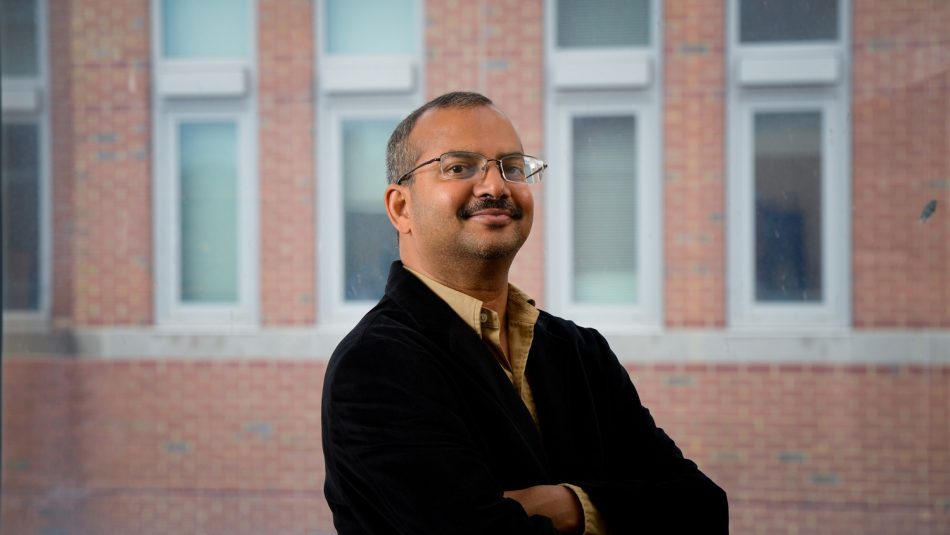
Raju Vatsavai is an Associate Professor in the Department of Computer Science at North Carolina State University, affiliated with the Center for Geospatial Analytics. He joined NC State in 2014 as part of the Chancellor’s Faculty Excellence Program cluster hire in Geospatial Analytics. Education: PhD and MS in Computer Science from University of Minnesota Prior Roles: Lead Data Scientist at Oak Ridge National Lab, roles at University of Minnesota, IBM Research, AT&T Labs, and C-DAC (India) His research in geospatial analytics spans big data management , spatiotemporal data mining , deep learning for remote sensing , and high-performance computing , with applications in national security, climate change, and crop monitoring. Recent work includes deep learning frameworks for cloud imputation , multi-sensor satellite data harmonization , and transfer learning applications in crop classification . He has been a leading investigator on grants from the National Geospatial-Intelligence Agency, Department of Energy, and Department of Homeland Security. Labs: Associate Director of the Center for Geospatial Analytics Expertise: Spatial computing, Earth observation, nuclear proliferation detection via remote sensing
Dr. Ali Kashani is a Senior Lecturer at the University of New South Wales (UNSW) within the School of Civil and Environmental Engineering. His research focuses on sustainable and low-carbon concrete materials, robot-aided construction (particularly 3D printing), and Circular Economy-aligned applications. Leadership in cementitious materials innovation Expertise in 3D printing for construction Advocate for waste valorisation and carbon capture Dr. Kashani has secured approximately $7 million in research funding and holds a patent in lightweight concrete foam. His work spans 70+ publications with 9,000+ citations, including media coverage in the Sydney Morning Herald and The Fifth Estate. He actively contributes to professional organizations such as MECLA, RILEM, and ASTM. Recent research trends include AI and optimization algorithms for sustainable concrete mix design, chloride diffusion modeling, and 3D printing performance analysis. His publications often address waste material integration, durability assessment, and eco-friendly construction practices. Scientific Awards: National and NSW Awards for 'Excellence in Concrete' (Technology and Innovation) from the Concrete Institute of Australia Churchill Fellowship for Digital Construction and 3D Printing sponsored by AVJennings Dr. Kashani serves as Co-Chair of the cement and concrete working group at MECLA and contributes to RILEM and ASTM committees. His email is ali.kashani@unsw.edu.au , and his office is located in the Civil Engineering Building (H20), Level 2, Room CE204, UNSW.
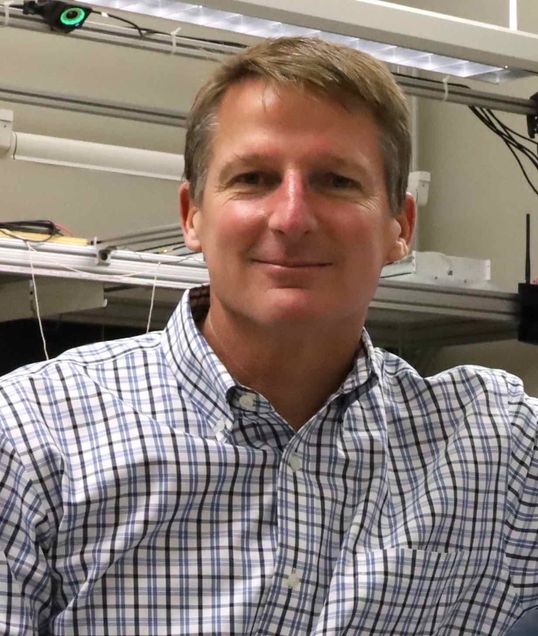
Thomas DC Little is a Professor of Electrical and Computer Engineering in the College of Engineering at Boston University. He serves as the Associate Dean for Educational Initiatives, driving the growth of the engineering master’s program and enhancing pedagogy through mobile and cloud technologies. Additionally, he is the Associate Director and Principal Investigator of the National Science Foundation Smart Lighting Engineering Research Center (LESA), a multi-institutional effort advancing visible light communication and smart lighting systems. Professor Little's research centers on ubiquitous computing and communications, with a focus on using optical cells to expand wireless data capacity for mobile devices. He pioneers ambient intelligence that enables environments to anticipate human needs. His key areas include Visible Light Communications (VLC), Optical Wireless Communications, Indoor Positioning Systems, and Smart Lighting. By integrating lighting infrastructure with communication networks, his work addresses the growing demand for wireless data and enables energy-efficient, responsive smart buildings and urban environments. Analysis of his recent publications (2019-2024) shows a strong trend toward occupancy sensing, indoor positioning, and hybrid RF/VLC networks. His team develops innovative solutions for people counting, zone-based positioning, and interference mitigation in dense optical wireless environments. There is increasing integration of machine learning for security and optimization, with applications in energy-efficient buildings and user-centric smart spaces. Scientific awards received by Professor Little include: Janetos Award for Continuous Indoor Air Quality Assessment for BU Buildings (2025) Professor Little actively mentors graduate students and postdocs, with notable advisees including Iman Abdalla (awarded Best Computer Engineering Dissertation, 2020-2021) and the MenuNav team (Societal Impact Award for a navigation app for the blind). He has secured significant research funding, including a $1M Department of Energy/ARPA-E project for occupancy sensing to reduce energy costs in commercial buildings and grants for indoor air quality sensor development. He leads the NSF Smart Lighting ERC (LESA), which develops COSSY people counting technology, sensory lighting systems, and dynamic light control applications. His team collaborates with industry and has spun off Helux Technologies, Inc. to commercialize dynamic lighting control. Current projects focus on creating safe, energy-efficient buildings through advanced sensor integration and wireless communication.
Bruce Jacob is a Keystone Professor and Full Professor in the Department of Electrical & Computer Engineering at the University of Maryland College Park's College of Engineering. His research primarily focuses on memory systems design and exascale computing architectures, with significant contributions to DRAM simulation and high-performance computing systems. Dr. Jacob received his A.B. in Mathematics from Harvard University (1988), followed by his M.S. and Ph.D. in Computer Science & Engineering from the University of Michigan (1995 and 1997 respectively). His research interests include memory systems design, exascale computing architectures, embedded systems, circuit integrity, and algorithmic composition. His recent publications demonstrate a strong focus on next-generation memory technologies, particularly ReRAM and advanced DRAM architectures. His work bridges the gap between theoretical modeling and practical implementation, with significant contributions to memory system simulation through projects like DRAMsim. His research shows a consistent trajectory toward solving the memory bottleneck problem in high-performance computing systems. Named Fellow, IEEE (2021) Multiple University of Maryland Research Leader awards (2006, 2010, 2012, 2016, 2017) Clark School of Engineering Keystone Professor (2006) National Science Foundation CAREER Award (2000) University of Maryland Award for Teaching Excellence (2004) Dr. Jacob has led significant research initiatives including the University of Maryland Exascale Systems Research and Memory-Systems Research groups. He has developed important computational artifacts such as DRAMsim (a public-domain DRAM-system simulator) and BioBench (a set of bioinformatics workloads). His work has influenced both academic research and industry practices in memory system design.
Dr. W.S. Winston Ho is a Distinguished Professor of Engineering at The Ohio State University, holding joint appointments in the William G. Lowrie Department of Chemical and Biomolecular Engineering and the Department of Materials Science and Engineering. With over 50 years of combined industrial and academic experience, he leads pioneering research in molecular separation technologies. His industrial tenure includes R&D leadership at Exxon, Xerox, and Commodore Separation Technologies, where he commercialized gas treating processes and membrane systems. Education: Ph.D. in Chemical Engineering, University of Illinois at Urbana-Champaign (1971) M.S. in Chemical Engineering, University of Illinois at Urbana-Champaign (1969) B.S. in Chemical Engineering, National Taiwan University (1966) His research focuses on advanced membrane systems for critical environmental and energy challenges, including: CO 2 -selective membranes for hydrogen purification and carbon capture High-flux desalination membranes with fouling resistance Proton-exchange membranes for fuel cells operating under low humidity Supported liquid membranes for pharmaceutical recovery and heavy metal removal Recent publications demonstrate a strong emphasis on scaling membrane technologies for industrial applications, particularly carbon capture from flue gas and hydrogen purification. Over 75% of his last 15 articles address CO 2 separation, membrane scalability, or material enhancements for energy systems. Major Scientific Awards: Elected to National Academy of Engineering (2002) and Academia Sinica (2014) AIChE Institute Award (2006), Gerhold Award (2007), Evans Award (2012) New Jersey Inventor of the Year (1991) with 60+ U.S. patents Global recognition including Chemcon Distinguished Speaker Awards He directs the Winston Ho Research Group, focusing on membrane process scale-up and holds advisory roles in national research panels. Current projects include field testing spiral-wound membrane modules for carbon capture and developing fluoride-containing membranes to enhance solid oxide fuel cell efficiency. His work has been funded by DOE, NSF, and industrial partners, resulting in commercial implementations of membrane technologies.
Christopher Rycroft is a Professor and Associate Chair in the Department of Mathematics at the University of Wisconsin–Madison. He leads the Rycroft Group, which focuses on mathematical modeling and scientific computation for interdisciplinary applications in science and engineering. Prior to joining UW-Madison in summer 2022, he was a professor at Harvard University's School of Engineering and Applied Sciences from 2014-2022, and before that a Morrey Assistant Professor at UC Berkeley from 2010-2013. Professor Rycroft's research spans three main areas: numerical methods for material mechanics, data-driven discovery, and computational geometry. His group develops new computational methods while working directly with domain scientists. Key achievements include the development of the reference map technique for fluid-structure interaction, Voro++ software library for Voronoi tessellation, and novel approaches to understanding crumpling physics. His work combines traditional analysis and modeling with machine learning methods to extract scientific insights from complex data. The Rycroft Group's publication record demonstrates a strong trajectory of interdisciplinary research bridging mathematics, physics, materials science, and biology. Recent work has focused on fluid-structure interaction, computational geometry applications, mechanical metamaterials, and biological fluid dynamics. The group develops both theoretical frameworks and practical software tools that have found applications across diverse scientific domains from materials science to virology. Everett Mendelsohn Award for Excellence in Mentorship (2021) Professor Rycroft has advised numerous PhD and master's students who have gone on to postdoctoral positions at institutions including MIT, EPFL, and Cornell. His teaching includes advanced scientific computing courses that have quadrupled in enrollment during his tenure. He has secured research funding supporting his group's work on computational methods and interdisciplinary applications. The Rycroft Group consists of graduate students, postdocs, and collaborators with diverse backgrounds in applied mathematics, physics, engineering, and computer science. The group maintains active collaborations with researchers across multiple institutions and participates in centers such as the Harvard Quantitative Biology Initiative.
Athanasios Liavas is a Professor at the Technical University of Crete in the School of Electrical and Computer Engineering , specializing in Signal Processing for Telecommunications and Information Theory . He has held administrative roles as Department Chair (2009-2011), Vice Chair (2011-2013), and Dean of the ECE School (2017-2021). Education: Diploma (1989) and PhD (1993) in Computer Engineering and Informatics from the University of Patras. Professional Background: Postdoctoral Marie Curie Fellow at INT, Evry (1996-1998); Lecturer at University of Ioannina (1999-2001); Assistant/Associate Professor at University of the Aegean (2001-2004) and Technical University of Crete (2004-present). His research focuses on Signal Processing for Telecommunications , Information Theory , and Tensor Decomposition . Recent work involves nonnegative tensor factorization , parallel algorithms , and fMRI data analysis , with applications in wireless communications and medical imaging . Articles show trends in optimization algorithms , LDPC code design , and MIMO system robustness . Scientific Awards include: Marie Curie Fellowship (1996-1998) Associate Editor, IEEE Transactions on Signal Processing (2005-2009) Elected Member, IEEE Signal Processing for Communications and Networking Technical Committee (2006-2011) He has taught courses like Telecommunications Systems II , Wireless Communications , and Information Theory , and supervised students such as Despoina Tsipouridou (PhD) and Alex Balatsoukas-Stimming (Graduate). He leads projects like Partensor (Parallel Tensor Toolbox) and COOPCOM (Cooperative Communications), and contributes to labs including the Telecommunications Laboratory .
Magdalena Szymczyk is a Lecturer in the Department of Biocybernetics and Biomedical Engineering at AGH University of Science and Technology, Faculty of Electrical Engineering, Automatics, Computer Science and Biomedical Engineering. Her work bridges embedded systems, biomedical signal processing, and geophysical data analysis. Research focuses on energy-efficient sensor networks, neural networks for GPR data classification, and mathematical transforms in signal analysis Expertise in parallel computing, real-time systems, and biomedical engineering applications Her publications (2015–2025) demonstrate a trajectory from parallel neural networks and S-transform/GPR methodologies to recent work on MicroPython in embedded systems. Key themes include energy optimization in distributed architectures and AI-driven signal processing across biomedical and geophysical domains. She has authored works on deterministic chaos in simulations, GPU image processing, and cybersecurity in microcontroller systems. Her current research emphasizes embedded systems security, medical signal diagnostics, and computational methods for geological analysis. She utilizes tools like OpenCL for GPU acceleration and MATLAB for parallel computing implementations.
Pan Xu is a tenure-track assistant professor with joint appointments in the Department of Biostatistics & Bioinformatics, Department of Computer Science, and Department of Electrical & Computer Engineering at Duke University's Pratt School of Engineering. Prior to joining Duke, he was a Postdoctoral Scholar Research Associate at the California Institute of Technology, and he earned his Ph.D. in Computer Science from UCLA. His research bridges theoretical foundations with practical applications in machine learning and artificial intelligence. Dr. Xu's research focuses on developing computationally- and data-efficient machine learning algorithms with strong theoretical guarantees, particularly in reinforcement learning, optimization, and high-dimensional statistics. His work addresses two fundamental challenges in sequential decision-making: efficient exploration with minimal interactions and robustness against distributional shifts. His research spans theoretical algorithm design, practical implementation, and real-world applications in bioinformatics and healthcare. His publication record demonstrates consistent high-impact contributions to top-tier conferences including ICML, NeurIPS, ICLR, AAAI, and AISTATS. The research trends show a progression from foundational work in non-convex optimization and multi-armed bandits toward increasingly sophisticated frameworks for robust reinforcement learning, with particular emphasis on distributional robustness, efficient exploration strategies, and practical applications. His work often bridges theoretical guarantees with empirical validation. NSF award on approximate sampling based exploration for sequential decision making Whitehead Scholar award from Duke University School of Medicine PIMCO Postdoctoral Fellowship in Data Science UCLA Outstanding Graduate Student Research Award Rising Stars in Data Science by University of Chicago Best Paper Award for Queer In AI: A Case Study in Community-Led Participatory AI at FAccT 2023 Featured Certification for Wasserstein Distributionally Robust Policy Evaluation and Learning for Contextual Bandits at TMLR Oral Presentation award at AAAI 2024 Dr. Xu actively mentors students and researchers, seeking highly motivated individuals with strong mathematical backgrounds for Ph.D. programs in Biostatistics & Bioinformatics, Computer Science, and Electrical & Computer Engineering at Duke. He has received multiple research grants including an NSF award on approximate sampling based exploration for sequential decision making. His service to the academic community includes roles as area chair for NeurIPS, ICML, ICLR, and AISTATS, as well as action editor for Transactions on Machine Learning Research. His research group develops algorithms that address fundamental challenges in sequential decision-making, with applications spanning healthcare, bioinformatics, and multi-agent systems. Current research directions include distributionally robust reinforcement learning, efficient exploration strategies, and applications of graph neural networks to biological problems.
Dr. Kenneth Zick is a Research Professor at the University of Southern California's Information Sciences Institute (USC ISI), where he serves as Research Director of Transformational Computing. His work focuses on game-changing computer architectures, hardware, and systems for solving critical government problems, with expertise in unconventional computing, quantum computing, and bio-inspired systems. Ph.D. in Computer Science & Engineering, University of Michigan-Ann Arbor M.S. in Electrical Engineering, University of Texas at Dallas Bachelor's in Electrical Engineering, University of Michigan-Ann Arbor Dr. Zick's research interests span unconventional computing , bio-inspired systems , Ising machines , quantum annealing , FPGA-based solutions , and neuromorphic computing . His group develops hardware-centric algorithm discovery and Cosm, a heuristic algorithm for sparse Ising optimization. Current projects include superconducting digital architectures, analog-digital hybrid computing, and human-AI co-design for breakthrough hardware. His team leverages advanced facilities such as USC ISI's MOSIS 2.0 and the California DREAMS hub in the DoD Microelectronics Commons, with expertise in high-speed I/O, FPGA prototyping, and radiation-hardened systems. He has received a NASA Fellowship for his Ph.D. work and mentored students like Aditi, who won the USC ECE Outstanding Academic Achievement Award.
Nikos Hardavellas is a Professor of Computer Science and Electrical and Computer Engineering at Northwestern University, affiliated with the McCormick School of Engineering. He leads the Parallel Architecture Group at Northwestern (PARAG@N), focusing on energy-efficient parallel computing and quantum systems. His research spans quantum computing systems, fault-tolerant quantum error management, memory-centric architectures, and photonics-based interconnects. Education: Ph.D. Computer Science, Carnegie Mellon University (2009) M.S. Computer Science, Carnegie Mellon University (2006) M.S. Computer Science, University of Rochester (1997) B.S. Computer Science, University of Crete (1995) Research Interests: Quantum system software stack and error mitigation Memory-centric computing and programmable memory systems Energy-efficient architectures and dark silicon Photonics and optical interconnects Parallel systems and compiler-hardware co-design Key Contributions: Developed SupermarQ, a scalable quantum benchmark suite Pioneered optical cache hierarchies (Pho$) and energy-proportional photonic networks Advanced compiler-driven virtual memory systems (CARAT) and MPI autotuning (ACCLAiM) Awards & Honors: NSF CAREER Award (2015) Future CRA Leader (2024) Best Paper Awards at HPCA (2022) and ISLPED (2021 nomination) Test-of-Time Award at EDBT (2019) Grants & Service: Secured $4.8M in research funding from NSF, industry partners, and university initiatives Executive Committee member of Northwestern’s INQUIRE Institute for Quantum Research General Co-chair of IEEE/ACM MICRO 2022 Extensive service on departmental committees and thesis advisory boards Labs & Teams: Directs PARAG@N, collaborating on quantum computing, photonics, and energy-efficient architectures. Engages with industry partners like AMD, Intel, and Synopsys.
Professor Rob Poole holds the Harrison Chair in Mechanical Engineering at the University of Liverpool’s School of Engineering, part of the Faculty of Science and Engineering. Previously Head of Department (2017–2021), he co-edits the Journal of Non-Newtonian Fluid Mechanics . His research focuses on rheology, fluid mechanics, and turbulence, with recent work on polymeric drag reduction, superhydrophobic surfaces, and viscoelastic instabilities. Education: BEng (Hons) and PhD in Mechanical/Aerospace Engineering. Research Interests: Non-Newtonian fluid mechanics Elastic turbulence and viscoelastic instabilities Polymer solutions and additive effects Heat transfer in porous media Constitutive equation development Awards & Fellowships: EPSRC Complex Fluids and Rheology Fellowship (2015–2021) British Society of Rheology Annual Award (2018) 2015 Best Paper Award (Theoretical and Applied Mechanics Letters) Grants & Projects: Funded projects include Flexible Heat Pump development (£1.5M), Instabilities in Complex Fluid Flows (£1.2M), and Superhydrophobic Surface Drag Reduction (£0.8M) Industry collaborations: Schlumberger, Procter & Gamble, National Nuclear Laboratory Professional Activities: Editorial roles: Journal of Non-Newtonian Fluid Mechanics (Co-Editor-in-Chief), Physics of Fluids External examiner at Warwick, Strathclyde, and multiple Indian Institutes of Technology
Paul O'Gorman is a Professor at the Department of Earth, Atmospheric and Planetary Sciences (EAPS) at the Massachusetts Institute of Technology. He currently serves as the Faculty Chair of the EAPS Committee on Education and as the EAPS Graduate Officer. His research focuses on understanding how climate change affects atmospheric circulation and precipitation patterns, particularly extreme events. Education: BA in Theoretical Physics, Trinity College Dublin MSc in High-Performance Computing, Trinity College Dublin PhD in Aeronautics with Minor in Applied Mathematics, California Institute of Technology Research Interests include atmospheric dynamics, hydrological cycle responses to climate change, moist convection, and the application of machine learning to climate modeling. His work addresses regional variability in extreme precipitation, vertical warming profiles in the tropics, and the fluid dynamics of land-ocean warming contrasts. Scientific Awards : Bernhard Haurwitz Memorial Lectureship (2023), American Meteorological Society MIT School of Science Graduate Teaching Prize (2018) Recent Contributions include co-leading the MIT Climate Grand Challenges flagship project "Preparing for a new world of weather and climate extremes" , which develops tools for predicting climate extremes and transitioning to low-carbon resources. He has also explored the asymmetrical generalization capabilities of machine learning algorithms in climate models under warming versus cooling scenarios.
Professor Yue Rong is a Full Professor at Curtin University's Department of Electrical and Computer Engineering, within the School of Electrical Engineering, Computing and Mathematical Sciences. He holds editorial roles at IEEE Transactions on Signal Processing and IEEE Wireless Communications Letters. His research focuses on signal processing for communications, underwater acoustic systems, wireless networks, and healthcare IoT. Rong has authored over 140 journal and conference papers and received multiple awards, including the 2010 Young Researcher of the Year Award. Education: B.E. (Electrical Engineering), Shanghai Jiao Tong University (1999) M.Sc. (Electrical Engineering), University of Duisburg-Essen (2002) Ph.D. (Electrical Engineering), Darmstadt University of Technology (2005) Research Interests: Rong's work spans cooperative MIMO communications, underwater acoustic systems, OFDM modulation, radar-based healthcare monitoring, and secure wireless protocols. His innovations include adaptive modulation schemes for underwater environments and radar-based vital signs detection. Recent trends in his publications emphasize AI-driven signal processing for healthcare IoT and underwater optical communication systems. Awards: Best Paper Awards (WCSP 2011, APCOMM 2010) Chinese Government Award (2004) DAAD/ABB Fellowship (2001-2002) Grants & Labs: His research is supported by grants focusing on UAV-enabled data collection and underwater network optimization. He leads projects in the Distributed Data Fusion and Emerging Technologies (DDFE) lab, advancing radar-cardiography and wearable health monitoring systems.
Dr. Jason D. Bakos is a Professor in the Department of Computer Science and Engineering at the University of South Carolina's Molinaroli College of Engineering and Computing. His research focuses on high-performance domain-specific architectures, including reconfigurable computing, embedded systems, and machine learning acceleration. He has held academic positions since 2005, progressing from Assistant to Associate Professor before becoming a full Professor in 2017. Education : Ph.D., Computer Science, University of Pittsburgh (2005) B.S., Computer Science, Youngstown State University (1999) Research Interests : Dr. Bakos specializes in computer architecture at multiple levels (circuit, micro-architectural, and system) with a focus on VLSI design, reconfigurable computing, high-performance computing, and applications in embedded systems. His recent work includes FPGA acceleration of machine learning algorithms, structural health monitoring systems, and real-time signal processing. Awards : 2018 Teaching Award in Computer Science and Engineering 2009 NSF CAREER Award Multiple design competition awards for innovative chip and circuit designs Grants & Funding : He leads and co-leads projects funded by NSF, Savannah River National Laboratory, and industry partners like Texas Instruments. Recent grants focus on edge computing for real-time machine learning, FPGA-based accelerators, and corrosion analysis of nuclear materials. Labs & Teams : His research group collaborates on projects involving embedded systems, FPGA design, and interdisciplinary applications in structural engineering and bioinformatics. He advises a dynamic team of graduate students and post-doctoral researchers.