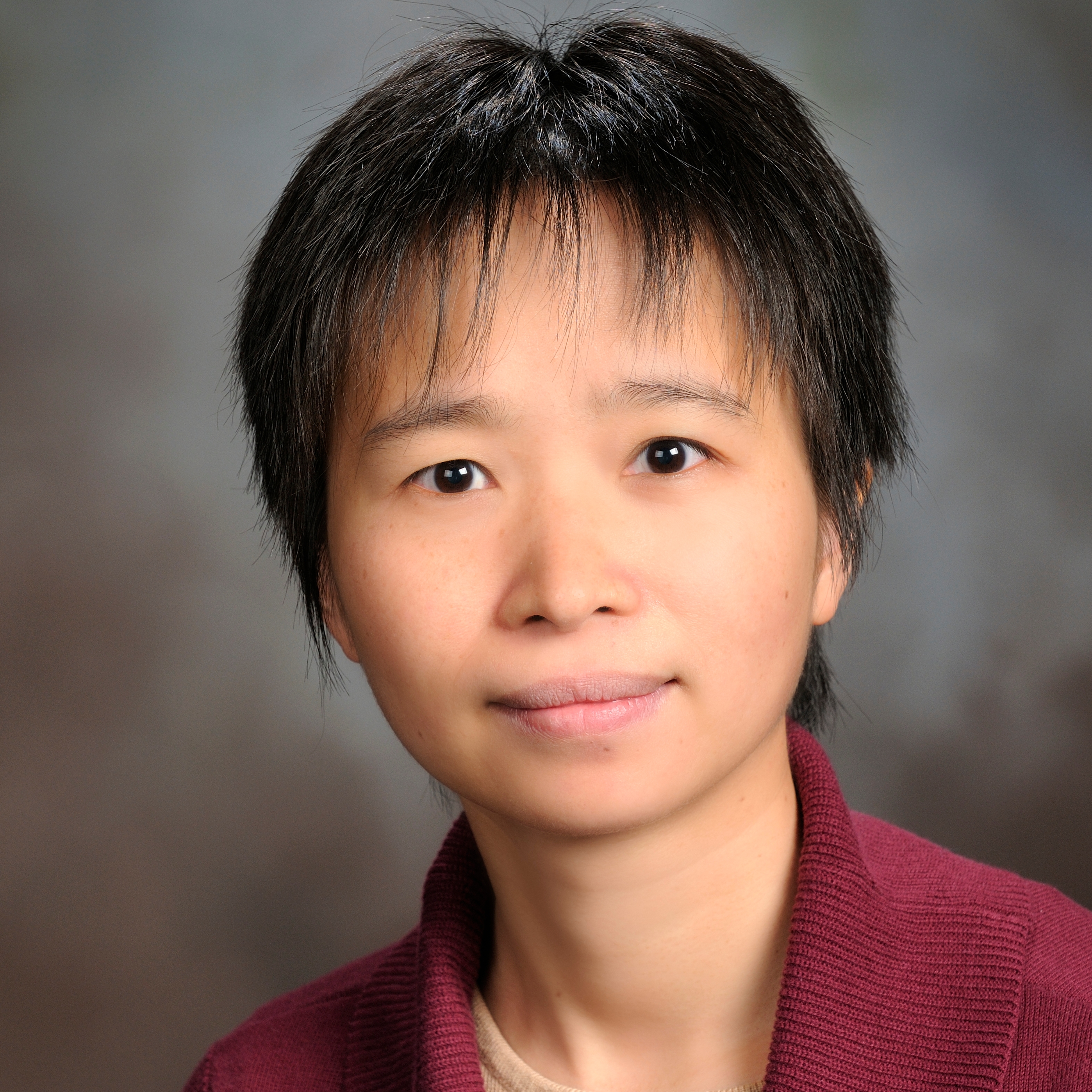
Zhou Ying is an Associate Professor of Geophysics at Virginia Tech's College of Science, Department of Geosciences. Her research focuses on understanding seismic heterogeneities in the Earth's interior through finite-frequency wave propagation theory and diffractional tomography. Ph.D. in Geophysics from Princeton University (2005) Her research interests include: Seismic Wave Propagation in Heterogeneous Media Global and Computational Seismology Finite-Frequency Seismic Tomography 3-D Anelasticity (Q) Structure in the Mantle Seismic Anisotropy in the Upper Mantle and Transition Zone Core-Diffracted Waves and Core-Mantle Boundary Structure Signal Processing and Array Data Analysis Zhou's 15 most recent publications span seismology, geophysics, and unexpected interdisciplinary topics like molecular biology. Most studies focus on mantle discontinuities, finite-frequency tomography, and outer core dynamics, with specific attention to 410-km/660-km discontinuities and surface-wave sensitivity kernels. Current graduate advisee: Zhen Guo (Ph.D. candidate in Geophysics). Former advisees include Youyi Ruan (Ph.D. 2012), Kui Liu (Ph.D. 2014), Kai Deng (MS 2014), and Jing Xue (MS 2014). She teaches undergraduate courses in Physical Geology and Earthquake Seismology, and graduate courses in Theoretical Seismology, Advanced Seismology, and Seismic Data Analysis.
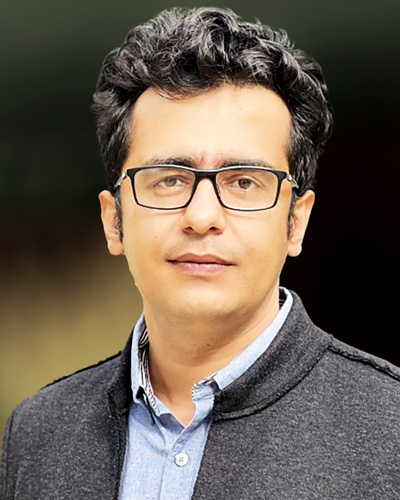
Robin Kleer is an Associate Professor of Innovation Management at Vlerick Business School in Leuven, Belgium. He serves as Programme Director for the Masters in Innovation and Entrepreneurship and Masters in General Management. Previously, he held positions at RWTH Aachen University (Habilitation), Technical University of Berlin (Professor of Technology and Innovation Management), and visiting roles at MIT, Michigan State University, and others. His research focuses on technology transfer, sustainable business models, digitalisation, additive manufacturing, and blockchain applications. He teaches innovation management, technology foresight, and executive education programmes like 'Growth through Innovation.' Education: Doctor in Economics (University of Würzburg, Germany) Habilitation (Post-Doc Degree) at RWTH Aachen University Degree in Business Engineering (University of Karlsruhe) Research Interests: Dr. Kleer explores the interplay between innovation, market structures, and business models. His work emphasizes sustainable practices in digitalisation, additive manufacturing (3D printing), and blockchain. He investigates how these technologies enable more sustainable business models and collaboratively oriented value creation. Key themes include degrowth theory, mass customization, and the societal implications of Industry 4.0. Grants & Labs: His research has addressed topics like modular smartphone design, recycling consortia dynamics (e.g., German Recyclate Forum), and computational reviews of customization literature. While specific grants aren’t detailed, his work frequently engages with interdisciplinary frameworks for sustainable degrowth and post-growth economics.
Daniel Gallart Mateu is a Senior Lecturer in the Department of Analytical Chemistry at the Faculty of Chemistry, University of Valencia. He is associated with the research group SOLINQUIANA, focusing on innovative solutions in analytical chemistry. Education: PhD in Analytical Chemistry (2017) from the University of Valencia, supervised by Dr. Sergio Armenta and Dr. Miguel de la Guardia. His research spans analytical chemistry, green methodologies, and environmental analysis. Key areas include: Development of sustainable sample preparation techniques (e.g., magnetic nanocomposites, natural sorbents). Environmental monitoring of pollutants (e.g., alkylphenols, phthalates, hexavalent chromium). Application of spectroscopy and chromatography in forensic and toxicological analysis (e.g., synthetic cathinones, cocaine in camouflaged samples). Integration of computational thinking into chemistry education via machine learning. Article trends highlight a focus on green analytical chemistry, forensic toxicology, and environmental impact mitigation. He contributes to master's programs in occupational risk prevention and chromatographic techniques.
James R. Green is a Professor in the Department of Systems and Computer Engineering at Carleton University , where he has been a faculty member since 2005. He holds a PhD from Queen's University and is a licensed Professional Engineer (P.Eng.) and Senior Member of IEEE. His work integrates machine learning, biomedical informatics, and high-performance computing. His educational background includes: B.A.Sc. in Systems Design Engineering, University of Waterloo (1998) M.Sc.(Eng.), Queen's University (2000) PhD, Queen's University (2005) Dr. Green's research focuses on machine learning challenges in biomedical informatics , particularly class imbalance and rare event prediction. Key areas include protein structure, function, and interaction prediction; microRNA detection in unique species; non-contact neonatal monitoring; and accelerating scientific computing via parallel architectures like the Cell BE processor. His lab has developed several widely used bioinformatics tools such as PIPE, ProtDCal, and PCI-SUMO. His recent publications reflect a strong trend in computational biology and machine learning , with applications in proteomics, genomics, and medical diagnostics. He has published over 100 peer-reviewed papers and secured funding from NSERC, CIHR, CFI, ORF, OCE, MITACS, and IBM. Scientific and teaching recognitions include: Three teaching awards NSERC Best Project Award (twice: 2006-2007 and 2007-2008) Multiple student projects resulting in conference papers (e.g., CMBEC) He has supervised numerous undergraduate capstone projects in areas such as assistive technologies, robotic systems, and bioinformatics. His teaching portfolio includes courses in Pattern Classification, Machine Learning, Computer Architecture, and Biomedical Engineering. He leads an active research group that bridges computer engineering and life sciences, fostering interdisciplinary collaboration. Lab and research team initiatives include: Development of open-access web servers for protein analysis Collaborations with biologists and clinicians Integration of hardware and software for medical applications
Eugene Chan is an Associate Professor in the Department of Marketing Management at the Ted Rogers School of Management, Toronto Metropolitan University. He holds a PhD in Marketing from the University of Toronto, a MA in Social Psychology from the University of Chicago, and an AB in Honors Psychology from the University of Michigan, along with an ARCT (Hons) in Piano Performance from the Royal Conservatory of Music, reflecting a multidisciplinary background. His research lies at the intersection of consumer psychology, political ideology, health communication, and sustainability. He employs experimental and survey methods grounded in social science theories to understand how individuals make judgments and decisions in marketplaces and society. Key themes include the influence of political ideology on consumer behavior, strategies for effective marketing and health communication, and promoting environmentally sustainable choices. His work often explores how emotional, moral, and cognitive factors shape consumer decisions. His recent publications span top journals such as Journal of Consumer Psychology , Global Environmental Change , Computers in Human Behavior , and Personality and Social Psychology Bulletin . These studies reveal consistent focus on behavioral interventions, ideological divides, health compliance, and environmental sustainability. Trends indicate a strong emphasis on moral psychology, emotional triggers, and real-world applications in public policy and marketing strategy. Scientific Awards: Emerging Researcher Award, Australian and New Zealand Marketing Academy (2018) Dean’s Award for Excellence in Research by an Early Career Researcher, Monash Business School (2018) He has secured research funding from diverse sources including the National Natural Science Foundation of China, ACR Transformative Consumer Research Grant, IHS Hayek Fund, and the Indiana Commission for Higher Education, supporting projects on fake news mitigation, brand revitalization, moral foundations, and pandemic behavior. He has taught at institutions worldwide, including the University of Toronto, Monash University, and Purdue University, demonstrating international academic engagement. Eugene Chan serves in editorial roles for several journals, including as Associate Editor for Australasian Marketing Journal and International Journal of Consumer Studies , and as Special Issue Editor for Frontiers in Psychology . He also co-authored the 2nd Asia-Pacific edition of the textbook Consumer Behavior , contributing to marketing education. He advises students in consumer behavior and marketing research, though specific advisees are not listed.
Rui Silva is an Associate Professor with Tenure at the Nova School of Business and Economics (Universidade Nova de Lisboa), holding the Haddad Chair in Entrepreneurship. He previously served as an Assistant Professor of Finance at the London Business School. His academic affiliations include a Research Affiliate role at the Centre for Economic Policy Research (CEPR). **Education:** PhD in Economics, University of Chicago (2012) MA in Economics, University of Chicago (2008) Bachelor's in Economics, Nova University of Lisbon (2004) **Research Focus:** Rui’s work bridges corporate finance, labor economics, and organizational economics. Key themes include corporate governance, innovation dynamics, and the interplay between financial distress and labor markets. His recent studies explore mergers’ mental health impacts on employees, bankruptcy’s legal-economic implications, and institutional drivers of innovation. **Awards & Grants:** No explicit awards are mentioned, though his Haddad Chair indicates recognition in entrepreneurship. His research has been supported by institutions like CEPR and through collaborative projects. **Advising & Teams:** While no advisees are listed, his work involves interdisciplinary collaborations with scholars like Ramin Baghai (University of Chicago) and Viktor Thell (Lund University). **Labs & Platforms:** He contributes to the Finance Knowledge Center at Nova School, focusing on entrepreneurial finance and policy-relevant research. His work integrates methodologies from decision science and simulation modeling to address industrial and organizational challenges.
Tom Goethals is an FWO Junior Postdoctoral Fellow affiliated with the Department of Information Technology at Ghent University , where he conducts research in edge computing, container networking, and decentralized systems. Current role: IMEC Postdoctoral Researcher Research focus: Secure and intelligent edge service management for decentralized IoT applications His work explores edge intelligence , orchestration frameworks , and AI-driven network optimization , with trends in lightweight virtualization (e.g., Feather), Kubernetes adaptation for edge environments, and intent-based decentralized orchestration. Publications emphasize scalability, security, and energy efficiency in fog-native workflows. Scientific Awards : FWO Junior Postdoctoral Fellowship He collaborates with researchers like Bruno Volckaert and Filip De Turck on projects funded by the Research Foundation - Flanders (FWO) , including grants for edge container networking and decentralized learning frameworks. His projects align with Ghent University’s focus on smart city infrastructure and edge-to-cloud systems.
Farzad Hashemi serves as an Assistant Professor at the School of Architecture + Planning within The University of Texas at San Antonio (UTSA), affiliated with the Margie and Bill Klesse College of Engineering and Integrated Design. He leads the Climate-Sensitive Design Lab (CSDL), focusing on interdisciplinary research at the intersection of urban climate science, building performance, and environmental justice. Education: Ph.D., Pennsylvania State University Dr. Hashemi's research investigates urban heat island phenomena, building energy dynamics, and socio-spatial inequities in thermal exposure. His work employs advanced simulation techniques including GIS, ENVI-met, CFD, and machine learning to analyze climate impacts across diverse urban contexts. Key contributions include examining historical redlining's legacy on contemporary heat distribution, developing parametric workflows for energy modeling, and creating data-driven mitigation strategies for urban heat. His approach integrates technical building science with critical social analysis to address climate vulnerabilities in marginalized communities. His publication portfolio demonstrates consistent focus on urban heat mitigation, building energy performance, and environmental justice across multiple U.S. cities. Recent work emphasizes adaptive cooling strategies through computational modeling and examines thermal inequities through spatial analysis of social vulnerability indices. The research bridges technical climate modeling with socio-political dimensions of urban heat exposure. Honors and Awards: The 2024 ARCC Dissertation Award As director of the Climate-Sensitive Design Lab, Dr. Hashemi develops research initiatives that combine environmental simulation with community-focused design solutions. The lab's work informs both academic discourse and practical urban planning applications, particularly regarding climate adaptation in rapidly growing Sun Belt cities like San Antonio. Current projects integrate tree canopy data, occupancy patterns, and future climate scenarios to create resilient urban environments.
Milo Lin is an Associate Professor in the Lyda Hill Department of Bioinformatics at UT Southwestern Medical Center, a position he has held since September 2024. He initially joined the department as an Assistant Professor in 2021 and has been a member of the Cecil H. and Ida Green Center for Systems Biology since 2015. His educational background includes a B.S. and Ph.D. in Physics from Caltech, earned in 2006 and 2012 respectively, under the mentorship of Ahmed Zewail. He completed his postdoctoral training as a Miller Independent Research Fellow at UC Berkeley from 2012 to 2015, hosted by David Chandler. Dr. Lin's research focuses on the physical and computational principles underlying biological processes, particularly protein folding and systems-level biological dynamics. His work bridges physics, biology, and computational modeling, aiming to uncover fundamental mechanisms in cellular function. His research has been supported by his position as the Cecil H. and Ida M. Green Endowed Scholar in Biomedical Computational Science and recognition as a Miller Fellow. He leads the Lin Lab, which is dedicated to advancing computational and theoretical approaches in biophysics. Cecil H. and Ida M. Green Endowed Scholar in Biomedical Computational Science Miller Independent Research Fellow Dr. Lin advises students and researchers through his laboratory, fostering training in interdisciplinary computational and biophysical sciences. While specific grants are not listed, his endowed scholar position and fellowship history indicate sustained research support. He is actively involved in the academic and research mission of the Department of Bioinformatics and the Green Center for Systems Biology. The Lin Lab serves as the primary research team under Dr. Lin's leadership, focusing on integrating physical theory with biological data to model complex cellular behaviors.
Dave Armstrong is a Professor and Director of Placement at the University of Western Ontario, holding the Canada Research Chair (CRC). He leads the Centre for Computational and Quantitative Social Science (CCQSS) and earned his PhD from the University of Maryland. His work focuses on statistics, data mining, and political conflict analysis. PhD, University of Maryland Director, Centre for Computational and Quantitative Social Science (CCQSS) His research explores: Non-linearity in statistical models and its impact on effect sizes The Costs of Contention project analyzing political conflict consequences Visualization techniques for pairwise statistical comparisons using Shiny and D3.js Recent publications span urban-rural divides, municipal governance, and statistical methodology. Awards include a five-year Norwegian Social Science Research Council grant (2016), editorial board membership at the American Journal of Political Science (2013), and undergraduate research stipends (2010).
Anthony Cupido is an Adjunct Associate Professor in the Department of Civil Engineering at McMaster University's Faculty of Engineering. His work focuses on sustainable building technologies, energy performance modeling, and water resource management in institutional contexts. His research interests span Sustainable Building Technologies Energy Performance Modeling Water Resource Management Environmental Engineering with a focus on policy-based tools and green infrastructure. Recent publications highlight trends in Net zero energy buildings Rainwater quality analysis Green building policy evaluation Public building energy simulation across journals like the Journal of Green Building and conferences such as the Winter Simulation Conference.
Prof. Dr. Reinhold Decker is a full professor of business administration with a focus on marketing and market research at Bielefeld University's Faculty of Economics, where he has been affiliated since 1997. He currently serves as the Rector's Representative for Cooperation with Business, BRIC, and Research Transfer (since October 2023), following previous roles as Vice Rector for Information Infrastructure and Business (2019-2023), Vice Rector for Information Management (2015-2019), and Vice Rector for Financial Affairs and Resources (2012-2015). He is also the Scientific Director of BI2000plus - Research Projects on the Region since 2005 and a member of the Bielefeld Graduate School of Economics and Management (BiGSEM). Decker earned his degree in industrial engineering with a focus on OR/Computer Science in 1988, received his doctorate in 1993, and completed his habilitation in 1997, all from the University of Karlsruhe (KIT). His academic career includes visiting professorships at the University of Vienna, Moscow Academy of Economics, University of Veliko Turnovo, Universidade NOVA de Lisboa, Université Paris III – Sorbonne Nouvelle, and the University of Maryland. His research focuses on the development and empirical testing of methods and models for acquiring and analyzing consumer data, particularly from social media, and data-driven, consumer-centric development of intelligent products and services. His work spans social media analysis, buyer behavior modeling, brand image analysis, web mining in marketing, and internet-based preference measurement. Decker's interdisciplinary approach bridges marketing, data science, and consumer behavior, with increasing emphasis on intelligent systems and digital transformation in marketing contexts. Analysis of his 15 most recent publications reveals a strong focus on emerging technologies in marketing, including augmented reality, voice assistants, and social media analytics. His research increasingly examines privacy concerns in the digital age, sustainability communication, and the integration of AI in consumer decision-making processes. The interdisciplinary nature of his work is evident in publications spanning marketing journals, data science publications, and technology-focused outlets. Member of the Scientific Council of the journal Argumenta Oeconomica Cracoviensia (since 2013) Associate Editor of the journal Behaviormetrika (since 2012) Member of the Editorial Board of the Springer series Studies in Classification, Data Analysis, and Knowledge Organization (since 2004) Vice President of the European Association for Data Science – EuADS (2018-2022) Decker has served on numerous editorial boards and scientific program committees, including for the International Federation of Classification Societies. His extensive reviewing work spans prestigious journals such as Journal of Business Research, Journal of Product Innovation Management, and Review of Managerial Science. His leadership extends to project management, including BiLinked (2025), Bielefeld 2000plus (2024), and Bielefelder DatenNarrative (2022). Decker has also edited multiple volumes and special issues on data analysis and marketing, demonstrating his commitment to advancing methodological approaches in business research. As Scientific Director of BI2000plus, Decker leads interdisciplinary research projects focused on regional development. His work bridges academia and industry through initiatives like the Bielefeld Center for Data Science (BiCDaS) and the Bielefeld Graduate School in Theoretical Sciences. His recent projects emphasize data narrative techniques, linking data analysis with effective communication strategies for diverse audiences.
Andrea Simonetto is a Research Professor at the Applied Mathematics Unit (UMA) , ENSTA Paris, Institut Polytechnique de Paris. His work spans optimization, control theory, and learning algorithms for large-scale and streaming data , with applications in smart grids, intelligent transportation, personalized health, and quantum computing. Current research focuses on online algorithms for time-varying optimization , personalized optimization for cyber-physical systems , and variational quantum algorithms . Past contributions include theoretical and algorithmic advances in convex/non-convex optimization, distributed optimization (robotic networks, smart grids), and signal processing for sparse reconstructions and parallel computing in particle filtering. Key application domains include renewable energy integration , quantum state preparation , and human-in-the-loop control systems . His research is published in journals like ACM Transactions on Quantum Computing , IEEE Control Systems Letters , and Automatica .
Sandeep Gupta is a Professor and Director of the School of Computing and Augmented Intelligence at Arizona State University's Ira A. Fulton Schools of Engineering. He also serves as a Senior Global Futures Scientist. His work bridges computer science, engineering, and healthcare applications with a focus on creating reliable cyber-physical systems that interact safely with humans. Education: Ph.D. from The Ohio State University (1995) Research Interests: Professor Gupta's research spans cyber-physical systems, green and sustainable computing, mobile and pervasive computing, and parallel and distributed computing. His work increasingly focuses on human-in-the-loop systems where AI and humans collaborate safely, particularly in healthcare contexts. Recent research integrates large language models with cyber-physical systems to enhance safety and operational effectiveness in critical applications like medical monitoring and industrial automation. Research Trends: Analysis of Professor Gupta's recent publications reveals a strong focus on operational safety in human-AI collaborative systems, particularly in healthcare applications. His work combines physics-guided models with machine learning to detect "unknown-unknowns" in safety-critical systems, develops LLM-based approaches for medical image classification, and creates frameworks for ethical human-AI collaboration. The research increasingly addresses real-world challenges in diabetes management, epilepsy diagnosis, and industrial automation. Professional Service: IEEE Communication Letters Editorial Board, Area Editor (2008-Present) IEEE Journal on Special Areas in Communications - Issue on Body Area Network, Co-editor (2006-Present) Elsevier COMNET - Computer Network Journal, Reviewer (2008-Present) Technical Advisory Committee Chair for Networks (2005-Present) Advising and Grants: Professor Gupta has secured numerous research grants from NSF, NIH, Intel, Raytheon, and other organizations, totaling millions of dollars. His research portfolio includes projects on smart stadiums, mobile ECG sensing, power-aware scheduling, medical device verification, and sustainable data center management. He actively advises PhD and Master's students through thesis courses and research supervision, focusing on cyber-physical systems and healthcare applications. Labs and Research Groups: Professor Gupta leads research in cyber-physical systems with applications in healthcare, sustainable computing, and mobile networks. His work involves interdisciplinary collaboration across engineering, computer science, and medical domains, particularly through ASU's Global Futures initiatives.
Dr. TÓTH Csaba is an Associate Professor at the Department of Highway and Railway Engineering, Budapest University of Technology and Economics (BME), Faculty of Civil Engineering. He teaches courses such as Highway and Railway Structures (BMEEOUVAI41) and Pavement Structures (BMEEOUVMU63), while previously teaching Pavement Analysis and Design (BMEEOUVDT81) and Project Management in Transportation (BMEEOUVMU-4). His research focuses on asphalt technology, pavement diagnostics, and sustainable road construction. Phone: +36 1 463 1154 Room: ÉL. ép / 206/E Research Interests: His work emphasizes non-destructive evaluation methods (e.g., Ground-Penetrating Radar), rheological modeling of asphalt binders, recycled asphalt pavement applications, and climate-adapted pavement design. Key methodologies include the Ramberg-Osgood model for dynamic modulus prediction and the virtual inertial point method for structural diagnostics. Scientific Contributions: Recent research trends highlight sustainable road rating systems, thermal stress analysis in asphalt pavements, and advanced diagnostic techniques for infrastructure monitoring. Scientific Awards: Magyar Felvételi Scholarship (#építő250)