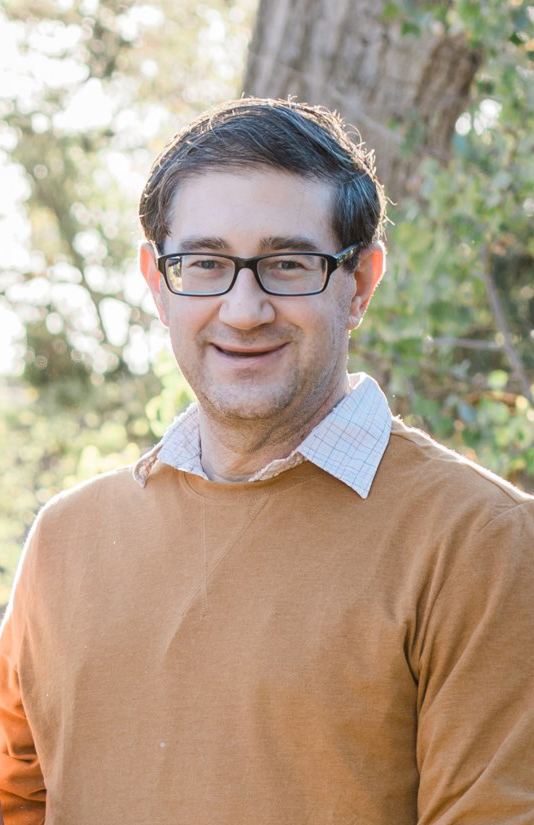
Dan McHale is a Visiting Professor in the Animation Program at the California College of the Arts (CCA). His role involves teaching and contributing to the academic and creative environment of the program. Contact him via email at dmchale@cca.edu . No specific research interests, grants, or awards are explicitly mentioned in the provided text. His profile focuses primarily on his faculty role and institutional affiliation within CCA's Animation Program.
Michaela Bačíková is an Assistant Professor at the Faculty of Electrical Engineering and Informatics (FEI) of the Technical University of Košice (TUKE). Her research focuses on Human-Computer Interaction (HCI), domain usability, and domain analysis, with an emphasis on graphical user interfaces (GUIs), domain-specific languages (DSLs), and gesture-driven interaction. She leads the development of the DEAL tool, a domain analysis framework for extracting domain models from software systems. Her teaching includes courses on component-based programming, web technologies, and user interface design. Research Projects: DEAL (Domain Extraction ALgorithm) : A tool for analyzing GUIs to generate DSLs, ontologies, and usability metrics. EU Project: 'Evolving Architectural Knowledge in the Edge-to-Cloud Continuum' (participant). Educational initiatives: Integrating gesture-driven IDEs and social networks for mentoring in programming courses. Research Interests : Automated domain usability evaluation using DEAL. DSL-driven GUI generation and feature modeling. Innovations in teaching software development and user experience design. Grants & Labs : Recipient of FEI TUKE Grant no. FEI-2015-16 for domain usability metrics research. Active in the FEI lab developing DEAL and related tools.
Eric A. Suess is a Professor in the Department of Statistics and Biostatistics at California State University East Bay, with a joint appointment in the College of Engineering. He served as Department Chair until Spring 2015, after which he focused on developing and teaching courses related to Data Science, Machine Learning, and AI. His educational background isn't explicitly stated in the provided text, but he holds a Ph.D. and has extensive experience in academia. Professor Suess's research interests span a wide range of statistical and computational fields. His primary areas include Bayesian Statistics, Time Series Analysis, Applied Probability, Stochastic Processes, and Simulation. Since 2015, he has expanded his focus to include Data Visualization, Statistical/Machine Learning, Natural Language Processing, and Deep Learning. As of Fall 2023, he has been experimenting with Large Language Models for applied NLP problems, and since Spring 2024, he has been working with open-source small language models (SMLs) from ollama. His work demonstrates a consistent progression from traditional statistical methods to cutting-edge computational approaches. His scholarly publications show a strong emphasis on computational statistics, Bayesian methods, and practical applications across various domains including meteorology, environmental science, and public health. His most recent work focuses on precipitation forecasting accuracy, analysis of coronavirus events using hierarchical Bayesian models, and air quality monitoring systems. JSM 2018 Vancouver, Data Competition Winner for "Accuracy of Precipitation Forecasts" JSM 2018 Vancouver, First Prize for poster presentation "Classroom Demonstration: Deep Learning for Classification and Prediction" JSM 2011 Miami, Third Prize for "Effect of Oil Spill on Birds: A Graphical Assay of the Deepwater Horizon Oil Spills Impact on Birds" Professor Suess has been advising Engineering Management MS students on Capstone Projects related to Data Science applications since Fall 2016. These projects cover topics including Time Series Forecasts, Natural Language Processing, Process Control, and other data science applications in engineering management. He has also co-authored the book "Introduction to Probability Simulation and Gibbs Sampling with R" published by Springer-Verlag in 2010, which has become a valuable resource for students and practitioners. His department offers several degree programs including MS in Statistics (with options in Applied Statistics, Data Science, Mathematical Statistics, and Actuarial Science), MS in Biostatistics, and BS in Statistics (with a concentration in Data Science). He has been instrumental in developing the Data Science curriculum at CSUEB.
David E. Low is a Professor in the Department of Literacy, Early, Bilingual and Special Education at California State University, Fresno's Kremen School of Education and Human Development. His research examines critical multimodal literacy practices of children and youth in diverse learning spaces, with particular expertise in comics, visual literacy, and critical pedagogy. Dr. Low previously served as Assistant Professor (2015-2020) before advancing to Associate Professor and ultimately Professor. Dr. Low earned his Ph.D. from the University of Pennsylvania, M.A. from New York University, and B.A. from the University of Arizona. His educational background in language, literacy, and culture informs his current research and teaching approaches which center on critical praxis and dismantling educational status quos that harm learners. Dr. Low's research focuses on intersections among multiliteracies, multimodality, racial and cultural identity, antideficit and antiracist pedagogies, popular culture/media, and critical multicultural education. His recent book "Transgressive Humor in Classrooms" (Routledge, 2024) explores humor as a form of social critique in secondary ELA classrooms. He has published extensively in top journals including Journal of Literacy Research, Research in the Teaching of English, Language Arts, and English Education, with over 30 scholarly publications to his name. Dr. Low's scholarly trajectory demonstrates consistent engagement with visual and multimodal literacies, particularly comics and graphic narratives, as tools for critical inquiry, social justice education, and identity exploration. His work spans teacher education, children's literature analysis, and critical examinations of representation across multiple disciplines including mathematics, gender studies, and cultural identity. Dr. Low has received significant recognition for his scholarship: Arthur Applebee Award for Excellence in Research on Literacy (2023) Divergent Publication Award (2023) Keynote speaker at NCTEAR (2025) As an academic leader, Dr. Low chairs the University Personnel Committee at Fresno State (2020-present) and serves on the Executive Committee of ELATE (2023-27). He previously served as the School of Education's Faculty Assembly President (2017-18), co-chaired the Research Committee (2016-19) and Dandoy Committee (2017-23), and convened the César Chávez Education Conference (2017). His teaching focuses on mentoring pre- and in-service teachers to develop frameworks that honor students' cultural and intellectual legacies. He oversees the College's ongoing partnership with the Fresno American Indian Health Project (2015-present). Dr. Low serves on the Editorial Review Boards of Research in the Teaching of English and English Journal. He previously served as Section Editor for Language Arts (vols. 97 and 98, 2019-21) and co-edited a special issue of English Teaching: Practice and Critique. He is past chair and program chair of the AERA Literature SIG (2015-19) and a past member of NCTE's Standing Committee on Research (2018-21).
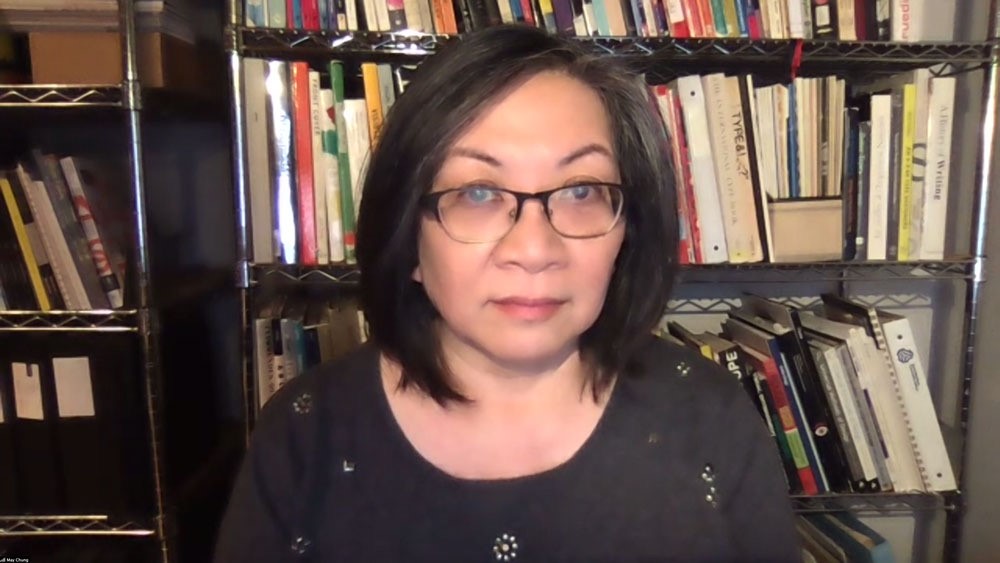
May Chung is an Associate Professor of Design at NSCAD University, specializing in interdisciplinary design education and research. She holds a Master of Graphic Design from North Carolina State University and BFA/BA degrees from the University of Alberta. Her work focuses on design pedagogy, technology integration in education, and collaborative practices. Chung has been actively involved in grants and research initiatives addressing design’s role in social issues, such as human rights advocacy and pandemic response. Chung’s education includes a Master of Graphic Design (North Carolina State University), BFA in Visual Communication Design, and BA (General) from the University of Alberta. Her research explores teaching methodologies in design education, particularly during the pandemic. Notable grants include the 2021 Dreamscape Design Research Grant and the 2018 Alexander Bell Foundation Grant. Her research interests span design education, technology in teaching, and community engagement through design. She has presented at conferences like the AtypI International Typography Conference and contributed to exhibitions addressing human rights issues. Additionally, she has served as an external reviewer for academic tenure and program evaluations at institutions such as York University and Emily Carr University. Chung is a director of The Cari Dair Typography Workshops Society and previously held leadership roles in national design education organizations, emphasizing her commitment to advancing design education.
John Hendrix is a Professor of Art and Chair of the MFA Illustration and Visual Culture Program at Washington University in St. Louis. He is an accomplished author and illustrator of books for young people, blending storytelling with visual art. His work emphasizes historical narratives, such as his award-winning graphic novel The Faithful Spy: Dietrich Bonhoeffer and the Plot to Kill Hitler , which required extensive research and a five-year commitment. Educated at the University of Kansas (KU), Hendrix credits faculty mentors like Barry Fitzgerald, Christine North, and Roger Shimomura for shaping his career trajectory. His teaching philosophy emphasizes patience and the long-term development of artistic skill, advising students to view their careers as 50-year processes. Hendrix's creative practice spans studio work, teaching, and public lectures. His studio is located in his attic, where he focuses on sketching, writing, and final art production. He remains proud of his KU roots, citing the BFA program's interdisciplinary approach to design, illustration, and fine art as foundational to his success.
Doriane Gomet is a Lecturer in cultural history and sports history at the University of Angers (UCO), affiliated with the Faculty of Sciences and the APCoSS research team. She serves as Academic Director of the MEEF EPS master's program and Head of History Teaching at IFEPSA. Holding a doctorate in STAPS and Contemporary History (2012, joint supervision University of Lyon 1/Stuttgart), her work focuses on sport's role in vulnerability contexts (e.g., captivity/gender), socialization processes, and sports governance. Notable projects include documenting the history of Racing Club de France (2020-2023) and Stade Français (2021-2024). She has authored/co-authored over 50 publications, including books like Racing Club de France: Le sport en ciel et blanc (2023) and articles in top journals like International Journal of the History of Sport . Research highlights include analyzing sports practices in Nazi camps, Jewish sports communities in interwar France, and the socio-political impact of hiking in Brittany. Awards include the Routledge Prize 2016 for her study of boxing in concentration camps. She actively contributes to academic governance as Secretary of the French Society for Sports History (SFHS), member of the Ministry of Sports' History Committee, and editor-in-chief of Sciences Sociales et Sport . Her work bridges historical analysis with contemporary issues, emphasizing sport's role in memory, identity, and socio-political dynamics. Current projects explore sport's intersection with vulnerable populations and territorial governance, reflecting her interdisciplinary approach to sports history.
Kasey Garrison is a Senior Lecturer and Associate Head of School-Research at the School of Information and Communication Studies, Charles Sturt University. She specializes in Teacher Librarianship and coordinates the Children's Specialisation for the Master of Information Studies. With a PhD in Education from Old Dominion University, her research focuses on social justice in children’s and young adult literature, inquiry-based learning, and culturally diverse library collections. She has extensive experience in school libraries, special archives, and teaching exceptional learners. Her research interests include the role of school libraries in supporting metacognition, global literature for teaching, and the availability of multicultural literature. She is actively involved in professional organizations like the International Association of School Librarianship and serves on editorial boards for journals such as School Libraries Worldwide . Kasey has received awards including the Bridgewater College Young Alumna Award (2017), Academic Excellence Award (2016), and the 2024 Charles Sturt Excellence Award for Social Responsibility. She leads initiatives like the Knowledge Bank of Australian and New Zealand School Libraries (KBANZSL) and has contributed to projects on social work integration in libraries and sustainability practices.
Dr. Umran Ali is a Senior Lecturer at the University of Salford's School of Arts, Media and Creative Technologies. He leads video game design programs and serves as a consultant for higher education institutions globally. His research focuses on virtual natural environment design, blending game design with geography, geology, and landscape architecture. Notable work includes the Virtual Amazon rainforest project (2019), an immersive educational tool for environmental engagement. He holds a PhD in Higher Education Research and Practice (2016) alongside qualifications in Creative Technology and Computer Games. Teaching expertise spans Game Design, Narrative Storytelling, Virtual Reality, and AI. He actively collaborates with organizations like the Landscape Institute and CIEEM, contributing to interdisciplinary projects at the intersection of gaming and environmental science. His research explores how virtual landscapes can reflect real-world ecological systems, with publications examining game ecosystems, architectural level design principles, and the cultural significance of digital landscapes across eras (1990s to modern). Dr. Ali’s work bridges academia and practice through exhibitions like the Virtual Landscapes Exhibition (2017) and conferences presentations on topics like 'Virtual Ecosystems & Video Games' (2018). He is affiliated with the Arts, Media and Communications Research Centre, advancing research into interactive technologies and their societal impacts.
Dr. Keshav Pingali is the W.A. 'Tex' Moncrief Chair of Computing and Professor of Computer Science at The University of Texas at Austin, where he also directs the Center for Grid and Distributed Computing at the Oden Institute. Previously, he held the India Chair of Computer Science at Cornell University (2003–2006) and served as a professor in Computer Science and Electrical Engineering at Cornell (1999–2006). He completed his B.Tech. at IIT Kanpur (1978), followed by S.M., E.E., and Sc.D. degrees from MIT (1983, 1986). Research Interests: Focuses on programming languages, compilers, and runtime systems for parallel computing, with emphasis on optimizing irregular applications in domains like graphics and data mining. His work addresses challenges in high-performance computing and multicore processor programming methodologies. Awards & Honors: ACM SIGPLAN Programming Languages Achievement Award (2024) ACM/IEEE CS Ken Kennedy Award (2023) IEEE Charles Babbage Award (2023) Foreign Member of Academia Europaea (2020) Fellow of ACM (2012), AAAS (2010), and IEEE (2010) NSF Presidential Young Investigator Award (1989–1994) President’s Gold Medal, IIT Kanpur (1978) Professional Activities: Keynote speaker at major conferences like ACM PACT (2018), HPCA/PPoPP/CGO (2016), and HIPEAC (2012). Served as editor-in-chief of ACM TOPLAS (2007–2010) and on NSF advisory committees. Currently teaches courses on compiler optimization and performance programming.
Michael Wehar is a Lecturer in Computer Science at Bryn Mawr College , where he teaches Introductory Programming Courses. He is a multidisciplinary researcher and developer with a focus on algorithms , computational art , and software engineering , creating innovative tools that bridge computer science with creative applications. Co-founder of AlgoArt.org , a platform for algorithmic art creation and exhibition Creator of Word of The Hour , a multilingual vocabulary learning platform Co-developer of Treegle Dictionary , a structured definition platform His research spans computational complexity, human-computer interaction, and educational technology. Key areas include: Algorithmic Art : Generative design systems, interactive visualizations Pattern Matching : Matrix algorithms, Voronoi diagrams, formal verification Language Technology : Multilingual dictionaries, crowdsourced translation systems Educational Tools : Git repository analysis, interactive learning platforms His 15 most recent publications focus on topics ranging from 2D pattern matching to ETH-based complexity lower bounds , with significant contributions to automata theory and algorithm design. He has received academic recognition including the Best Faculty Poster at CCSC:EA 2022 and Honorable Mention at IFoRE 2022 . As a dedicated mentor, he has guided over 100 students across institutions like Swarthmore College, Temple University, and University at Buffalo in projects spanning: Web development frameworks AI applications in art and education Mobile productivity tools Language learning platforms Game development projects
Beth Dillard is an Assistant Professor in the Woodring College of Education at Western Washington University, specializing in Multilingual Education. She serves as Co-Director of Bilingual Teacher Community Routes and coordinates Grow Your Own (GYO) certification programs for dual-language teachers. Previously, she taught high school social studies and ESL. She holds a Ph.D. in Second Languages Education (University of Minnesota, 2016), an M.Ed. in Curriculum and Instruction (University of Oregon, 2006), and a B.A. in History (Auburn University, 2003). Her research focuses on systemic functional linguistics, content-language integration, teacher learning, and bilingual education. She actively contributes to academic discourse through presentations and publications, including work on SFL analysis and classroom strategies. Her Orcid ID is 0000-0002-3941-7562. Education: Ph.D. (2016), University of Minnesota: Second Languages Education M.Ed. (2006), University of Oregon: Curriculum and Instruction (Secondary Social Studies & ESOL) B.A. (2003), Auburn University: History (cum laude) Research Interests: Systemic Functional Linguistics, Content and Language Integration (CBI/CLIL), Teacher Learning, Bilingual Education, Activity Theory, Discourse Analysis (including conversation analytic approaches). Professional Engagement: Coordinates GYO pathways for bilingual teachers, advises on Multilingual Education programs, and collaborates with schools in South King County. She has presented at international conferences like AAAL and co-organizes events on multilingual education and teacher development.
Ulrike Felsing is a Senior Lecturer at the Lucerne School of Design, Film and Art (Lucerne University of Applied Sciences and Arts, HSLU), where she teaches in the BA Graphic Design and Data Design + Art programs. She leads the +RE course 'Wissensbilder in Medien und Gesellschaft' (Knowledge Images in Media and Society). Her research focuses on knowledge visualization in digital humanities and participatory archives. Education: Studied Visual Communication at the Leipzig University of Applied Sciences (HGB). Research Projects: Co-Principal Investigator (2021–2025): 'Participatory Knowledge Practices in Analog and Digital Image Archives' (Swiss National Science Foundation Sinergia grant, with Prof. W. Leimgruber & Dr. P. Fornaro, University of Basel). 'The Exploration of Design Methods in Transcultural Visual Communication' (SNF-funded, 2010–2015, with Dr. R. Baur). Publications include peer-reviewed articles on participatory archives and critical map visualizations, as well as monographs such as 'Reflexive Kataloge' (2021) and co-authored 'Visual Coexistence' (2020). Grants and Funding: Swiss National Science Foundation (SNF) grants for multiple projects. Her work bridges design, cultural studies, and digital humanities.
Thu D. Nguyen is a distinguished Professor and currently serves as the Dean of Mathematical and Physical Sciences at the School of Arts and Sciences, Rutgers University. She holds a faculty position in the Department of Computer Science where she has made significant contributions to research and education. Her research interests span multiple domains within computer science, with a particular focus on Datacenters , Sustainability , Computer Systems , Approximate Computing , and Computer Science Education . Dr. Nguyen leads the Computer and Networked Systems research group, where her team investigates innovative approaches to energy-efficient computing and data management. Analysis of her recent publications reveals a strong trend toward addressing challenges in big data management, missing data imputation, blockchain applications in education, and machine learning for educational technology. Her work bridges theoretical computer science with practical applications in educational systems and healthcare data management. Dr. Nguyen has received numerous prestigious awards recognizing her contributions to the field: Rutgers Big Ten Academic Alliance Department Executive Officers Fellow (2018) Best paper award at FAST 2016 for research on datacenter reliability IEEE Micro Top Picks selection (2014) Multiple best paper awards including at IGCC 2010 NSF CAREER award (2005-2010) Faculty of the Year Award for Excellence in Teaching (awarded in 2000 and 2002) Her research has been supported by substantial grants including a $4 million DIBBS grant, NSF CSforAll grant, Microsoft SEIF grant, and multiple NSF CRI grants. Dr. Nguyen has played a leadership role in establishing Rutgers' new Data Science major, minor, and certificate programs, reflecting her commitment to advancing computer science education.
Tim Weingärtner is a Lecturer at Lucerne School of Computer Science and Information Technology, part of Lucerne University of Applied Sciences and Arts. He holds a Dr.-Ing. from the University of Karlsruhe (now KIT) and a Dipl. Inform. in Computer Science. His professional experience includes roles as a Product Manager, Managing Director, and Senior Manager in finance and IT sectors, alongside academic roles as a Research Assistant and Lecturer. His research focuses on Blockchain technology, Smart Contracts, Self-Sovereign Identity, Innovation Management, and FinTech. He leads projects like SSI 4 Sport and Environmental assessment of DLT solutions , and is involved with organizations like the Blockchain Lab and DEC Association. His academic contributions include books on Blockchain and cybersecurity, and peer-reviewed articles on decentralized finance risks and quantum mechanics education. Notable awards include a 2021 2nd Prize at the Blockchain International Scientific Conference. He actively promotes innovation through initiatives like Smart-up and serves as Vice President of DIDAS and President of DEC Association.