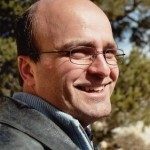
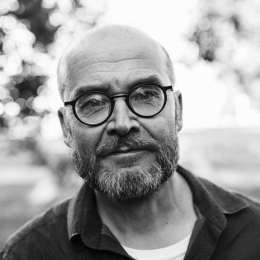
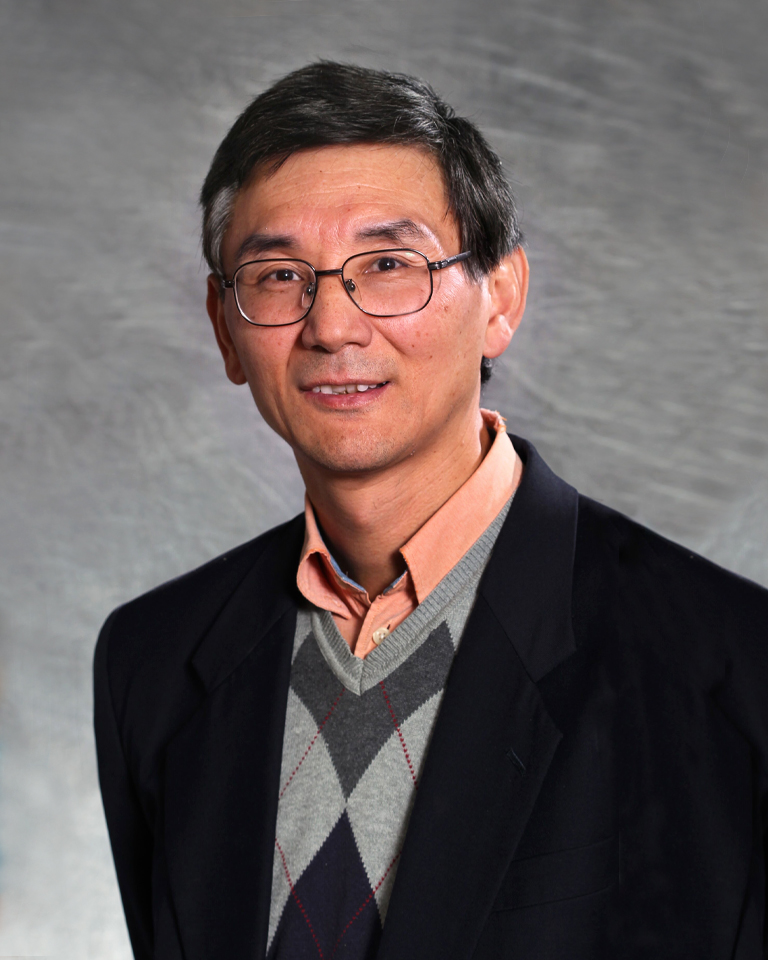
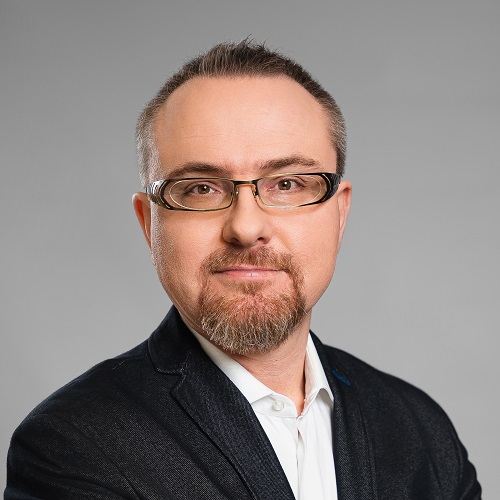
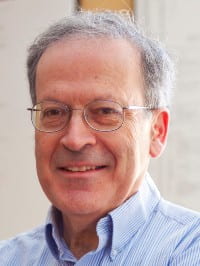
Prof. Dr. M. Bjørn von Rimscha is a full-time Professor of Media Economics at the Department of Social Sciences, Media and Sport, Johannes Gutenberg University Mainz. He serves as Prodekan for Studium und Lehre since 2023 and previously held leadership roles including Geschäftsführender Leiter of the Institute for Journalism. His research focuses on media economics, digital transformation, advertising markets, and cross-border media management. Positions: Professor (2015–present), Prodekan (2023–present) Education: Freie Universität Berlin, University of Ulster Key Collaborations: Co-edited De Gruyter Handbook of Media Economics (2024), Handbuch Medienökonomie (2021) His recent work examines digital disruption in media industries, payment models for journalism, and the economic value of creativity. He advises PhD students like Robin Riemann and holds editorial roles at the Journal of Media Business Studies . Contact: b.vonrimscha@uni-mainz.de
Prof. Tine De Moor is a leading scholar at Rotterdam School of Management, Erasmus University Rotterdam , holding the Chair of Social Enterprise and Institutions for Collective Action . With a PhD in History from Ghent University (2003), she specializes in long-term institutional analysis of collective action across historical and modern contexts. Department of Business-Society Management ERIM Research Member Former Utrecht University Professor (2012-2020) Research Focus: Her work examines institutions for collective action from medieval commons to modern cooperatives, with key contributions to understanding energy cooperatives, citizen collectives, and social enterprises. She leads innovative citizen science projects and investigates labor market participation patterns over the past millennium. Publication Trends: Recent articles focus on platform cooperatives in the gig economy , energy prosumerism motivations , and institutional grammar applications . She explores paradoxes in cooperative governance and develops computational models for historical institutional analysis. Awards & Grants: Recipient of prestigious honors including ERC Starting Grant NWO-VIDI Grant International Association for Study of the Commons Leadership Advising & Collaboration: She has co-authored with scholars like Daan van Weeren and David Bunders, with significant citations in environmental and social science domains. Her work informs policy on collective resource management and sustainable transitions. Labs & Teams: Founding editor of the International Journal of the Commons , she leads the CollectieveKracht knowledge platform and collaborates with Triodos Bank stakeholders. Her research integrates GIS, archival analysis, and agent-based modeling.
Eduardo Rocha is a Professor and Head of the Microbial Evolutionary Genomics laboratory at the Institut Pasteur, within the Department of Genomes and Genetics. His research integrates bioinformatics, molecular evolution, and genomics to understand bacterial genome organization and dynamics, particularly focusing on mobile genetic elements and their role in adaptation and antibiotic resistance. His research interests include microbial evolutionary genomics, genome organization, horizontal gene transfer, mobile genetic elements (plasmids, phages, integrons), bacterial pathogen evolution, and computational biology. His work lies at the intersection of molecular evolution, population genetics, and molecular epidemiology, with strong translational implications for understanding antimicrobial resistance and infectious disease emergence. The recent publications highlight a consistent focus on mobile genetic elements, genome plasticity, and bacterial adaptation. Key themes include the role of integrons and CRISPR-Cas systems in bacterial immunity, plasmid-mediated spread of antibiotic resistance, phage-plasmid interactions, and the development of bioinformatics tools for microbial genomics. These works frequently appear in high-impact journals such as Science , Nature Microbiology , and PLoS Biology , reflecting significant contributions to the field. Eduardo Rocha leads multiple funded research projects, including ERC-2011-StG EVOMOBILOME, ANR Magisbac, and ANR SHAPE. He has developed and maintains several widely used bioinformatics software tools: IntegronFinder, MacSyFinder, PanACoTA, SatelliteFinder, CapsuleFinder, TXSScan, and others. He mentors a large team of PhD students, postdoctoral researchers, and engineers, and has supervised numerous former students who now hold independent research positions worldwide. Eduardo Rocha has received research funding from major agencies including the European Research Council (ERC) and the French National Research Agency (ANR). His work is central to the LabEx IBEID and the INCEPTION convergence program, where he serves on the steering committee, promoting interdisciplinary research in infectious disease emergence. His laboratory, part of the Genomes and Genetics department, actively contributes to microbial evolutionary genomics through both methodological development and biological discovery. The team participates in networks such as Phages.fr, GDR BIM, and GDR AIEM, reinforcing its collaborative and integrative approach.
Mattias Tydén is a Senior Lecturer at Stockholm University's Department of History, where he received his doctorate in 2002. He previously served as an associate professor at Uppsala University's Hugo Valentin Center (formerly the Center for Multiethnic Research) and has been a researcher at the Institute for Futures Studies in Stockholm and Linköping University's Department of History. His research focuses on key aspects of Swedish modern history including: Racism as an idea and policy, particularly examining eugenics and sterilization programs Evolution of the welfare state and its early challenges Migrant and refugee issues in historical perspective Sweden's response to the Holocaust Post-war international aid development His most recent major publication, En svindlande uppgift. Sverige och biståndet 1945-1975 (2021), explores Sweden's role in international development assistance during the formative post-war decades, co-authored with Annika Berg and Urban Lundberg.
Prof. dr. Tessa Quax is an Associate Professor at the Faculty of Science and Engineering, University of Groningen, leading research in Molecular Microbiology . Her work focuses on archaeal virology and virus-host interactions, supported by prestigious grants including an ERC Starting Grant (2022) and NWO Vidi Grant (2023). Key Research Areas: Archaeal virus entry/egress mechanisms Cell surface dynamics and motility Extreme environment microbiology Genetic tool development for archaea Recent publications in Nature Reviews Microbiology (2025) and Current Opinion in Microbiology (2024) highlight her work on viral host recognition and structural diversity. Her lab's 44 research outputs span archaeal cell biology, viral evolution, and ecological impacts of virus-induced lysis. Scientific Recognition: KNAW Beijerinck Premium (2022) KNAW Early Career Award (2021) Hector Research Career Development Award (2021) ERC Starting Grant (2022) As Chair of the International Society for Viruses of Microbes SAB and Speaker of the German Microbiology Society's Microbial Viruses group, she coordinates global research networks including a HFSP grant (2023) with Japan/Australia/USA collaborators. Her lab currently includes PhD candidate Zaloa Aguirre Sourrouille and multiple postdoctoral researchers.
Professor Sir Nigel Shadbolt is Principal of Jesus College Oxford and Professor of Computing Science at the University of Oxford. He is Chairman and Co-founder of the Open Data Institute which he established with Sir Tim Berners-Lee. His career spans multiple prestigious institutions including the University of Southampton and University of Nottingham, where he held leadership roles in AI research. He has served in significant government advisory positions including as Information Advisor to the UK Prime Minister and member of the Public Sector Transparency Board. Nigel Shadbolt earned his undergraduate degree in Philosophy and Psychology from the University of Newcastle (1st Class Honours, 1978) followed by a PhD in Artificial Intelligence from the University of Edinburgh. His academic journey includes positions as the Allan Standen Professor of Intelligent Systems at Nottingham and leadership of the Web and Internet Science Group at Southampton before joining Oxford. Shadbolt's research spans the interdisciplinary field of Web Science, which he helped originate, focusing on human-centered AI, social machines, open data, and ethical considerations in technology. His work examines how humans and computers integrate at web scale to create novel applications, with recent emphasis on children's digital autonomy and privacy. He has published over 500 articles exploring topics from cognitive psychology to computational neuroscience, Artificial Intelligence to the Semantic Web. His notable contributions include the development of data.gov.uk and leadership in establishing Oxford's Institute of Ethics in AI. His 2018 book 'The Digital Ape: how to live (in peace) with smart machines' has been described as a 'landmark book' in the field. Knighted in 2013 for services to science and engineering Fellow of The Royal Society (FRS) Fellow of the Royal Academy of Engineering (FREng) Fellow of the British Computer Society (FBCS) Technology Pioneer status by the Davos World Economic Forum UK national BT Flagship IT Award As an advisor, Shadbolt has supervised numerous PhD students who have gone on to positions at Google DeepMind, the World Bank, and other prestigious institutions. His research has been supported by multiple grants including SOCIAM, KOALA, and ReTiPS projects. He co-founded Garlik Ltd, which was acquired by Experian, demonstrating his commitment to translating research into practical applications that benefit society. Shadbolt leads the Web and Internet Science research group at Oxford, focusing on social machines - applications that succeed at web scale by integrating humans and computers in novel ways. His work on the KOALA Hero Toolkit and CHAITok system addresses critical challenges in children's data autonomy on social media platforms, reflecting his commitment to ethical technology design.
Prof. Dr. Arwen Deuss is a full Professor at the Faculty of Geosciences, Utrecht University , specializing in Seismology . Her research focuses on mapping Earth's deep interior using global seismology, with particular emphasis on mantle discontinuities, core structure, and whole Earth oscillations. She integrates seismological data with mineral physics, geodynamic modeling, and geochemistry to understand planetary evolution. Key research areas: Earth's Deep Interior, Global Seismology, Mantle Discontinuities, Inner Core Anisotropy Teaches courses in Theoretical Seismology, Earth Systems, and Planetary Interior Structure Developed open-source tools like FrosPy for normal mode analysis Her recent work explores 3D mantle attenuation, tilted transverse isotropy in the inner core, and seismic wave coupling. She leads projects connecting seismic tomography with geodynamic processes and maintains active collaborations in international seismological research.
Dr. Sumin Zhao is a Reader (Associate Professor) in Discourse Analysis at the University of Edinburgh's School of Philosophy, Psychology & Language Sciences. She holds a PhD in text linguistics from the University of Sydney and has held prestigious fellowships at the University of Southern Denmark and the University of Technology Sydney. Her research focuses on multimodal discourse analysis, social semiotics, and digital literacies, with particular attention to social media practices, immigrant families, and children's digital engagement. Education: PhD in Text Linguistics (Hallidayan tradition), University of Sydney Postdoctoral Fellowships at University of Southern Denmark (2016-2018) and University of Technology Sydney (2013-2016) Research Interests: Analysis of social media genres (e.g., selfies, shelfies, video-sharing platforms) Multimodal communication in transnational families Children's digital literacy practices and translanguaging Semiotic technologies in education and cultural studies Projects & Grants: Lead investigator for the PPLS Small Project Grant on emoji analysis (2021-2022) Pilot study on transnational family storytelling via social media (2020-2021) Awards: Carlsberg Distinguished Postdoctoral Fellowship (2016-2018) Chancellor's Postdoctoral Fellowship (2013-2016) Supervision & Labs: Supervises PhD students researching social media influencers, digital parenting, and transnational literacy practices Member of the International Collective of Research and Design in Children's Digital Books (www.childrensdigitalbooks.com)
Yiguang Ju is the Robert Porter Patterson Professor of Mechanical and Aerospace Engineering at Princeton University, affiliated with the HMEI Grand Challenges Program. His research focuses on plasma-assisted combustion, alternative fuels, and nano-material synthesis via flame processes. He investigates energy-efficient systems for microscale energy conversion, catalytic reactions, and low-temperature plasma chemistry. Research interests include non-equilibrium plasma dynamics, ammonia synthesis, and high-pressure oxidation kinetics. He develops advanced diagnostics like hybrid laser spectroscopy and machine learning models to study reaction mechanisms. Recent work explores plasma-enhanced combustion for hydrogen and alternative fuels, with applications in energy storage and emission reduction. His studies address challenges in plasma-chemistry interactions, material synthesis, and high-pressure combustion systems. His articles highlight innovations in plasma catalysis, combustion kinetics, and atmospheric chemistry. Collaborative projects include plasma-based material recycling and supercritical-pressure reactor analysis. He leads initiatives in clean energy technologies and sustainable chemical processes.
Janusz Bujnicki is a Professor and head of the Laboratory of Bioinformatics and Protein Engineering at the International Institute of Molecular and Cell Biology in Warsaw (IIMCB), Poland. He holds concurrent roles in science policy advisory bodies, including the European Commission's Group of Chief Scientific Advisors (2015-2020, then expert) and the Polish Academy of Sciences’ advisory panel (2024-). He is also a founding member of the Association of ERC Grantees (AERG) and serves on the Scientific Advisory Board of Life Science Center at Vilnius University. Academia Europaea Member (2018-) EMBO Member (2018-) Leadership Academy for Poland (2018) His research spans structural biology, RNA modification, computational biology, and molecular evolution. He has pioneered computational methods like ModeRNA, SimRNA, and ClaRNA for RNA structure prediction and analysis, and developed databases like MODOMICS for RNA modification pathways. His work has applications in understanding RNA function and drug design targeting RNA-processing enzymes. The 15 most recent publications focus on RNA structural modeling (e.g., ModeRNA, ClaRNA, SupeRNAlign), RNA-ligand interactions (LigandRNA), and RNA modification biology (MODOMICS database). These works bridge computational methods with experimental validation in RNA enzymology and structure-function relationships. Scientific Awards: ERC Starting Grant (2010), EMBO Member (2018), Crystal Brussels Sprout (2016), Prime Minister’s Award (2014), Knight’s Cross of Polonia Restituta (2014) Grants & Leadership: Founded RNA bioinformatics infrastructure at IIMCB, led EU science policy advisory groups, and organized international research competitions (RNA Puzzles)
Oliver Grau is a Chair Professor for Image Science and a leading figure in Media Art research, affiliated with Hong Kong Baptist University (Academy of Visual Arts, Distinguished Fellow since 2023) and Danube University Krems (Chair Professor for Image Science from 2005–2022). He founded the Archive for Digital Art (ADA) and the international MediaArtHistories Conference Series , with key roles at institutions across Germany, Austria, and Australia. His work bridges art, science, and technology, focusing on immersive images, digital heritage, and emotion research. Key Positions: Director of ADA (since 2000), Founding Director of MediaArtHistories Conference Series (since 2005), PI for high-resolution digitization of the Goettweig Graphic Print Collection (2005–2017). Research Grants: Funded by DFG, Austrian Science Fund, Australian Research Council, VW Foundation (total 8.3 Mio EUR), and Erasmus+ Joint Master program (5.4 Mio EUR). Research Interests: Grau’s scholarship spans the history of media art, telepresence, artificial life, emotion research, and digital humanities. His work emphasizes the evolution of immersive visual experiences from historical art forms to digital media, integrating theoretical and practical approaches. Article Trends: His recent publications focus on digital art’s sociopolitical dimensions, archiving challenges in the digital era, and cross-disciplinary methodologies. Themes include media art conservation, web-based tools for digital humanities, and the intersection of artistic expression with contemporary global issues like climate change and surveillance. Scientific Awards: Distinguished Fellow at Hong Kong Baptist University (2023) Science Award of Lower Austria (2019) Honorary Doctorate from University of Oradea (2014) Invitations to G-20 summit, Olympic Games, and international symposia Labs & Teams: He leads the Archive for Digital Art, managing a global team of 28 staff, and co-founded the Erasmus+ Joint Master in Media Arts Cultures. His projects emphasize collaborative archiving tools (e.g., Web 2.0/3.0 archives) and large-scale digitization initiatives.
Leslie Valiant is the T. Jefferson Coolidge Professor of Computer Science and Applied Mathematics in Harvard University's School of Engineering and Applied Sciences, where he has held a faculty position since 1982. A foundational figure in theoretical computer science, his work bridges artificial and natural computational phenomena across multiple disciplines. His academic background includes education at: King's College, Cambridge Imperial College, London Ph.D. in Computer Science from Warwick University (1974) Valiant's research spans computational complexity , machine learning theory , parallel systems , and computational neuroscience . He pioneered the PAC (Probably Approximately Correct) learning framework that established computational learning theory as a rigorous field. His holographic algorithms work revealed deep connections between computational complexity and statistical physics, while his neuroidal model and evolvability theory provide computational explanations for cognitive processes and biological evolution. Current investigations focus on cortical computation primitives and knowledge infusion architectures. His publication trends show increasing integration of neuroscience with computational theory since 2010, with dominant themes in holographic computation (2006-2018), cortical modeling (2012-2018), and evolvability (2009-2017). The work consistently applies computational complexity analysis to biological and cognitive systems. Major recognitions include: Nevanlinna Prize (1986) for mathematical aspects of computer science Knuth Award (1997) for foundational algorithms contributions EATCS Award (2008) for theoretical computer science impact Turing Award (2010) for computational learning theory and complexity Fellowship in the Royal Society and National Academy of Sciences Valiant's research has been supported by NSF and international grants enabling cross-disciplinary work in computational neuroscience and evolutionary algorithms. While specific advisees aren't documented in source materials, his theoretical frameworks have shaped generations of researchers in machine learning and complexity theory. His current research group explores neuroidal architectures for cognitive computation, investigating how cortical circuits achieve robust information processing through in-circuit testing methodologies. Ongoing projects aim to identify fundamental computational primitives in neural systems and develop biologically inspired AI frameworks.
Frederic Bloom is a Professor of Law at the University of Colorado College of Law, where he has taught since 2012. His scholarship focuses on structural, methodological, and design issues in modern federal courts. He earned his J.D. from Stanford Law School (Order of the Coif) and a B.A. from Washington University in St. Louis. Education: J.D., Stanford Law School (Order of the Coif) B.A., Washington University in St. Louis Bloom's research spans federal courts, constitutional law, jurisdictional design, and procedural frameworks. His work explores temporal dynamics in legal systems, judicial accountability mechanisms, and institutional constraints. Key publication themes include Judicial structure and supermajoritarianism Temporal analysis in adjudication Jurisdictional myths and realities Court litigation dynamics Awards: Order of the Coif (Stanford Law School) As a former clerk for Judge Sidney Thomas (9th Circuit) and Judge Marilyn Hall Patel (N.D. Cal), his academic practice integrates doctrinal analysis with institutional critique.
Steven Ma is a Professor at Clemson University's College of Engineering, Computing and Applied Sciences. He is affiliated with the Department of Mechanical Engineering, though the department name is not explicitly mentioned. His contact information includes an office in 222 Fluor Daniel Building, phone number (864) 656-5537, and email sma22@clemson.edu. Education : Ph.D. from State University of New York at Buffalo (1991), MS from Beijing Polytechnic University (1986), BS from Beihang University (1983). Steven Ma's research interests focus on engineering disciplines, specifically Autonomous Wheeled Vehicles, Machine Design and Manufacturing, Hydraulics and Electro-Hydraulic Control, Welding & Fatigue, and Bolted Joints Design. These areas highlight his expertise in mechanical systems and manufacturing technologies. Analysis of his publications reveals a secondary focus on historical and political topics, particularly Russia's Great War and Revolution, the Russo-Japanese War, and transnational cultural exchanges. His work explores themes like military finance, ideological propaganda, and the global impact of capitalism and revolutionary movements. As of the latest data, there are no documented scientific awards or student advisement records for Steven Ma. His affiliations and contributions to engineering research remain central to his academic profile.
Duran Icels serves as an Associate Professor in the Department of Western Languages and Literatures at Kirikkale University's Faculty of Humanities and Social Sciences, specializing in French language and literature studies. His academic career spans appointments at Zonguldak Bülent Ecevit University (1997), Hacettepe University (2000-2007; 2014-2017), and current service at Kirikkale University since 2008, including roles as Erasmus-Farabi Coordinator (2009-2013) and Deputy Director of the School of Foreign Languages (2013-2016). Educational background: BA in French Language and Literature, Hacettepe University (1994) MA in French Language and Literature, Hacettepe University (1999) PhD in French Language and Literature, Hacettepe University (2005) Research focuses on French literary traditions, cross-cultural comparative analysis, and Turkish-French poetic dialogues. His scholarship examines structural and thematic intersections between Francophone and Turkish literary canons, with particular emphasis on translation theory and poetic form evolution across cultural boundaries. Academic leadership includes developing international exchange programs through Erasmus-Farabi coordination and administrative oversight as Deputy Director of Foreign Languages. He has supervised master's theses in translation studies while maintaining active bilingual (Turkish-French) scholarly engagement.