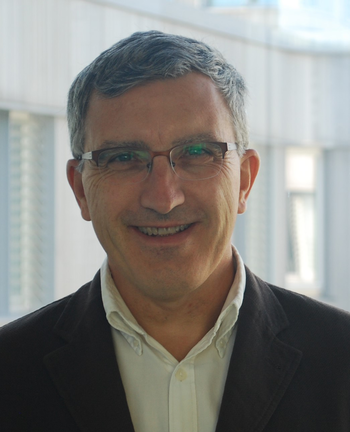
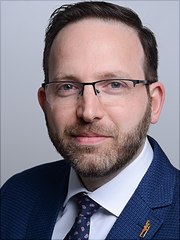
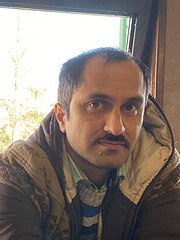
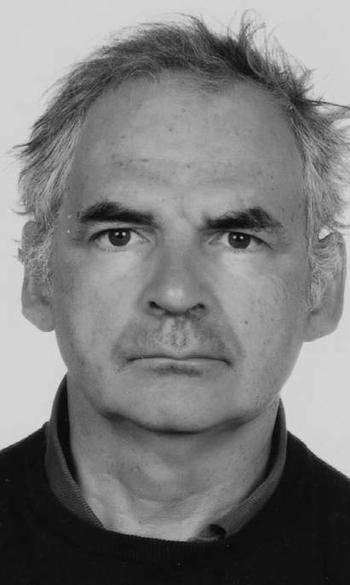
Prof. Dr. Kianoosh Rezania is a Professor of West Asian Religious History and Director of the Käte Hamburger Kolleg Dynamics of Religious History at Ruhr University Bochum. His research focuses on Zoroastrianism, Iranian religions, and the history of religions, with a particular emphasis on ancient Iranian languages and interreligious dynamics. He holds a Ph.D. from Georg-August University Göttingen and has conducted extensive research on topics such as Zoroastrian cosmology, Sasanian-Zoroastrian interactions, and the transmission of religious texts. His work combines philological analysis with historical and cultural studies approaches. Rezania's academic career includes roles as a research associate at Göttingen University and his habilitation project on spatial concepts in early Zoroastrianism. He has directed major research initiatives like the Graduate School of Metaphor and Religion (GSMR) and the Käte Hamburger Kolleg. His publications span monographs, edited volumes, and peer-reviewed articles exploring themes such as religious economics, Middle Persian lexicography, and cross-cultural exchanges between the Safavid and Mughal empires. His current projects include the 'Zoroastrian Middle Persian: Digital Corpus and Dictionary' initiative and studies on Pahlavi literature's interreligious context. He collaborates internationally, leading interdisciplinary teams and contributing to digital humanities efforts in religious studies.
Alberto Cantera Glera is a Professor at the Institute of Iranian Studies within the Department of History and Cultural Studies at Freie Universität Berlin. His research focuses on Zoroastrian studies, Avestan language and literature, Iranian linguistics, and manuscript studies. He teaches courses on Young Avestan, Pahlavi, Zoroastrian rituals, and Iranian literature, with office hours held on Thursdays from 3-5 p.m. Professor Cantera Glera's research interests center on Zoroastrian religious practices, particularly the Long Liturgy, Avestan textual criticism, and the transmission of Zoroastrian texts through manuscript traditions. His work bridges linguistic analysis with religious studies, examining how ritual practices evolved from ancient to medieval Iran. He has made significant contributions to understanding the relationship between oral performance and written transmission in Zoroastrian traditions, as well as the linguistic features of Avestan and Middle Persian texts. His recent publications reveal a consistent focus on Zoroastrian ritual structures, particularly the Long Liturgy, with increasing attention to the relationship between textual manuscripts and ritual performance. The articles show progression from linguistic analysis of Avestan texts toward broader studies of ritual practice, sacred geography, and the historical development of Zoroastrian religious authority. His work demonstrates sophisticated integration of manuscript evidence with ritual theory and historical linguistics. PRIX ROMAN ET TANIA GHIRSHMAN 2021 Professor Cantera has supervised numerous PhD students including Nils Purwins, Stefan Härtel, Yusef Saadat, Jaime Porro, Soheil Delshad, and Xue Li. His research has been supported through various academic projects related to Zoroastrian manuscript studies and Avestan textual criticism, contributing significantly to the field of Iranian studies at Freie Universität Berlin.
Professor Shervin Farridnejad is a faculty member at the Asia-Africa Institute of the University of Hamburg, where he holds the Professorship of Iranian Studies since September 2022. He also serves as the Head of the MA program 'Manuscript Cultures' at the Centre for the Study of Manuscript Cultures (CSMC) within the Cluster of Excellence 'Understanding Written Artefacts'. PhD in Ancient and Middle Iranian Philology and Zoroastrian Studies (2014) - Georg-August University Göttingen MA in Ancient Iranian Studies (2007-2009) - Georg-August University Göttingen MA in Fine Arts and Art History (2003-2006) - Tarbiat Modares University Tehran BA in Fine Arts (Painting) (1998-2002) - Tehran University His research focuses on Zoroastrianism , particularly examining its cultural and religious history from antiquity to the early Islamic period. He investigates the dynamics between Zoroastrians and non-Zoroastrians, Zoroastrian art and iconography, and manuscript cultures. His work also extends to Judeo-Persian literature , Ancient Iranian philology , and Persian calligraphy . Recent publications highlight ritual practices in Zoroastrianism, including sacrificial food traditions and gift-exchange theology. The 2024 article on canine roles in Zoroastrian meat ethics and 2023 works on Safavid manuscript iconography demonstrate his interdisciplinary approach combining textual analysis with visual culture studies. 2022-2024: Editorial board member for Sasanian Studies series 2020-2023: Book Review Editor of the journal Iranian Studies 2016-2022: Co-editor of Ancient Iran Series 2015-2024: Contributor to Bibliographia Iranica and DABIR journals As an active academic leader, he serves as Sustainability Officer of the Asia-Africa Institute, member of the CSMC Steering Committee, and deputy member of the Faculty Council of Humanities at University of Hamburg. His teaching spans from introductory courses on Iranian history to specialized seminars on Zoroastrian rituals and Persian manuscript cultures.
Markus Mode is Professor at Martin Luther University Halle-Wittenberg's Seminar für Orientalische Archäologie und Kunstgeschichte, specializing in pre-Islamic Central Asian archaeology and art history. Research Focus: His scholarship examines Sogdian art, religious iconography, and cultural interactions along the Silk Road. Key investigations include Sogdian temple art from Panjikent, metallurgy of Eurasian nomads, and Kushan-era sculpture. Academic Contributions: Authored foundational studies on Sogdian historiography paintings, religious iconography, and cultural transfers between sedentary and nomadic societies. His work reconstructs artistic programs at sites like Afrasiab and Dokhtar-e Noshirwân. Education: PhD (1984) and Habilitation (1991) from Halle University.
Yukiyo Kasai is an Associate Professor of Central Asian History of Religions at Ruhr-Universität Bochum (RUB), affiliated with the Center for Religious Studies (CERES). She holds a Ph.D. from Free University Berlin (2005) and a post-doctoral habilitation from RUB (2021). Her research focuses on the history of Uyghur Buddhism, manuscript studies, and religious dynamics in pre-Islamic Central Asia, with particular attention to Turkic and Iranian cultural interactions. She has held fellowships at the Fritz Thyssen Foundation, DFG, and the Berlin-Brandenburg Academy of Sciences. Key roles include coordinating the RELIGUR project and serving as Research Associate for BuddhistRoad. Her work bridges textual analysis, material culture, and socio-political contexts, with expertise in Old Uyghur, Sogdian, and Brāhmī scripts. Awards include the 2011 Preis für Geisteswissenschaften from Göttingen Academy. She contributes to interdisciplinary projects like the Turfan Studies Academy and has edited major volumes on Buddhist transmission and Central Asian religious history. Publications span 20+ years, emphasizing Buddhist colophons, translation practices, and interreligious contacts. Her research highlights the role of Buddhism in Uyghur legitimation, pilgrimage networks, and textual hybridity. Current projects examine Sino-Uyghur religious exchanges and the cultural significance of talismans and sacred sites.
Dr. Thomas Benfey is an Assistant Professor in the Department of History, Faculty of Humanities, at the University of Tübingen. He previously held a Postdoctoral Researcher position at the University of Oxford, working on the ERC project 'Going Local in the Perso-Islamic Lands' within the 'Invisible East' Research Program at the Faculty of Asian and Middle Eastern Studies. He earned his PhD in Near Eastern Studies from Princeton University in 2020. His earlier education includes an MA in Religion (with distinction) from SOAS, University of London, a BA in Classics (Greek & Latin) from Yale University, and exchange studies at Freie Universität Berlin and the University of Chicago. His primary research interests focus on the intellectual, social, and administrative history of late antique and early medieval Iran, particularly the Sasanian Empire (224–651 CE). He investigates the Sasanian engagement with Greco-Roman and Indian scholarly traditions, the Islamic reception of Sasanian science and philosophy, and the use of Middle Persian documents for understanding pre-Islamic and early Islamic economic and religious history. He also has strong interests in Iranian philology, Zoroastrianism, and the historiographic traditions of the period. His recent publications and talks reveal a consistent trend in the study of knowledge transmission, fiscal systems, and religious thought in the late antique East. His work heavily utilizes primary sources in Syriac, Middle Persian, Arabic, and Greek, often focusing on newly discovered or under-studied documents. The sub-fields of his research include Sasanian science, astral and medical traditions, land and tax administration, philology, and the intellectual history of Zoroastrian priests. Nominated for Award for Excellence, Oxford University Reward and Recognition Scheme (2022) Near Eastern Studies Department Prize for an Outstanding PhD Dissertation, Princeton University (2021) Honorable Mention, Award for Best Dissertation on a Topic of Iranian Studies, Foundation for Iranian Studies (2021) Shortlisted, Martin Buber Society of Fellows, The Hebrew University of Jerusalem (2020) DAAD Research Fellowship, German Academic Exchange Service (2017–2018) Johnson Garrett ’35 Memorial Merit Fellowship, Princeton University (2017) Dr. Benfey has been actively involved in advising and academic service, serving as a tutor and instructor at both Princeton and Oxford. He has organized significant international conferences, such as 'A Hard Row to Hoe: Landowning and Land Management in the Medieval Islamic World' at Oxford in 2022. His research is supported by grants from DAAD and internal university awards. He is a member of the American Oriental Society, Middle East Studies Association, and Association for Iranian Studies. His current major projects include a book on 'The Scholars of Sasanian Iran and Their Islamic Heirs' and an edited volume on 'Land Management and Landownership in the Medieval Islamic World.'
Dr. Meysam Mohammadi is a Post-Doctoral Research Fellow at the University of Hamburg's Faculty of Humanities, specifically within the Asia-Africa Institute's Department of History and Culture of the Near East. He works as a Research Associate on the DFG project "Iranische Dialektliteratur der klassischen Periode: Die philologische Erschließung des Alt-Ṭabarī (10.-15. Jh. n. Chr.)" focusing on the philological analysis of Old Tabari language from the classical period. Dr. Mohammadi earned his Ph.D. in Ancient Iranian Languages from the University of Tehran, where his dissertation focused on "Fahlawī verses quoted in Safīne-ye Tabrīz." His academic journey includes graduate studies at the University of Tehran in both the Faculty of Literature and Humanities and the Department of Ancient Culture and Languages. Dr. Mohammadi's research primarily centers on the historical linguistics of Iranian languages, with particular emphasis on Western Iranian languages and Early New Persian. His work delves into the historical dialectology of Northwestern Iranian languages, with specialized focus on the philology of Old Ṭabarī, Old Gorgānī, and Old Āδarī (the pre-Turkish language of Azerbaijan). His scholarly contributions demonstrate deep engagement with ancient Iranian linguistic traditions and their evolution. His publications reveal a strong focus on philological analysis of ancient Iranian texts, particularly those written in Tabari and related Northwestern Iranian dialects. His work often involves textual criticism, linguistic reconstruction, and semantic analysis of obscure terms in historical manuscripts. A significant portion of his research examines specific linguistic features in classical Persian and Middle Iranian literature, including works like Draxt-i Āsurīg and Ayādgār ī Zarērān. Dr. Mohammadi has contributed to academic discourse through numerous scholarly papers and a co-edited volume titled "MYTH OF FOUNDATIONS. FESTSCHRIFT FOR A. ESMAILPOUR" (2017). His research methodology combines traditional philological approaches with linguistic analysis to reconstruct historical language features and interpret challenging textual passages in ancient Iranian literature. His academic presence includes active participation in specialized research communities focused on Iranian languages and philology, with particular emphasis on less-documented Northwestern Iranian dialects. Dr. Mohammadi maintains scholarly communication through platforms like Academia.edu and Telegram, where he shares his research on Iranian linguistic traditions.
Niloofar Homayoonzad is a Doctoral Researcher at the University of Hamburg, affiliated with the Cluster of Excellence 'Understanding Written Artefacts (UWA)' and the department 'I Formatting Multigraphic Artefacts'. Her work focuses on scribal practices in historical contexts, particularly within Zoroastrian traditions during the Safavid period (1501–1722). Her research aligns with the preservation of written cultural heritage, including projects related to Mesopotamian manuscripts and digital archiving initiatives. She contributes to the academic community through publications and collaborative efforts within the UWA cluster. For contact, her email is niloofar.homayoonzad@uni-hamburg.de .
Univ.-Prof. Dr. Klaus Faiß is a Professor in the Department of English and Linguistics at the University of Trier. His research focuses on historical linguistics, word formation, and the evolution of the English language. He has published extensively on topics such as Old English morphology, compound structures, and sociolinguistic analysis of ancient texts. Faiß has collaborated on interdisciplinary projects involving ancient Iranian languages and classical geographical texts. His work bridges historical linguistic analysis with comparative studies, emphasizing the interplay between language change and cultural context. Education: No formal education details listed, but expertise indicates advanced qualifications in English Linguistics and Historical Philology. Research Interests: Faiß specializes in historical morphology, word-formation processes, and the diachronic study of English. He also explores sociolinguistic dimensions of ancient texts, contributing to Zoroastrian studies and classical geography through linguistic analysis. His work often involves cross-linguistic comparisons between Germanic, Iranian, and classical languages. Publications Trends: His 50-year career includes monographs on English historical morphology (e.g., English Historical Morphology and Word Formation: Loss versus Enrichment , 1992) and co-authored studies on ancient texts like Zarathushtra and His Antagonists (2010). Recent work (2009–2013) combines historical linguistics with interdisciplinary topics like ancient geography and religious texts. Awards/Grants: No specific awards or grants mentioned. However, his extensive publication record indicates sustained academic recognition. Advising & Labs: No student advisement records listed. His research appears to be individually driven with collaborative co-authorship rather than lab-based work. Labs/Teams: No dedicated research groups or labs mentioned. Collaboration focuses on co-authored projects rather than institutional affiliations.
Dr. Iris Colditz is a Researcher at Ruhr-Universität Bochum, affiliated with the Center for Religious Studies and the Department of History of Western Asian Religions . Her work focuses on Zoroastrian Middle Persian studies, including the development of a digital corpus and dictionary. Located in Bochum, Germany, she is based at Universitätsstr. 90a in office 1.09. Key Affiliations : Center for Religious Studies History of Western Asian Religions Her research interests combine historical religious studies with digital humanities methodologies, particularly in preserving and analyzing ancient texts. While no specific grants or awards are noted, her contributions to Middle Persian studies and digital corpus projects reflect her commitment to interdisciplinary scholarship.
Floriana Marra is a Cotutelle PhD Student in Religious Studies and Philology and History of the Ancient World, jointly affiliated with CERES (Ruhr-Universität Bochum, Germany) and the University of Rome 'La Sapienza'. She also holds the position of Cultrice della Materia (Lecturer in Iranian Studies) at the University of Pisa. Her research focuses on Manichaean cosmology and its intersections with Iranian religious traditions, particularly Zoroastrianism, and the scribal practices of medieval Central Asian manuscripts. Education: PhD: Religious Studies (2021–ongoing), supervised by Prof. Kianoosh Rezania and Prof. Chiara Barbati. M.A.: History and Oriental Studies (2017–2019), University of Bologna, thesis on Central Asian lapidaries. B.A.: Humanities (2014–2017), University of Pisa, thesis on Hinduist iconography. Research Projects: FWF-funded project on scribal habits in Eastern-Christian manuscripts (2019–2020), Austrian Academy of Sciences. PhD project: 'The Manichaean Cosmos between Iranian and Heterogeneous Traditions of Knowledge'. Teaching: Recent courses at Ruhr-Universität include 'Introduction to Manichaeism' and 'Iranian Manichaeism'. Key Presentations: 'Manichaean Cosmogony and Ptolemy’s Tetrabiblos' (2022, Aarhus). 'Religious Encounters in Manichaean Texts' (2022, Leiden).
Desmond Durkin-Meisterernst serves as Honorary Professor at Freie Universität Berlin's Institute of Iranian Studies since February 2010, while maintaining his research position at the Berlin-Brandenburg Academy of Sciences (BBAW). His career spans over three decades specializing in Eastern Iranian languages along the Silk Road. His research focuses on Middle Iranian linguistics , particularly Manichaean Middle Persian, Parthian, Sogdian, Bactrian, and Khotanese languages. His work centers on the Turfan Collection manuscripts from Central Asia, examining religious texts, linguistic structures, and historical contexts of pre-Islamic Iranian cultures. Durkin-Meisterernst's scholarly output reveals a consistent trajectory toward comprehensive linguistic documentation, with his 2004 Dictionary establishing foundational lexicographical work followed by his 2014 Grammar advancing theoretical understanding of West Middle Iranian structures. Chairman: 'Languages and Cultures of the Silk Road' doctoral program Former Director: Turfanforschungsstelle (2007-2016) Habilitation: Münster University (2012) His current teaching reflects deep specialization in advanced Iranian linguistics, continuing his lifelong dedication to preserving and analyzing these historical languages through both research and academic mentorship.
Geoffrey Herman is a Visiting Assistant Professor of Near Eastern Studies at Cornell University. He has held academic positions at institutions including The Jewish Theological Seminary of America and has been a post-doctoral fellow at The Hebrew University of Jerusalem, Harvard University, and the University of Geneva. Ph.D., Jewish History, The Hebrew University of Jerusalem (2006) M.A., History of the Jewish People, The Hebrew University of Jerusalem (1998) B.A., General History & History of the Jewish People, The Hebrew University of Jerusalem (1992) His research spans ancient Jewish history, Talmud and rabbinics, and the cultural dynamics of Sasanian Jewry within the broader context of the Sasanian Empire, Zoroastrianism, and Persian culture. He explores interreligious interactions and leadership structures in Late Antique Jewish and Syriac traditions. Geoffrey Herman has received multiple prestigious fellowships and is currently working on a comprehensive study of Sasanian Jewry's history.
Rhenish Friedrich Wilhelm University of BonnGermany
Dr. Nestor Kavvadas is a Researcher at the Catholic Theological Faculty of the University of Bonn, where he leads the Center for Comparative Theology and Social Issues. His work focuses on late antique and early medieval Christian communities, particularly Syriac, Greek, and Arabic-speaking groups under Islamic rule. He holds dual PhDs from the Universities of Tübingen (Theology and Philosophy) and a habilitation from Halle University. His research examines Christian-Muslim relations, Syriac literature, and Byzantine interactions with neighboring regions. Education highlights include studies in Thessaloniki (Byzantinistics), Tübingen (Theology and Oriental Studies), and postdoctoral roles at institutions like the University of Mainz and the Berlin-Brandenburg Academy’s Corpus Coranicum project. He is fluent in multiple ancient and modern languages, including Syriac, Arabic, and Old Greek. Research interests span theological anthropology, monastic literature, and the socio-political dynamics of early Islamic empires. His recent publications analyze Syriac Christian responses to Abbasid rule, iconoclasm debates, and Quranic exegesis. He has edited volumes on late antique textual networks and contributed to major reference works like the Lexikon byzantinischer Autoren . His academic contributions bridge patristic studies with Islamicate contexts, emphasizing textual interconnections between Christian and Muslim traditions. Current projects explore communication networks linking Jerusalem to Constantinople and Italy in the early medieval period.
Hossein Najari serves as Assistant Professor in the Department of Foreign Languages and Linguistics at Shiraz University's Faculty of Literature and Humanities since 2008, concurrently holding a Research Associate position for Subproject A04 of the Collaborative Research Center "Metaphors of Religion" (SFB 1475) at Ruhr University Bochum's Center for Religious Studies (CERES). His academic credentials include: Ph.D. in Iranian Studies from EPHE (Section of Religious Sciences), Sorbonne University, Paris (2008) M.A. in Ancient Iranian Languages from Shiraz University, Shiraz (1999) B.A. in English Translation from Islamic Azad University, Tehran (1996) Najari's research centers on Ancient Iranian Languages with Avestan as his primary specialization, extending to Zoroastrian Religious Studies, Iranian Mythology, and pre-Islamic History of Iranian Languages and Literature. His current CERES fellowship investigates conceptual frameworks of "Othering" in Avestan texts, analyzing linguistic structures and religious metaphors within ancient Zoroastrian contexts. This work bridges historical linguistics with religious studies through critical examination of primary sources. As part of CERES' international research consortium at Ruhr University Bochum, he contributes philological expertise to Subproject A04 within the SFB 1475 framework, collaborating with scholars specializing in comparative religious metaphors across civilizations.