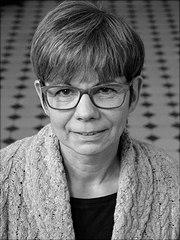
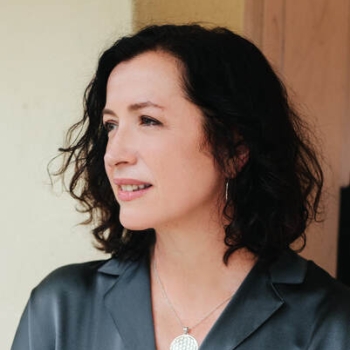
Bonnie Devet is a Professor of English at the College of Charleston in South Carolina and serves as the Director of the CofC Writing Lab. She teaches courses in grammar, technical writing, freshman composition, advanced composition, writing lab theory/practice, classical rhetoric, and composition pedagogy. Her work includes extensive conference presentations and publications on writing center consultancy training, grammar instruction, and technical communication. Education: Ph.D. in English (Composition concentration), University of South Carolina M.A. in English, University of Missouri - Columbia B.A. in English, University of South Carolina Devet’s research focuses on writing pedagogy and stylistic innovation. Her recent publications highlight cross-cultural writing center collaboration, advanced writing techniques, and the psychological dynamics of synchronous tutoring. She emphasizes practical applications of grammar and style in curriculum design. Devet received the Southeastern Writing Center Association Achievement Award (February 2019) and an Honorable Mention for Grammar Teacher of the Year (July 2019). Her article was nominated for Best American Essays by Hackwriters.com in June 2018. As Director of the CofC Writing Lab, she led the certification process to become the second writing lab in South Carolina to achieve regional recognition. Her office hours include in-person and Zoom appointments, reflecting her commitment to accessible academic support.
Prof. Dr. Kirsten Heinsohn is a distinguished historian specializing in German social and political history, with particular expertise in women's and gender history, the history of democracy, and Jewish history. She currently serves as the Acting Director of the Research Centre for Contemporary History in Hamburg (Forschungsstelle für Zeitgeschichte in Hamburg), a position she has held since July 2025, having previously been Deputy Director since December 2015. Affiliated with the University of Hamburg's Faculty of Humanities, Department of History, Heinsohn has made significant contributions to the understanding of German political culture across multiple historical periods. Education Doctorate from the University of Hamburg (1995) in Modern and Medieval History Habilitation at the University of Hamburg (2006) in Modern History Studies at the University of Hamburg (1982-1988) in Modern and Medieval History, Economics, and Political Science Research Interests Prof. Heinsohn's research spans multiple interconnected fields within German historical studies. Her work on social and political history of the 19th and 20th centuries examines the evolution of democratic institutions and political culture in Germany, with particular attention to gender dimensions. She has made significant contributions to women's and gender history, exploring the intersection of gender with political movements, party politics, and social change. Her research on Hamburg's history provides valuable local context to broader national narratives, while her work on Jewish history, particularly through biographical studies of figures like Eva Gabriele Reichmann, offers important perspectives on German-Jewish relations and intellectual history. Heinsohn's scholarly approach integrates gender analysis with traditional political history, creating a more nuanced understanding of historical developments. Her recent work has increasingly focused on contemporary history, examining the persistence of historical patterns in modern political movements, including studies of far-right politics in contemporary Germany. This interdisciplinary approach has positioned her as a leading voice in contemporary German historiography. Publication Trends Prof. Heinsohn's recent publications reveal a consistent focus on gender history, political culture, and contemporary German history. Her work demonstrates a growing interest in connecting historical patterns with contemporary issues, particularly in examining the historical roots of current political movements. A significant portion of her recent scholarship focuses on women's political participation throughout German history, from the early women's movement to the Weimar Republic and beyond. Her research on Jewish intellectuals and the history of antisemitism has gained particular relevance in contemporary discourse. Heinsohn's editorial work, including publications on Eva Gabriele Reichmann and collaborative projects on exile and remigration, shows her commitment to preserving and analyzing important historical narratives. Scientific Awards Frauenförderpreis der Universität Hamburg (2002): Awarded for her engagement in women's and gender research Academic Leadership and Service Prof. Heinsohn has held numerous leadership positions in academic and public history institutions. As Deputy Director and now Acting Director of the Research Centre for Contemporary History in Hamburg, she has shaped the institution's research agenda and public outreach. She serves on the scientific advisory board of the Digital German Women's Archive (since 2024), the Willy Brandt Foundation (since 2018), and the Neuengamme Concentration Camp Memorial (since 2017), where she became deputy chair in 2020. Her editorial roles include co-editing the Archiv für Sozialgeschichte since 2018 and contributing to digital editions of key documents on German-Jewish history. Research Environment Prof. Heinsohn works within the Research Centre for Contemporary History in Hamburg (Forschungsstelle für Zeitgeschichte in Hamburg), an institution dedicated to researching and documenting Hamburg's recent history. The center maintains close connections with the University of Hamburg's Faculty of Humanities and Department of History. Heinsohn collaborates with multiple research teams, including those led by Prof. Dr. Birthe Kundrus, Prof. Dr. Thomas Großbölting, and Prof. Dr. Ulf Schmidt. Her current major research projects include biographical work on antisemitism researcher Eva Gabriele Reichmann and studies of Hamburg's foreign policy regarding Israel and Arab regions.
Patricia Anthony serves as Associate Professor at Lincoln University's School of Landscape Architecture in New Zealand, where she holds an ORCID identifier 0000-0002-4991-3340. Her academic appointments include Faculty Postgraduate Chair for the Faculty of Environment, Society and Design (2021-2024) and current affiliation with the Centre for Geospatial and Computing Technologies (2025-present). Previously, she served as Head of Department (2016-2017), Department Postgraduate Coordinator (2014-2016), and SHIFT Coordinator (2017-2020). Her educational background comprises a Ph.D. from the University of Southampton, United Kingdom; an M.Sc. from Birkbeck, University of London, United Kingdom; and a BSc (High Honors) from the State University of New York, United States. She is proficient in Malay language, with reading, writing, and speaking capabilities. Dr. Anthony's research centers on agent and multi-agent systems, utilizing artificial intelligence techniques including machine learning, evolutionary computation, and text processing as decision-making strategies for agents. She is recognized as a leading researcher applying intelligent agents across diverse domains such as online auctions, agriculture, education, and social media analysis. Her specialized work in sentiment analysis and emotion identification enables agents to detect emotional states in textual communications, with recent applications in earthquake tweet analysis. Her publication record demonstrates consistent scholarly output with over 130 publications, showing particular strength in applying multi-agent systems to practical challenges. Recent work reveals three major research streams: trust and reputation management in IoT environments (accounting for approximately 30% of recent publications), agricultural technology applications including mastitis detection and water resource management (approximately 40%), and social media analysis focusing on elderly technology adoption and cyber aggression classification (approximately 30%). Adjunct Professor, Hubei University of Technology, Wuhan, China Program Committee/Senior Program Committee member for Pacific Rim International Conferences on Artificial Intelligence (PRICAI) 2016, 2018, 2019 Co-chair for International Carnahan Conference on Security Technology (ICCST) 2014, 2016, 2018, 2020 Member of Institute of Electrical and Electronics Engineers (IEEE) Reviewer for Engineering Applications of Artificial Intelligence, Malaysian Journal of Computer Science, and Adaptive Behaviour Dr. Anthony has supervised numerous postgraduate students across multiple research areas related to multi-agent systems, with completed projects spanning cyber aggression classification, agricultural technology, IoT security, and elderly technology adoption. She serves as an examiner for advanced computing courses including Advanced Database (COMP643), Advanced Programming (COMP642), and Studio Project (COMP639), demonstrating her integration within the university's computing curriculum despite her Landscape Architecture appointment. Her research aligns with Sustainable Development Goal 11 (Sustainable Cities and Communities), reflecting her commitment to applying computational techniques to address real-world challenges in urban and community contexts. She actively collaborates across disciplines through the Centre for Geospatial and Computing Technologies, bridging computational methods with landscape architecture applications.
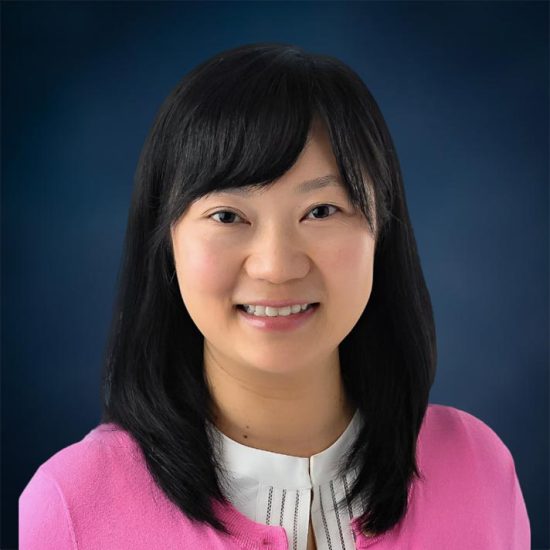
Dr. Mimi Li serves as Associate Professor of Applied Linguistics/TESOL in the Department of Literature and Languages within the College of Humanities, Social Sciences and Arts at East Texas A&M University. With over twenty years of teaching experience across multiple institutions including Georgia Southern University and Marshall University, she has established herself as an award-winning educator specializing in linguistics and TESOL instruction. Her academic journey reflects deep commitment to fostering critical inquiry and academic growth in students through research-infused pedagogy. Her educational foundation includes: Ph.D. in Second Language Acquisition/Instructional Technology from the University of South Florida (2014) M.A. in Foreign Linguistics and Applied Linguistics from Sichuan University, China (2008) B.A. in English Language and Literature from Sichuan Normal University, China (2002) Dr. Li's research program centers on second language writing, computer-assisted language learning, and language teacher education, with particular focus on collaborative writing in digital environments and multimodal composition. Her work examines how dynamic interactions in wiki-based platforms shape L2 writing development and how multimodal projects enhance linguistic knowledge representation. This research bridges theoretical frameworks with practical classroom applications in TESOL contexts. Analysis of her 2013-2023 publications reveals consistent innovation in digital writing pedagogy, with increasing emphasis on multimodal composition and collaborative learning structures. Her work demonstrates sophisticated integration of technology in L2 writing instruction while maintaining strong connections to foundational SLA principles, particularly evident in her 2022 Palgrave Macmillan monograph. Her recognition includes: Faculty Senate Research – Ceaseless Industry Award (2023) Paul W. Barrus Distinguished Faculty Award for Teaching (2022) Dr. Augustine “Chuck” Arize Junior Faculty Award (2021) “Best Article” Award from Journal of Second Language Writing (2017) Online Course Development Award from Georgia Southern University (2016) Dr. Li actively mentors master's and doctoral students while maintaining significant professional service through editorial roles as Associate Editor of Journal of Second Language Writing and Forum Editor of Language Learning & Technology. Her leadership extends to TESOL's Applied Linguistics Interest Section and AAAL conference coordination, demonstrating commitment to advancing the field. She contributes to the Applied Linguistics Lab and AI Lab within her department, focusing on technology-enhanced language learning solutions.
John Kim is an Associate Professor at Emory University's Goizueta Business School, specializing in Organization & Management. He teaches 500+ business school students annually across BBA, MBA, and Executive Education programs, focusing on strategy, consulting, and healthcare. His work bridges academic theory with practical tools for sustainable organizational change. Education: MBA in Strategy and Management Consulting from Emory University; BA in Economics from the University of Southern California. His research interests center on consulting fundamentals , including client decision-making processes, project implementation frameworks, and professional development in management consulting. He emphasizes actionable methodologies over jargon, prioritizing clarity for diverse audiences. Recent publications highlight his book Consulting Fundamentals , which distills decades of consulting practice into accessible tools. The work addresses topics like client interviewing techniques, proposal writing, and consulting design principles, reflecting his expertise in translating executive challenges into structured educational content. Kim actively engages with students through Coursera's Management Consulting specialization and maintains the #1 Google-ranked consulting blog at ConsultantsMind.com .
Dr. Julie Maslowsky is an Associate Professor of Health Behavior and Clinical Sciences at the University of Michigan School of Nursing and Associate Professor of Health Behavior and Health Equity at the University of Michigan School of Public Health. She is also a Research Associate Professor at the UM Institute for Social Research. Her work focuses on adolescent health with a particular emphasis on sexual and reproductive health including contraception and abortion. Dr. Maslowsky's research integrates adolescent developmental science with population and reproductive health to inform developmentally appropriate policies and practices. She is a team scientist, builder, and interdisciplinary scholar whose work has been funded by multiple institutes of the NIH. She founded Youth Reproductive Equity, the nation's leading research collaborative focused on adolescent and young adult sexual and reproductive health post-Dobbs v. Jackson. Her research interests span adolescent development and health, sexual and reproductive health, population health, health policy, and health equity. Dr. Maslowsky has received notable awards including the Outstanding Adolescent Health Initiative from the University of Michigan Adolescent Health Initiative, being named a Public Voices Fellow by The Op-Ed Project, and receiving the Compassion in Action Award presented by His Holiness the Dalai Lama. Dr. Maslowsky is currently leading several major research projects: Creating a state-level policy data dashboard to facilitate research on reproductive health (NICHD R01HD115716, PI, 9/16/2024-5/31/2029) Development of a digital decision support tool to facilitate developmentally appropriate adolescent contraceptive counseling in primary care (NICHD R21HD107460, PI, 9/12/2022-8/31/2024) Research roadmap on policy-ready research for youth abortion access (William T. Grant Foundation, PI, 1/1/2023-12/31/2023) Her publications demonstrate strong focus on adolescent perspectives on contraception post-Dobbs, the impact of abortion restrictions on minors, and the role of developmental science in reproductive health policy. Her work appears in high-impact journals including JAMA, Health Affairs, Pediatrics, and JAMA Pediatrics. Dr. Maslowsky serves on multiple professional organizations: Co-Director of Social Science and Medicine at the Center for History, Humanities, Arts, Social Sciences, and Ethics in Medicine, University of Michigan Medical School (2025-present) Affiliate, Institute for Health Policy and Innovation, University of Michigan (2024-present) Affiliate, Institute for Research on Women and Gender, University of Michigan (2024-present) Society of Family Planning (Chair of Adolescent Sexual and Reproductive Health Special Interest Group, 2021-2025) As an educator, Dr. Maslowsky teaches courses on social determinants of health, intervention development, implementation science, and grant writing. She actively mentors students and is currently accepting new PhD students. Her media appearances in outlets like The Washington Post, NPR, and The Conversation demonstrate her commitment to translating research into public discourse on adolescent sexual and reproductive health.
Elizabeth B Moje serves as Dean of the Marsal Family School of Education and Professor of Education at the University of Michigan, while also holding a Faculty Associate position at the Research Center for Group Dynamics, Institute for Social Research. Her dual leadership roles bridge academic administration with cutting-edge social science research. Moje's research program investigates the complex interplay between youth literacy, cultural identity, and adolescent development, particularly among marginalized populations in urban secondary schools. She examines how literacy practices function as essential tools for disciplinary learning across subject areas, with strong emphasis on sociocultural contexts and equity implications. Her work consistently connects theoretical frameworks to practical classroom applications. Analysis of Moje's publication history reveals a sustained focus on disciplinary literacy as a cross-cutting theme, with increasing attention to multimodal representations in science education and professional literacy practices. Her scholarship demonstrates methodological diversity spanning ethnography, experimental design, and discourse analysis, consistently prioritizing the social dimensions of knowledge construction in adolescent learning. Moje's scholarly recognition includes: George Herbert Mead Collegiate Professor Arthur F. Thurnau Professor Current research initiatives demonstrate her commitment to translating scholarship into practice through three major funded projects: Making 'Makin' It Possible' (William T. Grant Foundation), Developing Scientific Literacy Through Innovative Textual Tools (National Science Foundation), and Study of Social and Cultural Influences on Adolescent Development and Motivation (NICHD/OSERS/OVAE). These projects address critical gaps in understanding how cultural contexts shape educational trajectories. Through her affiliation with the Research Center for Group Dynamics, Moje contributes to interdisciplinary investigations of social processes, often collaborating with community partners to examine educational equity in urban settings.
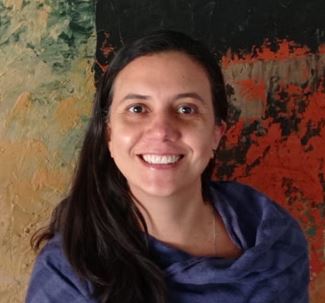
Julieta Briseño Roa is a Professor at the Center for Research and Higher Education in Social Anthropology (CIESAS) in Mexico City, specializing in Indigenous education and anthropology. She holds a PhD in Educational Research from CINVESTAV and has taught at UNAM and UABJO in Oaxaca. An active member of the College of Ethnologists and Social Anthropologists (CEAS) and the American Anthropology Association (AAA), she directs her research toward understanding educational realities in Indigenous and rural contexts through ethnographic methods. Her academic training includes a PhD in Educational Research (CINVESTAV), Master's in Social Anthropology (CIESAS), and Bachelor's in Psychology (UNAM), with postdoctoral work at UPN Ajusco and doctoral research at UFSC Brazil. She maintains SNI Level I recognition. Briseño Roa's research centers on territory-based pedagogy in Indigenous education, examining how school practices in multilingual contexts intersect with community life, violence, and care. Her work particularly emphasizes feminist pedagogies and Indigenous language revitalization since the pandemic. She has documented 15 major publications between 2018-2025 focusing on Indigenous education models that challenge hegemonic knowledge systems. Her scientific recognitions include the Concha Delgado Fellowship (2020) and Paulo Freire Award (2016). She serves as advisor to numerous graduate students and collaborates extensively with Indigenous communities in Oaxaca through the Secundarias Comunitarias Indígenas network, developing community-based educational models that prioritize territorial knowledge and linguistic diversity. Concha Delgado Fellowship from AAA Council of Anthropology and Education (2020) Paulo Freire Award for best doctoral research article from LASA (2016) SNI Level I Recognition Her current project examines territory-school relationships through graphic materials in Oaxacan community education. She leads research networks connecting Indigenous educators across Latin America while developing pedagogical approaches that integrate community knowledge systems with formal education structures. Her work with the Secundarias Comunitarias Indígenas demonstrates how community participation and Indigenous language use create sustainable educational alternatives.
Dr Simon Wilson serves as a Senior Lecturer at Canterbury Christ Church University within the Faculty of Arts, Humanities & Education, having joined in 2013 and promoted in 2016. His leadership roles include Course Director for the MA Myth, Cosmology and the Sacred (2019-2021) and module Lead for BA Theology, MA Chaplaincy and Pastoral Care, and BSc Human Development programs. His academic foundation includes a BA (Hons) and MA from the University of Cambridge, culminating in a 1994 PhD from the University of Hull. Prior to academia, he operated a language-solutions agency in Munich while teaching Business English at BMW. Wilson's research centers on spirituality and landscape, Eastern Orthodox theology, and true sustainability, with publications and conference presentations spanning these interconnected domains. His work bridges environmental philosophy, theological ethics, and pedagogical approaches to spiritual development. He has supervised multiple PhD completions on topics including heart-centered conflict resolution, mediumship in academia, and George Meredith's writings, currently mentoring two doctoral researchers. Professional recognition includes: Election to the Institute of Orthodox Christian Studies, Cambridge (2016)
Chyllis Scott is a Professor in the Department of Teaching and Learning within the College of Education at the University of Nevada, Las Vegas (UNLV). Her research focuses on literacy education, particularly content-area and disciplinary literacy, academic writing, and mentoring practices for preservice and inservice teachers. Holding a Ph.D. in Curriculum and Instruction with an emphasis in Literacy Education from Texas A&M University, she examines how teacher knowledge and practices in literacy instruction can be enhanced to foster equitable educational environments. Educational Background: Ph.D. in Curriculum and Instruction (Literacy Education emphasis), Texas A&M University Dr. Scott's research centers on literacy education with specific expertise in: Adolescent and content-area literacy instruction Teacher education and knowledge development Mentoring practices in higher education Her work investigates how literacy strategies can be integrated across disciplines to promote social justice, emphasizing reflective practice and the transformation of teacher-student relationships through innovative approaches like digital writing and virtual literature circles. Analysis of her recent publications (2019-2024) reveals consistent themes in interdisciplinary literacy instruction, adaptive mentoring during crises like the pandemic, and critical examinations of rigor in teacher education. Her scholarship consistently connects literacy to equity issues, advocating for student-centered pedagogies that address systemic barriers while exploring emerging challenges in digital learning environments. Scientific Awards No awards listed in available information Dr. Scott's mentoring research indicates active engagement in teacher development, though specific grant details are unavailable. Her work on reflection, field experiences, and co-teaching models informs professional development initiatives aimed at improving teacher retention and instructional effectiveness. She contributes to academic discourse through studies on academic writing communities and digital pedagogy. Laboratory and Team Affiliations No specific research laboratories or collaborative teams documented beyond departmental affiliation
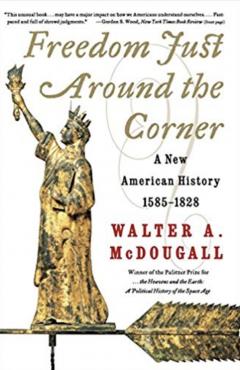
Walter A. McDougall is a Professor of History and Alloy-Ansin Professor of International Relations at the University of Pennsylvania’s School of Arts & Sciences. He holds a PhD from the University of Chicago (1974), an MA from the same institution, and a BA from Amherst College. His research focuses on U.S., European, and Pacific Rim diplomatic history, with particular emphasis on the interplay between technology, politics, and foreign policy. McDougall’s major works include a Pulitzer Prize-winning analysis of the Space Age ( ...the Heavens and the Earth , 1985), studies of American civil religion and foreign policy ( The Tragedy of U.S. Foreign Policy , 2016), and a trilogy on American history from colonial times to the Cold War. His writing blends rigorous scholarship with accessible narrative, often challenging conventional historical perspectives. He is Director of Research and Co-Director of the Center for the Study of America and the West at the Foreign Policy Research Institute. Though no longer accepting new PhD advisees, McDougall teaches courses on diplomatic history, international relations, and Western civilization. His office hours are held at College Hall 317D and Williams Hall 637. Awards include the Pulitzer Prize for History and recognition for his contributions to interdisciplinary historical analysis. His work frequently intersects with contemporary policy debates, emphasizing historical context in understanding modern geopolitical challenges.
Erin Friess is Professor and Director of Graduate Studies in Technical Communication at University of North Texas. Education includes Ph.D. in Rhetoric and M.A. in Professional Writing from Carnegie Mellon University, and B.A. from Trinity University. Research examines agile project management (particularly Scrum) implementation in technical communication, usability/user experience methodologies, and disciplinary patterns in technical communication scholarship. Developed influential frameworks for persona applications in design processes. Award-winning publications analyze content trends in technical communication literature, persona utilization in heuristic evaluation, and decision-making patterns in design workflows. Recent work explores Scrum methodologies in educational contexts. Teaches advanced courses in usability testing, document design, and project management. Recognized with field's top research awards from IEEE, ACM, and STC.
Lars Magne Lundheim is a Professor at the Department of Electronic Systems at Norwegian University of Science and Technology (NTNU). He holds an MSc and PhD in electrical engineering from NTNU. His career includes roles as Associate Professor (2002–2010), Research Scientist at SINTEF, and part-time academic positions. He belongs to the Signal Processing Group and focuses on signal processing for radar systems, power consumption optimization, and engineering education. His research spans technical domains like multicarrier communication systems and pedagogical innovations such as project-based learning and curriculum design. Notable contributions include work on sustainability integration in STEM education and competency development through active learning strategies. Lundheim is a Senior Member of IEEE and has reviewed for major journals/conferences including IEEE Transactions on Signal Processing. Recent publications emphasize educational frameworks linking mathematics with engineering practice, while earlier works address technical challenges in radar distortion correction and power-efficient multiplier design. He has contributed to 16 PhD examination committees and teaches courses like TTT4270 (Electronic System Design) and TTT4260 (Electronic System Design and Analysis). Lundheim’s outreach includes presenting at events like the Læringsfestivalen and collaborating on national initiatives like the 'Fremtidens teknologistudier' educational strategy report. His interdisciplinary work bridges technical innovation with pedagogical excellence in electrical engineering education.
Amalia S. Levi is a Researcher at the Bonn Center for Dependency and Slavery Studies (BCDSS) within the Rheinische Friedrich-Wilhelms-Universität Bonn. Her work focuses on archival studies, digital humanities, and colonial history with a particular emphasis on Jewish communities and slavery studies. Supervised by Prof. Dr. Michael Zeuske, Prof. Dr. Christian De Vito, and Prof. Dr. Jonathan Schorsch, her research explores archival silences, digitization ethics, and the intersection of technology with historical documentation. Her educational background and specific academic qualifications are not explicitly detailed in the provided materials, though her extensive publication record indicates advanced specialization in digital archiving methodologies and postcolonial historiography. Levi’s research interests coalesce around decolonizing archival practices, leveraging digital tools to recover marginalized narratives, and analyzing colonial-era records to address historical gaps. Her work bridges theoretical frameworks from archival science, Jewish studies, and slavery studies to propose innovative approaches for preserving underrepresented histories. Her most recent publications (2022–2025) highlight trends toward interrogating archival silences, digitizing colonial newspapers, and developing pedagogical strategies for engaging students with digital archives. She has contributed book reviews on pivotal works in Jewish archival history, further establishing her as a critical voice in the field. No scientific awards or grants are explicitly listed in the provided information. Her advising role remains undefined as no students are listed, though her supervisory relationships with senior faculty suggest collaborative research networks. Levi is affiliated with the BCDSS, a transdisciplinary research hub exploring dependency and slavery systems, and maintains active involvement in digital humanities initiatives. Her work often intersects with global projects like the Barbados Mercury Gazette digitization effort and Jewish archive cataloging in German regional archives.
Susan Murray is a Professor of Media, Culture, and Communication at New York University's Steinhardt School. Her research focuses on television's role in post-war technology, culture, and industry, with particular attention to color television history, medical education through broadcast media, and surveillance technologies. She is currently writing a book about closed-circuit television's development and its impact on consumer society and digital surveillance. Her work has been supported by major grants including the National Endowment for the Humanities, the American Council of Learned Societies, and the NYU Center for the Humanities. Key publications include Bright Signals: A History of Color Television (2018) and Reality TV: Remaking Television Culture (2004). Murray has held visiting fellowships and lectures internationally on media history and technology. Affiliations: NYU Steinhardt School, NYU Center for the Humanities Research Interests: Media technology, broadcast history, medical television, surveillance infrastructure Her recent research explores how closed-circuit television systems served as foundational infrastructure for automation across medicine, education, and the military, linking mid-20th century innovations to contemporary digital surveillance practices. Awards: 2021 Guggenheim Fellowship 2019 Katherine Singer Kovacs Book Award (Society for Cinema and Media Studies) 2019 Michael Nelson Book Prize (International Association for Media and History) Teaching: Courses include Media Studies Methodologies, Mediating the Real, and Amateur Media. She emphasizes interdisciplinary approaches linking technological developments with cultural and social contexts.