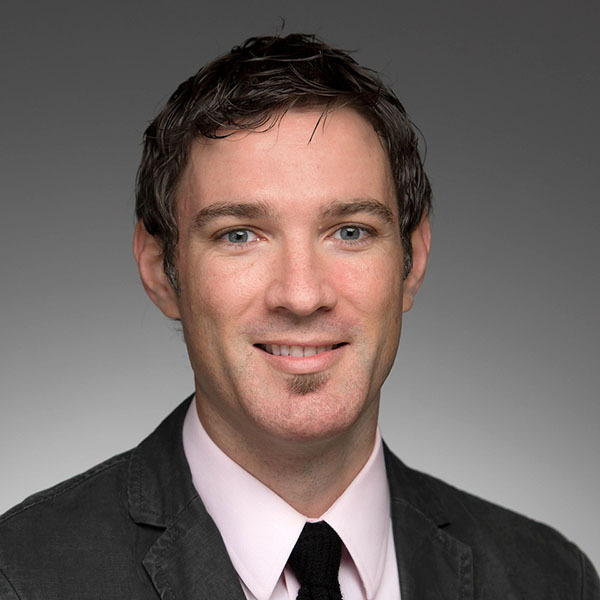
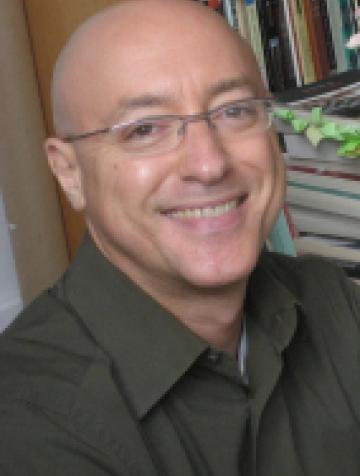
Adam Hollowell is an Adjunct Assistant Professor in the Program in Education at Duke University, where he also serves as Senior Research Associate at the Samuel DuBois Cook Center on Social Equity and Director of the Inequality Studies Minor. His teaching spans ethics, inequality studies, and history across Duke’s Kenan Institute for Ethics, Sanford School of Public Policy, and Department of History. Hollowell holds a Ph.D. from the University of Edinburgh (2009). His research focuses on inequality, higher education, public policy, and ethics, with notable work on pandemic impacts, telemedicine in education, and reproductive health access during crises. In Inequality Studies , Hollowell emphasizes understanding policies to drive social change, as highlighted in recent media coverage. His publications explore topics like student behavior shifts during the pandemic, telemedicine adoption in universities, and James Baldwin’s ethical challenges. He is a finalist for the Judith Deckers Prize (2024). Professionally, Hollowell leads projects such as Bass Connections on college contraception access and Story+ initiatives. His work bridges academia and public engagement, addressing systemic inequities through interdisciplinary approaches.
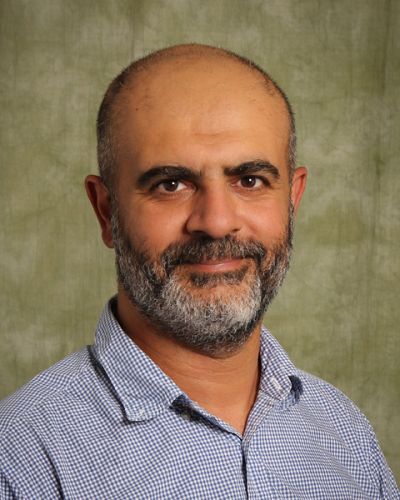
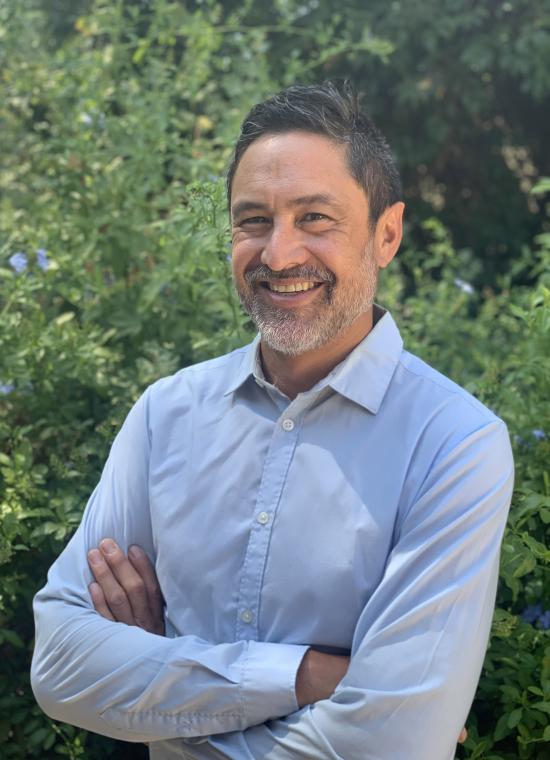
Matthew Thomas Payne is an Associate Professor in the Department of Film, Television, and Theatre at the University of Notre Dame. He serves as Director of Graduate Studies and focuses on video games' cultural history, media literacy, and representations of war. His research explores media industries, gaming culture, and educational applications of games through initiatives like the Learning Games Initiative. Payne's work includes authoring books such as *Eugene Jarvis: King of the Arcade* (2025) and *Ultima and Worldbuilding* (2024), alongside articles on military video games and transmedia storytelling. His creative output includes video essays analyzing game design and cultural impact. Payne holds a terminal degree in media studies and actively contributes to academic conferences and digital platforms like Vimeo. Education: Ph.D. in Media Studies (assumed based on faculty role). Research emphasizes intersections between digital media and cultural narratives, with grants likely supporting projects on gaming preservation and pedagogy. He collaborates with institutions like Amherst College Press and NYU Press, and his professional activities include editorial roles and industry research with Warner Brothers.
University of California, Los AngelesUnited States
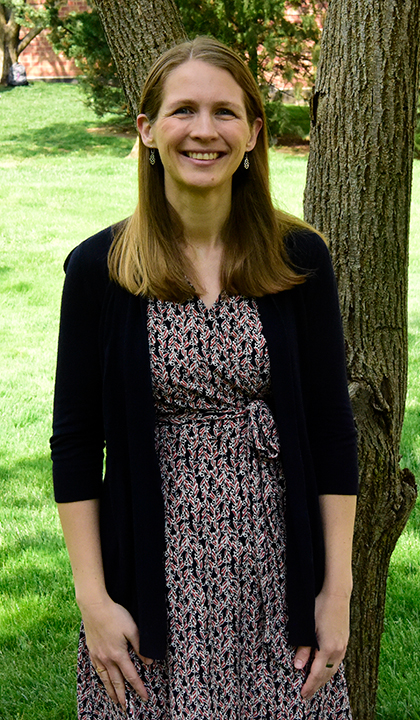
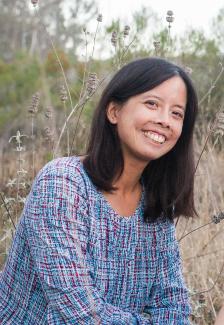
Aamir R. Mufti serves as Professor of Comparative Literature at the University of California, Los Angeles, with affiliations at the Asia Pacific Center. His scholarly work bridges literary studies, anthropology, and area studies focused on South Asia, the Middle East, North Africa, and Jewish diaspora communities. His research centers on: Global colonialism and decolonization processes Postcolonial reconfigurations of Western humanities concepts (secular, minor, cosmopolitan) Migrant/refugee experiences in European unification projects Palestine as historical experience of homeland loss Critical examinations of world literature frameworks Analysis of his publications reveals consistent engagement with suppressed narratives in colonial and postcolonial contexts, particularly examining how enforced immobility contradicts world literature's mobility discourse and how minority experiences in Europe were disseminated globally through colonial nation-state formations. His work systematically interrogates Orientalism's legacy in contemporary humanistic practice. Mufti maintains a long-standing editorial role with the journal boundary 2 , where he has curated special collections advancing critical postcolonial discourse. His current research trajectory emphasizes migrant subjectivity within European political crises and reimagining humanities frameworks from colonized perspectives. Academic foundations include doctoral training under Edward Said at Columbia University, with formative influences from South Asian literary traditions (notably Faiz Ahmed Faiz) and European critical theory (Heinrich Heine). His institutional work positions Comparative Literature as a discipline uniquely equipped to address contemporary global political rightward shifts through interdisciplinary humanistic analysis.
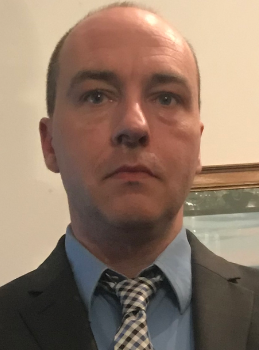
Amir Ahmadi Arian is an Iranian-American writer and Assistant Professor in the Department of English, General Literature and Rhetoric at Binghamton University (College of Arts and Sciences). He holds a PhD in Comparative Literature from the University of Queensland, Australia, an MFA in Creative Writing from New York University, and a BSc in Metallurgy Engineering from the University of Tehran, Iran. His research and teaching focus on creative writing, world literature, postcolonial novels, and Persian poetry. He has published two novels, a story collection, and a nonfiction book in Persian, and translated works by E.L. Doctorow, Paul Auster, P.D. James, and Cormac McCarthy into Persian. His English-language publications include fiction in Harper’s , The Paris Review , The New York Times , and other prestigious venues. His debut English novel Then the Fish Swallowed Him (HarperVia/HarperCollins, 2020) received critical acclaim from The New Yorker , Publishers Weekly , and Kirkus Reviews for its political themes and interior portrayal of oppression.
Rutgers, The State University of New JerseyUnited States
Emily C. Bartels is a Professor of English at Rutgers University specializing in early modern literature and culture, with particular expertise in Shakespearean and non-Shakespearean drama. She has served as director, and is now dean, of the Middlebury Bread Loaf School of English since 2010, a summer Master's program designed for K-12 English teachers. Professor Bartels received her BA from Yale University and both her MA and PhD from Harvard University. Her academic background positioned her to become a leading scholar in Renaissance literature studies. Her research examines questions of race, cross-cultural relations, gender, genre, and performance in early modern English drama. Professor Bartels is renowned for her groundbreaking work on Shakespeare's Othello and Christopher Marlowe's plays, analyzing how these texts represent cultural and racial difference. She has significantly contributed to postcolonial approaches to early modern literature, revealing how English drama engaged with global encounters and representations of the 'other' during the Renaissance period. Her scholarship demonstrates how early modern writers both reflected and shaped contemporary attitudes toward difference, particularly regarding race, religion, and national identity. Professor Bartels' publications reveal a consistent scholarly trajectory examining racial and cultural representation in early modern England. Her work spans from detailed analyses of specific plays like Hamlet and Julius Caesar to broader studies of how England conceptualized Africa and non-Christian cultures during the Renaissance. A recurring theme throughout her career is the analysis of how early English drama both reflected and shaped contemporary attitudes toward difference, particularly regarding race, religion, and national identity. Roma Gill Prize for Best Work on Christopher Marlowe (1993-94) for Spectacles of Strangeness: Imperialism, Alienation, and Marlowe Board of Trustees Fellowship for Scholarly Excellence (1993) School of Arts and Sciences Award for Distinguished Contributors to Undergraduate Education (2008 & 1993) Warren I. Susman Award for Excellence in Teaching (2008) Solmsen Fellowship at the Institute of Research in the Humanities, University of Wisconsin (1995) Black Atlantic Project fellowship from the Rutgers Center for Historical Analysis Professor Bartels has demonstrated exceptional commitment to both research and teaching excellence. She has developed innovative courses exploring the intersections of literature, history, and cultural studies, including undergraduate seminars on Othello and Hamlet, and graduate courses on Shakespeare Page and Stage. Her administrative role as dean of the Middlebury Bread Loaf School of English demonstrates her commitment to education beyond traditional university settings. Her fellowships from prestigious institutions indicate successful grant acquisition throughout her distinguished career. Professor Bartels has been actively involved with the Shakespeare Association of America and has collaborated with international scholars like Emma Smith of the University of Oxford. Her work has positioned her at the forefront of conversations about early modern literature, race studies, and postcolonial approaches to Renaissance drama, influencing how scholars understand the intersections of literature, race, and cultural identity in the early modern period.
Harsha Ram is an Associate Professor in the Department of Comparative Literature at the University of California, Berkeley. His research focuses on Russian and European Enlightenment, modernist literature, and the cultural histories of the Caucasus region. He holds dual B.A. Honors degrees in Italian and Russian from the University of Sydney and University of New South Wales, and a Ph.D. in Comparative Literature from Yale University. His work bridges literary theory, post-colonial studies, and geopoetics, with a particular emphasis on Georgia's literary modernism and its intersections with Russian imperial culture. Key themes include spatial theory, peripheral modernisms, and the transnational dimensions of cultural production. Recent work examines the role of ritual feasts in Georgian national identity and the geopoetics of Eurasian avant-garde movements. Ram has published extensively on figures like Velimir Khlebnikov and Boris Pasternak, exploring their engagement with imperial legacies and revolutionary aesthetics. His book The Imperial Sublime: A Russian Poetics of Empire (2003) remains a seminal study of Russian imperial poetics. Current projects include studies on Georgian literary encounters with Russian culture and the symbolic dimensions of Caucasus representations. His scholarship frequently appears in leading journals such as Modernism/Modernity , Slavic Review , and Ab Imperio . He has held visiting positions at institutions globally and actively participates in interdisciplinary dialogues between literary studies, history, and cultural geography.
Jiaxuan You is an Assistant Professor at the Siebel School of Computing and Data Science, University of Illinois at Urbana-Champaign, leading the U Lab focused on achieving Artificial General Intelligence (AGI) in digital environments. His research spans graph neural networks (GNNs), relational data, foundation models, and machine learning systems. PhD and MS in Computer Science from Stanford University (2021) Developed GraphGym and PyTorch Geometric (PyG) for graph learning Core member at Kumo AI (2021-2023) His research explores: Graph-enhanced LLMs: Integrating relational structures into foundation models AGI Development: Self-optimizing AI agents and tool utilization ML Systems: Scalable architectures and redundancy-free computation Interdisciplinary Applications: Financial networks, crop yield prediction, and metro systems Recent publications focus on temporal reasoning, multi-agent dynamics, and hybrid architectures for LLMs. He actively develops open-source tools like DBGYM and GraphRouter. Scientific recognition includes: JPMC PhD Fellowship Baidu Scholarship Best Student Paper at AAAI 2017 World Bank Big Data Innovation Challenge winner He mentors PhD and intern students, emphasizing machine learning systems expertise. His lab collaborates on AGI workshops (e.g., ICLR 2024) and industry projects.
Shanique Brown serves as Assistant Professor of Management at the Zicklin School of Business, City University of New York (CUNY), where she investigates cognitive processes impacting organizational team dynamics and decision-making. Her research bridges industrial-organizational psychology with practical applications in extreme environments. Her academic foundation includes: Ph.D. in Industrial-Organizational Psychology from DePaul University M.A. in Industrial-Organizational Psychology from Southern Illinois University, Edwardsville B.Sc. in Psychology from the University of the West Indies Dr. Brown's research centers on decision-making mechanisms and team cognition within organizational contexts, with specialized focus on extreme environments like space missions. She examines how cognitive styles, working memory, and team composition influence performance in isolated, confined, and high-stakes settings. Her work integrates psychological theory with actionable frameworks for optimizing team effectiveness across virtual and physical workspaces. Analysis of her publication history reveals evolving expertise in team science, particularly regarding virtual team leadership, polycultural organizations, and NASA-relevant analog research. Recent work emphasizes selection-optimization-compensation models for team performance and psychosocial factors in extreme environments, demonstrating consistent contribution to organizational psychology literature. Her scientific recognition includes: Editorial Fellowship from Group Dynamics (2022) Wayne State University Faculty Accessibility Fellowship (2022) Teaching Innovation Development Excellence Award (2020) Faculty Teaching Award (2020) University Research Grant (2019) Robert A. Daugherty Memorial Award (2011) Dr. Brown actively collaborates on NASA-funded research through the Human Research Program, developing crew composition models for long-duration space missions. She serves on Baruch College's PhD Admissions and Interdisciplinary Business Major committees while maintaining leadership roles in the Society of Industrial-Organizational Psychology, including Task Force Chair and Conference Committee positions. Her grant work focuses on translating team dynamics research into operational frameworks for extreme environments. She leads interdisciplinary collaborations with NASA researchers and international scholars on projects including virtual escape room studies for team performance assessment and CREWS (Crew Recommender for Effective Work in Space) development, demonstrating commitment to solving real-world team challenges in high-consequence settings.
Christina García, Ph.D., is an Associate Professor of Spanish at Saint Louis University's Department of Languages, Literatures, and Cultures, within the College of Arts and Sciences. She specializes in Phonetics, Phonology, Sociolinguistics, and Second Language Acquisition, with a focus on Ecuadorian Spanish. Dr. García teaches courses such as Spanish Phonetics & Phonology, Spanish for the Health Professions, and Spanish in the World. Education: Ph.D., The Ohio State University, 2015 M.A., The Ohio State University, 2011 B.A., The Ohio State University, 2009 Her research interests emphasize the application of phonological principles to language teaching and the sociolinguistic variation of Spanish. She is a member of the Professional Latino Action Network (PLAN), reflecting her community engagement. Awards: 2017 Saint Louis University Faculty Commitment to Experiential Learning Award No advising or grant details are explicitly mentioned. She is affiliated with Morrissey Hall, Saint Louis, MO.
David Arbesú is Professor of Spanish at the University of South Florida, serving as Head of the Spanish Section and Graduate Program Director for the MA in Spanish within the Department of World Languages. He has presented at over 70 national and international conferences on medieval and Golden Age Spanish literature. His research specializes in manuscript studies, codicology, and palaeography, with significant contributions to Golden Age textual scholarship and Florida colonial history. Arbesú has discovered key historical manuscripts including Pedro Menéndez de Avilés' conquest records and legal proceedings concerning colonial Florida, demonstrating interdisciplinary expertise in literary analysis and historical documentation. Recent publications (2018-2023) reveal sustained focus on critical editions of medieval Spanish texts like Sendebar and Libro de los gatos , alongside colonial Florida manuscripts. His work consistently bridges philological precision with historical context, producing authoritative editions that illuminate textual transmission and cultural frameworks of Iberian literature. Arbesú serves on the Editorial Board of Harvard UP’s Dumbarton Oaks’ Medieval Library Spanish Series and as Book Review Editor for La corónica: A Journal of Medieval Hispanic Languages, Literatures, and Cultures , maintaining active leadership in scholarly publication standards.
Max Cavitch is an Associate Professor of English at the University of Pennsylvania's School of Arts & Sciences, specializing in American literature, psychoanalytic studies, and cinema. He joined Penn in 1999 after earning his B.A. from Yale and Ph.D. from Rutgers. His research spans 19th- and 20th-century literature, African American studies, and interdisciplinary fields like animal studies and gender theory. Cavitch has authored influential works such as *American Elegy* (2007) and co-edited volumes on Whitman and early American studies. He directs Penn's Psychoanalytic Studies program and edits the blog *Psyche on Campus*, honored with the 2022 American Psychoanalytic Association's Excellence in Journalism Award. His teaching includes courses on psychoanalysis, autobiography, and American poetry. Cavitch has held fellowships from the Fulbright Foundation, Newcombe Foundation, and others. His recent projects explore world autobiography, psychoanalysis in academia, and the history of 'ashes' as a conceptual and material symbol. Award-winning scholar and educator, Cavitch's work bridges literary criticism with clinical theory, media studies, and transnational frameworks. He advises doctoral students in American literature and affiliated programs, maintaining active collaborations with institutions like the McNeil Center for Early American Studies and the Psychoanalytic Center of Philadelphia.
Christopher M. Chinn is a Professor of Classics at Pomona College since 2007, specializing in Augustan and Imperial Roman poetry. He teaches Latin and Greek languages alongside translation courses like Ancient Epic and Introduction to the Greeks and Romans . Research Focus: Roman poetry, ecocriticism, art-text relationships Key Contributions: Studies on Statius, Pliny, and intertextual analysis His work bridges visual art analysis with literary interpretation, particularly in Flavian-era texts. Recent publications address environmental themes in ancient Mediterranean literature and the evolution of ekphrastic techniques. Scientific Awards & Honors Jim Greenfield Dissertation Fellowship (University of Washington, 2001-2002) Downing-Pomona Exchange Fellow (2009) Pomona College Summer Research Grant (2011) His teaching includes advanced language courses and senior seminars on classical studies, reflecting his commitment to both pedagogy and research in ancient literature.
Timothy Hampton is a Professor of French and Comparative Literature at the University of California, Berkeley , and serves as Director of the Doreen B. Townsend Center for the Humanities . He was previously the Director of the Designated Emphasis in Renaissance and Early Modern Studies and co-chairs the Democracy, Free Speech, and Values study group. His research explores intersections of literature and politics , poetry and song , and the history of emotion and diplomacy in Renaissance and early modern periods. Recent projects include a 2022 France-Berkeley Fund grant on poetry translation and a Diebold Foundation grant for interdisciplinary cultural studies. Notable publications include Bob Dylan: How the Songs Work (2019) and Cheerfulness: A Literary and Cultural History (2022). Upcoming works address premodern colonialism and American education through memoir and cultural critique. His scholarship appears in MLN , Critical Inquiry , and public venues like Salon and Aeon/Psyche .
Martin Kern is the Joanna and Greg Zeluck ’84 P13 P18 Professor in Asian Studies at Princeton University. He specializes in ancient Chinese literature, philology, and textual studies, with a focus on poetry, ritual, and cultural memory. Kern co-edits T'oung Pao and directs the "International Center for the Study of Ancient Text Cultures" at Renmin University, Beijing. Education: Ph.D. in Sinology, Cologne University M.A. in Sinology, Cologne University His research spans early Chinese rhetoric, authorship debates, manuscript analysis, and the intersection of writing/orality. He has led Princeton's "Comparative Antiquity" initiative (2018–2022) and co-directs the Princeton-Venice Summer School in Classical Chinese. Recent publications include studies on the Classic of Poetry , Chuci , and Zuozhuan , emphasizing newly discovered manuscripts and their impact on understanding ancient Chinese textuality. His work often bridges philological rigor with comparative theoretical frameworks. Scientific Awards: Member of the American Philosophical Society President of the American Oriental Society (2023–2024) Kern's editorial roles include co-editing the monograph series Studies in the History of Chinese Texts and the Handbook of Oriental Studies: Section 4 China . He has held leadership positions in major academic initiatives on ancient China.
University of California , Santa Barbara (UCSB)United States
Alenda Y. Chang serves as an Assistant Professor in Film and Media Studies at the University of California, Santa Barbara. With a multidisciplinary background spanning biology, literature, and film, she integrates ecocritical theory with contemporary media analysis. Her scholarly work appears in journals including Interdisciplinary Studies in Literature and Environment , Qui Parle , and electronic book review , focusing on sustainable media practices and ecological frameworks for digital engagement. Her educational background includes: M.A. and Ph.D. in Rhetoric from the University of California, Berkeley M.A. in English Language and Literature from the University of Maryland Chang specializes in environmental media and game studies, developing theoretical frameworks for ecological game design. Her research examines how digital games model environmental systems and foster player engagement with climate change through concepts like "slow violence" and "rambunctious play." She advocates for sustainable design patterns that address gaming's carbon footprint while creating immersive ecological narratives. Analysis of her 15 most recent publications reveals a consistent trajectory from foundational ecological game theory (2013-2018) to current work on thermal contexts of play and sustainable infrastructure (2022-2024). Her scholarship increasingly bridges data-driven activism with critical game design, emphasizing multispecies entanglements and infrastructural play as tools for environmental awareness. As co-founder of Wireframe—a collaborative media studio at UCSB—Chang cultivates critical game design practices through initiatives like growinggames.net . The studio supports data-driven global media art, environmental activism, and experimental pedagogy, serving as a hub for translating ecological theory into tangible digital interventions that challenge anthropocentric perspectives in gaming.