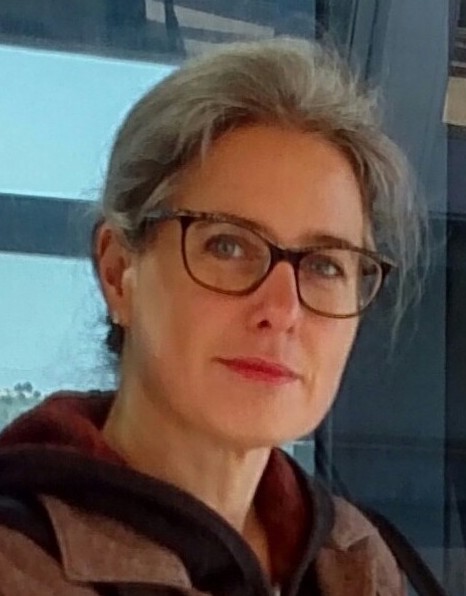
Adam Hollowell is an Adjunct Assistant Professor in the Program in Education at Duke University, where he also serves as Senior Research Associate at the Samuel DuBois Cook Center on Social Equity and Director of the Inequality Studies Minor. His teaching spans ethics, inequality studies, and history across Duke’s Kenan Institute for Ethics, Sanford School of Public Policy, and Department of History. Hollowell holds a Ph.D. from the University of Edinburgh (2009). His research focuses on inequality, higher education, public policy, and ethics, with notable work on pandemic impacts, telemedicine in education, and reproductive health access during crises. In Inequality Studies , Hollowell emphasizes understanding policies to drive social change, as highlighted in recent media coverage. His publications explore topics like student behavior shifts during the pandemic, telemedicine adoption in universities, and James Baldwin’s ethical challenges. He is a finalist for the Judith Deckers Prize (2024). Professionally, Hollowell leads projects such as Bass Connections on college contraception access and Story+ initiatives. His work bridges academia and public engagement, addressing systemic inequities through interdisciplinary approaches.
Rutgers, The State University of New JerseyUnited States
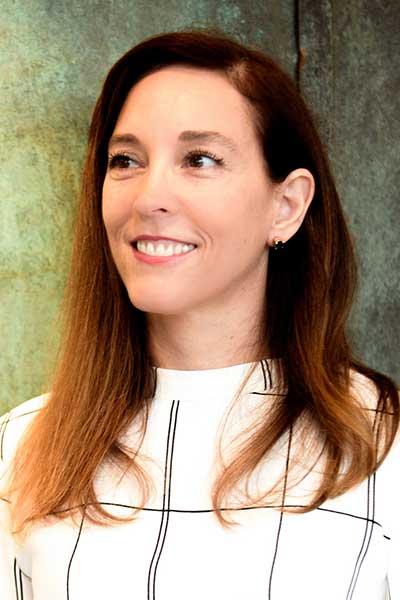
Emily C. Bartels is a Professor of English at Rutgers University specializing in early modern literature and culture, with particular expertise in Shakespearean and non-Shakespearean drama. She has served as director, and is now dean, of the Middlebury Bread Loaf School of English since 2010, a summer Master's program designed for K-12 English teachers. Professor Bartels received her BA from Yale University and both her MA and PhD from Harvard University. Her academic background positioned her to become a leading scholar in Renaissance literature studies. Her research examines questions of race, cross-cultural relations, gender, genre, and performance in early modern English drama. Professor Bartels is renowned for her groundbreaking work on Shakespeare's Othello and Christopher Marlowe's plays, analyzing how these texts represent cultural and racial difference. She has significantly contributed to postcolonial approaches to early modern literature, revealing how English drama engaged with global encounters and representations of the 'other' during the Renaissance period. Her scholarship demonstrates how early modern writers both reflected and shaped contemporary attitudes toward difference, particularly regarding race, religion, and national identity. Professor Bartels' publications reveal a consistent scholarly trajectory examining racial and cultural representation in early modern England. Her work spans from detailed analyses of specific plays like Hamlet and Julius Caesar to broader studies of how England conceptualized Africa and non-Christian cultures during the Renaissance. A recurring theme throughout her career is the analysis of how early English drama both reflected and shaped contemporary attitudes toward difference, particularly regarding race, religion, and national identity. Roma Gill Prize for Best Work on Christopher Marlowe (1993-94) for Spectacles of Strangeness: Imperialism, Alienation, and Marlowe Board of Trustees Fellowship for Scholarly Excellence (1993) School of Arts and Sciences Award for Distinguished Contributors to Undergraduate Education (2008 & 1993) Warren I. Susman Award for Excellence in Teaching (2008) Solmsen Fellowship at the Institute of Research in the Humanities, University of Wisconsin (1995) Black Atlantic Project fellowship from the Rutgers Center for Historical Analysis Professor Bartels has demonstrated exceptional commitment to both research and teaching excellence. She has developed innovative courses exploring the intersections of literature, history, and cultural studies, including undergraduate seminars on Othello and Hamlet, and graduate courses on Shakespeare Page and Stage. Her administrative role as dean of the Middlebury Bread Loaf School of English demonstrates her commitment to education beyond traditional university settings. Her fellowships from prestigious institutions indicate successful grant acquisition throughout her distinguished career. Professor Bartels has been actively involved with the Shakespeare Association of America and has collaborated with international scholars like Emma Smith of the University of Oxford. Her work has positioned her at the forefront of conversations about early modern literature, race studies, and postcolonial approaches to Renaissance drama, influencing how scholars understand the intersections of literature, race, and cultural identity in the early modern period.
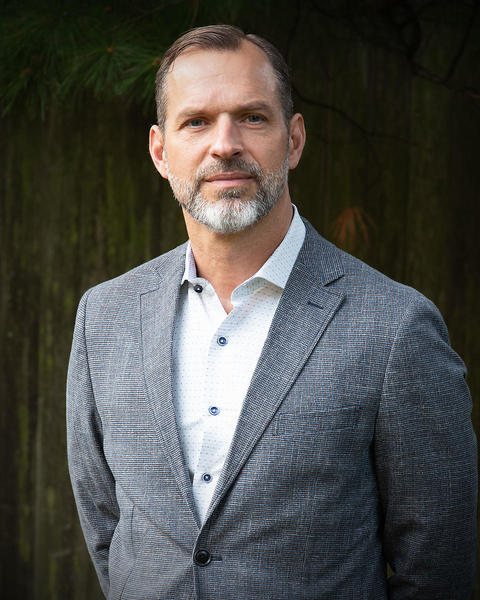
Matt King is an Associate Professor and Graduate Director in the Department of History at the University of South Florida (USF), within the College of Arts and Sciences. He specializes in medieval Mediterranean history, digital humanities, and the Crusades era, particularly focusing on Norman-Sicily and Zirid-Ifriqiya relations. King holds a Ph.D. from the University of Minnesota (2018) and teaches courses on medieval history, digital methods, and historical pedagogy. His research explores the interconnectedness of medieval Mediterranean polities, leveraging Arabic and Latin sources alongside digital tools like the Old World Drought Atlas. His first book, Dynasties Intertwined (2022), examines Zirid-Norman relations. He has co-authored translations of al-Idrisi’s geography and is currently researching the historical perception of goblins. Education: Ph.D., University of Minnesota (2018); M.A. (2014), B.A. (2012) in History and Latin. King’s teaching emphasizes active learning and digital humanities, including workshops for K-12 educators. He has received grants totaling over $40,000 for research and community projects. Awards include the Outstanding Graduate Instructor Award (UMN, 2018) and the Subvention Award (USF, 2022). His publications span peer-reviewed journals (e.g., Journal of North African Studies , The History Teacher ) and edited volumes, with a focus on medieval Mediterranean dynamics, digital pedagogy, and environmental history. King advises graduate students in medieval Mediterranean history, emphasizing research in Arabic, Latin, or Greek. He is involved in digital initiatives, including departmental websites and archaeological 3D modeling projects.
Timothy Hampton is a Professor of French and Comparative Literature at the University of California, Berkeley , and serves as Director of the Doreen B. Townsend Center for the Humanities . He was previously the Director of the Designated Emphasis in Renaissance and Early Modern Studies and co-chairs the Democracy, Free Speech, and Values study group. His research explores intersections of literature and politics , poetry and song , and the history of emotion and diplomacy in Renaissance and early modern periods. Recent projects include a 2022 France-Berkeley Fund grant on poetry translation and a Diebold Foundation grant for interdisciplinary cultural studies. Notable publications include Bob Dylan: How the Songs Work (2019) and Cheerfulness: A Literary and Cultural History (2022). Upcoming works address premodern colonialism and American education through memoir and cultural critique. His scholarship appears in MLN , Critical Inquiry , and public venues like Salon and Aeon/Psyche .
Xi Lian serves as the David C. Steinmetz Distinguished Professor of World Christianity at Duke Divinity School and is currently a Yang Visiting Scholar at Harvard Divinity School. His scholarly work examines the complex relationship between Christianity and Chinese society across historical periods. His educational background includes: BA and MA from Fujian Normal University PhD from the State University of New York at Albany Professor Lian's research focuses on: The development of indigenous Chinese Christian movements Religious transformation in post-Mao China Christian missionary history in China Religion's role in cultural and political change He has authored several groundbreaking books including The Conversion of Missionaries: Liberalism in American Protestant Missions in China, 1907-1932 (1997), Redeemed by Fire: The Rise of Popular Christianity in Modern China (2010), and Blood Letters: The Untold Story of Lin Zhao, a Martyr in Mao's China (2018). His current research investigates how homegrown Christianity has emerged as a transformative force in contemporary Chinese public life, offering new moral frameworks in the post-Mao era. Professor Lian's scholarship bridges historical, theological, and sociological perspectives to document how Christian beliefs have been adapted within Chinese cultural contexts, challenging Western-centric narratives about global Christianity.
University of California, Los AngelesUnited States
Sanjay Subrahmanyam is Distinguished Professor of History and Irving & Jean Stone Endowed Chair in Social Sciences at UCLA's Department of History. A globally recognized historian of the early modern period (15th-18th centuries), he previously held prestigious positions at the Collège de France (2013-2021), University of Oxford (2002-2004), and Ecole des Hautes Etudes en Sciences Sociales in Paris (1995-2002). He founded UCLA's Center for India and South Asia (2005-2011) and maintains significant academic engagement in France through media appearances and lectures. His educational background includes: M.A. in Economics (First Rank with Gold Medal), Delhi School of Economics (1982) Ph.D. in Economic History, Delhi School of Economics (1987) Honorary D.Litt., University of Calcutta (2015) Doctorat honoris causa, Université catholique de Louvain (2017) Subrahmanyam's research revolutionized global historical methodology through his pioneering concept of 'connected histories,' which challenges Eurocentric periodization and emphasizes horizontal connections across regions. His work spans South Asian political culture, Indian Ocean trade networks, Iberian imperial systems, and Mughal court dynamics, consistently integrating multilingual archives and visual sources. He demonstrates exceptional mastery in synthesizing Portuguese, Spanish, Persian, Tamil, and Sanskrit materials to reconstruct non-Western perspectives on early modern globalization. His recent publications reveal intensified focus on transcultural encounters, maritime archaeology, and the material dimensions of empire. Works like Across the Green Sea (2024) and Mirrors of Empire (2026) showcase his shift toward analyzing ego-documents and visual culture to explore identity formation in frontier zones. The consistent thread remains his critique of civilizational boundaries and emphasis on fluid cultural exchanges across the Indian Ocean world. His scientific recognition includes: Infosys Humanities Prize (2012) Dan David Prize for History (2019) Prix International de l'Histoire (2020) Fellowship in American Academy of Arts and Sciences (2009) Corresponding Fellowship in British Academy (2016) Guggenheim Fellowship (2011-12) Subrahmanyam has mentored nine doctoral students to completion, maintaining active collaborations with Muzaffar Alam (University of Chicago), Velcheru Narayana Rao (University of Wisconsin), and David Shulman (Hebrew University). His editorial leadership includes co-editing The Cambridge World History (2015) and serving over a decade as Joint Managing Editor of the Indian Economic and Social History Review . He currently directs major international projects on Indo-Persian travel writing and Mughal intellectual networks. Though not leading a traditional laboratory, he coordinates the 'Connected Histories' research initiative across UCLA, Collège de France, and University of Chicago, fostering interdisciplinary teams examining early modern knowledge circulation. His public engagement includes regular contributions to French media (France 24, France Info) and curated exhibitions like the Codex Casanatense project.
Otto Maduro is a Venezuelan-born Professor of World Christianity & Latin American Christianity at Drew University (Madison, New Jersey) since 1992. He chairs the Division of Church & Society in the Theological School and co-leads the Hispanic Institute of Theology and Hispanic D.Min. Program. Married to Dr. Nancy Noguera, they share a passion for social justice, music, and intercultural dialogue. His research focuses on liberation theology, social justice, and the intersection of religion with marginalized communities. Education: PhD (1977), MA (1975), and MA (1973) in Philosophy/Sociology of Religion from the Université Catholique de Louvain (Belgium), all summa cum laude. Licentiate in Philosophy from Universidad Central de Venezuela (1968). Research Interests: Liberation theology, social justice, ecological ethics, epistemological critiques, religious resistance, and LGBTQ+ rights. His work emphasizes global South perspectives, particularly Latin America’s socio-religious dynamics. Grants & Awards: Henry Luce III Fellowship (2006), Ford Foundation grants (2000–2002), Will Herberg Award (1997), and international recognition for his book Marxismo y Religión (1977). Professional Contributions: Associate editor of Concilium , Journal of Hispanic/Latino Theology , and others. Served on editorial boards of leading journals and as council member of PARAL, SSSR, and ACHTUS. Current Projects: Researching Pentecostal congregations among Latina/o immigrants in Newark and directing the Hispanic Summer Program in Religion & Theology.
Andrew R. Meyer is an Associate Professor in the Department of Health, Human Performance, and Recreation at Baylor University, where he teaches courses in Sport Psychology and Religion and Sport. His academic work bridges the fields of sport sociology, cultural studies, and theology, with a particular focus on the enduring influence of muscular Christianity in American sports. His research interests include: Contemporary American Sport Culture and Religion Muscular Christianity and its modern manifestations Hero-celebrity athletes in popular culture Character development through sport and education Traditional and contemporary Indigenous sport cultures Sport's cultural impact on communities The themes across his publications reveal a consistent exploration of the moral, spiritual, and cultural dimensions of sport. His work analyzes how religious values, particularly those rooted in Christian traditions, shape athlete identity, media narratives, and public perception of sports figures. He has developed the Contemporary Muscular Christian Instrument (2017, 2020) to measure these values across global sport contexts. His articles appear in interdisciplinary journals spanning religion, sociology, public health, and cultural studies, reflecting the broad relevance of his research. Scientific awards and recognitions include: Baylor Teaching Fellow (2017) Dr. Meyer has been active in academic and public discourse, serving as a keynote speaker at international conferences on sport and Christianity and being featured on media outlets such as NPR and the Sport, Faith, Life podcast. His teaching emphasizes character formation in the classroom, aligning with his research on moral development through sport. While specific grant funding is not mentioned, his extensive publication record in peer-reviewed journals and edited volumes indicates sustained scholarly productivity. He has contributed to discussions on mega-sport events, cycling culture, and the redemption narratives of fallen athletes like Lance Armstrong. He is affiliated with the College of Health, Human Performance, and Recreation at Baylor University, contributing to both graduate and undergraduate education in sport studies.
Kristin Schwain is a Professor in the Department of Art History at the University of Missouri's School of Visual Studies. She holds a PhD in Art History and Humanities from Stanford University and a BA in Art History and Humanities from Valparaiso University. Her interdisciplinary research examines marginalized objects and practices in American art history, emphasizing their cultural significance through lived experience. Her educational background includes: PhD in Art History and Humanities, Stanford University BA in Art History and Humanities, Valparaiso University Dr. Schwain's research centers on American Material and Visual Culture, Art and Religion, Arts of the African Diaspora, and Public Humanities. She investigates overlooked artifacts to reveal their influence on everyday life, challenging assumptions about modernization's impact on religious expression. Her work bridges historical analysis with contemporary relevance through studies of traditional craft, artist books, photojournalism, and mass-produced objects as lenses into social practices. Her recent publications demonstrate consistent focus on art-religion intersections in American cultural history, from Henry Ossawa Tanner's biblical paintings to Afro-Cuban religious themes in Ediciones Vigía artist books. This body of work reveals evolving methodologies for uncovering marginalized narratives through interdisciplinary frameworks spanning visual culture, material studies, and diaspora scholarship. Her scholarly recognition includes: First Biennial National Basketry Association Book Award for Rooted, Revived, Reinvented: Basketry in America Dr. Schwain has secured major grants from the Smithsonian Institution, Luce/American Council of Learned Societies, Center for the Study of Religion and American Culture, and Georgia O’Keeffe Museum Research Center. Her collaborative public humanities projects with the Missouri School of Journalism's Pictures of the Year International and Scruggs-Vandervoort-Barney department store collection demonstrate institutional partnerships that translate academic research into community engagement. She actively collaborates with the Museum of Art and Archaeology at the University of Missouri on exhibitions like Rooted, Revived, Reinvented: Basketry in America and Juan Roberto Diago: Foraged Materials, Assembled Histories , fostering cross-generational dialogues through multi-venue traveling shows and digital initiatives including The iCatalog .
University of North Carolina at Chapel HillUnited States
Lauren Leve is an Associate Professor of Religious Studies and Director of Graduate Studies at the University of North Carolina at Chapel Hill. Her academic career centers on the intersection of religion, culture, and changing forms of life in contemporary Nepal and South Asia. Trained as an anthropologist, she examines how religious practices and subjectivities interact with broader political, economic, and social trends, particularly those associated with neoliberal globalization. Ph.D., Princeton University B.A., University of Chicago A.A., Simon's Rock of Bard College Professor Leve's research interests span ethnographic methods, the ethnography of religion, personhood, subjectivity, the anthropology of ethics, democracy, law, violence, international development, globalism, postcoloniality, and the religious landscapes of Nepal, South Asia, and Buddhist Southeast Asia. Her work explores how religious practices mediate and are mediated by political and economic transformations, with particular attention to how human agents use religion to reflect on their world and aspirations. Her scholarly output reveals a consistent focus on Theravada Buddhism's revival in Nepal, particularly among Newar communities, and how this religious movement intersects with democratic reforms, economic liberalization, and changing forms of personhood. Her publications demonstrate expertise in both ethnographic methodology and theoretical contributions to understanding modern religious subjectivity, with a special emphasis on how global processes are reflected and reflected upon by Nepali Buddhists. James Fisher Prize for First Books on the Himalayan Region (2018) UNC FIRE grant (2016) Carolina Women's Center, Faculty Fellow (2013-14) Institute for Arts and Humanities, Faculty Fellow (2007) Harry Frank Guggenheim Foundation, Research Award (2004) Program in Agrarian Studies, Yale University, Program Fellow (2004-2005) As Director of Graduate Studies in Religious Studies, Professor Leve mentors graduate students and teaches courses on ethnographic methodologies, Theravada Buddhism, Himalayan Buddhism, and topical theories reflecting her research interests. She has consulted on research studies in international development, focusing on women's literacy and empowerment, and provides expert witness services in US courts. Her current research projects explore the globalization of Buddhist meditation through the Goenka tradition and follow rural women's experiences through development projects, Maoist insurrection, and conversion to Christianity.
David J. Pederson is an Assistant Professor of Global Studies at Liberty Divinity School Online since 2010, and serves as Program Director for the Master of Arts in Global Studies Department. He holds a PhD and has extensive pastoral experience, including 12 years overseas in Greece, South Korea, and the Philippines. His research focuses on missions, practical theology, and biblical theology, with notable works analyzing Old Testament pilgrimage themes and Paul's missionary strategies in expatriate communities. Education: PhD (discipline unspecified), seminary training. Research Interests: Missions and World Christianity, Practical Theology, Biblical Studies, and Cross-Cultural Ministry. His articles explore theological frameworks for understanding diaspora communities and missionary practices in historical contexts. Advising & Grants: Mentors doctoral/master’s students but no specific grants mentioned. Current roles include teaching and program leadership. Labs/Teams: Not explicitly detailed, but affiliated with Liberty University School of Divinity’s Global Studies initiatives.
Steven Rutt is an Associate Professor of Biblical & Theological Studies and the founding Director of the Master of Arts in Theology, Worldview, and Culture at Arizona Christian University. He has over four decades of experience in pastoral ministry, mission work, and theological education across fourteen countries, including roles in New Zealand, Lithuania, the UK, and the United States. His educational background includes a Ph.D. from the University of Lancaster, an M.A.T. from Fuller Theological Seminary, and a B.Th. from Sweetwater Bible College. Dr. Rutt's research focuses on missiology, particularly the life and theology of Roland Allen, ecclesiology, historical theology, and the intersection of Christian faith with culture. He has taught courses in Systematic Theology, Hermeneutics, Pauline Studies, and Early Christianity. His work emphasizes apostolic principles, church planting, and the priesthood of the laity. His recent publications and presentations reveal a consistent focus on missionary ecclesiology, the legacy of Roland Allen, and the application of historical theological insights to contemporary mission practice. His writings span journals like Transformation and books published by The Lutterworth Press. He remains an active lecturer at the Oxford Centre for Mission Studies and within the Reformed Episcopal Church. He is also a member of The Society of Anglican Theologians and founder of Covenant Renewal Ministries, Inc. Dr. Rutt has supervised Ph.D. candidates and contributed to theological training globally. Though no specific grants are mentioned, his leadership in founding academic programs and non-profit ministry indicates significant institutional and scholarly engagement. He has delivered lectures and seminars across Europe and North America, contributing to clergy training and intercultural theological dialogue. He is affiliated with several academic and ecclesial bodies, including the Yale-Edinburgh Group and the Oxford Centre for Mission Studies, and continues to influence theological education through writing, speaking, and teaching.
Stacey Jacobsen is an Associate Professor of Finance at the Cox School of Business, Southern Methodist University (SMU), and holds the Fabacher Endowed Professorship of Alternative Asset Management. She received her PhD in Finance from Indiana University in 2011 and an undergraduate degree from Texas Christian University. Prior to her academic career, she worked as an investment banking analyst and strategy associate. PhD, Finance, Indiana University Undergraduate, Texas Christian University Her research focuses on Empirical Corporate Finance and Market Microstructure , with a particular emphasis on liquidity analysis, corporate bond markets, and investor behavior. Her work combines empirical studies with quantitative finance methodologies to explore financial market dynamics, transaction cost analysis, and strategic corporate finance decisions. Stacey's publications in top-tier journals such as the Journal of Finance, Journal of Financial Economics, and Management Science reflect her expertise in liquidity measurement, market microstructure, and corporate finance. These works often bridge theoretical finance with real-world market outcomes, covering subfields like high-speed trading, market efficiency, and empirical analysis of financial strategies. She teaches FINA 6238 Financial Modeling , integrating her research insights into practical financial analysis tools.
Molly Greene is a Professor of History and Hellenic Studies at Princeton University. Her work focuses on the Ottoman Empire and the Mediterranean world, with expertise in early modern Christian-Muslim interactions, maritime history, and colonial dynamics. She served on the Executive Committee of the Program in Hellenic Studies from 2011 to 2022. Her research bridges Ottoman administrative systems, ethnic communities, and religious coexistence. Affiliations: Princeton University (current), Center for Hellenic Studies (past committee role) Her research explores themes such as Ottoman governance mechanisms, the role of piracy in Mediterranean trade, and socio-economic relationships between Christian and Muslim populations. Recent work emphasizes the agency of non-state actors and marginalized groups in shaping imperial structures. Greene’s publications include seminal works like A Shared World (2002) and Catholic Pirates and Greek Merchants (2010), which reframe understandings of religious and economic networks in early modern Europe. She has also published in Greek, reflecting her deep engagement with Hellenic cultural history. Teaching: Courses on the Mediterranean’s historical trajectory, Ottoman Empire studies, and early modern global connections. She advises students on topics spanning Ottoman social history, Mediterranean maritime networks, and interfaith historiography. Her research has been supported by grants from the National Endowment for the Humanities and the Andrew W. Mellon Foundation. Greene’s interdisciplinary approach integrates archival research from multiple languages and regions, emphasizing the Mediterranean as a cohesive yet diverse space. She is a leading voice in redefining narratives of early modern empire and cross-cultural interaction.
Charles M. Stang is Professor of Early Christian Thought at Harvard Divinity School and Director of the Center for the Study of World Religions, positions he has held since joining the faculty in 2008 and becoming director in 2017 respectively. His academic home is firmly within Harvard University's religious studies ecosystem, where he has established himself as a leading scholar in ancient Christian thought and Mediterranean religious history. His educational background includes an AB from Harvard College, an MDiv from the University of Chicago, and a ThD from Harvard Divinity School. This rigorous training across prestigious institutions has equipped him with interdisciplinary perspectives that inform his boundary-crossing scholarship. Stang's research interrogates the intersections of early Christian thought with broader Mediterranean philosophical traditions, with particular emphasis on apophatic theology, Gnosticism, and Syriac Christianity. His work consistently challenges reductionist approaches to religious studies, advocating instead for what he terms an 'expansive anthropology, ontology and epistemology' that recognizes religion's capacity to transcend mundane frameworks. He has developed a distinctive theoretical framework around 'transcendence and transformation'—concepts he argues should form the core of religious studies in the contemporary academy. His publications reveal a trajectory from focused historical studies of early Christian texts toward more expansive theoretical interventions in religious studies methodology. While his early work centered on figures like Dionysius the Areopagite and Evagrius Ponticus, his recent scholarship increasingly engages with contemporary questions about religion's role in the humanities and the urgent need for what he calls 'superhumanities' that acknowledge dimensions of reality beyond conventional academic frameworks. Manfred Lautenschläger Award for Theological Promise (2013) for Apophasis and Pseudonymity in Dionysius the Areopagite As Director of the Center for the Study of World Religions, Stang has launched the 'Transcendence and Transformation' initiative, positioning the center as both a scholarly hub and a conceptual beacon for reimagining religious studies. His vision frames religious studies not as a marginal discipline but as essential to revitalizing the humanities through its unique capacity to engage with dimensions of reality that conventional academic frameworks often overlook. The Center functions as what Stang describes as 'a beacon, a harbour, and a record' for this reconceptualization of religious inquiry.