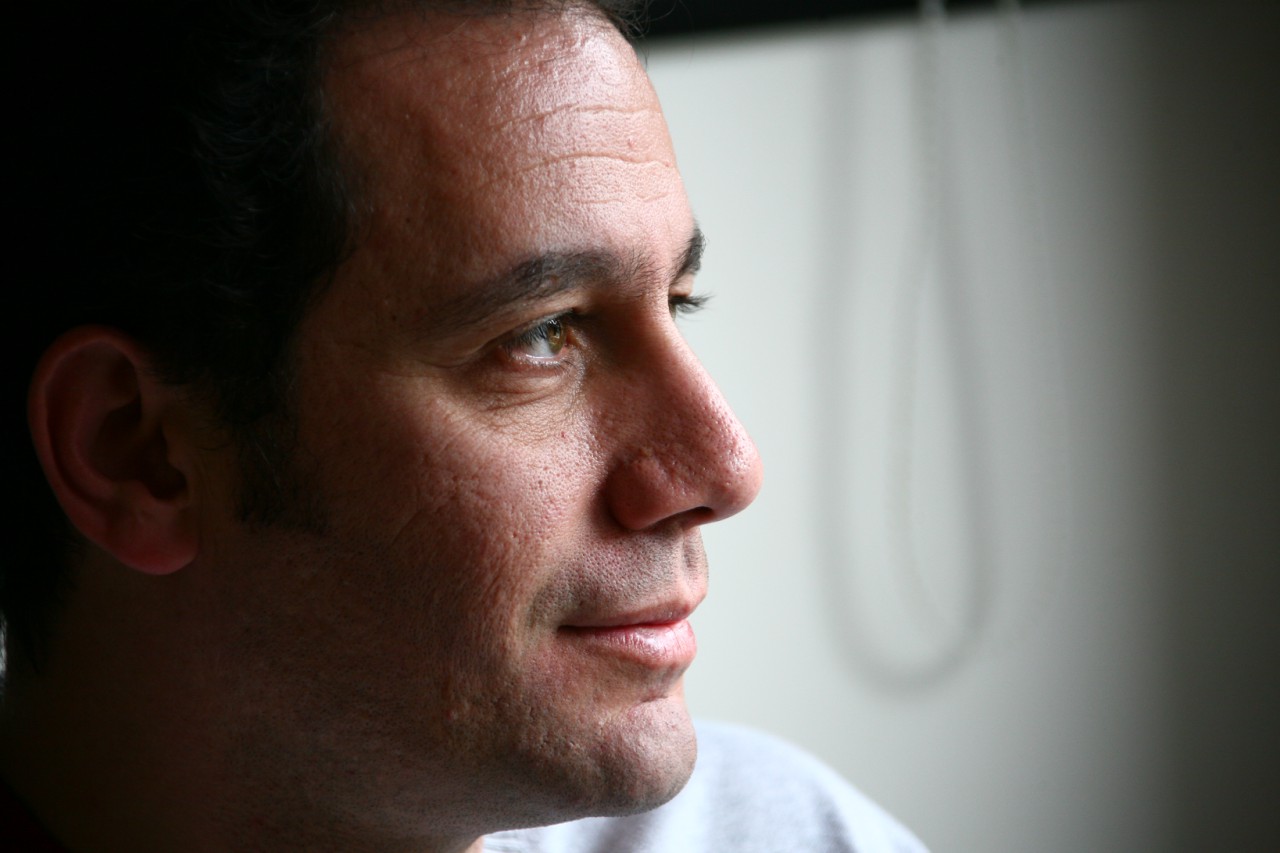
Daniel Horsley is an Associate Professor and ARC Future Fellow at the School of Mathematical Sciences, Monash University. His research focuses on combinatorial designs and edge decomposition of graphs, with notable contributions to extremal graph theory, Zarankiewicz problems, and graph decomposition theorems. Current Role: ARC Future Fellow, Associate Professor Affiliation: School of Mathematical Sciences, Monash University Active Projects: 'The Zarankiewicz problem through linear hypergraphs and designs' (2022–2025), 'Edge decomposition of dense graphs' (2017–2022), and more Research interests span combinatorial designs, graph decomposition, and extremal combinatorics. His work emphasizes theoretical advancements in design theory, with applications in discrete mathematics and optimization. Recent articles address semi-inducibility, Zarankiewicz numbers, and embedding partial designs, reflecting his expertise in structural and extremal combinatorics. Key awards include the ARC Future Fellowship. His research outputs include over 57 publications in journals like Journal of Graph Theory , SIAM Journal on Discrete Mathematics , and European Journal of Combinatorics . Grant projects include collaborations with ARC, University of Queensland, and University of Melbourne, focusing on Steiner systems, compressed sensing, and combinatorial structure analysis. Advising PhD students and mentoring researchers in discrete mathematics and combinatorial design theory.
Geoffrey Cook is a Senior Lecturer at the Scripps Institution of Oceanography, UC San Diego, within the VC Marine Sciences school and Geosciences Research Division. He holds a PhD in Geology from Washington State University (2009), an M.S. from Boise State University (2002), and a B.A. from Franklin and Marshall College (2000). His research focuses on physical volcanology, including the volcanic evolution of large calderas, petrogenesis of magmas, and geoscience education. Notable projects include studies on the Otowi Member of the Bandelier Tuff and crustal assimilation processes in Iceland’s Fagradalsfjall Fires (2021). He emphasizes innovative teaching methods, such as active learning and experiential education, to address student misconceptions in geoscience. Dr. Cook has received multiple teaching awards, including the 2023 Scripps Outstanding Undergraduate Teaching Award and the 2018 UCSD Panhellenic Chapters Outstanding Faculty Award. His publications span volcanology, geochemistry, and educational pedagogy, with recent work in Nature (2024) and active learning strategies in STEM education. His academic profile reflects a commitment to both advancing geoscience research and improving undergraduate education through evidence-based practices.
Sebastian Pokutta is a Professor at Technische Universität Berlin, Vice President at the Zuse Institute Berlin (ZIB), and Chair of the Cluster of Excellence MATH+ and MODAL. His research lies at the intersection of Artificial Intelligence, Optimization, and Machine Learning, with applications in sustainability, quantum computing, and mathematical discovery. Research Interests: Development of novel optimization algorithms, particularly Frank-Wolfe and Conditional Gradient methods. Integration of machine learning with decision-making and combinatorial optimization. AI for Science (AI4Science), including applications in quantum mechanics and ecology. AI and creativity, human-AI co-creativity, and social science modeling using multi-agent LLMs. His recent publications (2025) demonstrate a strong focus on scalable optimization, interpretability, and algorithmic foundations. The work spans theoretical advances in convergence analysis, practical implementations in Julia (FrankWolfe.jl), and real-world deployments in biomass estimation and quantum certification. Scientific Awards: Gödel Prize (2023) STOC Test of Time Award (2022) Science Prize of the Association for Pediatric Orthopedics (2025) Google Research Awards (2021, 2020) NSF CAREER Award (2015) He advises a vibrant research group, with former students and postdocs securing faculty positions at institutions like Inria, Carlos III University, and James Madison University. His group has received funding from Google, DFG, and Math+, and he leads major collaborative efforts such as the Thematic Einstein Semester on Mathematical Optimization for Machine Learning. Labs and Teams: Interactive Optimization and Learning Lab at TU Berlin and ZIB. Leadership in MODAL and MATH+ research clusters, fostering interdisciplinary collaboration in mathematical optimization and AI.
Prof. Felix Brandt is a Professor of Algorithmic Game Theory at the Technical University of Munich (TUM), within the School of Computation, Information and Technology. His research focuses on algorithmic game theory, computational social choice, and their intersections with theoretical computer science, AI, and economics. Education: Diploma and PhD from TUM, postdoctoral research at Carnegie Mellon University and Stanford University. Habilitation from LMU Munich (2010). Research interests include social choice theory, mechanism design, and strategic behavior in multi-agent systems. Notable contributions include work on tournament solutions, probabilistic social choice, and Nash equilibrium characterizations. Recent articles explore Condorcet-consistent voting systems, stability in hedonic games, and axiomatic foundations of Nash equilibrium. Awards include the DFG Heisenberg Professorship (2010) and TUM Supervisory Award (2021). Advises over 10 PhD students and has supervised numerous postdocs. Active in editorial roles for journals like Games and Economic Behavior and Social Choice and Welfare .
David R. Lee is an International Professor at the Charles H. Dyson School of Applied Economics and Management, Cornell University. He holds a BA from Amherst College (1972), MA and PhD from the University of Wisconsin-Madison (1980/1981). His research bridges economic development, agriculture, and environmental sustainability, focusing on food security, climate change impacts, and policy interventions. He has advised global institutions like the World Bank, FAO, and USAID, and received the World Bank Green Award twice (2007, 2011). Education: PhD in Applied Economics, University of Wisconsin-Madison (1981) MA in Economics, University of Wisconsin-Madison (1980) BA in Economics, Amherst College (1972) Research Interests: Dr. Lee explores how economic policies can enhance sustainable agriculture while mitigating environmental degradation. His work emphasizes climate-smart practices, technology diffusion among smallholders, and gender dynamics in resource use. Recent studies include analyzing religious networks' role in information sharing and bioenergy systems' climate mitigation potential. Awards: World Bank Green Award (2007, 2011) Teaching & Advising: Teaches International Trade and Finance and Natural Resources and Economic Development . Mentors graduate students in development economics. No specific grants listed, but extensive consultancy work with global institutions reflects applied research impact. Global Engagement: Conducted research in ~30 countries across Latin America, Sub-Saharan Africa, and beyond. Served as visiting scholar at FAO, USDA, and universities in Italy, Netherlands, Venezuela, and Honduras.
Karin Coifman is a Professor and Chair at Kent State University's Department of Psychological Sciences. She holds a Ph.D. from Columbia University (2008) and specializes in clinical psychology with a focus on emotion regulation, stress, and psychopathology. Her research examines emotion processing and regulation in relation to mental health adjustments during acute and chronic stress. This includes studying resilience, mental illness development, and the role of psychophysiological and behavioral indices in emotion regulation. She leads the Kent Clinical Affective Science Lab and frequently teaches courses in Psychological Interventions and Introduction to Psychotherapy. Dr. Coifman's recent publications analyze pandemic response behaviors, emotion differentiation, and gene-environment interactions in affective disorders. Her work combines experimental methodologies with community and clinical populations. Labs/Teams: Kent Clinical Affective Science Lab
Dr. Toshiyuki Nakamura is a Lecturer at the School of Culture, History & Language at The Australian National University. With a PhD in Applied Linguistics from Monash University, his research focuses on second language acquisition, particularly examining language learning motivation, multilingual identity, self-concept in language learning, and Japanese language education. His work often bridges sociocultural theory with practical educational applications. His scholarly activities include: Published studies in Japanese Studies and System journals Research exploring motivational frameworks in Australian and Korean contexts Application of Bakhtinian concepts to speech genre analysis in language acquisition Recent publications demonstrate consistent engagement with multilingual identity formation (73% overlap across works) and motivational dynamics (61% coverage). Despite limited citation counts (highest: 29 citations for 2019 study), his research outputs show sustained scholarly contribution from 2015-2024, including a 2019 monograph with Bloomsbury Publishing. Key research themes: Dialogic approaches to language motivation Self-image construction in multilingual contexts Speech genre analysis in educational settings Cross-cultural comparisons of language learning experiences Japanese language education in non-native contexts Life domain theory in second language acquisition
Shima Abdullateef is a Postdoctoral Research Fellow at the Centre for Medical Informatics within the Usher Institute, College of Medicine and Veterinary Medicine at the University of Edinburgh. Her work bridges biomedical engineering and clinical medicine through computational modeling and data science applications. Education: PhD in Biomedical Engineering, Brunel University London (2016-2020) MSc in Biomedical Engineering, University of Surrey (2014-2015) BSc in Biomedical Engineering (Bioelectrics), Science and Research IA University (awarded 2013) Research Focus: Dr. Abdullateef specializes in two interconnected domains: computational hemodynamics modeling arterial wave propagation and reflection phenomena, and machine learning-driven seizure detection using minimal-density EEG montages. Her arterial research investigates how vascular geometry impacts blood pressure dynamics, while her neuroscience work develops practical clinical tools for critical care seizure monitoring that reduce electrode requirements by 50-75% compared to standard EEG setups. Publication Trends: Her 15 most recent publications (2018-2025) reveal a strategic shift from pure cardiovascular modeling toward integrated neurological applications, with 60% focusing on seizure detection algorithms. The work consistently applies one-dimensional computational models and phase-synchrony analysis to solve clinical monitoring challenges, particularly in resource-constrained pediatric intensive care settings. Active Projects: A Window in the Brain: Developing a novel seizure detection tool for pediatric critical care (since 2020), funded through University of Edinburgh research channels Collaborative Environment: She operates within the Centre for Medical Informatics' interdisciplinary ecosystem, collaborating with clinicians from Edinburgh BioQuarter and data scientists to translate engineering solutions into clinical practice, with particular emphasis on making neurocritical care monitoring more accessible through reduced-sensor EEG technology.
Gerd Stumme is a Full Professor of Computer Science at University of Kassel , leading the Chair on Knowledge and Data Engineering . He serves as Executive Director of the Research Center for Information Systems Design (ITeG) , director of the International Centre for Higher Education Research (INCHER) , and founding member of the Hessian Institute for Artificial Intelligence (hessian.AI) . His research spans the intersection of Data Science, AI, and Mathematics , focusing on semantic/structural analysis of social networks, concept hierarchies, and mathematical structures (graphs, ordered sets) for knowledge acquisition. He pioneered work on Semantic Web, Web Mining, Social Bookmarking , and Recommender Systems , and has recently revisited mathematical foundations for knowledge representation. Recent publications analyze ordinal motifs in lattices , controversy mapping , and social network structures , with applications to business models, journalism, and AI. His work often integrates graph theory and formal concept analysis . He is a core developer of BibSonomy , a social bookmarking and publication-sharing system, and has contributed to FolkRank and TriAS algorithms for collaborative knowledge management.
Nicole Wein is an Assistant Professor in the Department of Electrical Engineering and Computer Science at the University of Michigan, where she is a member of the Theory of Computation Lab within the Computer Science and Engineering Division. Her research focuses on theoretical computer science, particularly graph algorithms and lower bounds across various domains including distance-estimation, dynamic, parameterized, distributed, and online algorithms. Education: PhD in Computer Science from MIT, advised by Virginia Vassilevska Williams Master's in Computer Science from Stanford University B.S. in Computer Science/Mathematics from Harvey Mudd College Nicole's research centers on theoretical aspects of graph algorithms and computational complexity. She investigates fundamental questions about how algorithms can efficiently handle changing data, extract information from graphs in linear time, and understand the structure of shortest paths, especially in directed graphs. Her work spans multiple algorithmic paradigms including dynamic algorithms that adapt to changing inputs, parameterized approaches for hard problems, and fine-grained complexity that establishes precise relationships between problem difficulty. Analysis of Nicole's recent publications reveals a strong focus on graph algorithms, particularly shortest path problems, spanners, and hardness results. Her work often bridges theoretical insights with practical implications, developing novel techniques for distance estimation, dynamic graph processing, and approximation algorithms. A significant portion of her research examines the structural properties of graphs that enable or constrain efficient computation, with applications across computer science. Nicole actively mentors students at various levels. She currently advises PhD student Jubayer Nirjhor and has worked with undergraduate researchers including Sam Hiken (now a pre-doc at MIT), Michael Wang, and Tony Zhang. Her teaching includes foundational courses like EECS 376: Foundations of Computer Science and specialized courses such as EECS 598: Graph Algorithms. Nicole contributes to the academic community through service as a program committee member for major conferences including SOSA 2025, FOCS 2025, SODA 2025, and others. She co-organized the June 2023 DIMACS workshop on Modern Techniques in Graph Algorithms and previously organized Algorithms Office Hours at MIT to improve communication between theory and applications of algorithms.
Christopher Castro serves as an Assistant Professor of Composition at Chapman University's College of Performing Arts. A composer and double bassist from Brooklyn, New York, he combines academic rigor with avant-garde experimentation. Ph.D. in Composition and Theory from University of California, Davis Bachelor of Music from Juilliard School (Double Bass & Composition) His research bridges Western Art Music traditions with contemporary innovations , creating works that merge: Johannes Ockeghem's polyphonic complexity John Coltrane's spiritual intensity Modernist structural experimentation Historical reconstruction techniques Jazz-classical hybrid forms Interdisciplinary performance formats Recent compositions demonstrate trends in flexible instrumentation , text-music relationships , and genre synthesis . His output spans chamber works, orchestral pieces, and vocal compositions with equal mastery. Scientific recognition includes: 2023 Fromm Music Foundation Commission (Harvard University) Chamber Music America's 2021 Classical Commissioning Award As a new music advocate , Castro collaborates with ensembles like: Left Coast Chamber Ensemble (artistic advisory board) New Mexico Contemporary Ensemble Los Angeles Philharmonic's Upbeat Live series Lyris Quartet and Sharon Harms
Dr. Kezhi (Ken) Li is an Associate Professor of AI in Healthcare at the Institute of Health Informatics, University College London (UCL). He leads the AI for Health research group and has established himself as a leading expert in applying artificial intelligence to solve complex problems in healthcare, with over 130 publications in leading journals (total impact factor greater than 400). Dr. Li earned his Doctor of Philosophy from Imperial College of Science, Technology and Medicine in 2013, followed by research positions at the Medical Research Council (2015-2017), University of Cambridge (2014-2015), and Royal Institute of Technology (KTH) (2013-2014). His academic journey reflects a consistent trajectory from technical AI research toward increasingly healthcare-focused applications. Dr. Li's research focuses on solving physiological, medical, clinical, and operational problems in healthcare using AI techniques. His specific expertise includes AI in healthcare using electronic health records (EHR), biomedical time series analysis using monitors/wearables, diabetes management, large language models (LLM) in healthcare (especially mental health), patient flow optimization, and digital health with federated learning. His work bridges the gap between cutting-edge AI methodologies and practical healthcare applications, with a strong focus on improving patient outcomes and healthcare system efficiency. Analysis of Dr. Li's publication history reveals a strong emphasis on diabetes management technologies, particularly blood glucose prediction systems using advanced neural network architectures. More recently, his work has expanded into mental health applications of large language models, blockchain-based federated learning for healthcare data, and mortality prediction in critical care settings. His research demonstrates a clear evolution from purely technical AI development toward increasingly clinically impactful applications, with growing emphasis on explainability, privacy preservation, and real-world implementation challenges. Dr. Li has received numerous prestigious awards recognizing his contributions to healthcare AI: Best Application Award of IEEE Global Blockchain Conference (2025) Fellow of British Computer Society (2025) Fellow of the Royal Society for Public Health (2024) Healthcare Partnership of the Year category at the London Higher Awards (2024) ECR Promising Project Award (2023) Gallivan Award finalists (2022) Stylianos Kalaitzis PhD Award Winner (2022) HDR UK Team of the Year (COVID-19) Award (2021) As an educator, Dr. Li serves as the Director of MRes study (AI-enabled Healthcare Systems) at UCL. He leads multiple key modules including Healthcare Artificial Intelligence Journal Club, Dissertation in Artificial Intelligence Enabled Healthcare, and Advanced Machine Learning for Healthcare. His supervision extends across dissertation projects and junior researchers in his AI for Health group. His research has been supported by various grants, including those from HDR UK, focusing on translating AI innovations into practical healthcare solutions. Dr. Li leads the AI for Health research group (https://ai4hucl.github.io/ai4h_webs/), which comprises researchers with diverse expertise in machine learning, healthcare systems, and clinical domains. The group maintains strong collaborations with healthcare providers and industry partners to ensure their research addresses real-world healthcare challenges and can be effectively translated into clinical practice.
Amy E. Stich is an Associate Professor of Higher Education and Director of Graduate Studies at the Louise McBee Institute of Higher Education at the University of Georgia. She also serves as an affiliate faculty member with the Interdisciplinary Qualitative Studies program and as a Research Fellow at the Georgia Policy Labs. Dr. Stich employs sociological perspectives and qualitative methodologies to investigate mechanisms that stratify and reproduce inequality in higher education. Her research interests include: Sociology of education Qualitative research methodologies Social theory applications Higher education inequality Educational stratification systems Postsecondary tracking mechanisms Class dynamics in educational settings Dr. Stich's scholarly work reveals consistent themes around how social structures and institutional practices create and maintain educational inequalities. Her publications demonstrate sophisticated applications of Bourdieusian theory to analyze educational tracking, social reproduction, and efforts to democratize access to higher education. Recent work examines democratic research practices, school counseling responses to dual enrollment policies, and the relationship between middle-class aspirations and higher education pathways. Her significant research contributions have been recognized through: 2016 National Academy of Education/Spencer Foundation Postdoctoral Fellowship Exemplary Reviewer Recognition by the Journal of Higher Education (2025) Dr. Stich serves on the editorial boards of the British Journal of the Sociology of Education, The Journal of Higher Education, and The Review of Higher Education. As Director of Graduate Studies, she plays a pivotal role in mentoring graduate students and shaping academic programs. She teaches advanced courses in qualitative research and social theory (EDHI 8990, EDHI 8930, EDHI 9060) that emphasize critical analysis of educational inequality. Current research includes a William T. Grant Foundation-funded project examining postsecondary debt repayment inequalities and an NSF-funded study on geographic influences on experiential learning opportunities.
Dr. Stephanie Archer is an Associate Professor and Senior Research Associate at the University of Cambridge, jointly affiliated with the Department of Psychology and the Department of Public Health and Primary Care. Her work bridges psychological science with clinical applications, particularly in cancer risk assessment and digital health interventions. Dr. Archer holds a BSc, MSc, and PhD, though specific institutions are not mentioned in available sources. Her educational background has prepared her for interdisciplinary research at the intersection of psychology, public health, and clinical medicine. Her research focuses on three primary areas: designing multifactorial cancer risk prediction tools for clinical settings; exploring patient and staff experiences of health and social care; and developing/testing digital health interventions. She employs qualitative methods extensively while also engaging with quantitative approaches for comprehensive health services research. Her work demonstrates strong translational focus, moving from theoretical frameworks to practical clinical applications. Analysis of Dr. Archer's recent publications reveals a consistent trajectory in cancer risk prediction tools (particularly CanRisk), patient experience research across multiple conditions, and implementation science for digital health interventions. Her work spans breast, ovarian, prostate, and other cancers while also addressing mental health in autistic populations and patient safety in surgical settings. The interdisciplinary nature of her research connects psychology with oncology, primary care, and public health. Dr. Archer actively contributes to clinical guidelines development, as evidenced by her involvement in the Joint ABS-UKCGG-CanGene-CanVar consensus regarding CanRisk implementation. Her research methodology combines qualitative depth with mixed-methods approaches to address complex healthcare challenges. As a Senior Research Associate and Associate Professor, Dr. Archer likely supervises PhD students and early-career researchers, though specific advisees are not documented in available sources. Her teaching interests include health psychology, health services research, qualitative methods, and intervention development. Dr. Archer collaborates across multiple research units at Cambridge, including the Primary Care Unit and likely the Centre for Cancer Genetic Epidemiology, reflecting her interdisciplinary approach to improving cancer risk assessment and patient care pathways.
Dr. Ugur Turhan is a Senior Lecturer in aviation at UNSW Canberra with over two decades of experience in academic and professional settings. His expertise spans Air Traffic Management, Airport Operations, Aviation Safety, and Human Factors in Aviation. Previously, he served as Assistant Professor at Eskisehir Technical University and Anadolu University, and held a visiting professorship at Embry Riddle Aviation Academy. Dr. Turhan earned his Ph.D. in Civil Aviation Management from Anadolu University. His academic journey includes significant contributions to aviation education and research across multiple institutions in Turkey and internationally. Dr. Turhan's research focuses on critical aspects of aviation safety and efficiency. His work explores human factors in air traffic control, aircraft maintenance procedures, and emergency management in aviation contexts. He has developed innovative approaches to training air traffic controllers using 3D simulation technology and has investigated the relationship between safety culture and operational performance in aviation organizations. His research bridges theoretical frameworks with practical applications to enhance aviation safety standards globally. Analysis of Dr. Turhan's recent publications reveals a strong emphasis on human factors across aviation domains. His work consistently addresses safety management systems, cognitive workload assessment, and maintenance procedures. A notable trend is the integration of neurophysiological measurements with operational data to assess air traffic controller performance. His research also demonstrates growing interest in the application of advanced technologies for improving maintenance documentation and technician performance. Dr. Turhan has secured significant research funding through multiple international projects. His leadership roles include: Researcher and Eskisehir Technical University Coordinator for the FACT project under European Commission HORIZON2020 SESAR call (2020-present) Researcher and Eskisehir Technical University Coordinator for the Skill-UP project under Erasmus+ (2020-present) Researcher and Anadolu University Coordinator for the STRESS Project under HORIZON 2020-SESAR-2015-1 (2016-2018) Researcher and Anadolu University Coordinator for the IMPACT Project under HORIZON 2020-DRS-2014 (2015-2018) Researcher and Anadolu University Coordinator for SECONOMICS project under European Commission FP7 (2012-2015) Researcher for Boeing-sponsored International Project on Aviation Educational Software (2014-2016) Dr. Turhan has supervised multiple doctoral and master's students in aviation-related fields. His doctoral students include Birsen Acikel (2016) who researched flight training airspace complexity and Tarık Güneş (2021) who assessed aircraft maintenance technician competency. His master's students have investigated topics ranging from Turkish airspace flexibility to aircraft maintenance documentation. Dr. Turhan also serves as a valuable resource for prospective PhD students interested in human factors and safety in aviation and air traffic management.