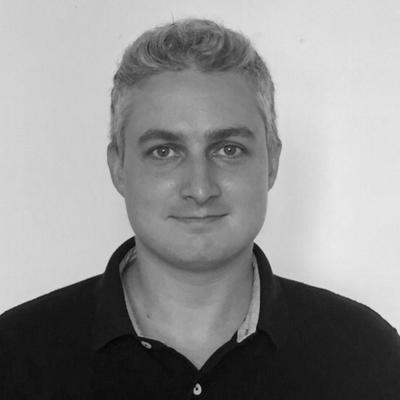
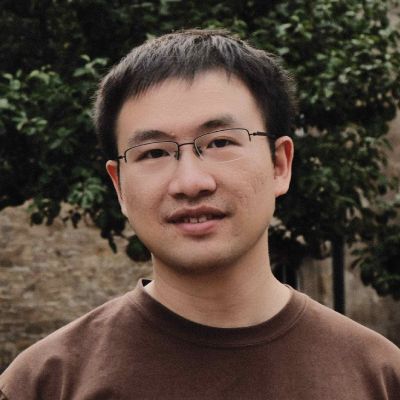
Ioana Hulpus is a post-doctoral researcher in the Data and Web Science Group at the University of Mannheim, collaborating with Prof. Heiner Stuckenschmidt and Prof. Simone Paolo Ponzetto. Her work bridges text mining and knowledge representation, with prior research at Insight Centre (NUI-Galway) involving projects with Elsevier, RTE, and Irish Times. She holds a Ph.D. from the National Insight Centre (2014), focusing on unsupervised word-sense disambiguation and knowledge graphs under Dr. Conor Hayes. Research Interests: Knowledge Graph Mining Entity Linking & Word-Sense Disambiguation Knowledge Representation & Linked Data Financial Network Analysis Research Trends in Articles: Her recent work emphasizes predictive analytics in education and knowledge-driven argument analysis, leveraging machine learning and semantic technologies. Earlier contributions explored argumentation frameworks integrated with knowledge graphs. Advising & Grants: No specific grants or advising roles explicitly listed. Collaborations include industry-academic partnerships with Elsevier and media organizations. Labs/Teams: Core member of the Data and Web Science Group, focusing on interdisciplinary applications of knowledge representation techniques.
Rudy Setiono is an Associate Professor and Assistant Dean of Graduate Studies at the School of Computing, National University of Singapore (NUS). He has been with NUS since August 1990, following the completion of his Ph.D. in Computer Science from the University of Wisconsin-Madison. Previously, he served as Vice Dean (Undergraduate Affairs) from November 2001 to July 2005 at the School of Computing. B.Sc. in Computer Science from Eastern Michigan University (1984) M.Sc. in Computer Science from University of Wisconsin-Madison (1986) Ph.D. in Computer Science from University of Wisconsin-Madison (1990) Professor Setiono's research focuses on neural networks, particularly in rule extraction, neural network construction and pruning, and applications in optimization. His work spans theoretical foundations to practical implementations in credit scoring, poverty analysis, and business intelligence. He has made significant contributions to making neural networks more interpretable through rule extraction techniques, bridging the gap between black-box models and transparent decision systems. His recent publications show a strong trend toward practical applications of neural network rule extraction in credit scoring, poverty analysis, and document processing. The research demonstrates consistent evolution from theoretical neural network construction to real-world applications across finance, social sciences, and business analytics, with an emphasis on model interpretability and practical implementation. Senior Member of IEEE Associate Editor of IEEE Transactions on Neural Networks (2000-2005) Professor Setiono has supervised numerous research projects and taught courses including BT4103 Business Analytics Capstone Project, BT4240 Machine Learning for Predictive Data Analytics, IS5152 Data-Driven Decision Making, and IS4240 Business Intelligence Systems. His work has been published in reputable journals including IEEE Transactions on Neural Networks, IEEE Transactions on Data and Knowledge Engineering, and Neurocomputing.
Mark Hasegawa-Johnson is a Professor of Electrical and Computer Engineering at the University of Illinois at Urbana-Champaign, where he has been faculty since 1999. He holds affiliations with the College of Engineering and leads the Statistical Speech Technology Group. His academic roles include serving as Editor-in-Chief of the IEEE Transactions on Audio, Speech and Language, and membership in the ISCA Diversity Committee. Education: PhD in Electrical Engineering and Computer Science from MIT (1996), postdoctoral research at UCLA (1996-1999). Research interests span automatic speech recognition, machine learning applied to phonetics and prosody, and accessibility technologies for under-resourced languages and speech disorders. Key projects include the Speech Accessibility Project, which improves speech recognition for individuals with dysarthria, and international competition successes in audio event detection and multilingual broadcast retrieval. Scientific achievements include Fellowships from the IEEE (2020), Acoustical Society of America (2011), and ISCA. Awards also include NIH’s National Research Service Award (1998-1999) and the Frederic Vinton Hunt Post-Doctoral Fellowship (1996-1997). Teaching focuses on courses like Artificial Intelligence, Multimedia Signal Processing, and Speech Processing. Research supervision emphasizes undergraduate projects in signal processing and speech recognition, with notable student contributions to prosody-dependent speech recognition and audio source separation. Labs/Teams: Leads the Speech Accessibility Project and collaborates with interdisciplinary teams on projects like Mandarin language education tools and audio-visual speech models. Current work explores unsupervised learning, cross-lingual speech recognition, and AI-driven accessibility solutions.
Jeta Hamzai is a Senior Lecturer at the Language Center of South East European University (SEEU) in Tetovo, North Macedonia, employed full-time since 2013. She holds a PhD in Linguistics from the Faculty of Education at Ss. Cyril and Methodius University (2017), an MA in English Language Teaching from SEEU (2009), and a BA in English Education from SEEU (2005). Her research focuses on language teaching methodologies, legal English compound structures, multilingualism in education, and student-centered learning strategies. Research interests include morphological productivity in compound words, inquiry-based learning in higher education, and comparative analysis of English-Albanian lexical patterns. She has co-authored over 15 publications addressing topics like EFL pedagogy, legal discourse analysis, and educational technology adaptation during the pandemic. Notable works include studies on legal English compounds (2024), self-regulated learning in digital environments (2023), and multilingual university policies (2023). Her professional experience spans over 18 years in education, beginning as a secondary school English teacher (2005-2007) before transitioning to higher education roles. She has contributed to curriculum development in ESP (English for Specific Purposes) programs and professional development workshops for educators. Current work emphasizes bridging theoretical linguistics with practical teaching strategies in multilingual academic settings.
Marcos Garcia Gonzalez is a Ramón y Cajal Research Fellow at the University of Santiago de Compostela (USC), affiliated with the Department of Spanish Language and Literature and the Center for Research in Intelligent Technologies (CITIUS). His research focuses on computational linguistics, particularly in semantic analysis, multilingual systems, and language technologies for Galician and Portuguese. He leads projects like the Nós Project, advancing Galician's integration into AI and NLP tools. His work includes developing resources like the Parallel Universal Dependencies Treebank and tools such as Bertinho (Galician BERT models). Key areas include idiomaticity detection in word representations, vector models for semantic analysis, and syntactic parsing. Education: PhD in Computational Linguistics from USC (2014), Master in Linguistics (University of Lisbon), and Degree in Portuguese Philology (USC). Postdoctoral research under the Juan de la Cierva fellowship (2016-2020). Awards include Ramón y Cajal and Juan de la Cierva fellowships. Research interests span vector models, multilingual NLP, and semantic compositionality. Projects include LINNA (linguistic-based neural models) and DeepR3 (green language tech). His publications explore topics like homonymy/synonymy representation and Galician language preservation through open-source tools. Key contributions include annotated corpora, coreference resolution systems, and cross-lingual parsing methods. He collaborates on hybrid intelligence systems for education (iRead4Skills) and Responsible AI (DeepR3.gal). Current efforts emphasize leveraging linguistic knowledge to enhance NLP models' interpretability and multilingual support.
Chitta Baral is a Professor in the School of Computing and Augmented Intelligence at Arizona State University (ASU), part of the Ira A. Fulton Schools of Engineering. He joined ASU in 1999 as an Associate Professor and was promoted to Full Professor in 2002. His research focuses on artificial intelligence, natural language processing, vision-language systems, and neuro-symbolic approaches. He directs the Cognition and Intelligence Lab (COGINT Lab) and has authored influential works like the book Knowledge Representation, Reasoning and Declarative Problem Solving (Cambridge University Press). His academic journey includes a B.Tech from IIT Kharagpur, and M.S./Ph.D. from the University of Maryland, College Park. Baral's work spans theoretical contributions (e.g., Answer Set Programming, logical reasoning) and applied domains like cybersecurity, biomedical informatics, and robotics. He has held editorial roles at top AI journals, led KR Inc., and collaborated with organizations like the Mayo Clinic. His recent research emphasizes LLM instruction engineering, bias mitigation, and multimodal reasoning benchmarks. He teaches advanced courses in NLP and advises students in AI-related areas.
Professor Kirk Plangger holds a Chair in Marketing and serves as Associate Dean (Doctoral Studies) at King's Business School, King’s College London. He is a leading researcher in digital marketing, consumer behaviour, and AI-driven marketing strategies. PhD in Marketing and Consumer Behaviour, Simon Fraser University MBA in General Management, Simon Fraser University BA (Honours) in Economics, University of Western Ontario His research focuses on how digital technologies transform consumer behaviour and organizational marketing strategies. Key areas include AI in advertising , deepfakes , consumer privacy , brand transparency , gamification , and immersive technologies . He explores ethical and strategic implications of synthetic media, algorithmic bias, and customer surveillance. His recent publications span top journals such as the Journal of the Academy of Marketing Science , Psychology & Marketing , and Journal of Advertising . Themes across his latest work include reimagining marketing for social good, responsible digital implementation, perceived brand transparency, and the future of immersive advertising in the metaverse. His research integrates AI, behavioural insights, and strategic marketing frameworks. KingsCAT: Capture and Analysis Tool for Social Media Research (2024, Other distinction) Professor Plangger is an Associate Editor at the Journal of Advertising Research (Technology & AI in Advertising) and serves on editorial boards of multiple journals. He has secured funding from the Leverhulme Trust, EPSRC, British Academy, and SSHRC. He is actively involved in PhD supervision and executive education, and his work contributes to UN Sustainable Development Goals through ethical and inclusive marketing research.
Stephan Oepen is a Professor at the Department of Informatics, University of Oslo, specializing in Computational Linguistics and Natural Language Processing (NLP). He leads the Research Group for Language Technology and serves as Academic Chair in Artificial Intelligence for the Circle U European University Alliance. His research bridges formal linguistics with large-scale computation, focusing on semantic parsing, dependency structures, and multilingual language models. 2002–present: Researcher → Professor at UiO 2011–2017: Head of Language Technology Research Group 2019–20: Section Head for Machine Learning 2021–24: Department Head for Informatics Current projects include HPLT (High-Performance Language Technologies), Nordic Language Processing Laboratory (NLPL), and OpenEuroLLM . He co-directs the 2017 ACL Shared Task on Extrinsic Parser Evaluation and contributes to international NLP conferences like ACL, EMNLP, and CoNLL. Recent publications focus on: Uniform semantic graph representations Hybrid parsing architectures Continual training for small languages Diagnostic parser evaluation Copyright implications in LLMs Community language resource infrastructure He actively participates in editorial boards and technical coordination roles, including the LUMI Scientific Advisory Group and Horizon Europe's High-Performance Language Technologies project.
Daqing He is a Professor and Associate Chair of the Department of Informatics and Networked Systems (DINS) at the School of Computing and Information (SCI), University of Pittsburgh. He also holds appointments in the Intelligent Systems Program (ISP) and directs the Information Retrieval, Integration and Synthesis research lab. His academic journey began with a PhD from the University of Edinburgh, establishing a foundation for his distinguished career in information science. Dr. He's research focuses on information retrieval, natural language processing, adaptive web systems, and scholarly data management. His work bridges computer science and information science with practical applications in healthcare, education, and social information access. He has published over 300 articles in prestigious journals and conferences including Journal of the Association for Information Science and Technology, Information Processing and Management, and ACM SIGIR proceedings. His recent publications demonstrate a clear trajectory toward integrating advanced AI techniques with healthcare applications, particularly in clinical information retrieval, patient-centered recommender systems, and biomedical text processing. His work increasingly combines retrieval-augmented generation, large language models, and personalized health information systems to address real-world challenges in healthcare information access. ACM SIGIR CHIIR 2023 Best Short Paper Award ACM SIGIR CHIIR 2019 Best Poster Award iConference 2017 Best Poster Award ACM SIGIR CHIIR 2017 Best Student Paper Award iConference 2013 Best Paper Award Honorable Mention Dr. He has successfully mentored numerous PhD students who have become active researchers in information science. His research has been supported by significant grants from NIH, NSF, Amazon Research Award, and the University of Pittsburgh, including the $1.48 million NIH NLM-funded HELPeR project developing a personalized health information access system for patients. His lab maintains strong collaborations with healthcare institutions and technology companies to translate research into practical applications. His Information Retrieval, Integration and Synthesis lab brings together computer scientists, information scientists, and healthcare professionals to develop innovative solutions for information access challenges. Current projects focus on health information systems, clinical abbreviation resolution, and personalized learning technologies, reflecting his commitment to applying information science to improve human capabilities in information-rich environments.
Andi Han is a Lecturer in Data Science at the School of Mathematics and Statistics, University of Sydney . He earned his PhD in Business Analytics from the University of Sydney Business School in 2023 and served as a postdoctoral researcher at RIKEN AIP’s Continuous Optimization Team until 2025. Research Interests: Large generative models (diffusion models, large language models) Optimization on manifolds Efficiency of foundation models Graph neural networks for biology and chemistry Awards: DAAD AInet Fellowship (2025) PhD Completion Award (USYD, 2023) Best Paper Award (IEEE SCCI, 2022) University Medal (USYD, 2019) Business Analytics Prize (USYD, 2018) Teaching: STAT5002: Introduction to Statistics (Unit Coordinator & Lecturer, S2 2025) MATH1061: Mathematics 1A (Lecturer, S2 2025) His recent publications focus on Riemannian optimization techniques, diffusion models, and graph neural networks (GNNs), with applications in protein sequence generation, transformer optimization, and AI for science. Collaborative work spans institutions like RIKEN, Zhejiang Lab, and A*STAR. He actively organizes workshops, including Deep Generative Model in Machine Learning: Theory, Principle and Efficacy at ICLR 2025.
Jason Rajsic is a researcher at Northumbria University's Department of Psychology, focusing on cognitive processes governing attention and memory in visual tasks. He joined the institution in 2019 after completing his PhD at the University of Toronto and postdoctoral work at Vanderbilt University. Education: PhD in Psychology (2017), MSc at Queen's University (Canada) His research employs behavioral measures, eye-tracking, and EEG to study how goal-directed attention and memory interact. Key themes include distractor rejection, visuomotor integration, and the neural correlates of working memory. Recent publications highlight interdisciplinary work spanning healthcare data sharing, sports psychology, and cognitive biases. Collaborations include scholars from diverse fields like AI, emergency medicine, and sports science. While no specific awards are mentioned, his academic trajectory includes prestigious institutions like University of Toronto and Vanderbilt University. His research program appears to focus on both theoretical cognitive questions and applied contexts like CPR training and sports environments.
David A. Broniatowski is a faculty member in the Department of Engineering Management and Systems Engineering at the George Washington University's School of Engineering and Applied Science. His research spans systems engineering, computational social science, cognitive science, and public health, with a focus on analyzing social media to understand misinformation, decision-making, and public health communication. His research interests include systems engineering, natural language processing, fuzzy-trace theory, public health informatics, social media analytics, and misinformation detection. He investigates how people process risk and make decisions online, particularly in health-related contexts such as vaccine hesitancy and pandemic response, using computational models grounded in cognitive theory. His recent publications demonstrate a strong trend in analyzing the spread of misinformation, particularly during the COVID-19 pandemic, using NLP and machine learning. He has developed tools for measuring gist in text, detecting biases and prejudice online, and evaluating the impact of content moderation policies. His work frequently involves large-scale analysis of Twitter data and collaboration with experts in public health and computer science. Notable scientific contributions include: Developing the Twitter Social Mobility Index to measure social distancing. Creating the GisPy tool for measuring gist inference in text. Leading the creation of a large, annotated corpus of COVID-19 tweets. Applying fuzzy-trace theory to model online information spread. He has advised or collaborated with numerous researchers and students on projects related to bot detection, narrative analysis, causal reasoning in social media, and the impact of foreign influence operations. His work is supported by interdisciplinary grants focused on public health surveillance, cognitive modeling, and social computing. Dr. Broniatowski leads or is a key member of a research team that integrates systems engineering principles with data science to address complex societal challenges, particularly in the domain of public health communication and online behavior.
Dr. Maurice Rekrut is an Associated Member at the German Research Center for Artificial Intelligence (DFKI) in Saarbrücken, Germany, and part of the Ubiquitous Media Technology Lab (UMTL) at Saarland University. Based at the Saarland Informatics Campus, he conducts cutting-edge research at the intersection of neural engineering and interactive systems, with a focus on translating EEG-based discoveries into practical human-machine interfaces across diverse domains including autonomous vehicles and medical technology. His research centers on Human-Computer Interaction, Brain-Computer Interfaces, Neural Engineering, and Applied Machine Learning, with specialized expertise in silent speech recognition, intent detection, and adaptive interface design. He pioneers techniques for electrode reduction in EEG systems, transfer learning from overt to silent speech, and multimodal integration of physiological signals to overcome current BCI limitations. His work bridges theoretical neuroscience with real-world applications in neurosurgery, virtual reality, and public transport accessibility, emphasizing user-centered design to enhance system robustness and usability. Analysis of his 15 most recent publications (2020-2024) reveals a strategic shift toward deployable BCI solutions, characterized by three key trends: optimization of silent speech recognition through gamified training and transfer learning, hardware constraint reduction via electrode minimization, and multimodal data fusion (EEG/eye-tracking) for context-aware interaction. This trajectory demonstrates increasing focus on practical implementation challenges across autonomous driving, surgical robotics, and VR environments, moving beyond proof-of-concept toward clinically and industrially viable systems. Dr. Rekrut has mentored 14 graduate students through thesis supervision, guiding research on silent speech BCIs, EEG-based intent recognition, and VR neurofeedback applications. His advisees have produced significant work including automated BCI training frameworks, electrode reduction methodologies, and surgical microscope control systems. While specific grant details aren't provided, his research is institutionally supported by DFKI and Saarland University, with notable contributions to the Mobia project for inclusive public transport and collaborations on autonomous systems development. As a core member of the Ubiquitous Media Technology Lab within DFKI's Cognitive Assistants department, he collaborates in a multidisciplinary team exploring human factors in interactive systems. The lab's research ecosystem spans virtual reality illusions, haptic feedback systems, and sports technology, with recent achievements including IEEE VR best paper awards and novel toolkits for psychophysical experimentation. Current initiatives focus on perceptual detection thresholds for VR hand redirection and GPU-accelerated reinforcement learning frameworks.
Sarah Colby is a Research Fellow at the University of Ottawa, focusing on the intersection of sensory and cognitive factors in language processing. Her work primarily examines aging and cochlear implant users, employing eye-tracking and pupillometry to study speech perception under degradation. Research Interests: Psycholinguistics Cognitive Aging Speech Processing in Hearing-Impaired Populations Perceptual Learning Individual Differences Projects: Lead investigator for the Language Across the Lifespan Project , which explores how cognition, hearing, and psychosocial well-being interact across aging. Publications: 15+ peer-reviewed articles in journals like Cognition , Language, Cognition and Neuroscience , and Nature Communications , focusing on spoken word recognition, lexical competition, and listening effort.
Zihao Fu is an Affiliated Lecturer at the University of Cambridge within the Faculty of Modern and Medieval Languages and Linguistics, specifically at the Language Technology Lab. He also serves as a Research Assistant Professor at The Chinese University of Hong Kong (CUHK). His research spans Natural Language Processing , Large Language Models , and Biomedical Applications with a focus on Parameter-Efficient Fine-Tuning and Algorithmic Fairness . Previously, he was a Postdoctoral Researcher at both University of Cambridge (2021-2024) and University of Oxford (2024-present). Dr. Fu's academic background includes a Ph.D. in Systems Engineering from The Chinese University of Hong Kong (2017-2021), followed by postdoctoral training at Cambridge and Oxford. His technical expertise integrates Computational Linguistics , Machine Learning , and Algorithmic Fairness to address challenges in Biomedical Named Entity Recognition and Knowledge Base-to-Text Generation . His recent publications (2020-2025) demonstrate a trajectory from foundational work in Text Generation and KB-to-Text Systems to cutting-edge research in Biomedical LLMs and Algorithmic Fairness Toolkits . Notable contributions include the BAND Biomedical Alert Dataset (AAAI 2024) and theoretical studies on LLM Watermarking and Parameter Stability . While no scientific awards are explicitly listed, his service as a Reviewer for top conferences (AAAI, ACL, NeurIPS) indicates field recognition. As an educator, he has taught courses like Computational Linguistics at Cambridge (2022-2023) and Advanced Financial Infrastructure at CUHK. His technical projects include open-source tools like StreamTask (parallel processing framework) and CSTL (C++ STL wrapper for Python), reflecting practical implementation skills alongside theoretical contributions.