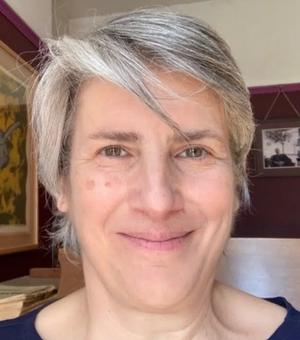
Sarah Hill is Associate Professor of Music at the University of Oxford and Fellow of St Peter's College, specializing in the historiography of popular music. Her research examines the intersection of musical cultures with political activism, particularly focusing on Welsh-language music preservation, countercultural movements, and music's role in identity formation. Dr. Hill's monograph 'San Francisco and the Long 60s' (Bloomsbury, 2016) offers a microhistory of the Haight-Ashbury music scene and its contemporary legacy. Current projects include co-editing 'The Oxford Handbook of Progressive Rock' and investigating women rock critics' contributions to second-wave feminism. As Coordinating Editor of Popular Music journal since 2012, she maintains active engagement with international music research communities. Dr. Hill was elected Fellow of the Learned Society of Wales in 2023.
Martin Robertson is a renowned saxophone professor at the Royal College of Music (RCM) and the Guildhall School of Music and Drama. He graduated from the RCM in 1984 with studies in saxophone and clarinet under Stephen Trier and John McCaw, winning the Boosey and Hawkes Music Prize. His career spans international solo performances with orchestras like the Berlin, Los Angeles, and London Philharmonics, collaborating with conductors such as Simon Rattle and Vladimir Jurowski. Robertson is celebrated for his fusion of classical, jazz, and world music, particularly through collaborations with composers Mark-Anthony Turnage and George Fenton. His work includes Turnage’s Blood on the Floor and Fenton’s orchestral scores for films like Earth and Planet Earth . Robertson’s academic roles include leading the Woodwind department at RCM since 1994 and teaching at Guildhall since 2012. His research interests emphasize cross-genre exploration, using instruments like the duduk and taragato to bridge cultural musical traditions. He has premiered works such as Turnage’s About Water (2007) and Anna Nicole (2011), an opera exploring tragic biography through modern musical language. His performances include high-profile events like the BBC Proms and collaborations with ensembles such as the Delta Saxophone Quartet, which he joined in 2009. Robertson’s film credits span major projects, including Shakespeare in Love , Billy Elliott , and King Arthur . Beyond the concert stage, he advocates for contemporary saxophone repertoire through academic and ensemble work, fostering innovation in woodwind performance. Robertson’s awards include the Boosey and Hawkes Prize (1984), and his recordings, such as Poirot Variants (2010) and Tony Banks’ Six (2012), highlight his versatility across genres. His teaching integrates jazz improvisation, classical technique, and contemporary experimentation, shaping a new generation of woodwind musicians.
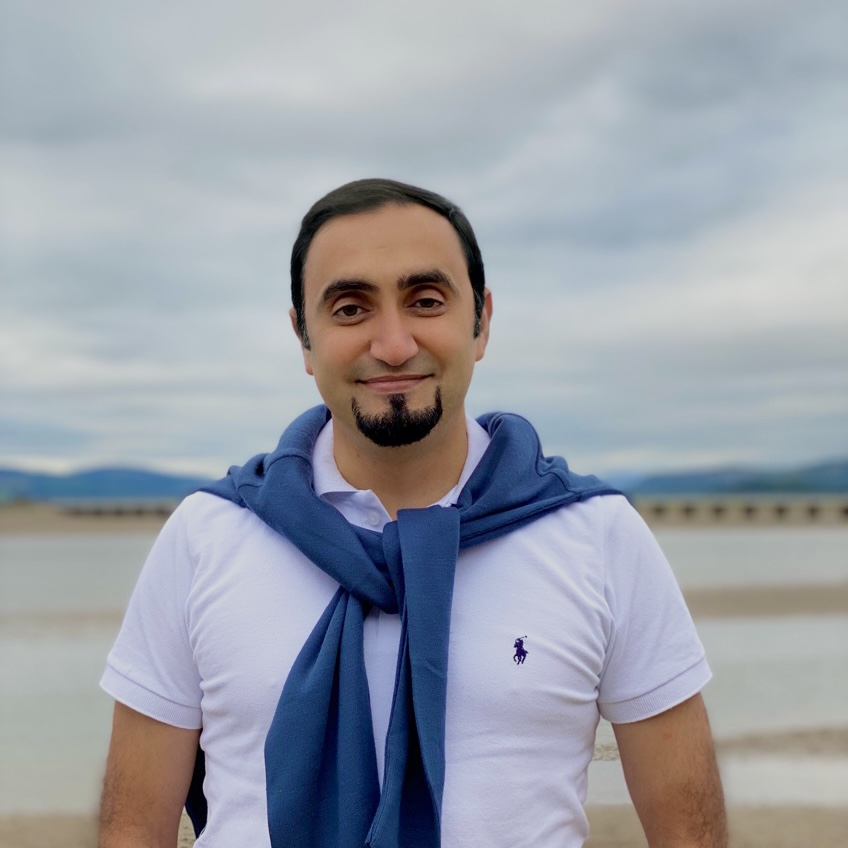
Dr. Mo El-Haj is a Reader (Associate Professor) in Natural Language Processing (NLP) at the College of Engineering & Computer Science, VinUniversity, Hanoi, Vietnam, and holds a visiting role at Lancaster University. He specializes in NLP with a focus on Financial NLP, Arabic NLP, and multilingual systems for under-resourced languages. Education: PhD in Computer Science (University of Essex, 2012), MSc in Information Systems (University of Jordan, 2008), BSc in Computer Information Systems (University of Jordan, 2005). Awards include the FHEA Fellowship (2021) and the 2016 BBC NewsHack Best Tool award. Research interests include text summarization, financial narrative processing, biomedical NLP, and corpus linguistics. He leads the VinNLP research group and has supervised/co-supervised over 20 PhD students. Notable projects include the Welsh Automatic Text Summarisation tool (ACC) and the FreeTxt bilingual analysis toolkit, funded by the Welsh Government and AHRC. Publications span 92+ works in top journals/conferences like Computational Linguistics and LREC. Active in organizing workshops (e.g., WACL-4, FinNLP) and has served as external/internal PhD examiner at UK universities.
Dr Helen West is a Senior Lecturer in English Language within the Division of Communication, Screen and Performance at the University of Chester's School for the Creative Industries. She serves as a research and knowledge exchange representative for her division and has held significant leadership roles including Single Honours English Language Programme leader (2017-18) and Student Engagement Officer for English (2018-2024). Helen's educational background includes a PhD from the University of York (2009-2013), an MSc and MA (Hons) from the University of Edinburgh (2008-2009 and 2004-2008 respectively), and a PGCert in Learning and Teaching in Higher Education from the University of Chester. She became a Fellow of the Higher Education Academy in 2016. Her research focuses on sociolinguistics, particularly sociophonetics, investigating how social factors like age, gender, and social status influence language and accent. Two major research strands dominate her recent work: the Talking Chester/Cestrian English Project examining Chester's unique linguistic position between Liverpool, Manchester and Welsh English varieties; and The Swift Accent Shift Project analyzing Taylor Swift's accent changes between musical genres to explore connections between accent, stylistic categories, and social-psychological processes. Her methodological approach combines computational, quantitative, and qualitative techniques to study language variation and change. Helen's publication record demonstrates consistent scholarly output with a notable recent focus on contemporary sociophonetic investigations. Her work spans traditional academic formats like book chapters and conference presentations while also engaging with public-facing formats including exhibitions and internet publications. The Taylor Swift research represents an innovative approach to studying real-time accent variation through popular culture, while the Chester dialect project contributes to our understanding of regional identity formation through language. As an educator, Helen teaches across undergraduate and postgraduate programs on topics including sociolinguistics, sociophonetics, phonetics and phonology, child language acquisition, forensic linguistics, language and identity, and language and popular culture. She has developed numerous courses including Forensic Linguistics, Language and Identity, and Topics in Sociophonetics. Her leadership roles have focused on enhancing student engagement through immersive teaching experiences and promoting student-as-partner approaches to learning. Helen actively collaborates through projects like the Talking Chester initiative with Dr Jo Close and has organized significant academic events including the 10th Northern Englishes Workshop and Current and New Methods in Sociolinguistics (CANMIS) conference. She also serves as an External Examiner for Blackpool and The Fylde College and holds membership in professional organizations including the International Phonetic Association and Linguistics Association of Great Britain.
Professor Julian Philips is Head of Composition at the Guildhall School of Music & Drama, where he also holds a Professorship (conferred 2014). A Welsh-born composer with degrees from Emmanuel College, Cambridge (FGS, DPhil, MA Cantab), he specializes in operatic, choral, and vocal works. His compositions blend literary sources with innovative musical structures, particularly in settings of Emily Dickinson, Dylan Thomas, and John Clare. Notable roles include Glyndebourne Opera's first Composer-in-Residence (2006-2009) and creator of the Guildhall School's Opera-Making & Writing MA program. Education: FGS, DPhil, MA (Cantab) from Emmanuel College, Cambridge Research focuses on text-music relationships , with acclaimed works like Turning Fifty (2019), How the Whale Became (2013), and the Middle English opera The Tale of Januarie (2017). His ballets ( Les Liaisons Dangereuses , The Snow Queen ) and symphonic works ( Ballades Concertantes ) further showcase his versatility. Recent projects include Henny Penny (2021 children's opera) and Ted Hughes settings for the Little Missenden Festival. Awards: Honorary Fellow (Guildhall, 2007), British Composer Award nomination (2009). Advising & Grants: Established the Royal Opera House Doctoral Composer-in-Residence scheme. Current projects include Vaughan Williams anniversary work Looking West (2022) and a horn/tenor/piano piece for Oxford Lieder Festival.
Antony Hughes is a Lecturer in the School of Humanities and Social Science at the University of Brighton. His work is aligned with the Research Excellence Group, where he contributes to research on childhood and adolescent development, particularly in the context of literacy and learning difficulties. His research interests center on literacy development, cognitive models of reading, and interventions for dyslexia and Specific Learning Difficulties (SpLDs). He investigates phonological awareness as a key indicator of dyslexia risk and explores how self-paced, computer-based reading programs can improve literacy and behavior in children. His work uniquely combines literacy interventions with psychological approaches such as Cognitive Behavioural Therapy, mindfulness, and music therapy, with a growing interest in music and memory. The analysis of his recent publications reveals a consistent focus on brief, technology-assisted reading interventions that yield rapid improvements in reading ability and behavioral outcomes. These studies highlight the effectiveness of self-paced, computer-based programs in both English and Welsh educational contexts, particularly for children with reading difficulties. Antony Hughes has contributed to academic discourse through publication peer-review for journals such as Learning and Motivation and participation in research workshops like the REG Inspiration Event. These activities reflect his active engagement in the scholarly community. He has served as a peer reviewer and participated in academic workshops, demonstrating commitment to research dissemination and collaboration. While no formal advising or grant information is provided in the text, his collaborative research suggests involvement in team-based educational and psychological research projects.
Jonathan Padley is an Affiliated Lecturer at the University of Cambridge's Faculty of Education since 2020, specializing in English children’s literature from the 18th century to present. He also serves as a Fellow, Tutor, and Lead Admissions Tutor at Churchill College, Director of Studies at Lucy Cavendish and St Edmund’s Colleges, and Honorary Member of the Faculty of English. BA English Language and Literature (University of Oxford) BA Theology and Religious Studies (University of Cambridge) MA English (University of Wales) PhD English (University of Wales) PGCE Post-Compulsory Education and Training (University of Wales) LMusTCL Musical Theory (Trinity College London) His research focuses on marginalization in children's literature, including authors, texts, and characters. He explores interdisciplinary intersections of literature, media, music, science, and theology. Key publications analyze Frankenstein , Tennyson's English Idyls , and Tolkien's Lord of the Rings , often addressing theological themes and textual anomalies. His work bridges literary theory with educational policy. Articles and reports highlight his engagement with educational equity (Welsh Government collaborations), literary criticism (children’s literature marginalization), and theological interpretations in fantasy works. He has contributed to policy implementation for Seren and served in various academic roles at Swansea University, Gorseinon College, and Coleg Sir Gâr.
Tim Price is a screenwriter and playwright affiliated with the University of Manchester's Centre for New Writing since 2015, where he teaches on the Screenwriting MA program. His work spans television, theatre, and film, focusing on politically charged narratives and innovative storytelling formats. Notable credits include The Radicalisation of Bradley Manning (James Tait Black Award winner), Protest Song (starring Rhys Ifans), and Candylion, the Insatiable Inflatable , a fusion of theatre and live music. He has contributed to major TV series such as Eastenders , Casualty , and Sky's The Smoke . His awards include the James Tait Black Award, Olivier Award nominations, and international festival recognitions. Price’s work often explores themes of technology’s societal impact, political dissent, and cultural identity.
Dr. Lucy Thompson serves as a Lecturer in Nineteenth-Century Literature and Creative Writing within the Department of English & Creative Writing at Aberystwyth University's School of Languages and Literature. She holds the additional role of PGT Lead for the school, demonstrating active administrative engagement alongside her teaching and research commitments. Her educational qualifications include a PhD in English Literature from Aberystwyth University, completed in 2018 with the thesis "Romanticism, Gender and Surveillance, 1780-1830" under the supervision of Professor Richard Marggraf Turley. Dr. Thompson's research centers on the complex interplay between surveillance mechanisms and literary expression in the Romantic and nineteenth-century periods. She investigates how gendered and disabled bodies are subjected to various forms of scrutiny—medical, domestic, and social—and how literature both reflects and resists these regimes of visibility. Her scholarship bridges historical literary analysis with contemporary concerns, as evidenced by her public engagement on topics like Taylor Swift's music and historical patterns of slut-shaming. Analysis of her recent publications (2017-2025) reveals a consistent trajectory examining surveillance through multiple lenses: from Vermeer's paintings to Godwin's novels, and from Austen's social commentary to modern pop culture. Her work increasingly integrates Critical Disability Studies, highlighting how impairment and care intersect with systems of control. Her scholarly recognition includes: Joy Welch Research Grant (2024) for research in the Romantic era and digital archives In academic service, Dr. Thompson actively mentors PhD candidates whose projects span Gothic literature, fin de siècle fiction, periodical studies, and disability representation. Her grant acquisition supports innovative interdisciplinary work connecting medical humanities with cultural history.
Dr Guto Puw is a Senior Lecturer and Reader in Music Composition at Bangor University's School of Music, part of the School of Arts, Culture and Language. He holds a PhD in Composition from Bangor (2002) and has been Head of Composition since 2015. His work spans orchestral compositions, operas, and experimental music theatre, with notable works like Y Tŵr (2017) and Oboe Concerto (2007). He has received the Sir Geraint Evans Award (2013) and a British Composer Awards Listeners’ Prize (2007). Research interests include orchestration, contemporary opera, Ligeti studies, and Welsh musical identity. His teaching focuses on composition techniques, music theatre, and 20th-century repertoire. He co-founded the Bangor Music Festival (2000) and serves as its Artistic Director. Current PhD students include Sa Do Kim (Composition and Conducting) and Zach Reading (Composition). Award-winning compositions like ...onyt agoraf y drws... (Gramophone Magazine, 2015) and Camouflage (2018) showcase his innovative approach to blending traditional and modern elements. He actively promotes new music through collaborations with BBC National Orchestra of Wales and Music Theatre Wales.
Rhiannon Mathias is an Honorary Research Fellow at Bangor University's School of Arts, Culture and Language . She holds a PhD from the University of Reading (2000), an MPhil from the University of Cambridge (1990), and a B.Mus (First Class Honours) from the University of Surrey (1989). Her research focuses on women’s contributions to music, Welsh musical traditions, and 20th-century British composers. She has edited major works such as The Routledge Handbook of Women’s Work in Music (2022) and directed international conferences on women’s work in music since 2017. Dr. Mathias is also the Editor-in-Chief of the Cambridge Elements series on Women in Music (2020–2025). Her publications span topics including Grace Williams, Elizabeth Maconchy, and Cold War-era women composers. She has organized interdisciplinary events, including three international conferences on women’s music, fostering global dialogue on gender and music history. Dr. Mathias is actively involved in supervising postgraduate research, particularly in areas of women’s musical contributions and Welsh cultural studies.
Eurig Salisbury is a Lecturer in Creative Writing at the Department of Welsh and Celtic Studies, Aberystwyth University. His academic work bridges literature, history, and environmental studies, with a strong focus on Welsh poetry and cultural landscapes. His research interests center on Welsh medieval poetry , creative writing , and the cultural representation of natural phenomena such as flooding. He explores how historical texts reflect human-environment interactions, particularly in the context of Wales. His interdisciplinary approach connects literary analysis with historical geography and environmental humanities. The 15 most recent publications show a consistent focus on Welsh literary traditions , manuscript studies , and environmental narratives . Themes include flood memory in poetry, the cultural significance of landscapes, and creative responses to historical texts. His works appear in journals like Journal of Historical Geography and Geohumanities , as well as in poetry collections and scholarly books. While no specific scientific awards are listed, his sustained publication record and peer-reviewed contributions reflect scholarly recognition. He has supervised multiple students, as indicated by 'Supervised Work (4)' in the data, and has secured research activity through collaborative projects, particularly with Huw Griffiths and other scholars. Eurig Salisbury maintains a digital presence through his personal website eurig.cymru and has contributed to web publications such as Cwlt y Seintiau yng Nghymru , showcasing his engagement with digital humanities and public scholarship.
Dr. John Cunningham is a Senior Lecturer in Music at Bangor University’s School of Arts, Culture and Language, with a focus on secular vocal and instrumental music in the British Isles (1600–1870), seventeenth-century English consort music, and the interplay between music and cultural history. He has published extensively on composers like William Lawes, Ben Jonson, and Shakespeare, and explores modern popular music’s links to visual culture. Education: PhD in Music (University of Leeds, 2007), MA and BMus (University College Dublin, 2001 and 2000). Research: Covers music as cultural history, editing historical compositions, Shakespearean music, opera in non-Western contexts, and popular music analysis. Awards: Senior Fellow (2019) and Fellow (2015) of the Higher Education Academy. Leadership: Held roles including Head of Department of Music, Drama and Performance (2022–24), Director of Research, and Digital Ambassador. Students: Supervises PhD students like Yining Li and Luxi Tian, with completed students including Stephen Bullamore. Projects: Currently examines musical censorship in popular culture and Shakespeare’s music, funded by Bangor University’s Innovation and Impact Award for Welsh identity studies.
Guto Pryderi Puw is a Reader in Music Composition at Bangor University, actively serving as Head of Composition since 2015. His career spans academic roles, creative residencies (BBC National Orchestra of Wales), and artistic direction of the Bangor Music Festival. Academic Affiliation: School of Music, Bangor University Teaching Focus: Composition, Orchestration, Contemporary Opera Research interests center on Music Composition , Orchestration , and Opera/Theatrical Music , with specific emphasis on Welsh composers like John Metcalf and Ligeti-inspired techniques. His 15 most recent works reveal trends in experimental orchestration, theatrical integration, and cultural identity exploration. Scientific Recognition: Sir Geraint Evans Award (2013) British Composer Awards Listeners' Award (2007) Mentoring PhD students Sa Do Kim and Zach Reading, Puw contributes to music education and innovation through classroom composition workshops and community engagement initiatives like the Bangor Music Festival.
Martin Johnes is Professor of Modern History at Swansea University's School of Culture and Communication within the Faculty of Humanities and Social Sciences. His research specializes in Welsh history and popular culture in modern Britain, with a focus on identity through the lenses of politics, sport, masculinity, race, national identity, pop music, disasters, and local government. Johnes' research explores how identity is constructed through diverse contexts. Key areas include: Sport as cultural practice: Football's significance in Wales and race in British boxing Welsh historical analysis: Political responses to the Aberfan disaster and post-1939 societal developments Cultural phenomena: Evolution of Christmas in the UK and language politics in education His current AHRC-funded project 'Beyond Borders' examines how ordinary people navigated national identity and Empire during WWII. Johnes actively contributes to public discourse on history through school engagements, media commentary, and his BBC television series Wales: England's Colony? (2019). He maintains an active online presence with essays, podcasts, and articles at www.martinjohnes.com. He currently supervises postgraduate research on topics including sport in Carmarthenshire/Pembrokeshire, social mobility in South Wales, and nuclear communities in Nevada. His teaching portfolio includes dissertation supervision, research methods, and modules on modern Welsh history and British social change.