Arnaud LACAN is a Permanent Professor at KEDGE Business School , specializing in Management . With a Doctor of Economics and Political Science background, he combines 15 years of managerial experience in insurance (MAIF Group) with academic work since 2017. His expertise focuses on postmodern management , collaborative management practices , and social and solidarity economy (SSE) . Education : Doctor of Economics Graduate in Political Science Research trends from his 15 most recent publications (2016-2024) emphasize managerial transformation , value-based governance in SSE organizations, and workplace wellbeing . Key themes include occupational health policies , collaborative leadership , and sustainable management across 18 works. Awards : DISC Certified He contributes to academic discourse through publications with keywords spanning organizational ethics , psychosocial risks , and innovative governance . His work bridges theory and practice through executive education programs on team management and leadership .
Elizabeth Canning is an Associate Professor in the Psychology Department at Washington State University (WSU), where she leads the BOLD Lab (Build. Opportunity. Learn. Develop.). Her research focuses on creating equitable and inclusive educational environments through social-psychological interventions, with specific emphasis on achievement motivation, social inequality, and organizational behavior. Ph.D. in Social Psychology from the University of Wisconsin-Madison (2016) Postdoctoral research at Indiana University’s Mind and Identity in Context Lab (2016-2019) Dr. Canning’s work investigates how institutional messages about belonging, value, and ability shape student motivation and achievement. She employs controlled experiments, randomized interventions, and longitudinal studies to mitigate disparities in STEM education, particularly for first-generation, minoritized, and stigmatized groups. Her recent publications highlight the impact of instructor mindset communication on student outcomes, strategies for reducing imposter syndrome, and the role of growth mindset cultures in organizational success. Notably, her 2024 research in CBE-Life Sciences Education demonstrated how growth mindset messaging improves first-generation student performance. Editor’s Choice, Science (2014) Dr. Canning mentors undergraduate RAs (9+ hours/week commitment) and Ph.D. students in the Experimental Psychology program. She will be on sabbatical at the Wissenschaftskolleg in Berlin during 2025-2026.
Dr Rosemary Stott is a faculty member at the University of East London, serving as Dean of the School of Arts and Creative Industries. She holds a PhD in Film from Reading University, an MA in Film from Westminster University, and a BA from Oxford University. Education: BA (Oxford), MA (Westminster), PhD (Reading) Leadership roles at UEL, London Metropolitan University, and Ravensbourne University London Research focus: East German film (DEFA), cultural transference, inclusive learning design, digital education Her research explores the intersection of film history, pedagogy, and educational technology. Key projects include World on our Doorsteps (2022-2025, Arts Council England) and Embedding Mental Well-Being in the Curriculum (2020-21). Earlier work involved a Horizon 2020 wearable technology project and Jisc-funded initiatives for dyslexic students. Recent publications analyze Critical Race Theory in film education, DEFA film legacy, and digital pedagogy innovations. Awards include funding from Jisc, HEFCE, and HEA for educational technology projects. She supervises PhD students in German film, media practice, and transnational cinema.
Professor Massimiliano Tani Bertuol is a distinguished academic specializing in economics at UNSW Canberra's School of Business, where he has served as Professor since 2015. His professional affiliations extend beyond UNSW as he is an Associate Investigator/Member at CEPAR; Ageing Futures; uDASH; AI Institute; and Cyber security (IFCYBER). Additionally, he maintains international connections as a Research Fellow at the Institute for the Future of Labor (IZA) in Germany since 2005, an Associate Member at Macquarie University's Centre for Workforce Futures since 2018, and a Research Fellow at the Global Labor Organization (GLO) in Maastricht since 2016. His educational background reflects a strong foundation in economics and business, having earned a PhD in Economics from the Australian National University (2003), a Master of Science in Economics from the London School of Economics (1992), and a Bachelor's degree in Business/Economics from Bocconi University in Milan, Italy (1989). His academic journey has positioned him as a leading researcher in human capital economics with international recognition. Professor Tani Bertuol's research centers on human capital development and its economic implications. His work examines how human capital can be fostered, efficiently transferred internationally through migration, and how it affects productivity, innovation, and economic growth at both firm and national levels. His research spans multiple regions including Australia, Europe, the US, Africa, and China, with particular focus on migration economics, labor market outcomes, and the economic impacts of education and skills. His current research agenda includes non-pecuniary incentives, behavioral/financial decisions in China, occupational licensing, language skills and economic assimilation, AI-human interactions in health contexts, and labor mobility and productivity. Analysis of his recent publications reveals significant interdisciplinary trends bridging economics with public health, environmental science, and technology. His work connects migration dynamics with economic outcomes, examines household financial behaviors through gender lenses, and investigates the complex relationships between environmental factors like air pollution and economic activities including education investment and entrepreneurship. More recent work explores AI applications in health and the economic implications of pandemic responses, demonstrating his ability to address contemporary challenges through rigorous economic analysis. 2023: UNSW ARC Postgraduate Council (Arc PGC) award for excellence in research supervision 2011: Vice-Chancellor Award for Teaching Excellence 2011: Faculty Award for Teaching Excellence for teaching economics Professor Tani Bertuol has successfully supervised 4 PhD students to completion, with 1 submitted dissertation and 5 currently under supervision. His active research program is supported by significant grant funding including an ARC Linkage Project (2023-27) on regional Australia's skills shortages and high-skill refugees' employment ($354,811), an ARC Discovery Project (2019-23) on migrant aging and wellbeing ($478,000), and a NUW Alliance grant (2021-23) on hearing screening and academic outcomes ($73,367). He serves as Associate Editor for Social Indicators Research and Higher Education Research & Development, contributing to scholarly discourse in his fields of expertise. His teaching portfolio includes courses in data analytics, finance, and professional executive education focused on cost-benefit analysis and data communication. He teaches ZBUS2333 Data Analytics and Visualisation, ZBUS8105 Finance and Investment Appraisal, and ZBUS8149 Introduction to Finance, demonstrating his commitment to developing the next generation of economics professionals with both theoretical knowledge and practical skills.
Meden F. Isaac-Lam is a Professor of Chemistry in the College of Engineering and Sciences at Purdue University Northwest, where she teaches organic chemistry, biochemistry and general chemistry. Her research spans multiple interdisciplinary fields with significant contributions to cancer therapeutics and molecular imaging. Her primary research interests focus on the development and discovery of drug therapeutics for photodynamic therapy as cancer treatment and for neurodegenerative diseases, the use of MRI/MRS (magnetic resonance imaging and spectroscopy) to study brain diseases and disorders, and understanding the effect of calorie restriction in human health . Additional research areas include plastic degradation, environmental protection, and STEM education innovation. Dr. Isaac-Lam's scholarly work demonstrates a strong trend toward translational research with clinical applications, particularly in cancer treatment. Her publications show expertise in chemical synthesis, molecular imaging, and therapeutic development with a focus on practical applications for human health conditions. Senior Fulbright Scholar United States Patent No. 11,191,835 B2 for Chlorin-Vitamin Conjugates (Therapeutics for Cancer) Dr. Isaac-Lam is deeply committed to mentoring undergraduate students, believing that "mentoring is extremely critical in student success." She emphasizes individualized teaching approaches and has developed well-structured mentoring programs that consider students' career paths and intellectual abilities. Her patent work serves as an inspiration for students, demonstrating the real-world applications of chemistry research and the possibility of becoming an inventor. She leads interdisciplinary research initiatives including a project studying American military veterans afflicted with post-traumatic stress disorder (PTSD), collaborating with statisticians, social workers, psychologists, radiologists, MRI technicians and medical physics students to understand how brain molecules affect feelings and behavior.
Kyle Lewis is a Professor and Christian A. Felipe Chair in Technology Management at the University of California, Santa Barbara (UCSB), where she serves as Chair of the Technology Management Program in the College of Engineering. Her research examines how organizations leverage individual and collective knowledge, focusing on team performance in professional services, new product development, and project-based tasks. She has authored award-winning research in journals like Management Science , Academy of Management Review , and Organization Science , and received the Jay Wright Forrester Award for her work on system dynamics modeling of organizational learning. Education : PhD in Organizational Behavior & Human Resources Management (University of Maryland), MS in Industrial Administration (Carnegie Mellon University), BS in Computer Science and Mathematics (Duke University). Lewis’s research spans transactive memory systems, collective intelligence, and bias interruption strategies. Her work, often conducted with co-authors like Edward G. Anderson and David Bachrach, explores team diversity, knowledge retention amid disruptions, and organizational structures. She has applied system dynamics and social network analysis to model performance in financial services, healthcare, and engineering teams. Her recent publications (2018-2020) include studies on team reflexivity in healthcare, AI product management, and cross-understanding mechanisms. The scientific awards she has received include: Jay Wright Forrester Award (2018) Top 50 Women in Business (Pacific Coast Business Times) Academy of Management Best Paper Award (2005) Lewis has delivered over 20 invited lectures (2016-2019) on topics ranging from Interrupting Implicit Bias to Effective Teaming at institutions like UC Tech, CSU System, and NORDP. She previously held editorial roles as Senior Editor for Organization Science and Associate Editor for Management Science , and directed the Master of Science in Technology Commercialization at University of Texas, Austin.
Dr. Francine Laden is a renowned Professor of Environmental Epidemiology at the Harvard T.H. Chan School of Public Health , where she serves as Associate Chair of the Department of Environmental Health and Director of the NIH/NIEHS T32 Training Program in Environmental Epidemiology. She concurrently holds the title of Associate Professor of Medicine at Harvard Medical School and Brigham & Women’s Hospital. Her research program bridges environmental exposures with chronic disease epidemiology. ScD in Epidemiology and MS in Environmental Health from Harvard T.H. Chan School of Public Health Past President of the International Society of Environmental Epidemiology Former member of the EPA Science Advisory Board Dr. Laden's research focuses on environmental determinants of chronic diseases , including cancer, cardiovascular conditions, and respiratory illnesses. Her work systematically examines air pollution (ambient and occupational), persistent organic pollutants, secondhand smoke, temperature variations, and built/green environments using geographic information systems and large cohort studies such as the Nurses’ Health Study series and Health Professional Follow-Up Study. Recent publications demonstrate her expertise in environmental mixture effects on health outcomes, including air pollution and diabetes, greenspace and mental health, and noise exposure and hypertension. Her methodological innovations span digital phenotyping , spatial analysis , and multi-exposure modeling across life stages. 2023 John Goldsmith Award 2022 Marianne Wessling-Resnick Mentoring Award 2019 John A. Rock Scholar honorarium 2011 Alice Hamilton Lectureship As principal investigator on multiple NIH grants, Dr. Laden leads studies on environmental and social determinants of mammographic features , early-life exposure impacts on hypertension , and multi-stressor health disparities . She mentors through the T32 training program and collaborates across institutions on cardiovascular and ecological health research initiatives.
Heidi Ottevaere is a Professor at the Faculty of Engineering of the Vrije Universiteit Brussel (VUB) since October 1, 2009. She serves as the head of the Instrumentation and Metrology platform at the Photonics Innovation Center and leads the 'biophotonics' research unit of the Brussels Photonics Team (B-PHOT), which is chaired by Prof. Hugo Thienpont. Her work focuses on the design, fabrication, and characterization of photonic components and systems for diverse applications in medical diagnostics, environmental monitoring, and industrial processes. Dr. Ottevaere earned her Electrotechnical Engineering degree with majors in Photonics from Vrije Universiteit Brussel in 1997 and completed her PhD in Applied Sciences at the same institution in 2003. Her doctoral research focused on 'Refractive microlenses and micro-optical structures for multi-parameter sensing: a touch of micro-photonics.' Professor Ottevaere's research spans multiple cutting-edge areas of photonics with particular emphasis on biophotonics, micro-optics, and optical metrology . Her work bridges fundamental science with practical applications, developing novel photonic components and systems that address real-world challenges. She has pioneered research in miniaturized optical systems for medical diagnostics, environmental monitoring, and industrial applications. Her current research focuses on advancing lab-on-a-chip technologies, microfluidic optical sensors, and novel optical fiber systems for biomedical applications. She has developed microminiaturized, integrated plastic detection units for absorbance and laser-induced fluorescence measurements in microfluidic channels, enabling portable, robust, and disposable diagnostic systems. Her recent publications demonstrate a strong trend toward integrated optical sensing systems with applications in medical diagnostics and environmental monitoring. There's a clear progression from fundamental optical component design to complete system integration, with increasing emphasis on artificial intelligence for data analysis and computational imaging techniques. Her work bridges photonics with biomedical engineering, materials science, and data science, reflecting the interdisciplinary nature of modern photonics research. Dr. Ottevaere has been recognized with several prestigious awards: Best Application award (2008) Educational award - Bronze (2019) MOC09 Contribution Award Winners (2009) As an educator and mentor, Professor Ottevaere has promoted 9 PhD students and supervised numerous master's theses. She has secured substantial research funding from diverse sources including the Fund for Scientific Research Flanders (FWO), the Institute for the Promotion of Innovation by Science and Technology in Flanders (IWT), and multiple European Framework Programs. Her current portfolio includes projects on miniaturized biosensors for drinking water screening, precision manufacturing, and photonics education initiatives in Uzbekistan. She has coordinated multiple strategic research and networking projects with regional, national, and international funding bodies. Professor Ottevaere leads the biophotonics research unit within the Brussels Photonics Team (B-PHOT), one of Europe's leading photonics research groups. Her team includes researchers working on optical metrology, micro-optics fabrication, and biophotonic applications. She collaborates extensively with industry partners including Melexis, Umicore, and Anteryon, as well as academic institutions across Europe through various EU-funded projects. She has been instrumental in developing the interuniversity engineering curriculum 'Master in Photonics' which received the EC Erasmus Mundus quality label in 2006, and continues to be the driving force behind photonics education at VUB.
Sophie Leroy is a Professor of Management and Dean of the School of Business at the University of Washington Bothell . She is an internationally recognized scholar whose work focuses on attention, interruptions, and leadership. She has held editorial roles at top journals and has received multiple awards for both research and teaching excellence. Education: Ph.D. in Organizational Behavior – Stern School of Business, New York University (2007) Master in Management (MBA equivalent) – HEC School of Management, Paris (1998) MBA Exchange Scholar – Columbia Business School (1997) B.A. – HEC School of Management, Paris (1996) Research Interests: Dr. Leroy’s research centers on self-regulation , particularly how individuals manage attention, time, and ethical decision-making in the face of interruptions. She coined the term "Attention Residue" , which describes the cognitive interference that occurs when attention lingers on a prior task after switching to a new one. Her work explores how this affects performance and how interventions like "ready-to-resume" plans can mitigate its effects. She also studies mindfulness , leadership , and synchrony preferences in team settings. Teaching: Dr. Leroy teaches courses in Leadership , Managing High Performance Teams , Global Management , and Ethical Decision Making across MBA and undergraduate programs. Since 2014, she has received eight teaching awards , including six MBA Faculty of the Year Awards and the Executive Education Distinguished Professor of the Year Award. Scientific Awards & Honors: 2024 University-wide Distinguished Research, Scholarship, and Creative Activities Award 2024 MBA Faculty of the Year Teaching Award 2022 Distinguished Professor of the Year Award, Executive Education 2021 Finalist for Best Paper of the Year – Academy of Management Annals 2009 Best Paper Award, Academy of Management MOC Division Advising & Grants: She has served as Dissertation Chair for John-Gabriel Licht and as a committee member for multiple Ph.D. students. She has also received competitive research grants including the SRCP Seed Grant and Dean’s Small Research Grant (five times). Media & Outreach: Dr. Leroy’s work has been featured in Harvard Business Review , The Economist , TIME Magazine , NBC News , and more. She has also appeared in podcasts and interviews on platforms like The David Pakman Show , Quartz , and King 5 Seattle .
Susan Aguiñaga serves as Associate Professor in the Department of Kinesiology and Community Health and the Center for Latin American and Caribbean Studies at the University of Illinois Urbana-Champaign. Her research bridges kinesiology, public health, and cultural studies to address health disparities in Latino communities through evidence-based physical activity interventions. Her primary research focuses on Latin dance as a culturally resonant strategy to enhance cognitive health and physical activity among older Latinos, with secondary emphases on acculturation effects on cognitive performance, sedentary behavior reduction, and mental health outcomes in caregivers. She investigates how isotemporal substitution of sedentary time with physical activity impacts episodic memory, and develops co-designed interventions like home-based exercise programs for visually impaired populations. Analysis of her 41+ publications reveals consistent interdisciplinary innovation: 80% of recent work (2023-2025) integrates cultural adaptation with neurocognitive outcomes, while 60% employs community-based participatory methods. Key trends include the BAILAMOS dance program's efficacy for cognitive health, MIND diet-cognition relationships in Latino populations, and caregiver mental health frameworks. Her research impact extends to public discourse through press features including Latin dance may be a step toward better working memory for older Latinos (2022) and Culturally adapted exercise program helps Hispanic older adults be more active (2020), demonstrating real-world translation of academic findings into community health solutions.
Matt Allwood is a Clinical Trial Data Co-ordinator at the University of Oxford, primarily involved in mental health and educational psychology research. His work focuses on evaluating school-based interventions like mindfulness training and teacher classroom management programmes. Role: Clinical Trial Data Co-ordinator Affiliation: University of Oxford Research interests span mental health prevention in adolescents, implementation science, and educational interventions. Key projects include the MYRIAD trial assessing mindfulness training and the STARS trial examining classroom management strategies. Recent publications highlight findings that universal school-based mindfulness training may not benefit high-risk adolescents and could worsen outcomes, while pharmacist-prescriber partnerships show promise in antibiotic stewardship. His work emphasizes rigorous trial design and real-world applicability.
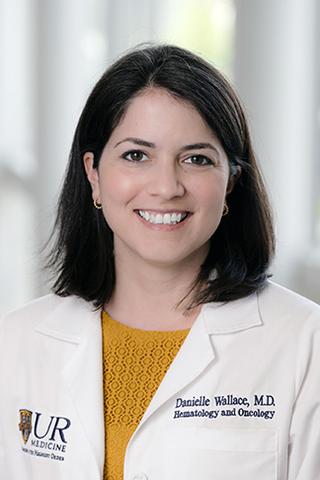
Danielle S. Wallace, M.D., is an Assistant Professor at the University of Rochester School of Medicine and Dentistry , affiliated with the Department of Medicine, Hematology/Oncology . As a clinician researcher, she specializes in the treatment of lymphoma , with a focus on nodal and cutaneous T-cell lymphomas, and is actively involved in clinical trials for cellular therapies like CAR T-cell treatment. MD | SUNY Upstate Medical University College of Medicine, 2016 Fellowship, Hematology & Oncology, University of Rochester Medical Center, 2020-2023 Residency, Internal Medicine, University of Rochester Medical Center, 2017-2019 Certified by American Board of Internal Medicine in Hematology, Internal Medicine, and Medical Oncology Her research emphasizes lymphoma treatment optimization , molecular classification , and targeted therapies . She leads clinical trials such as a Phase 2 Study of Epcoritamab and Rituximab for Follicular Lymphoma and a Randomized Phase 3 Trial of Zanubrutinib for Mantle Cell Lymphoma . Her work spans clinical trials , biomarker analysis , and patient-centered care in immune-privileged sites. Scientific awards include: Wilmot Physician Scientist-Fellowship Program (2025-2028) Wilmot Investigator Initiated Trial Support Program (2025-2027) Lymphoma Scientific Research Mentoring Program (2024-2026) Arnold P. Gold Foundation Humanism and Excellence in Teaching Award (2018) She is part of the multidisciplinary team at Wilmot Cancer Center , collaborating with clinical trial offices, radiation oncologists, and pathologists to enhance patient experiences. Her grants focus on hematologic malignancies , innovative therapies , and medical education initiatives .
Elena Serrano, Ph.D., is a Professor and Extension Specialist in the Department of Human Nutrition, Foods, and Exercise at Virginia Tech. She directs the Virginia Family Nutrition Program (VFNP), a land-grant initiative focusing on nutrition security and chronic disease prevention. Her work emphasizes evaluating food assistance programs and promoting healthy eating through community partnerships. She holds a Ph.D. from Colorado State University (2001) and has served at Virginia Tech since 2002, advancing from Assistant to Associate Professor before her current role. Her research explores food security contributors, SNAP program effectiveness, and mental health linkages among low-income mothers. Notable awards include the Virginia Tech Alumni Award (2022) and recognition for early career contributions (2007). Education: Ph.D. & M.S. in Food Science and Human Nutrition (Colorado State University), B.S. in Development Studies (UC Berkeley) Key Roles: Director of VFNP, Virginia Cooperative Extension leader, and Extension Specialist Her research focuses on nutrition security, food environment interventions, and policy evaluation. Recent work examines SNAP-authorized retailers’ healthy product commitments and the impact of food insecurity on maternal mental health. She collaborates on initiatives to enhance access to nutritious foods through farmers markets, school programs, and community health worker models. Awards: Virginia Tech Alumni Award (2022), American Heart Association Volunteer Award (2010), and multiple NEAFCS recognitions Grants/Programs: Leads multi-state collaborations for school nutrition programs and Healthy Food Retail initiatives Program highlights include the VFNP’s 50-year history improving family nutrition and its “Eat Smart, Move More” motto. Current projects address food waste in camps, SNAP consumer environments, and drone technology for food security. She has over 50 peer-reviewed publications and presents at national conferences like ISBNPA and Society for Nutrition Education.
Nancy A. Lever, PhD, serves as Associate Professor in Psychiatry at the University of Maryland School of Medicine, Executive Director of the University of Maryland School Mental Health Program, and Co-Director of the Center for School Mental Health. With over 20 years of experience, she is a nationally recognized leader advancing comprehensive school mental health systems through clinical practice, research, and policy at local, state, and national levels. Her educational foundation includes: Dartmouth College, BA in Psychology (1991; Phi Beta Kappa) Temple University, MA in Clinical Psychology (1994) University of Maryland Medical System, Psychology Internship (1996) Temple University, PhD in Clinical Psychology (1997) University of Maryland School of Medicine, Postdoctoral Fellowship (1998) Dr. Lever's research pioneers multi-tiered behavioral health systems emphasizing quality, sustainability, and trauma-informed care. Her work establishes family-school-community partnerships as critical for dropout prevention, student resiliency after civil unrest, and workforce development. She developed the School Mental Health Quality Assessment Questionnaire to standardize service evaluation. Recent publications reveal evolving priorities: teacher/staff wellness, telemental health implementation, and national performance metrics. Her scholarship consistently bridges clinical innovation with systemic change, highlighting sustainability strategies for school mental health programs. Accolades include: NIH Loan Repayment Award for Clinical Research (2004-2006) Baltimore City Mayoral Citation (2006) Paula U. Hamburger Children’s Mental Health Champion Award (2016) Dartmouth College Phi Beta Kappa and three departmental awards (1991) She directs major grants including: Promoting Student Resiliency (U.S. Department of Education, 2016-2018) Expanded School Mental Health in Baltimore City (2007-2018) National Resource Center for Mental Health Promotion (SAMHSA, 2013-2017) Project AWARE-SEA (SAMHSA, 2014-2019) Dr. Lever shapes national discourse as Planning Committee Chair for the National Conferences for Advancing School Based Mental Health (2001-present) and through leadership in the National Coordinating Committee on School Health and Safety and Maryland State School Health Council.
Gerta Bardhoshi is a Professor of School Counseling at the University of Iowa’s College of Education, affiliated with the Department of Counselor Education and the Scanlan Center for School Mental Health. She holds a BS in Psychology (Northern State University), MSED in Counseling, and a PhD in Counselor Education and Supervision (George Washington University). Her research focuses on school counselor well-being, interventions addressing adolescent mental health, LGBTQ+ student experiences, and photovoice methodology. She has been honored as a Senior Research Fellow at the University of Iowa Public Policy Center (2019). Her work emphasizes burnout prevention, culturally responsive counseling practices, and evidence-based interventions. Notable grants include studies on rural Latinx students’ sense of belonging and the psychometric validation of scales like the School Counselor Self-Efficacy Scale. She is certified as a Licensed Professional Counselor (LPC) and Approved Clinical Supervisor (ACS). Awards: Senior Research Fellow (2019), University of Iowa Public Policy Center Grants: Over $200K in grants for counseling interventions, including group therapy for marginalized youth and photovoice studies. Her lab and collaborations emphasize community-based participatory research, advocating for inclusive education policies and counselor training programs to enhance student outcomes.