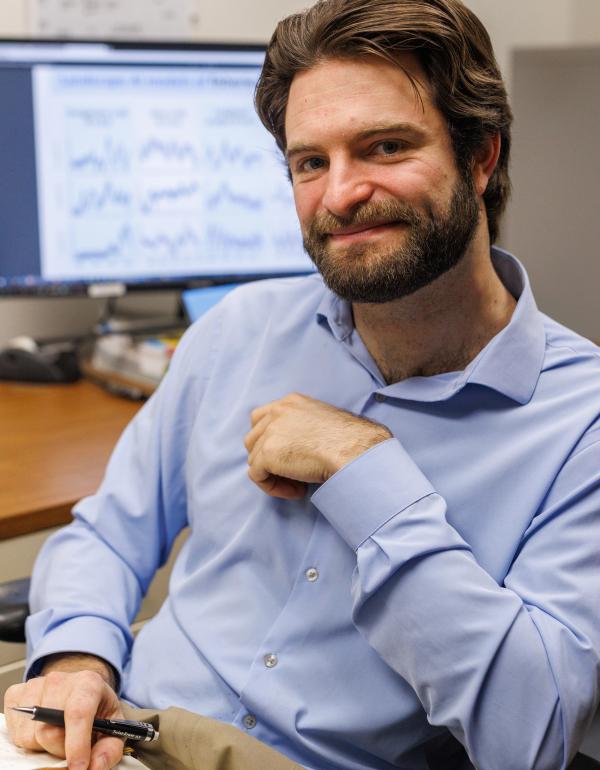
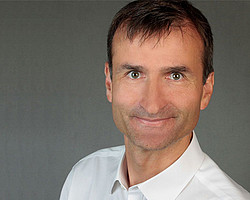
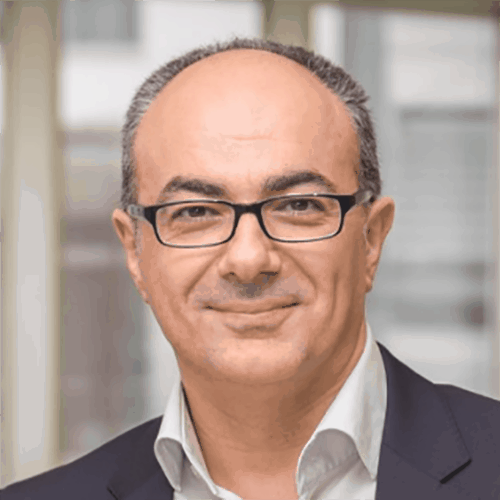
Vadim Karatayev is the William J. Higgins Assistant Professor of Biology at the University of Maryland. His research integrates ecological theory with large-scale field data to study resilience in complex ecosystems, focusing on community ecology, landscape ecology, and network dynamics. He explores critical questions at the intersection of ecological stability and climate change impacts. His work emphasizes spatial synchrony mechanisms, invasive species management, and the role of behavioral dynamics in regulating ecosystem states. Recent projects include analyzing how climate change amplifies synchrony in marine systems and evaluating the cascading effects of resource subsidies across ecosystems. Research interests: Ecosystem resilience, alternative stable states, spatial synchrony, climate change mitigation strategies Key contributions: Quantitative frameworks for understanding biodiversity loss from invasions and habitat degradation Lab affiliation: Resilience Lab (https://resiliencelab.github.io/) Publications span high-impact journals like Ecology Letters and Proceedings of the National Academy of Sciences. His interdisciplinary approach bridges ecological theory with practical conservation challenges, including pandemic response modeling and climate policy analysis.
Maria João Carneiro is an Associate Professor in Tourism at the University of Aveiro (UA), where she has worked since 1993. She serves on the Executive Committee of the Department of Economics, Management, Industrial Engineering and Tourism and holds leadership roles in the Undergraduate Degree in Tourism Management and Planning, including Vice-Director. Her academic leadership extends to PhD, Master’s, and undergraduate programs, where she has held directorial and committee roles. Coordinated 9 books and 2 international journal issues Co-author of over 260 publications (90 journal papers, 50+ book chapters, 35+ conference papers) h-index of 25 in Scopus (22 excluding self-citations) Member of the editorial board of Management Letters Her research focuses on sustainable tourism, accessible tourism for people with disabilities, wine tourism, rural tourism, and environmental impacts on visitor behavior. She has contributed to projects like TWINE (Co-creating sustainable Tourism & WINe Experiences) funded by FCT and ERASMUS+, with emphasis on co-creation in tourism experiences and accessibility challenges in museums and wine routes. Recent publications analyze topics such as: Family-friendly wine tourism in Portuguese wine routes Tourism-air quality interdependence and visitor travel planning Co-creation barriers in museums for visually impaired visitors Sustainability perceptions and destination loyalty Maria João Carneiro participates in external evaluations of study cycles for A3ES and collaborates with research groups like DSS-Lab and Tourism and Development (TD). Her work spans editorial contributions, project coordination, and academic governance, reflecting a multidisciplinary approach to tourism studies.
Filippo Malandra is an Assistant Professor in the Department of Electrical Engineering at the University at Buffalo, part of the School of Engineering and Applied Sciences. His research focuses on Internet of Things (IoT), wireless communications, 5G/4G cellular networks, network performance analysis, smart grid communications, optimization, and machine learning applications. PhD in Electrical Engineering from École Polytechnique de Montréal Master of Engineering in Telecommunications Engineering from Politecnico di Milano Bachelor of Engineering in Telecommunications Engineering from Politecnico di Milano His research interests include experimental testbed development for 5G-enabled smart grids, analytical modeling of cellular network delays, and machine learning frameworks for optimizing network performance under environmental factors. He has contributed to tools like WTTool for 5G network simulation and PeRF-Mesh for RF-mesh network analysis. Recent work emphasizes 5G testbed experimentation (e.g., ExTODS), weather-based signal prediction, and CBRS spectrum analysis. He has explored synergies between federated learning and O-RAN architectures for elastic network services. Active service roles include TPC Member for IEEE SECON 2019 and reviewer for IEEE journals and conferences like DRCN. Recipient of NSF CRII grant (2021) for CNS research on IoT-aware dynamic spectrum sharing. Collaborates on projects like UBSpot (aerial-ground wireless networks) and smartDESC (distributed energy storage control).
Niko Siltala is a University Instructor at Tampere University's Department of Automation Technology and Mechanical Engineering. He holds a Doctor of Science (Technology) in Mechanical Engineering (2016) and a Master of Science (Technology) in Automation Engineering (2001). His research focuses on production system design, reconfiguration, robotics, and virtual reality applications in safety training. He has contributed to the development of semantic rules for capability matchmaking, which supports rapid system design and reconfiguration. Key research areas include: Manufacturing automation and system adaptability Human-robot collaboration and safety protocols Virtual reality-based training solutions Formal resource descriptions for modular systems His work aligns with UN Sustainable Development Goals, particularly in advancing quality education (SDG 4) through innovative robotics education tools. He has received the Distinguished Committee Service Award (2004) and contributed to grants such as the K.F. ja Maria Dunderbergin testamenttisäätiö (2014). He has collaborated on projects like the D-BEST methodology for pilot lines and the ODIN project for scalable production systems. His activities include organizing conferences, presenting at international forums, and developing web-based tools for manufacturing system planning.
Tiago Prince Sales is an Assistant Professor in the field of Semantics, Cybersecurity & Services, actively contributing to foundational research in conceptual modeling, ontology, and information systems. His work bridges formal methods with practical applications in digital platforms, cybersecurity, and knowledge representation. Assistant Professor, Semantics, Cybersecurity & Services Active in international research communities (FOIS, ER, BPMDS, RCIS) Key focus: Ontology, Domain Modeling, Interoperability, Digital Platforms Recognized with multiple best paper awards His research centers on the development and application of formal conceptual models using frameworks such as OntoUML and the Unified Foundational Ontology (UFO). He investigates how domain models can enhance system design, improve interoperability, and support risk analysis in complex information systems. His work often integrates empirical insights with theoretical rigor, aiming to address real-world challenges in modeling. The recent publications highlight a strong trend toward ontological engineering in cybersecurity (e.g., phishing attack modeling), digital platform taxonomy, and FAIR data planning. These works demonstrate a consistent focus on creating reusable, semantically rich models that support both human understanding and machine processing across domains. The integration of modeling with data science and security indicates a forward-looking research agenda. Best paper award at FOIS 2023 Best paper award at ER 2022 EMMSAD 2025 Best paper award Tiago Prince Sales actively mentors and collaborates with researchers, though no formal students are listed. He has secured recognition through competitive awards and leads significant research outputs, including datasets and open models. His involvement in organizing top-tier conferences such as FOIS 2024 reflects leadership in the academic community. While specific grants are not listed, his productivity suggests external funding support. He contributes to open science through Zenodo-hosted datasets like the OntoUML Vocabulary and GO-Plan method, and participates in collaborative teams focused on knowledge graphs, FAIRification, and model-driven engineering. His role in organizing the FOIS 2024 conference underscores his integration within leading research networks in formal ontology and conceptual modeling.
Prof. Dr. Enno Bahrs is Head of the Department of Agricultural Business Management (410b) at the University of Hohenheim, Germany, where he has held a full professorship since 2008. His work is based at the Institute of Agricultural Business Management, and he plays a leading role in shaping sustainable agricultural systems through interdisciplinary research and policy engagement. His research interests lie at the intersection of agricultural economics, sustainability, and digital innovation in farming. Key areas include: Sustainable biomass production and agro-ecological transitions Climate resilience and adaptation strategies in agriculture Development of GIS-based tools for sustainability assessment Decision support systems (DSS) for farm-level climate risk management Innovations in pasture and grassland management Policy analysis in plant protection, biodiversity, and bioeconomy Although no specific publications are listed in the provided text, his involvement in multiple large-scale, interdisciplinary research projects indicates a strong and ongoing publication record in agricultural economics, environmental modeling, and sustainable land use. These projects often combine economic analysis with ecological and technological innovations. Prof. Bahrs holds several prestigious roles that reflect his scientific leadership: Scientific Advisory Board for Biodiversity and Genetic Resources at the BMEL Co-editor of the German Journal of Agricultural Economics Steering committee member of the research program 'Bioeconomy Baden-Württemberg' Member of the Senate of the University of Hohenheim Chairman of the DMK eV (German Corn Committee) Scientific Advisory Board of the National Action Plan for Plant Protection at the BMEL He has led and contributed to significant research grants and collaborative projects including NOcsPS 2.0, NBiomassBW, StressRes, KaRisMa, and GreenGrass 2.0—funded by agencies such as BMBF and BMEL. These projects involve partnerships with institutions like the Julius Kühn Institute and Georg-August University of Göttingen, demonstrating strong national collaboration. He supervises bachelor's and master's theses, following formal guidelines, though no specific students are named. His team operates within a well-structured research environment focused on translating scientific findings into practical tools for farmers, advisors, and policymakers. His research group is deeply engaged in developing integrative models and web-based tools that assess sustainability at multiple scales (field, farm, regional), support real-time monitoring of environmental stressors, and enable climate adaptation planning. Projects like GreenGrass 2.0 aim to restore ecological balance through innovative grazing systems, while others focus on pesticide-free agriculture and mineral fertilizer optimization.
Schahram Dustdar is a Full Professor of Computer Science and head of the Distributed Systems Group at TU Wien (Vienna University of Technology), Austria. He has held significant international academic positions, including Honorary Professor at the University of Groningen (2004–2010) and Visiting Professor at the University of Seville (Dec 2016–Jan 2017) and UC Berkeley (Jan–Jun 2017). His research interests lie at the intersection of distributed computing, cloud services, and intelligent data systems. He actively contributes to advancing the fields of services computing, cloud infrastructure, web technologies, and data-driven financial modeling. His work emphasizes scalable, robust, and knowledge-aware systems, particularly in financial data visualization and transaction network analysis. The most recent publications highlight his focus on modeling financial transaction networks using constraint satisfaction and developing visualization frameworks that incorporate incremental domain knowledge. These works reflect a strong trend toward integrating formal methods with interactive data systems for enterprise and financial applications. ACM Distinguished Scientist (2009) IBM Faculty Award (2012) IEEE Fellow (2016) Elected Member of Academia Europaea Schahram Dustdar has supervised multiple research projects and leads a vibrant research group at TU Wien. He has been involved in editorial leadership as Editor-in-Chief of Computing (Springer) and Associate Editor for top-tier journals such as IEEE Transactions on Cloud Computing, IEEE Transactions on Services Computing, ACM Transactions on the Web, and ACM Transactions on Internet Technology. His editorial roles and international visiting positions indicate extensive collaboration and grant-related activities, though specific grants are not detailed in the text. He leads the Distributed Systems Group at TU Wien, a research team focused on building next-generation distributed computing platforms, cloud services, and intelligent data processing systems with real-world applications in finance, enterprise systems, and large-scale data analytics.
Adrian Francalanza is a Professor in the Department of Computer Science at the Faculty of Information and Communication Technology, University of Malta. His research is centered on formal methods, runtime verification, and concurrency, with a focus on monitorability and distributed systems. His research interests include: Runtime Verification and Monitor Synthesis Session Types and Protocol Safety Concurrency and Actor-Based Systems Branching and Linear-Time Temporal Logics Probabilistic and Decentralized Monitoring Formal Tools for Cyber-Physical and Distributed Systems The recent publications highlight a strong trend in theoretical and practical advances in monitorability, especially for branching-time and probabilistic systems. His work bridges theory with implementation, often resulting in tools like STMonitor and DetectEr. There is a clear emphasis on session types, runtime enforcement, and the verification of communication protocols in real-world systems such as REST APIs and SMTP. Scientific awards include: Distinguished Paper Award at ECOOP 2025 Best Paper Award at DisCoTec 2022 He has been actively involved in advising and organizing major academic events. He served as Program Chair for GandALF 2024 and 2025, FORTE 2024, and VORTEX workshops. He led a three-year project funded by Rannis on Theoretical Foundations for Monitorability in collaboration with Reykjavik University. He has received grants and recognition for developing practical tools such as DetectEr and STMonitor, which support runtime monitoring of Erlang and session-typed systems. He is associated with several research teams and labs, including: Runtime Verification and Monitorability Research Group at University of Malta Collaborators on the DetectEr project Developers of STMonitor and polyLarva tools International collaborators at Reykjavik University and beyond
Vanja Bevanda is a Full Professor at the Faculty of Economics and Tourism, University of Primorska in Pula. She holds a PhD from 2002 and has been employed at the institution since 2005, contributing to the Department of Quantitative Methods. Her educational background includes a BSc (1989), MSc (1995), and PhD (2002). Research Interests : Her work focuses on decision analytics, business intelligence, artificial intelligence applications in SMEs, data mining for customer behavior analysis, tourism development strategies, and the integration of technology in education. She explores topics like AI-driven managerial journeys, microchip implant adoption, and post-pandemic technology use trends. Publications : Recent articles highlight her contributions to AI transformation in SMEs, sentiment analysis during the pandemic, and mobile BI adoption in SMEs. Her research spans both theoretical frameworks and practical case studies across Croatia and beyond. Teaching : She teaches courses including Business Decision-Making, IT Project Management, and Database Systems. She emphasizes bridging theoretical knowledge with practical skills in information systems education.
Raphaël Troncy is an Assistant Professor at EURECOM's Data Science Department, specializing in Semantic Web technologies, Knowledge Graphs, and Natural Language Understanding. He teaches courses like 'Human-computer interaction for the Web' and 'Semantic Web technologies.' His research focuses on semantic data integration, knowledge graph applications, and recommender systems. Notable projects include DOREMUS (musical work graph), entity2rec (knowledge graph-based recommendations), and 3cixty (city exploration knowledge bases). He actively contributes to semantic web challenges and conferences, winning multiple awards including the 2018 Best Poster Award at ESWC and 2015 First Prize in the Semantic Web Challenge. Troncy's work spans cultural heritage digitization (e.g., Odeuropa olfactory data modeling), cybersecurity anomaly detection (NORIA-O ontology), and interdisciplinary projects like SILKNOW's silk textile knowledge graph. He leads development of tools like DAGOBAH for semantic table interpretation and KG Explorer for knowledge graph exploration. Education: Not explicitly stated in text Labs/Teams: Active in EURECOM's Data Science group, collaborating on projects involving knowledge graphs, AI, and semantic technologies
Jan Cieciuch is a university professor at the Faculty of Christian Philosophy of the John Paul II Catholic University of Lublin (UKSW). His research focuses on personality psychology, values, developmental processes, and well-being, with a particular emphasis on the interplay between personality traits, values, and psychopathology. He has contributed extensively to cross-cultural studies on value systems, temperament dimensions, and attachment theories. His work integrates theoretical frameworks like the Circumplex of Personality Metatraits and the refinement of diagnostic tools for personality disorders (e.g., PiCD for ICD-11). Key areas of expertise include the validation of psychometric scales (e.g., SIFS-PL, LPFS-SR), the relationship between personality functioning and mental health systems, and the dynamics of value development in adolescents. With 134 publications and an h-index of 26 (Web of Science), his research spans clinical, developmental, and social psychology, emphasizing practical applications in education and healthcare systems. His articles often explore interconnected themes such as the structural foundations of personality disorders, the role of values in perception and behavior, and the cultural context of emotion regulation strategies. He collaborates internationally, contributing to global efforts in standardizing personality assessments and advancing theoretical models in psychological taxonomy.
Hongxin Hu is a Professor and Associate Chair in the Department of Computer Science and Engineering at the University at Buffalo, State University of New York (SUNY). His research spans security, networking, and machine learning, with publications across top conferences including security (S&P, CCS, USENIX Security, and NDSS), networking (SIGCOMM and NSDI), machine learning (NeurIPS, ICML, and EMNLP), and human-computer interaction (CHI and CSCW). His work has been funded by NSF (SaTC, CNS, IIS, OAC, SOC), USDOT, VMware, Amazon, Google, and Dell. Dr. Hu earned his PhD in Computer Science and Engineering from Arizona State University in 2012. His academic journey has led him to become a prominent researcher in cybersecurity with a strong publication record and significant research impact. Dr. Hu's research interests encompass a wide range of topics at the intersection of security, networking, and artificial intelligence. His work focuses on Emerging Network Technologies and Security (5G/Future-G, NFV, SDN, Edge computing), Machine Learning for Security and Privacy , Security and Privacy in IoT and Cyber-Physical Systems , and AI for Social Good (addressing online abuse, unsafe children's games, and cyberbullying). His interdisciplinary approach has enabled him to tackle complex security challenges through innovative solutions that combine networking expertise with machine learning techniques. His recent publications demonstrate a strong trend toward applying large language models and advanced machine learning techniques to security challenges, particularly in content moderation, vulnerability detection, and privacy protection. The research spans multiple domains including voice assistant security, IoT security, network security, and social media safety, showing a consistent pattern of addressing real-world security problems with cutting-edge technical approaches. IEEE Big Data Security Senior Research Award (2025) ACM SACMAT Test-of-Time Award (2024) NSF CAREER Award (2019) Multiple Best Paper Awards from ACM ASIACCS (2022), ACSAC (2020), IEEE ICC (2020), and ACM SIGCSE (2018) Amazon Faculty Research Award (2022) First Place Award in ACM SIGCOMM 2018 Student Research Competition Dr. Hu has successfully advised multiple PhD students, including Nishant Vishwamitra who joined UT San Antonio as a tenure-track Assistant Professor. His research has been generously funded by major agencies and industry partners. As an active member of the academic community, he serves as Associate Editor for IEEE Transactions on Dependable and Secure Computing and Computers & Security, and has held numerous leadership roles in major security conferences including TPC Co-Chair for ASONAM 2025 and IWSPA 2024/2025. Dr. Hu leads a vibrant research group that has produced significant contributions in network security function virtualization, intrusion detection systems, and privacy-preserving technologies. Current projects include developing LLM-assisted vulnerability detection systems, defenses against jailbreak attacks on large language models, and security mechanisms for emerging networking technologies. His team's work on IoT security, voice assistant applications, and online content moderation has received wide recognition and press coverage.
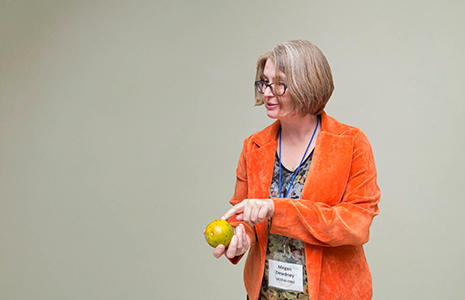
Dr. Megan Dewdney is an Associate Professor and Extension Specialist in the Department of Plant Pathology at the University of Florida's Citrus Research and Education Center. Her extension work focuses on integrated management strategies for citrus canker, citrus greening (huanglongbing), and fungal pathogens, while her research investigates the biology of bacterial and fungal pathogens to develop enhanced disease control methods. She holds a Ph.D. and leads active research programs in citrus pathology. Her primary research interests include: Integrated disease management systems for citrus pathogens Biology and epidemiology of fungal and bacterial diseases in citrus Development of molecular detection tools for plant pathogens Implementation of precision agriculture technologies for disease forecasting Physiological impacts of huanglongbing on citrus trees Analysis of her recent publications reveals strong emphasis on: Advanced detection methods using hyperspectral imaging and machine learning Genomic studies of fungal pathogens like Phyllosticta citricarpa Development of web-based disease advisory systems for growers Physiological management of huanglongbing-affected trees Molecular characterization of citrus pathogens She currently advises doctoral student Eva Mulandesa and collaborates with postdoctoral researcher Pamela Suellen. Her laboratory team includes research technicians, a lab manager, and program support staff focused on citrus pathology research.
Jun Yang is the Knut Schmidt Nielsen Distinguished Professor of Computer Science at Duke University's Trinity College of Arts & Sciences, with current appointments since 2014. He's also an Associate of the Duke Initiative for Science & Society. Education: Ph.D. and M.S. from Stanford University (2001), B.A. from University of California, Berkeley (1995) His research focuses on Databases and Data-Intensive Computing , particularly Computational Journalism to preserve public interest journalism through computing. He co-directs the Duke Database Research Group within the Systems and Architecture Group. Recent publications include work on SQL query debugging (Qr-Hint system), relational query education tools, and vaccine misinformation taxonomy. NSF grants (2024-2027, 2022-2026, 2020-2024) support his research, along with funding from Knight Foundation, NIH, Google, HP, and IBM. Scientific Awards: NSF III: Medium Responsive Optimization Grant, NSF III: Medium Ask the Experts Grant, NSF IIS: Small Grant, and multiple industry grants He maintains strong connections with No.7 High School of Chengdu alumni network, having created its web-based alumni system in the 1990s. His work combines technical innovation with societal impact applications.
Raquel Gómez-Díaz is Professor at the University of Salamanca's Department of Library Science and Documentation within the Faculty of Translation and Documentation. She holds qualifications including a Diploma in Library Science and Documentation, Graduate degree in Documentation, and PhD from the University of Salamanca. She teaches across multiple programs including the Bachelor's in Information and Documentation, Master's in Digital Information Systems, Master's in Textual Heritage and Digital Humanities, and Doctoral program in the Knowledge Society. Her research explores digital reading technologies (devices, applications, social reading), information sources , and library science . Key focus areas include reading behavior analysis, digital literacy development, educational technology implementation, and knowledge dissemination frameworks. Her work bridges library sciences with digital humanities and educational innovation. Publications demonstrate strong emphasis on digital reading ecosystems , educational technology evaluation , and scholarly communication . Research consistently examines technology adoption in educational contexts, digital resource management, and reading community development across academic, public, and youth settings. She has supervised 11 doctoral students to completion with research spanning library science, digital humanities, and educational technology. Since joining the faculty in June 2013, she has completed three recognized research periods (sexenios), the most recent in 2023.