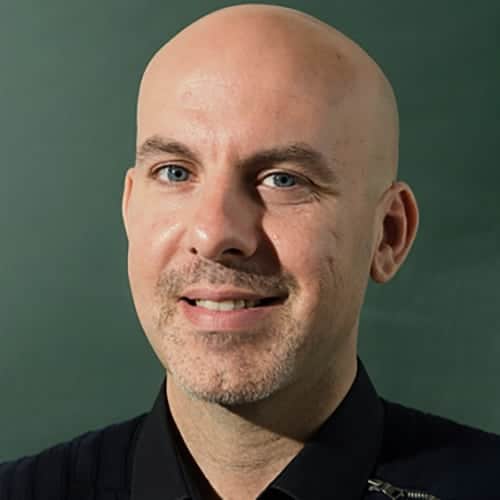
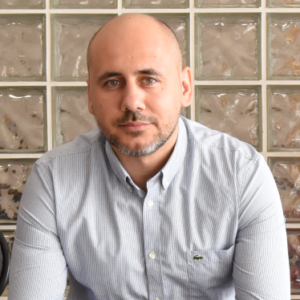
Steve Sprecher is a Lecturer in the Department of Computer Science at Northeastern University. His research focuses on network and web security, systems security, practical applications of machine learning in security, censorship measurement, and privacy. He holds a PhD from Northeastern University, advised by Engin Kirda, and earned his MS and BS in Computer Science from the University of Michigan, where he worked with J. Alex Halderman and Roya Ensafi on censorship, ransomware, and network measurement. His teaching experience includes serving as the Instructor of Record for Foundations of Computer Security & Privacy at Northeastern (Winter 2023), and as Head Graduate Student Instructor for the introductory computer security course at the University of Michigan (2017-2019). He has also held roles as a Teaching Assistant and Guest Lecturer in multiple security-related courses. Sprecher's publications address cutting-edge security challenges such as HTTP protocol vulnerabilities, third-party script management, and decentralized internet control mechanisms. His work bridges theoretical research with practical applications, emphasizing both technical depth and real-world impact.
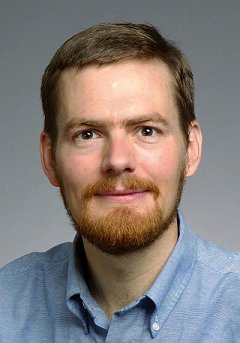
Prof. Annette Jackle is a Professor of Survey Methodology and Deputy Director of Understanding Society - the UK Household Longitudinal Study at the University of Essex. Her research focuses on innovative data collection methods, including mobile device integration, sensor data, and data linkage consent processes. She leads methodological experiments in longitudinal studies to improve participation rates and data quality. Key projects include the Understanding Society Innovation Panel, which explores event-triggered data collection, mobile app-based expenditure measurement, and consent mechanisms for administrative data linkage. Her work addresses barriers to participation, mode effects, and bias reduction in surveys. Recent studies analyze digital trace data during the pandemic, mobile app efficacy in probability/nonprobability panels, and the impact of question placement on consent decisions. Her research informs best practices for survey design in rapidly evolving technological landscapes. Jackle collaborates with institutions like ISER and the ESRC Research Centre on Micro-Social Change. She advises on survey methodology for large-scale studies and contributes to policy-relevant research through Understanding Society's extensive dataset.
Alex Arenas is a Full Professor in the Department of Computer Engineering and Mathematics at Universitat Rovira i Virgili (URV), Tarragona, Spain. He is also an External Faculty member at the Complexity Science Hub in Vienna and Chief of Complex Systems Science at the Pacific Northwest National Laboratory, USA. His research spans complex systems, network science, computational epidemiology, and multilayer dynamics, with applications in public health, neuroscience, and social systems. Research Interests: His work focuses on the physics of multilayer networked systems, particularly the interplay between structure and function in complex networks. Key areas include synchronization, epidemic modeling, network medicine, the physics of the microbiome, and higher-order interactions in spreading processes. He investigates dynamic transitions using functional multilayer frameworks and develops models for real-world systems like urban mobility and misinformation diffusion. The recent articles highlight a strong trend in computational epidemiology, especially post-COVID modeling of vaccination strategies, rebound dynamics, and wastewater surveillance. There is also significant work on synchronization in oscillator networks, chimera states, and higher-order network effects, reflecting a deep engagement with nonlinear dynamics and theoretical network science. Applications span medicine, urban planning, and social systems. Scientific Awards: Fellow, American Physical Society (2018) Fellow, Network Science Society (2020) ICREA Academia (2011, 2017, 2022) Narcís Monturiol Medal (2022) Web Science Trust Test of Time Award (2024) Complex Systems Society Senior Award (2024) Advising and Grants: Arenas has supervised numerous PhD students and postdoctoral researchers, though specific names are not listed. He has been Principal Investigator on 47 research projects, including EU FP7 projects, a James S. McDonnell Foundation grant, and Horizon Europe's CREXDATA project. He has served as an editor for Physical Review E , Journal of Complex Networks , and Network Neuroscience , and has reviewed for major funding agencies including ERC, MINECO, and international bodies. Labs and Teams: He leads the Alephsys Lab at URV, which develops tools like Radatools for network analysis and community detection. His team focuses on interdisciplinary modeling of real-world complex systems using data-driven and theoretical approaches.
Mark Iscoe, MD, MHS is an Assistant Professor of Emergency Medicine and Biomedical Informatics and Data Science at Yale School of Medicine. He holds fully joint appointments in both the Department of Emergency Medicine and the Department of Biomedical Informatics & Data Science, reflecting his interdisciplinary work at the critical intersection of clinical emergency care and health informatics innovation. Dr. Iscoe completed his medical degree at Johns Hopkins University School of Medicine in 2017, followed by residency training in Emergency Medicine at New York University / Bellevue Hospital in 2021. He further specialized with a Master of Health Science (MHS) in Clinical Informatics from Yale School of Medicine in 2023. He is board certified in both Emergency Medicine (2022) and Clinical Informatics (2024). His research spans several interconnected domains with a focus on optimizing the interface between emergency physicians and health information technology. Key areas include electronic health record (EHR) optimization, artificial intelligence applications in emergency settings, clinical decision support systems, and medication safety protocols. His 2024 JAMA Network Open publication 'Benchmarking Emergency Physician EHR Time per Encounter Based on Patient and Clinical Factors' represents a significant contribution to understanding the digital burden on emergency clinicians. More recently, he has pioneered work applying large language models to emergency medicine challenges, with multiple 2025 publications on AI applications for deprescribing, symptom identification, and risk stratification. His research trajectory shows a clear evolution from foundational EHR usage studies toward increasingly sophisticated AI implementations that bridge theoretical informatics with practical clinical tools in high-pressure emergency settings. YCCI Scholar Award for AI Research on Drug Reactions (2024) Dr. Iscoe has received research funding from multiple prestigious sources including the National Institute on Drug Abuse (NIDA), the American Medical Association (AMA), the National Institutes of Health, and Yale New Haven Health System. His collaborative network includes prominent researchers such as Andrew Taylor (6 joint publications), Ted Melnick (5 joint publications), and Rohit Sangal (4 joint publications), reflecting his work's multidisciplinary nature spanning clinical departments, informatics specialists, and data scientists.
Michael D. Ernst is a Professor in the Computer Science & Engineering department at the University of Washington's College of Engineering. His research aims to make software more reliable, more secure, and easier (and more fun!) to produce. Previously, he was a tenured professor at MIT and a researcher at Microsoft Research. Ernst's primary technical interests are in software engineering, programming languages, type theory, security, program analysis, bug prediction, testing, and verification. His research combines strong theoretical foundations with realistic experimentation, with an eye to changing the way that software developers work. He focuses particularly on programmer productivity and developing practical tools that can be integrated into developers' workflows. Analysis of his recent publications (2018-2025) reveals a continued focus on verification techniques, program analysis, and testing methodologies. His work spans from theoretical foundations of type systems to practical applications of NLP for test generation and LLMs for test oracle creation. A consistent theme is developing lightweight, modular approaches that can be practically applied in real-world development environments. Scientific Awards: ACM Fellow (2014) John Backus Award (2009) NSF CAREER Award (2002) ACM SIGSOFT Impact Paper Award (2013) 8 ACM Distinguished Paper Awards across multiple conferences ECOOP 2011 Best Paper Award Microsoft Academic Search ranked #2 in software engineering research (2013) Ernst has received significant research funding including the NSF CAREER Award, supporting his work on program analysis and verification techniques. His research combines theoretical rigor with practical impact, often resulting in tools that are adopted by the software engineering community. He actively collaborates with researchers across institutions and has served in leadership roles for major conferences in programming languages and software engineering. His research group develops practical tools that address real challenges in software development, with a focus on making verification and analysis techniques more accessible to working developers. Current projects include applying machine learning techniques to software engineering problems while maintaining strong theoretical foundations.
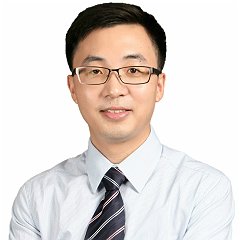
Yepang Liu is a tenured Associate Professor in the Department of Computer Science and Engineering at Southern University of Science and Technology (SUSTech) in Shenzhen, China. He leads the Software Quality Lab and serves as director of the Trustworthy Software Research Center within the Research Institute of Trustworthy Autonomous Systems. His educational background includes a B.Sc. with honors from Nanjing University (2010) and a Ph.D. from the Hong Kong University of Science and Technology (2015), where he was supervised by Prof. Shing-Chi Cheung. Prior to joining SUSTech, he worked as a postdoc at HKUST's CASTLE Lab and Cybersecurity Lab. Liu's research primarily focuses on software testing and analysis, empirical software engineering, AI for SE, software security, and trustworthy AI. His work bridges traditional software engineering with cutting-edge AI technologies, particularly in automated testing, security analysis, and quality assurance for mobile, blockchain, and extended reality applications. Recent projects explore how large language models can enhance bug detection, improve testing automation, and address fairness issues in machine learning systems. His contributions have been recognized with three ACM SIGSOFT Distinguished Paper awards (ICSE 2021, ASE 2016, ICSE 2014) and one Distinguished Artifact award (ICSE 2019). He has also received the ACM SIGSOFT Service Award and Distinguished Reviewer Award for his extensive service to the software engineering community. Top-10 Most Active Early-Stage Software Engineering Researcher (2013-2020) Top-10 Most Popular Instructor Among 2024 Undergraduate Graduates at SUSTech Junior Faculty of the Year (2021) SUSTech Teaching Excellence Award (2021) Outstanding Mentor Award (2020, 2024) Liu actively serves on the editorial boards of Empirical Software Engineering (EMSE) and Journal of Computer Science and Technology (JCST). He has participated in over 80 conference committees including leadership roles in ICSE, FSE, ASE, and ISSTA. His research is supported by the National Natural Science Foundation of China, National Key Research and Development Program, and leading Chinese IT companies. He regularly mentors PhD and MSc students and has guided multiple national competition award-winning teams. The Software Quality Lab under Liu's direction focuses on innovative approaches to software testing, security analysis, and quality assurance across various platforms including mobile, blockchain, and extended reality applications. Current projects emphasize the integration of AI techniques with traditional software engineering practices to address emerging challenges in software quality.
Yonghwi Kwon is a Visiting Assistant Professor in the Department of Computer Science at the University of Virginia. His research focuses on software systems security, cyber forensics, and software engineering. He received the CAREER Award for developing dynamic defenses against cyber threats. His work emphasizes securing software from cyber attacks, recovering forensic evidence, and improving software testing and reverse engineering techniques. Key research areas include memory safety mechanisms, automated vulnerability detection in web applications and mobile systems, and forensic analysis of phishing campaigns. He has pioneered frameworks like CMASan for memory allocator-aware sanitization and Racedb for detecting race conditions in database-backed systems. His contributions span cloud security automation, kernel exploitation analysis, and embedded system fuzzing. Notable achievements include the 2025 CAREER Award supporting his dynamic defense research, and impactful publications in areas like Android information leakage detection (DryJIN), Bluetooth protocol fuzzing (BTFuzzer), and autonomous driving bug discovery (Drivefuzz). His work bridges theoretical computer science with practical cybersecurity solutions.
Yinzhi Cao is an Associate Professor at the Johns Hopkins University Department of Computer Science . He serves as Technical Director of the Johns Hopkins Information Security Institute and is affiliated with the Data Science and Artificial Intelligence Institute and the Institute for Assured Autonomy . Cao joined JHU in 2018 from Lehigh University, where he was an Assistant Professor. Doctor of Philosophy (PhD) in Computer Science, Northwestern University (2014) Bachelor of Engineering (BE) in Electronic Engineering, Tsinghua University (2008) Research Interests focus on security and privacy of web, mobile, and machine learning systems . Key projects include Vulnerability Analysis of Web Applications and Security, Privacy, and Fairness Analysis of ML Systems . His work addresses prototype pollution in JavaScript, node.js vulnerabilities, browser fingerprinting, federated learning privacy, and automated exploit generation. Scientific Recognition includes the NSF CAREER Award (2021) DARPA Young Faculty Award (2022) & Director's Fellowship (2024) Amazon Research Awards (2022, 2017) IEEE Security & Privacy Test of Time Award (2025) Distinguished Paper Awards at IEEE S&P 2025, CCS 2023, USENIX Security 2022 Advising & Grants highlight mentorship of 20+ PhD and Master’s students across institutions. Major grants include $1.2M collaborative CICI TCR grant (2024-2026) with Dr. John Aucott $750K DARPA YFA grant (2022-2025) $500K NSF SaTC grant (2022-2025) NSF EAGER grant (2016-2017) Labs & Teams : Affiliated with Johns Hopkins Information Security Institute , Data Science AI Institute , and Institute for Assured Autonomy . Collaborates with institutions like Columbia, UC Santa Barbara, and SRI International. His group investigates real-world vulnerabilities in over 2,500 websites and NPM packages, uncovering 80+ zero-day issues.
Professor Ioannis Katakis is a Faculty Member at the University of Nicosia, where he is affiliated with the School of Sciences and Engineering and the Department of Computer Science. He has held various academic positions across multiple institutions including Aristotle University of Thessaloniki, University of Cyprus, Cyprus University of Technology, Open University of Cyprus, Hellenic Open University, Athens University of Economics and Business, and National and Kapodistrian University of Athens. His educational background includes a PhD in Machine Learning for Automated Text Classification (2005-2009), a Master's in Information Systems (2005-2007), and a Bachelor's in Computer Science (2000-2004), all from Aristotle University of Thessaloniki. Professor Katakis specializes in several cutting-edge areas of computer science and data analysis. His primary research interests include Mining Social, Web and Urban Data , Sentiment Analysis and Opinion Mining , Data Streams , and Multi-label Learning . His work bridges theoretical machine learning approaches with practical applications in social media analysis, healthcare informatics, privacy protection, and smart city technologies. He has published extensively in top venues including CIKM, ECML/PKDD, IEEE TKDE, and ECAI. His recent publications demonstrate a clear trend toward applying machine learning techniques to real-world problems with societal impact. He has focused on areas such as GDPR compliance in smart devices, sentiment analysis in crowd-sourced content, healthcare applications including drug reaction classification and brain disease monitoring, and privacy protection in wearable technologies. His work often involves multi-modal data analysis and addresses challenges in data streams and multi-label classification. Professor Katakis has made significant contributions to his field, with his research cited over 4,200 times. He serves as an Editor for the journal Information Systems and has edited four special issues in journals such as DAMI and InfSys. He regularly contributes to the academic community by serving on program committees for major conferences including ECML/PKDD, WSDM, DEBS, and IJCAI, and by reviewing for prestigious journals like TPAMI, DMKD, TKDE, TKDD, JMLR, TWEB, and ML. He has been actively involved in European research projects, notably serving as Quality Assurance Coordinator and Senior Researcher for projects such as VAVEL (www.vavel-project.eu) and INSIGHT (www.insight-ict.eu). His grant activities demonstrate a strong focus on collaborative, interdisciplinary research with practical applications in urban data management, social media analysis, and healthcare informatics. He has organized three workshops at major conferences (ICML, ECML/PKDD, EDBT/ICDT) and has extensive experience translating research into practical applications through his involvement in European projects.
Dr. Gaël Kermarrec is a researcher at the Boundary Layer Meteorology Group , part of the Institute of Meteorology and Climatology within the Faculty of Mathematics and Physics at Leibniz University Hannover . His work focuses on atmospheric turbulence, GNSS applications, and remote sensing for environmental monitoring. Boundary layer meteorology Turbulence theory GNSS signal processing Terrestrial laser scanning Climate change impacts Geodetic time series analysis His research integrates advanced mathematical models like LR B-splines and Matérn covariance with large eddy simulations to study: Atmospheric turbulence effects on optical/GNSS signals Hydrospheric mass loading Deformation analysis of terrain/port infrastructure Climatic sea-level changes Machine learning for remote sensing The 15 most recent articles (2025-2023) demonstrate his focus on: GNSS-based turbulence detection AI-enhanced climate mapping Advanced surface approximation techniques Multi-sensor data fusion Stochastic modeling of geodetic observations Environmental impacts on optical measurements He has developed tools like the Klimascanner QGIS plugin for urban climate resilience and contributes to: Understanding atmospheric scale lengths Improving TLS/GNSS deformation monitoring Analyzing hydrospheric changes Wavefront modeling Ionospheric corrections
Dr. Hai Phan is an Associate Professor in Data Science at New Jersey Institute of Technology's Ying Wu College of Computing. He holds a Ph.D. in Computer Science and Engineering from CNRS, University Montpellier 2 (2013), an M.S. from Konkuk University (2010), and a B.S. from HCM City University of Technology (2008). His research explores privacy-preserving machine learning and computational health analytics: Federated learning systems and optimization Privacy-enhancing technologies (differential privacy) Health informatics and social media analysis Cybersecurity defenses and adversarial learning Fair and ethical AI systems Dr. Phan's publications demonstrate strong emphasis on federated learning architectures with privacy guarantees, defenses against emerging security threats, and analysis of health-related behaviors through social media. Recent work focuses on IoT applications, large language model security, and mobile federated learning ecosystems. His research integrates techniques from distributed systems, cryptography, and machine learning. No scientific awards are mentioned in available sources. Information regarding student advising, research grants, or laboratory affiliations is not provided in available documentation.
Ion Androutsopoulos is a Professor of Artificial Intelligence in the Department of Informatics at Athens University of Economics and Business (AUEB), where he also serves as Head of Department. He is founder and co-director of AUEB's Natural Language Processing Group and an Adjunct Researcher at the Digital Curation Unit and "Archimedes" Research Unit of the Research Centre "Athena". His research spans multiple dimensions of Artificial Intelligence with a focus on Natural Language Processing. Key interests include: Machine learning in NLP, particularly deep learning and large language models Question answering and retrieval augmented generation for document collections Dialog systems for new languages and knowledge domains Sentiment analysis and emotion recognition from text and speech Detecting toxic posts and disinformation online Image-to-text generation for medical diagnostics NLP applications in biomedical, legal, and financial domains His recent publications demonstrate strong activity across medical AI (particularly ImageCLEFmed Caption competitions where his group consistently ranks 1st-2nd), legal NLP (LexGLUE benchmark), financial NLP (EDGAR-CRAWLER), and multilingual challenges. His work shows increasing emphasis on large language models, explainability, and practical applications. Notable awards include: Top 2% scientist worldwide (Stanford University database, 2023) Multiple AUEB Excellent Teaching Awards (2017-18, 2021-22, 2023-24) Three consecutive BioASQ awards (2018-2020) Multiple 1st/2nd place rankings in ImageCLEFmed Caption competitions (2021-2025) He actively organizes major events including the Athens Natural Language Processing Summer School (AthNLP) and SemEval tasks. His group maintains strong industry and research collaborations, particularly in medical AI applications where they've developed systems that generate diagnostic captions from medical images with state-of-the-art performance.
Prof. Oliver Faude is a Professor and Researcher at the Department of Motor Performance & Biomechanics within the University of Basel's Department of Sport, Exercise and Health (DSBG). His research focuses on exercise physiology, sports medicine, and the application of physical activity in managing chronic conditions like type 2 diabetes. He supervises doctoral students, including Vivien Hohberg, whose work on telephone-based health coaching for diabetes patients was published in the Journal of Science and Medicine in Sport. Faude collaborates on projects such as the dbcoach intervention, funded by Innosuisse and health insurers, demonstrating how personalized coaching increases physical activity in diabetic populations. His work also extends to musculoskeletal imaging innovations, such as the UMUD web application for ultrasonography data access, and the PrepAir study addressing chemotherapy-induced sensory dysfunction in children. Faude's interdisciplinary approach integrates clinical research, biomechanics, and public health, with a particular emphasis on aging populations and pediatric oncology. He contributes to injury prevention strategies in sports like badminton and soccer, while advancing methodologies for muscle volume assessment via 3D ultrasound and MRI comparisons. Key Projects: dbcoach program, PrepAir study, musculoskeletal imaging tools, agility training for frailty prevention. Grants: Innosuisse, SwissLife Foundation, Voluntary Academic Society of Basel. Students: Vivien Hohberg (PhD). Labs/Teams: Motor Performance & Biomechanics lab, collaborations with Prof. Bart Roelands (Vrije Universiteit Brussel) on overtraining syndrome research.
Michael Pradel is a full professor at the University of Stuttgart, specializing in software engineering, programming languages, and machine learning. He will join CISPA as a faculty member from September 2025 while retaining his Stuttgart position. His research focuses on: Neuro-symbolic software analysis Web application analysis Dynamic analysis and test generation Quantum software testing Machine learning for code Recent publications address: LLM-based program repair (RepairAgent, Treefix) WebAssembly analysis (Wasm-R3, LintQ) Python security and analysis (DyLin, DyPyBench) Quantum program analysis (LintQ) Scientific awards: Ernst-Denert Software Engineering Award Emmy Noether grant (1.3M Euro) ERC Starting Grant (1.5M Euro) 3x ACM SIGSOFT Distinguished Paper Award at FSE ACM Distinguished Member Best Paper/Distinguished Paper Awards at ISSTA, ASE, ASPLOS, MSR Key contributions include: DeepBugs for name-based bug detection Getafix for automated bug fixing LintQ for quantum program analysis DyLin for Python dynamic analysis Neuro-symbolic developer tools
Dr. Joseph Ndogmo is a Senior Academic Councillor in civil service for life at the Chair of Metal Construction at the Technical University of Munich (TUM), working under Prof. Martin Mensinger. He has been with the Chair since December 2005, initially as a Research Assistant, then as an Academic Councillor on probationary civil service status from November 2007 to June 2009, and as an Academic Councillor in civil service for life from July 2009 to June 2014, before being promoted to his current position as Senior Academic Councillor in July 2014. Dr. Ndogmo's educational background includes: Primary school in Yaoundé, Cameroon (1972-1978) High school in Batouri and Mbouda, Cameroon (1978-1985) Studies in Mathematics/Computer Science at the University of Yaoundé, Cameroon (1985-1986) Language course at the Herder Institute in Leipzig (1986-1987) Diploma in Engineering (Dipl.-Ing.) from the Friedrich List University of Transport in Dresden, majoring in road construction with specialization in bridge construction (1987-1992) Doctorate (Dr.-Ing.) from Technical University of Munich with thesis on "On the safety and economic reinforcement of bulging web plates of solid-wall girder bridges taking fatigue into account" (awarded November 27, 1997) Training as an international welding engineer at SLV Munich (January-April 2008) Dr. Ndogmo's research focuses on structural engineering with particular expertise in steel and composite bridge construction. His primary research interests include: Overall stability of steel composite bridges Plate and shell buckling phenomena External reinforcement elements for composite bridges Buckling verification according to Eurocode 3 standards Welding technology applications in structural engineering His work bridges theoretical structural mechanics with practical engineering applications, particularly in the context of bridge construction and maintenance. Dr. Ndogmo has made significant contributions to the understanding of buckling behavior in stiffened plates under various loading conditions, with numerous publications addressing both theoretical aspects and practical implementation of Eurocode standards. Dr. Ndogmo's recent publications (2016-2024) demonstrate a consistent focus on buckling analysis of steel structures, particularly in bridge applications. His work shows increasing sophistication in analyzing complex loading scenarios including biaxial stresses and eccentric load introduction. He has made notable contributions to the implementation of Eurocode 3 standards, particularly Part 1-5 on plate buckling. His research combines experimental testing with numerical analysis, providing practical insights for structural engineers. Professional memberships include: VSVI (Association of Road Construction and Traffic Engineers in Bavaria) DVS (The Connection Specialists) Technical Working Group 8.3 (Plate buckling) Working Group EN 1993-1-5 Working Group EN 1993-1-14 CEN / TC 250 / SC 3 / WG22 Dr. Ndogmo is actively involved in teaching at TUM, with courses including Assessment and preservation of historic steel structures, Welding Technology, Composite building and bridge construction, and Plate buckling and steel bridge construction. He also serves as a municipal councilor in Erdweg since 2014 and previously ran as a mayoral candidate in 2017 (finishing second with 32.4% of the vote).