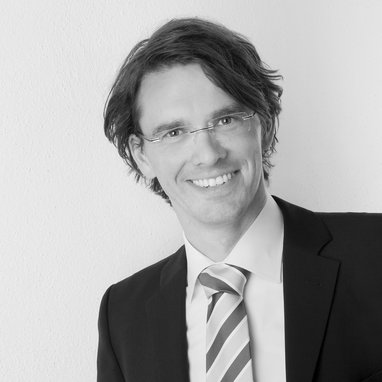
Michael BachView profile
Professor
Michael Bach is a Professor for Water Management and Hydraulic Engineering at Stuttgart University of Applied Sciences since 2019. He also serves as the International Relations Officer (Auslandsbeauftragter) of the institution. His work focuses on integrated approaches to water resources management and modeling. Professor Bach's educational background includes: Civil Engineering studies at TU Darmstadt (Diplom-Ingenieur) Master's work at KTH Stockholm, Sweden Doctorate (Dr.-Ing.) from TU Darmstadt in 2010 His research interests span Water Management , Hydraulic Engineering , and Integrated Catchment Modeling . Professor Bach has developed software tools like BlueM.Wave for time series management and analysis, and BlueM.Sim for integrated river basin simulation. His work addresses critical challenges in urban wastewater systems, water quality modeling, and flood risk management, with applications both in Germany and internationally, including projects in Thailand. An analysis of his publication record reveals a strong focus on integrated modeling approaches for water systems, particularly for complex land use areas and urban environments. His work with the BlueM software package represents a significant contribution to the field, providing free tools for integrated river basin management. Many of his publications address the implementation of the EU Water Framework Directive and explore energy optimization within water management systems. Professor Bach has led numerous research projects since 2004, including ENERWA (energy optimization of water management systems), TASK (reservoir adaptation strategies for climate change), and IMCOP (integrated modeling of runoff and substance flows). He has collaborated extensively with academic and professional institutions, contributing to guidelines like the HSGSim for integrated urban wastewater system modeling. At Stuttgart University of Applied Sciences, Professor Bach is associated with the Kompetenzzentrum "Neue Forschungsfelder" (New Research Fields), where he contributes to advancing water management research and education.