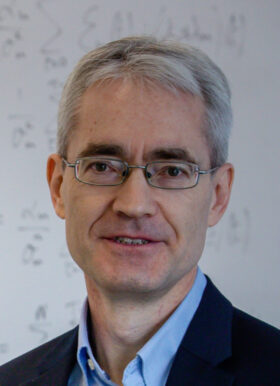
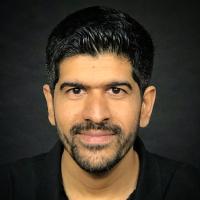
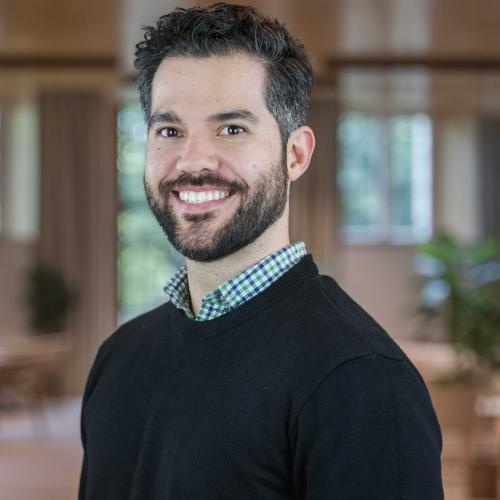
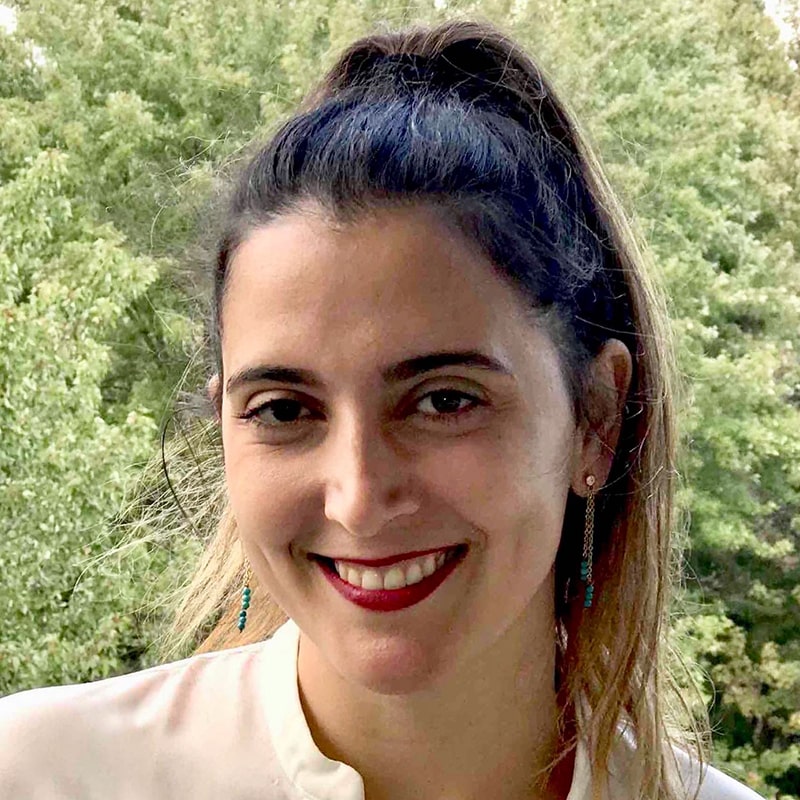
Satoshi Funabashi is an Assistant Professor in the Department of Intermedia Art and Science at Waseda University's School of Fundamental Science and Engineering, Japan. He is affiliated with the Graduate Program for Embodiment Informatics under Waseda University's Program for Leading Graduate Schools and contributes to multiple graduate schools including the Graduate School of Creative Science and Engineering. Education: Doctor of Engineering (Waseda University, 2017-2021) Research Focus: Robotics, tactile sensing, deep learning, and embodiment informatics Academic Appointments: Assistant Professor (non-tenure-track) His research centers on symbiotic robotics and tactile-driven manipulation, with recent publications exploring graph convolutional networks, vision-touch fusion, and morphology-specific deep learning for robotic hands. He has secured multiple competitive research grants including JSPS KAKENHI and JST ACT-I programs. Scientific Awards: Grant-in-Aid for Scientific Research (B) (KAKENHI), JSPS (2024-2027) Grant-in-Aid for Early-Career Scientists, JSPS (2022-2024) JST ACT-I Research Fellow (2020-2022, 2018-2020) JSPS Research Fellowship DC1 (2017-2020) He collaborates with the Intelligent Dynamics and Representation Lab (Prof. Tetsuya Ogata) and the Intelligent Machine Lab (Prof. Shigeki Sugano) at Waseda University. He has interned at MIT's CSAIL (2018-2019) and conducted research at UC Davis (2015). His work has been cited over 500 times with an h-index of 14 according to Google Scholar.
Geoffrey Goodhill is Professor of Neuroscience and Professor of Developmental Biology at Washington University School of Medicine, where he directs the Center for Theoretical & Computational Neuroscience. His laboratory bridges experimental and theoretical approaches to study brain development. Goodhill earned his BSc in Mathematics and Physics from the University of Bristol (1986), MSc in Artificial Intelligence from the University of Edinburgh (1988), and PhD in Cognitive Science from the University of Sussex (1992). His postdoctoral training included a Medical Research Council Fellowship and a Sloan Theoretical Neuroscience Fellowship at the Salk Institute. His research focuses on computational principles of brain development, particularly using larval zebrafish to investigate neural coding development, behavioral emergence, and alterations in Autism Spectrum Disorders. Key projects examine neural coding and spontaneous activity patterns zebrafish behavioral development autism-related circuit dysfunction calcium imaging analysis methods historical work on axon guidance mechanisms His recent publications show a clear trajectory from molecular gradient studies toward complex systems neuroscience using zebrafish models. Scientific recognition includes: Paxinos-Watson Prize (2012) Elspeth McLachlan Plenary Lecture (2019) Keynote at Computational Neuroscience Meeting (2020) Sloan Theoretical Neuroscience Fellowship (1995) The Goodhill Lab maintains an interdisciplinary team with backgrounds in biology, mathematics, physics and engineering. Current research analyzes human video data for early autism detection while continuing zebrafish neural circuit investigations. The lab has received consistent funding for its innovative approaches to developmental neuroscience questions.
Jan Theeuwes is a full Professor and current Head of Department at Vrije Universiteit Amsterdam's Department of Cognitive Psychology. With over 250 peer-reviewed publications, he leads research in visual attention, statistical learning, and distractor suppression mechanisms. His work bridges fundamental cognitive science with practical applications in road design and human factors. His educational background includes: BSc in Mechanical Engineering (1981) BSc and MSc in Experimental Psychology with highest honors (cum laude) from Tilburg University (1987) PhD from Vrije Universiteit with highest honors (1992) Theeuwes' research focuses on fundamental knowledge acquisition regarding perception, attention, memory, and emotion using diverse methodologies including behavioral measurements, eye tracking, fMRI, psychophysiological recordings, patient studies, and computational modeling. His specific contributions span attentional and oculomotor capture, working memory, multimodal integration, remapping, face perception, visual search, emotion processing, unconscious processing, the attentional blink, reward processing, and applied road design research. His recent work demonstrates how statistical learning shapes attentional selection by creating predictive models of where and when to expect relevant information. Analysis of his recent publications reveals a strong focus on the neural and behavioral mechanisms of learned distractor suppression, with particular emphasis on how statistical regularities in the environment shape attentional priority maps. His research increasingly integrates electrophysiological methods with behavioral paradigms to uncover the temporal dynamics of attentional selection and suppression processes. His notable scientific achievements include: Election to the Royal Dutch Academy of Science (KNAW) in 2010 Receiving the first Bertelson Award for outstanding psychological research from the European Society for Cognitive Psychology in 2001 Serving as president of ESCOP (European Society for Cognitive Psychology) from 2016 to 2018 Theeuwes serves as principal advisor to the Dutch Department of Transportation (Rijkswaterstaat) regarding road design and signing. In 2023, he co-founded Attention Architects with two former PhD students, a company applying eye-tracking research to practical settings. His work has received substantial research funding supporting his investigations into attentional mechanisms and their real-world applications. Theeuwes has established collaborations across multiple institutions and mentored numerous researchers who have gone on to establish their own careers in cognitive science. He leads the Cognition Team at Vrije Universiteit Amsterdam, which investigates fundamental attentional processes using cutting-edge methodologies. The team maintains strong connections with applied research settings through projects with government agencies and industry partners, particularly in transportation safety. Their current work focuses on how statistical learning dynamically shapes attentional selection in complex visual environments.
Dr. Jayesh Pillai is an Associate Professor at the IDC School of Design, Indian Institute of Technology Bombay, specializing in immersive media design, virtual reality, and augmented reality technologies. His work bridges the gap between design, technology, and storytelling, with a focus on creating meaningful user experiences in virtual environments. His research interests include: Immersive Media Design Virtual Reality & Augmented Reality Visual & Interactive Storytelling Interaction Design Dr. Pillai teaches courses in Design for Virtual Reality, Immersive Media Design, Interaction Design, and Trends in Interactive Technologies at the MDes level, as well as Digital Media Technologies at the BDes level. He has developed educational content through D'Source, including "Virtual Reality: Introduction." His recent publications demonstrate a strong focus on VR narrative techniques, AR educational applications, and social interactions in virtual spaces. His work explores audio-visual cues in 6DoF VR, interactive storytelling through digital game design, and the application of AR in mathematics education and vocational training. Dr. Pillai's research consistently examines how immersive technologies can enhance user experience, learning, and social connection. Dr. Pillai is the creator of "Cinévoqué," a form of responsive VR Cinema where storylines are driven by the viewer's point of interest, and has directed VR films including "Dragonfly" (2018) and "Manhole" (2022), which has been officially selected at multiple international film festivals. He leads the IMXD Lab at IIT Bombay, where his team conducts cutting-edge research in immersive media and interaction design. His work has been presented at major conferences including ACM SIGGRAPH, IEEE VR, and INTERACT.
Bor Gregorcic serves as an Associate Professor (Docent) and University Lecturer in Physics Education at Uppsala University's Department of Physics and Astronomy. His academic work bridges theoretical frameworks in science education with practical applications of educational technology. Gregorcic's research program spans several interconnected domains: Physics education research focusing on conceptual understanding in mechanics and statistical mechanics Embodiment and multimodal approaches to science learning Educational technology applications including interactive whiteboards and digital learning environments Emerging applications of artificial intelligence in physics education contexts Teacher professional development and pedagogical content knowledge His recent publication trajectory (2023-2025) reveals a significant pivot toward AI applications in physics education, with multiple studies examining ChatGPT's performance in interpreting physics concepts, visual representations, and kinematics graphs. This represents an evolution from his earlier foundational work on embodiment in science education and multimodal learning, where he explored conceptual blending, gesture studies, and the use of digital tools like Algodoo. His research consistently addresses how students develop conceptual understanding through various representational forms. Gregorcic has been recognized with the 'Excellent Teacher' award at Uppsala University, highlighting his commitment to pedagogical excellence. He maintains active research collaborations with Giulia Polverini, Elias Euler, Trevor Volkwyn, Ebba Koerfer, and other international scholars. His work appears predominantly in leading physics education research journals including Physical Review Physics Education Research, European Journal of Physics, and Physics Education, demonstrating significant impact in the field.
Vitor Lima serves as Assistant Professor of Marketing at ESCP Business School's Madrid campus. His academic journey includes a Postdoctoral Fellowship at Schulich School of Business/York University, establishing his international research profile. PhD in Business Administration (Marketing) from IAG/PUC-Rio and Schulich School of Business/York University MSc in Business Administration from FGV/EBAPE MBA in Marketing from FGV BA in Advertising with Branding extension from ESPM Digital Marketing Strategy Executive Certificate from Harvard University Professor Lima's research explores the intersection of emerging technologies and consumer behavior through critical theoretical lenses. His work examines how biohacking, transhumanism, and AI reshape human identity and consumption practices. He investigates consumer experiences with cyborg technologies, self-tracking devices, and human enhancement, often employing enactive and posthumanist frameworks to analyze these phenomena. His research methodology frequently incorporates arts-based and speculative approaches to examine technological futures. His recent publications reveal a strong focus on posthuman consumer identities, with significant contributions to understanding biohacking cultures, NFT implications, and human-robot interactions. The interdisciplinary nature of his work bridges marketing, philosophy of technology, and medical humanities, creating novel theoretical syntheses for analyzing technologically mediated consumption. AMS Mary Kay Doctoral Dissertation Award AMS Review - Sheth Foundation Doctoral Competition for Conceptual Articles (ADCCA) ACR Best Working Paper Award Professor Lima actively engages with media outlets including the BBC, translating complex academic concepts for broader public discourse. His collaborations extend beyond academia into practical applications of marketing theory, particularly regarding digital transformation and emerging technology adoption. His research on biohacking and human enhancement technologies has generated significant cross-disciplinary interest, influencing both academic and industry discussions about the future of consumer experiences.
Michael A. Silver is an Associate Professor in the School of Optometry and Vision Science at UC Berkeley, with affiliations in the Helen Wills Neuroscience Institute and the Department of Psychology. His research focuses on cognitive neuroscience, particularly the neurophysiological and neurochemical substrates of visual perception, attention, and learning. He leads the Silver Lab, which investigates topics such as visual attention mechanisms, perceptual learning, cholinergic pharmacology, and the effects of psychedelics on brain function. Silver holds a Ph.D. from UCSF and has been recognized with grants from the NIH, NSF, and private foundations. Education: B.S. Biological Sciences and Chemistry (Carnegie Mellon, 1991); Ph.D. Neuroscience (UCSF, 1999). Awards include the Howard Hughes Medical Institute Predoctoral Fellowship and Hellman Family Faculty Fund. He mentors graduate students and postdoctoral researchers in vision science and neuroscience. Research interests span visual neuroscience, including the impact of psychedelics (e.g., psilocybin) on neural substrates of perception and cognition. His lab collaborates with institutions like Stanford University and UC Irvine to explore therapeutic applications of psychedelics and age-related auditory decline. Key projects include cholinergic modulation of attention and perceptual learning, and functional subdivisions of the lateral geniculate nucleus. Recent articles highlight studies on attentional modulation of visual crowding, effects of psychedelics on predictive coding, and GABA levels in amblyopia. Silver teaches courses on visual cognitive neuroscience and supervises over 20 graduate students and postdocs. His grants total over $5M, supporting work on nicotine therapy for auditory decline and psychedelic science.
Päivi Häkkinen is a **Professor and Vice Director** at the **Finnish Institute for Educational Research (FIER)**, part of the University of Jyväskylä. Her research focuses on technology-enhanced learning, particularly in collaborative problem-solving, computer-supported collaborative learning (CSCL), and the integration of virtual/augmented reality in education. She leads projects like the EDUCA Flagship for future education and LearnDigi , exploring digitalization in learning. Research Interests: She investigates ICT integration in education, learning analytics, and the cognitive and social dynamics of collaborative learning. Her work emphasizes remote collaboration mechanisms, digital tools for assessment, and AI-driven educational innovation. Key Projects: EDUCA Flagship: Addresses future education challenges through interdisciplinary research. LearnDigi: Examines technology’s role in knowledge construction and digitalization impacts. METEOR: Enhances transversal skills for early career researchers via teamwork methodologies. Recent Work Trends: Her publications analyze joint attention in remote collaboration, AI-human partnerships in education, and neural bases of problem-solving. She emphasizes practical applications for teachers and educators. Labs/Teams: Active in FIER and LearnDigi, focusing on collaborative learning design and technology evaluation.
Leila Wehbe is an Associate Professor in the Machine Learning Department and Neuroscience Institute at Carnegie Mellon University (CMU), with affiliations in Psychology and Computational Biology. She leads a research group focused on understanding high-level brain representations of language and vision using machine learning techniques. Her work combines neuroimaging (fMRI/MEG) with computational models to investigate how the brain processes meaning and visual stimuli. Education : PhD in Machine Learning from CMU, advised by Tom Mitchell BE in Electrical and Computer Engineering from the American University of Beirut Postdoc at UC Berkeley's Helen Wills Neuroscience Institute with Jack Gallant Research Interests : Her research bridges cognitive neuroscience and AI, focusing on: Decoding language and visual processing from brain activity Developing machine learning models aligned with brain representations Investigating semantic composition in language Exploring visual cortex selectivity for objects/food Improving neural decoding with advanced methods (e.g., transformers, generative models) Awards & Recognition : NSF CAREER Award (2022) NIH R21/R01 Awards Human Frontier Science Program Award Google Faculty Research Award Grants & Labs : Leads the Wehbe Lab, part of brAIn at CMU. Active in grant programs including NSF and NIH, focusing on language-brain alignment and visual cortex studies. Co-organized workshops at ICLR and CVPR on brain-inspired AI.
Hari Subramonyam is an Assistant Professor (Research) at Stanford University's Graduate School of Education with a courtesy appointment in Computer Science. He serves as the Ram and Vijay Shriram Faculty Fellow at Stanford's Institute for Human-Centered AI (HAI) and is a core faculty member of Stanford HCI. Subramonyam earned his PhD in Information from the University of Michigan under advisor Eytan Adar. His research focuses on the intersection of Human-Computer Interaction (HCI) and Learning Sciences, specifically developing AI systems to augment human learning through cognitively informed design, co-design with educators, and transformative learning experiences. His work prioritizes ethical AI, responsible design practices, and human values in technology creation. Research spans generative AI for education, human-AI interaction paradigms, and accessible learning technologies. Subramonyam's publications demonstrate strong focus on human-centered AI systems for education, visualization, and creative applications. His recent work (2023-2025) concentrates on generative AI interfaces for writing assistance, educational tools, and collaborative systems, while maintaining consistent exploration of visualization techniques and AI transparency frameworks. Awards & Honors: Best Paper Award at CHI (2025, 2020, 2019) Honorable Mention Award at CHI (2025) Best Paper Award at IUI (2021) Ram and Vijay Shriram Faculty Fellow HAI Hoffman Yee Grant (2024) Cover Story in Interactions Magazine (2024) Advising & Grants: Leads 27 students including PhD advisee Neha Rajagopalan (co-advised) and diverse MS/BS researchers. Received HAI Hoffman Yee Grant (2024) for "Integrating Intelligence: Building Shared Conceptual Grounding for Interacting with Generative AI" as co-investigator. Teaches courses on data visualization (CS 448B) and educational technology design (EDUC 432). Labs & Leadership: Core faculty at Stanford HCI group, directing research on human-centered AI systems. Organizes workshops including "Tools for Thought" (CHI 2025) and "Human–AI Coevolution" (ICLR 2025). Maintains collaborations with National University of Singapore and University of Michigan.
Dr. Clara Colombatto is an Assistant Professor in the Department of Psychology at the University of Waterloo, where she directs the Vision and Cognition Lab. She holds an honorary lecturer position at University College London and a PhD from Yale University. Her research explores how visual perception extracts social and cognitive states from others, focusing on attentiveness, confidence, and metacognition. She investigates non-biological agents like AI and the perceptual roots of social cognition, including group dynamics and moral judgment. Education: BS in Neuroscience and Philosophy, Duke University PhD in Psychology, Yale University Postdoctoral Research Fellow, University College London Research Interests: Perception of attentiveness and metacognition, social group perception, AI ethics, moral judgment, and visual cognition. Her work bridges cognitive psychology, vision science, and social psychology to understand how humans perceive other minds and interact with non-human agents. Recent Trends in Articles: Recent work emphasizes human-AI collaboration, trust in technology, and perceptual foundations of social interaction. Key themes include gaze dynamics, confidence attribution in AI, and optimal group size perception. Grants & Collaborations: Collaborates with institutions like Princeton University, University of Oxford, and Microsoft Research. Her team includes students working on topics like robot teleoperation and moral narratives. Labs & Teams: Leads the Vision and Cognition Lab at Waterloo, focusing on experimental psychology and computational modeling. Current projects explore metacognition in advice-taking and perceptual grouping in social interactions.
Alan A. Stocker is a Professor in the Department of Psychology at the University of Pennsylvania, with affiliations in the Neuroscience Graduate Group, Bioengineering Graduate Group, and Computational Neuroscience Initiative. He leads the Computational Perception and Cognition (CPC) Laboratory, focusing on how prior beliefs and expectations shape sensory perception through Bayesian inference and efficient coding principles.
Thomas Bjørner is an Associate Professor at Aalborg University's Department of Architecture, Design and Media Technology within The Technical Faculty of IT and Design. He serves as Head of the Media Innovation & Game Research (Me-Ga) unit and co-founded the research network for qualitative methods (since 2007) with 40+ company collaborations. Specializes in qualitative/mixed methods for technology evaluation Teaches PhD courses in advanced qualitative methods EU expert evaluator for research grants His research focuses on gamified learning , VR for social communication , and technology acceptance studies , often addressing UN Sustainable Development Goals. Recent projects include: Audio-only VR for blind gamers Generative AI integration in education Plastic crisis awareness games Smart city implementation barriers Scientific Awards: Serious Game Competition Award (2022) International conference prizes (2020, 2018) With over 121 publications including two textbooks, his work emphasizes applied qualitative methods with improved validity in technology contexts, particularly for youth education and media research.
Mia Filic is a Full Professor of Theoretical Philosophy at the Faculty of Philosophy of the Università Vita Salute San Raffaele in Milan. She holds a doctoral affiliation with ETH Zürich's Department of Computer Science (D-INFK) and is affiliated with the Institute for Information Security. Her career includes teaching aesthetics at the Venice Academy of Fine Arts and collaborating with Massimo Cacciari at the IUAV. She co-founded the journal Paradosso and directs the column Theorein in Anfione-Zeto . Education: Graduated from the University of Venice in 1981 under Emanuele Severino Research Focus: Ontology, aesthetics, philosophy of music, and interdisciplinary studies in arts Her work bridges philosophy with art, literature, and music, emphasizing ontological questions in contemporary cultural production. Recent publications explore photography's philosophical dimensions, Lucio Battisti's musical philosophy, and Calvino's narrative structures. Awards: Premio Capalbio (2014) Labs/Teams: Co-director of Diaporein Research Center (meta-physics and philosophy of arts)
Dr. Sanford R. Student is an Assistant Professor in the School of Education at the University of Delaware and a Resident Faculty member of the Data Science Institute. His research focuses on connecting psychometric methodologies with practical educational implications, particularly in academic growth measurement, large-scale science assessments, and instrument design. He holds a Ph.D. in Research and Evaluation Methodology from the University of Colorado Boulder (2023) and dual B.A.s in Philosophy and Computer Science from Brown University (2013). Dr. Student’s professional experience includes roles as a Research Associate at Lyons Assessment Consulting (2021–2023), Doctoral Researcher at the Center for Assessment Design, Research and Evaluation (2018–2023), and Lead Researcher for the American Bar Association’s Bar Exam study (2019–2020). Prior to academia, he worked as a Software Engineer at edX (2016–2018). His awards include selection for the 2020 AIR/NCES NAEP Data Training Workshop. Current research trends in his publications emphasize Bayesian methods, vertical scaling, and crosscutting concepts in science education. He actively contributes to educational policy discussions through work with state agencies and assessment developers. Dr. Student advises graduate students and collaborates on grants related to growth measurement and educational data systems. He is affiliated with the National Council on Measurement in Education and maintains a lab focusing on applied psychometric challenges in K-12 systems.