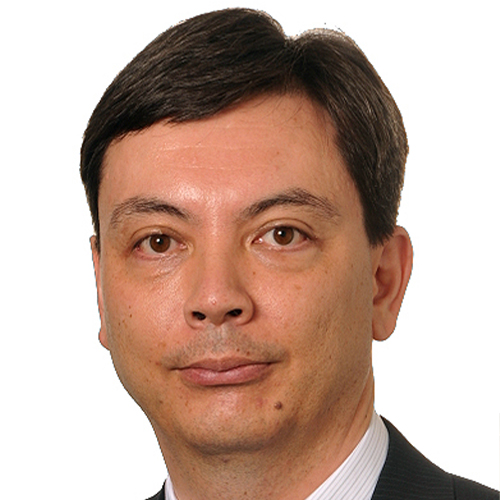
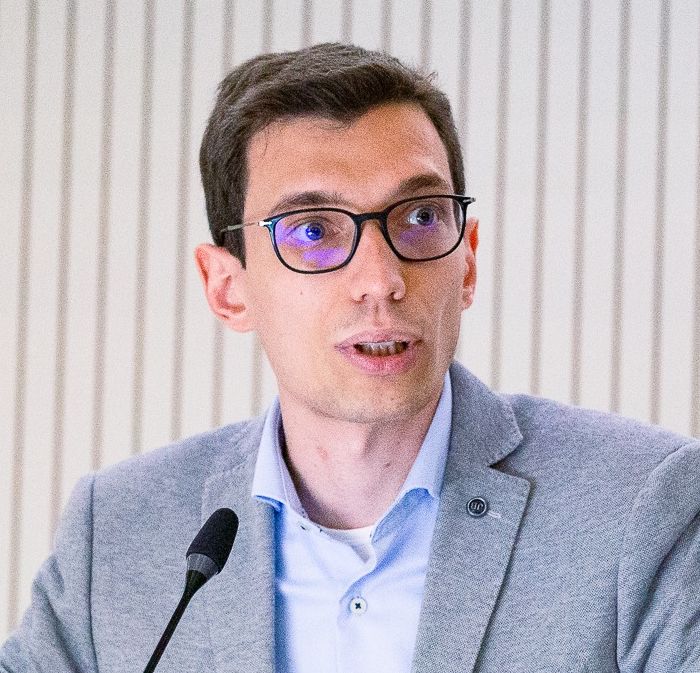
Dr. Tim Conrad is a researcher at the Zuse Institute Berlin in the Visual and data-centric computing department under the Mathematics of Complex Systems division. He leads projects at the intersection of computational biology, AI, and medical data analysis. Projects: Geometric Learning for Single-Cell RNA Velocity Modeling, MODAL MedLab, Sparse Compressed Sensing in -Omics Data, BIFOLD (Big Data and Machine Learning) Research Networks: Affiliated with MATH+ and MODAL Research Campus His research focuses on applying machine learning , network optimization , and sparse data analysis to biological and medical challenges including disease modeling, microbiome dynamics, and ECG classification. Recent work explores hybrid PDE-ODE epidemic models and federated learning in healthcare. 2023-2025 publications highlight trends in AI for biological networks , temporal community detection , and medical signal processing . He co-authored studies on SARS-CoV-2 simulations, proteomics feature selection, and multi-label ECG analysis. His 2004 doctoral thesis at Monash University laid foundations for later work in metabolic pathway analysis. Awarded as a Zuse Fellow , he contributes to open science initiatives like FAIR data sharing . Collaborations span institutions including Freie Universität Berlin and Charité in medical informatics and clinical applications.
Christopher G. Healey is the Goodnight Distinguished Professor of Analytics in the Institute for Advanced Analytics and a Professor in the Department of Computer Science at North Carolina State University. His research spans visualization, data analytics, text analytics, sentiment analysis, machine learning, cognitive psychology, computer graphics, and social media analytics. He has graduated 15 Ph.D. and 26 master's students and secured over $6 million in research funding from agencies including the National Science Foundation, Department of Defense, National Security Agency, Army Research Office, and various industry partners. He has published over 100 peer-reviewed articles and is a senior member of both IEEE and ACM, as well as a member of the NC State Academy of Outstanding Teachers. His research focuses on developing visualization techniques that leverage visual perception to support rapid, accurate, and effective analysis of large, complex datasets. More recently, he has been investigating machine learning for natural language processing and text analytics. His work includes projects on visualizing election results, sentiment estimation for social media, and wildfire narratives using large-scale social media data. His publications demonstrate a strong trend toward integrating machine learning with visualization, particularly for text analytics and social media analysis. He has made significant contributions to visualizing deep neural networks, cyber situation awareness, and pandemic response analytics, showing how visualization can enhance understanding of complex systems and large datasets across multiple domains. IBM Faculty Award (2007, 2008, 2010, 2011, 2012) Senior member, Association of Computing Machinery (ACM) (2007) Senior member, Institute of Electrical and Electronics Engineers (IEEE) (2007) NC State Academy of Outstanding Teachers inductee (2003) National Science Foundation Faculty Early CAREER Award (2001) He has successfully mentored numerous graduate students and secured significant research funding across multiple projects. His work with the Laboratory for Analytic Sciences, National Science Foundation, and Department of Defense demonstrates strong industry and government partnerships. His recent projects focus on visualizing social media narratives, deep neural networks for text understanding, and predictive analytics for large document collections. He leads research groups focused on visualization and analytics, working with teams to develop innovative approaches for data exploration and analysis. His current work continues to push the boundaries of how visualization can be used to enhance understanding of complex data across domains including public health, cybersecurity, and social media analysis.
Rob Patro is an Associate Professor in the Department of Computer Science at the University of Maryland, with an appointment at the University of Maryland Institute for Advanced Computer Studies. His work bridges computational biology and computer science, focusing on algorithm design and data structures for genomics applications. Education: Ph.D. in Computer Science, University of Maryland, College Park (2012) B.S. in Computer Science, University of Maryland, College Park (2006) with academic and departmental honors Patro’s research centers on developing computational methods for analyzing high-throughput genomics data, combining algorithmic innovation with statistical inference. His work extends to programming languages, parallel computing, and machine learning applications in biology. His publications at ISMB, RECOMB, and in journals like Nature Methods and Cell Systems highlight advancements in RNA-seq quantification, metagenomic analysis, and compressed genomic representations. These contributions emphasize efficiency and scalability in genomic data processing.
Lorenzo Baraldi is an Associate Professor at the University of Modena and Reggio Emilia, where he leads research in deep learning, vision-language integration, and multimodal AI systems. He serves as an ELLIS Scholar and Coordinator of the Modena ELLIS Unit, and has held the position of deputy director at the Interdepartmental Center on Digital Humanities since 2021. Previously, he worked at Facebook AI Research laboratory in Paris in 2017, developing video-matching algorithms for content moderation. His research spans multiple areas including Vision-and-Language integration, Multimodal Retrieval, Image and Video Captioning, Visual-Semantic alignment, Large-Scale model development, High Performance Computing, and Embodied AI. With over 120 publications in international journals and conferences, his work demonstrates consistent contributions to advancing multimodal AI capabilities. He has served as an Associate Editor for Computer Vision and Image Understanding and Pattern Recognition, and as Area Chair for major conferences including ICCV, WACV 2026, and ACM Multimedia 2025. His recent publication record shows significant impact in the field, with multiple papers accepted to top-tier conferences in 2024-2025 including CVPR, ICCV, BMVC, ICLR, ECCV, and NeurIPS. Notably, his paper "Hyperbolic Safety-Aware Vision-Language Models" was selected as a highlight paper at CVPR 2025. His research often involves collaboration with Rita Cucchiara and other researchers at his institution. ELLIS Scholar and Coordinator of the Modena ELLIS Unit Associate Editor for Computer Vision and Image Understanding Area Chair for ICCV and major multimedia conferences Highlight paper at CVPR 2025 Professor Baraldi teaches courses in Computer Vision and Cognitive Systems, Scalable AI, and Computer Architecture for the Artificial Intelligence Engineering and Computer Engineering programs. His teaching spans both undergraduate and graduate levels, with a focus on providing students with both theoretical foundations and practical implementation skills. He has developed educational materials including Deep Learning tutorials for classroom instruction.
Prof. Daniel Große serves as Professor at the Institute for Complex Systems (ICS) within Johannes Kepler University Linz, Austria, while maintaining a dual affiliation with the German Research Center for Artificial Intelligence (DFKI) in Bremen. His research centers on Electronic Design Automation (EDA), specializing in verification, debugging, and synthesis of complex hardware/software systems through advanced virtual prototyping techniques. His primary research domains include Formal Verification , Hardware Verification , and Virtual Prototyping , with significant contributions to RISC-V architecture development and embedded systems validation. Current projects like PaSVer (automotive electronics), AUTOASSERT (analog-digital verification), and VerSys (RISC-V software platforms) demonstrate his focus on bridging simulation and formal methods for safety-critical applications. Recent publications reveal accelerating trends in metamorphic testing for embedded graphics libraries and RISC-V vector extensions, alongside innovations in waveform analysis tools like Surfer. His work increasingly integrates AI-assisted verification while maintaining rigorous formal methods foundations. Prof. Große actively supervises student research, having guided Lucas Klemmer's PhD thesis and nine Bachelor theses on topics ranging from RISC-V processor design to transaction visualization. His projects including SATiSFy (autonomous vehicle security) and CONVERS (complex system design automation) secure substantial research funding from academic and industry partners. He leads the Institute for Complex Systems' development of open-source tools such as RISC-V VP++ and contributes to international standards through program committee roles at DATE, ICCAD, and RISC-V Summit Europe.
Kevin Chenchuan Chang is a Professor in the Department of Computer Science at the University of Illinois at Urbana-Champaign (UIUC), affiliated with the FORWARD Data Lab and the Data and Information Systems Laboratories. His research focuses on bridging structured and unstructured data through natural language processing, data mining, machine learning, and information retrieval, with applications in web search, social media analytics, and knowledge acquisition. He co-founded Cazoodle and developed GrantForward.com, a funding discovery platform used by leading institutions globally. Education: Ph.D. in Electrical Engineering from Stanford University (2001), B.S. from National Taiwan University. Professional roles include service on program committees for SIGMOD, VLDB, KDD, and NeurIPS, as well as editorial roles for PVLDB, TKDE, and the Encyclopedia of Database Systems. His awards include the ICDE 10-Year Test of Time Award (2022), NSF CAREER Award (2002), and multiple UIUC teaching excellence recognitions. He teaches courses such as CS 411 (Database Systems), CS 598 KCC (Understanding LLMs), and CS 511 (Advanced Data Management). Research contributions span graph algorithms (e.g., Geom-GCN, SimRank), social network analysis (ROSE), and NLP (DEER, Open Relation Modeling). The FORWARD Lab emphasizes real-world impact through systems like GrantForward and tools for analyzing large-scale data.
Yanxi Liu is a Professor in the Department of Computer Science and Engineering and the Department of Electrical Engineering at Pennsylvania State University. She is affiliated with the Huck Institutes of the Life Sciences and holds multiple NSF grants focusing on computational symmetry, regularity perception, and human movement analysis. Her work bridges computer vision, cognitive science, and medical imaging. Education details not explicitly listed in provided text. Key research areas include computational symmetry, near-regular textures, human perception of patterns, and medical image analysis. Notable projects include 'RI: Medium: From Vision to Dynamics' (2023-2026) and 'INSPIRE: Symmetry Group-based Regularity Perception in Human and Computer Vision' (2012-2016). Her research emphasizes symmetry-driven approaches for urban scene analysis, medical diagnostics (e.g., brain asymmetry in Alzheimer's), and dynamic motion modeling. She has co-authored over 100 publications and pioneered methods like lattice-based tracking and symmetry-based mid-sagittal plane extraction in neuroimaging. Funding includes grants from NSF totaling over $5M, supporting interdisciplinary work in vision science and AI. Collaborations span neuroscience, biomedical engineering, and architectural pattern analysis.
Kathy Fontaine serves as Senior Lecturer in Information Technology and Web Science at Rensselaer Polytechnic Institute and Program Manager for the RPI-IBM AI Research Collaboration. She joined RPI in 2014 after 25 years at NASA Goddard Space Flight Center where she developed international data access policies through CEOS WGISS, GEO, and USGEO. Her educational background includes: B.S. in Physics with Astrophysics Option from New Mexico Institute of Mining and Technology (1984) M.A. in Science, Technology and Public Policy from The George Washington University (2002) Ph.D. in Public Policy and Public Administration from Walden University (2013) Dr. Fontaine's research integrates data science policy with ethical frameworks, focusing on international data sharing cultures and volunteer organization dynamics. She develops courses like Big Data Policy and Ethical Informatics that address data scientists' societal responsibilities. Her work examines how policy implementations affect global earth observation systems and research data ecosystems, with particular attention to cross-cultural collaboration challenges in scientific consortia. Analysis of her publications reveals strong interdisciplinary connections between earth sciences and computer science, with emerging trends in data dexterity training, knowledge graph applications for social equity, and mineral inventory data legacies. Her research increasingly bridges technical data infrastructure with ethical considerations in data sharing. Dr. Fontaine actively contributes to scientific communities through the Earth Science Information Partners (ESIP), where she serves on GEO's Programme Board, and maintains affiliations with AGU, ACM Web Science, IEEE GRSS, and IEEE SSIT. Her current leadership in the RPI-IBM AI Research Collaboration extends her mission to develop responsible AI frameworks.
Dr Crispin Branfoot is a Reader in the History of South Asian Art and Archaeology at SOAS University of London, affiliated with the School of Arts and the Department of History of Art and Archaeology. He holds a BA in Ancient History and Archaeology from Manchester University, and an MA and PhD in Art and Archaeology from SOAS. His research focuses on the arts of southern India from the 14th to 20th centuries, with emphasis on Hindu temple architecture, colonial-era renovations, and the intersection of photography, archaeology, and conservation. He has supervised four PhD students examining topics ranging from temple iconography to colonial paper-making practices. His work explores how sacred spaces like the Minakshi-Sundareshvara temple in Madurai were reconfigured through colonial and post-colonial interventions, while also analyzing pilgrimage routes, portraiture traditions, and the legacy of the Vijayanagara Empire. He has contributed to major publications such as India: A History in Objects (2022), and his research bridges material culture studies with postcolonial theory. He previously worked at De Montfort University and the British Museum, where he gained expertise in South Asian art curation and historical documentation.
Prof. Alexander Geissler holds the position of Full Professor of Health Care Management at the School of Medicine (Med-HSG) within the University of St. Gallen. His research focuses on health systems research, health economics, and health policy, with particular emphasis on digital transformation in healthcare and patient-reported outcomes. He has contributed extensively to studies on healthcare quality improvement, public reporting systems, and the integration of artificial intelligence in medical diagnostics and screening programs. His work spans topics like optimizing hospital digital maturity (e.g., German DigitalRadar project), analyzing surgical outcomes (robotic vs. open prostatectomies), and evaluating patient empowerment through quality information. He has pioneered methodologies for interpreting patient-reported outcomes (e.g., EQ-5D-3L) and designing clinical dashboards to enhance care delivery. Recent research highlights include investigating AI applications in breast cancer screening and cost-effectiveness of remote patient monitoring post-joint replacement surgery. Geissler’s publications demonstrate a strong focus on healthcare policy implications, such as hospital capacity planning, payment systems for specialized care, and cross-country comparisons of healthcare transparency initiatives. His work frequently bridges academic rigor with practical policy recommendations, particularly in Switzerland and Germany. Notably, he has addressed low-value care reduction, price sensitivity in healthcare demand, and the socio-demographic factors influencing healthcare utilization. While no specific awards are listed, his prolific research output reflects sustained leadership in health systems analysis. His academic contributions are disseminated through the Alexandria Research Platform and international peer-reviewed journals.
Anup Basu is a Professor in the Department of Computing Science at the University of Alberta. His research focuses on computer graphics, computer vision, and multimedia communications. He holds an B.S. in Math & Statistics from the Indian Statistical Institute (1980), an M.E. in Computer Science from the Indian Statistical Institute (1983), and a Ph.D. in Computing Science from the University of Maryland (1990). His work emphasizes Quality of Service (QoS) in multimedia delivery for e-commerce and telelearning, adaptive bandwidth monitoring, and 3D visualization tools. He pioneered foveated image compression and stereo visualization techniques, contributing to MPEG-4 coding standards. He leads major initiatives like the ASRA/TelePhotogenics/IBM 3D Medical Imaging project ($2M+ funding) and developed patented SHR Stereo/3D scanning technologies. Awards include the American Neurological Association Fellowship. He has held leadership roles as General Chair for IEEE International Conferences on SMC (2017), Multimedia & Expo (2013), and SMC (2014). His research integrates interdisciplinary collaborations across universities and industry partners, leveraging advanced equipment like the CAVE system for immersive visualization.
Kathryn Nave is a Leverhulme Trust Early Career Research Fellow at the University of Edinburgh's School of Philosophy, Psychology and Language Sciences. Her research critiques the 'machine concept' of organisms and develops a realist account of autonomy through metabolic processes. She holds a PhD in Philosophy (2022) and MSc in Mind, Language, and Embodied Cognition (2016) from the University of Edinburgh, alongside a BA in Philosophy from King's College London (2013). Her work bridges philosophy of mind, cognitive science, and biology, focusing on predictive processing's limitations in explaining life. Key contributions include critiques of the Free Energy Principle and explorations of embodied cognition. Recent publications analyze survival mechanisms in living systems and the role of prediction in conscious experience. Awards include the Leverhulme Fellowship, Analysis Trust grant, and ERC PhD studentship. She collaborates with the Association for Mathematical Consciousness Science and explores interdisciplinary intersections between philosophy and life sciences.
Dr. Pulin Gong is an Associate Professor in the School of Physics at the University of Sydney. His research focuses on understanding the self-organizing mechanisms of neural circuits' spatiotemporal dynamics and their computational principles. He investigates distributed dynamic computation via propagating neural waves, irregular neural activity variability, and coherent spatiotemporal patterns in large-scale neural data. His work combines experimental and computational approaches to unravel neural coding principles. Research interests include: Distributed dynamic computation (e.g., visual feature integration) Irregular neural dynamics and membrane potential fluctuations Coherent spatiotemporal wave patterns (e.g., spiral waves) Recent projects involve analyzing cortical wave patterns in mice and primates, fractional neural sampling, and Lévy walk dynamics in neural systems. Collaborators include institutions like Fudan University and Kyoto University. Current research student: Andrew LY, working on cortico-cortical loop dynamics and AI applications.
Iro Laina is a Departmental Lecturer in Computer Vision at the University of Oxford's Visual Geometry Group. She holds a PhD (Dr. rer. nat.) from the Technical University of Munich (TUM), where her dissertation earned the ECVA PhD Award. Her research focuses on unsupervised and language-supervised learning for 3D scene understanding, image/video perception systems, and geometric reconstruction. Education: PhD in Computer Science (TUM), MSc in Biomedical Computing (TUM), Diploma in Electrical & Computer Engineering (NTUA). Research Interests: 3D Reconstruction and Generation Unsupervised Learning Multi-View and Video Analysis Generative Diffusion Models Geometry-Aware Networks Her recent work emphasizes scalable 3D scene synthesis, training-free methods, and cross-modal fusion with LLMs. Over 15+ publications since 2021 reflect her leadership in geometric deep learning. Awards: ECVA PhD Award (2020), Recognized in multiple international conferences. Advising: Mentors DPhil students in creative AI applications (e.g., gameplay design). Active in Oxford's Robotics and Biomedical Engineering networks. Labs/Tech: Core member of the Visual Geometry Group, collaborating on projects like IMAD2025 with the ZERO Institute.
Gillian Hayes is the Vice Provost for Academic Personnel and a Chancellor’s Professor at the University of California, Irvine (UCI). She holds joint appointments in the Department of Informatics (Donald Bren School of Information and Computer Sciences), School of Education, and School of Medicine. Her research focuses on human-computer interaction, assistive technologies, and digital health interventions for children with ADHD and autism. She leads the STAR Group, which designs technologies to address real-world challenges in healthcare and education. Education: PhD in Computing from Georgia Tech, and degrees from Vanderbilt University. Professional roles include Vice Provost for Graduate Education, Dean of the Graduate Division, and faculty director of multiple programs, including the Master of Human Computer Interaction and Design. Research interests include child development, health informatics, and ethical technology deployment. Notable projects include the CERES initiative and work on smartwatch interventions for ADHD. Over 100 peer-reviewed publications and 6 books/chapters highlight her contributions. Scientific awards include NSF CAREER Award, ACM SIGCHI Academy, and recognition for teaching and innovation in accessibility. Advises graduate students in informatics, computer science, and education. Active in leadership roles at UCI and the Computing Research Association (CRA Board member). Labs/Teams: STAR Group, Intel Science and Technology Center (ISTC) collaborator, and co-founder of AVIAA and Tiwahe Technology. Focuses on interdisciplinary research with global collaborators.