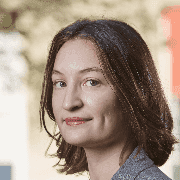
Dr. Mike Seymour is a Senior Lecturer at the University of Sydney Business School, specializing in Human-Computer Interaction (HCI), Digital Humans, and AI ethics. He holds a BSc, MBA, and PhD from the University of Sydney. His research focuses on photorealistic digital faces for immersive interfaces, blockchain socio-technical systems, and agile project management in creative industries. Dr. Seymour is a member of the Sydney Nano Institute and leads the Motus Lab. He has published in top journals like *Harvard Business Review*, *Communications of the ACM*, and *Information Systems Research*. His current projects include ARC-funded research on digital humans for anti-racism initiatives and adaptive AI for brain injury patients. He has received awards such as the SOAR Prize and ECR Researcher of the Year. His teaching spans CX, UX, and project management courses (e.g., INFS2040, INFS3080). Media engagements include ABC News, Sky News, and *The Australian Financial Review* for commentary on AI ethics and film industry trends. Education: BSc (University of Sydney) MBA (University of Sydney) PhD (University of Sydney) Research Themes: Real-time photorealistic avatars Deepfake ethics Agile methodologies in VFX Grants: A$450K ARC DP25 grant for anti-racism digital humans Earned $200K in industry partnerships (e.g., Epic Games) Labs/Teams: Leads the Motus Lab and collaborates with the Digital Human Research Group.
Gregory Burton, Ph.D., is a Professor of Psychology at Seton Hall University's Department of Psychology. His research focuses on haptic perception, ambiguous figures, the psychology of entertainment, and the history of sensory research. He holds degrees from LaSalle University (B.A., 1985) and the University of Connecticut (Ph.D., 1990). Burton teaches courses such as Research Methods, Perception, and Cognitive Psychology. His work bridges historical and experimental psychology, exploring how touch and sensory perception inform human interaction with objects and environments. Notable contributions include studies on nonvisual gap judgment, ambiguous figures, and critiques of historical scientific claims. He has published extensively in journals like History of Psychology and Psychonomic Bulletin and Review . Research trends in his articles emphasize haptic perception techniques, the role of sensory misinformation in scientific history, and cognitive mechanisms underpinning ambiguous visual phenomena. His articles often integrate empirical experimentation with archival analysis, reflecting a multidisciplinary approach. Burton has not been noted for specific scientific awards, but his academic contributions are recognized through consistent scholarly output. His teaching focuses on foundational psychology areas, including perception and cognitive processes.
Tijana Rakic is Associate Professor of International Tourism and Hospitality Management at De Montfort University, affiliated with the School of Humanities and Performing Arts. She leads the Tourism and Hospitality subject area and the BA (Hons) International Tourism and Hospitality Management program. Her research expertise spans visual research methods, heritage and identity in tourism, art and tourism, visual cultures of leisure and events, and sustainability in tourism. She employs creative methodologies including visual ethnography, narrative analysis, and multimodal research. Her recent scholarly output reflects a strong trend toward interdisciplinary and visually oriented research in tourism, with a focus on representation, identity, and methodological innovation. She has contributed significantly to advancing visual methods in tourism and leisure studies through edited volumes, journal special issues, and multimedia outputs. Fellow of the Royal Geographical Society Fellow of the Royal Anthropological Institute Fellow of the Higher Education Academy Tijana Rakic is an experienced PhD supervisor and welcomes research students in her areas of expertise. She chairs the Geographies of Tourism and Leisure Research Group at the Royal Geographical Society and serves as co-editor of the Routledge book series 'Current Developments in the Geographies of Leisure and Tourism'. She is also a member of the editorial boards of Tourist Studies , Tourism Geographies , International Journal of Tourism Cities , Finnish Journal of Tourism Research , and Consumer Behaviour in Tourism and Hospitality . Her creative research outputs include co-produced documentaries and a co-curated exhibition, highlighting her commitment to public engagement and knowledge dissemination beyond traditional academic formats.
Stefano Noventa is a Research Fellow at the Methods Center, Department of Social Sciences, Faculty of Economics and Social Sciences, University of Tübingen. He has held multiple postdoctoral positions at the University of Tübingen and previously at the University of Verona and the University of Padova. Education: Ph.D. in Cognitive Psychology, University of Padova (2011) M.Sc. in Physics, University of Padova (2006) Studies in Physics, University of Padova (1999–2006) International Visiting Graduate Student, University of Toronto (2009, 2010) Dr. Noventa's research lies at the intersection of mathematical psychology, psychometrics, and psychophysics, with a focus on developing and unifying quantitative models of human cognition and assessment. His work integrates Item Response Theory (IRT) and Knowledge Space Theory (KST) to create more robust frameworks for educational and psychological measurement. He investigates latent variable models, probabilistic knowledge structures, and the identifiability of complex psychometric models, often applying these to domains such as education, organizational psychology, and entrepreneurship. His recent publications (2020–2024) demonstrate a strong trend toward theoretical integration, particularly in bridging cognitive diagnosis models with traditional psychometric frameworks. The articles emphasize mathematical rigor, model generalization, and empirical validation, with applications in both cognitive science and applied psychology. Topics include the unification of assessment models, parameter estimation under local dependence, and the modeling of intuitive physical reasoning. Scientific Awards: No awards or honors listed in the provided text. Dr. Noventa has not been explicitly mentioned as an advisor to students, but he has served as a corresponding author and collaborator on multiple research projects, indicating a leadership role in research teams. He has been involved in a DFG-funded project (GLI NON-NORM) since 2019, suggesting active grant participation. His work is highly collaborative, involving researchers from Germany, Italy, Austria, and Canada. Labs and Research Groups: Methods Center, University of Tübingen Hector Institute of Education Science and Psychology, University of Tübingen Center of Assessment, University of Verona Department of General Psychology, University of Padova
Tesary Lin is the Isabel Anderson Career Development Assistant Professor of Marketing at Boston University's Questrom School of Business. She is also a Dean’s Research Scholar, a Junior Faculty Fellow at the Hariri Institute for Computing, and a Faculty Affiliate of the Technology & Policy Research Initiative. Her research centers on the interplay between consumer privacy, data sharing, and marketing strategy. Key interests include how firms adapt analytics in a privacy-first world, how choice architecture influences data consent, and the impact of regulations like COPPA on digital content. Her work integrates behavioral economics, marketing science, and public policy. Her recent publications explore consumer privacy preferences, identity fragmentation bias, and the role of dark patterns in data sharing. These works span venues such as Marketing Science and the ACM Conference on Economics and Computation, reflecting interdisciplinary engagement with computer science, policy, and behavioral research. John D.C. Little Best Paper Award Alessandro di Fiore Best Paper Award Sheth Foundation ISMS Doctoral Dissertation Award MSI Alden G. Clayton Doctoral Dissertation Award Professor Lin advises on data policy and consumer behavior, with ongoing collaborations involving regulatory bodies such as the FTC and academic institutions like MIT and Brookings. She does not currently list formal advisees. She is involved in research teams at the Hariri Institute and the Technology & Policy Research Initiative, focusing on ethical data use and digital governance.
Christian Wolff is a University Professor and Chair of Media Informatics at the Institute for Information and Media, Language and Culture at the University of Regensburg. Since April 2022, he has served as the founding Dean of the Faculty of Computer Science and Data Science, while maintaining secondary membership in the Faculty of Languages, Literature and Cultural Studies (SLK). His academic career spans over three decades with significant contributions to multiple disciplines at the intersection of computer science and humanities. Wolff's research interests center around multimedia and multimodal information systems, electronic publishing, and text technology, particularly text mining. His work bridges computer science with digital humanities, legal informatics, and social media analysis. Recent publications demonstrate a strong focus on large language models, sentiment analysis applications across various domains, legal technology innovations, and virtual reality research for cognitive studies. His interdisciplinary approach has produced significant contributions in both technical and humanities domains. His recent publication trends reveal a strategic shift toward applied AI research, particularly in legal technology (LegalTech), social media analysis, and sentiment analysis using large language models. The publications show increasing collaboration across disciplines, connecting computer science with law, political science, literature, and psychology. His work on the digital basis document for legal proceedings represents a major practical application of his research in the German justice system. East Bavarian Cultural Prize Doctoral Award of the University of Regensburg Wolff has led numerous interdisciplinary research projects connecting computer science with humanities and legal studies. His leadership extends to institutional roles including Dean of Research, Vice Dean, and Dean of Faculty positions. He has been instrumental in establishing the new Faculty of Computer Science and Data Science at the University of Regensburg, demonstrating significant impact on institutional development and research infrastructure. Wolff directs research initiatives focused on text technology, digital humanities, and legal informatics. His work with the INDIGO - Internet and Digitization Eastern Bavaria initiative and the TRIO project demonstrates commitment to regional technology transfer and innovation. The interdisciplinary nature of his research groups connects computer scientists with legal scholars, linguists, and social scientists to address complex digital transformation challenges.
Dr. Otto Lappi is a Research Fellow at the University of Helsinki's Department of Digital Humanities, Faculty of Arts. His work bridges cognitive science and human performance in complex dynamic tasks, particularly focusing on predictive processing in visuomotor control. PhD in Cognitive Science Title of Docent at University of Helsinki Academy Research Fellow (2020-2025) His research explores: Cognitive mechanisms in high-speed sports and driving Predictive gaze strategies and steering control Flow states in skill acquisition VR and eye-tracking applications in archaeomusicology Neural substrates of domain expertise Recent publications analyze: Flow-state dynamics in visuomotor learning Predictive gaze behavior in automated driving Computational models of attention in distracted driving Chunking mechanisms in high-speed sports performance Scientific contributions include: Academy Research Fellow (Research Council of Finland) Editorial work on high-performance cognition Organizing cognitive science workshops As doctoral supervisor, he has guided: Samuel Tuhkanen (Predictive Gaze and Steering) Jesse Kuokkanen (Mechanistic Computationalism) Ida Maasalo (Driver Behavior) Markus Mattsson (Psychometrics)
Jason Nelson is a Professor of Digital Culture in the Department of Linguistic, Literary and Aesthetic Studies at the University of Bergen, Norway. He is a creator of digital poems and fictions, builder of surrealist and politically focused art games and digital creatures. His work is exhibited widely in galleries and journals around the globe at FILE, ACM, LEA, ISEA, SIGGRAPH, ELO and numerous other venues. Nelson serves on organizational boards including the Australia Council Literature Board and the Electronic Literature Organization. Nelson's research focuses on the intersection of digital technology, creative writing, and artistic expression. He explores how AI and machine learning can be harnessed for creative purposes, developing new forms of digital literature and interactive art. His work often involves building expansive visual worlds through collaborative AI processes, creating interactive digital poetry, and developing novel approaches to digital narrative. Nelson's research spans digital humanities, electronic literature, AI-generated art, and interactive media, with particular emphasis on how these technologies transform creative processes and experiences. Over the past decade, Nelson's work has increasingly focused on the creative potential of AI technologies, especially in the areas of text-to-image generation and multimodal authorship. His projects often blend game engines with poetic expression, creating immersive experiences that challenge traditional boundaries between human and machine creativity. Recent works explore themes of multispecies futures, time perception, and the transformation of physical spaces through augmented reality. Nelson has received numerous scientific awards and fellowships including: Fulbright Fellowship at the University of Bergen Moore Fellowship at the National University of Ireland Winner of the Digital Writing Prize, Queensland Literary Awards (15,000 AUD) Winner of the Woollahra Library Digital Poetry Prize (5,000 AUD) Runner-Up Prize at the Videomedeja digital art exhibition Finalist for the Turn-on Literature Prize Finalist for the Queensland Literary Awards, Digital Writing Category Multiple finalist nominations for the New Media Writing Prize Nelson actively participates in academic advising and has secured significant research funding, including a 125,000 AUD grant from the Australia Council of the Arts, Literature Board for his project "Cube Cryptext and Nomencluster," which was recognized as the world's largest interactive art-game. His work "Nine Billion Branches" received multiple awards including the Digital Writing Prize from the Queensland Literary Awards. He has also received a 75,000 NOK grant for the "Flood Mosaic Artwork" project featured in the Floodlines Exhibition at the State Library of Queensland. Nelson is affiliated with the Center for Digital Narrative at the University of Bergen, where he collaborates with researchers like Scott Robert Rettberg and Alinta Krauth. Together they form EphemerLab, exploring new creative processes that move beyond simple "ask and generate" AI methods. Their work involves stitching together hundreds of individual image fragments and components into cohesive visual and narrative concepts, pushing the boundaries of what's possible with current AI technologies.
Luis Sentis is a Professor in the Department of Aerospace Engineering and Engineering Mechanics at The University of Texas at Austin and holds the Frank and Kay Reese Endowed Professorship in Engineering . He leads the Human Centered Robotics Laboratory, focusing on control systems, human-robot interaction, and exoskeleton robotics. His affiliations include UT Austin's Good Systems initiative and Apptronik Systems as an innovation advisor. Ph.D. , Electrical Engineering, Stanford University B.S. , Telecommunications and Electronics Engineering, Polytechnic University of Catalonia His research spans humanoid robotics , agile manipulation , autonomous systems , and human-robot teaming . Recent work emphasizes FAIR datasets , EEG monitoring , and collision detection for legged robots, with applications in industrial automation and ethical AI. Scientific awards include the NASA Elite Team Award and La Caixa Foundation Fellowship . Funding sources include DARPA , NSF , NASA , and ONR .
Jessica Hullman is the Ginni Rometty Professor of Computer Science at Northwestern University's McCormick School of Engineering and a Faculty Fellow at the Institute for Policy Research. Her research develops theoretical frameworks and interfaces for human-AI collaboration, focusing on uncertainty quantification, statistical modeling, and decision-making in domains like scientific research and AI-assisted analysis. Education: PhD in Information (Visualization), University of Michigan (2013) MS in Information Analysis, University of Michigan (2008) BA in Comparative Studies, Ohio State University (2003) Tableau Postdoctoral Fellowship, UC Berkeley (2015) Research Focus: Hullman's work bridges formal models of rational inference (e.g., Bayesian decision theory) with real-world applications. Key areas include: human-AI complementarity in decision-making, visualization of uncertainty, statistical reform, and LLM applications in behavioral science. Her research consistently addresses the alignment of data-driven interfaces with human cognitive capabilities. Publication Trends: Recent work demonstrates a strong emphasis on human-AI collaboration frameworks, decision-theoretic evaluation of visualizations, and methodological rigor in machine learning and social science. Key themes include uncertainty quantification (conformal prediction, privacy tradeoffs), behavioral experiments in AI-assisted tasks, and critical analyses of scientific practices. Awards & Honors: Microsoft Faculty Fellow (2019) Google Faculty Award NSF CAREER, Medium, and Small Awards Multiple best paper/honorable mention awards at top HCI/visualization venues (CHI, VIS) Funding & Labs: Principal Investigator for NSF-funded projects including HCC: Medium on visualization tools. Previously affiliated with University of Washington's Interactive Data Lab and DataLab. Current research includes NSF-supported work on improving data visualization for reasoning about analytical assumptions.
Amir Shmuel is a Professor at McGill University's Faculty of Medicine, holding appointments in the Department of Neurology and Neurosurgery, Department of Biomedical Engineering, and Department of Physiology. He serves as Director of the Brain Imaging Signals Lab and Core Faculty at the McConnell Brain Imaging Centre of the Montreal Neurological Institute. His leadership includes chairing the 2018 International Society for Brain Connectivity conference and securing an $18.7M Canada Foundation for Innovation grant for Quebec's first large-bore 7 Tesla MRI scanner. Dr. Shmuel's research focuses on understanding neuronal mechanisms underlying functional brain imaging signals and visual information processing. His integrative approach combines fMRI, optical imaging, multi-channel neurophysiological recordings, and optogenetics across multiple spatial and temporal scales. Current research priorities include resting-state functional connectivity mechanisms, cortical lamina-resolved neurophysiology, and computational modeling of brain signals. His lab emphasizes parallel model development with experimental data acquisition. Recent publications demonstrate strong trends in multimodal neuroimaging integration, with emphasis on high-resolution fMRI techniques (especially 7T applications), resting-state connectivity analysis across species, and computational modeling of neurovascular coupling. Key subfields include laminar-specific activity mapping, artifact detection in medical imaging using deep learning, and cross-species functional connectivity frameworks. Dr. Shmuel's research is currently funded by the Canadian Institutes of Health Research (CIHR), Natural Sciences and Engineering Research Council of Canada (NSERC), and the US Department of Defense. His lab maintains active collaborations through initiatives like the International Society for Brain Connectivity and the PRIME-DE database consortium. Operating within the Brain Imaging Signals Lab at the Montreal Neurological Institute, Shmuel's team develops and applies advanced multimodal techniques including simultaneous fMRI-electrophysiology, voltage-sensitive dye imaging, and computational modeling frameworks. The lab maintains strong ties with the McConnell Brain Imaging Centre and participates in major open-science initiatives including the Tanenbaum Open Science Institute.
Schea N Fissel, Ph.D., CCC-SLP, is an Associate Professor in the Department of Speech-Language Pathology at Midwestern University's College of Health Sciences, Glendale campus. She holds a Ph.D. from Kent State University (2018), an M.A. (2008), and B.S. (2006) from Western Michigan University. Her educational background includes: Ph.D., Kent State University, 2018 M.A., Western Michigan University, 2008 B.S., Western Michigan University, 2006 Dr. Fissel's research examines how attentional resources are dynamically recruited by complex visual stimuli like human faces and biological motion, with emphasis on neurodiverse populations. She investigates automatic attention processes in social communication and how these differ in autism spectrum disorder, focusing on autism, attention, and literacy dynamics. Her work applies complexity theory to understand information processing in social contexts. Her publications (2019-2025) reveal strong thematic continuity in autism research, attention mechanisms, and clinical education. Key trends include music's impact on attention, evidence-based practice critiques in autism services, second-language processing interactions, and reading comprehension in traumatic brain injury. The work consistently bridges cognitive theory with speech-language pathology applications. Dr. Fissel teaches core graduate courses including Child Language and Learning II/III (SLPPG 522/533) and Communication Disorders in Autism (SLPPG 623), alongside capstone sequences (SLPPG 505/506/606/607) and thesis supervision (SLPPG 670). Her teaching portfolio demonstrates active mentorship through evidence-based practice instruction and clinical research guidance, preparing students for professional practice in speech-language pathology.
Michaela Valente is an Associate Professor in Early Modern History at the Department of Political Science, Sapienza University of Rome , where she has taught since 2021. Previously, she was Associate Professor at the University of Molise (2005-2021) after postdoctoral work at Salerno. Her research focuses on witchcraft, inquisition practices, religious migrations, and historiographical debates in Early Modern Europe. Her scholarship explores the demonological discourse through works like Charles V (2013) and co-edited volumes on the Roman Inquisition. She has contributed to international research projects including COST Action PIMo (2019-2023) on Mediterranean displacements and PRIN initiatives on Renaissance philosophy. Recent publications analyze transnational religious refugees ( Religious Refugees in the Early Modern World , 2023), gender in exile (2024), and witchcraft's intellectual legacy . Her teaching includes Modern History and Migration History courses, with exam texts emphasizing primary sources and critical historiography. Scientific Awards : Anna Maria Battista Fellowship Fondazione Luigi Firpo Fellow (2000) University of Rome Research Fellow (2001-2003)
Alex Holcombe is a Professor in the School of Psychology at the University of Sydney . His research spans two major domains: perception and attention (investigating visual information bottlenecks and temporal processing) and meta-science (advancing open science and reproducibility through tools like tenzing.club and editorial roles in open-access journals). Education: PhD in Psychology (Harvard), BA in Psychology and Cognitive Science (University of Virginia) Editorial Roles: Associate editor for WikiJournal of Science , Collabra: Psychology , and Meta-psychology His experimental psychology work uses behavioral studies to reveal limits in visual processing speed, feature binding, and attentional resource allocation. Key findings include the role of naps in learning, parietal lobe function in rapid letter processing, and temporal binding dynamics in perception. Recent publications focus on peer review reform (2025 PNAS ), contributorship attribution (2024 Accountability in Research ), and visual cognition (2024 Journal of Vision ). These works reflect his dual commitment to understanding perceptual mechanisms and improving scientific practices. Advising: Mentors PhD students including De-wei DAI, Jye MARCHANT, and Rasmus PEDERSEN Labs: Leads research on visual perception and attentional bottlenecks Grants: 2024 Core Funding Grant for object tracking research
Lou Safra is Assistant Professor in political psychology at the Center for Political Research (CEVIPOF) of Sciences Po , Paris, and co-directs the Evaluation of Democracy Research Group at the Laboratory for Interdisciplinary Evaluation of Public Policies (LIEPP) . She is also associate researcher at the Institut d’Études Cognitives (École Normale Supérieure, Paris), bridging political science with cognitive neuroscience. Education: PhD in Cognitive Science, École Normale Supérieure, Paris (2017) Research Interests: Lou Safra investigates the cognitive mechanisms underlying social and political behaviour , focusing on leader choice and cooperation . She adopts an ecological and evolutionary perspective to understand inter-individual differences across space and time. Her methodological toolkit includes behavioural experiments , social surveys , computational modelling , and cultural artefact analysis such as paintings and books. Publication Trends: Her recent work (2020–2024) explores how early-life adversity shapes trust and authoritarian preferences , how cultural evolution influences concepts like love in literature, and how public opinion on defence issues evolves during the Ukraine war . Studies appear in high-impact journals spanning political science , psychology , behavioural economics , and cultural evolution . Scientific Awards & Funding: No specific awards or fellowships are listed in the provided text. Advising & Grants: No named students or specific grant details are provided in the text. Labs & Teams: She is affiliated with CEVIPOF–Sciences Po , LIEPP , and the Laboratoire de Neurosciences Cognitives & Laboratoire de Neurosciences Cognitives et Computationnelles at ENS, indicating active collaboration across political science, cognitive neuroscience, and computational modelling teams.