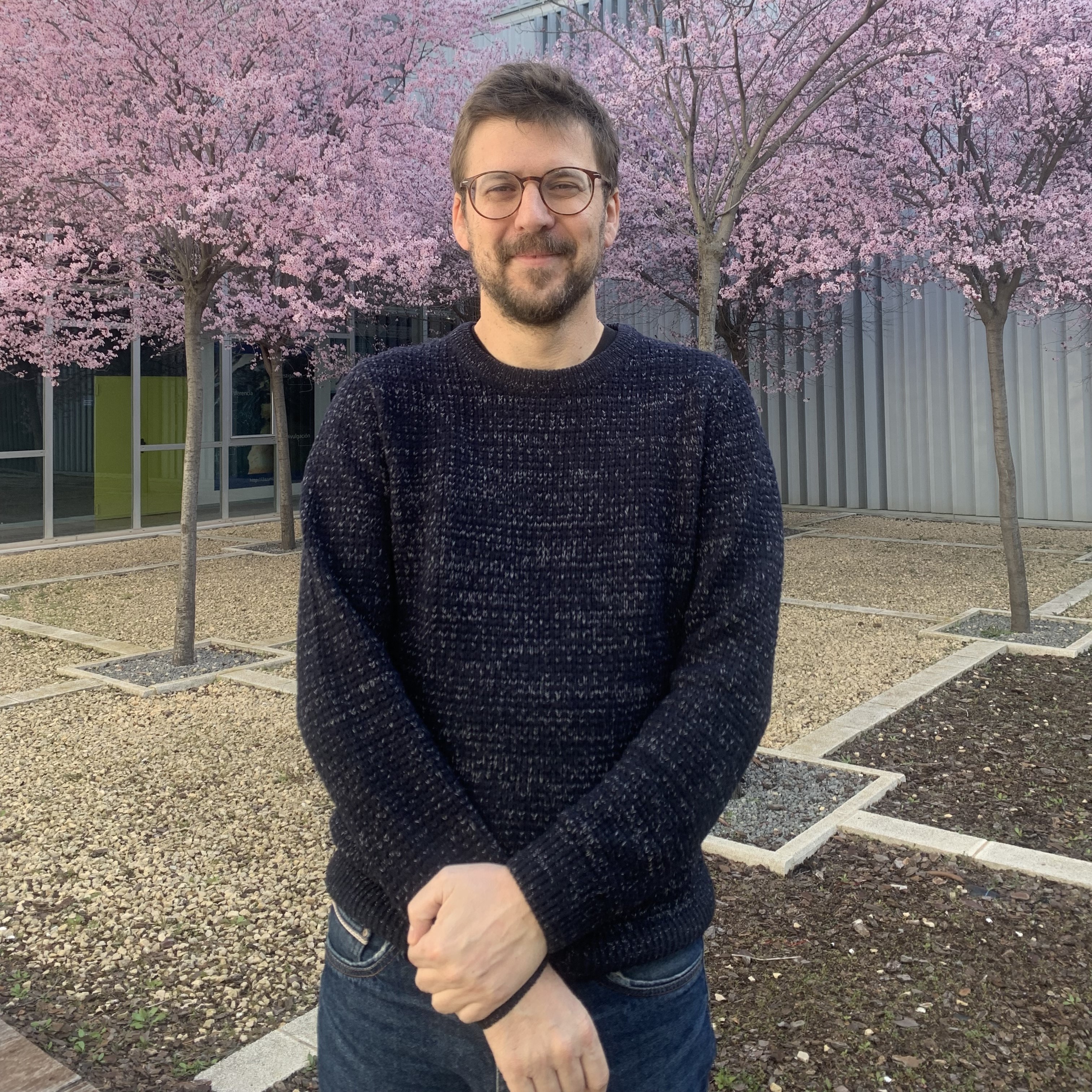
Joan Vallvé NavarroView profile
Researcher
Joan Vallvé Navarro is a post-doctoral researcher at the Institut de Robòtica i Informàtica Industrial (IRI), a joint center of CSIC and Universitat Politècnica de Catalunya (UPC). He is part of the Mobile Robotics group, where his work focuses on state estimation, Simultaneous Localization and Mapping (SLAM), and autonomous navigation systems. His research is deeply technical, centered on algorithm development for mobile robots, particularly using factor graph optimization frameworks. His research interests lie at the intersection of robotics, computer vision, and mathematical optimization. Key areas include SLAM, visual and inertial odometry, sensor fusion, and efficient graph-based estimation. He is particularly known for his contributions to sparsification techniques in pose-graph SLAM, enabling faster and more scalable robotic mapping. His work often appears in top robotics conferences such as IEEE/RSJ IROS and journals like IEEE Robotics and Automation Letters. The trend in his recent publications shows a strong focus on improving computational efficiency in SLAM systems through factor graph sparsification, preintegration of IMU data, and modular software design. He also contributes to autonomous delivery robots and intelligent vehicle systems, indicating applied research directions with real-world deployment goals. Scientific Awards: No scientific awards or honors were mentioned in the provided text. Advising and Grants: While no formal students or advisees are listed, Vallvé has co-authored multiple publications with researchers and students at IRI, suggesting active collaboration and mentorship. He has contributed to major research projects in mobile robotics, likely supported by institutional or national grants, though specific funding sources are not detailed in the text. Labs and Teams: He is a core developer of the WOLF (modular estimation framework) and the yaml-schema-cpp library, both developed at IRI. These tools support robust, maintainable software in robotics research, particularly in configuration validation and state estimation. His work is embedded within a collaborative robotics research environment focused on autonomy and intelligent systems.