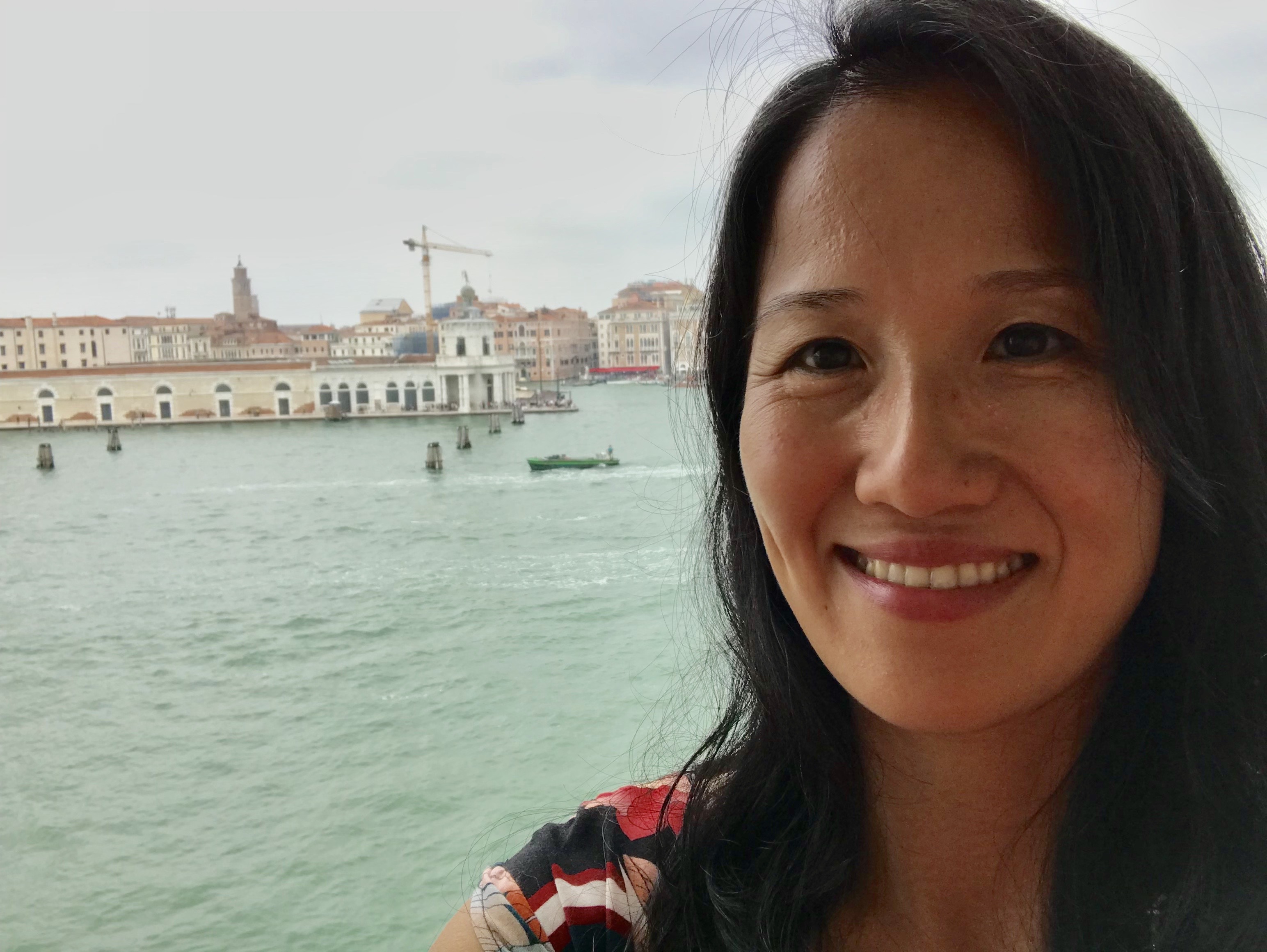
Dr. Wanju Huang is a Clinical Assistant Professor in the Learning Design and Technology program at Purdue University , where she focuses on enhancing online learning experiences through innovative instructional design and emerging technologies. Prior to joining Purdue in Fall 2016, she served as an instructional design manager at Teaching and Learning Technologies and spent six years as a lecturer and instructional designer at Eastern Kentucky University. Education: Ph.D. in Curriculum & Instruction (Technology concentration) from University of Illinois at Urbana-Champaign Her research interests center on technology-mediated online communities, instructor presence in digital learning, augmented reality applications, and faculty development programs. She has published extensively on these topics, including studies on multimedia interventions for teaching presence, immersive technologies in ESL education, and adaptive cyber training platforms. Dr. Huang's publications reflect a strong focus on EdTech innovation , with trends spanning AI integration in K-12 , model-based systems engineering , and microlearning strategies . Her work bridges theoretical frameworks like social constructivism with practical implementations in professional education. Professional memberships include the American Educational Research Association, Association for Educational Communications and Technology, and Quality Matters. She teaches courses on learning design foundations, e-learning systems, and professional competency demonstrations in LDT.
Professor Yo Sasaki is a distinguished academic at Waseda University's Faculty of Science and Engineering, School of Creative Science and Engineering, specializing in urban design, landscape architecture, and civil engineering. With a Master of Engineering from Tokyo Institute of Technology and a Doctor of Engineering from the University of Tokyo, he has established himself as a leading authority in infrastructure design and regional planning. Member of Science Council of Japan (SCJ) since 2020 Active member of Japanese Institute of Landscape Architecture Member of City Planning Institute of Japan Member of Architectural Institute of Japan Long-standing member of Japan Society of Civil Engineers Professor Sasaki's research focuses on the intersection of urban planning, landscape architecture, and civil engineering design, with particular emphasis on regional water systems, historical infrastructure, and community-based urban development. His work bridges theoretical frameworks with practical applications, exploring how traditional water utilization systems can inform contemporary sustainable design practices. He investigates how intermediate spaces in residential areas foster urban publicness and examines resident-led approaches to revitalizing depopulated urban centers. His extensive publication record reveals consistent focus on regional water infrastructure, with recent work analyzing traditional water facilities like Kawado in Niigata Prefecture, tsunami memorial parks, and community-based water management systems. His research demonstrates a clear trajectory toward integrating historical wisdom with contemporary design challenges, particularly in the context of disaster recovery and sustainable regional development. Japan Society of Civil Engineers Publication Culture Award (2024) Landscape and Design Committee Design Award, Grand Prize (2024) Waseda University Teaching Awards President's Award (2022) Landscape and Design Committee Design Award, Excellence Award (2022) Multiple historical design awards dating back to 2005 Professor Sasaki actively mentors junior researchers and collaborates on numerous research projects, including regenerative design of intermediate spaces between homes and scalable water infrastructure design programs. His work with the Japan Society of Civil Engineers' D&I Committee demonstrates commitment to diversity and inclusion in engineering practice. His laboratory (Yoh Lab) serves as a hub for innovative research connecting people, towns, and natural systems through thoughtful design.
Rika Hanamitsu is a Professor at the School of Social Sciences, Waseda University, where she teaches courses related to intercultural communication studies. She holds a Doctor of Philosophy degree from Waseda University and is also affiliated with the Center for International Education and the Global Education Center at the university. Education: Doctor of Philosophy from Waseda University Affiliations: Center for International Education, Global Education Center Her research focuses on intercultural communication and applied linguistics, particularly examining how cultural stereotypes, identities, and communication styles are represented in media and literature. She has conducted extensive research on Allen Say's works and their cultural implications, analyzing how they depict multicultural experiences and identity formation. Professor Hanamitsu's educational activities include teaching various courses including 'Seminar III (Intercultural Communication Studies)', 'Exploring Cultures through Film', 'Inter-Cultural Communication', 'Freshman Seminar', and 'Intercultural Communication' in both fall and spring semesters of 2025. Her teaching emphasizes the use of films as educational tools for intercultural understanding and literacy development. She has participated in overseas activities such as attending the Summer Institute of Intercultural Communication at Hope College, University of Michigan in 2002. Her social activities include intercultural communication training using games to develop communication skills, which she has conducted since 2011. International Presentations: 35th IBBY World Congress (2016), Summer Institute of Intercultural Communication (2002) Domestic Conferences: Japan Association for Language Education & Technology, Japan Association of College English Teachers, Japan Society of English Usage and Style Research Projects: Cultural Comparison of Conflict Scenes in Movies and Their Treatment (2005)
Masayuki Goto is a Professor in the Department of Industrial Systems Engineering, School of Creative Science and Engineering at Waseda University, Japan, where he has served since 2011. He earned his Doctor of Engineering from Waseda University and leads research integrating statistical science, machine learning, information theory and management engineering to solve business-analytics, marketing, AI ethics and industrial optimisation problems. Education: Doctor of Engineering, Waseda University Research Interests: His work spans data science, machine learning, business analytics, statistical learning theory, generative AI, deep neural networks, natural language processing, network analysis and information theory, with recent emphasis on trustworthy AI and synthetic data generation. Publication Trends: Over 2024-2025 his group has published extensively on deep learning for tabular data, vision-language models, recommender systems, causal inference and ethical AI, demonstrating a shift toward generative-AI-driven business analytics and interpretable models. Scientific Awards: Best Paper Award, CIE51 2024 Outstanding Paper Award, APIEMS 2023 Best Paper Award, APIEMS 2022 Best Paper Award, 20th ANQ Congress 2022 2022 PC Conference Best Paper Award Best Paper Award, JASMIN 2021 Best Paper Award, 19th ANQ Congress 2021 Encouragement Award, AAMSA 2021 IDR User Forum 2020 Enterprise & DBSJ Special Awards Best Paper Award, APIEMS 2019 Best Paper Award, ANQ Congress 2018 World CIST'18 Best Paper Award Best Paper Award, ANQ Congress 2017 JSPS Grant Review Commendation 2016 JIMA Distinguished Research Award 2015 Best Paper Award, Journal of JIMA 2015 IPSJ National Convention Best Paper Awards (2015 & 2012) Advising & Grants: He has mentored a large cohort of graduate students evidenced by co-authorship on over 100 recent papers. He has served as PI on numerous JSPS KAKENHI grants and industry projects focused on data-driven management, AI marketing and ethical AI frameworks. Labs & Teams: He heads the Goto Laboratory within the Waseda Institute for Advanced Study, leading interdisciplinary projects on business AI, data-ethics education and industrial optimisation.
Hayato Yamana serves as Professor at Waseda University's Faculty of Science and Engineering and concurrently holds the position of Vice President for IT Promotion and Chief Information Officer since October 2020. His academic journey began with a Dr. Eng. degree from Waseda University in 1993, followed by positions at the Electrotechnical Laboratory of MITI, before joining Waseda University as Associate Professor in 2000 and becoming full Professor in 2005. He has held significant leadership roles including Director of the Database Society of Japan and the Information Processing Society of Japan, as well as Vice Chair of IEICE's Information and Communication Society. Waseda University, Faculty of Science and Engineering (2005-Present) National Institute of Informatics, Visiting Professor (2005-Present) Waseda University, Vice President for IT Promotion (2020-Present) Deputy Chief Information Officer (2015-2020) His research spans homomorphic encryption, big data analysis, and computer architecture, with notable contributions in privacy-preserving computation, recommender systems, and secure data processing. His work bridges theoretical cryptography with practical applications in smart cities, healthcare, and e-commerce security. Recent publications demonstrate strong focus on accelerating homomorphic encryption operations, improving recommendation system diversity, and developing novel authentication mechanisms. Analysis of his 15 most recent publications reveals consistent emphasis on privacy-preserving technologies (particularly homomorphic encryption applications), innovative recommender system architectures, and biometric security solutions. His research group produces highly cited work at the intersection of cryptography, machine learning, and systems security, with practical implementations in real-world scenarios including smart grids, e-commerce, and healthcare. Fellow, Information Processing Society of Japan (IPSJ), 2020 Golden Core Award, IEEE Computer Society, 2018 Fellow, Institute of Electronics, Information and Communication Engineers (IEICE), 2018 IBM Faculty Award, 2009 Multiple Best Paper Awards from IEICE, IPSJ, and ITE Yamana has secured substantial research funding for projects in homomorphic encryption, smart city infrastructure, and privacy-preserving systems. His leadership extends to advising numerous doctoral students and directing major research initiatives including the Smart Systems and Services Innovative Professional Education Program. He maintains active collaborations with industry partners through projects involving secure computation and data analytics. His research group operates at the forefront of secure computing, with specialized laboratories focused on homomorphic encryption acceleration, privacy-preserving machine learning, and secure mobile authentication. The team actively develops practical implementations of cryptographic protocols for real-world applications in healthcare, finance, and smart city infrastructure, bridging theoretical cryptography with deployable security solutions.
Prof. Dr. med. Franz Lennard Ricklefs is a Senior Physician and Head of the Working Group at the Department of Neurosurgery, University of Hamburg Faculty of Medicine. He is a Medical Specialist in Neurosurgery with cross-disciplinary expertise in neuro-oncology, molecular pathology, and extracellular vesicle research. Affiliations: University Medical Center Hamburg-Eppendorf (UKE), European Liquid Biopsy Society (ELBS), International Consortium on Meningiomas (ICOM) Research Interests: His work focuses on neurosurgical oncology, particularly glioblastoma and meningioma pathobiology. He investigates DNA methylation patterns, extracellular vesicle biomarkers, and liquid biopsy implementation in clinical neuro-oncology. Additional interests include surgical outcomes for epilepsy and aneurysm management. Article Trends: Over the last decade, Dr. Ricklefs has published extensively on: Extracellular vesicle applications as liquid biopsy markers DNA methylation subclasses for glioblastoma and meningioma Multicenter surgical outcome benchmarking Immune evasion mechanisms in neuro-oncology Technological innovations in neurosurgical visualization Molecular characterization of rare CNS tumors Professional Contributions: He co-authored the MISEV2023 guidelines for extracellular vesicle studies and participates in international consensus reviews for meningioma classification. His collaborations span institutions across Europe and North America.
Ana Paulina Lee is an Assistant Professor of Writing and Digital Humanities in the Comparative Literature, English, and Creative Writing Department at the American University of Paris. She joined AUP in 2025 after teaching Latin American literature and culture at Columbia University for eight years and serving as a Mellon Postdoctoral Fellow at Tulane University. Her interdisciplinary scholarship bridges literature, history, law, and urban studies with particular focus on marginalized narratives in the Americas. Ph.D. from University of Southern California M.A. from New York University B.A. from Binghamton University Professor Lee's research examines how stories—archival, fictional, oral—shape legal imagination, social life, and urban experience in the Americas. She specializes in the intersections of magic, law, and literature in Latin America, with particular focus on Asian and African diasporas in Brazil. Her work traces how narrative functions as both historical record and catalyst for social transformation, exploring themes of slavery, emancipation, colonial legacies, and urban memory. She approaches these topics through interdisciplinary lenses combining literary analysis with histories of labor, migration, and performance. Lee's recent publications reveal a consistent focus on marginalized narratives and their impact on social structures. Her scholarship connects legal history with cultural production, showing how magical thinking and narrative practices shape urban spaces and social relations. Works like 'Urban Sorcery, Segregation, and Spectacle in Twentieth-Century Rio de Janeiro' and 'Black Magic City' demonstrate her innovative approach to understanding the relationship between occult logics and legal frameworks in Brazilian contexts. Her research on diasporic communities, particularly Chinese and Japanese experiences in Latin America, contributes significantly to transnational and comparative race studies. David B. Larson Fellowship in Health and Spirituality, Kluge Center, United States Library of Congress (2025-2026) National Endowment for the Humanities Fellowship (2025) Social Sciences Research Council, Inaugural Recipient of Interdisciplinary Projects in the Social Sciences (2020-2023) Institute for Ideas and Imagination Fellowship, Columbia University in Paris, France (2021-2022) Provost's Tsunoda Senior Fellowship, Visiting Scholar, Waseda University, Tokyo, Japan (2019) Heyman Center Fellow, The Heyman Center for the Humanities, Columbia University (2017-2018) Fulbright, Lisbon, Portugal (2013-2014) Professor Lee's scholarly activities have been generously supported by major research grants from the National Endowment for the Humanities, the Social Sciences Research Council, and the Library of Congress. Her work demonstrates a commitment to interdisciplinary approaches that bridge humanities and social sciences, particularly through projects examining intersections of race, migration, and cultural production in the Americas. Her publication 'Socially Engaged Oral History Pedagogy Amid the COVID-19 Pandemic' indicates a strong commitment to innovative teaching methods and community-based research. While specific details about current advisees aren't provided, her research program suggests engagement with graduate students interested in diaspora studies, urban history, and literary-cultural analysis. Though not explicitly mentioned in the available information, Professor Lee's research on urban spaces, magic, and law in Brazil likely involves collaborative work with scholars across disciplines. Her participation in centers like the Institute for Ideas and Imagination at Columbia University suggests engagement with interdisciplinary research communities focused on global cultural production and social transformation. Her work contributes to ongoing conversations about how narrative practices shape legal frameworks and social structures in the Americas, particularly regarding racial formation and diasporic experiences.
David Evan Harris is a Senior Research Fellow at the International Computer Science Institute (ICSI) and a Chancellor’s Public Scholar at the University of California, Berkeley. He serves as a Continuing Lecturer at the Haas School of Business and Senior Advisor for AI Ethics at the Psychology of Technology Institute. He is affiliated with multiple UC Berkeley centers, including CITRIS, the Center for Latin American Studies, EGAL, and the Business and Public Policy Group. M.S., Sociology, University of São Paulo B.A., Political Economy of Environment & Development, UC Berkeley His research focuses on AI ethics, misinformation, civic technology, social media policy, and global development. He explores deceptive design, digital literacy, and the societal impacts of AI, with a particular emphasis on democratic governance and human rights. His recent publications highlight AI ethics, regulatory challenges in AI governance, and international policy frameworks. Earlier work spans social movements, open knowledge, and poverty visualization. David teaches UC Berkeley courses including AI Ethics for Leaders, Civic Technology, and Futures Thinking. He founded the Global Lives Project in 2004 and previously led research at the Institute for the Future (2008–2018). Fluent in English, Portuguese, and Spanish, he has conducted research in 37 countries.
Bertram O. Ploog is a Professor at the College of Staten Island, City University of New York, and is affiliated with the CUNY PhD program in Cognition & Comparative Psychology. He teaches courses in behavior analysis and statistics at both undergraduate and graduate levels. Research Interests: His research focuses on autism spectrum disorders, with emphasis on selective attention, stimulus overselectivity, and emotion recognition. He employs behavioral animal models, including studies with squirrel monkeys and dogs, to explore cognition and Theory of Mind. His work extends to the development and evaluation of computer-assisted technologies (CAT) for enhancing social, communicative, and language skills in children with autism. Recent Research Trends: His recent publications reflect a strong focus on attention processes in autism, the use of educational technology and computer games in developmental disabilities, and cross-species cognitive studies. His work bridges experimental psychology, clinical applications, and technological innovation in autism research. Professional Recognition: He is a Board-Certified Behavior Analyst and a licensed psychologist and behavior analyst in New York State. Education and Training: He earned his Ph.D. from the University of California, San Diego, mentored by Laura Schreibman and Ben Williams. His academic foundation was shaped by George Reynolds and Edmund Fantino in experimental behavior analysis. Advising and Grants: While no specific students or grants are listed, his active research and doctoral program affiliation suggest involvement in mentoring graduate students and securing research funding. His ongoing publications and program affiliation indicate sustained scholarly engagement. Labs and Teams: Specific lab or research team names are not mentioned in the available text.
Bruno Echauri Galván serves as Associate Professor in the Department of Modern Philology at the University of Alcalá (UAH), Spain, teaching core translation courses including Introduction to Translation Theory and English-Spanish Translation across multiple degree programs in Alcalá de Henares and Guadalajara. His research centers on Translation Studies and Reception Theory, with significant contributions to intersemiotic translation (particularly in children's literature), healthcare interpreting, and film adaptation reception. As an active member of the Research Group on Interdisciplinary Reception Studies, he investigates cultural reception, literary reception, and translation through frameworks including cultural mediation, censorship studies, and myth reception. Recent publications (2021-2024) demonstrate consistent innovation in translation pedagogy, including color-based translation assessment tools, service-learning translation projects, and pandemic-era teaching adaptations. His work on collaborative writing projects, mental health communication, and Carver-Lish translation controversies reveals methodological diversity across literary, audiovisual, and healthcare domains. Dr. Echauri Galván has participated in multiple research initiatives including the JOB AND MOVE student network project (2018), Homopoly strategic partnership (2016), and InterMed healthcare mediation project (2011), where he contributed expertise in intercultural communication and translation standards. He maintains active research leadership through the Interdisciplinary Reception Studies group, examining reception phenomena across cultural, literary, musical, and translational contexts while addressing contemporary issues like censorship and myth criticism.
Chris Speed is a Professor of Design for Regenerative Futures at RMIT University, Australia, and Director of Regenerative Futures. Previously, he held academic roles at the University of Edinburgh, including leading the Institute for Design Informatics and co-designing the Edinburgh Futures Institute. His research focuses on design-driven solutions for social, environmental, and economic challenges, leveraging data and emerging technologies. Key areas include blockchain applications, sustainable design, and regenerative systems. Affiliations: RMIT University (Current), University of Edinburgh (2012–2024) Grants: £7.4m Creative Informatics (UK), £5m DECaDE (Digital Economy) Publications: Over 50 peer-reviewed articles on design informatics, regenerative futures, and blockchain ethics. Research interests span Design Informatics, Human-Computer Interaction, and Sustainable Design. He has supervised 23 PhD/MPhil students and pioneered projects like OxChain (blockchain for charitable giving) and Creative Informatics (data-driven creative industries). Awards: Fellow of the Royal Society of Edinburgh (2020), Chancellor’s Award for Research (University of Edinburgh, 2020). Collaborations include BBC, Oxfam, and the Digital Catapult. His work emphasizes co-creation with communities to address systemic challenges, such as climate action and cultural value measurement.
Jian Zhao is an Associate Professor at the University of Waterloo's School of Computer Science, specializing in Information Visualization (InfoVis), Human-Computer Interaction (HCI), and Data Science. With a Ph.D. from the University of Toronto (2016), his research emphasizes interactive visualization techniques, AI integration in design processes, and socio-technical systems. He explores how human-AI collaboration can enhance data analysis, presentation, and user experience in complex systems. Key research areas include: 1) AI-Driven Design (e.g., code generation via sketching, infographic creation), 2) Health Informatics (therapeutic AI tools for autism support), 3) Immersive Technologies (VR/AR interfaces for presentations and education), and 4) Social Computing (remote family communication, multi-modal emoticons). His work bridges technical innovation with human-centered design principles. His publications (2021–2025) reflect a focus on interactive visualization frameworks (e.g., iTrace for cross-view data analysis), AI-human collaboration (CoLadder for hierarchical code editing), and specialized applications like TherAIssist for art therapy and EMooly for autism support. Zhao frequently explores novel interaction modalities , including gesture-based VR interfaces and sketch-based programming tools. He leads projects in computational notebooks (EDAssistant, Slide4N), visual analytics (MissBin for bipartite networks), and neurofeedback training games (Eggly). His work often emphasizes systematic design considerations for missing data, cross-view analysis, and contextual visualization in spatial AR environments.
Aniket 'Niki' Kittur is a Professor in the Human-Computer Interaction Institute at Carnegie Mellon University's School of Computer Science. His research focuses on AI-augmented cognition, exploring how human and machine intelligence can collaborate to enhance creativity, decision-making, and innovation. He leads projects like the Semantic Reader and Skeema browser extension, aiming to reduce cognitive overload through intelligent systems. Education: BA in Psychology & Computer Science from Princeton University; PhD in Cognitive Psychology from UCLA. His work bridges HCI, crowdsourcing, and cognitive science, with 100+ publications and 17 best paper awards. He advises industry partners including Google, Microsoft, and Toyota while maintaining a lab focused on real-world impact. Research interests center on accelerating knowledge acquisition via systems that scaffold sensemaking (e.g., Selenite for web exploration) and fostering analogical innovation through crowdsourced/AI hybrid approaches. Notable contributions include CrowdForge (human-machine workflows) and Kinetica (touch-based data visualization). Awards include NSF CAREER Award, Allen Newell Award, and CHI Academy membership. His lab's Skeema tool has achieved 79% 30-day retention in beta, reflecting impactful user-centered design principles. Current projects emphasize LLM integration for composite cognition, aiming to create systems where 'LLMs + Humans > Either Alone.' Funding来自NSF, NIH, ONR, and industry partners like Bosch and Wikimedia. Teaching includes PhD bootcamps and user-centered research courses. Over 100 students have contributed to his projects, many advancing to tech leadership roles.
Prof. Helen Blank is a Professor leading the Multisensory Perception Group and the Prediction in Communication Lab at the Institute for Systems Neuroscience, University Medical Center Hamburg-Eppendorf. Her work focuses on understanding how sensory information is integrated and predicted in contexts like speech perception and face recognition. She holds a Marie Curie Fellowship for her research on prior information's role in human communication. Fluent in German, English, and French, she contributes to experimental medicine and systems neuroscience. Her research spans predictive coding, neuroimaging, and clinical applications in Parkinson’s and developmental disorders. Education: Not explicitly stated in text, inferred as advanced degrees in neuroscience or related fields. Her research interests emphasize multisensory integration, predictive processing in speech and vision, and the neural bases of perception. Recent articles explore topics such as pupil responses to auditory surprise, face expectation hierarchies, and audio-visual speech processing. Awards include the Marie Curie Fellowship supporting her predictive communication work. She leads interdisciplinary teams within the Center for Experimental Medicine, advancing knowledge on perceptual mechanisms and their clinical implications.
Harald C. Gall is a Professor of Software Engineering and Dean of the Faculty of Business, Economics, and Informatics at the University of Zurich (UZH). He leads the Software Evolution and Architecture Lab, focusing on software evolution analysis, mining software repositories, and cloud-based software engineering. His research emphasizes improving software development productivity through data-driven insights. He has held visiting positions at Microsoft Research and the University of Washington. Education: PhD (Dr. techn.) and Master's (Dipl.-Ing.) in Informatics from TU Vienna Research Interests: Software evolution, mining software archives, cloud-based tools, developer productivity, and empirical software engineering. Notable contributions include the Evolizer , ChangeDistiller , and SOFAS systems. Key Contributions: Established the Mining Software Repositories (MSR) research area, program chair for ICSE 2011 and ESEC/FSE 2005, associate editor of leading journals like Empirical Software Engineering and IEEE Software. Awards: Most Influential Paper Award, Test of Time Award, and multiple Best Paper Awards. Recognized for contributions to SE research methodologies and tool development. Professional Activities: ACM SIGSOFT awards chair, board member of Informatics Europe, and executive committee member of CHOOSE (Swiss SIG for OO Systems). Labs/Teams: Director of the Software Evolution and Architecture Lab at UZH, leading projects like SURF-MobileAppsData (SNSF-funded) and DevCloud (Hasler Foundation).