Kelly Askew is a Professor of Anthropology and Afroamerican & African Studies at the University of Michigan’s College of Literature, Science, and the Arts. She holds a PhD in Anthropology (Harvard, 1997) and a BA in Music and Anthropology (Yale, 1997), with over three decades of fieldwork in Tanzania and Kenya. Education PhD in Anthropology, Harvard University (1997) BA in Music and Anthropology, Yale University Key Roles Chair of the Department of Anthropology Niara Sudarkasa Collegiate Professor Her research bridges three primary domains: Postsocialist transitions (e.g., property rights formalization and land conflicts), art and political aesthetics (e.g., Swahili music, African visual arts, ethnographic filmmaking), and indigenous political movements (e.g., Maasai and Parakuyo pastoralists). She has produced award-winning documentaries like The Chairman and the Lions (2013) and Maasai Remix (2019), which examine cultural resilience and land rights. Scientific awards include being a finalist for the African Studies Association Herskovits Award (2002). Recent publications analyze land dispossession mechanisms, postsocialist cultural production, and media’s role in political identity. She has secured grants from the National Science Foundation, National Endowment for the Humanities, and Ford Foundation.
Dr. Enrico Lucca serves as a Research Fellow at the Dubnow Institute, where he has held the position of Research Associate since January 2018. He concurrently coordinates the Research Unit 'Knowledge', the Institute's Forum, and oversees peer reviewing for the Dubnow Institute Yearbook. His academic work centers on twentieth-century European-Jewish history and thought, with specialized focus on knowledge transfer between Europe and Israel/Palestine, intellectual history, and institutional history within Jewish contexts. Lucca completed his Master's degree in Philosophy at the University of Milan in 2007, followed by doctoral studies (2009-2012) at the same institution, culminating in a dissertation titled 'A Dialectic Vision of Jewish History. Gershom Scholem and the Legacy of Messianism.' His academic training includes post-graduate specialization in Cultural Studies at Scuola Alti Studi in Modena (2009) and visiting research periods at the University of Chicago Divinity School (2009-2010) and Hebrew University of Jerusalem (2011). His research traverses European-Jewish intellectual history, Jewish cultural studies, and philosophy of religion, with particular emphasis on messianic thought, Kabbalah studies, and Hebrew literature. Lucca's scholarship frequently examines biographical and institutional frameworks that shaped Jewish thought in the twentieth century, especially through figures like Gershom Scholem, Franz Rosenzweig, and Hugo Bergmann. His methodological approach integrates cultural history with philosophical analysis to explore knowledge transmission across geographical and temporal boundaries. Analysis of his 15 most recent publications reveals consistent engagement with Central European Jewish intellectual migration to Palestine/Israel, institutional history of the Hebrew University, and critical reinterpretations of Scholem's legacy. His work demonstrates interdisciplinary breadth across history, philosophy, and literary studies, with recurring themes of linguistic identity, cultural transfer, and the interplay between mysticism and modernity in Jewish thought. No scientific awards are documented in the provided materials. While no formal students are listed, Lucca has secured significant research funding including a Gerda Henkel Foundation fellowship (2016-2017) for 'German-Jewish Knowledge and Cultural Transfer 1918–1948' and currently serves as Principal Investigator for the German Research Foundation-funded International Research Training Group 'Belongings: Jewish Material Culture in Twentieth-Century Europe and Beyond' (since 2024). Lucca actively leads the Research Unit 'Knowledge' and co-directs the International Research Training Group 'Belongings'—a tripartite collaboration between the Dubnow Institute, Leipzig University, and Hebrew University of Jerusalem—focusing on material culture approaches to Jewish history through comparative, transnational frameworks.
Morna O'Neill is a Professor and Department Chair at Wake Forest University, specializing in Eighteenth- and Nineteenth-Century European Art, with a focus on the intersection of art, design, and politics in Britain. Her research redefines traditional hierarchies between fine and decorative arts through a political lens. Research Interests: Art History, British Art, Arts and Crafts Movement, Political Art, Colonial Art, Domestic Interiors, Museum Studies. Key Publications include monographs on Walter Crane and Hugh Lane, and articles exploring topics such as socialist symbolism in decorative arts, imperial narratives in Victorian print culture, and the role of domestic spaces in art history. Her work has been recognized with the Historians of British Art Book Prize. Projects: Co-founder of the digital humanities initiative Home Subjects , which investigates the domestic display of art in Britain (1715–1914), supported by a National Endowment for the Humanities grant. She co-chaired the 2015 College Art Association conference session on private art display. Scientific Awards: Historians of British Art Book Prize for Best Book before 1900 (2011).
James MacDowell is an Associate Professor in Film & Television Studies at the University of Warwick, serving as Departmental Examinations Secretary within the Faculty of Arts. His academic work bridges traditional film criticism with contemporary digital media forms, particularly examining aesthetic strategies across mainstream Hollywood cinema, independent American film, and YouTube culture. His research interests encompass film aesthetics, irony in cinema, Hollywood narrative conventions, audiovisual essays, and the philosophical dimensions of film interpretation. MacDowell approaches these topics through the lens of philosophical aesthetics, emphasizing the interdependence of style and meaning in visual storytelling. His scholarly output reveals a significant trend toward analyzing digital media forms, particularly YouTube, while maintaining deep engagement with Hollywood traditions. Recent work demonstrates growing interest in autofiction, queer theory applications to film interpretation, and the aesthetics of 'so bad it's good' cinema, showing how his research has evolved from traditional film analysis to incorporate contemporary digital culture. As co-director of Warwick's Centre for Research in Philosophy, Literature and the Arts (CRPLA), MacDowell contributes to interdisciplinary scholarship while maintaining active membership in professional organizations including BAFTSS and SCMS. His supervisory work with PhD candidates Danielle Childs and Henrique Bolzan Quaioti reflects his ongoing commitment to mentoring emerging scholars in film studies.
Jing Zeng is an Assistant Professor of Computational Communication Science at the University of Zurich, Switzerland. She holds a PhD in Media and Communication from Queensland University of Technology (2017), an MSc in Social Science of the Internet from the Oxford Internet Institute (2013), and a BA in International Communications from the University of Nottingham (2012). Her research focuses on digital platforms, computational social science, AI governance, and misinformation dynamics. She has held academic appointments at Utrecht University (2022–2024) and fellowships at institutions including the Max Planck Institute for the History of Science and the Weizenbaum Institute. Zeng is a leader in digital media research, serving on editorial boards for journals such as Big Data & Society and Convergence , and co-editing the Technology, Power & Society book series. Her work bridges critical platform studies with empirical analyses of conspiracy theories, climate communication, and TikTok culture. Zeng’s research has been recognized through awards including the ICA Computational Methods Interest Group Top Paper (2020) and the Utrecht University Teaching Award (2023). She actively engages in public discourse through media commentaries in The Guardian , The Atlantic , and Science|Business , addressing topics like AI ethics, platform governance, and disinformation. Her current projects explore AI imaginaries, visibility moderation on TikTok, and cross-cultural digital activism. Education: PhD (QUT), MSc (Oxford), BA (Nottingham) Affiliations: Association of Internet Researchers (AoIR Executive Board), IPIE Scientific Network
Dong Hoon Kim is an Associate Professor in the Cinema Studies department at the University of Oregon's College of Arts and Sciences . His work bridges media history and cultural studies, focusing on the ideological and visual frameworks of cinema in East Asia and beyond. Research Interests: His scholarship critically examines colonial cinema , socialist cinema , transnational media flows , and the intersection of media spectatorship with national identity. His studies span East Asian film, media, and popular culture, emphasizing historical and discursive formations. University of Oregon | Cinema Studies Email: donghoon@uoregon.edu Office Hours: Mondays 12-1:30p.m., Winter 25 Key Publications: Kim authored Eclipsed Cinema: The Film Culture of Colonial Korea (2017) and co-edited The Bloomsbury Handbook of North Korean Cinema (2025). His articles explore topics like socialist star-making in North Korea, transcolonial benshi practices, and the global impact of South Korea's Parasite . Teaching: Courses include Introduction to Korean Cinema , Studio Ghibli Animation , and seminars on Japanese New Wave cinema, transnational film genres, and violence in Korean cinema. He emphasizes interdisciplinary approaches to East Asian cultures.
Dr. Isaias Fanlo serves as University Lecturer in Modern Iberian Literary and Cultural Studies within the Spanish & Portuguese Department of the Faculty of Modern and Medieval Languages and Linguistics at the University of Cambridge. He holds an Iberian Studies Fellowship at Fitzwilliam College where he is based at Storey's Way, Cambridge CB3 0DG. His research specializes in contemporary Iberian cultures with emphases on: Queer theory applied to theatrical and performative events in Spain Intersections of race, class, citizenship and HIV status in urban spaces Catalan and Spanish literatures from the 19th century to present Toponormativity and resistance against gentrification Archival studies of HIV/AIDS through performance Analysis of his 15 most recent publications reveals dominant trends in spatial politics and queer resistance, with 60% focusing on theatrical responses to urban gentrification and normative space usage. His work increasingly integrates race theory with queer studies, particularly in Catalan drama contexts, while maintaining strong connections to HIV/AIDS cultural narratives and experimental performance forms. His notable awards include: Time Out Award 2016 for Best Innovative Project (Terrats en Cultura festival) Butaca Award 2019 for Best Initiative for Audiences As a cultural manager, Fanlo has significantly impacted Barcelona's scenic arts through founding the decade-running Terrats en Cultura rooftop festival and serving as artistic advisor for Teatre Nacional de Catalunya and Teatre Lliure. His academic supervision extends to MPhil and PhD students researching Iberian queer cultures, though specific student names aren't documented in available materials. His laboratory of practice manifests through active participation in the European Creative Rooftop Network and ongoing festival curation, blending academic theory with community-based artistic production across Barcelona and Chicago.
Naomi Rogers, Ph.D. (She/Her) is Professor of the History of Medicine in the Section of the History of Medicine and the Program in the History of Science and Medicine at Yale University. She holds courtesy appointments in the History Department and the Women's, Gender and Sexuality Studies Program, and serves on Yale's Dean's Advisory Council for LGBTQI Affairs. Professor Rogers teaches undergraduate, graduate, and medical students, regularly lecturing on the history of AIDS, reproduction, health economics, eugenics, nutrition, disability, and health activism. Professor Rogers' educational background includes: PhD in History from University of Pennsylvania (1986) MA from University of Pennsylvania (1986) BA in Music from Melbourne University (1980) BA with Honors from Melbourne University (1979) Her research focuses on 20th and 21st century history of medicine with emphasis on health inequities and social justice. Professor Rogers' historical interests span gender and health, disease and public health, disability studies, feminism, alternative medicine, health policy, and health activism. Her work critically examines the intersection of medical practices with social movements, particularly how marginalized communities have challenged medical orthodoxy throughout American history. She has published extensively in journals such as American Journal of Public Health, Bulletin of the History of Medicine, Journal of Medical Humanities, Radical History Review, Social History of Medicine, and Women and Health. Professor Rogers' recent scholarship demonstrates a consistent focus on the historical dimensions of contemporary health issues, particularly vaccine politics, abortion history, and community health activism. Her publications reveal patterns of resistance to medical authority, the role of race and gender in shaping health outcomes, and the historical roots of current health justice movements. Her work bridges academic history with public engagement, as evidenced by her frequent media commentary on COVID-19 and other health issues in outlets including BBC Radio, CNN, Huffington Post, National Public Radio, New York Times, Wall Street Journal, and Washington Post. Among her notable recognitions: AAHN's Lavinia L. Dock Award for Exemplary Historical Research for 'Polio Wars: Sister Kenny and the Golden Age of American Medicine' (2014) Presenter of the AAHM's Garrison Lecture: 'Radical Visions of American Medicine: Politics and Activism in the History of Medicine' (2017) Professor Rogers has been actively involved in academic leadership and mentoring. She has served as Director of Graduate Studies for the 2022-23 academic year, Chair of the Women's Faculty Forum, and Liaison to the Committee on Status of Women in Medicine. Her service extends to editorial boards including the Journal of the History of Medicine and Allied Sciences since 2018. She has also contributed to public understanding of medicine through consultations for documentaries including 'The Polio Crusade' (PBS), 'On the Basis of Sex' (Focus Features), and 'War on Science' (in process). Currently, Professor Rogers serves on the Medical School's OBGYN 'Dobbs' Sessions Planning Committee, which has organized webinars for the Yale community, and was co-organizer of the history-themed session 'Rooted in History: Abortion, Law and American Health Care.' She is working on her book project 'Health Radicalism and the Humanization of American Medicine' (under contract with Oxford), examining critics of medical orthodoxy since 1945 including civil rights, consumer, and feminist activists. She also conducts ongoing research on antisemitism in American medicine in the decades before and after World War II.
Melissa McCormick, Andrew W. Mellon Professor of Japanese Art and Culture at Harvard University, holds a Ph.D. in Japanese Art History from Princeton University (2000) and a B.A. in art history and Japanese from the University of Michigan (1990). She has taught at Columbia University as the Atsumi Assistant Professor of Japanese Art (2000-05) and at Harvard since 2005, where she was promoted to Professor with tenure in 2009. She has held visiting professorships at the University of Zurich and Universidade Estadual de Campinas, Brazil. Education : University of Michigan (B.A.), Princeton University (Ph.D.), Gakushūin University (1996-98) Affiliations : Harvard Art Museums, Metropolitan Museum of Art, NHK Documentaries, Getty Foundation Her research explores the interplay of text and image in Japanese art, focusing on emaki (narrative scrolls), The Tale of Genji , and Buddhist themes. Her 2018 monograph The Tale of Genji: A Visual Companion and 2009 book Tosa Mitsunobu and the Small Scroll in Medieval Japan established new frameworks for analyzing scroll format and narrative. Current projects examine Buddhist nun-artist Ōtagaki Rengetsu and bridal manuscript traditions. Selected articles highlight her work on Hakubyō (ink-line painting), medieval Genji genealogies, and the poetics of chigo (novice) tales. She has contributed to exhibitions at the Metropolitan Museum of Art and Dartmouth College’s Hood Museum. Scientific Awards : Mellon Fellowship in the Humanities (1990) At Harvard, McCormick teaches courses ranging from introductory surveys ( Arts of Japan ) to advanced seminars on gender, tea culture, and museum research. She co-curated the 2019 Tale of Genji exhibition at the Met, which received critical acclaim, and developed an edX course with over 20,000 enrollments. Her consultancy work extends to opera and dance companies, including Japan Society and Asia Society of Texas.
Irene Albers is a full Professor at Free University of Berlin's Department of Philosophy and Humanities, holding dual appointments at the Peter Szondi Institute for General and Comparative Literature and Institute for Romance Philology since 2004. She chairs both the Examination Board and Doctoral Committee for General and Comparative Literature, serves as Trustee of Studienstiftung des deutschen Volkes since 2004/05, and has been Principal Investigator for the Friedrich-Schlegel Graduate School for Literary Studies and Cluster Languages of Emotion since 2007. Her research bridges comparative literature, anthropology, and visual culture with institutional leadership spanning editorial projects and international conferences. Her educational background includes: Born in Bremen (1967) Romance Studies, Philosophy, and German Studies at Universities of Tübingen, Tours, and Konstanz M.A. from University of Konstanz (1993) Ph.D. from University of Konstanz (1999) on literature and photography in Émile Zola, Proust, and Claude Simon Albers' core research examines literary anthropology through colonial/postcolonial lenses, focusing on French literary engagement with Africa, surrealism, and literature-photography intersections. She pioneered studies on Michel Leiris' ethnological poetics and Claude Simon's photographic techniques, extending to historical emotion research (anatomy of affects, body language) and romance novella traditions. Her work consistently challenges Eurocentric literary canons through primitivism critique and heteronomy aesthetics, emphasizing textual restitution and cultural reclamation. Recent publications (2018-2025) reveal a sharp turn toward colonial restitution ethics, particularly in oral literature provenance. Articles increasingly analyze literature as colonial loot, connecting French modernism with African/Caribbean contexts through collaborative projects with anthropologists like Eléonore Devevey. This trajectory builds from earlier surrealist studies to concrete frameworks for decolonizing literary scholarship, spotlighting institutional complicity in cultural appropriation while advancing symmetrized modernity revisions. Scientific awards include: Senior Fellow and Prize Winner of the Zukunftskolleg, University of Konstanz (2009) Albers supervises master's and doctoral students through dedicated AVL colloquia while securing major research funding as Principal Investigator for Friedrich-Schlegel Graduate School (2007-present) and Cluster Languages of Emotion (2007-2012). Her current DFG-funded project 'Literature as Colonial Loot?' with Andreas Schmid pioneers philological provenance research. Earlier, she contributed to Collaborative Research Center 511 'Literature and Anthropology' (Konstanz, 1999-2002) and DFG-funded conferences on Claude Simon. She leads the DramaNet research project and co-edits the 'machina' series at transcript Verlag since 2010. As board member (2007-2009) and deputy (2008-2012) of Cluster Languages of Emotion, she coordinates Area D 'Cultural Codings of Emotions'. Her Zukunftskolleg fellowship (2012-2013) and Marcel Proust Society collaborations underscore sustained engagement with literary anthropology networks.
Dr. Jules Rawlinson is a Senior Lecturer in Digital Design at the Reid School of Music , University of Edinburgh. He serves as Programme Director for the MSc Sound Design and contributes to MSc Design and Digital Media, ESALA undergraduate courses, and the Reid School's MSc Digital Composition and Performance. PhD in Composition (University of Edinburgh, 2011) MSc Sound Design (University of Edinburgh, 2006) BA Combined Arts (Sunderland University) Jules investigates audiovisual composition , live electronics , and interactive performance systems , blending machine learning , virtual environments , and corpus-based sound synthesis . His work explores non-linear narrative structures , graphical scores , and political sound-art through collaborations like Raw Green Rust and projects such as Lie Still My Sleepy Fortunes and w[i]nd . His 15 most recent outputs span audiovisual installations , generative sound systems , and collaborative performances , focusing on virtual reality , spectral transformation , and digital improvisation . Jules co-founded the LLEAPP network and has secured grants from EPSRC and New Media Scotland's Alt-w Fund . He supervises PhD students Tim Bentley, Hal Xu, Benjamin Cantil, and Liam Peacock, with works showcased at festivals including Sonorities , Edinburgh International Film Festival , and Edinburgh Festival Fringe . His Requiem for Edward Snowden was featured in BBC Radio 3's Hear and Now and selected for Creative Scotland's Made In Scotland Showcase.
Kerri Kotta is a Professor of Music Theory and Head of Musicology at the Estonian Academy of Music and Theatre. She holds a PhD in Musicology (2004) and an MA in Composition (1997) from the same institution. Her research focuses on music theory, tonal analysis, Estonian music history, and contemporary composition, with special expertise in the works of Eduard Tubin and Dmitri Shostakovich. She coordinates the International Eduard Tubin Society and edits the composer's complete works. Her research interests span music theory , compositional techniques , Estonian cultural heritage , and interdisciplinary performance studies . Recent publications explore modernism in Estonian art music, Beethoven's structural rhetoric, and socio-psychological dimensions of contemporary opera. Kotta received the Reet Neimar Criticism Award (2023) for her contributions to music scholarship. She leads the project How to share the ardor? Conveying complex musical structures through animated scores (2024-2025), funded by the Estonian Ministry of Culture. Administratively, she chairs the Estonian Musicological Society (2013–present) and the International Eduard Tubin Society (2015–present), while serving on the board of the Estonian Composers Union (2022–present).
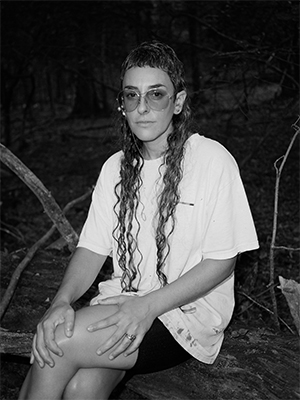
Katherine Hubbard is an Associate Professor of Art and Director of the MFA Program at Carnegie Mellon University School of Art. Her practice integrates photography, writing, and performance to explore the intersection of social politics, history, and narrative through a lens of bodily engagement. Hubbard's work emphasizes analog photography as a medium that mimics and interrogates the body's relationship to visual processes, often staging performances where participants' physical positioning becomes integral to the artwork's temporal experience. Education: MFA from the Milton Avery Graduate School of the Arts at Bard College (2010). Research focuses on the politics of looking, the malleability of vision, and bridging the imaginary with the familiar through interdisciplinary projects. Notable collaborations include the Poetry Parade series (2012–ongoing), a migratory feminist reading action performed in institutions like the Whitney Museum, and cyclops & slashes (2015), a participatory performance addressing social dynamics through photography and text. Awards: 2020 Guggenheim Fellowship in Photography. Hubbard has exhibited widely, including solo shows at Higher Pictures (New York) and Company Gallery (NY), with works featured in Frieze Magazine . Her projects often involve site-specific installations, such as Four shoulders and thirty five percent everything else (2014), which interrogates landscape and perception in Utah's desert.
Stephanie M. Pridgeon is an Associate Professor of Hispanic Studies and Department Chair at Bates College. Her research focuses on 20th- and 21st-century Latin American film and literature, with an emphasis on intersections of race, ethnicity, gender, religion, and politics. She holds a Ph.D. from Emory University. Her first book, *Revolutionary Visions: Jewish Life and Politics in Latin American Film* (University of Toronto Press), received Honorable Mention from the LASA Visual Culture Studies section. Her second book, *Absorption Narratives: Jewishness, Blackness, and Indigeneity in the Cultural Imaginary of the Americas*, was published in 2025. Current research includes analyzing visual imagery of the Mexican Revolution in literature. Pridgeon’s scholarship spans diverse topics such as Jewish-Indigenous literary interactions, queer ethnic rite narratives, and documentary film politics. She contributes to public discourse through opinion pieces like her 2024 analysis on Jewish political leadership in North America. Key Expertise: Latin American cinema, cultural hybridity, memory studies, feminist theory, and Marxist analysis. Recent Work: Leading projects on transnational Jewish narratives and post-revolutionary imagery.
Ali Yaycıoğlu is an Associate Professor of History at Stanford University, serving as Director of the Abbasi Program in Islamic Studies and Middle Eastern Studies Forum. His work focuses on Ottoman Empire and Modern Turkey, integrating digital tools to analyze political, economic, and legal institutions. He holds affiliations with the Center on Democracy, Development and the Rule of Law, and the Freeman Spogli Institute for International Studies. B.S. in International Relations (Middle East Technical University, 1994) M.A. in History (Bilkent University, 1997) Graduate Studies in Islamic Studies (McGill University, 1998) Ph.D. in History and Middle Eastern Studies (Harvard, 2008) His research explores Ottoman political and financial systems, with current projects examining debt networks (The Order of Debt) and Ottoman political communities. He leads digital initiatives like Charting the Empire and Mapping Ottoman Epirus, using spatial analysis to map fiscal records and power structures. His work bridges historical analysis with digital humanities, producing visualizations of Ottoman networks. Notable publications include Partners of the Empire (2016) and essays on Ottoman global connections. He co-edited a special digital humanities issue of the Journal of Ottoman and Turkish Studies (2023). His research has been supported by grants including the Stanford Data Science Seed Grant (2018). Yaycıoğlu advises the Stanford Ottoman World Series and engages in public scholarship through media commentary on Turkish politics. His artistic projects under 'Critical Imagination' explore historical themes through visual arts, further bridging academic and creative domains.