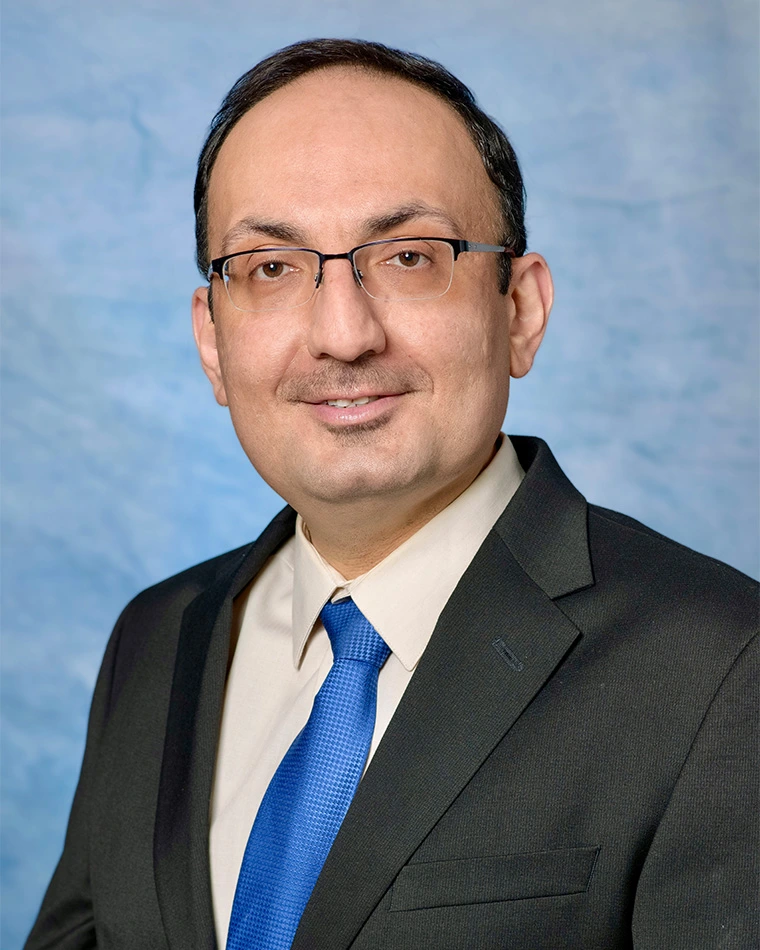
Jay Henderson is an Assistant Professor in the Department of Computer Science at Memorial University of Newfoundland, leading the Human-Computer Interaction (HCI) Lab. His research focuses on quantitative HCI, measuring human performance with emerging technologies such as mixed reality and generative AI. He holds a PhD from the University of Waterloo and has held roles including Postdoctoral Fellow at Carleton University and Senior Research Scientist at Huawei Technologies Canada. Education: PhD in Computer Science, University of Waterloo (2021) BSc Hons in Computer Science (minors in Mathematics and Psychology), Mount Allison University (2016) Research Interests: Henderson’s work bridges computer science with psychology and mathematics, emphasizing objective measurement of user interactions. Key areas include mixed reality productivity, generative AI interfaces, gesture-based input, and multimodal feedback systems. His quantitative approach ensures practical insights for technology design. Key Grants & Awards: NSERC Discovery Grant ($155,000 over 5 years) NSERC Discovery Launch Supplement ($12,500) David R. Cheriton Graduate Scholarship ($20,000 over 2 years) Teaching & Supervision: Teaches courses like COMP 4303 (AI for Games) and supervises multiple graduate and undergraduate researchers. Notable supervisees include Daniel Jo (MSc) and Arunav Saha (BSc Honours). Service Contributions: Served on ACM committees including Graphics Interface and CHI Late Breaking Work. Acted as Virtual Chair for ACM ASSETS 2024 and contributed to ACM’s name change policy as a transgender advocate.
Professor Stephen Cave is the Academic Director of the Leverhulme Centre for the Future of Intelligence (CFI) and Co-Director of the Institute for Technology and Humanity at the University of Cambridge. With a PhD in Philosophy from Cambridge, he previously served as a policy advisor and diplomat in the British Foreign Office for nearly a decade before returning to academia. Education: PhD in Philosophy, University of Cambridge Current Roles: Academic Director (CFI), Co-Director (Institute for Technology and Humanity) Media Engagement: Regular contributor to Financial Times , Guardian , New York Times , and media appearances on BBC and NPR His research bridges philosophy and ethics of technology , with two primary strands: (1) the ethics of AI and robotics , focusing on responsible AI development and societal impact through works like AI Narratives and Feminist AI ; and (2) the ethics of life-extension and immortality , explored in Immortality and Should You Choose to Live Forever? . Recent publications analyze algorithmic fairness, gender representation in AI narratives, and digital death. The articles listed reflect his engagement with responsible AI frameworks , cultural portrayals of AI , and existential implications of life extension . His work often synthesizes historical, ethical, and cultural perspectives to address contemporary challenges in AI governance and mortality philosophy.
Natalie T. Wood, PhD (Auburn University, 2002), is a Professor of Marketing and Associate Dean at Saint Joseph’s University’s Haub School of Business. Her expertise spans consumer behavior and social media marketing, with a focus on digital engagement and virtual environments. PhD, Auburn University (2002) GradDip in Marketing, Edith Cowan University (1999) BBus in Marketing, Edith Cowan University (1996) Her research explores social media’s influence on consumer trends, political marketing, themed hospitality authenticity, and virtual education. Key journals include Journal of Consumer Behaviour and Business Horizons . Recent publications analyze microblogging’s role in customer service and brand promotion. Notable awards: Saint Joseph’s University Faculty Merit Award for Teaching (2013) and Research (2007). Grants from Arrupe Center (2019) and Direct Selling Education Foundation (2010-2011) highlight her funded work. Professional roles include Assistant Director, Center for Consumer Research (2007-2011).
Professor Judy Kay is a leading academic in Computer Science at the University of Sydney, holding a Chair in Human-Centred Technology Research within the Faculty of Engineering and IT. Her work focuses on designing personalized systems that empower users to control their data, particularly in lifelong learning and health contexts. She leads the Human Centred Technology Research Cluster and is Editor-in-Chief of the International Journal of Artificial Intelligence in Education (IJAIED). Education: Studied at the University of Sydney, inspired to pursue academia due to its multidisciplinary environment and student collaboration opportunities. Research interests include user modeling, scrutable AI systems, and interfaces for personal informatics. Current projects span virtual reality learning environments, health data dashboards, and ethical AI transparency. Her work has led to commercialized technologies like the Personis system. Publications include over 200 peer-reviewed works in top venues like CHI, UbiComp, and AIED conferences. Awards highlight her contributions to computing education and AIED, including the 2023 Lifetime Achievement Award. Advises 4 current PhD/Master’s students focusing on topics like Open Learner Models in VR and health decision-making tools. Collaborates with multidisciplinary teams across computer science, health sciences, and education. Labs/Teams: Leads research groups in the School of Computer Science and collaborates with the Charles Perkins Centre on health-related projects.
Masood Masoodian is an Associate Professor in the Department of Art and Media at Aalto University, Finland. He leads the Visual Communication Design research group, focusing on interactive visualization for health, energy, and sustainability contexts. Previously, he held roles at the University of Waikato (2000-2016), University of Southern Denmark, and Massey University. Education: Doctoral degree in Other disciplines from the University of Waikato (1999) Research interests include design thinking, visualization of complex data, and creative aging interventions. Notable projects include the EU-funded INT-ACT initiative (2024-2026) addressing intangible cultural heritage. He has received an award for collaborative work on video game ludonarrative analysis (2019). Recent activities include organizing workshops on map-based interfaces, co-creating cultural heritage methods, and delivering public talks on digital design. Supervised two theses and contributed to 131 peer-reviewed outputs, emphasizing human-centered design and sustainability. Grants: Principal investigator for multiple EU projects totaling over 3 years of active funding. Awards: Prize for 'Comedy in the Ludonarrative of Video Games' (2019). Labs/Teams: Visual Communication Design group, collaborating internationally on projects like INT-ACT's cultural heritage mapping.
Mark Billinghurst is a Professor and Director of the Australian Research Centre for Interactive and Virtual Environments at UniSA STEM, University of South Australia. His work focuses on Augmented Reality (AR), Virtual Reality (VR), and empathic computing, emphasizing remote collaboration, human-computer interaction, and inclusive design. He has authored influential books like Computer-Supported Collaboration: Theory and Practice (2024) and pioneered systems such as Empathy Glasses and gaze-tracking interfaces for collaborative tasks. Education & Affiliations: Mark Billinghurst is affiliated with the Empathic Computing Laboratory and has collaborated globally with institutions like Keio University, Nokia, and the University of Canterbury. His research spans AR applications in manufacturing, healthcare, and social interaction, with a focus on improving accessibility and user experience. Research Interests: Dr. Billinghurst’s research explores AR/VR for remote guidance, wearable technologies, and emotional interfaces. He investigates how gaze cues, multimodal feedback, and AI can enhance collaboration and empathy in virtual environments. His work bridges technical innovation with human-centric design, addressing challenges in industrial assembly, mental health, and workplace transformation. Publications & Impact: His 2016 study on gaze tracking in remote collaboration (cited over 100 times) and 2024 book on AR collaboration highlight his contributions. Recent projects include Vibe360 (group emotion analysis) and CAEVr (biofeedback-driven empathy systems). He actively contributes to conferences like IEEE VR and CHI, shaping the future of immersive technologies. Labs & Future Work: His lab develops tools like the SAR system for aircraft drilling and empathic agents (EMiRAs). Future directions include AI-driven emotional interfaces, inclusive metaverse design, and VR solutions for cognitive rehabilitation.
Mark Fehlberg is an Assistant Professor in the Department of Mechanical Engineering at the University of Utah, specializing in ergonomics, human factors, and robotics. He contributes to the Ergonomics and Safety program at RMCOEH through teaching and research. Research Focus: Ergonomic robotics (Active Handrest system) Human performance evaluation with robotic interfaces Biomechanics of movement and energy expenditure Publications & Expertise: His work spans robotic control systems, assistive technology, precision manipulation, and biomechanical measurement systems including foot incline analysis. Recent publications highlight innovations in virtual fixtures, adaptive admittance control, and energy-efficient robotic designs. Contact: Email: m.fehlberg@utah.edu
J. Edward Colgate is the Walter P. Murphy Professor of Mechanical Engineering and Director of the Human Augmentation via Dexterity (HAND) Engineering Research Center at Northwestern University's McCormick School of Engineering. He also holds the title of Breed Senior Professor of Design. His academic career includes leadership roles as founding co-Director of the Segal Design Institute and director of the Master of Science in Engineering Design and Innovation program. Colgate earned his Ph.D. (1988), S.M. (1986), and S.B. in Physics (1983) from the Massachusetts Institute of Technology. Colgate's research focuses on physical human-robot interaction with specialization in surface haptic interactive design and electroadhesion technology development. His work spans three interconnected domains: haptic interfaces (including wearable haptic arrays and Touchbot systems), robot dexterity through Shape-Based Remote Manipulation (SBRM) for overcoming communication delays, and high-speed electroadhesive actuators. The Northwestern Haptics Lab under his direction aims to create realistic virtual environments by merging these research vectors. His publications demonstrate consistent focus on tactile perception mechanisms, electroadhesion applications, and haptic rendering algorithms. Recent work explores texture playback fidelity, wearable electroadhesive arrays, robotic manipulation, and human-swarm control systems, reflecting interdisciplinary integration of mechanical engineering, materials science, and neuroscience principles. Awards: Elected to National Academy of Engineering (2021) for contributions to haptics, human-robot systems, and design education Inducted into National Academy of Inventors (2015) Educational initiatives include developing Northwestern's Design Thinking and Communication curriculum, establishing the Certificate in Engineering Design, and creating the Master of Science in Engineering Design and Innovation. He teaches ME 390: Introduction to System Dynamics using a flipped classroom model. Colgate directs the Northwestern Haptics Lab within the Center for Robotics and Biosystems, focusing on fundamental haptics research with applications in virtual reality, prosthetics, and human-assistive devices. The lab maintains active industry partnerships for technology transfer of haptic innovations.
Florian 'Floyd' Mueller is a Professor of Future Interfaces at Monash University in Melbourne, Australia, where he directs the award-winning Exertion Games Lab within the Department of Human-Centred Computing (ranked among the top 20 HCI departments globally). Previously, he held positions at RMIT University, Stanford, University of Melbourne, Microsoft Research, MIT Media Lab, Fuji-Xerox Palo Alto Labs, Xerox Parc, and Australia's CSIRO. Mueller is a member of the prestigious ACM SIGCHI Academy, an honorary group recognizing leaders who have made substantial contributions to Human-Computer Interaction (HCI). Professor Mueller's research focuses on the intersections between technology, the human body, and play. He originated the concept of "Exertion Interface," arguing that we should not just design "easy-to-use" interactions when "hard-to-use" interactions can also be beneficial. His work spans movement-based interactions, whole-body interfaces, uncomfortable interactions, somaesthetics, and exertion games. Mueller's research methodology often employs research through design, design ethnography, and autoethnography to explore these novel interaction paradigms, incorporating mixed-reality, augmented reality, virtual reality, electronic muscle stimulation, biosensors, wearables, and drones. His recent publications demonstrate a continued focus on bodily interactions and human-computer integration, with particular emphasis on emerging subfields like WaterHCI and SportsHCI, brain-computer interfaces, and gustosonic (taste and sound) experiences. Mueller's work has evolved from foundational exertion game concepts to more sophisticated explorations of human-computer integration where technology becomes seamlessly woven into the fabric of human experience. Professor Mueller's contributions have been widely recognized with numerous awards including: Inaugural honouree of the Australian Design Centre's Design Honours Tall Poppy award for "intellectual and scientific excellence" 10 "Best Paper Honorable Mentions" (top 5%) from premier HCI conferences 2 "Best Paper" awards (top 1%) at CHI PLAY and CHI Shortlisted for the European Innovation Games Award (alongside Nintendo's WiiFit) Nokia Mindtrek Ubimedia Award Mueller has successfully secured some of Australia's largest and most competitive research grants, achieving a remarkable 14% success rate on Australian Research Council Discovery Project applications. He has served as General co-Chair for CHI PLAY'18 and CHI'20, becoming the first Australian-based researcher to spearhead HCI's highest-ranked publication outlet, and is currently General co-Chair for CHI'24. He is Associate Editor for tier A journals including Elsevier's IJHCS (International Journal of Human-Computer Studies) and ACM's IMWUT (Interactive, Mobile, Wearable and Ubiquitous Technologies). As director of the Exertion Games Lab, Mueller leads a research team whose innovations have been experienced by over 20,000 users across 3 continents and featured on the BBC, ABC, Discovery Science Channel, and Wired magazine. The lab has produced groundbreaking work in bodily interfaces, co-founding the CHI PLAY conference series and establishing new research directions in SportsHCI and WaterHCI through recent "Grand Challenges" papers. Mueller's lab continues to push boundaries with projects exploring brain-to-brain interfaces, lucid dreaming induction, and novel gustosonic experiences.
Dr. Shirley Coyle is an Assistant Professor in the School of Electronic Engineering at Dublin City University (DCU) and Programme Chair for the BSc Global Challenges. She holds a BEng in Electronic Engineering from DCU (2000) and a PhD in Biomedical Engineering from NUI Maynooth (2005). Her career includes roles as a Telecoms Engineer at Siemens, Research Fellow at the National Centre for Sensor Research, and Team Leader of Wearable Sensors in the INSIGHT Centre for Data Analytics. She also studied part-time at the Grafton Academy for Fashion Design and later founded a consultancy in wearable technologies. Her research focuses on smart garments, wearable sensors, and sustainable textiles, with applications in healthcare, sports performance, and S.T.E.A.M. integration. Key interests include developing wearable chemical sensors, energy-autonomous sensing systems, and IoT-enabled rehabilitation devices. She has pioneered work on wearable sensors for monitoring chronic diseases, athlete training, and home rehabilitation using VR. Dr. Coyle’s work spans interdisciplinary collaboration, combining biomedical engineering with textile design. Her contributions include innovations in electrospun textiles, self-powered sensors, and sensor integration with microfluidics. She has held leadership roles in DCU’s Governing Authority and promotes STEM education through design-focused initiatives.
Paul Taele is an Instructional Assistant Professor and Deputy Lab Director in the Sketch Recognition Lab at Texas A&M University's Department of Computer Science & Engineering. He holds a Ph.D. (2019), M.S. (2010), and dual B.S. degrees in Computer Science and Mathematics from the University of Texas at Austin (2006). His research focuses on sketch recognition, haptics, and intelligent interfaces for education and accessibility, with notable work in mid-air gesture recognition, educational sketching tools, and assistive technologies for disabilities. He has contributed to projects like Kanji Workbook , Hashigo , and HaptiMoto , and has published over 50 peer-reviewed articles across venues like CHI, IUI, and AAAI. Taele has received awards including the NSF Student Travel Grant (2014) and Ford Foundation Honorable Mention (2015). He teaches courses in capstone design, programming, and sketch recognition, and mentors students across all academic levels through strict eligibility criteria for research collaborations. Education : Ph.D. Computer Science, Texas A&M University (2019) M.S. Computer Science, Texas A&M University (2010) B.S. Computer Science & Mathematics, University of Texas at Austin (2006) Concentration in Mandarin Chinese, National Chengchi University (2007) Research Interests : Taele's work bridges HCI and AI to create accessible educational interfaces. His projects emphasize: Sketch Recognition : Developing algorithms for mid-air gestures, children's developmental assessments, and language learning Accessibility : Haptic systems for visually impaired learners and algebra education Educational Tech : Intelligent tutoring systems for music, math, and East Asian languages Awards & Grants : EAAI-20 Travel Grant (2020) Ford Foundation Dissertation Honorable Mention (2015) NSF East Asia-Pacific Summer Institutes (2013, 2012) Royce E. Wisenbaker Fellowship (2009) Lab & Teams : Director of the Sketch Recognition Lab (SRL) and collaborator with global institutions like Singapore Management University and National Taiwan University. Active in organizing workshops like SketchRec at IUI conferences.
Pardis Emami-Naeini is an Assistant Professor of Computer Science at Duke University, with joint appointments in the Sanford School of Public Policy and the Department of Electrical and Computer Engineering. She serves as the Director of the Duke Interdisciplinary Security, Privacy, and Interaction Research (InSPIre) lab and is a Duke Science and Technology Scholar. Her interdisciplinary work bridges computer science, public policy, and electrical engineering, with a focus on developing usable privacy and security solutions that empower individuals from diverse sociodemographic backgrounds. Dr. Emami-Naeini earned her Ph.D. in Computer Science from Carnegie Mellon University in 2020, followed by postdoctoral research at the University of Washington (2020-2022). Her research sits at the intersection of security, privacy, and human-computer interaction, with particular expertise in IoT security, technology-enabled abuse, reproductive health privacy, and smart city security. She has published extensively at flagship venues including IEEE S&P, CHI, CSCW, and SOUPS, with her work covered by major media outlets such as Wired and The Wall Street Journal. Her recent publications reveal a clear trajectory toward examining the human dimensions of security and privacy in emerging technologies, from LLM chatbots for mental health to social robots and period-tracking apps in the post-Roe v. Wade landscape. Her work consistently emphasizes the need for privacy-aware design that accounts for diverse user needs and contexts, particularly for vulnerable populations. Google Systems and ML Research Gift Award (2025) Google AI Research Scholar Program Award (2024) Top 5% Instructor in Duke Trinity College (2024) ORAU Ralph E. Powe Junior Faculty Enhancement Award (2023) Duke Science and Technology Scholar (2022) IEEE S&P paper highlighted in IEEE Security and Privacy Magazine (2021) CyLab Presidential Fellowship (2019) Dr. Emami-Naeini actively mentors several Ph.D. students including Jabari Kwesi, Jessie Cao, and Hiba Laabadli, as well as undergraduate and master's students. Her research has influenced key organizations including the National Institute of Standards and Technology (NIST), Consumer Reports, and the World Economic Forum in creating usable security and privacy labels for smart devices. She serves on numerous program committees including USENIX Security and CHI, and has participated in NSF grant review panels, demonstrating her growing leadership in the security and privacy community. Her InSPIre lab conducts user-centered research to uncover security and privacy needs of diverse stakeholders, with a particular focus on marginalized communities. The lab's work spans multiple domains including intimate partner violence, reproductive health, virtual reality, and smart cities, always with a strong emphasis on translating research findings into practical tools and policy recommendations.
Dr. Gary Scavone is a Professor and Department Chair in the Music department at McGill University's Schulich School of Music. He holds a PhD in Computer-Based Music Theory & Acoustics and MS in Electrical Engineering from Stanford University, alongside degrees from Syracuse University in Music and Electrical Engineering. His research focuses on music technology, including acoustic modeling, sound synthesis, and instrument design. He directs the Computational Acoustic Modeling Laboratory (CAML), which explores advanced techniques for simulating musical instruments and developing software tools. As a saxophonist, he specializes in contemporary concert music performance. Research interests include physically-based sound synthesis, wind instrument acoustics, and digital waveguide modeling. He has contributed to studies on brass and woodwind impedance measurements, violin soundpost dynamics, and free-reed instrument modeling. His work bridges engineering and artistry, with applications in music pedagogy, instrument design optimization, and virtual acoustic replication. Key contributions include open-source projects for wind instrument modeling and the development of tools for automated timbre assessment. His research often combines experimental methods with computational simulations, addressing challenges in both theoretical and applied music acoustics. Current projects focus on deep learning for friction modeling, impedance measurement systems, and cross-cultural instrument analysis.
Sarah Ita Levitan is an Assistant Professor in the Department of Computer Science at Hunter College, CUNY, and a member of the doctoral faculty in both Computer Science and Linguistics PhD programs at the CUNY Graduate Center. She previously served as a Postdoctoral Research Scientist at Columbia University, where she completed her PhD in Computer Science in 2019 under Dr. Julia Hirschberg. Research Focus: Spoken Language Processing Natural Language Processing Paralinguistic Analysis Trustworthiness and Deception Detection Acoustic-Procedic and Lexical Feature Extraction Online Radicalization and Misinformation Recent Publications demonstrate expertise in analyzing speech and text for trust cues, deception detection, and mental health prediction. Her awards include grants from NSF, Google, and Columbia University fellowships. She leads the Hunter Speech Lab , mentoring PhD, MS, and undergraduate students in computational linguistics research. Scientific Awards and Grants: NSF EAGER Grant (2023) Google Cyber NYC Grant (2023) NSF AI Institute Grant (2023) Air Force Office of Scientific Research Grant (2020) Brown Institute Seed Grant (2020) Knight News Innovation Fellowship (2018) Teaching: Courses include Natural Language Processing (undergraduate/graduate), Computational Linguistics, Computer Theory, and advanced topics in spoken language processing at both Hunter College and Columbia University.
Ehsan Azimi is an Assistant Professor in the Department of Electrical and Computer Engineering and the Department of Computer Science at the University of Arizona, where he is also a member of the Graduate Faculty. His research bridges human-AI interactive systems, extended reality, robotics, and human-centered design, with a strong focus on medical applications. His research interests lie in creating synergistic human-AI systems that enhance medical procedures through advanced technologies. Key areas include extended reality for surgical navigation , robotics in minimally invasive surgery , and intelligent user interfaces . His work has led to innovations in smart glasses calibration, intraocular robotic snakes, needle steering, and digital twins for surgical training, all aimed at improving precision, safety, and learning in medicine. The recent articles highlight a consistent trend in medical robotics , augmented reality in surgery , and human-robot collaboration . These works span from hardware development to AI-driven interfaces, emphasizing real-time interaction, user experience, and clinical applicability across disciplines like ophthalmology, otology, and surgical education. Scientific Awards: Siebel Scholar Provost Postdoctoral Fellowship Link Fellowship Ehsan actively mentors students and scholars in research projects, indicating a strong commitment to academic advising. While specific grant details are not listed, his patented technologies and publication record suggest successful funding and translational research outcomes. His work has been featured in Engineering Magazine and other media, reflecting its impact and innovation. His research is conducted within an interdisciplinary lab environment focused on human-centered AI and medical robotics, integrating expertise from computer science, engineering, and clinical medicine to develop next-generation surgical and training systems.