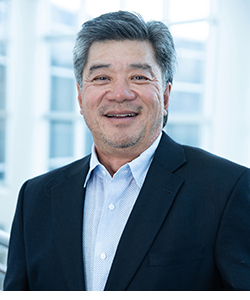
Ross Koppel is an Adjunct Professor of Sociology with expertise in healthcare information technology, medication errors, and ethics in social research. His work explores the intersection of technology and societal impacts, focusing on data governance, clinical workflows, and human factors in health IT systems. Research Interests Context-sensitive understanding of medication errors Societal implications of clinical data sharing Ethical challenges in AI and informatics Healthcare cost analysis Scientific Awards Fellow of the American College of Medical Informatics (FACMI)
Jillian Holt is a Senior Lecturer at Swinburne University of Technology, affiliated with the School of Social Sciences, Media, Film and Education. She holds a PhD in Practice-led Research (2015), a Master of Design in Multimedia Design (2005), and brings over two decades of professional experience as a film editor across feature films, documentaries, and television. She has held leadership roles including Academic Leader and Course Director for the Bachelor of Film and Television (Honours), and has significantly contributed to the internationalization of Swinburne’s film programs through CILECT and ASPERA affiliations. Her research centers on the intersection of creative practice, phenomenology, and pedagogy in film editing. Key interests include intuition in editing, embodied cognition, rhythm, and the teaching of creativity in postproduction. She has developed influential educational resources such as The Art of Editing: Australian Screen Editors Discuss Creativity in Editing . The recent publications reflect a consistent focus on creative editing, documentary storytelling, and pedagogical innovation. Her works span academic articles, creative documentaries, and thesis-based practice research, highlighting a blend of scholarly and artistic contributions in screen and digital media. Scientific Awards: Vice-Chancellor's Teaching Award, Swinburne University of Technology (2007) Supervision and Grants: She is actively co-supervising multiple PhD candidates on topics involving cultural identity, Indigenous research, and community-based documentaries. She has secured competitive grants, including a 2022–2023 research contract with the Australian Vietnamese Women's Association for a documentary project celebrating multicultural communities. Professional Engagement: She has held leadership roles in the Australian Screen Editors Guild (ASE), and served on committees for ASPERA and CILECT, reinforcing her national and international impact in film education and practice.
Dr. Guido Hunze serves as Senior Academic Councillor (Akademischer Oberrat) at the Institute for Religious Education and Pastoral Theology within the Catholic Theological Faculty of Westfälische Wilhelms-Universität Münster since December 2012. He holds state teaching authorization for Catholic Religious Education at secondary levels and has been actively involved in teacher education and curriculum development. 1991-1997: Studied Physics, Catholic Theology, and Pedagogy at Rheinische Friedrich-Wilhelms-Universität Bonn 1997: First State Examination for Teaching (Sek. II/I) in Physics and Catholic Religious Education 2006: Doctorate (Dr. theol.) at Catholic Theological Faculty of University of Bonn 2005: First State Examination for Teaching (Sek. II) in Pedagogy Dr. Hunze's research focuses on innovative approaches to religious education, particularly through video analysis methodologies. His work emphasizes inclusive religious teaching practices, creation theology in dialogue with natural sciences, and religious education for sustainable development. He explores how digital technologies transform religious pedagogy while maintaining theological depth, examining how students experience religious learning in contemporary contexts. His scholarship bridges theoretical frameworks with practical classroom applications. His recent publications reveal a consistent focus on contemporary challenges in religious education, with increasing attention to digital transformation, diversity, and sustainability. The trajectory shows evolution from traditional religious pedagogy toward more interdisciplinary approaches integrating video analysis, inclusive education, and ecological theology. His work increasingly addresses how religious education can respond to societal crises and digital transformation while maintaining theological integrity. As an academic leader, Dr. Hunze serves as faculty advisor for teacher education programs, coordinates practical semesters for religious education students, and moderates training for the implementation of confessional-cooperative religious education in the Diocese of Münster. He has contributed significantly to textbook development for Catholic religious education in German schools. Dr. Hunze leads the TheoTVIST videography team and previously directed the GRUVI project, which develops fundamental competencies for religious education through video analysis of classroom instruction. These initiatives represent his commitment to evidence-based approaches to religious pedagogy and teacher development.
Steven Watson is an Associate Professor at the Faculty of Education , University of Cambridge, with a Visiting Professor role at the Department of Sociology, Faculty of Croatian Studies, University of Zagreb. He co-founded the Cambridge Global Knowledge Nexus , is an Associate of the Digital Education Futures Initiative (DEFI), and a Fellow at Wolfson College. His research bridges engineering, social sciences, philosophy, and technology to address complex educational and societal challenges. Watson's work focuses on generative AI in education , using autopoietic ontology to develop frameworks for AI literacy, ethics, and integration. He advises UK policymakers on AI implementation and explores educational inclusion, cultural systems, and the sociology of technology. His presentations span global events, including the World Economic Forum and Tsinghua University. Recent publications emphasize AI's societal impact , transdisciplinary methodologies , and ethical frameworks for AI in education. His articles appear in journals like Systems Research and Behavioral Science and European Educational Research Journal , with a focus on autopoietic systems, educational equity, and technological evolution.
Professor Lisa Kervin is a leading academic in early childhood education at the University of Wollongong (UOW), serving as Director of Early Start Research and holding a Professorial appointment in the School of Education. Her research focuses on young children’s literate practices, play-based learning, and digital technology integration in education. She leads the ARC Centre of Excellence for the Digital Child and has secured significant funding, including a 2025 ARC Future Fellowship exploring intergenerational play. Kervin was honored as a Member of the Order of Australia (AM) in 2024 for contributions to early childhood digital literacy research. She has supervised over 35 research students, many now in academic and leadership roles, and currently oversees seven doctoral candidates. Her work bridges theory and practice through collaborations with educators and industry partners, emphasizing interdisciplinary approaches to child development and policy influence globally. Education: PhD in Language and Literacy from UOW (2001–2004). Professional roles include Principal Fellow of the Australian Literacy Educators’ Association and Director qualifications from the Australian Institute of Company Directors. Her research spans digital childhood ethics, play pedagogy, and literacy curriculum design, with outputs impacting government policies and international educational frameworks. Ongoing projects include the ‘DigIQ’ program promoting digital literacy and ‘Playgroups for All Ages’ fostering intergenerational engagement. Grants and collaborations involve partnerships across six universities and 33 global organizations. Her teaching innovations include the Early Childhood Elevate Mentoring Program to support educators’ academic progression. Kervin’s work addresses critical issues like screen time impacts, STEAM education, and culturally responsive pedagogies, positioning her as a key voice in 21st-century early childhood education.
Dr. Atsusi Hirumi is a Professor of Instructional Technology at the University of Central Florida (UCF), affiliated with the College of Community Innovation and Education and the Department of Learning Sciences and Educational Research. Born in New York and raised in Nairobi, Kenya, he holds a B.S. in Biology from Purdue University, an M.A. in Educational Technology from San Diego State University, and a Ph.D. in Instructional Systems from Florida State University. His research focuses on advancing e-learning systems, particularly in medical education, instructional design, and game-based learning. Key areas include the design of virtual patient simulations (e.g., InterPLAY), evidence-informed curriculum frameworks (AVIDesign), and the impact of multimedia elements like background music on learner performance. He has published over 100 articles and presented globally on topics such as blended learning strategies and competency-based education. Dr. Hirumi has received notable awards, including the Star Faculty Award for teaching and service, and is a two-time recipient of the WebCT Exemplary Online Course Award. His work emphasizes bridging theory and practice, collaborating across institutions to train educators in innovative teaching methods. His recent research highlights include exploring medical students' use of curriculum resources, analyzing the role of background music in learning, and advancing virtual patient simulation methodologies. These efforts aim to optimize educational outcomes in K–12, higher education, and corporate training settings.
Kathrin Siebold is a Professor at the Institute for German Linguistics of Philipps-Universität Marburg , specializing in German as a Foreign and Second Language (DaF/DaZ) . She leads the German as a Foreign and Second Language Working Group and oversees multiple MA and teacher training programs , including international double degree collaborations with institutions in China, France, and Spain. Contact: +49 6421 28-24892 | Email | Room B213, Marburg Educational Background includes a Dr. phil. (2007) from Universidad de Sevilla for her dissertation on speech acts and verbal politeness, with distinctions like Doctorado Europeo and Premio extraordinario del Doctorado . She earned her Magister Artium in German and Romance Studies from Philipps-Universität Marburg (1998) and Ludwig Maximilians-Universität München (1993–1997). Research Interests center on contrastive and intercultural pragmatics , focusing on speech acts, politeness, discourse markers, and interactional competences in L2. She explores empirical classroom research , video-based observation (VEO), and pedagogical innovations like Virtual Exchange and Tandem Learning . Her projects address multilingualism , language policy , and professional development of DaF/DaZ educators. Scientific Contributions include co-founding the open-access journal ZIAF (Zeitschrift für Interaktionsforschung in DaFZ) and organizing conferences such as the International Conference on German as a Foreign Language and the Marburger FaDaF-Thementage . Her recent 15 publications (2025–2023) analyze classroom interaction, discourse markers, and international educational collaborations. Awards: Premio extraordinario del Doctorado (2007) | Doctorado Europeo (2007) Professional Leadership involves coordinating research projects like DaF im iberoamerikanischen Kontext (DAAD-funded 2025–2027), Stark nach Corona in DaFZ (2023–2024), and Videobasierte Unterrichtsbeobachtung mit VEO (2023–2025). She collaborates with universities in Chile, Argentina, Spain, and Poland through Germanistische Institutspartnerschaften .
Dr. Ian Sturrock is a Senior Lecturer in Games, Animation & Visual Effects at Teesside University, within the Department of Computing & Games. He is actively involved in teaching across undergraduate, postgraduate, and foundation levels, and contributes to the university's Arts Research Group. His academic work spans game design, narrative theory, and digital innovation, with a strong focus on motivation and world-building in games. His research interests include: Game narrative and narratology Transmedia storytelling and world-building Player motivation and identity Cybersecurity awareness through games The cultural impact of role-playing games Dr. Sturrock's recent publications explore innovative frameworks for measuring game motivation and examine how transmedia narratives can promote social justice. His work often bridges academic theory with practical game design, emphasizing interdisciplinary approaches. He has led the Innovate UK-funded project 'HackEscape,' which uses game mechanics to teach cybersecurity. His research has been published in journals such as Gamevironments and Analog Game Studies , and he has contributed to educational syllabi collections on game design pedagogy. He is currently accepting PhD students and has supervised research in game studies. Dr. Sturrock was previously affiliated with the University of Hertfordshire, where he served as Partnership Manager for the Creative Enterprise degree and contributed to the Media Research Group, co-organizing the first international Game of Thrones Conference in 2017. His professional engagements include media contributions on video game adaptations and the success of Games Workshop, reflecting his public-facing scholarship. He is an active researcher with a growing body of peer-reviewed work in digital games and narrative.
Jennifer Richards serves as a Research Assistant Professor at Northwestern University's School of Education and Social Policy, Evanston, IL. Her work bridges science education research and K-12 classroom practice through research-practice partnerships focused on teacher learning and responsive pedagogy. Her educational background includes: PhD in Science Education, University of Maryland (2013) MEd in Secondary Science Education, University of Maryland (2008) BA in Biology and Political Science, University of Delaware (2006) Richards' research examines responsive learning environments that center students' ideas and experiences, alongside teacher practice dynamics across contexts. She employs discourse analysis and situative perspectives to investigate how teachers develop responsiveness to student thinking, particularly in science education settings. Her collaborative approach involves co-designing professional learning with educators to foster equitable classroom practices. Analysis of her 2020-2025 publications reveals consistent focus on teacher noticing, video-based professional development, and responsiveness mechanisms. Key trends include developing tools for analyzing classroom discourse (e.g., framing analysis lite), examining aesthetic dimensions of teaching, and exploring how teachers learn from self-captured classroom videos across mathematics and science contexts. No scientific awards were documented in the provided materials. Richards actively cultivates research-practice partnerships (RPPs) with school districts, evidenced by projects like expanding understanding of video-mediated teacher learning. While specific grant details are absent, her collaborative publications (e.g., Thompson et al., 2019 on networked PLCs) demonstrate sustained engagement with educational institutions to improve teaching practices. She collaborates extensively with scholars like Miriam G. Sherin in the Learning Sciences community, contributing to professional learning communities and video analysis initiatives. Her current work involves studying mechanisms for teacher learning from classroom video, though no dedicated lab name is specified in the materials.
Prof. Dr. Poldi Kuhl is a Professor of Educational Psychology at Leuphana University , Lüneburg, since 2021. Affiliated with the Institute of Psychology in Education (IPE) and the Center for Empirical Research on Language and Education (ERLE) , Kuhl specializes in educational psychology, developmental psychology, and inclusive education. Their research focuses on data-driven decision-making, digital learning platforms, academic language demands, and teacher professional development. Education: Diploma in Psychology (2003) and PhD in Philosophy (2008) from Freie Universität Berlin. Kuhl’s recent work examines how academic language features affect learning outcomes, digital data utilization in primary education, and mental health literacy among teachers. Their publications span topics from virtual reality training tools to inclusive teaching strategies in mathematics. Kuhl’s career includes leadership roles at the Research Data Center (FDZ) at the Institute for Quality Improvement in Education (IQB) and a Junior Professorship at Leuphana University. They have collaborated with institutions like the Universitat Oberta de Catalunya and the Max Planck Institute for Human Development .
Professor Julia Schlüter is a distinguished academic in the Chair of English Linguistics within the Humanities Faculty at the University of Bamberg, Germany. She has served as Senior Lecturer at the Chair of English Linguistics and Language History under Prof. Manfred Krug since June 2008, holding the title of Professor following her habilitation in 2008. Her institutional profile demonstrates deep commitment to both research and teaching innovation, particularly through her leadership of the KorPLUS project and development of open educational resources for corpus linguistics. Her research interests span corpus linguistics for English language learners, empirical methods for studying language variation and change, and the application of corpus methods to teaching. She specializes in examining grammatical, phonological, and lexical differences between British and American English across historical periods from Middle English to present-day usage. Her work investigates phonological variation (particularly phonotactically controlled alternations), morphological change, and syntactic variation through corpus analysis, with special attention to functional grammar and grammaticalization theory. Professor Schlüter's recent publications (2022-2025) reveal a strategic evolution in her research focus, with increasing emphasis on the intersection of corpus linguistics and digital education. While maintaining her foundational work in historical English linguistics, she has developed significant expertise in applying corpus methods to language teacher education and evaluating AI writing tools. Her work demonstrates consistent methodological innovation, moving from traditional corpus analysis to blended learning approaches and digital educational resource development. Her scientific recognition includes: Winner of the 2025 Teaching Innovation Prize from the International Society for the Linguistics of English for the KorPLUS project University of Bamberg Prize for outstanding habilitation (2009) Lise Meitner Programme post-doctoral scholarship (2005-2006) Rectorate Prize from University of Paderborn for outstanding Ph.D. thesis (2005) Multiple DAAD scholarships for international study Professor Schlüter actively supervises doctoral research, currently guiding three Ph.D. candidates (Katharina Deckert, Aklima Nahar, and Nikolai Beland) while having successfully completed supervision for several others. She leads the KorPLUS project (2021-2025), funded by the Stiftung Innovation in der Hochschullehre, which develops open educational resources for corpus linguistics. Her research has been consistently supported by the German Research Foundation (DFG) and other funding bodies throughout her career. She heads the KorPLUS team (with Carina Großmann and Katharina Deckert) which develops the interactive Open Educational Resource platform for corpus linguistics. Her YouTube channel offers video tutorials on corpus basics, and she has created the Video Podcast Series "How to Update your Grammar" for English teachers. She regularly organizes in-service teacher trainings and collaborates with the Virtual Linguistics Campus at RWTH Aachen University to deliver her educational materials globally.
Christy Thomas, EdD serves as Dean of the School of Education and Associate Professor at Ambrose University, where she joined as a sessional instructor in Fall 2019, became Assistant Professor in August 2020, and was promoted to Associate Professor in March 2024. She concurrently holds an Adjunct Assistant Professor position at the Werklund School of Education, University of Calgary, where she has taught since 2016. Her academic credentials include: EdD in Education (University of Calgary, 2016) MEd (University of Alberta, 2011) BEd (University of Calgary) Dr. Thomas's research centers on collaborative leadership frameworks and professional learning ecosystems in educational settings. She employs mixed-methods approaches including design-based research and action research to investigate how communities of practice foster teacher development. Her work bridges theoretical scholarship with practical implementation, focusing on creating environments where educators and students can thrive through collaborative risk-taking and supportive structures. Current projects examine digital-age pedagogies and leadership development models that integrate care ethics. Analysis of her 2021-2024 publications reveals strong thematic convergence around educational transformation through collaboration. Key trends include decolonization of teacher education (evident in Métissage leadership frameworks), pandemic-responsive teaching strategies, and technology-mediated social connectedness. Her scholarship consistently addresses systemic challenges in K-12 education while proposing actionable solutions through professional learning communities and leadership development. Dr. Thomas has secured substantial research funding as Principal Investigator (PI) and Co-Investigator (Co-I), including: Alberta Education Research Partnership Program Grant (2025-2027): New Teacher Transition: Early Career Supports (PI) SSHRC Insight Grant (2025-2029): Examining Implementation of Policies Restricting Mobile Devices in K-12 Schools (Co-I) SSHRC IDG (2021-2023): Exploring Online Pedagogies for Social Connectedness (Co-PI) Ambrose Research Fund (2021-2022): Building Faculty Capacity for Online Teaching (PI) She actively translates research into practice through instructional design consulting at Ambrose University and faculty development workshops at both Ambrose and the University of Calgary's Taylor Institute. Her consulting specializes in bridging academic theory with classroom application, particularly in online pedagogies and collaborative leadership models. Dr. Thomas emphasizes creating partnerships between researchers and practitioners to address real-world educational challenges.
Professor Kathy Douglas is the Associate Deputy Vice Chancellor, Learning, Teaching & Quality in RMIT University's College of Business and Law. She leads initiatives in pedagogy innovation, program development, and educational governance. With over 20 years in dispute resolution (ADR), her research spans legal education, mediation practices, and technology-enhanced learning. Previously, she served as Dean of the Graduate School of Business and Law (2018–2022), receiving the 2020 Vice Chancellor’s Leadership Award for Imagination. Her work integrates transformative educational experiences with impactful research, focusing on community, industry, and staff engagement. Research Interests: Alternative Dispute Resolution (ADR) practices and education Legal pedagogy and blended learning Technology’s role in dispute resolution and legal training Mediation ethics and emotional intelligence Awards: Vice Chancellor’s Leadership Award for Imagination (2020) Advising & Grants: Supervises research projects in mediation and legal practice innovation Prior grants focused on ADR training and educational technology integration Labs/Teams: Leads the College’s Learning & Teaching Quality portfolio, collaborating with academic boards and industry partners.
Zhe Hou is a Senior Lecturer at the School of Information and Communication Technology , Griffith University, Australia. His academic journey includes a PhD in automated reasoning for separation logic from the Australian National University (2015) and prior research roles at Nanyang Technological University, Singapore (2015-2017). He joined Griffith University in 2017 and became permanent faculty in late 2019. Research Interests : Formal methods for software verification Automated reasoning with logical frameworks Blockchain technology and security Quantum computing verification Integration of LLMs with rigorous reasoning Sports analytics via model checking Recent Publications demonstrate expertise in neural-symbolic reasoning, blockchain security, quantum SAT solvers, and runtime verification frameworks. His work combines formal logic with machine learning for applications in cybersecurity and AI trustworthiness. Scientific Awards : ACM SIGSOFT Distinguished Paper Award (2025) Supervision Roles : Principal/Associate Supervisor for 6+ doctoral projects in blockchain security, AI verification, and network security. Professional Activities : Editor for Springer-Nature and Formal Aspects of Computing special issues, conference chair for ICFEM, ICECCS, and ISACE symposia.
Yung-Hsiang Lu is a Professor of Electrical and Computer Engineering at Purdue University's Elmore Family School of Electrical and Computer Engineering. His research focuses on mobile/cloud computing, energy-efficient computing, and image/video processing. He holds a BSEE from National Taiwan University (1992), an MSEE (1996), and a PhD (2002) from Stanford University. Dr. Lu's academic background includes significant contributions to VLSI and circuit design, with primary emphasis on computer engineering. His work spans theoretical and applied domains, including optimizing neural networks for edge devices, securing deep learning models, and leveraging large language models for software development. Recent research trends in his articles emphasize energy efficiency in AI systems, interdisciplinary applications of transformers (e.g., music analysis), and challenges in model interoperability and security. His publications also highlight innovations in global camera networks and real-time visual data analysis. While no specific grants or awards are explicitly mentioned, his extensive list of publications reflects sustained academic engagement. His educational contributions include developing C programming resources and teaching large-scale image processing using global camera networks. Dr. Lu's professional address is at Purdue's Materials and Electrical Engineering Building in West Lafayette, Indiana, where he maintains an active research lab focused on embedded systems and low-power computing innovations.