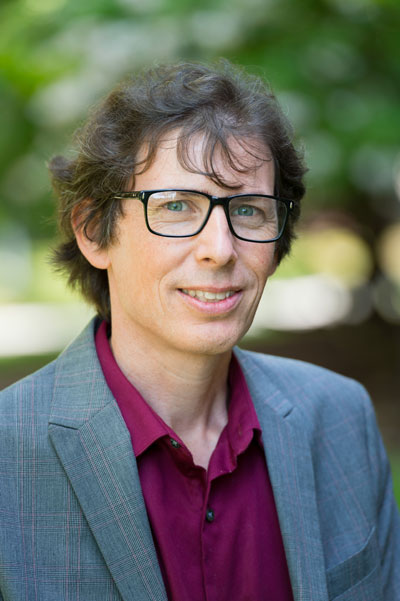
Steven Rogak is a Professor in the Department of Mechanical Engineering at the University of British Columbia's Faculty of Applied Science. He holds a P.Eng. license and degrees including a B.A.Sc. in Mechanical Engineering from UBC, and M.Sc. and Ph.D. from Caltech. P.Eng., University of British Columbia B.A.Sc., University of British Columbia M.Sc., Ph.D., California Institute of Technology His research focuses on aerosol science, particularly solid nanoparticles from combustion processes, their climate and health impacts, and mitigation strategies. Key areas include: Soot morphology and transport properties Engine emission reduction via fuel injectors Indoor air filtration systems Membrane-based energy exchangers Atmospheric particulate analysis The 15 most recent articles span experimental and theoretical studies on soot characterization, membrane technologies, and aerosol dynamics, with applications in climate modeling, healthcare ventilation, and sustainable materials. Collaborations include Westport Innovations and interdisciplinary teams. Rogak leads the Aerosol Laboratory at UBC, where he applies fluid mechanics and heat transfer fundamentals to address environmental and health challenges. He emphasizes experimental rigor and welcomes graduate students with expertise in these areas.
Daniel Adelman is the Charles I. Clough, Jr. Professor of Operations Management at the University of Chicago Booth School of Business. He joined the faculty in 1997 after completing his PhD in industrial engineering and operations research at Georgia Tech. Adelman is a leading expert in Business Analytics and Management Analytics, helping companies deploy data and decision analysis to build world-class strategic and tactical management capabilities. Adelman received his PhD in industrial engineering and operations research in 1997, along with a bachelor's degree in industrial engineering and a master's degree in operations research, all from the School of Industrial and Systems Engineering at the Georgia Institute of Technology. Daniel Adelman's research focuses on applying analytical models to solve complex business problems across multiple industries. He has worked with firms from diverse sectors including internet services, chemical distribution, airlines, third party logistics, fiber-optics manufacturing, semiconductor manufacturing, oil, and healthcare. His research integrates real-world data with analytical models to bring structure and discipline to decision and control processes, enabling firms to achieve higher profits with lower risk. Adelman's recent work has concentrated heavily on healthcare analytics, where he leads the Healthcare Analytics Laboratory at Chicago Booth. This lab works with teams of doctoral and MBA students on projects with major healthcare institutions to optimize clinical, operational, and financial outcomes. His research spans foundational operations research including approximate dynamic programming, inventory theory/supply chain management, and revenue management/pricing optimization, as well as examining the linkage between operational performance metrics and financial performance of firms. Adelman's publications show a clear trend toward increasing focus on healthcare applications while maintaining strong theoretical foundations in operations research. His earlier work focused more on general operations management problems like inventory control and supply chain optimization, while his recent publications demonstrate a strategic shift toward healthcare analytics, particularly examining surgical team dynamics, hospital performance metrics, and resource allocation during public health emergencies like the COVID-19 pandemic. George B. Dantzig Prize (1998) for the best dissertation in operations research and management sciences that is innovative and relevant to practice Adelman regularly advises doctoral and MBA students through the Healthcare Analytics Laboratory at Chicago Booth. He has served as Associate Editor for Management Science, currently serves as Associate Editor for Manufacturing and Service Operations Management, and is the Area Editor for Operations and Supply Chain at Operations Research. His industry collaborations include significant projects with Akamai on internet pricing, with GE Global Research Labs on the electricity smart grid, with BP on gasoline supply contract portfolio optimization, and with Symantec on software release planning. Adelman leads the Healthcare Analytics Laboratory at Chicago Booth, which brings together interdisciplinary teams of doctoral and MBA students to work on a portfolio of projects with major healthcare institutions. The lab focuses on optimizing clinical, operational, and financial outcomes through advanced analytics and decision modeling.
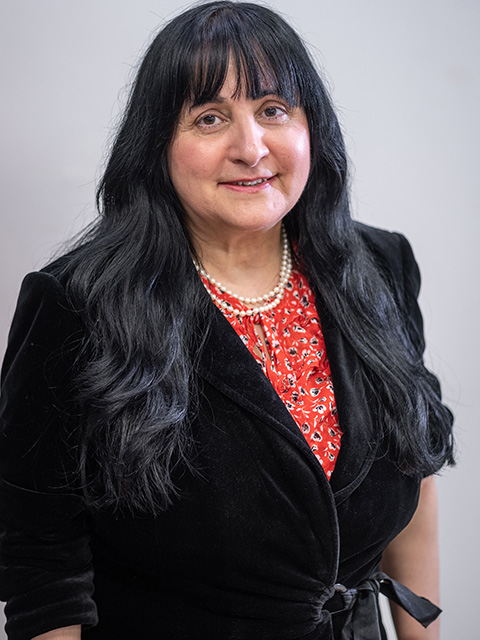
Dr. Laila Ingrid Muderspach is a Clinical Professor of Obstetrics & Gynecology at the University of Southern California (USC) on a part-time basis. She specializes in the diagnosis and treatment of gynecologic malignancies, emphasizing patient-centered care that addresses physical, emotional, and socioeconomic needs. Her clinical expertise spans surgical and medical interventions for cancers of the female reproductive system, with a focus on improving outcomes through advanced techniques like Enhanced Recovery After Surgery (ERAS) pathways and sentinel lymph node biopsies. Dr. Muderspach’s research spans epidemiological trends in gynecologic cancers, including adolescent and young adult (AYA) populations, and the optimization of surgical and chemotherapy protocols. She has contributed to pivotal studies on endometrial and cervical cancer staging, palliative care utilization, and the management of complications in vulvar cancer surgery. Her work also addresses healthcare disparities, such as accessibility to obstetric care and adherence to cancer treatment in underserved communities. Education: Medical degree from an unspecified institution, with training at USC and UCLA. Awards: Over 30 awards including Best Doctors recognition (2009–2014), National Faculty Award (2007), and multiple teaching accolades. Labs/Teams: Active in multidisciplinary gynecologic oncology teams at LAC+USC Medical Center, focusing on surgical innovation and patient safety. Her publications (over 150 listed) reflect a commitment to translational research, including clinical trials for novel therapies like eribulin for cervical cancer and investigations into HPV vaccine impact on cervical lesions.
Professor Dinusha Mendis is a leading academic in Intellectual Property and Innovation Law at Bournemouth University, where she serves as Director of the Centre for Intellectual Property Policy and Management (CIPPM). Her expertise bridges copyright law with emerging technologies like 3D printing, AI, blockchain, and the Metaverse, informed by extensive research and consultation with entities such as the European Parliament, UKIPO, and corporations like HP and Chanel. She holds a PhD from Edinburgh University and has authored seminal works on the intersection of technology and IP. BSc in Law from Aberdeen University LLM and PhD from Edinburgh University Called to the Bar of England and Wales Her research focuses on copyright challenges in immersive environments , AI-generated content regulation , and blockchain/NFTs . She led major studies for the European Commission and UKIPO , including the first peer-reviewed work on 3D printing and IP. Her 2019 co-edited book with Stanford and QUT scholars established foundational frameworks for additive manufacturing legal analysis. Recent publications highlight AI copyright disputes (2024 The Conversation ), NFT legal ambiguities (2022), and pandemic-era 3D printing (2020). Trends show increasing emphasis on decentralized IP systems and machine learning's impact on creative industries . Scientific Awards & Grants JSPS Visiting Professorship (2023) Daiwa Anglo-Japanese Foundation Grant (2024) EU Commission Research Funding (2020) AHRC Grant for 3D Jewellery Study (2017) As a PhD supervisor, she mentors researchers on AI copyright (Benjamin White), crypto-art (Bahar Dagli), and music creation law (Elizabeth Bailey). She contributes to global IP policy through the World Economic Forum's Metaverse Governance Team and EU IPR Enforcement Projects .
Ji-Quan Shi is a Research Fellow in the Department of Earth Science & Engineering at Imperial College London's Faculty of Engineering. His affiliations include the Energy Futures Lab, Minerals, Energy and Environmental Engineering, and Petroleum Geoscience and Engineering. His research focuses on geomechanical and coupled THM (thermo-hydro-mechanical) modeling for CO2 storage, geothermal energy systems, and mining-induced seismicity. Key interests include induced seismicity risk assessment, reservoir simulation, and fracture mechanics in subsurface energy systems. Education background not explicitly stated in text, but his expertise spans geoscience, civil engineering, and environmental systems. Research areas emphasize interdisciplinary approaches to subsurface energy challenges, including carbon capture and storage (CCS), geothermal reservoir management, and coal mining hazards. His work combines field observations, numerical modeling, and laboratory experiments to address challenges like CO2 plume tracking, fault activation mechanisms, and microseismic event forecasting. Recent studies focus on Iceland's geothermal fields (Hellisheiði) and North African CO2 storage sites (In Salah). He has pioneered methods for integrating microseismic data with reservoir models to improve safety and efficiency in subsurface operations. Notable contributions include probabilistic frameworks for hazardous microseismicity prediction in coal mines and coupled modeling of thermal effects on induced seismicity. His research also explores innovative monitoring technologies like distributed fiber optic sensing for CO2 plume tracking.
Guangyu Cao is a Professor at the Department of Energy and Process Engineering, Norwegian University of Science and Technology (NTNU). He holds leadership roles in multiple international organizations, including the European standards working group CEN TC156 WG18, REHVA's technical committee, and the editorial board of the Journal of Building Engineering (Impact Factor 5.318). His research focuses on indoor airflow dynamics, ventilation systems in healthcare settings, and airborne disease transmission mitigation, with a strong emphasis on surgical environments and school buildings. Education: PhD in Energy Engineering (2009), Helsinki University of Technology Senior Researcher at VTT Technical Research Center (2009-2014) Research Interests: Hospital ventilation optimization, thermal comfort in clinical settings, airborne infection control, and sustainable building environmental quality. He combines experimental studies with mathematical modeling to evaluate ventilation strategies, particularly in operating rooms and isolation wards. Projects: EU Marie Curie DTN HumanIC (2024–2027) EU H2020 iclimabuilt (2021–2025) NFR POSIred (2020-2024) Labs/Teams: Collaborates with St. Olav's Hospital on indoor environment projects and leads teams in Cold Climate HVAC and Healthy Building Europe initiatives.
Dr. Gabriel Wainer is a Professor in the Department of Systems and Computer Engineering at Carleton University's Faculty of Engineering and Design. He leads the Advanced Real-Time Simulation Lab and specializes in modeling and simulation methodologies, particularly focusing on discrete event systems, real-time modeling, cellular automata, and DEVS formalism. Research Interests: Discrete event systems, DEVS formalism, cellular automata, real-time simulation, IoT applications, and parallel/distributed simulation Affiliation: Carleton University Recent publications highlight his work in advanced simulation frameworks, energy-efficient 5G systems using deep reinforcement learning, and pandemic modeling with cellular automata. His lab develops tools like PROMETHEUS and Devsmap for standardized DEVS model representation, while also exploring applications in wireless communication, building energy systems, and behavioral epidemiology.
Stacy Farina is an Associate Professor in the Department of Biology at Howard University, affiliated with the College of Arts & Sciences. Her research focuses on functional morphology, biomechanics, and evolutionary biology, particularly in fish systems. She holds a B.S. in Marine and Freshwater Biology from the University of New Hampshire (2010) and a Ph.D. in Evolutionary Biology from Cornell University (2015). Her work examines skeletal morphology, respiratory systems, and functional adaptations in diverse fish species, including flatfishes, snailfishes, and elasmobranchs. Recent studies investigate remote research methodologies during the pandemic, deep-sea adaptation, and biomechanical integration in feeding systems. She directs a research lab in Just Hall, Room 410, and maintains a Google Scholar profile. Publications span topics like ventilation mechanics, acoustic signaling evolution, and skeletal density patterns in deep-sea environments. Her research emphasizes interdisciplinary approaches, combining anatomical analysis, computational modeling, and experimental biomechanics. No scientific awards or grants are explicitly listed in the provided texts. She advises no listed students, though her research involves undergraduate participation. Her lab focuses on fish morphology, ecology, and evolutionary processes.
Overview Catherine O'Neill Buck is an Assistant Professor in the Department of Pediatrics, Division of Neonatal-Perinatal Medicine at Yale School of Medicine. She is a neonatologist and clinical researcher focused on maternal metabolic health during pregnancy and its influence on infant growth, body composition, and neurodevelopment. Her work bridges clinical care and translational research, with a particular emphasis on preterm infants and obesity prevention. Education & Training MD: University of Connecticut School of Medicine BS: University of Connecticut (Molecular/Cell Biology and Spanish) Pediatric Residency: University of Texas Southwestern Medical School (2015) Neonatal-Perinatal Medicine Fellowship: Brown University/Women and Infants Hospital (2019) MHS (Clinical Investigation): Yale School of Medicine (2025) Research Focus Dr. Buck's research investigates how maternal metabolic conditions (e.g., diabetes) and early neonatal nutrition affect preterm and term infants' growth trajectories, adiposity, and long-term cardiometabolic health. Key areas include: Adipokine and metabolite profiling in newborns Ultrasound-based body composition assessment in preterm infants Optimizing nutritional protocols for preterm growth Impact of maternal diabetes on neonatal morbidities Clinical Trial Principal Investigator for the trial Preventing Obesity in Preterm Infants (HIC ID 2000031084), exploring strategies to mitigate obesity risks in preterm populations. Labs/Teams Leads the Yale Neonatal NOuRISH Team , focusing on nutritional and metabolic interventions for neonates.
Dr. John W. Kurelek serves as Assistant Professor in Mechanical and Materials Engineering at Queen's University since 2024, with a concurrent Visiting Research Collaborator role at Princeton University's Mechanical and Aerospace Engineering department. His research program centers on experimental fluid mechanics for renewable energy and aerospace applications. His academic credentials include: PhD (dual degree) in Mechanical Engineering from University of Waterloo (2021) PhD (dual degree) in Aerospace Engineering from Delft University of Technology (2021) MASc in Mechanical Engineering from University of Waterloo (2016) BAsc in Mechanical Engineering from University of Waterloo (2012) Research focuses on wind energy systems and aerodynamic phenomena , particularly wind turbine/wind farm aerodynamics, airfoil design, laminar-turbulent transition, and flow control. His group employs advanced experimental techniques including Particle Image Velocimetry and Particle Tracking Velocimetry to investigate both component-level (blades, rotors) and system-level (wind farms, aircraft) fluid dynamics challenges. Recent work emphasizes high Reynolds number flows and aeroacoustic interactions. Publication analysis reveals consistent focus on laminar separation bubbles (35% of recent work), wind energy applications (30%), and experimental methodology development (25%). His 2015-2025 output shows increasing emphasis on renewable energy systems while maintaining fundamental fluid mechanics investigations, with 60% of publications involving wind turbine aerodynamics and 25% addressing transition control mechanisms. No scientific awards are documented in the provided materials. Dr. Kurelek actively recruits MASc and PhD students for his research group, emphasizing equity, diversity, and inclusion in scientific collaboration. Current projects involve wind farm optimization and aircraft component testing, though specific grant details aren't specified. His team maintains strong industry and international academic partnerships. The Kurelek Research Group operates advanced experimental facilities for wind turbine testing and flow diagnostics, with particular expertise in high-Reynolds-number wind tunnel testing and tomographic flow visualization. Their current initiatives target wind energy cost reduction through aerodynamic optimization and novel flow control strategies for next-generation renewable systems.
Alan Briones Delgado is a researcher at the La Salle School of Engineering , Universitat Ramon Llull , with a focus on Internet of Things , Cybersecurity , and Transport Protocols . His work spans projects funded by the European Commission and national grants, including EXCEL4HOUSING4.0 , WeB-Nimbus , and NG-SOC , addressing challenges in cloud computing education, ecological monitoring, and security operations. His research integrates Artificial Intelligence and Wireless Sensor Networks for sustainable solutions. Key research areas include Quality of Service in heterogeneous networks, Environmental Conservation via IoT, and Teaching and Learning strategies for Big Data. Projects like EcoSentinel and BTL-COP highlight his commitment to Environmental Monitoring and Community Policing applications. His collaborations extend to institutions in the UK , Albania , and Western Balkans . Contact: alan.briones@salle.url.edu
Prof. Dr. Ahmet ÖZMEN is a Professor at Sakarya University's Faculty of Computer and Information Sciences, Department of Software Engineering. He has held various administrative positions including Head of the Software Engineering Department (2019-2028) and Director of the Computer Research and Application Center (2019-2022). With extensive experience in academia since 1991, he has made significant contributions to computer vision, traffic monitoring systems, and sensor technologies. Sakarya University: Professor (2019-present), Associate Professor (2011-2019) Dumlupınar University: Assistant Professor (2001-2011), Research Assistant (2000-2001, 1993-1998) Istanbul Technical University: Research Assistant (1991-1993) Prof. ÖZMEN's research spans computer vision applications for traffic monitoring, indoor air quality systems, parallel computing, and sensor technologies. His work bridges theoretical computer science with practical engineering applications, particularly in developing vision-based systems for nighttime vehicle detection, traffic flow monitoring, and environmental sensing. His interdisciplinary approach combines machine learning, image processing, and embedded systems to solve real-world problems in transportation and environmental monitoring. His publication record shows a clear evolution from parallel and distributed systems in his early career to computer vision and sensor applications in recent years. The majority of his recent work focuses on traffic monitoring systems using computer vision techniques, particularly for nighttime conditions, and indoor air quality monitoring systems using sensor networks. His research demonstrates strong industry and societal relevance, with applications in smart transportation, environmental protection, and educational technology. TÜBİTAK Publication Awards (2006, 2008, 2009, 2010) Physical implementation award from TÜBİDER (2008) Microsoft Certified Professional Certificate (2005) YÖK overseas study scholarships (1993, 1998) Elginkan graduate scholarships (1990, 1991) Prof. ÖZMEN has supervised numerous graduate students across multiple institutions, with a focus on practical engineering problems. His research has been supported by various projects including TÜBİTAK projects, institutional research grants, and industry collaborations. He has led significant research initiatives in traffic monitoring systems, indoor air quality monitoring, and educational technology platforms. His administrative leadership has included directing research centers and shaping curriculum development in software engineering. His work has involved establishing research teams focused on computer vision applications, sensor network development, and educational technology. These teams have produced numerous publications, developed practical systems, and trained the next generation of computer engineers. Current research directions include advanced traffic monitoring systems using deep learning and multi-camera setups for urban planning applications.
Professor Mahroo Eftekhari is a Professor in Building Services Engineering at Loughborough University, leading the Low Energy Building Services Engineering MSc programme. Her research focuses on energy-efficient building systems, thermal comfort, HVAC optimization, and renewable integration. She has pioneered control systems for airports and buildings, including MPC-based strategies to reduce energy use while enhancing occupant well-being. Notable contributions include the development of BISPA (Building & Industrial Services Pipework Academy), a national center for BIM and pipework training. Education: Holds qualifications including CEng (Chartered Engineer), DPhil (Doctor of Philosophy), FCIBSE (Fellow of Chartered Institution of Building Services Engineers), and SFHEA (Senior Fellow of the Higher Education Academy). Her academic career is marked by collaborations with Tata Steel, Mitsubishi R&D, and Vexo, yielding applied research in sustainable building technologies. Research Interests: Indoor Air Quality, Thermal Comfort Modeling, Zero Energy Buildings, Digital Twins, and Advanced Control Systems. She has developed innovative solutions like AI-driven thermal management for Building Energy Management Systems (BEMS) and interfaces to synchronize airport operations with energy systems. Awards & Grants: Secured funding from diverse bodies for projects such as adaptive thermal comfort models, BISPA infrastructure, and energy-efficient HVAC strategies. Her work emphasizes practical applications, including reducing CO₂ emissions via airport terminal optimization and improving renewable energy use in buildings. Lab & Teams: Leads the Building Energy Research Group, managing projects in closed-loop heating systems, IEQ monitoring, and hydronic system efficiency. The Civil Engineering labs house interactive BIM rigs launched with institutional and industry support.
Erica R.H. Fuchs is the Kavčić-Moura Professor in the Department of Engineering and Public Policy at Carnegie Mellon University (CMU), directing the Critical Technology Initiative (CTI). She holds courtesy faculty positions in Materials Science and Engineering and the Heinz College. Her research focuses on emerging technology development, commercialization, and global manufacturing, with emphasis on national policy implications. Fuchs leads interdisciplinary efforts at CTI to advance critical technology assessment frameworks, ensuring smart investments and policies for national security and economic competitiveness. Formerly, she directed the Manufacturing Futures Initiative, now an endowed institute at CMU. Education: She earned a Ph.D. (2006), M.Sc. (2003), and B.Sc. (1999) in Engineering Systems, Technology Policy, and Materials Science from MIT. Post-MIT, she was a UNIDO fellow in Beijing. Research Interests: Global innovation policy, technology commercialization pathways, and the intersection of technology with economic and security objectives. She authored influential works like the 2021 report *Securing America’s Future*, advocating for a National Technology Strategy to align multi-objective outcomes (security, equity, prosperity). Key Contributions: Catalyzed the National Network for Critical Technology Assessment, mobilizing 13+ universities to address technology gaps. Testified in Congress on supply chain resilience, EV battery policies, and semiconductor strategies. Advises entities like the National Semiconductor Technology Center and MIT’s Institute for Data, Systems, and Society. Affiliations: National Bureau of Economic Research (Research Associate), National Institute of Standards and Technology (NSTC Board), and Brookings Institution panelist. Her work is frequently cited in *Axios*, *Bloomberg*, and the *New York Times*.
Dr. Thomas Parkinson is a Lecturer at The University of Sydney and Deputy Director of the IEQ Lab within the School of Architecture, Design and Planning. His research focuses on high-performance buildings, indoor environmental quality (IEQ), and human thermal physiology. He holds a PhD in Architectural Science from The University of Sydney and has led technical development of the SAMBA IEQ Monitoring System. He previously worked at the Center for the Built Environment at UC Berkeley. Education: BEnvMgt, BSc(Hons1), PhD in Architectural Science (University of Sydney). Research interests include thermal comfort dynamics, sensor technology for built environments, and adaptive comfort models. Key contributions include the ASHRAE Global Thermal Comfort Database II and studies on workplace dissatisfaction in 600 office buildings. Awards: 2022 Ralph G. Nevins Award (ASHRAE) for thermal comfort research, 2018 Best Paper Award (Building and Environment). He reviews for journals like Building and Environment and serves on ASHRAE Technical Committees. Teaching: Courses include BADP1001 Empirical Thinking and DESC9067 Mechanical Services. Current advisee: Sepideh Borghei (PhD project on indoor greenery's impact). Affiliations: Lawrence Berkeley National Laboratory, UC Berkeley's Center for the Built Environment. Active in ASHRAE committees and professional networks.