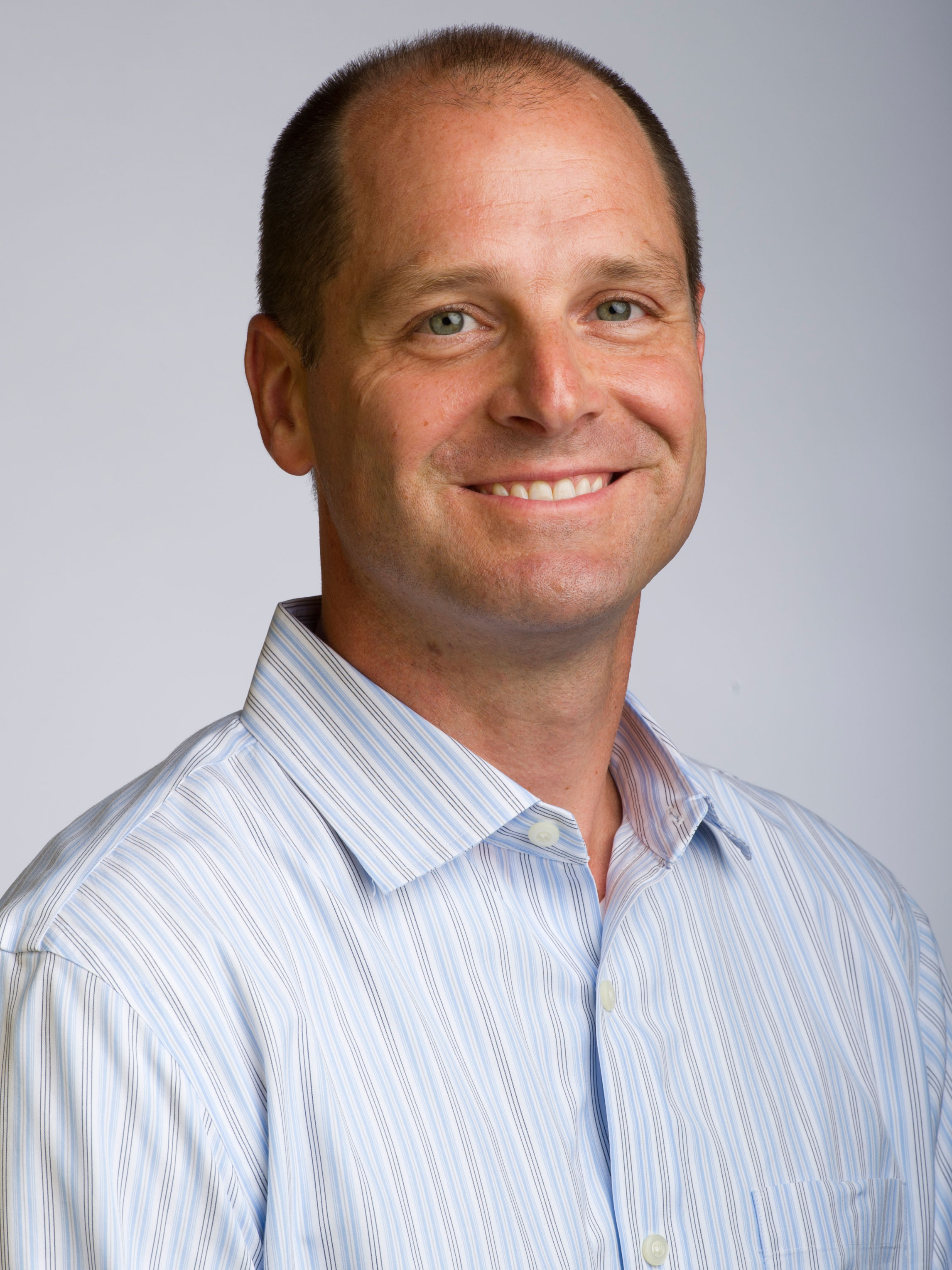
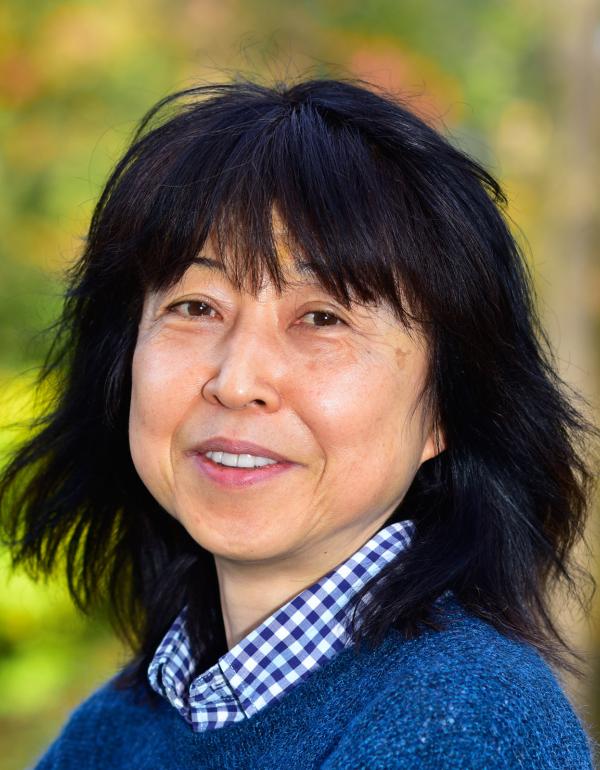
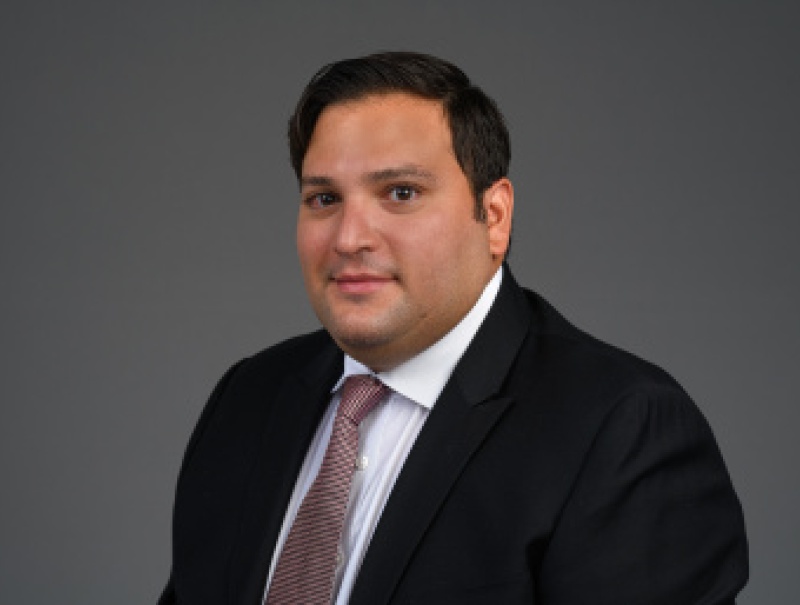
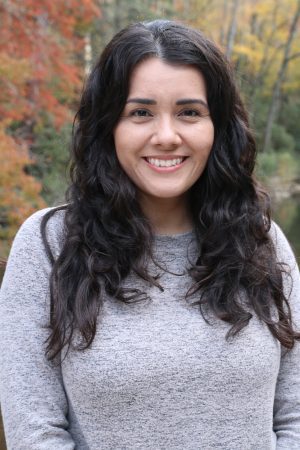
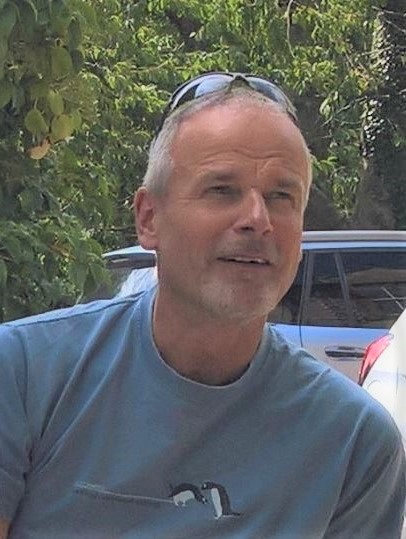
Yizhou Zhang is an Assistant Professor in the Department of Computer Science at the University of Waterloo. He holds a PhD and MS from Cornell University (2019 and 2016) and a BS from Shanghai Jiao Tong University (2012). His research focuses on programming languages, including design, implementation, and theory, with emphasis on formal methods, compiler optimization, and probabilistic programming. Education: PhD, Cornell University, 2019 MS, Cornell University, 2016 BS, Shanghai Jiao Tong University, 2012 Research interests span programming language theory, compiler construction, and formal verification. His work explores topics like certified compilers, effect handlers, and probabilistic program analysis. Recent publications emphasize formal models for memoization, nested family polymorphism, and bidirectional control flow. His publications reflect contributions to probabilistic programming semantics, compiler optimization techniques, and type systems. No scientific awards are explicitly listed. Advising and grant details are not provided in the text. Zhang’s research often intersects with formal methods and practical compiler implementation challenges.
James Adams is the President's Professor in the School for Engineering of Matter, Transport and Energy at Arizona State University (ASU), serving as the undergraduate program chair for materials science and engineering within the Ira A. Fulton Schools of Engineering. His research spans computational materials modeling and biomedical investigations into autism-related issues such as nutritional deficiencies, heavy metal toxicity, and gut microbiome dysregulation. He directs the Autism/Asperger's Research Program at ASU, focusing on translational research to improve clinical outcomes. Education: Ph.D. Materials Science and Engineering, University of Wisconsin-Madison (1987) M.S. Materials Science and Engineering, University of Wisconsin-Madison (1986) B.S. Physics, Duke University (1984) Research Focus: Adams bridges materials science and biomedical engineering, with seminal work on microbiota transfer therapy for ASD, metabolomics in autism, and heavy metal toxicity. His studies emphasize clinical applications, including nutritional interventions and dietary therapies to address gastrointestinal and neurobehavioral symptoms in children with ASD. Grants & Awards: Presidential Young Investigator Award (NSF, 1996–1998) Over 30 research grants from NSF, DOE, and industry partners (e.g., Motorola, CFD Research Corp) Labs/Initiatives: Biodesign Center for Health Through Microbiomes Autism/Asperger's Research Program Teaching: Courses include undergraduate/graduate research supervision (MSE 792, 799), honors thesis指导, and engineering foundations (FSE 100). He mentors students in materials science, biomedical engineering, and interdisciplinary projects.
Amir R. Nejad is a Professor in the Department of Marine Technology at NTNU, leading the Marine Energy Systems and Autonomics (MESA) research group. He holds roles such as Chair of the EAWE WindEurope Scientific Track Committee and co-chair of the Drivetrain Technical Committee at the European Academy of Wind Energy (EAWE). His research focuses on stochastic design, reliability-based operation, dynamic modeling, and fault detection in marine and offshore renewable systems. Nejad is an editorial board member for journals like Wind Energy Science and Ocean Engineering , and a member of ISO committees on drivetrain health monitoring. Education: PhD in Marine Technology, NTNU (2015) MSc Subsea Engineering, University of Aberdeen (2012) BSc Mechanical Engineering, Tehran University (2009) His research interests emphasize offshore wind drivetrain reliability, condition monitoring, and digital twin applications. Recent work includes studies on blade bearing fatigue estimation, SCADA-based lifetime extension of drivetrains, and wake steering techniques in floating wind farms. Key awards include multiple 'Best Lecturer' honors at NTNU and international conference recognitions. His research has been supported by grants such as the Nowitech Fellowship and DNV Education Fund. Key Projects: Marine System Dynamics and Vibration Lab (MD Lab) oversees projects on wind turbine drivetrains, floating offshore systems, and digital twin integration. Lab/Teams: MD Lab focuses on advancing marine energy systems through experimental and computational studies.
Mai Dao is an Assistant Professor in the Department of Mathematics, Statistics, and Physics at Wichita State University's Fairmount College of Liberal Arts and Sciences. She earned her Ph.D. from Texas Tech University under the mentorship of Professors Min Wang and Souparno Ghosh. Research Focus: Bayesian statistics, high-dimensional inference, and statistical machine learning Contact: mai.dao@wichita.edu | Jabara Hall 319 | Office hours: Tue & Thu 3:30-4:30 p.m. Research Interests include: Bayesian quantile regression High-dimensional data analysis Statistical machine learning algorithms Variable selection techniques Computational statistics Econometric modeling Recent Article Trends : Mai Dao's publications (2021-2025) emphasize Bayesian quantile regression methods, focusing on variable selection, high-dimensional inference, and computational approaches. Key themes include handling non-ignorable missing data, macroeconomic stress testing, and bridge-randomized regression techniques. Academic Expertise spans: Bayesian statistical modeling High-dimensional inference Machine learning applications Quantile regression methodologies Statistical computing
R. Edward Beighley is the COE Distinguished Professor and Interim Chair of Civil and Environmental Engineering at Northeastern University. He is also affiliated with the Marine and Environmental Sciences program. His research focuses on hydrologic and hydraulic modeling, remote sensing of the hydrologic cycle, and flood hazard assessment. He holds a Ph.D. from the University of Maryland (2001), an M.S. from Pennsylvania State University (1996), and a B.S. from the same institution (1995). Key honors include the 2024 Distinguished Faculty Award, 2019 Fostering Engineering Innovation Award, and leadership roles in NASA’s SWOT Satellite Mission. His work emphasizes sustainable water resource management through interdisciplinary approaches combining remote sensing, field data, and hydrologic models. Research projects include evaluating microplastic accumulation in floodplains, global river baseflow analysis via GRACE/GRACE-FO satellites, and improving SWOT discharge estimation algorithms. The Beighley Lab collaborates on flood risk assessment and climate change impacts at local to global scales. Grants: SWOT Science Team (NASA), NSF Microplastics Project, North Carolina Hurricane Relief Research. Students: Advises PhD student Max Rome on floating wetlands and urban water quality. Labs/Teams: Beighley Lab focuses on terrestrial water systems and satellite applications.
Bahattin Kimençe is a Lecturer in the Civil Engineering Department at Istanbul Technical University (ITU). He holds a PhD in Civil Engineering from ITU (1993–1997), an MSc in Structural Engineering (1985–1989), and a BSc in Civil Engineering (1982–1986). His research focuses on Solid Body Mechanics, Structural Dynamics, and Numerical Modeling with applications to masonry structures, seismic performance, and anisotropic material behavior. He has been a member of the Chamber of Civil Engineers from 1987 to 2018. Education: PhD in Civil Engineering, Istanbul Technical University (1993–1997) MSc in Structural Engineering, Istanbul Technical University (1985–1989) BSc in Civil Engineering, Istanbul Technical University (1982–1986) His research interests emphasize the analysis of masonry structures, mortar thickness effects, seismic performance of multi-story steel buildings, and tunnel-structure interactions. His work combines numerical methods like the Boundary Element Method with anisotropic modeling to assess structural integrity and dynamic behavior. He has published extensively on topics such as historical building preservation, load distribution irregularities in multi-story systems, and soil-structure interaction for foundations. His articles consistently explore structural dynamics, material behavior under stress, and innovative numerical techniques. Recent trends focus on earthquake-resistant design and historical masonry preservation through advanced modeling. He has contributed to understanding geometric and load asymmetries in buildings and optimizing container structures over variable soil conditions. Notable Activities: Doctorate Lecturer in Disaster Management (Master’s Program) at ITU since 2024 Academic duties spanning over three decades at ITU No scientific awards were explicitly mentioned in the provided information. His work involves advising students in structural engineering and disaster management, though specific grants or lab affiliations were not detailed.
Professor Craig Wheeler is a distinguished academic in the School of Engineering at the University of Newcastle, specializing in Mechanical Engineering with a focus on bulk solids handling and belt conveyor technology. As Associate Director of the Centre for Bulk Solids and Particulate Technologies and Deputy Chairman for the Australian Society for Bulk Solid Handling, he has established the university as a global leader in fundamental and applied research within this field. Wheeler's research interests primarily center on reducing the energy intensity and environmental impact of ore and mineral transportation globally. His work develops novel theoretical approaches to model and optimize belt conveyor and bulk handling systems, with significant contributions in energy-efficient transportation, dust emission control, and innovative conveying technologies like the Rail Conveyor system. His research bridges fundamental computational techniques with practical industrial applications, addressing real-world challenges in bulk material handling. His extensive publication record demonstrates trends toward increasingly sophisticated modeling techniques, combining continuum mechanics, discrete element methods, and computational fluid dynamics to solve complex problems in bulk material flow and energy consumption. Recent work shows particular emphasis on large-diameter idler rollers for energy savings, rail-running conveyor systems, and advanced dust control methodologies. 2023 Engineers Australia - Australian Society for Bulk Solids Handling 2017 Significant Contributions to Engineers Australia's Warman Design and Build Competition (Weir Minerals) 2017 Australian Council of Engineering Deans National Award for Engineering Education Excellence 2016 Innovative Technology Award (Australian Bulk Handling) 2010 Rising Star Award (Newcastle Innovation, The University of Newcastle) 2009 Pro-Vice Chancellor's Award for Research Excellence 2006 Best Research and Development Project (Australian Bulk Handling Review) 2000 A.W. Roberts Award (Australian Society for Bulk Solids Handling) Professor Wheeler has successfully led numerous Linkage Projects with major companies including Rio Tinto, Veyance Technologies, and Laing O'Rourke, securing significant cash and in-kind contributions for research projects. His industrial consulting experience, built on a 10-year engineering career with BHP, provides valuable insights that bridge fundamental research with practical applications. He actively supervises research students and contributes to professional development courses both within Australia and internationally. As a key member of the Centre for Bulk Solids and Particulate Technologies in association with TUNRA Bulk Solids, Wheeler leads research teams focused on developing eco-friendly conveying solutions. His work has resulted in new licensed technologies, internationally recognized testing methods, design guidelines, and Australian Standards that have transformed industry practices worldwide.
Professor Anna Giacomini is a leading academic in Rock Mechanics and Civil Engineering at the University of Newcastle. She holds a PhD from the University of Parma, Italy, and has been at the University of Newcastle since 2005. Her roles include Director of the Priority Research Centre for Geotechnical Science and Engineering and Deputy President of the Academic Senate (Research). She specializes in rockfall hazard analysis, mine geotechnics, and numerical modeling of geomechanical systems. Her research focuses on improving safety in mining and civil environments, with over $7.5M in funding and 140+ publications. Key areas include rockfall trajectory analysis, energy absorption in safety barriers, and drapery systems. She has led 20 major projects through ACARP and pioneered low-cost photogrammetric monitoring systems for rock slopes. Professor Giacomini is also a co-founder of HunterWiSE, promoting women in STEM. She has received prestigious awards such as the 2022 NSW Premier’s Engineering Prize and the 2019 John Booker Medal. Her administrative roles include membership in the ARC College of Experts and leadership in gender equity initiatives. Her technical contributions span experimental and numerical rock mechanics, including advancements in discrete element modeling (DEM) and stochastic approaches for discontinuity shear strength prediction. She collaborates internationally with institutions like the Colorado School of Mines and the University of Bologna.
Dr. Kayo Ide is an Associate Professor at the University of Maryland's Department of Atmospheric and Oceanic Science, within the College of Computer, Mathematical, and Natural Sciences. Her research focuses on dynamics of atmosphere and oceans, with expertise in data assimilation, scientific prediction, transport/mixing processes, and climate variability. She contributes to NOAA's operational systems and collaborates with teams like the UFS Coastal Applications Team. Her work emphasizes integrating advanced observational technologies (e.g., satellite data from CrIS, Aeolus) into numerical weather prediction and ocean modeling frameworks. Key projects include optimizing data assimilation algorithms, evaluating new sensor constellations (e.g., CubeSats), and improving forecast initialization techniques. Dr. Ide also develops software tools like the System for Analysis of Wind Collocations (SAWC) to intercompare multi-platform wind observations. Publications highlight innovations in satellite data utilization, ensemble-based methods, and the impact of novel observing systems on operational forecasting. Her research bridges computational methods, environmental science, and applied meteorology, addressing challenges in global climate monitoring and predictive modeling.
Mostafa Mohammadi is an Assistant Professor at the Department of Health Science and Technology, Aalborg University, affiliated with the Faculty of Medicine and Center for Rehabilitation Robotics. His research focuses on neurorehabilitation robotics, human-computer interaction, and telerehabilitation technologies for individuals with disabilities. Ph.D. in Biomedical Engineering (Aalborg University, 2018-2022) M.Sc. in Biomedical Engineering (Polytechnic University of Milan, 2015-2017) B.Sc. in Mechanical Engineering (Sharif University of Technology, 2011-2015) His work spans exoskeleton design, assistive robotics, and innovative interfaces like tongue-computer interfacing. Recent projects include the eMotivo digital health solution funded by Innovation Fund Denmark and intelligent tendon-driven exoskeletons for severe disabilities. Research outputs (33 total) emphasize adaptive robotics, motor impairment solutions, and wearable technologies. Collaborations span robotics, biomedical engineering, and clinical disciplines. Teaching includes courses in rehabilitation robotics, human-computer interaction, and digital systems for biomedical engineering. Scientific activities align with UN Sustainable Development Goals for quality education and reduced inequalities. Notable contributions include advancements in myoelectric interfaces and neurorehabilitation technologies.
Fiona M. Scott Morton is the Theodore Nierenberg Professor of Economics at the Yale University School of Management, where she has been a faculty member since 1999. She also holds appointments as Professor in the Health Policy & Management department and as an Adjunct Professor at Yale Law School. Her primary academic home is the School of Management, where she serves as a full Professor of Economics. Professor Scott Morton earned her BA in Economics from Yale University in 1989 and her PhD in Economics from the Massachusetts Institute of Technology in 1994. Her educational background has provided a strong foundation for her work at the intersection of economics, law, and public policy. Her research focuses on industrial organization, with particular expertise in competition policy and antitrust enforcement. Professor Scott Morton has become a leading voice on competition issues in digital markets and healthcare, with her work frequently cited by policymakers and practitioners. She has pioneered research on the economic implications of market concentration, platform regulation, and healthcare pricing dynamics. Her work bridges theoretical economic analysis with practical policy applications, making significant contributions to both academic discourse and real-world competition policy. A review of her recent publications reveals a strong focus on digital market regulation, particularly the implementation and enforcement of the European Union's Digital Markets Act. She has also continued her groundbreaking work on healthcare markets, examining issues like hospital acquisitions of physician practices and surprise medical billing. Her research demonstrates a consistent application of industrial organization theory to contemporary policy challenges across multiple sectors. Professor Scott Morton has received numerous accolades for her work, including: Yale School of Management Faculty Teaching Excellence Award (2020) Yale SOM Alumni Association Teaching Award (2015-16, 2006-07) Health Care Research Award for "The Effect of Medicare Part D on Pharmaceutical Prices and Utilization" (2011) National Science Foundation Research Grants (multiple awards) As Associate Dean from 2007-10 and through her founding of the Thurman Arnold Project at Yale, Professor Scott Morton has played a significant role in shaping competition policy education and discourse. Her government service as Deputy Assistant Attorney General for Economic Analysis at the U.S. Department of Justice (2011-12) provided practical experience that informs her academic work. She has secured substantial research funding, including grants from the Washington Center for Equitable Growth and multiple National Science Foundation awards. Professor Scott Morton directs the Thurman Arnold Project at Yale, which serves as a hub for competition policy research, education, and engagement. Through this initiative, she connects academic research with practical policy challenges, fostering dialogue between scholars, practitioners, and policymakers in the antitrust community.
Juan Rojas, MD, MS is an Assistant Professor in the Department of Internal Medicine at Rush Medical College. He holds multiple leadership roles including Associate Chief Medical Information Officer and Director of the Rush Health Equity Analytics Studio. He is also the Associate Program Director for the Clinical Informatics Fellowship. His research focuses on critical care medicine, healthcare informatics, and machine learning applications in healthcare. Dr. Rojas leads the Rush Health Equity Analytics Studio, addressing disparities through data-driven solutions. He is a key contributor to the Common Longitudinal ICU Data Format (CLIF) initiative, advancing multi-institutional critical care research. His work emphasizes standardizing ICU-to-ward handoffs via tools like the ICU-PAUSE framework, improving communication and patient outcomes. His research spans ventilator management, sepsis protocols, and AI-driven predictive models for ICU readmissions and discharge planning. Collaborations across institutions highlight his commitment to evidence-based practices in critical care and health equity. He has also explored the impact of cultural factors, such as patient language preferences, on sedation practices in intensive care settings. Dr. Rojas has led quality improvement projects to enhance resident education and patient care in pulmonary and critical care fellowships. His contributions to national surveys on AI adoption in healthcare provide insights into health system priorities and challenges. His work continues to bridge clinical practice, technology, and health equity in critical care environments.
Dr. In-Sue Oh is the Charles E. Beury Professor of Management at Temple University's Fox School of Business. He specializes in personnel selection, meta-analysis, and strategic human resource management. With nearly 100 scholarly publications, his work appears in top-tier journals such as the Academy of Management Journal and Journal of Applied Psychology . Dr. Oh has received prestigious awards, including SIOP's Distinguished Early Career Contributions Award (2016) and the AOM HR Division Scholarly Achievement Award (2016). He currently serves as Associate Editor of the Journal of Applied Psychology . Education: PhD in Business Administration from Tippie College of Business, University of Iowa Research Interests: Advances in meta-analytic methods, including second-order meta-analysis and range restriction corrections Personnel selection validity and high-performance work systems Personality traits (Five-Factor Model) and their impact on job performance, organizational citizenship behaviors, and turnover Cross-cultural comparisons of person-environment fit Recent Focus: Crisis of confidence in psychological research reproducibility Methodological innovations in handling range restriction and publication bias HR systems' strategic alignment (vertical/horizontal fit) Awards & Recognition: Two-time Joyce and Robert Hogan Award (2013, 2024) Elected Fellow of SIOP, APA, and APS Recipient of SIOP's William A. Owens Award (2017-2018) Labs/Teams: Leads research teams focused on meta-analytic methodology and HR strategy optimization. Collaborates internationally on cross-cultural HR studies.
Adriana Ocejo Monge is an Associate Professor of Mathematics and Undergraduate Program Director at the University of North Carolina at Charlotte, affiliated with the Mathematics & Statistics Department. She holds a PhD in Statistics from the University of Warwick (2014) and degrees from Universidad de Sonora, Mexico. Her research focuses on mathematical finance, actuarial science, and stochastic optimal control, with emphasis on risk management, derivatives pricing, and regime-switching models. She directs the Actuarial Science Program and contributes to the Mathematics Honors Program and MS in Mathematical Finance. Her research explores topics such as stochastic volatility, portfolio allocation, variable annuities, and optimal stopping problems. Recent work includes applications of Feynman-Kac formulas in regime-switching diffusions and risk-adjusted fee models in portfolio optimization. Her publications span journals like Annals of Applied Probability and Stochastic Processes and their Applications. Dr. Ocejo has received the J.L. Doob Best Paper Award for her contributions. Her advising roles include overseeing actuarial programs and graduate concentrations in actuarial statistics. She is involved in the Math Alliance and has collaborated on projects addressing retirement planning and actuarial valuation challenges.
Ulrich Salzmann is a Professor of Palaeoecology & Palaeoclimatology at the Department of Geography & Environmental Sciences, Northumbria University, and Director of the NERC Doctoral Training Partnership ONEPlanet. His research focuses on reconstructing past environments, particularly in tropical and polar regions, with an emphasis on understanding climate-vegetation interactions and human impacts. Prior to his current role, he worked at institutions including the British Antarctic Survey and the Leibniz Centre for Tropical Marine Research. Salzmann holds a PhD in vegetation and climate history from the University of Frankfurt (1998) and an MSc in 1994. He is a Fellow of the Higher Education Academy (2018). His research projects include global climate proxy data synthesis, Antarctic and Arctic climate studies, and the role of early human influence on vegetation. His work integrates palynology with numerical climate models to improve future climate predictions. Key research interests include polar glaciation mechanisms, Eocene-Oligocene transitions, and Pliocene climate analogs. He collaborates internationally on initiatives like the Pliocene Model Intercomparison Project (PlioMIP3) and the NERC ONEPlanet DTP. His publications span over 30 years, addressing topics from Antarctic amber discovery to mangrove resilience in Indonesia. Salzmann’s labs and teams focus on interdisciplinary paleoenvironmental reconstruction, combining fieldwork, proxy data analysis, and model simulations. His work contributes to understanding climate feedbacks and informing sustainable environmental management strategies.