Krzysztof Walczak is a Professor at the Department of Information Technology, University of Economics in Poznan. His work bridges Information and Communication Technology (75%) with Management and Quality Studies (25%). 2020–Present: Professor 2010–2020: Assistant Professor 2001: Doctorate Research focuses on Virtual & Augmented Reality applications in education, industry, and cultural heritage. Key themes include semantic modeling for adaptive XR interfaces, 3D content creation for marketing, and AI integration in immersive environments. Recent work explores: Generative AI ethics in education Industry 4.0 VR training systems Financial data visualization in AR Green digital transition policies As a scientific leader, he has published 70+ works and supervised 110+ research activities. His Hirsch index (approx. 25) reflects significant impact in semantic XR systems and 3D web technologies.
Dr Dimitrios Kolyperas is a Lecturer in Marketing & Retail at the University of Stirling, affiliated with the Institute for Retail Studies. His research spans sport marketing, corporate social responsibility (CSR), digital sustainability, and social media analysis. Digital Society and Culture Health & Behaviour Contextual Learning in Humans and Machines Being Connected His work focuses on CSR in sports organizations, ethical practices in eSports, and value co-creation through fan engagement. Recent publications investigate Twitter communication, mixed-reality sports platforms, and sustainability frameworks in football and eSports. Key trends in his 15 most recent articles include the intersection of digital technologies and CSR, fan behavior on social media, and ethical challenges in competitive gaming. He employs methodologies like bibliometric analysis and machine learning to study these domains.
Helmut Kammerzelt serves as a Professor at Fachhochschule St. Pölten (University of Applied Sciences St. Pölten), holding multiple leadership roles including Head of Marketing and Communication (BA) program and Deputy Head of Digital Marketing and Communication (MA) program. He is also Course Director for Event Management programs at academic, MA, and MBA levels and serves as a Member of the UAS Board from 2023 to 2026. His academic home is in the Department of Digital Business and Innovation. Dr. Kammerzelt completed his studies in journalism and communication science, earning a Master of Advanced Studies in Public Relations and certification as a market and opinion researcher. His academic career began in 2006 at FH St. Pölten, where he has held significant leadership positions including Department Head of Media and Business Economics (2009-2012, 2015), interim Department Head (2013-2015), and Vice Rector (2010-2012, 2015). Prior to academia, he worked in media agencies from 1999, culminating as Head of Media Service at PanMedia Western/Initiative Media. Professor Kammerzelt's research focuses on digital transformation in marketing and communication, with particular interest in AI applications, customer experience, and PR 4.0. His publications examine cutting-edge topics including chatbots, voice assistants, influencer marketing, and Gen Z consumer behavior. His work bridges academic theory with practical industry applications, often resulting from collaborations with professional organizations like the Forum Mediaplanung. Silberner Media Award (Kreative Media category) Member of advisory boards including Cawi Print Contributor to industry publications like Horizont and A3Boom Former executive board member of Forum Mediaplanung/FMP (2010-2017) Teacher at Wifi Advertising Academy As an educator, Dr. Kammerzelt has directed the Event Management program since 2009 and led the Media and Communication Consulting programs from 2007-2017. His industry background informs his practical teaching approach, and his research continues to influence both academic discourse and marketing practices in Austria. His recent work demonstrates increasing focus on AI implementation in marketing and the evolving competencies required for PR professionals in the digital age.
Eleonora Rosati is a Professor of Intellectual Property Law at the Department of Law, Stockholm University. She co-directs the LLM in European Intellectual Property Law and teaches modules including Copyright and Transborder Litigation and Fashion and Intellectual Property Law . Her research focuses on EU copyright harmonization, online intermediary liability, AI-related challenges, and fashion industry IP. Education: PhD in EU Copyright Law (European University Institute, 2012) LLM (University of Cambridge, 2009) Laurea Specialistica in Giurisprudenza (University of Florence, 2008) Laurea in Scienze Giuridiche (University of Florence, 2006) Her recent publications analyze AI training data licensing , DSM Directive implementation , and metaverse IP enforcement . She has contributed to policy debates at the European Parliament , WIPO , and EUIPO . Notable awards include the 2022 Adepi Award and recognition as an Influential Woman in IP (2020, 2025) and one of the 50 Most Influential People in IP (2018). She serves as Of Counsel at Bird & Bird and co-edits the Journal of Intellectual Property Law & Practice . As a permanent member of The IPKat team since 2012 and author of over 1,000 posts, she shapes global IP discourse. Her work spans online intermediary responsibilities , text and data mining , and international jurisdiction in digital copyright cases. She has advised on Belgian additional remuneration rights and Italian Supreme Court decisions regarding store layout design protection.
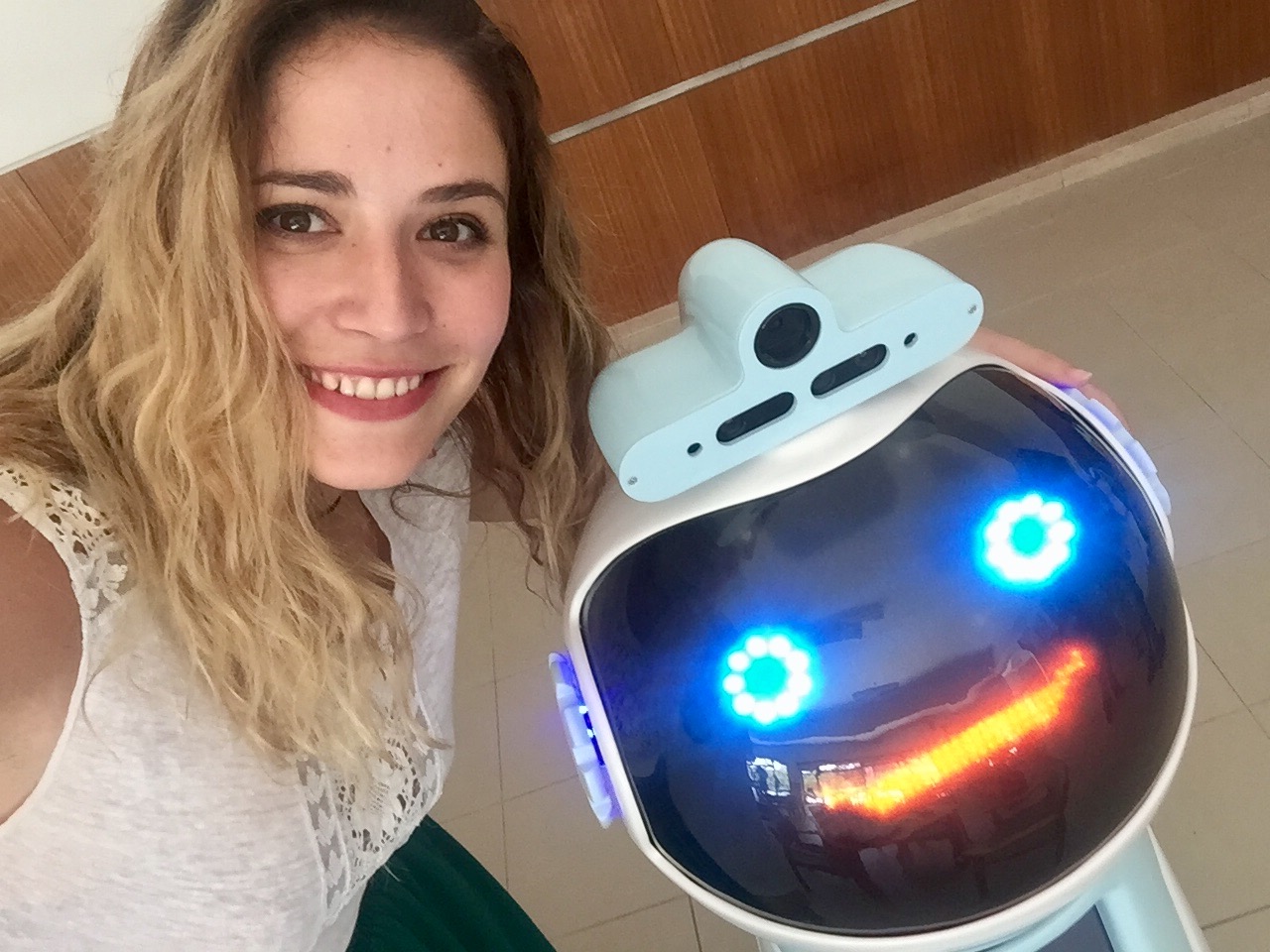
Martina Caic is an Assistant Professor at the Department of Design, Aalto University. Her research focuses on service design, human-robot interaction, and healthcare innovation, with particular emphasis on ethical implications and consumer behavior in automated systems. 2022 Aalto ARTS Teaching Award 2018 Robert Johnston Outstanding Paper of the Year Award 2019 Outstanding Paper of the Year Award 2021 Outstanding Reviewer (Emerald Literati Awards) As a Full Researcher Profile at Aalto University, she explores themes like: Role changes in human-AI collaboration Smart technologies for healthy aging Service design for Industry 5.0 Ethical frameworks in robotic care Her publications span top journals like Journal of Service Management , Journal of Services Marketing , and International Journal of Social Robotics . Martina collaborates with interdisciplinary teams on topics ranging from parasocial interactions in digital reviews to systemic diversity initiatives.
Melissa Ocepek is an Assistant Professor at the School of Information Sciences , University of Illinois at Urbana-Champaign. She holds a PhD in Information Studies from the University of Texas at Austin and a B.A. in Political Science and Sociology from Pepperdine University. Education: PhD in Information Studies (UT Austin), B.A. in Political Science and Sociology (Pepperdine) Her research focuses on everyday information behavior using cultural and critical theory frameworks, with a unique emphasis on food studies and ethnography. She explores how people interact with information in mundane contexts like grocery shopping and leisure activities, often employing shadowing and participant observation methods. Recent publications analyze serendipity in bookshops, sensory grocery shopping behaviors, and historical food advertising. She has co-authored two books: Food in the Internet Age and Formal and Informal Approaches to Food Policy with William Aspray and George Royer. Her 2019 INTERACT paper won a Best Paper Award. Scientific Awards: Best Paper Award Winner, INTERACT 2019 Ocepek teaches courses like Libraries, Information and Society (IS510AC) and Independent Study (IS589MGO). She collaborates internationally on misinformation governance and has contributed to studies on food-buying behavior during the COVID-19 pandemic. Her work bridges library science with informatics through her Faculty Affiliate role in Illinois Informatics.
Dr. Bettina Frankham is a Senior Lecturer in Digital Media at the School of Communication, Faculty of Arts and Social Sciences, University of Technology Sydney (UTS). She combines academic practice with creative work at the intersection of documentary, art, and poetry, focusing on aesthetic experience in knowledge creation. Her research explores digital culture’s impact on media production, expanded documentary practices, and immersive technologies like VR/MR. Education: PhD in Digital Media from UTS (2005–2013) Her scholarly output includes over 20 publications analyzing poetic documentary strategies, mobile media aesthetics, and pandemic-era screen education. Recent work investigates high-visibility clothing as a cultural symbol and the role of lists as heuristic tools in documentary. She contributes to academic leadership through roles like Interim Deputy Head of School and editorial board chair for Sightlines: Filmmaking in the Academy . Teaching focuses on Media Arts and Production, with supervision of research students exploring topics like eco-aesthetic filmmaking and autistic-led screen practices. Her work aligns with UN Sustainable Development Goals for Reduced Inequalities and Quality Education.
Distinguished Professor Jie Lu AO is an internationally renowned scientist in computational intelligence at the University of Technology Sydney, where she serves as Associate Dean (Research Excellence) in the Faculty of Engineering and Information Technology and Director of the Australian Artificial Intelligence Institute (AAII), the largest AI hub in Australia with 35 researchers and 230 PhD students. She has been a Professor at UTS since 2007 after serving as Associate Professor from 2004-2006. Professor Lu earned her PhD from Curtin University, Perth, Australia. Her research focuses on computational intelligence with significant contributions to fuzzy transfer learning, concept drift, data-driven decision support systems, and recommender systems. She has developed machine learning models, intelligent recommender systems, and AI-driven decision support systems through collaborations with industry partners including Optus, Sydney Trains, Domain Holdings Australia Ltd, and Workforce Health Assessors Transport NSW. Her recent publications demonstrate a strong focus on addressing challenges in non-stationary environments, out-of-distribution detection, multi-stream concept drift, and applying AI to healthcare applications such as stroke risk prediction and cancer risk assessment. She has pioneered approaches combining traditional AI techniques with large language models for more robust and explainable systems, particularly in legal case recommendation and women's health applications. Officer of the Order of Australia (AO) IEEE Fellow, IFSA Fellow, Australian Computer Society Fellow Australian Laureate Fellow in AI and Industry Laureate Fellow in AI-for-Health UTS Chancellor's Research Medal for Research Excellence (2019) IEEE Transactions on Fuzzy Systems Outstanding Paper award (2019, 2022) Australian Most Innovative Engineer award (2019) NeurIPS 2022 Paper Award Australasian AI Distinguished Research Contribution Award (2022) Australian NSW Premier Prize on Excellence in Engineering (2023) Professor Lu has supervised 60 PhD students to graduation and serves as Editor-In-Chief for Knowledge-Based Systems journal. She has secured 47 ARC grants and over 110 industry projects since 2017, with funding from ARC Discovery projects, ARC Laureate Fellowships, and industry partners. Her leadership has established UTS as a leading center for AI research in Australia, with significant impact across multiple sectors including transportation, telecommunications, healthcare, and education. As Director of the Australian Artificial Intelligence Institute, Professor Lu has built a thriving research ecosystem that bridges academic research with practical industry applications. Her work on concept drift and transfer learning addresses fundamental challenges in adapting machine learning models to changing environments, with direct applications to real-world problems requiring continuous learning and adaptation.
Pradip K Srimani is a Professor at the School of Computing , Clemson University , with research focus on Parallel and Distributed Computing , Self-Stabilizing Systems , and Graph Theory Applications . He is an IEEE Life Fellow and ACM Distinguished Scientist with over 250 publications. Research Interests Self-stabilizing algorithms for network graphs Ontology-based biomedical information retrieval High-performance computing resource management Biologically inspired distributed algorithms Network topology computation Recent publications demonstrate expertise in token circulation protocols, genome assembly frameworks, and semantic similarity measurement. He has served on program committees for APDCM , GPC-2018 , and IEEE BigMM conferences, while maintaining editorial roles at International Journal of High Performance Computing and Journal of Big Data . Scientific Awards IEEE Life Fellow ACM Distinguished Scientist
Dr. Sahil Sharma is a Research Fellow at the School of Computing, Engineering and Intelligent Systems, Ulster University, Derry~Londonderry campus. His interdisciplinary research bridges artificial intelligence, biomedical engineering, and agricultural science, with significant contributions to medical diagnostics and sustainable agricultural practices through advanced computational techniques. Sharma's primary research domains include artificial intelligence (particularly deep learning and large language models), biomedical engineering (focusing on cardiac biomarker detection and medical data analysis), and agricultural science (specializing in plant biostimulants and sustainable farming). His work demonstrates consistent innovation in applying machine learning to solve real-world problems across healthcare and agriculture, with recent emphasis on explainable AI for medical visualization and anime recommendation systems. Analysis of Sharma's 15 most recent publications (2023-2025) reveals a dominant trend toward AI-driven healthcare solutions, including cardiac troponin I detection assays, XAI-based medical data visualization, and synthetic data generation for diagnostics. Parallel work explores agricultural applications through deep learning-based crop monitoring systems. His research outputs show strong translational impact, with significant citations (h-index 86) and practical implementations referenced in patents, particularly in the biomedical domain where his 2012 agricultural paper accumulated 85 Scopus citations.
Prof. Torsten Braun is a Professor and Head of the Communication and Distributed Systems (CDS) research group at the Institute of Computer Science, University of Bern. His research focuses on advanced networking technologies, edge computing, and machine learning applications in telecommunications. He leads projects addressing challenges in 5G/6G networks, federated learning optimization, and intelligent systems for smart cities. His work integrates theoretical frameworks with practical implementations, emphasizing distributed systems, service-oriented architectures, and IoT security. Key research areas include edge caching strategies for VR/AR applications, trajectory prediction using reinforcement learning, and resilient network design against jamming attacks. Braun has contributed to innovations in vehicular networks (V2X), RAN intelligence, and decentralized machine learning frameworks. He holds leadership roles in developing adaptive resource management systems for edge-cloud environments and has pioneered solutions for energy-efficient federated learning in heterogeneous IoT ecosystems. Publications span topics like spatial-temporal point cloud sensing, mobility-aware service orchestration, and secure positioning systems. His team explores cross-disciplinary applications such as LoRaWAN-based urban heat monitoring and blockchain-inspired public key infrastructures for IoT (Veritaa-IoT). Braun actively engages in standardization and industry collaborations to advance next-generation network architectures.
Jesse Benjamin is Assistant Professor in Industrial Design at Eindhoven University of Technology, affiliated with EAISI (Eindhoven Artificial Intelligence Systems Institute). His research explores human-AI interaction through participatory design and research-through-design approaches. Benjamin investigates ethical AI licensing, generative systems in design, and value conflicts in smart technologies. He received the Best Paper Award at ACM DIS 2024 and leads projects on metaphor-driven AI design.
Dr. Ruben Schneider is a Lecturer in Law at the University of Bonn's Department of Civil Law, Information and Data Law. He holds a doctorate from the inter-university graduate program 'Information Society Law' and has been a legal trainee at the Bonn Regional Court since 2021. His research focuses on data protection law, intellectual property, and digital legal frameworks. He co-teaches Data Protection Law with Prof. Dr. Specht-Riemenschneider and actively contributes to ForTech eV, a research center for legal issues in new technologies. Education: Juris Doctor from University of Bonn (2019), internships at Cleary Gottlieb and German Bundestag, founding member of ForTech eV. Key academic activities include moderating certificate courses in IT/IP law, organizing working groups on obligations law, and publishing extensively on GDPR compliance, digital teaching, and copyright conflicts. His work bridges legal theory with practical challenges in emerging technologies. Notable collaborations include co-authoring the textbook Internet Law (Springer, 2020) and leading research on data trusts and cross-border data governance. He regularly presents at academic events such as the Bayreuth Talks on Consumer Law and Bonn Debates on Data Privacy.
Animesh Animesh is an Associate Professor and Area Coordinator of Information Systems at McGill University's Desautels Faculty of Management. His research examines the economic and strategic impacts of digital technologies, with focus areas including online advertising, social media analytics, platform ecosystems, and sustainable business models. Animesh's work combines econometric analysis with large-scale data to investigate how digital innovations transform business practices. Recent studies explore AI hallucination detection, open government data economics, and sustainability communication strategies. His research on software patents has influenced understanding of innovation management in competitive IT markets. Animesh maintains industry partnerships through the McGill Dobson Centre for Entrepreneurship.
Dr. Stamos Katsigiannis is an Associate Professor in the Department of Computer Science at Durham University. His research focuses on bioinformatics, health informatics, affective computing, machine learning, and GPU computing applications. He holds a PhD in Computer Science from the National and Kapodistrian University of Athens (Greece), with prior roles including Postdoctoral Research Fellow and Lecturer at the University of the West of Scotland (2016-2020). Education: BSc (Hons) Informatics and Telecommunications, National and Kapodistrian University of Athens (Greece) MSc Computer Science, Athens University of Economics and Business (Greece) PhD Computer Science, National and Kapodistrian University of Athens (Greece) Research Interests: Bioinformatics, health informatics, affective computing (e.g., emotion recognition using EEG/ECG signals), machine learning applications in medical imaging and video quality, GPU-accelerated algorithms for biomedical data analysis, and biometric identification systems. His work bridges computational methods with healthcare, education technologies, and human-computer interaction. Advising & Students: Supervising postgraduate students in AI-driven healthcare, computer vision, and affective computing. Recent collaborations include projects on AI-generated content detection (De-Factify 4.0), chest X-ray image analysis (CLN network), and trajectory prediction using graph neural networks. Labs/Teams: Active in Durham's AI research groups, contributing to interdisciplinary projects in medical imaging, cybersecurity, and educational technology. Collaborates internationally in EU-funded initiatives and UK parliamentary AI governance consultations (AGENCY project).