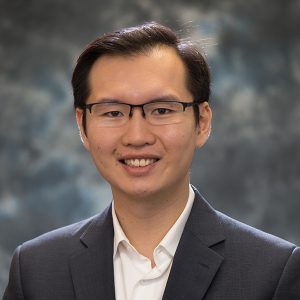
Dr. Wayne Giang is an Assistant Professor in the Department of Industrial & Systems Engineering at the University of Florida. His research bridges human systems and health systems, focusing on interface design and decision-support tools for healthcare providers. Ph.D., University of Toronto (2018) M.S., University of Waterloo (Systems Design Engineering) B.S., University of Waterloo (Systems Design Engineering) His work explores human-automation interaction , particularly in automated driving systems , health insurance decision aids , and smart device distractions . He applies cognitive engineering principles to enhance safety and usability in complex systems. Recent publications highlight trends in automated vehicle training , accessibility for cognitively impaired users , and distraction analysis in transportation and healthcare contexts. His studies often involve experimental design and user-centered methodologies. Dr. Giang teaches courses in cognitive engineering , human information processing , and statistical analysis , emphasizing practical applications of human factors research.
Joy Lu is an Assistant Professor of Marketing at the Tepper School of Business, Carnegie Mellon University, where she has been a faculty member since July 2018. She also held the Xerox Junior Faculty Chair position from July 2023 to July 2024. Her research focuses on consumer behavior, information search processes, and digital media consumption patterns, with particular expertise in eye-tracking methodologies and online learning environments. Education: PhD in Marketing/Dual AM in Statistics, University of Pennsylvania, 2018 BS in Economics and Engineering & Applied Science, California Institute of Technology, 2013 Dr. Lu's research examines how consumers navigate information in digital environments, with a particular focus on eye-tracking studies of web page interactions. She has made significant contributions to understanding binge-watching and media consumption patterns, exploring how consumers plan and allocate time for future media consumption. Her research on online learning investigates how different content delivery formats affect learner engagement and outcomes. Additionally, she has explored topics in algorithmic transparency and how explainable AI can aid consumer decision making, particularly for vulnerable populations. Analysis of Dr. Lu's recent publications reveals a strong focus on digital consumer behavior, particularly how users interact with online content. Her work combines rigorous experimental methods with sophisticated modeling approaches to understand complex decision processes. A recurring theme is how consumers allocate attention and time in digital environments, whether for shopping, learning, or entertainment. Her research has important implications for website design, educational platform development, and content delivery strategies across multiple industries. Scientific Awards: 2020 Carnegie Bosch Institute Research Award 2019 Carnegie Bosch Institute Research Award 2013 David M. Grether Prize in Social Science Russell Ackoff Doctoral Student Fellowship Patty and Jay H. Baker Ph.D. Fellowship Innovative Models for Undergraduate Research Fellow (2020-2021) Dr. Lu serves on the editorial board of the Journal of Marketing Research and has conducted peer reviews for prestigious journals including PLoS ONE, Journal of the Academy of Marketing Science, and the Journal of Marketing Research. She has also reviewed for major conferences including the Society for Consumer Psychology and the Association for Consumer Research. Her research has been supported by grants from organizations such as the Jay H. Baker Retailing Center and the Wharton Behavioral Lab at the University of Pennsylvania. While specific laboratory information isn't provided in the available text, Dr. Lu's research involves sophisticated methodologies including eye-tracking experiments and analysis of large-scale user behavior data from online platforms. Her work suggests collaboration with interdisciplinary teams spanning marketing, psychology, and information systems to investigate complex consumer decision processes in digital environments.
Dr. Clara Rivera is a Lecturer in Language and Literacy at the University of Wollongong's School of Education, part of the Faculty of the Arts, Social Sciences and Humanities. She also serves as an Associate Investigator with the ARC Centre of Excellence for the Digital Child. Her research focuses on co-design methodologies involving children as active participants in digital technology development, emphasizing children's rights frameworks. Education: She holds a PhD from the University of Wollongong, where her doctoral work explored children's roles as co-designers and co-researchers in app development for preschoolers. This research earned the 2021 Beth Southwell Award and a Ray Debus Award nomination. Research Interests: Clara's work bridges Child-Computer Interaction (CCI) and early childhood education. Key themes include digital play contexts, participatory design with children, and evaluating digital technologies' impact on cognitive and psychosocial outcomes. Recent studies address digital footprint management and family perspectives on home technology use. Teaching & Leadership: She coordinates courses like Language and Learning and Early Childhood Contexts . Professional roles include convening the Children and Student Voice SIG for AARE and serving as NSW South Coast Local Council President for ALEA. Awards: Notable recognitions include the 2021 Beth Southwell Award for her thesis and multiple collaborative research publications addressing child-centered digital technologies. Labs/Teams: Active contributor to the ARC Centre of Excellence for the Digital Child, focusing on ethical digital technology design for children.
Florentin Rochet is an Assistant Professor at the University of Namur's Faculty of Computer Science. His research focuses on anonymous communication , network security , and encrypted transport protocols , with a particular emphasis on improving privacy-enhancing technologies and protocol design. He holds a PhD in Applied Cryptography and has contributed to projects like TCPLS (TCP/TLS integration) and CLAPS (Tor path selection). Key academic milestones include joining UNamur in 2022 as an Assistant Professor, completing a postdoc at the University of Edinburgh (2021), and serving on program committees for Usenix Security, ACM CCS, and PoPETs. He has received the Usenix Security Noteworthy Reviewer Award (2023) and the 2020 Alan Berman Research Publication Award. His research spans flexible anonymous networks , secure transport protocols , and authentication technologies , with notable work on improving Tor's resilience against attacks through location-aware path selection and enhancing TLS/TCP integration for modern networks. He also leads a research group exploring eBPF security and WebAssembly runtime protections. Teaching responsibilities include computer security and privacy courses, with a 6-year teaching assistant position involving bachelor's/master's instruction and PhD supervision. His lab focuses on applied cybersecurity, network protocol innovation, and privacy-preserving systems design.
Jay Henderson is an Assistant Professor in the Department of Computer Science at Memorial University of Newfoundland (MUN), leading the Human-Computer Interaction (HCI) Lab. He holds a PhD from the University of Waterloo's HCI Lab, advised by Prof. Edward Lank. His research focuses on understanding human-technology interactions through quantitative methods, particularly in mixed reality productivity applications and generative AI interactions. Education: PhD in HCI from University of Waterloo (advised by Edward Lank). Research interests include evaluating human performance with emerging technologies, cross-modal input evaluation, and midair interaction techniques. Recent work explores mixed reality rendering effects and generative AI interface design. Current teaching includes COMP 4303: Artificial Intelligence for Games (Winter 2025/2024), COMP 1001: Introduction to Programming (Fall 2024), and previous courses at Carleton University. Labs/Teams: Leads the HCI Lab at MUN, collaborating on projects involving spatial computing and gesture-based interfaces.
Prof. Dr. Horst Oberquelle is an emeritus faculty member in the Department of Informatics at the University of Hamburg, associated with the Faculty of Mathematics, Informatics, and Natural Sciences. His primary role involves curating the Informatics Museum. He specializes in Human-Computer Interaction (HCI), Computer-Supported Cooperative Work (CSCW), and usability engineering. His research focuses on interdisciplinary design, user-centered systems, and the evolution of interactive technologies. Education details are not explicitly listed, but his academic career spans decades with contributions to HCI education and standards. Research interests include dynamic system design, collaborative systems, and the sociotechnical aspects of computing. Over 150 student theses have been supervised, reflecting his mentorship in HCI and related fields. Publications span from foundational HCI principles to applied research in groupware and usability. His work includes seminal contributions like the 'Memorandum on Human-Computer Interaction 2000' and editorship of key conferences like Mensch & Computer. He is a member of professional organizations like GI and FiFF. Notable projects include the development of the CommSy collaborative learning platform and contributions to the design of usable systems for freelancers and virtual organizations. His academic legacy includes shaping HCI education and fostering interdisciplinary collaboration in computing.
Becky Rawson is a Senior Lecturer in Sustainability & Environment Management at the University of Derby's College of Science and Engineering. Her research focuses on sustainability policies, climate change impacts, environmental education, and healthcare sustainability. She explores how policies and design can promote sustainable practices while addressing climate anxiety in families and communities. Research Interests: Her work spans environmental policy analysis, biophilic design, urban ecology, and innovative online learning strategies. She investigates the intersection of climate change and mental health, particularly among parents and children. Education & Grants: No specific grants or educational background details are provided. She advises no listed students. Advising & Grants: No formal grants or student advisement details are recorded. Her contributions include interdisciplinary projects like an online student conference case study. Labs/Teams: Not explicitly mentioned, though her collaborations suggest involvement in sustainability education and healthcare waste reduction initiatives.
Eileen Crehan is an Assistant Professor at Tufts University, holding dual appointments in the Eliot-Pearson Department of Child Study & Human Development and Tisch College. She earned her PhD in Clinical Psychology from the University of Vermont (2016) and a BA in Mathematics and Psychology from Wellesley College. Her research focuses on social impairments and functioning in autism spectrum disorder (ASD), employing eye tracking and psychophysiological methods. Current projects include sexuality education programs for autistic individuals and studies on the stare-in-the-crowd effect. She leads the Crehan Lab, emphasizing community-informed research and interdisciplinary collaboration. Education: PhD, Clinical Psychology (University of Vermont, 2016); BA, Mathematics & Psychology (Wellesley College). Research interests include neurodevelopmental disorders, autism, sexuality education accessibility, social perception, and dimensional measurement of psychological symptoms. Her lab collaborates with self-advocates to develop inclusive programs, such as sexuality education tailored for neurodiverse populations. Grants: Received funding from the Organization for Autism Research (2020-2021) for comparative sex education studies. Teaching includes courses on autism across the lifespan and child development. Professional activities include editorial roles and presentations at conferences like the International Meeting for Autism Research. Labs/Teams: The Crehan Lab includes doctoral and undergraduate researchers studying topics like IEP disparities, pediatric screener tools, and electronic device accessibility for individuals with physical disabilities.
Andrew Longstaff is a Professor of Machine Tool Metrology at the University of Huddersfield, affiliated with the Department of Engineering and School of Computing and Engineering. He serves as Research Director at the Centre for Precision Technologies and is an Associate Member of the Behavioural Research Centre. His research focuses on improving machine tool performance through advanced metrology, thermal error modeling, sensor technology, and precision manufacturing processes. He holds a PhD from the University of Huddersfield and has led multiple high-value European and UK research projects, including Innovate UK initiatives and Knowledge Transfer Partnerships. Longstaff’s expertise includes machine tool calibration, vibration analysis, and the application of artificial intelligence for data processing in manufacturing. He is deeply involved in industry collaboration, working with machine tool manufacturers and end-users to address technical challenges. His work aligns with UN Sustainable Development Goals related to industrial innovation and infrastructure (SDG 9). He is a Fellow of the Higher Education Academy and a member of professional bodies such as the IET and CMI. His recent research trends emphasize thermal error compensation, ultrasonic core temperature measurement, and advanced sensor integration. Over 124 publications highlight contributions to precision engineering, with a focus on metrology, manufacturing systems, and sensor development. Awards include the EPSRC High Value Manufacturing Catapult Fellowship (2014). He supervises PhD students and teaches the MSc in Engineering Control Systems and Instrumentation, embedding his research into education.
Jung-ran Park is an Associate Professor in the Department of Information Science at Drexel University's College of Computing & Informatics. Her research focuses on knowledge organization systems, metadata standards, multilingual information access, and cross-cultural communication in digital environments. She holds a Ph.D. in Linguistics (University of Hawaii, 2003) and an MLIS (2000), along with prior degrees from institutions in South Korea. Her work bridges linguistics and information science, addressing challenges in semantic interoperability, metadata quality, and professional development for cataloging and metadata specialists. Notable projects include studies on BIBFRAME implementation, RDA adoption barriers, and automated metadata generation systems for digital repositories. Research trends in her publications emphasize: 1) Metadata standardization (e.g., BIBFRAME, Dublin Core) and their practical applications; 2) Cross-cultural communication dynamics in social media and virtual reference services; 3) Professional training needs for evolving library technologies. Though no formal awards are listed, her contributions to metadata education and digital library systems are significant. Her advising focuses on preparing professionals for evolving information organization challenges, reflected in collaborative projects like metadata harvesting tools and continuing education resource repositories. Labs/Teams: Involved in digital repository development initiatives, metadata workflow optimization studies, and cross-cultural communication analysis teams within the College of Computing & Informatics.
Jingrui Li is an Assistant Professor of FinTech at Stevens Institute of Technology's School of Business, with an affiliation to the CRAFT FinTech Center. He holds a PhD in Finance from West Virginia University (2019), an MS in Finance from West Virginia University (2013), and a BA in Accounting from Liaoning University (2012). His research focuses on financial econometrics, volatility dynamics, cryptocurrency markets, and sentiment analysis. He has published in top journals like Quantitative Finance, Journal of Banking & Finance, and Financial Review, receiving accolades including the WILEY Top Cited Article Award (2020–2021) and FMA Best Paper Award semifinalist recognition. Dr. Li teaches courses in Financial Technology, Derivatives, and Financial Modeling at Stevens and previously at Tulane University. He is actively involved in institutional service, including the Financial Engineering PhD committee and FinTech faculty search committees. His professional affiliations include the American Finance Association, European Finance Association, and Global Association of Risk Professionals (FRM certified). His research spans tail risk persistence, cryptocurrency volatility spillovers, and the impact of geopolitical events on markets. Recent work explores Bitcoin's volatility dynamics during the Russia-Ukraine war and the role of social media sentiment in meme stock returns. He has secured grants including the AFA Student Travel Grant and has advised on projects linking retail trader behavior and illegal user activity in crypto markets.
Aurora Occa is an Associate Professor in the Department of Communication at the University of Kentucky's College of Communication and Information. She is also a member of the Cancer Prevention and Control Research Program and the Markey Cancer Center. Her work focuses on health communication strategies for complex health issues like clinical trials, cancer prevention, and mental health, emphasizing media and technology's role in shaping health behaviors. Education: PhD in Communication from the University of Miami (2018), Master of Science in Communication, Management, & Health (2013), Master of Science in Marketing (2012), and Bachelor's in Public Relations and Corporate Communication (2011). Research Interests : Health communication, persuasive messaging for stigmatized health topics, clinical trial participation, mental health advocacy, and the impact of digital media on health perceptions. Her interdisciplinary approach involves collaboration with medical professionals, public health experts, and global partners. Grants & Projects : Co-Investigator on multiple Substance Abuse & Mental Health Services Administration grants for suicide prevention initiatives (UK-CAN projects, 2021–2025). These focus on evidence-based practices for mental health intervention and clinician collaboration. Awards : 2015 Nonverbal Communication Division-Top Paper Award for contributions to health communication research. Labs/Teams : Active in the Cancer Prevention and Control Research Program at the Markey Cancer Center, contributing to initiatives on patient education and clinical trial recruitment strategies.
Virendra Bhavsar is an Honorary Research Professor and Professor Emeritus in the Department of Computer Science at the University of New Brunswick (UNB). He holds a PhD in Computer Science and is affiliated with UNB's Fredericton campus, located in Gillin Hall GE109A. His research focuses on natural language processing (especially for Hindi and other Indian languages), cognitive informatics, distributed systems, and bioinformatics. Bhavsar has also contributed to projects involving virtual reality in education, parallel computing, and machine translation systems. Education: PhD in Computer Science Research Interests: Development of NLP tools for free-word-order languages Optimization of in-memory data processing systems on NUMA architectures Cognitive learning environments using virtual reality Tree-based parsing algorithms for linguistic analysis High-performance spatial and spatio-temporal data systems Recent Work Trends: His articles from 2017–2022 highlight advancements in Hindi language processing, distributed computing optimizations, and cognitive informatics applications. Notable areas include improving data skew resilience in hash joins and developing visualization systems for language learning. Awards: No specific scientific awards listed in available materials. Advising & Grants: No formal advisee list or grant details provided in current data. His collaborations include work on grid computing frameworks like GARUDA and HPGC initiatives. Labs/Teams: Involved in projects related to distributed in-memory systems (e.g., DISTIL) and cognitive informatics research groups.
Anna Grana is an Associate Professor in the Department of Roads Railways Airports at the University of Palermo's College of Engineering. She specializes in road infrastructure engineering with a focus on road safety, traffic operations, and sustainable transportation systems. Her educational background includes a Classical high school diploma from Umberto I classical high school in Palermo (1991), a Degree in Civil Engineering with honors (1995/1996), a PhD in Road Infrastructure Engineering (2002), and a Specialization diploma in Public Management (1999). Dr. Grana's research focuses on the analysis of risk associated with road traffic, functional design of road geometry (particularly non-signalized intersections and roundabouts), and environmental sustainability of transport infrastructures. Her work covers preventive analysis of road safety, safety and reliability of transport infrastructure, and crash analysis and modeling. Over the past decade, her research has evolved toward smart mobility solutions, with increasing focus on cooperative driving systems and the integration of connected and automated vehicles into existing infrastructure. Her recent publications demonstrate strong engagement with intersection design, traffic simulation, and resilience assessment in urban environments. Editor-in-chief for the Journal of Sustainable Development (since 2011) Associate editor for the International Journal of Statistics and Probability (since 2011) Member of SIIV (Italian Society of Road Railway and Airport Infrastructures) since 2003 Elected member of SIIV Board since 2010, serving as treasurer since 2013 Dr. Grana has been actively involved in teaching, serving as a member of PhD committees for Road Railway and Airport Engineering, Architecture of Systems for Mobility, and Civil and Environmental Engineering programs. She has supervised numerous final year students and has been instrumental in developing postgraduate courses focused on sustainable transport infrastructure. Her research has been supported by multiple National Relevant Research Programs (PRIN) and collaborations with the Municipality of Palermo, focusing on urban road safety and traffic management solutions. She has led research projects on non-standard roundabouts and urban road intersections, contributing significantly to the field of transportation engineering.
Jinghai Rao is a Researcher at Carnegie Mellon University's School of Computer and Information Science within the Institute for Software Research International. His work focuses on semantic web services, security policies, and logic-based programming. He holds a PhD in Computer Science from the Norwegian University of Science and Technology (NTNU) and has Master's and Bachelor's degrees from Renmin University of China. His research emphasizes web service composition, policy enforcement, and automated reasoning. Notable contributions include the use of linear logic for service composition and frameworks for interleaving policy reasoning with service discovery. He has received a best paper runners-up award at ICWS 2004. Rao has been actively involved in professional activities, serving on committees for workshops like ECWS'06 and SOT'06, and as a reviewer for conferences such as IJCAI'05 and ISWC'05. His work bridges theoretical foundations of semantic web services with practical applications in security and collaborative systems.