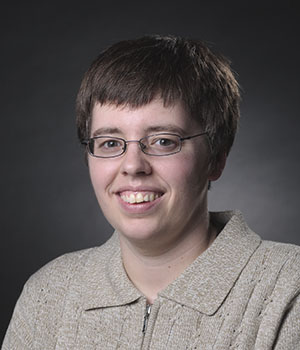
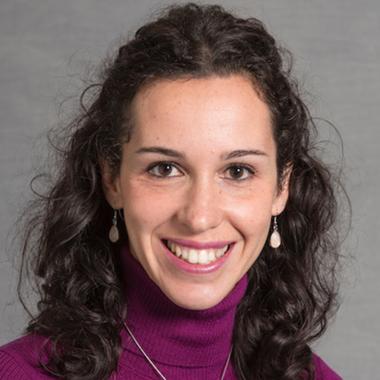
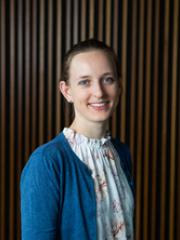
Margaret E. I. Kipp is an Associate Professor in the School of Information Studies at the University of Wisconsin-Milwaukee. She holds a PhD and MLIS from the University of Western Ontario, and a BSc in Computer Science from the University of Ottawa. Her research focuses on social tagging, metadata, semantic web technologies, and information organization systems. Education: PhD, 2009: Library and Information Science, University of Western Ontario MLIS, 2002: University of Western Ontario BSc, 1999: Computer Science, University of Ottawa Research interests include: Metadata design and standards Semantic web applications Social tagging practices Information retrieval systems Classification systems Her recent work explores metadata schemes for cultural heritage materials like Chinese rubbings data, linked data models for libraries, and user behavior in social tagging platforms. She has published widely on topics such as collaborative tagging effectiveness in medical collections and mappings between MARC standards and linked data formats. Dr. Kipp is affiliated with the Information Organization Research Group and teaches courses in information organization, metadata, and database management.
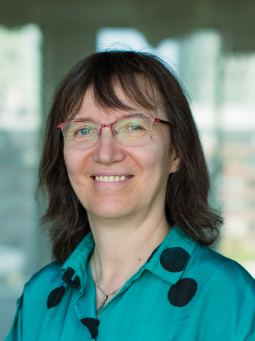
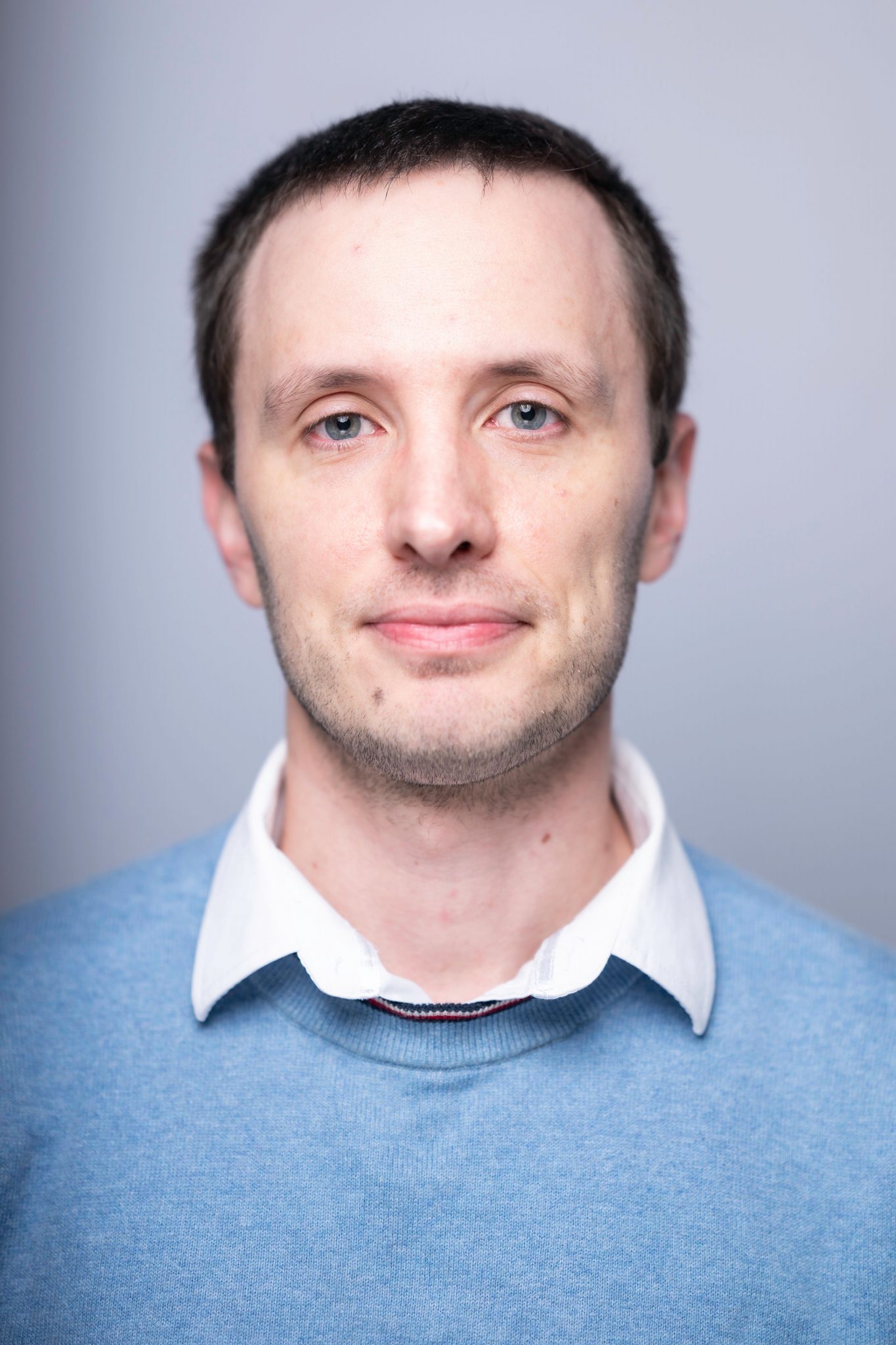
Prof. Maria Bielikova is a Full Professor and former Dean of the Faculty of Informatics and Information Technologies (FIIT STU), now leading research at the Kempelen Institute of Intelligent Technologies (KInIT). Her work focuses on AI ethics, user modeling, and combating disinformation. She has held leadership roles in EU initiatives like the High-Level Expert Group on AI and chairs Slovakia's Permanent Committee for AI Ethics. Education: BSc/PhD in Electronic Computers from Slovak University of Technology Over 30 years at STU, including 15 years as Full Professor and 5 years as Dean Research interests span personalized systems, trustworthy AI, and low-resource machine learning. Authored/co-authored over 280 publications with 4,500+ citations (h-index 30). Secured EU funding for projects like vera.ai and VIGILANT. Supervised 90+ bachelor, 70+ master, and numerous doctoral students. Recognized with national/international awards including Slovakia IT Personality 2016 and Ľudovít Štúr Order 2024. Key contributions include founding the Slovak.AI research center, establishing the PeWe research group, and leading the User eXperience and Interaction Research Centre. Her work bridges academia-industry collaboration through KInIT's international projects with 69+ global partners.
Gianvito Pio is an Associate Professor at the Department of Computer Science, University of Bari Aldo Moro, Italy. His research spans data mining, bioinformatics, social network analysis, multi-relational data mining, and big data analytics. He holds a PhD in Computer Science from the University of Bari (2015) and has taught courses such as Big Data Management and Analysis and Security in Blockchain Technology . As an expert in heterogeneous network analysis, he develops methods for anomaly detection in cryptocurrency trends, microbiome data interpretation, and legal judgment clustering. He leads the local research unit of the PRIN 2022 project COCOWEARS and contributes to journals like the Machine Learning Journal and Expert Systems with Applications as an associate editor. His recent work includes multi-view learning for risk identification in dynamic networks, spatially-aware models for energy forecasting, and biclustering algorithms for biological data. Collaborations with researchers such as Michelangelo Ceci and Antonio Pellicani highlight his interdisciplinary approach. Gianvito Pio also organizes academic events like the Discovery Science conference and contributes to open-source software tools including HOCCLUS2 and GENERE .
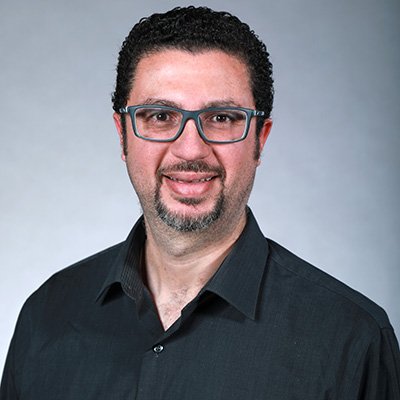
Dr. Hany Elgala is an Assistant Professor in the Department of Electrical and Computer Engineering at the University at Albany, State University of New York, and Director of the Signals and Networks (SINE) Lab. Previously, he served as a Research Professor at Boston University, co-leading the Multimedia Communications Lab and acting as Communications Testbed leader at the NSF Smart Lighting ERC. His research focuses on telecommunications, digital signal processing, and embedded systems, with specialization in visible light communications (VLC), LiFi networks, IoT security, and AI-driven wireless solutions. He has coordinated industrial projects with Airbus and EADS on optical wireless networks in aircraft cabins. Elgala's work emphasizes heterogeneous wireless networks, backscatter communication, and security in IoT. He has authored/co-authored ~50 publications/patents, contributing to fields like spectral efficiency, energy optimization, and network coexistence. His leadership in the SINE Lab drives innovations in 6G networks, UAV-based systems, and hybrid LiFi-WiFi architectures. His research portfolio includes breakthroughs in VLC system design, machine learning applications for physical layer optimization, and jamming-resistant IoT networks. Recent efforts focus on indoor flying networks and low-complexity VLC frameworks leveraging multi-task learning and autoencoder-based modulation.
Dr. Barbara Villarini is a Reader in Computer Science at the University of Westminster, specializing in computational vision and imaging technology. She leads research in medical imaging computing, AI-driven healthcare solutions, and autonomous systems. Previously, she contributed to pioneering image-guidance systems at University College London's Centre for Medical Image Computing (CMIC), earning team awards for advancements in cancer care and research. In 2020, she was awarded the Royal Academy of Engineering Leverhulme Trust Research Fellowship. She is affiliated with the Computational Vision and Imaging Technology group. Her education includes a PhD in Information Engineering from the University of Perugia (Italy). Her research integrates AI, computer vision, and 3D reconstruction to address challenges in healthcare (e.g., brain tumor segmentation, skin cancer detection) and autonomous vehicle safety. Notable projects include the SmartTarget biopsy trial, validating MRI/TRUS-guided prostate interventions. Dr. Villarini’s work emphasizes cross-disciplinary collaboration, with grants focused on medical imaging innovation and AI applications. Her lab explores AI-driven IoT systems for medical diagnostics and AR/VR solutions for personalized healthcare. Key Awards: Royal Academy of Engineering Leverhulme Trust Research Fellowship (2020) Research Focus: AI in medical imaging, autonomous systems, and healthcare technology Lab Affiliation: Computational Vision and Imaging Technology Group
Alexandri Christina is a Lecturer at the Faculty of German Language and Literature at the National and Kapodistrian University of Athens. Her research focuses on computational linguistics and natural language processing, with applications in sentiment analysis, machine translation, and human-computer interaction systems. Her work examines how implicit meaning and unspoken context in spoken interactions can be computationally modeled, particularly in political, journalistic, and technical domains. Recent projects explore the integration of generative AI with traditional linguistic approaches to enhance human-machine communication across specialized fields including medical, engineering, and maintenance contexts. Research trends show consistent focus on multilingual processing challenges, with innovations in knowledge graph construction for bias detection and cross-domain adaptation techniques. Publications demonstrate strong interdisciplinary connections between linguistics, computer science, and social sciences.
Dr. Catherine Fassbender is an Assistant Professor in Psychology at Dublin City University (DCU), affiliated with the Faculty of Science and Health and the DCU Anti-Bullying Centre. She holds a PhD in Cognitive Neuroscience from Trinity College Dublin (2005) and has held academic roles at UC Davis MIND Institute (2012–2019), where she was promoted to Associate Professor in Psychiatry (2016). Her research focuses on neural mechanisms underlying cognitive control in clinical disorders such as ADHD and substance abuse, using neuroimaging and electrophysiological methods. Key interests include relapse risk prediction in substance users, adolescent vulnerability to addiction, and translational neuroscience for targeted interventions. Education: BA (Psychology, UCD, 1999), Graduate Diploma in Statistics (Trinity College Dublin, 2002), PhD (Cognitive Neuroscience, Trinity College Dublin, 2005). Professional milestones include a Klingenstein Fellowship (2008) and the Joe P. Tupin Award (2013). She coordinates advanced research modules in DCU’s MSc in Psychology and Wellbeing. Dr. Fassbender has been funded by NIH/NIDA and collaborates on projects examining ADHD neurobiology, adolescent substance use, and psychiatric comorbidities. Research Themes: Cognitive Neuroscience, Neuroimaging, Addiction Neuroscience, ADHD, Clinical Psychopharmacology Key Projects: Longitudinal studies on ADHD brain networks, neural correlates of relapse in poly-substance abuse, and reward processing in adolescents
Chris van der Lee Dr. Chris van der Lee is an Assistant Professor at Tilburg University's Tilburg School of Humanities and Digital Sciences (TSHD),隶属 Department of Communication and Cognition. His work focuses on human evaluation of natural language generation systems, data-to-text generation, and reproducibility challenges in computational linguistics. He actively contributes to advancing methodologies for assessing AI-generated content and improving transparency in research practices. Research Interests Key areas include: Human evaluation frameworks for automated text generation Data-to-text generation using small datasets Reproducibility in NLP research Conversational AI and chatbot interactions Awards Best Paper Award (2019) Best Thematic Paper Award (2021) Outstanding Reviewer Recognition (2020) Collaborations Dr. van der Lee collaborates with international researchers on projects like the ReproHum initiative, investigating reproducibility barriers in human evaluations. His work also involves interdisciplinary projects, such as developing digital health assistants for medication reconciliation.
Shannon D. Blunt is the Roy A. Roberts Distinguished Professor of Electrical Engineering & Computer Science (EECS) at the University of Kansas (KU), where he also serves as Director of the KU Radar Systems Lab (RSL) and Director of the Kansas Applied Research Lab (KARL). With a distinguished career spanning over two decades, Prof. Blunt has established himself as a leading expert in radar signal processing and waveform design. Dr. Blunt earned his B.S., M.S., and Ph.D. degrees in Electrical Engineering from the University of Missouri, completing his doctorate in 2002 under the supervision of K.C. Ho. After working at the U.S. Naval Research Laboratory from 2002-2005, he joined the University of Kansas faculty, where he has remained ever since, advancing to his current distinguished professorship. Prof. Blunt's research focuses on sensor signal processing and system design with particular emphasis on waveform diversity and spectrum sharing techniques. His work has made significant contributions to radar and sonar systems that have been deployed operationally. His research spans radar waveform design, spectrum coexistence, cognitive radar, and the integration of radar and communication systems. The 15 most recent publications demonstrate his continued leadership in random FM radar waveforms, spectrum sharing techniques, and experimental validation of novel radar concepts, with numerous papers appearing in top journals like IEEE Transactions on Radar Systems and presented at major radar conferences. His scientific achievements have been recognized with numerous prestigious awards including the IEEE/AESS Nathanson Memorial Radar Award (2012), IEEE Fellowship (2016), IET Radar, Sonar & Navigation Premium Award (2020), and the IEEE/AESS Warren D. White Award (2025). In 2019, he was appointed to the U.S. President's Council of Advisors on Science & Technology (PCAST), and in 2024 he was named Fellow of the MSS. Prof. Blunt has successfully mentored numerous graduate students, with many of his former PhD students now holding positions at prestigious institutions including MIT Lincoln Laboratory, Johns Hopkins University Applied Physics Lab, Naval Research Laboratory, and academic positions at the University of Kansas. His research has been supported by over $30M in funding from organizations including NRL, DARPA, AFRL, ARL, ARO, DoE, NAVSEA, and ONR. He has served in significant editorial roles including Founding Editor-in-Chief of IEEE Transactions on Radar Systems and editorial board member for IET Radar, Sonar & Navigation. As Director of both the KU Radar Systems Lab and the Kansas Applied Research Lab, Prof. Blunt leads research teams focused on advancing radar technology and applying it to real-world problems. His labs have developed numerous innovative radar techniques that address spectrum congestion challenges while maintaining radar performance.
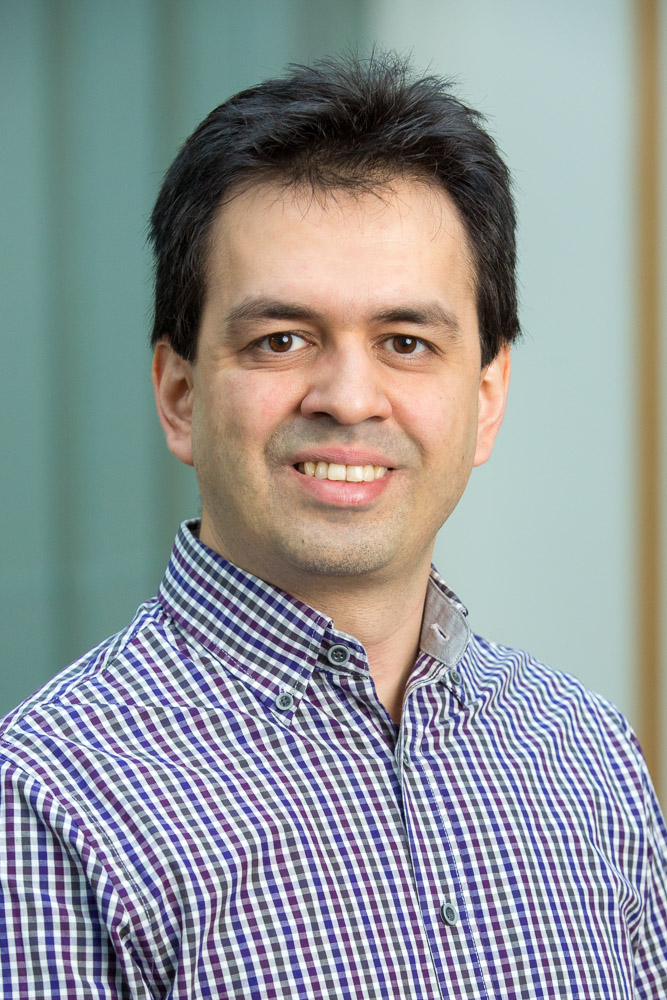
Carlos Cardonha is an Assistant Professor in the Department of Operations and Information Management at the University of Connecticut School of Business since 2019. He holds a Ph.D. in Mathematics from Technische Universität Berlin (2011) and degrees in Computer Science from the University of São Paulo (B.Sc. 2004, M.Sc. 2006). Previously, he worked as a Research Staff Member at IBM Research – Brazil (2012–2019). His research focuses on discrete optimization, approximation algorithms, and applications of machine learning and mathematical programming to operations research problems. He teaches courses such as OPIM 5641 (Business Decision Modeling) and OPIM 3511 (Business Data Analytics II), supported by DataCamp. Education: Ph.D. in Mathematics, Technische Universität Berlin, Germany (2011) M.Sc. in Computer Science, University of São Paulo, Brazil (2006) Bachelor in Computer Science, University of São Paulo, Brazil (2004) Research Interests: His work spans analytics, optimization, and theoretical computer science, with a focus on mixed-integer linear programming, combinatorial optimization, and algorithm design. He applies these techniques to real-world problems in scheduling, resource allocation, and machine learning model optimization. Grants & Advising: No specific grants or advisees are listed in the provided materials. Labs/Teams: Not explicitly mentioned in the text.
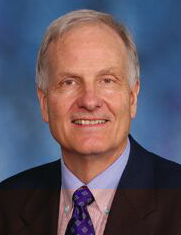
Dale Schaefer is a Professor in the Department of Materials Science and Engineering at the University of Cincinnati's College of Engineering and Applied Science since 1997. He served as Director of the Polymer Research Center (1998-2004) and Dean of the College of Engineering (1997). His career spans academia and national laboratories, including Sandia National Laboratories (1972-1997) and Los Alamos National Laboratory (2004-2005). B.S. in Chemistry, Wheaton College (1963) Ph.D. in Physical Chemistry, MIT (1968) Post-doctoral in Physics, MIT (1970) His research focuses on materials science with expertise in polymer physics, colloid science, and neutron/x-ray scattering techniques. He investigates nanostructured materials , including hybrid organic-inorganic composites, corrosion-resistant coatings, and porous materials. His work integrates experimental methods (light scattering, diffraction) with theoretical modeling of polymer dynamics and colloidal systems. Grants include federal funding from DOE and Air Force Research Laboratory, emphasizing nanocomposite morphology and corrosion inhibition . He has received fellowships from the American Physical Society, Materials Research Society, and American Institute of Chemists, along with the DOE-BES Outstanding Sustained Research Award. He serves on editorial boards (Journal of Materials Research) and advisory committees for Los Alamos National Laboratory and NIST's Neutron User Group. His technical expertise bridges materials engineering, physics, and chemical engineering with applications in energy, biomedical, and environmental technologies.
Dr. Loutfouz Zaman is an Associate Professor in the Game Development and Interactive Media department at Ontario Tech University , part of the Faculty of Business and Information Technology . He holds a PhD in Computer Science with a focus on Human-Computer Interaction from York University. His research explores visual programming interfaces, game analytics, and extended reality technologies, with a focus on practical applications such as automated bug detection and user experience optimization. Dr. Zaman has collaborated on projects funded by MITACS, NSERC, and industry partners, addressing challenges in healthcare incident management, language learning gamification, and air traffic control simulation training. He teaches courses ranging from introductory game math to graduate-level topics in human-computer interaction and machine learning for game analytics. Education: Bachelor of Science in Computer Science (Software Systems) – Concordia University Master of Science in Computer Science (Human-Computer Interaction) – York University PhD in Computer Science (Human-Computer Interaction) – York University Research Interests: Dr. Zaman’s work spans user research in gaming, game evaluation methodologies, and emerging technologies like AR/VR. His team focuses on developing tools for visual game analytics and automated testing, with recent projects including mixed reality fitness gaming interfaces and deep learning-based bug detection systems. Grants & Collaborations: His industry partnerships include projects on healthcare incident management during pandemics, CRM gamification, and pet identification systems using computer vision. He actively seeks doctoral candidates to expand research in visual analytics, XR technologies, and automated bug detection. Labs & Affiliations: Dr. Zaman is affiliated with the Software and Informatics Research Centre (SIRC) and contributes to the university’s efforts in bridging academic research with real-world applications.
Fabien Moutarde is a Full Professor and Director of the Center for Robotics at MINES ParisTech (PSL University, Paris, France). He holds a PhD in Physics and an Habilitation to Direct Research in Engineering Sciences. Dr. Moutarde coordinates French engineering education at ParisTech_Shanghai (SPEIT) in China. Research Areas Deep Learning & Reinforcement Learning Computer Vision for Intelligent Vehicles Collaborative Robotics Traffic Analysis & Forecasting Human Gesture Recognition Recent Article Trends His work focuses on autonomous driving using Deep Reinforcement Learning, pedestrian trajectory prediction with spatio-temporal attention, and multi-modal localization techniques combining vision with Wi-Fi. Key applications include urban traffic analysis, collaborative robotics, and end-to-end driving systems. Leadership & Teaching Co-created specialized Machine Learning courses Pioneered Deep Reinforcement Learning lectures Led French-Chinese academic coordination Former UML/Java curriculum developer Publications With 28 h-index, his research includes 30+ IEEE/ACM publications on autonomous vehicles, gesture recognition, and traffic mining. Representative conferences: CVPR, NeurIPS, IROS, ITSC.
Dr Alina Bialkowski is a Senior Lecturer at the School of Electrical Engineering and Computer Science , part of the Faculty of Engineering, Architecture and Information Technology at The University of Queensland. Her research focuses on interpretable machine learning and computer vision to enhance AI transparency and solve real-world challenges. Prior to joining UQ in late 2017, she held postdoctoral positions at University College London (2015–2017), where she studied human perception in driving, and Disney Research Pittsburgh (2014), analyzing team sports using spatiotemporal data. Dr Bialkowski earned her PhD and Bachelor of Engineering (Electrical Engineering) from Queensland University of Technology, Australia. Her doctoral research centered on group behavior analysis from visual and spatiotemporal data, with applications in sports analytics and intelligent surveillance systems. Her research interests span medical imaging (especially electromagnetic imaging of strokes), human attention modeling in driving, intelligent transport systems , surveillance systems , and sports analytics . She emphasizes explainable AI to bridge the gap between technical systems and human understanding, employing methods like feature visualization and attribution. Her work also explores sensors for non-invasive imaging and machine learning frameworks to ensure ethical AI. Dr Bialkowski has received significant recognition, including the Best Paper Prize at the 2017 IEEE Winter Conference on Applications of Computer Vision (WACV) . Her research has led to 6 international patents with collaborators such as Disney Research, Toyota Motor Europe, and The University of Queensland, focusing on electromagnetic imaging and AI-driven solutions. She actively contributes to interdisciplinary projects like The Lanyard Project (traffic sensor fusion) and co-authored a SmartSat CRC-funded research report on machine learning for satellites. Dr Bialkowski is available for supervision and advocates for AI systems that integrate human-centric principles into their design and evaluation.
Professor Hans Pols is a historian specializing in the history of medicine, psychiatry, and mental health in colonial and postcolonial contexts. He holds a position at the University of Sydney's Faculty of Science and is affiliated with the Sydney Centre for Healthy Societies and the Sydney Southeast Asia Centre. His academic credentials include degrees from Groningen University (Drs), York University (MA), and the University of Pennsylvania (PhD). His research focuses on the intersection of medicine, colonialism, and mental health in Southeast Asia, particularly Indonesia. Key projects include an ARC-funded study on Australia's community mental health history and investigations into Dutch East Indies medical systems. He has authored influential works such as Nurturing Indonesia: Medicine and Decolonisation and edited volumes on traumatic pasts in Asia and mental health in Indonesia. Prof. Pols has received prestigious fellowships including FAHA, FASSA, and FRSN. His publications span books, edited collections, and over 50 journal articles addressing topics like colonial race theories, mental health activism, and decolonization of medical knowledge systems. He actively collaborates across disciplines and regions, contributing to global health initiatives such as the Regional Mental Health Care Atlas project in Indonesia. Education: Drs (History), University of Groningen MA (History), York University PhD (History of Science), University of Pennsylvania Grants: Australia-Indonesia Institute: Mental Health through Social Media during Pandemic ARC Linkage: Socio-cultural Factors in Therapeutic Opioids Use DFAT/KONEKSI: Mental Health Care Atlas in Central Java Awards: Fellow of the Australian Historical Association (FAHA) Fellow of the Academy of the Social Sciences in Australia (FASSA) Fellow of the Royal Society of New South Wales (FRSN) His work bridges historical scholarship with contemporary health policy, emphasizing the importance of understanding colonial legacies in modern healthcare systems. Current research explores transnational mental health frameworks and the co-production of historical knowledge with affected communities.