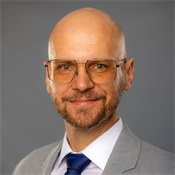
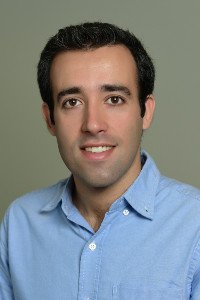
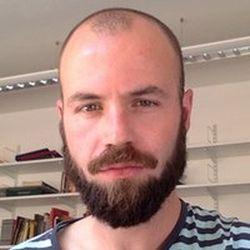
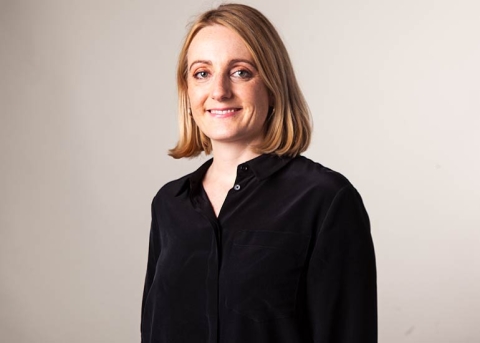
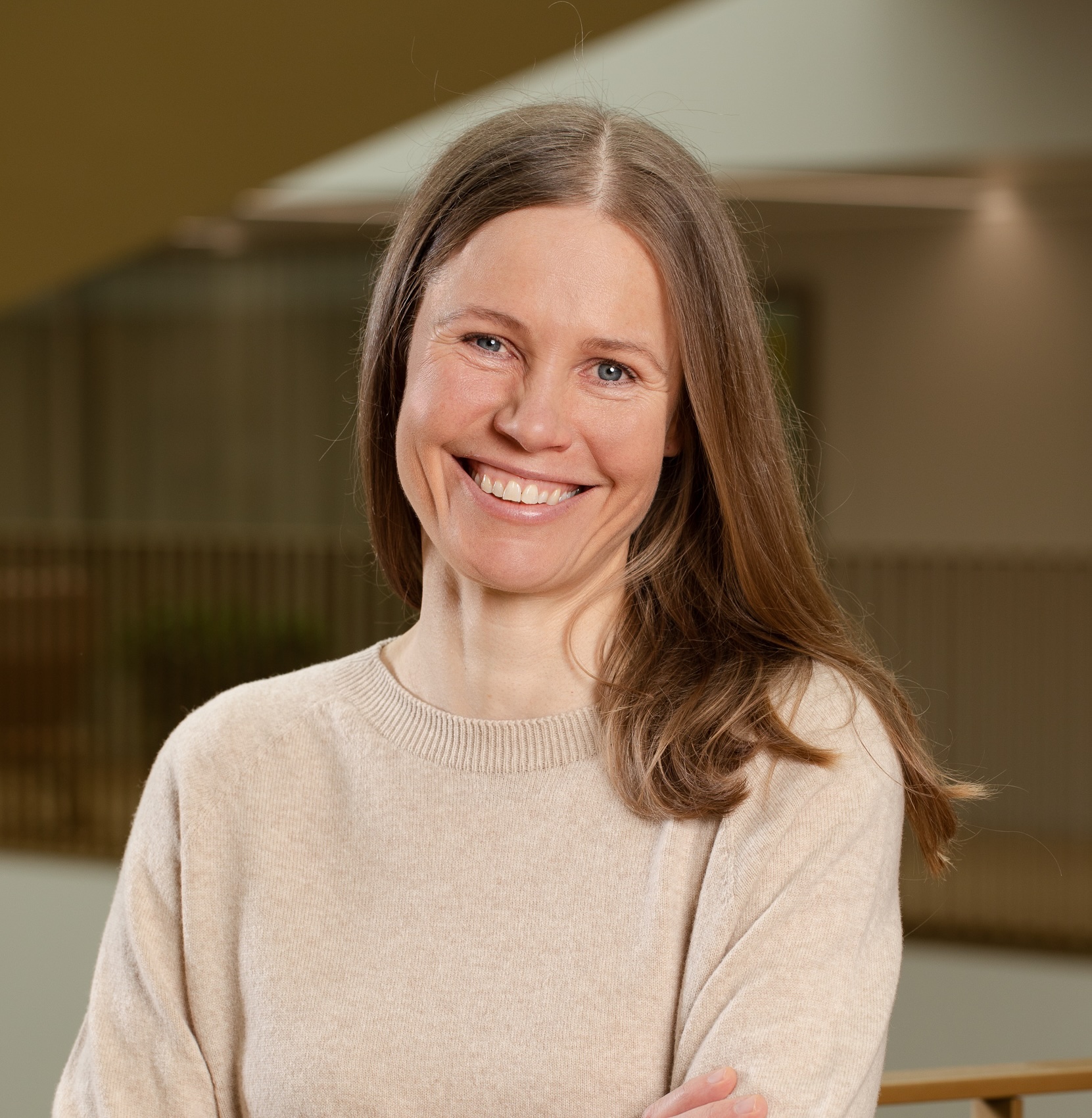
Dr. John Wagner Givens is an Associate Professor in the International Studies department at Spelman College, joining in 2022. He holds a Ph.D. in Politics from the University of Oxford, an MA in Asian Studies from UC Berkeley, and a BSFS from Georgetown University. Doctorate of Philosophy in Politics, University of Oxford Masters of Arts in Asian Studies, University of California, Berkeley Bachelor’s in Science of Foreign Service, Georgetown University His research spans Chinese politics, law, and foreign policy; smart cities; online politics in Asia; and Malaysian media. He has published widely in journals including China Quarterly , Review of Policy Research , and Journal of East Asian Studies . Recent work focuses on transnational policy diffusion, authoritarian adaptation, and urban technological governance. Notable studies include factional consolidation under Xi Jinping, pandemic nationalism, and the dual-edged implications of smart city development for privacy and democracy.
Alireza Khani is an Associate Professor in the Department of Civil, Environmental, and Geo-Engineering at the University of Minnesota's College of Engineering. His research focuses on modeling the impacts of emerging technologies on public transit systems and optimizing these systems for greater efficiency and reliability. Dr. Khani actively contributes to transportation research through numerous publications and substantial grant-funded projects. Dr. Khani's research interests center on transportation engineering with a particular emphasis on public transit systems. His work utilizes network modeling and optimization techniques to integrate public transit with autonomous mobility-on-demand services and electric fleets using renewable energy. His research spans urban mobility challenges, focusing on sustainable transportation solutions that address both passenger and freight transportation needs. His work increasingly incorporates machine learning techniques to analyze travel behavior and optimize transportation networks. His recent publications demonstrate a strong focus on electric bus systems, autonomous mobility-on-demand services, and optimization of transit networks. The research trends show progression from traditional transit modeling to integrating cutting-edge technologies like AI algorithms and autonomous vehicles. His work addresses critical transportation challenges including last-mile connectivity, rural transit solutions, and the transition to electric fleets, with growing emphasis on data-driven approaches to transportation planning. Dr. Khani actively mentors students and seeks undergraduate researchers for software development projects related to transportation systems. His research is supported by multiple substantial grants including projects funded by the National Science Foundation and the Minnesota Department of Transportation. Current projects include MobiliSlice: A Personalized Car-sharing System for Smart Urban Mobility , Estimating Likely Mode Shift and VMT Reduction Potential using TBI Data and AI Algorithms , and Transitioning to EV Fleets: Best Practices and A Decision Tool . Dr. Khani leads the UMN Transit research group, which focuses on developing mathematical, computational, and data analytic tools to evaluate and optimize transit systems. The group's research activities center on creating innovative solutions for modern transportation challenges, particularly those involving the integration of emerging technologies with traditional public transit infrastructure. The lab maintains strong connections with transportation agencies and actively contributes to practical solutions for real-world transit problems.
Dr. Thomas White is a Lecturer in China and Sustainable Development at the Lau China Institute, King’s College London . He holds a PhD from the University of Cambridge (2016) and has contributed extensively to environmental anthropology, focusing on Inner Asia’s pastoralist communities and their interactions with state policies. Education: PhD, University of Cambridge (2016) Current Role: Lecturer in China and Sustainable Development, King’s College London Former Role: Research Associate at Mongolia and Inner Asia Studies Unit (MIASU), University of Cambridge (2022-2023) Research Interests span environmental anthropology, human-animal relations, spatial politics, postsocialist transformations, and China’s ecological governance. His work critically examines the Belt and Road Initiative, grassland conservation policies, and the role of nonhumans in state territorial imaginaries. Publications address topics like camel-based connectivity in Inner Mongolia, cosmopolitical ecologies, and the domestication of infrastructure. Key articles analyze how the Chinese state mobilizes narratives of terrain friction and animal labor to construct territorial legitimacy. Projects include the ESRC-funded Trading Mongolia’s Sovereign Meat , which investigates Mongolia-China livestock trade dynamics, and contributions to special issues on spatial transformations in China’s borderlands and multispecies pastoralism in Inner Asia.
Heidi Gorovitz Robertson serves as the Steven W. Percy Endowed Professor of Law and Urban Affairs at Cleveland State University College of Law, where she has been a faculty member since 1995. She additionally holds a joint appointment with the Environmental Studies faculty at the Maxine Goodman Levin College of Urban Affairs, reflecting her interdisciplinary expertise in urban environmental governance. Her educational credentials include a BA from Tufts University (1985), JD from University of Wisconsin (1990), LLM from Columbia University (1995), and JSD from Columbia University (2002). Prior to academia, she practiced environmental law at Pillsbury, Madison & Sutro in San Francisco and Washington, D.C. Professor Robertson's research centers on urban environmental justice , land access rights , and energy regulation , with particular focus on demographic disparities in environmental risk exposure, brownfields redevelopment, and hydraulic fracturing policy. Her scholarship critically examines municipal authority in environmental matters, comparing Scandinavian and European approaches to public land access while analyzing Ohio's regulatory framework for oil and gas development. Analysis of her 15 most recent publications reveals consistent engagement with local governance challenges in environmental regulation, particularly regarding shale development, pipeline routing, and municipal responses to state preemption. Her work demonstrates evolving focus from theoretical environmental ethics toward practical regulatory solutions for urban communities facing energy extraction conflicts. Her distinguished recognition includes: 2013 Wilson G. Stapleton Award for Faculty Excellence 2013 McNair Scholars Mentor of the Year Fulbright Senior Specialist appointment at Uppsala University (2009) Multiple University Faculty Merit Recognition Awards (2005, 2008, 2010) Professor Robertson has provided substantial institutional leadership as Associate Dean for Academic Enrichment (2009-2014) and through external service on the Clean Air Conservancy Board of Trustees (1999-2007) and Ohio Lake Erie Commission's Blue Ribbon Task Force. Her mentorship of McNair Scholars exemplifies commitment to undergraduate research development in environmental justice. Her affiliation with the Levin College of Urban Affairs facilitates interdisciplinary collaboration on urban sustainability initiatives, connecting legal scholarship with practical urban planning challenges in Cleveland and beyond.
Mustafa O. Tuna serves as Associate Professor in the joint Departments of Slavic and Eurasian Studies and History at Duke University's School of Arts & Sciences, with additional affiliation at the Duke Islamic Studies Center. His scholarship critically examines the intersection of Islam and modernity among Turkic and Muslim communities across Russia, Central Asia, and Turkey through historical and contemporary frameworks. Dr. Tuna's academic credentials include: Ph.D. in History, Princeton University (2009) M.A. in History, Princeton University (2004) M.A. in International Relations, Indiana University at Indianapolis (2001) B.A. in International Relations (Valedictorian), Bilkent University, Turkey (1998) His research centers on how social networks, state interventions, and European modernity transformed Muslim communities under empire and nation-state. Key projects analyze Bediuzzaman Said Nursi's intellectual legacy, urbanization in Central Anatolia, and comparative secularization processes in Russian and Turkish contexts. His work consistently bridges Ottoman/Turkish and Tsarist/Soviet historical experiences while exploring Islamic tradition's resilience in modern Turkey. Analysis of his publications reveals sustained engagement with imperial governance, religious reform, and grassroots transformations across Eurasia. Recent scholarship particularly emphasizes comparative village-level studies, intellectual history of Muslim thought, and contemporary manifestations of Islamophobia in post-Soviet spaces, demonstrating methodological versatility across historical periods and geographic regions. No specific doctoral students or grant awards are documented in available materials, though his active research profile suggests ongoing mentorship responsibilities. His institutional affiliations with the Duke Islamic Studies Center indicate participation in broader scholarly networks focused on Muslim societies, though dedicated research laboratories or large-scale collaborative teams are not referenced in source documentation.
Sushrut Jadhav is Professor of Cultural Psychiatry at University College London's Division of Psychiatry and Consultant Psychiatrist leading the Camden Homeless Outreach Services for the mentally unwell at Camden & Islington NHS Foundation Trust. He also serves as Lead Clinician for the Cultural Consultation Service at the same NHS Foundation Trust. With dual expertise as both a psychiatrist and clinician anthropologist, Jadhav bridges clinical practice with anthropological theory to develop culturally relevant mental health frameworks. University College London, Division of Psychiatry (2020-present) Camden & Islington NHS Foundation Trust (2001-present) School of Oriental and African Studies (SOAS), Professorial Research Associate (2023-2025) LGBR Institute of Mental Health, Tezpur, Assam (Visiting Professor) Professor Jadhav's research interests focus on the mental health dimensions of marginalized groups across cultures, with particular attention to caste dynamics in India, homelessness in London, and human-animal relationships in rural and urban India. His work examines cultural appropriateness of mental health theory and practice in low-income nations, with field testing of cultural psychological therapy for social defeat among Dalits and identity distress among 'upper-ed' and 'forward-ed' Castes in India. He has pioneered work on digital oppression in Human-AI relationships and the mental health impacts of anti-radicalization policies. Jadhav's publications reveal a strong focus on decolonizing psychiatry, examining caste-based mental health disparities, and developing culturally appropriate therapeutic approaches. His recent work addresses mental health ecologies, structural violence related to caste and farming, and historical scientific racism in psychiatric publications. The interdisciplinary nature of his research spans anthropology, psychiatry, public health, and social justice. Lucy Mair Medal and Marsh Prize for Applied Anthropology (2023) Falling Walls Social Science and Humanities Winner (2022) Goffredo Bartocci Special Award in Cultural Psychiatry (2022) As Founding Editor and Editor-in-Chief of Anthropology and Medicine journal, Jadhav has shaped scholarly discourse at the intersection of these fields. He supervises doctoral and post-doctoral scholars conducting research on cultural aspects of mental health, particularly in India, and serves as an examiner for PhD programs at multiple prestigious institutions. His work with the Cultural Consultation Service directly translates research into clinical practice for culturally diverse patient populations. Jadhav leads innovative clinical work through the Camden Homeless Outreach Services and the Cultural Consultation Service, developing models of political therapy for caste-related social defeat and collaborating on human-elephant relationships in Assam, India. His approach emphasizes 'denominalisation in Psychiatry'—turning nouns into verbs—to better understand the dynamics of oppression and mental distress.
Dr. Julia Brown is an Associate Professor in Sustainable Environmental Management at the University of Portsmouth’s School of the Environment and Life Sciences. She is affiliated with the Institute of the Earth and Environment, Agile Centre for Equitable Sustainability, and Centre for Blue Governance. Her ORCID identifier is 0000-0003-3421-6347. BSc in Geography (University of Lancaster, 1999) MRes in Environment and Development (University of Manchester, 2001) PhD in Participatory Water Reforms (University of Manchester, 2007) Postgraduate Certificate in Teaching and Learning in Higher Education (2010) Brown’s research bridges geographies of water and animal welfare , focusing on participation, power, and politics. She critiques community-based water management models in Uganda and evaluates policy initiatives using frameworks like the Food-Water-Energy nexus. Her work intersects environmental governance, development studies, and social innovation. Her 15 most recent publications span equid welfare , urban sustainability , NGO programming , and water governance , with fieldwork in Uganda, Mexico, and the UK. Key themes include shame in social movements , advocacy-based programming , and NGO accountability , often using participatory methods and critical policy analysis . As a PhD supervisor, she mentors students in water governance and animal welfare. Her funded projects include a UK DfID-supported PhD at Manchester and external grants for Uganda’s social entrepreneur water schemes. She contributes to edited volumes on urban resilience and serves as a peer reviewer for journals like PLoS One and Geoforum.
Kirsi Eräranta serves as Senior University Lecturer in the Department of Management Studies at Aalto University School of Business, where her research critically examines business-society relations through organizational communication and critical management studies frameworks. Her research program centers on gender, diversity, and inclusion dynamics within contemporary organizations, with particular focus on refugee/migrant inclusion initiatives, LGBTQ+ identity work in digital spaces, and corporate social responsibility tensions in Nordic welfare states. She employs critical theoretical lenses including Foucauldian biopower analysis and discourse theory to investigate paradoxes in organizational practices where power, identity, and social change intersect. Analysis of her publication trajectory reveals consistent engagement with evolving business-society interfaces: from historical studies of work-life balance (2011-2015) to contemporary investigations of hybrid CSR models (2024) and inclusion paradoxes in migration contexts (2024), demonstrating methodological versatility across qualitative, discourse-analytic, and critical approaches. Scientific recognition includes: Best Paper Proceedings Publication at the 83rd Academy of Management Annual Meeting (2023) Her scholarly leadership extends to co-editing special issues on gender theory in marketing research (2015) and contributing foundational perspectives on responsible communication in Finnish organizational contexts (2021).
Dr. Juan José Martín García is a Professor of Contemporary History at the Universidad de Burgos , Faculty of Humanities and Communication. He specializes in economic history, social history, and emigration research, with particular focus on Castile's industrial heritage and rural-urban dynamics. Key research areas: Textile industry, population studies, rural economics Active in online teaching for History, Spanish Language, and Political Science degrees His article trends show deep engagement with Castile's socio-economic transformations, including textile manufacturing (1720-1939), rural press (1866-1936), and Guardia Civil infrastructure (1844-1936). Notable works examine population underreporting in 19th-century Burgos and the survival of pre-industrial economic practices.
Kjetil Frøyland is a Senior Researcher at the Center for Welfare and Working Life Research at Oslo Metropolitan University. With a background in social work and history of ideas, he focuses on work inclusion for vulnerable groups, supported employment models, and social policy interventions. Research Themes : Work inclusion, supported employment, vulnerable youth, early intervention, substance abuse prevention Projects : Youth inclusion in rural areas, IPS-ung evaluation, ExitAge, Work in Progress (Portugal), ENGAGE program His methodological expertise spans case studies, qualitative interviews, field observations, and mixed-methods approaches. Recent publications analyze workplace resistance to disability inclusion, fidelity of employment programs, and sustainable work integration strategies. Publications : 32 scientific works, 39 research reports Leadership : Extensive experience in cross-sectoral organizational leadership
Lídia Cabral is a social scientist at the Institute of Development Studies (IDS), University of Sussex, specializing in agricultural policy and rural development in Africa. As Rural Futures Cluster Lead, she bridges grassroots innovations with global policy frameworks, particularly focusing on Brazil’s role as a development actor and its impact on African agrifood systems. Her research spans political economy of agricultural policy South-South cooperation climate-resilient rural futures just transitions in food systems Recent projects include Roots of Change (UK agri-food net zero) Building Back Better from Below (pandemic-era food justice) Silenced Alternatives (Brazilian agri-food sustainability) . Her work has been published in Development Policy Review , Global Policy Journal , and IDS Working Papers. Collaborations include institutions like the African Development Bank , FAO , IFAD , and bilateral agencies (DFID, SDC, SIDA).
Prof. Dr. Burak Aricak is a faculty member at Bursa Technical University , where he serves in the Faculty of Forestry under the Department of Forest Engineering . His work integrates geospatial technologies and environmental science to address critical forestry challenges. Research Focus : Forest Road Planning, Harvesting Techniques, GIS & Remote Sensing Applications, and Ergonomics. Key Publications (2023-2025) explore climate change effects on forest species distribution, heavy metal accumulation in trees, soil respiration dynamics post-harvesting, and UAV/LiDAR advancements for biomass estimation. Contact : burak.aricak@btu.edu.tr | +90 (224)-8081101
Kostyantyn Mezentsev is Professor and Head of the Department of Economic and Social Geography at Taras Shevchenko National University of Kyiv, Ukraine, having progressed from Assistant Professor (1997) to Professor (2007) before assuming departmental leadership in 2015. His career spans nearly three decades focused on Ukrainian urban and regional dynamics. His academic credentials include: MSc in Economic and Social Geography (1993, Taras Shevchenko National University of Kyiv) CSc (PhD) in Economic and Social Geography (1997, Taras Shevchenko National University of Kyiv) DSc in Economic and Social Geography (2006, Taras Shevchenko National University of Kyiv) Mezentsev's research centers on socio-spatial transformation in post-Soviet Ukraine, with expertise in urban modernization models, migration patterns, and regional environmental safety. He employs mixed-method approaches including GIS modeling, mental mapping, and multivariate statistical analysis, with current emphasis on participatory planning, gentrification processes, and symbolic dimensions of urban space. His 2012-2015 publications reveal persistent focus on Ukrainian urban systems, particularly Kyiv's metropolitan region, analyzing regional polarization through lenses of global crises, migration flows, and post-Soviet transition. International collaborations with German, Hungarian, and Eastern European institutions dominate his work, highlighting cross-border comparative frameworks for understanding spatial inequality. No scientific awards were documented in the source material. Mezentsev directs multiple funded projects including 'Urban Reconfiguration in post-Soviet Space' (Leibniz Community, Germany), 'Civil Society Involvement in Urban Development' (DAAD, Germany), and Visegrad Fund migration studies, demonstrating extensive grant acquisition capacity focused on Eastern European urban challenges. He leads the Urban and Regional Development Research group at Taras Shevchenko University, advancing spatial modeling techniques while investigating municipal GIS applications and cultural dimensions of urban space transformation.
Kari B. Henquinet is a Teaching Professor in Social Sciences at Michigan Technological University, where she serves as Undergraduate Studies Director, Peace Corps Prep Program Director, and Sustainability Science and Society Program Advisor. With a PhD in Anthropology from Michigan State University (2007), her academic career focuses on the intersection of gender, development, and humanitarianism, with extensive fieldwork in West Africa and Central America. Her educational background includes: PhD in Anthropology, Michigan State University, 2007 MA in Anthropology, Michigan State University, 2003 BA in Interdisciplinary Studies, Wheaton College, 1996 Dr. Henquinet's research spans four interconnected areas: gender and women's rights in Niger, historical roots of evangelical aid and development, disaster risk reduction in Central America, and intercultural service learning. Her ethnographic work in Niger examines how transnational aid institutions interact with local gender relations and Islamic family law, while her historical research analyzes the Cold War-era foundations of organizations like World Vision. In El Salvador and Jamaica, she collaborates on interdisciplinary projects addressing social vulnerability to natural hazards. Her scholarship consistently bridges theory and practice through experiential learning initiatives. Analysis of her recent publications reveals a strong interdisciplinary trajectory connecting anthropology, religious studies, and development practice. Her work demonstrates growing emphasis on community-based approaches to vulnerability assessment, ethical dimensions of humanitarianism, and the intersection of faith-based and secular development models. Geographically, her research spans West Africa (particularly Niger), Central America (El Salvador, Jamaica), and engages with broader theoretical questions about knowledge production in international development. Dr. Henquinet has secured significant research funding including: Community- and Nature-Led Adaptation in El Salvador (2024, University of Michigan) Understanding Community Connections with Nature (2023, Consortium of Universities for Hydrologic Science) National Science Foundation IRES Track III Collaborative Research (2019) Fulbright-Hays Doctoral Dissertation Research Abroad Grant (2003-2004) As an educator, she has directed the Peace Corps Master's International program for nine years and Peace Corps Prep for six years, coordinating campus-wide efforts to prepare students for international service. She teaches numerous courses including Environmental Anthropology, Cultural Dimensions of International Immersion, and Ethnographic Methods, and advises students in the Pavlis Honors College. Her commitment to experiential learning extends to directing the Community Ambassadors program, building linkages between Michigan Tech and the local community. Dr. Henquinet collaborates extensively with interdisciplinary teams, particularly in her work on disaster risk reduction in El Salvador where she partners with geologists, hydrologists, and local communities. Her recent NSF-funded field school in El Salvador represents a significant collaborative effort with the Consortium of Universities for the Advancement of Hydrologic Science and Lutheran World Relief.
Bojan Đerčan is an Associate Professor at the Department of Geography, Tourism and Hospitality within the Faculty of Science and Mathematics, University of Novi Sad, Serbia. Born on June 23, 1984, in Sremska Mitrovica, he progressed from Researcher Trainee (2007-2010) to his current position since 2020, holding a Doctor of Science in Geoscience awarded in 2015 for his dissertation on Srem settlement systems. Bachelor's in Geography, Tourism and Hotel Management (University of Novi Sad, 2007) Master's in Architecture and Urban Planning (Faculty of Technical Sciences, 2018) PhD in Geoscience: 'Settlement Systems in Srem' (University of Novi Sad, 2015) His research centers on regional and social geography with specialized focus on settlement patterns, border region dynamics, and ethnic group sustainability in Vojvodina, Serbia. He examines demographic transitions, urban-rural linkages, and revitalization strategies for depopulated areas through interdisciplinary lenses combining spatial analysis, demographic modeling, and cultural studies. His work addresses critical challenges like ethnic minority resilience, cross-border cooperation, and sustainable tourism development in post-socialist contexts. Analysis of his 13 publications (2012-2021) reveals consistent thematic evolution toward integrated geographical-demographic frameworks. Early work focused on wood waste energy and traffic noise, while recent research emphasizes ethnic sustainability in Vojvodina, border region revitalization, and historical-demographic heritage. His methodology combines case studies of specific municipalities (e.g., Šid, Sremska Mitrovica) with regional-scale analysis, frequently collaborating with demographers and environmental scientists across international journals. Dr. Đerčan actively contributes to national and provincial research initiatives addressing Serbia's demographic challenges. His grant portfolio demonstrates sustained engagement with critical regional issues: Demographic transitions in Serbia (2006-2010) Revitalization of depopulated border areas in Banat (2008-2009) Migration processes in Kosovo/Metohija (2008-2009) Geospace transformations in Serbia (2011-2017) Depopulation challenges in Vojvodina (2011-2013) Ethnic group sustainability (2013-2019) Agricultural-tourism development in Vojvodina (2017-2018) He serves as Technical Editor for the Department of Geography's scientific journal and collaborates through multidisciplinary networks including the Serbian Geographical Society, Serbian Demographic Society, and international associations PLPR and ISDS. His fieldwork integrates with organizations like NGO Carpe Noctem for border region studies, while conference participation (ICB 2026, CTTH 2024) demonstrates ongoing scholarly engagement.