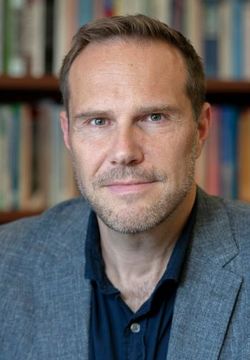
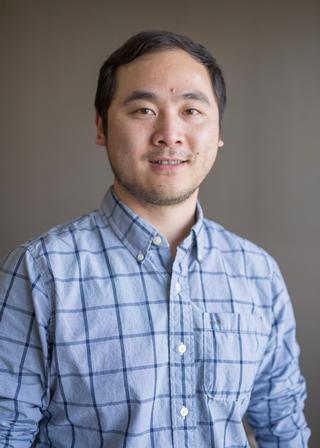
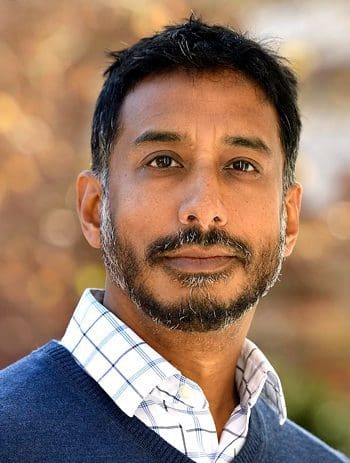
Dr. Colin Garroway is an Associate Professor in the Department of Biological Sciences at the University of Manitoba, Faculty of Science. His research focuses on understanding how population-level processes influence biodiversity at genetic, population, and species levels. He employs interdisciplinary approaches, including genomics, ecological modeling, and data synthesis, to address challenges in conservation and climate change impacts. His work often targets systems undergoing significant environmental changes, such as urbanized areas and Arctic ecosystems. Dr. Garroway teaches advanced courses in Evolutionary Genetics and Evolutionary Biology. His research emphasizes the interplay between human-driven environmental changes—such as urbanization and climate warming—and their effects on genetic diversity, species distribution, and adaptation. He leads the Garroway Lab, which collaborates on global projects like biodiversity assessments in protected areas and epigenetic studies in wildlife. Key research themes include: biodiversity conservation, climate adaptation genetics, urban evolution, and the genetic consequences of human activities. His work integrates field studies, genomic analyses, and computational models to provide actionable insights for conservation strategies.
Lee Ferguson is a Professor of Civil and Environmental Engineering at Duke University, with additional appointments as Associate Professor in the Division of Marine Science and Policy. His research focuses on environmental analytical chemistry, particularly using high-resolution mass spectrometry to study per- and polyfluoroalkyl substances (PFAS) , microplastics , and endocrine disruptors . Ferguson Lab develops methods for contaminant detection in water systems and investigates chemical leaching from polymers. Ph.D. in Chemistry from Stony Brook University (2002) Former Assistant Professor at University of South Carolina (2003-2009) Recent work includes PFAS analysis in lithium-ion batteries, glyphosate detection in hard waters, and microplastic dye toxicity studies. Key publications explore urban watershed contamination, Sri Lankan drinking water CKDu links, and novel analytical methods for environmental pollutants. Applied Research Fellowship (2022), Kavli Frontiers of Science Fellow (2011) Testified before U.S. Senate on nanotechnology risks Co-founder of NC PFAS Testing Network As an advisor, he mentors Doctoral Candidates Patrick Faught and Anna Lewis , who investigate microplastic dyes and polymer additives. Lab research spans environmental fate of nanomaterials, contaminant bioavailability, and exposomics for health outcomes.
Lisa R. Pruitt is a Professor of Law at the UC Davis School of Law and holds the Brigitte Bodenheimer Research Scholar designation. She is also a Faculty Affiliate at the UC Davis Center for Poverty Research. Ph.D. (Laws) - University of London (1997) J.D. - University of Arkansas (1989) B.A. in Journalism - University of Arkansas (1986) Professor Pruitt's research focuses on the legal and policy implications of income inequality across the rural-urban continuum, legal aspects of declining mobility, and the intersection of law with rural livelihoods. Her work reveals how economic, spatial, and social features of rural locales shape residents' encounters with the law. Her recent scholarship explores critical whiteness studies within rural contexts, examining how rurality inflects dimensions of gender, race, and ethnicity. She challenges the conflation of rurality with whiteness while seeking a more nuanced understanding of rural and working-class whites in the Trump era. Professor Pruitt has received numerous accolades including the Rural Sociological Society Excellence in Research Award (2021) and the UC Davis 2020 Distinguished Teaching Award . She is an elected member of the American Law Institute (since 2018) and has served in leadership roles at the Rural Sociological Society. She previously worked internationally for nearly a decade with experience in cultural conflict negotiation across more than 30 countries. Her research has been cited in various media outlets including US News , Tulsa World , and Capital Public Radio .
Paul K. Piff is an Associate Professor of Psychological Science at the University of California, Irvine. His research focuses on social psychology, social hierarchy, inequality, altruism, emotion, and morality. He holds a Ph.D. from the University of California, Berkeley. His work explores how socioeconomic status influences ethical behavior, prosociality, and perceptions of fairness. Key research themes include the psychological effects of wealth and poverty, the role of awe in fostering collective cohesion, and the moral implications of social class disparities. Piff’s studies often bridge experimental psychology with real-world societal issues, examining how environmental and social contexts shape human behavior and decision-making. His recent articles analyze topics like the moralization of effort, the social effects of awe-inspiring natural events, and the cognitive biases influencing perceptions of inequality. Piff’s lab website provides further details about ongoing projects and collaborations. Despite his prolific output, no academic awards are explicitly listed in the provided texts. His contact information includes ppiff@uci.edu, and his research emphasizes interdisciplinary approaches to understanding social dynamics and human behavior.
Adam M. Enders is an Associate Professor in the Department of Political Science at the University of Louisville. He also teaches advanced courses on measurement and scaling at the ICPSR Summer Program. His research examines the intersection of political psychology and societal dynamics, focusing on conspiracy theories, core values, partisanship, and polarization. Enders holds a Ph.D. (2016) and M.A. (2013) in Political Science from Michigan State University, and a B.A. (2011) in Political Science and Public Policy from Albion College. His work investigates how conspiratorial thinking influences public opinion, the role of racial prejudice in political behavior, and how subjective perceptions contribute to polarization. Publications appear in top journals like the American Journal of Political Science and Journal of Politics . He has also contributed to The Atlantic and Politico Magazine , analyzing modern conspiracism and its political ramifications. Teaching focuses include political psychology, public opinion dynamics, and quantitative research methods. His methodological expertise in scaling and measurement underpins much of his empirical work, emphasizing rigorous design to explore complex belief systems.
Dr. Petar Bankov is a Lecturer in Political & International Studies at the University of Glasgow. His research focuses on comparative party politics, political participation, populism, and Central and Eastern European politics. He employs mixed methods including regression analysis, survey experiments, and qualitative approaches (interviews, document analysis). He is Communications Officer for the PSA Left Radicalism Specialist Group and a member of the editorial team of dVERSIA , a Bulgarian left-wing magazine. His work emphasizes improving citizen-party relations to enhance political participation. Education: BA in International Relations, University of Sofia (Bulgaria) Joint International Master’s in Russian, Central, and East European Studies from University of Glasgow and Jagiellonian University (Poland) PhD research on electoral geographies of the European radical left Research Interests: Comparative politics, left-wing politics, political geography, and populism. His work explores party organization dynamics in post-communist contexts, electoral behavior, and democratic resilience. Grants: €10,000 from Friedrich Ebert Foundation-Bulgaria (2022) €3,000 Advanced Postdoctoral Fellowship (Babeș-Bolyai University, 2021) £3,500 Overseas Fieldwork Allowance (ESRC/SGSSS, 2017) Erasmus Mundus Master’s Scholarship (€20,000, 2012–2014) Teaching: Undergraduate: Politics 1B (Liberal Democracy), Politics 2B (Comparative Politics), Central and East European Studies modules Honours: Qualitative Methods in Social Sciences, Politics of the European Left Postgraduate: Qualitative Research Methods Labs/Teams: Part of the PSA Left Radicalism Specialist Group and dVERSIA editorial board. Engaged in non-formal education promoting intercultural exchange.
Jonathan Rodden is a Professor of Political Science at Stanford University and a Senior Fellow at the Hoover Institution and Stanford Institute for Economic Policy Research. His research focuses on the comparative political economy of institutions, particularly federalism and fiscal decentralization, with significant contributions to understanding the urban-rural political divide and its implications for representation and policy. PhD from Yale University BA from the University of Michigan Fulbright student at University of Leipzig His research spans several domains: Comparative Federalism: Analyzed fiscal decentralization mechanisms, budgetary transfers, and institutional design in federations globally. Political Geography: Developed computational methods for redistricting analysis and demonstrated how geographic voter distribution creates inherent electoral biases. Policy Uncertainty: Co-authored foundational work linking economic uncertainty to political polarization and fiscal cycles. Public Health: Conducted epidemiological studies on firearm-related mortality and suicide patterns in California. Scientific awards include: Gregory Luebbert Prize for best book in comparative politics (2007) Michael Wallerstein Award for best paper in political economy (2015) He has advised PhD students like Jowei Chen and directed policy projects with international institutions including the World Bank, IMF, and OECD. His work on redistricting simulations has been cited in U.S. Supreme Court amicus briefs and congressional testimony.
Jennifer F. Biddle is the Mary A.S. Lighthipe Professor of Marine Studies at the University of Delaware's School of Marine Science & Policy. Her research focuses on microbial ecology of marine systems, deep biosphere life, benthic archaea and bacteria, and geobiology. She leads the Biddle Lab, which explores subsurface microbial processes and their impacts on global biogeochemical cycles. Ph.D., Biochemistry and Molecular Biology, Pennsylvania State University (2006) B.S. with Honors, Biotechnology, Rutgers University (1999) Her work spans topics such as Microbial diversity in deep marine sediments Methane cycling in coastal and open ocean environments Interactions between marine organisms and their microbiomes Biogeochemical processes in extreme environments Recent metagenomic studies from her lab reveal conserved microbial functions across tropical reef fish guts and dynamic archaeal-bacterial communities in Atlantic Ocean sediments. The Biddle Lab maintains active engagement with scientific communities through social media platforms like Twitter and Facebook, emphasizing outreach and collaborative science.
Jost-Diedrich Graf Von Hardenberg is a Full Professor in the Department of Environmental, Land and Infrastructure Engineering (DIATI) at the Polytechnic University of Turin. He serves as the Energy and Climate Change Area Coordinator and is a Scientific Advisor of the HPC-AI Advisory Council. His research focuses on climate science and geophysical fluid dynamics, with significant contributions to understanding climate change impacts and Earth system modeling. Professor Von Hardenberg's research interests span multiple areas of climate science, including climate dynamics, geophysical fluid mechanics, hydrological cycle analysis, numerical climate modeling, and precipitation downscaling. His work particularly emphasizes climate tipping points and extremes, Rayleigh-Bénard convection in geophysical contexts, high-resolution Earth-system climate modeling, and stochastic approaches to precipitation downscaling. His research integrates theoretical, computational, and observational approaches to address fundamental questions about climate system behavior and change. His recent publications demonstrate a strong focus on Atlantic Meridional Overturning Circulation (AMOC) dynamics, climate extremes in Alpine regions, urban climate effects, and interdisciplinary applications of climate science to ecological and conservation challenges. His work bridges fundamental climate dynamics with practical applications for climate adaptation and environmental management. Among his notable recognitions are the Research in Paris award from the Maire de Paris (2009) and Fellowships at the London School of Economics and Political Science (2001-2002, 2004-2006). He has participated in numerous research networks including the European Geosciences Union section 'Nonlinear Processes in Geophysics' (2004-2012), the EC-Earth Consortium (2012-present), and COST Action ES0805 TERRABITES 'The terrestrial biosphere in the earth system' (2010-2014). Professor Von Hardenberg actively supervises PhD students including Marianna Albanese, Maria Clara Corda, Sara Filippini, and Jacopo Grassi, among others. He leads multiple significant research projects such as ROTurb (Resolving Ocean Macroscale Turbulence), LocClima (Impact of LOCal conditions on Italian microCLIMAtes), CRAWL (Carbon Release in A Warming cLimate), and CliMOC (Climate Impacts of the Atlantic Meridional Overturning Circulation), with funding from EU, national programs, and commercial contracts. He is a member of the Interdepartmental Center SmartData@PoliTO - Big Data and Data Science Laboratory, where he contributes expertise in climate data analysis and modeling. His collaborative work extends to multiple institutions through non-commercial agreements with the National Research Council and various international research consortia focused on climate system understanding.
Yu Liu is an Associate Professor of Public Health Sciences at the University of Rochester Medical Center (URMC). He holds a PhD in Epidemiology from Vanderbilt University, an MPH from George Washington University, and a BSc in Pharmaceutical Sciences from South China Agricultural University. His research focuses on leveraging advanced quantitative methods and implementation science to design HIV prevention interventions targeting marginalized populations, particularly LGBTQ+ communities and Black populations. Key areas include PrEP utilization, stigma reduction, and addressing social determinants of health through nurse-led programs and AI-enhanced tools. Dr. Liu has served as PI/Co-I on multiple NIH-funded studies, with over 60 peer-reviewed publications in journals like AIDS Care , PloS One , and Journal of Acquired Immune Deficiency Syndromes . His work emphasizes interdisciplinary collaboration with academic, clinical, and community organizations, including the CDC and Department of Health. Teaching responsibilities include advanced epidemiology courses (PM416, PM451, PM510) and directing the Master of Epidemiology Thesis Workshop. He prioritizes mentorship of students from diverse backgrounds, fostering academic competence and inclusive research environments.
Josh Davis is an Assistant Professor at the Department of Journalism , College of Humanities , San Francisco State University. As a journalist, filmmaker, and educator, he has worked with institutions such as VICE News Tonight on HBO , The New York Times , NPR , and MediaStorm . He earned an M.A. in Journalism from UNC-Chapel Hill and has received numerous awards, including the Peabody Award and multiple Emmy Awards . Emmy and Peabody Award-winning documentary producer Expertise in visual journalism and documentary ethics Focus on social justice, criminal justice reform, and global issues Davis’s research interests center on multimedia storytelling and documentary production for social change. His work explores visual journalism as a tool to counter misinformation, amplify marginalized voices, and investigate systemic issues. Projects like Charlottesville: Race and Terror and Planet Money Makes A T-Shirt highlight his ability to blend investigative reporting with interactive media . Davis’s recent articles and documentaries focus on political conflict ( Charlottesville ), economic systems ( Planet Money ), and environmental ethics ( Fast Food for Polar Bears ). These works often integrate data visualization , personal narrative , and cross-cultural documentation . His scientific awards include: 2018 Peabody Award 2018 Emmy for Outstanding Coverage of Breaking News 2015 duPont-Columbia Silver Baton Multiple Pictures of the Year International and Webby Awards Davis has also advised graduate students and collaborated with institutions like CNN , The International Center of Photography , and UNC-Chapel Hill through the Roy H. Park fellowship and Carnegie-Knight News21 fellowship .
Peter van Dam is a Professor in the Department of History at the University of Amsterdam , affiliated with the Faculty of Humanities . His work bridges Dutch History and global themes like Fair Trade , Environmental Ethics , and Postcolonial Globalization . Research Interests : Dutch history; entanglement of environmental, religious, and economic ethics; sustainable consumption debates; fair trade movements; and the evolution of consumer society. Publications : Over 25 articles and books focusing on 20th-century Dutch and Low Countries history, with recent works (2021–2025) analyzing sustainability, fair trade ethics, and consumer activism. Contact : phvandam@uva.nl | LinkedIn | BlueSky
Neal D. Goldstein, PhD, MBI, is an Associate Research Professor of Epidemiology at Drexel University's Dornsife School of Public Health. His work focuses on computational methods in epidemiology, particularly leveraging electronic health records (EHR) for infectious disease surveillance and public health resource optimization. He holds a PhD in Epidemiology from Drexel and an MBI from Oregon Health & Science University. Research interests include data analysis methods, infectious disease transmission, spatial epidemiology, and translational epidemiology. Goldstein has authored over 60 peer-reviewed publications, a textbook on EHR-based epidemiological analyses, and co-authored chapters in academic textbooks. His work has been featured in national media outlets including Kaiser Health News and Politico. Key projects include NIH-funded studies on HIV surveillance and predictive modeling of healthcare-associated infections. Goldstein also maintains a blog discussing methodological advances in epidemiology and EHR research. He advises students and collaborates on grants focused on improving public health resource allocation through data-driven approaches. Goldstein's lab emphasizes bridging EHR informatics with epidemiological practice to address challenges in infectious disease management and healthcare equity.
Anand Pandian is the Krieger-Eisenhower Professor of Anthropology at Johns Hopkins University, holding a joint appointment in Earth & Planetary Sciences. He also serves as President of the Society for Cultural Anthropology and a curator of the Ecological Design Collective. His research focuses on ecological ethics, sustainable design, and participatory anthropology, with fieldwork in India, the U.S., and Baltimore. Education details are not explicitly stated in the text, but his academic trajectory is evident through his publications and roles. Key research areas include environmental humanities, sensory ethnography, and experimental writing. He has authored multiple influential books including A Possible Anthropology (2019) and Something Between Us (2023). His work bridges theory and practice through initiatives like the Ecological Design Collective, fostering collaborations between researchers, artists, and activists. Current projects explore decay as an ecological concept and urban river revitalization in Baltimore. Pandian actively engages in public discourse through lectures and community projects. Grants and institutional roles include department chairmanship, organizing virtual conferences like 'Displacements' (2018), and editorial work for volumes such as Ethical Life in South Asia (2010). His interdisciplinary approach integrates anthropology with environmental science, literature, and design.
Jacob S. Hacker is the Stanley B. Resor Professor of Political Science at Yale University, Co-Director of the Ludwig Program in Public Sector Leadership at Yale Law School, and a resident fellow at the Institution for Social and Policy Studies. He specializes in American politics, public policy, and inequality, with a focus on health policy, welfare state dynamics, and 'predistribution' strategies. His seminal works include The Divided Welfare State (2002) and Winner-Take-All Politics (2010), which received the APSA's Aaron Wildavsky Award. He has held visiting roles at the Max Planck Sciences Po Center and the U.S. Library of Congress. Education: B.A., Harvard University (1994); Ph.D., Yale University (2000). Research interests span economic inequality, political economy, and policy design. His recent work critiques right-wing populism and explores strategies for equitable economic governance. He co-founded the Consortium on American Political Economy (CAPE) and chairs the APSA's American Political Economy section. Notable awards include the Robert Ball Award (2020) and membership in the American Academy of Arts and Sciences. His policy contributions include the 'public option' concept and advocacy for Medicare expansion.