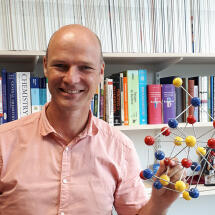
Prof. Dr. Michael Schäferling is a Professor of Photonic Materials at the Department of Chemical Engineering (CIW), FH Münster - University of Applied Sciences. His research focuses on optical chemical sensors, upconversion nanomaterials, and surface functionalization for chemical sensing. He teaches courses in Functional Materials , Materials Science , and advanced topics like Chemical Sensors and Technology of Coatings . University : FH Münster - University of Applied Sciences School : Department of Chemical Engineering Department : Laboratory for Photonic Materials His recent publications (2019–2024) address fluorescence imaging for medical diagnostics, upconversion crystal synthesis , and sensor design for corrosion monitoring . Key trends include the development of ratiometric measurement techniques , core-shell nanoprobes , and environmentally stable sensor materials . Prof. Schäferling’s work emphasizes surface functionalization of nanomaterials for energy transfer systems and tailoring crystal morphology to optimize luminescence. He has contributed to applied inorganic chemistry and nanostructured materials for analytical applications. Contact: michael.schaeferling@fh-muenster.de
Prof. Dr. Bart Jan Ravoo is a Professor of Organic Chemistry at the University of Münster, Germany, where he leads the "Synthesis of Nanoscale Systems" research group. He is also co-director of the Center for Soft Nanoscience (SoN) and spokesperson of the Collaborative Research Center (CRC 1459) "Intelligent Matter". His research focuses on creating novel nanoscale materials through supramolecular chemistry and molecular self-assembly. Prof. Ravoo received his PhD from the University of Groningen in 1998 and completed postdoctoral work at University College Dublin. He joined the University of Münster in 2007 as a professor, after serving as an assistant professor at the University of Twente. From 2012-2014, he served as Dean of the Department of Chemistry and Pharmacy. His research spans three main areas: biomimetic supramolecular chemistry, surface functionalization by molecular self-organization, and responsive materials. Prof. Ravoo's group is particularly known for developing photoresponsive materials using arylazopyrazoles and cyclodextrin-based systems for applications ranging from drug delivery to smart adhesives. His work often bridges the gap between fundamental molecular design and practical applications in biomedicine and materials science. Prof. Ravoo's recent publications demonstrate a strong focus on light-responsive materials, with particular emphasis on arylazopyrazole and arylazoisoxazole photoswitches. His research shows how molecular photoswitches can be integrated into various material systems including hydrogels, nanoparticles, and surface coatings to create materials with tunable properties that respond to specific wavelengths of light. This work has important implications for drug delivery, sensing, and adaptive materials. Recipient of the Schering-Plough Newman Scholarship in Organic Chemistry Member of the "Cells in Motion" research cluster Supervisor in the CiM-IMPRS Graduate Programme Prof. Ravoo has supervised over 40 PhD students and has been instrumental in establishing interdisciplinary research collaborations at the University of Münster. His group, consisting of approximately 25 researchers, is supported by multiple funding agencies including the Deutsche Forschungsgemeinschaft (DFG), European Union, and Volkswagen Foundation.
Martin Presselt is a researcher at the Leibniz Institute of Photonic Technology (IPHT) , focusing on Photonics and Quantum Detection . He leads the working group on Organic Thin Films and Interfaces, exploring applications in energy transfer, sensing, and material stability. Research Themes : Interfacial engineering, electrochemical sensors, solar cell longevity, and supramolecular design. Notable Collaborations : Sarah Jasmin Finkelmeyer, Benjamin Dietzek-Ivanšić, Ksenija Glusac, Sylvestre Bonnet. His recent work includes defect-free anisotropic membranes via plasticizers (Journal of Colloid and Interface Science, 2025), optical property tuning through intermolecular interactions (Chemistry-A European Journal, 2025), and calcium-sensitive TTA upconversion systems (Journal of Physical Chemistry Letters, 2024). He investigates graphene nanoribbon electrochemistry (JACS, 2024) and amphiphilic additives for solar cells (ACS Applied Electronic Materials, 2024). He contributes to cross-disciplinary perspectives on weak interactions (PCCP, 2023) and develops bifacial dye membranes for photocatalysis (Advanced Materials, 2023). His studies combine experimental and computational approaches, addressing challenges in material longevity and functional design. Contact : martin.presselt@leibniz-ipht.de
Prof. Dr. Manfred Helm is the Director of the Institute of Ion Beam Physics and Materials Research at the Helmholtz-Zentrum Dresden-Rossendorf (HZDR). His research focuses on materials science, nanotechnology, and semiconductor physics, leveraging advanced facilities like the Ion Beam Center (IBC) and the ELBE Center for High-Power Radiation Sources. He leads interdisciplinary projects, including the EU-funded ReMade@ARI initiative, and coordinates technology transfer through innovations like FlexiSens and Blitzlab. Helm's work emphasizes functional materials development, ion beam synthesis, and optoelectronic applications, with contributions to superconductivity, quantum defect engineering, and high-pressure material studies. Research highlights include investigations into GeSn alloys, CrSBr magnetic systems, and terahertz photonics. His institute promotes young scientists through programs like the DRESDEN-concept Research Group and the HZDR High Potential Program. Helm oversees collaborations in networks such as LEAPS and FELs of Europe, advancing applications in energy, information technology, and sustainable materials.
Dr. Pierre Picchetti is a Junior Research Group Leader and Liebig Fellow at the Karlsruhe Institute of Technology (KIT) 's Institute of Nanotechnology , leading the Cluster-Based Materials research unit focused on Multifunctional Nanomaterials for Healthcare Applications . His work spans advanced nanosensor development, supramolecular chemistry, and targeted drug delivery systems. Institution: Karlsruhe Institute of Technology (KIT) Unit: Cluster-Based Materials - Multifunctional Nanomaterials for Healthcare Applications Contact: pierre.picchetti@kit.edu | Phone: +49 721 608-28933 Dr. Picchetti's research integrates Nanotechnology , Supramolecular Chemistry , and Biomedical Engineering to create innovative solutions for food safety , drug delivery , and medical diagnostics . Key methodologies include Surface Enhanced Raman Scattering (SERS) , indicator displacement assays , and stimuli-responsive nanocarriers . Recent publications highlight 2025 breakthroughs in nanosensor design for food contaminants and plant-based detection systems , alongside 2024 advancements in polymersome-encapsulated chemosensors and light-triggered drug release platforms. His SERS-based mycotoxin sensors and cucurbit[7]uril assays demonstrate precision in complex biological environments. Scientific Awards: Liebig Fellow Current projects emphasize biofluid-applicable sensors , gold nanoparticle anticancer therapies , and environmentally responsive nanomaterials , reflecting his commitment to translating nanoscience into real-world applications.
Prof. Klaus Lips is a faculty member at Freie Universität Berlin, Department of Physics (Experimental Physics), and holds a joint appointment at the Helmholtz Centre Berlin for Materials and Energy where he leads the Institute of Nanospectroscopy. He heads the Working Group 'Advanced Analytics' and serves as the leading manager of the Energy Materials In-Situ Laboratory Berlin (EMIL), a cutting-edge facility for solar cell preparation and synchrotron-based characterization. His research focuses on fundamental loss mechanisms in solar cells, electronic properties of semiconductors and organic materials, and photon upconversion for third-generation photovoltaics. Through the Joint Berlin EPR Laboratory (BeJEL), Lips investigates performance-limiting defects using advanced spectroscopy techniques including continuous-wave/time-domain electron paramagnetic resonance (EPR), electrically/optically detected magnetic resonance (EDMR/ODMR), photoluminescence, Hall effect measurements, and synchrotron-based methods. Lips' recent publications predominantly explore spin-dependent phenomena in semiconductors, thin-film solar cell technologies (particularly silicon-based heterojunctions), and quantum computing applications of fullerenes. His work demonstrates strong emphasis on defect spectroscopy, materials characterization, and novel measurement techniques for photovoltaic optimization. He maintains active public engagement through science outreach including the 'Long Night of Sciences' events and educational programs for kindergartens and schools.
Dr. Stephan Winnerl is the Head of Spectroscopy at the Helmholtz-Zentrum Dresden-Rossendorf (HZDR), leading research in terahertz (THz) technology and semiconductor physics. His work focuses on advancing THz emitters, nanomaterials, and plasmonic systems, with applications in optoelectronics and condensed matter physics. Winnerl’s group specializes in ultrafast spectroscopy, exploring carrier dynamics in 2D materials and nanowires under extreme conditions. Research interests include nonlinear THz phenomena, high-pressure material behavior, and device optimization for THz photonics. His contributions span experimental techniques such as time-resolved nanospectroscopy and cavity-controlled light-matter interactions. Winnerl’s team collaborates on cutting-edge projects at facilities like TeraFERMI and FERMI, advancing accelerator-based photon sources. Publications emphasize THz-driven phenomena in graphene, GaN-based plasmonic structures, and topological insulators. Key themes include ultrafast switching, energy transfer in nanomaterials, and high-power THz emission systems.
Fritz Haber Institute of the Max Planck SocietyGermany
Jérémie Leonard is a Senior Researcher at the Université de Strasbourg , affiliated with the Institute of Physics and Chemistry of Materials of Strasbourg (IPCMS) and the Ultrafast Optics and Nanophotonics (DON) department. Since 2016, he has led the BIODYN team, focusing on ultrafast (bio)molecular photoreactions using UV-Vis femtosecond spectroscopy. PhD in Physics (2003), Université Paris 6 Marie Curie Postdoctoral Fellowship (2004), University of Amsterdam Habilitation à diriger des recherches (2010), Université de Strasbourg His research bridges ultrafast spectroscopy , molecular photophysics , and nano-biophotonics , with a focus on synthetic molecular motors, photoisomerization dynamics, and light-driven charge transfer in biological systems and functional materials. Recent work explores coherent control of molecular switches and their applications in drug delivery and nanophotonics. Publications reveal trends in molecular machine engineering , fluorescent probe design , and quantum-classical simulation of photoreactive systems. Awards include the Marie Curie Postdoctoral Fellowship . Collaborative projects span bioconjugate chemistry , exciton dynamics , and microfluidic fluorescence assays .
DWI – Leibniz Institute for Interactive Materials, AachenGermany
Dr. Gero Von Plessen is a researcher at RWTH Aachen University specializing in nanotechnology and photonics, with 77 publications demonstrating expertise in light-matter interactions at the nanoscale. His work bridges physics, chemistry, and biomedical engineering through experimental and simulation-based studies of gold nanoparticles and polymer microgels. His research interests focus on Nanotechnology , Photonics , and Polymer Science , particularly plasmonic effects in metal nanostructures and responsive microgel systems. Key contributions include enhancing photoacoustic imaging via melanin-coated nanoparticles and controlling nanorod reorientation in microgel arrays, with applications in biomedical diagnostics and soft matter engineering. Recent publications in Advanced Functional Materials (2017), Small (2017), and ACS Photonics (2015) reveal consistent themes: leveraging gold nanoparticles for signal amplification, studying microgel diffusion dynamics, and analyzing quantum optical phenomena near metal interfaces. These works emphasize experimental validation coupled with electromagnetic simulations. Dr. Von Plessen maintains an extensive collaborative network with 256 co-authors worldwide, including Prof. Alexander Böker (RWTH Aachen), Andrij Pich (Lichtenberg Professorship), and international researchers from Aalto University and Università degli Studi di Bari.
Professor Volker Deckert serves as Head of the Research Department Nanoscopy at the Leibniz Institute of Photonic Technology (Leibniz-IPHT) in Jena, Germany. His work focuses on advancing nanoscale analytical techniques, particularly in the field of Raman spectroscopy and its various enhanced forms. Deckert's research interests center around nanoscale molecular characterization , with particular expertise in Tip-Enhanced Raman Scattering (TERS), Surface-Enhanced Raman Spectroscopy (SERS), plasmonics, and nanomechanical analysis. His work spans multiple disciplines including materials science, biophysics, and analytical chemistry. He has made significant contributions to understanding molecular interactions at the nanoscale, particularly in polymer systems, biological samples, and catalytic processes. His research group develops and applies cutting-edge spectroscopic techniques to investigate phenomena that were previously inaccessible with conventional methods. The recent publications reveal a strong focus on TERS methodology development and its application to diverse systems ranging from block copolymer micelles to DNA-drug interactions and plasmonic catalysis. A recurring theme across his work is the investigation of nanoscale mechanical properties and molecular interactions in confined spaces, with applications in drug delivery, materials science, and biomedical diagnostics. His collaborative approach is evident through numerous international partnerships across academia and research institutions. As head of the Nanoscopy department, Deckert leads a research group dedicated to pushing the boundaries of optical spectroscopy at the nanoscale. His team develops advanced instrumentation and methodologies that enable unprecedented insights into molecular structures and dynamics. The department maintains strong connections with the broader scientific community through initiatives like the MicrobioRaman repository, which provides open-access spectral data for microbiological research.
Prof. Dr. Markus Haase serves as a Professor in the Department of Chemistry at the University of Osnabrück, Germany, leading the Inorganic Chemistry working group. His research focuses on the development and characterization of functional nanomaterials with applications in optical excitation and material science. His core research domains include: Nanomaterials and Nanoparticle Synthesis Upconversion Particles for Energy Conversion Doped and Metallic Nanoparticle Systems IR-excitable and UV-excitable Particle Engineering Macroscopic Solids Derived from Nanomaterials No scientific awards or honors were documented in the source material. The working group maintains active research output as evidenced by their publications section, though specific scholarly trends could not be analyzed due to absence of article details in the provided text. Contact inquiries are directed to the group's general channels, with no individual advising records or grant information disclosed. The laboratory operates within the Inorganic Chemistry framework, specializing in novel synthesis pathways for advanced nanomaterials as of the last modification date (September 13, 2023).
Max Planck Institute for the Science of LightGermany
Muktesh Mohan is a Postdoctoral Fellow at the Max Planck Institute for the Science of Light, focusing on advancing optical coherence tomography (OCT) technologies for biomedical applications. His research integrates nanotechnology, materials science, and photonics to develop innovative contrast agents and imaging techniques. Key areas include molecular imaging with upconversion nanoparticles, real-time monitoring of biological processes (e.g., enzyme kinetics, tissue soldering), and in vivo/ex vivo studies of disease models such as inflammatory bowel disease and oesophageal tissue. His work spans interdisciplinary collaborations, addressing challenges in early disease detection, drug delivery systems, and functional OCT applications. He has contributed to the development of multi-model contrast agents and advanced image segmentation algorithms for high-resolution retinal imaging. Ongoing projects involve exploring nanomaterials for enhanced imaging contrast and theranostic applications. Mohank’s research also extends to biofilm analysis using OCT, with studies on wheat leaf infections and bacterial colony characterization. His contributions bridge fundamental science with translational biomedical engineering, aiming to improve clinical diagnostics and therapeutic monitoring.
Yuri Kivshar is a Distinguished Professor in the Department of Materials Physics at The Australian National University (ANU) in Canberra, Australia, where he leads the Nonlinear Physics Centre (NLPC). Recognized as one of the world's leading experts in nonlinear physics and nanophotonics, he has established himself as a pioneer in metamaterials research and all-dielectric metaphotonics. Professor Kivshar's research spans multiple cutting-edge areas in modern photonics, with particular emphasis on nonlinear optical phenomena, bound states in the continuum, topological photonics, and chiral light-matter interactions. His work bridges fundamental physics with practical applications, developing novel optical devices for imaging, sensing, and quantum technologies. The NLPC under his leadership maintains both theoretical and experimental programs that are internationally recognized for their innovation and impact. His research portfolio demonstrates a clear evolution from fundamental nonlinear optics toward advanced nanophotonic structures and metamaterials, with recent work focusing on bound states in the continuum, topological photonics, and nonlinear effects at the nanoscale. This progression reflects both the maturation of the field and Kivshar's ability to identify and develop emerging research directions. Humboldt Research Award (2017) Two consecutive Federation Fellowships from the Australian Research Council Listed as one of the 'Most Cited Scientists in Physics' (ISI: h-index 91 with over 35,000 citations) Author of 5 influential books and over 80 papers in Physical Review Letters and 15 in Nature-family journals Through his leadership and research funding, including ARC Discovery and Linkage grants, Professor Kivshar established world-leading theoretical and experimental capabilities at the NLPC. His team has developed major experimental infrastructure including ultrafast laser systems, scanning near-field optical microscopes with sub-100nm resolution, and specialized facilities for nanofabrication. The NLPC actively collaborates with numerous international research groups and hosts visiting researchers from around the world, fostering a dynamic research environment that bridges theory and experiment. The Nonlinear Physics Centre operates as a comprehensive research hub with strong theoretical foundations complemented by cutting-edge experimental capabilities. The center maintains specialized laboratories for nonlinear optics, nanophotonics, and metamaterials research, featuring state-of-the-art equipment for fabrication, characterization, and theoretical modeling. This integrated approach has enabled groundbreaking discoveries including the first generation of Airy plasmons, observation of vortices in liquid crystals, and development of novel out-of-plane metamaterials.