Massachusetts Institute of TechnologyUnited States
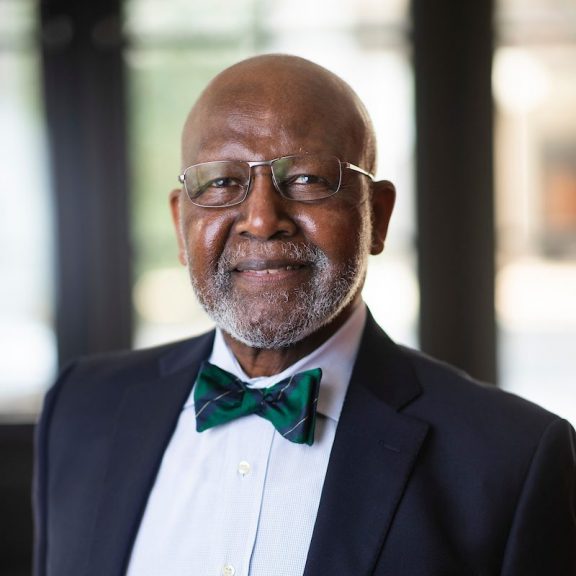
Wesley L. Harris is the Charles Stark Draper Professor of Aeronautics and Astronautics at the Massachusetts Institute of Technology (MIT), with a distinguished career spanning over five decades. He has served as Head of the Department of Aeronautics and Astronautics (2003-2008), Associate Provost for Faculty Equity (2008-2013), and Founding Director of the MIT Hypersonics Research Team (2015–present). His academic journey includes roles at the University of Tennessee, University of Connecticut, and NASA. B.A.E. (with Honors), 1964, University of Virginia M.A., 1966, Princeton University Ph.D., 1968, Princeton University Research Interests span fluid dynamics, unsteady aerodynamics, aeroacoustics, rotorcraft technology, defense systems acquisition, lean financial management, capital asset sustainment, and sickle cell pathology. He founded the Hypersonics Research Lab at MIT. Society Memberships : Fellow of the African Scientific Institute, American Association for the Advancement of Science, American Helicopter Society, and National Academy of Engineering, among others. Contact : Office Phone 617.253.0911 | Email: weslhar@mit.edu | Office: 33-217, MIT.
Jonathan Poggie is a Professor in the School of Aeronautics and Astronautics at Purdue University's College of Engineering, where he has been a faculty member since 2015. He previously spent over two decades at the Air Force Research Laboratory. His research group conducts high-fidelity simulations in hypersonic aerodynamics, turbulence, and plasma-based flow control, supported by major grants from DoD, DoE, AFOSR, and ONR. Ph.D., Mechanical and Aerospace Engineering, Princeton University, 1995 M.S.E., Mechanical and Aerospace Engineering, Princeton University, 1991 B.S., Mechanical Engineering, University of Rhode Island, 1988 Prof. Poggie's research focuses on high-speed fluid dynamics , particularly hypersonic flows , compressible turbulence , laminar-turbulent transition , and shock-wave/boundary-layer interactions . His group also investigates plasma-based flow control using electrical discharges. His work combines computational, experimental, and theoretical approaches to address challenges in aerospace vehicle design, especially for defense and space applications. The articles reflect a strong focus on computational fluid dynamics of high-speed flows, with particular emphasis on shock unsteadiness , boundary layer transition , and plasma actuation . The research spans from fundamental fluid mechanics to applied aerospace engineering, with increasing recent interest in military conflict modeling using fluid dynamics analogies. C. T. Sun Excellence in Research Award, 2023 University Faculty Scholar, 2023-2028 Outstanding Graduate Faculty Mentor Award, 2021 Elmer F. Bruhn Teaching Award, 2019 W. A. Gustafson Teaching Award, 2018 ASME Fellow, 2007 AIAA Associate Fellow, 2004 Prof. Poggie has advised 6 PhD students and 18 MS students at Purdue as of 2025. His research has been supported by multiple large-scale grants, including three DoD Frontier Projects and a DoE INCITE Award , providing supercomputing resources for high-fidelity simulations. He collaborates with researchers at The Ohio State University, Notre Dame, and various national laboratories. His group has developed novel approaches to operational mapping for military conflict analysis, creating continuous flow models of battlefield dynamics. The team has also secured two patents in hypersonic technology, one for inlet design and another for a hypersonic test facility. His research group investigates geometric imperfections in hypersonic vehicles (steps, gaps, roughness), laminar-turbulent transition prediction, and separation unsteadiness in shock-wave interactions. They use advanced computational methods like DDES and DNS, supported by massive computing allocations. The group has produced significant work on sidewall confinement effects , wall roughness , and gap flows in hypersonic configurations.
Lt Col Darrell S. Crowe, PhD, is an Assistant Professor of Aerospace Engineering in the Department of Aeronautics and Astronautics at the Air Force Institute of Technology (AFIT), part of the Graduate School of Engineering and Management at Air University. He is an active military officer and educator contributing to advanced aerospace research and graduate education within the U.S. Air Force. Education: PhD in Aeronautical Engineering, Air Force Institute of Technology, 2014 MS in Aeronautical Engineering, Air Force Institute of Technology, 2008 BS in Aerospace Engineering, Texas A&M University, 2003 Dr. Crowe's research focuses on propulsion aerodynamics, computational fluid dynamics (CFD), supersonic and hypersonic flows, jet interaction effects, and store separation dynamics. His work involves high-fidelity simulations of exhaust nozzles, thermal distortion modeling, and active flow control, often in collaboration with military and aerospace applications. He investigates complex phenomena such as hot streaks in serpentine nozzles, film cooling, and cavity acoustics, contributing to improved aircraft and propulsion system design. His recent publications demonstrate a strong trend in advancing CFD methodologies for defense-related aerospace problems, particularly in propulsion-airframe integration, weapon bay aerodynamics, and supersonic/hypersonic flow control. The articles span both experimental validation and numerical modeling, emphasizing accuracy, turbulence modeling, and multi-physics coupling in extreme environments. Scientific Awards and Honors: AFIT Dean's Distinguished Teaching Professor, 2023 AIAA Associate Fellow, 2020 Air Force Meritorious Service Medal (2018, 2021) Joint Service Commendation Medal, 2017 Southwestern Ohio Council for Higher Education Faculty Excellence Award, 2015 Field Grade Officer of the Quarter, Air University, 2015 Air Force Commendation Medal, 2011 Company Grade Officer of the Quarter (2005, 2009) Air Force Achievement Medal, 2006 Dr. Crowe advises MS thesis students in aerospace engineering and teaches graduate-level courses in his domain. He has been involved in flight testing and simulation projects, often funded through U.S. Air Force research programs. His work supports critical defense capabilities in aircraft performance, propulsion efficiency, and weapon system integration. He is actively involved in professional organizations such as the American Institute of Aeronautics and Astronautics (AIAA) and contributes to major conferences and workshops, including the Propulsion Aerodynamics Workshops. His research is conducted within AFIT’s advanced simulation and modeling environment, leveraging tools like Kestrel and BCFD for high-fidelity analysis.
Owen Williams is a Research Associate Professor in the William E. Boeing Department of Aeronautics and Astronautics at the University of Washington, with a focus on turbulent and hypersonic flows. He holds a PhD from Princeton University and an MEng from Imperial College, London. His research explores unsteady turbulent flows, hypersonic boundary layers, and renewable energy systems like rotating foils for hydrokinetic power generation. Dr. Williams has held prior positions, including Research Associate at the University of Maryland. His work addresses challenges in compressible turbulence, shock interactions, and flow separation dynamics. He leads the Williams Lab, which investigates turbulence modeling, flow control, and aerospace applications. Recent student achievements include Kevin Manohar's Herbold Fellowship and Abigale Snortland's graduation to PNNL. Research Interests: Fluid mechanics, turbulence dynamics, hypersonic flow physics, stratified atmospheric flows, and renewable energy systems. His lab focuses on improving predictive models for vehicular and environmental flows through experimental and computational methods. Recent Contributions: Studies on asymmetric flow phenomena, cross-flow turbine performance optimization, and supersonic retropropulsion. His work bridges fundamental turbulence studies with practical applications in aerospace and energy sectors. Lab Activities: Active in mentoring students and overseeing projects like the Pacific Marine Energy Center. Lab members have presented at SHARC Week and Space Grant's SURP program, showcasing innovations in hypersonic testing and turbine design.
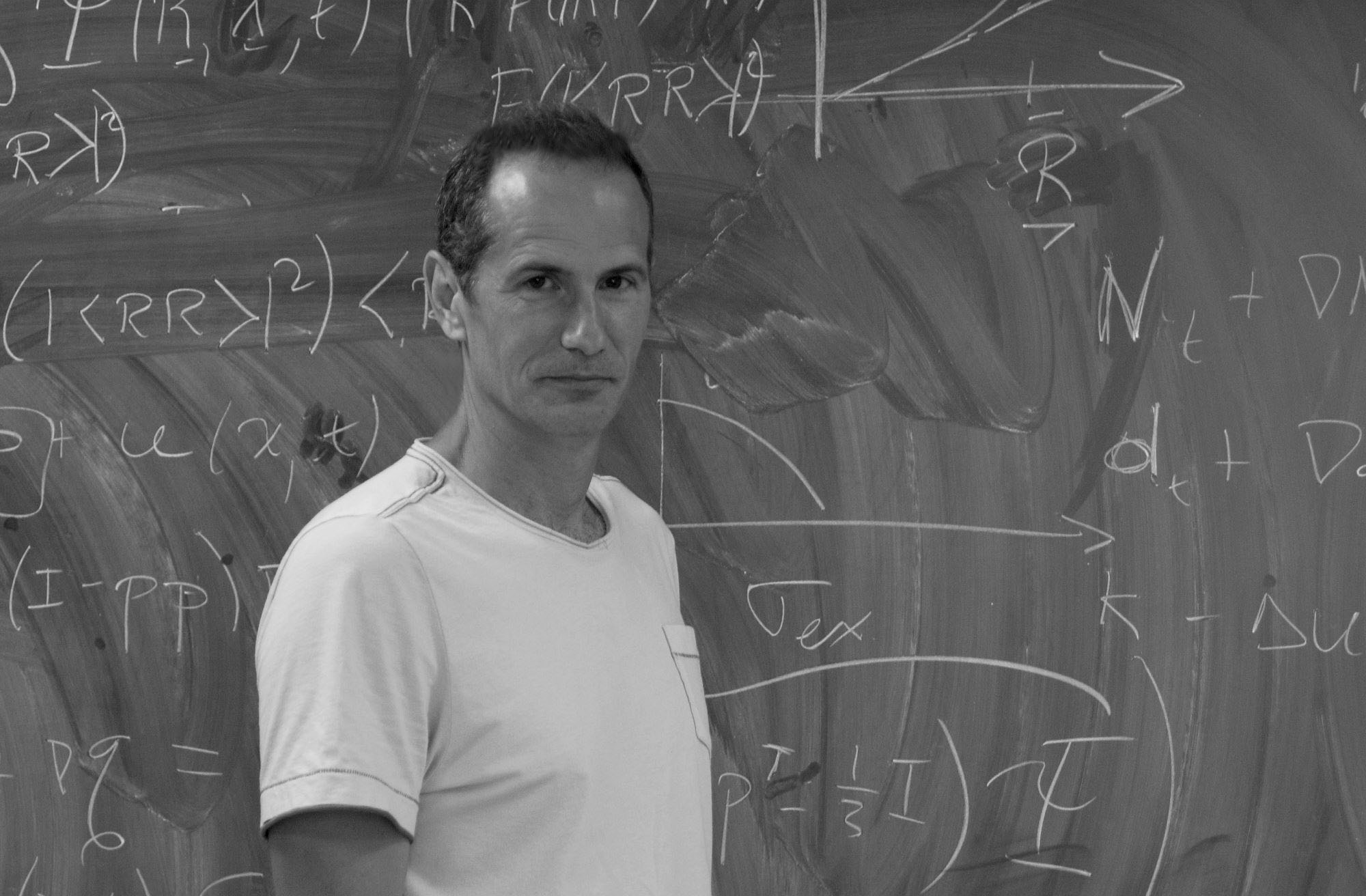
Michael Shelley is the Lilian and George Lyttle Professor of Applied Mathematics at New York University's Courant Institute of Mathematical Sciences. He holds additional roles as Professor of Mathematics, Neural Science, and Mechanical Engineering. His research focuses on fluid dynamics, active matter, and biophysical systems, with notable contributions to microswimmer dynamics, cytoplasmic flows, and fluid-structure interactions. Shelley leads the Applied Mathematics Laboratory at Courant and directs the Center for Computational Biology at the Flatiron Institute. His work bridges theoretical, computational, and experimental approaches to understand complex biological and physical phenomena. Research interests include nonlinear dynamics of fluids, collective behavior in active matter systems, and biomechanical processes such as mitosis and cellular transport. Recent studies involve modeling microtubule networks, cytoplasmic stirring, and spindle positioning in cells. His publications span topics like fluid-structure interactions, viscoelastic flows, and the mechanics of swimming organisms. Key projects include the dynamics of erodible bodies in fluid flows, optimization of microswimmer designs, and the rheology of active suspensions. Shelley collaborates across disciplines, integrating applied mathematics with biology, physics, and engineering. His work has advanced understanding of self-organization in living systems and fluid-driven morphological changes.
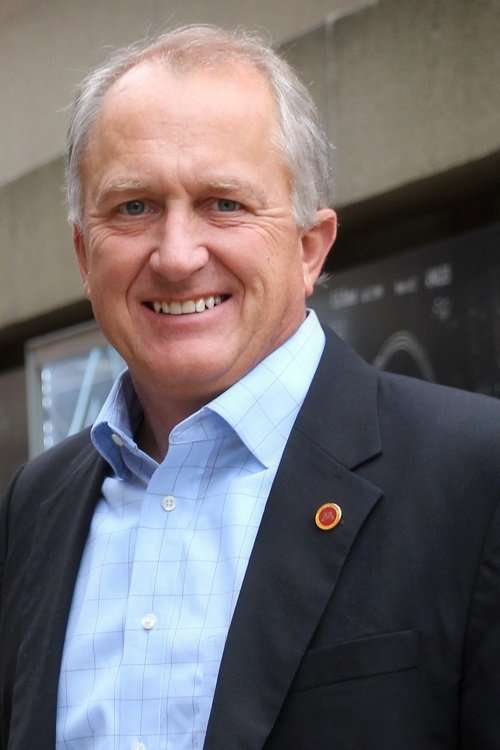
Paul Strykowski serves as the George W. Taylor Distinguished Professor in the Department of Mechanical Engineering at the University of Minnesota, where his research centers on fundamental fluid dynamics phenomena with applications in propulsion and combustion systems. His core research domains include: Fluid Dynamics and Turbulent Flow Mechanisms Active Flow Control and Stability Theory Combustion Dynamics and Propulsion Systems Specializing in spatio-temporal stability analysis, multi-phase turbulent flows, and the effects of compressibility/density on flow control, his work bridges theoretical modeling with experimental validation in complex fluid environments. Analysis of his publication history (2005-2016) reveals consistent focus on jet flow instabilities, shear layer control, and combustion optimization. Key methodological themes include counterflow techniques for thrust vectoring, microjet-based active control in combustors, and stability analysis of low-density jets—demonstrating interdisciplinary integration of fluid mechanics, thermodynamics, and control theory. Dr. Strykowski's contributions advance critical technologies in gas turbine propulsion, where his investigations into flame anchoring, vortex suppression, and heat release control directly address industry challenges in combustion efficiency and emissions reduction.
Virginia Polytechnic Institute and State UniversityUnited States
Mark Stremler is a Professor in the Department of Mechanical Engineering at Virginia Tech's College of Engineering, serving as the Engineering Mechanics Graduate Chair. His research focuses on fluid mechanics, with emphases on vortex dynamics, fluid-structure interaction, and biological fluid mechanics. He holds the Otto Moensted Visiting Professorship and has been recognized with awards including the Liviu Librescu Faculty Prize and Army Research Office Young Investigator award. His academic leadership roles include directing the Multi-Scale Transport in Environmental and Physiological Systems (MultiSTEPS) IGERT Program (2010-2017), serving as Graduate Chair of Engineering Mechanics (2019-present), and directing undergraduate studies in Engineering Science and Mechanics. He earned his Ph.D. from the University of Illinois at Urbana-Champaign and dual B.S. degrees in Mechanical Engineering and Mathematics from Rose-Hulman Institute of Technology. Research interests include reduced-order modeling of fluid flows, coherent vortical structures, and applications in biological systems such as mosquito drinking mechanics and coronary hemodynamics. His work bridges theoretical, computational, and experimental approaches to fluid dynamics challenges.
Tyler Van Buren is an Assistant Professor in the Department of Mechanical Engineering at the University of Delaware, part of the College of Engineering. He holds a Ph.D., M.S., and B.S. in Aerospace and Mechanical Engineering from Rensselaer Polytechnic Institute (2008–2013). Previously, he served as a Research Scientist at Princeton University (2014–2019), focusing on bio-inspired propulsion, turbulence, and flow control. His research emphasizes unsteady flows and coherent structures, with a focus on fluid-structure interaction, bioinspired systems, and practical applications in energy efficiency and robotics. Key areas include vortex dynamics, synthetic jet actuation, and turbulent boundary layer control. Recent work explores optimal parameters for oscillating fins, vortex generator emulation, and eddy self-similarity in pipe flows. His studies bridge fundamental fluid mechanics with real-world impacts, such as improving vehicle design and energy-saving technologies. Lab activities concentrate on experimental methods for analyzing unsteady flows, including flapping propulsion systems and turbulence-induced phenomena. Collaborative projects address challenges in wind energy harvesting and biomedical fluid dynamics.
Fred Schauer is an Associate Professor in the Department of Aeronautics and Astronautics at the Air Force Institute of Technology (AFIT), part of Air University at Wright-Patterson Air Force Base, Ohio. He is a leading researcher in propulsion systems, particularly in the development and analysis of detonation-based engines such as pulsed and rotating detonation engines. His work integrates experimental testing, thermodynamic modeling, and advanced diagnostics to advance aerospace propulsion technologies. His educational background includes: BS in Mechanical Engineering, University of Dayton, 1993 Ph.D. in Mechanical Engineering, University of Illinois at Urbana-Champaign, 1998 Air War College, 2008 Dr. Schauer's research focuses on energy, propulsion, and power, with special emphasis on novel thermodynamic cycles, detonation dynamics, laser diagnostics, and flame-turbulence interactions. His work has significantly contributed to understanding and optimizing rotating and pulsed detonation engines, including performance scaling, nozzle integration, and fuel injection strategies. He has explored both conventional and bio-derived fuels to enhance efficiency and sustainability in small-scale propulsion systems. The 15 most recent publications reflect a strong trend toward experimental validation of rotating detonation engines, thermodynamic modeling, and performance optimization. These works span high-speed propulsion, combustion stability, and integration with turbines and ejectors. Keywords across these articles include aerospace engineering, propulsion, combustion, and mechanical systems, with subfields such as rotating detonation, pulsed detonation, nozzle dynamics, fuel efficiency, and thermodynamic modeling. His scientific achievements have been widely recognized: AFRL Commander’s Cup and Innovation Award Two-time winner of the AFRL Science & Technology Achievement Award ASME Airbreathing Propulsion Award Finalist for the Collier Trophy Finalist for Aviation Laureate AFRL Fellow Air Force Scientist of the Year AIAA Engineer of the Year Dr. Schauer has served as a research advisor for numerous M.S. and Ph.D. students and maintains active collaborations with AFRL, NASA, DOE, and academic institutions. His research group has published extensively and led major projects, including the AFRL in-house detonation propulsion research program from 1997 to 2019. He previously led the Propulsion and Power Advanced Concepts Group, which operated the Detonation Engine Research Facility and the Small Engine Research Laboratory, driving innovation in next-generation propulsion systems. His research labs and teams include the Detonation Engine Research Facility and the Small Engine Research Laboratory, where experimental and computational studies on advanced propulsion concepts are conducted. These facilities support high-pressure, high-speed combustion research and enable the development of practical applications for military and aerospace platforms.
Lakshya Bhatnagar is a Research Scientist at Zucrow Labs, part of the School of Mechanical Engineering at Purdue University. He is based in West Lafayette, Indiana, and can be contacted at lbhatnag@purdue.edu . His primary research focuses on aerothermal engineering, turbine technology, and advanced measurement systems for high-pressure and high-temperature applications. His work emphasizes experimental assessments of turbine performance, including unsteady pressure analysis, heat flux measurement, and probabilistic approaches to uncertainty quantification. He has developed innovative sensors such as atomic layer thermopiles and conduction-free temperature probes, advancing the field of aerodynamic testing under engine-representative conditions. Key contributions include the Purdue High-Speed Small Core Turbine Facility (STARR) and advancements in particle image velocimetry for turbine stages. His publications (2018–2025) highlight expertise in turbine efficiency measurement, stator performance, and infrared thermography for aerospace applications. Bhatnagar’s research bridges theoretical models with experimental validation, addressing critical challenges in modern turbine design and aerothermal systems. He collaborates with corporate partners and leads Zucrow Labs’ efforts in high-speed, high-pressure turbine testing. His work aligns with Purdue’s broader initiatives in aerospace and mechanical engineering innovation.
Lesley Wright is an Associate Professor in the J. Mike Walker ’66 Department of Mechanical Engineering at Texas A&M University, holding the Jana and Quentin A. Baker ‘78 Career Development Chair. She serves as ABET Coordinator and leads research in gas turbine cooling, convective heat transfer, and fluid mechanics experimentation. Her work emphasizes experimental methods and advanced measurement techniques like pressure-sensitive paint (PSP) for film cooling effectiveness analysis. Education: Ph.D., Mechanical Engineering, Texas A&M University (2006) M.S., Mechanical Engineering, Texas A&M University (2003) B.S., Engineering with Mechanical Engineering Concentration, (2001) Research Interests: Wright’s research focuses on optimizing turbine blade cooling through jet impingement, serpentine channel designs, and advanced thermal measurement technologies. She collaborates with the Turbomachinery Laboratory to develop solutions for high-temperature applications in aerospace and energy systems. Publications: Her recent work highlights contributions to film cooling performance, heat transfer enhancement in rotating channels, and the application of machine learning for temperature field reconstruction. Over 50 peer-reviewed articles and two textbooks ( Experimental Methods in Heat Transfer and Fluid Mechanics and Analytical Heat Transfer ) reflect her expertise. Awards: Walker Outstanding Service Award (2023) AIAA Associate Fellow (2023) ASME Fellow (2021) SAE Ralph R. Teetor Educational Award (2015) Lab Affiliations: Wright is affiliated with the Turbomachinery Laboratory, advancing research in turbomachinery cooling, heat transfer, and fluid dynamics. Her team employs state-of-the-art facilities for experimental validation and computational modeling.
Virginia Polytechnic Institute and State UniversityUnited States
Dr. Christopher Roy is a Professor and Assistant Department Head for Graduate Studies in the Aerospace and Ocean Engineering Department at Virginia Tech (since 2013). He holds a Ph.D. from North Carolina State University (1998) and has held roles at Sandia National Laboratories and Auburn University. His research focuses on Computational Fluid Dynamics (CFD) , Verification and Validation , Turbulence Modeling , and Uncertainty Quantification , with notable contributions to CFD validation frameworks and error estimation techniques. He leads the CFD Research Group and co-teaches courses like Computational Fluid Dynamics and Verification and Validation in Scientific Computing . Education : Ph.D., 1998, Aerospace Engineering, North Carolina State University M.S., 1994, Aerospace Engineering, Texas A&M University B.S.E., 1992, Mechanical Engineering and Materials Science, Duke University Research Interests : Dr. Roy’s work emphasizes advancing CFD methodologies for complex flows, including turbulence modeling for hypersonic and high Reynolds number flows, and validation strategies for non-equilibrium boundary layers. He explores computational acceleration techniques (e.g., GPU-CPU hybrid systems) and error transport equations to improve simulation accuracy and efficiency. His team collaborates with NASA and industry on challenges like the VT-NASA CFD Validation Challenge and BlueRidge CFD solver development. Awards : Presidential Early Career Award for Scientists and Engineers (2006) Associate Fellow, AIAA (2006) Faculty Fellow Award, Virginia Tech (2009) Advising and Grants : Dr. Roy oversees graduate studies and has secured grants for research in CFD validation and turbulence modeling. His work bridges academic, industrial, and federal collaborations, including projects with Sandia National Labs and NASA. He actively contributes to AIAA technical committees and organizes CFD validation workshops. Labs and Teams : He leads the CFD Research Group at Virginia Tech, focusing on code development, validation experiments, and computational methodologies. His team develops tools like the SENSEI and BlueRidge solvers and participates in NATO-AVT349 projects for naval applications.
Craig Merrett serves as an Adjunct Professor in the Mechanical & Aerospace Engineering Department at Clarkson University's Coulter School of Engineering & Applied Sciences, with additional affiliation at the Center for Advanced Materials Processing (CAMP). His academic credentials include advanced degrees from the University of Illinois at Urbana-Champaign and foundational education at Carleton University, supporting his active role in aerospace engineering education and research. His educational background comprises: Ph.D. in Engineering from University of Illinois at Urbana-Champaign (2011) M.S. in Engineering from University of Illinois at Urbana-Champaign (2008) Bachelor's degree from Carleton University (2006) Dr. Merrett's research centers on aero-servo-viscoelasticity , specifically investigating time-dependent structural instabilities in viscoelastic materials under extreme conditions. His portfolio spans aircraft flutter analysis, composite fracture mechanics, elevated-temperature material behavior for aerospace/nuclear applications, and unsteady aerodynamics for panel flutter and wind farm systems. This work bridges theoretical structural dynamics with practical engineering solutions for critical time-to-failure scenarios. Analysis of his 2014-2016 publications reveals consistent focus on viscoelastic composite structures, with significant contributions to flutter prediction models, nuclear component stability, and flight data system innovation. His research integrates computational modeling with experimental validation to address real-world challenges in material degradation and structural performance. Key recognitions include: GARDN II Turboprop Flight Advisory System projects (2016-2017) Partners in Research Virtual Researcher Award (2014) Carleton Student Engineering Society "Best Professor" Award (2014) Dr. Merrett teaches core aerospace courses AE350 (Analysis of Aircraft Structures) and AE458 (Design of Aircraft Structures), while his research is supported through industry-academic collaborations like the GARDN II initiatives. His educational publications demonstrate commitment to innovative pedagogy in engineering design instruction. He conducts experimental and theoretical research through Clarkson's Center for Advanced Materials Processing (CAMP), utilizing specialized facilities for materials testing under extreme thermal and mechanical loads relevant to aerospace and nuclear applications.
David S. Thompson is a Professor in the Department of Aerospace Engineering at Mississippi State University, where he holds the inaugural Airbus Helicopters, Inc. Professorship. He is affiliated with the Bagley College of Engineering and has been a key figure in computational fluid dynamics (CFD) research and education. He previously served in leadership roles at the Center for Advanced Vehicular Systems (CAVS) and the Office of Research and Economic Development. Ph.D., Aerospace Engineering, Iowa State University (1987) M.S., Aerospace Engineering, Mississippi State University (1980) B.S., Aerospace Engineering, Mississippi State University (1979) Dr. Thompson's research focuses on computational fluid dynamics , particularly in aircraft icing , unsteady flows , and vortex-dominated flows . He also works on mesh generation, flow visualization, and high-performance computing applications in both aerospace and biomedical systems. His interdisciplinary work spans engineering mechanics, numerical methods, and biological flow modeling. His recent publications reflect a strong emphasis on turbulent wake analysis , flow visualization techniques , and CFD modeling of complex systems such as iced wings and lung airways. The articles demonstrate expertise in hybrid turbulence modeling, vortex detection, and adaptive mesh refinement, often applied to real-world engineering and biomedical challenges. Faculty of the Year, MSU Department of Aerospace Engineering (2015) Royal Academy of Engineering Distinguished Visiting Fellow (2014–15) Inaugural Airbus Helicopters, Inc. Professorship (2013–present) Bagley College of Engineering Hearin Faculty Excellence Award (2010) Mississippi State University StatePride Award (2010, 2011) Bagley College of Engineering Academy of Distinguished Teachers (2010) NASA Group Achievement Award for LEWICE development (2009) NASA TGIR Award for aircraft icing research (2001) Dr. Thompson has secured research funding from major agencies including the National Science Foundation , NASA , Air Force Office of Scientific Research , Army Research Office , Department of Homeland Security , and aircraft industry partners such as Airbus. He has advised numerous students and collaborators across disciplines, contributing to projects in aerospace, energy, and biomedical engineering. His work integrates simulation, visualization, and high-performance computing to solve complex fluid dynamics problems. He is associated with research facilities such as the Autonomous System Research Laboratory (ASRL) and the Center for Advanced Vehicular Systems (CAVS) , where he led the Computational Fluid Dynamics group. His collaborations extend to international institutions, including Cardiff University during his Royal Academy fellowship.
Matthew Woodward is an Assistant Professor in the Department of Mechanical Engineering at Tufts University's School of Engineering, where he has been employed since 2019 after completing post-doctoral research at the Max Planck Institute for Intelligent Systems. Education: Doctor of Philosophy, Carnegie Mellon University, 2017 Master of Science, Carnegie Mellon University, 2010 Bachelor of Science, San Diego State University, 2008 Research Interests: Dr. Woodward's work focuses on enhancing robot mobility through biological inspiration, specifically investigating how animals integrate multiple locomotion modes (e.g., walking, jumping, flying) to navigate complex environments. His research explores morphological intelligence—using physical body structures for passive environmental interaction—and advanced actuation systems. Current projects include bio-inspired designs such as adapting desert locust feet for terrestrial robots, studying unsteady aerodynamics in flying animals, and analyzing swarm communication for complex structure formation. This interdisciplinary work bridges robotics, biomechanics, and evolutionary biology to develop more agile robotic systems. Advising and Grants: While specific current students and active grants are not detailed in the available text, Dr. Woodward has prior teaching experience as a part-time professor at Robert Morris University during his graduate studies at Carnegie Mellon. Laboratory: He directs the Robot Locomotion & Biomechanics Laboratory at Tufts University, which serves as the primary hub for his research on bio-inspired mobility solutions.