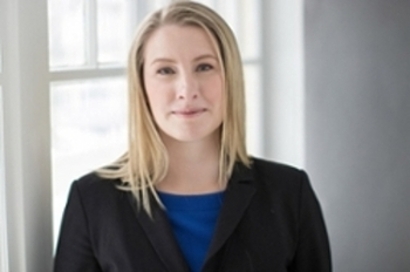
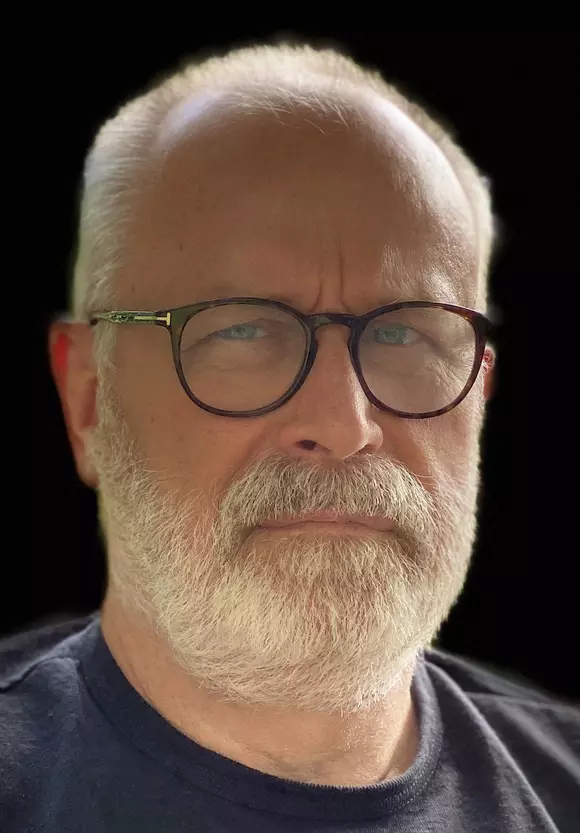
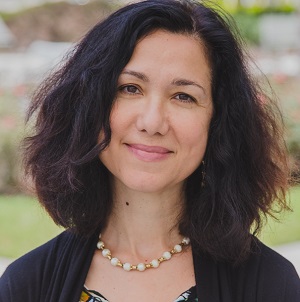
Prof. Dr. Olena Palko is a historian specializing in Eastern Europe, the Soviet Union, and Ukraine. She holds the SNSF Professorship at the University of Basel's Department of History, focusing on East European History. Her research emphasizes Soviet minority policies, cultural politics, and national identity formation in interwar Ukraine. She is a leading scholar with notable works including Making Ukraine Soviet (2021), awarded the 2023 Alexander Nove Prize. Her current SNF-funded project, Red Tower of Babel , examines Soviet minority experiments in Ukraine. Education: PhD from University of East Anglia (2017); Kandydat nauk from National Academy of Sciences of Ukraine (2013). Research Interests: Soviet nationality policy, minority history, Ukrainian twentieth-century history, transnational border dynamics. Her work bridges archival analysis with transnational perspectives, addressing contested borderlands between Poland and the USSR. Key publications include co-edited volumes like Making Ukraine (2022) and Ukraine's Many Faces (2023). She actively contributes to academic governance roles, including co-convening the BASEES Study Group for Minority History and serving on the Scientific Advisory Council of the Council of Europe's history observatory.
Max Cavitch is an Associate Professor of English at the University of Pennsylvania's School of Arts & Sciences, specializing in American literature, psychoanalytic studies, and cinema. He joined Penn in 1999 after earning his B.A. from Yale and Ph.D. from Rutgers. His research spans 19th- and 20th-century literature, African American studies, and interdisciplinary fields like animal studies and gender theory. Cavitch has authored influential works such as *American Elegy* (2007) and co-edited volumes on Whitman and early American studies. He directs Penn's Psychoanalytic Studies program and edits the blog *Psyche on Campus*, honored with the 2022 American Psychoanalytic Association's Excellence in Journalism Award. His teaching includes courses on psychoanalysis, autobiography, and American poetry. Cavitch has held fellowships from the Fulbright Foundation, Newcombe Foundation, and others. His recent projects explore world autobiography, psychoanalysis in academia, and the history of 'ashes' as a conceptual and material symbol. Award-winning scholar and educator, Cavitch's work bridges literary criticism with clinical theory, media studies, and transnational frameworks. He advises doctoral students in American literature and affiliated programs, maintaining active collaborations with institutions like the McNeil Center for Early American Studies and the Psychoanalytic Center of Philadelphia.
Zaur Gasimov is a Lecturer at Johannes Gutenberg University Mainz and currently serves as DAAD Departmental Coordinator and Co-Head at the Faculty of Economics and Administrative Sciences, Turkish-German University. He holds a habilitation in Modern History and Eastern European History, with a focus on Eastern European History, political science, and sociology. Education : B.A. in International Relations from Baku State University; M.A. from Catholic University of Eichstätt-Ingolstadt; Doctorate in Eastern European history Research : Concentrates on Russian-Turkish relations, nationalism in Eastern Europe, cultural transfer processes, and historical narratives. His habilitation thesis analyzed Polish-Turkish anti-Soviet alliances. Publications : Authored monographs on Prometheism, Azerbaijani historiography, and Russification policies. Collaborated on comparative studies of cultural transfer and Ottoman-Russian entanglements.
Francis King is a Lecturer in European History at the University of East Anglia, affiliated with the School of History and Art History. He serves as Co-Director of the East Centre: UEA Centre for the Study of East Central Europe and the Former Soviet Space. His research focuses on Soviet Studies, Russian Studies, Ukrainian Studies, and Georgian History, with particular attention to political conflict, nationalism, and social democracy in Eastern Europe and the Caucasus region. King has conducted extensive research on post-WWI national independence movements, Soviet-era cultural narratives, and the intersection of socialism and nationalism. His work often examines lesser-known historical figures and ideological tensions in regions such as Georgia and Ukraine. He has published in journals like New Area Studies , European History Quarterly , and Quaestio Rossica , contributing to debates on historiography and the legacy of Cold War dynamics. He has secured funding for two projects with SAGE Publications: an ongoing project (2024–2025) and a concluded project (2021–2023). His research outputs include peer-reviewed articles, book chapters, and editorial contributions analyzing topics ranging from Soviet foreign policy to the historiography of European studies. As part of the East Centre leadership, King collaborates on interdisciplinary projects exploring East Central Europe and post-Soviet spaces. His work bridges academic analysis with public engagement through publications and institutional initiatives focusing on underrepresented historical perspectives.
Rutgers, The State University of New JerseyUnited States
Jochen Hellbeck is a Distinguished Professor of History and Vice Chair for Graduate Education in the Department of History at Rutgers University's School of Arts and Sciences, where he has been teaching since 2003. He holds a Ph.D. from Columbia University and specializes in the history of the Soviet Union, with particular focus on individual life stories and the shaping of the self in modern Europe. Professor Hellbeck's research centers on the place and self-understandings of individuals during cataclysmic 20th century events, including the Russian Revolution, Stalin's terror regime, and World War II. His work examines how narratives of redemptive violence and transformation attached themselves to individuals on the ground, revealing how authors of diaries and personal texts became co-authors of the revolutionary script. More recently, he has explored comparative and transnational aspects of how Soviet, German, and British states mobilized citizens during World War II, highlighting the centrality of the Soviet war effort to the broader history of the conflict. His acclaimed book Stalingrad: The City that Defeated the Third Reich (2015) was the first Western study to probe the meaning of the Battle of Stalingrad for Soviet soldiers and civilians. The book draws on dozens of oral histories recorded by Moscow historians during and after the battle. Hellbeck's research consistently focuses on personal narratives and eyewitness accounts to provide grounded perspectives on major historical events. Morphomata Fellowship, Cologne (2019) Guggenheim Fellowship (2017) Short list, non-fiction prize of the Moscow Book Fair (2017) Davis Center Fellowship, Princeton (2016) Damals prize for best historical monograph (2013) American Academy in Berlin Fellowship (2009) Rutgers Board of Trustees Fellowship for Scholarly Excellence (2007) Michigan Society of Fellows (1997-1999) As a member of the Rutgers graduate faculty, Professor Hellbeck works with students interested in modern Russia and the Soviet Union, and in transnational explorations of Communism, World War II, and the Cold War. He encourages prospective graduate students to contact him before application deadlines. His website, Facing Stalingrad , features portraits and voices of veterans he interviewed during his research.
Wendy Salmond is a Professor of Art at Chapman University, holding the Martha Weidlein Masters Professorship in Art within the Wilkinson College of Arts, Humanities, and Social Sciences. She specializes in Russian and Soviet art, design, icons, architecture, the Romanov Family, and Russian Revolutionary Culture. Dr. Salmond received her academic training with a BA (Hons I) in Russian Language and Literature from the University of Otago in New Zealand (1978), followed by an MA in Slavic Languages and Literatures (1983) and a PhD in Art History (1989), both from the University of Texas at Austin. Professor Salmond is a renowned scholar of Russian and early Soviet art, architecture, and design, with particular expertise in exploring the intersection of diverse cultural traditions in Russia and the formation of national identity. Her research spans the Arts and Crafts movement, Art Nouveau, and Russian modernism, with a current focus on transformations in the perception and function of icons in Russia, from objects of devotion to works of art. She has made significant contributions to the study of Russian icons through extensive writing, lecturing, and curatorial work, including serving as a visiting curator at Hillwood Museum and Gardens and guest curator for exhibitions at Hillwood and The New York Public Library. Analysis of Professor Salmond's recent publications reveals a consistent focus on Russian religious and secular art, particularly icons and their evolving cultural significance. Her work spans historical periods from Imperial Russia through the Soviet era, with particular attention to the intersection of religious tradition and modern artistic movements. The 2020 publication 'Eternity in Low Earth Orbit: Icons on the International Space Station' demonstrates her innovative approach, examining how Russian Orthodox icons have been incorporated into the International Space Station as sacred objects, connecting terrestrial religious traditions with space exploration. Among her notable honors, Professor Salmond holds the Martha Weidlein Masters Professorship in Art at Chapman University. She has also been recognized through invitations to curate major exhibitions and edit significant scholarly volumes on Russian art. Professor Salmond teaches courses on European modernism, graphic design history, gender and Western art, art history methods, and Russian art, design, and visual culture of the Imperial and early Soviet era. Her teaching emphasizes close visual analysis, sustained discussion, and the development of research skills. As a prolific translator of texts on Russian art and culture, she has edited volumes on Sergei Konenkov, the Bolshevik sales of Russian art in the 1920s and 1930s, and the reception of Art Nouveau in Russia. Her scholarly work extends beyond traditional academic boundaries through her active engagement with museum curation and public scholarship, creating bridges between academic research and public understanding of Russian art and culture.
Phillips Payson O'Brien is a Professor of Strategic Studies and serves as the Head of the School of International Relations at the University of St Andrews . His academic work focuses on international relations, strategic studies, and military history. He has held editorial roles, including serving on the board of War in History (2014–2020). Research interests include modern conflicts like the Russia-Ukraine war, leadership analysis of historical figures such as Churchill and Stalin, and strategic decision-making during major wars. He has authored influential books such as The Strategists (2024) and contributed to policy-relevant studies. He has been involved in projects like the Carnegie Research Workshop Grant (2022–2024) and initiatives linking Scottish academia to EU think tanks. His work has impacted Ukrainian defense strategies, with findings cited in public policy contexts. He has served as an external examiner for undergraduate programs and participated in activities like the US Election Forum (2016) and consultancy for the Liberation Route Europe project.
Stefan Rohdewald is a Professor of East and Southeast European History at the University of Leipzig since 2020. His research focuses on the historical entanglements between Eastern Europe and the Middle East, emphasizing transconfessionalism, urban history, and memory discourses. Education: Studied and completed his doctorate at the University of Zurich (2004), habilitation at Passau (2005–2012). Affiliations: Past professor at Giessen (2013–2020), research associate in Passau (2003–2012), and Max Planck scholarship for doctoral research. Research interests span Transottoman studies, examining mobility dynamics between Eastern Europe, the Ottoman Empire, and Persia. He leads the DFG priority program Transottomanica (2017–2023) and contributes to decolonial and transimperial frameworks in Ukrainian history. Recent publications include analyses of geopolitical imaginaries, edited handbooks on the Black Sea region, and studies on Ottoman-Europe knowledge exchange. His work critiques national historiographies and explores multiculturality in Habsburg Bosnia-Herzegovina.
Edyta Bojanowska serves as Professor of Slavic Languages and Literatures at Yale University with an affiliated appointment in the Department of History. Her academic career bridges literary scholarship and historical analysis, focusing on imperial and postcolonial frameworks within Russian and Central European contexts. Bojanowska earned her Ph.D. in Slavic Languages and Literature from Harvard University and completed her undergraduate studies at Barnard College with a dual major in English and Russian. Her educational trajectory established the foundation for her interdisciplinary approach to Slavic studies. Her research program critically examines 19th-century Russian literature through the lenses of empire, nationalism, and globalization. Key interests include settler colonial dynamics, spatial theory, travel writing, and the interplay between ideology and literary form. She has pioneered methodologies connecting Russian cultural production to global imperial histories, particularly through her award-winning work on Goncharov's The Frigate Pallada and Gogol's Ukrainian-Russian identity negotiations. Bojanowska's publication record reveals consistent engagement with colonial paradigms in Russian literature, evolving from early studies of Gogol and Pushkin toward broader imperial frameworks. Her recent scholarship demonstrates increasing focus on racial discourse, indigenous land rights, and the spatial dimensions of empire, culminating in the Ab Imperio Award-winning analysis of Tolstoy's Bashkir estate. The thematic continuity across her work establishes her as a leading voice in post-Soviet imperial historiography. National Humanities Center Fellowship (Spring 2025) Ab Imperio Award for Best Study in New Imperial History (2022) Guggenheim Fellowship (2020-2021) AATSEEL Best Book in Literary Scholarship (2019) MLA Scaglione Prize for Best Book in Slavic Studies (2007-2008) Bojanowska actively shapes her field through editorial leadership on Ab Imperio and the PMLA Advisory Committee. Her teaching portfolio reflects her research expertise, featuring undergraduate seminars on War and Peace and Russian short fiction alongside graduate courses on spatial theory and imperial culture. Current leave status for Spring and Fall 2025 accommodates her National Humanities Center residency while maintaining her position as a central figure in Slavic literary studies.
His Excellency Bishop Andrzej Borkowski (born 1974) is a Polish Orthodox hierarch, theologian, and historian. He serves as Bishop of Supraśl and Vicar of the Białystok-Gdańsk Diocese since 2017. Since 2012, he has been an Assistant Professor at the Department of Orthodox Theology, University of Białystok, where he teaches courses on Byzantine civilization, monasticism, and liturgical history. Education: Habilitacja (2017), University of Białystok PhD in Theological Sciences (2009), University of Athens Master of Theology (2005, University of Athens; 2001, Christian Theological Academy in Warsaw) Greek language studies (2001-2002), University of Athens Research Interests: Specializes in the history of Eastern patriarchates in post-Byzantine Poland-Lithuania, Orthodox autocephaly movements (1919-1927), Union of Brest controversies, monasticism, canon law, and Byzantine-Balkan cultural influences in Poland. His work examines liturgical reforms, interfaith dialogues, and diplomatic exchanges between Orthodox churches and European powers. Academic Contributions: Authored three monographs and over 40 articles on Orthodox Church-state relations, including Patriarchaty Wschodu w dziejach Rzeczypospolitej (2014) and Między Konstantynopolem a Moskwą (2015). His research spans 16th-20th century Orthodox history in Poland, Ukraine, and the Balkans. Scientific Awards: Rektor's Award (2013), University of Białystok Leadership Roles: Promotes Orthodox theological education through international conferences, expert teams for heritage restoration, and supervision of theological licentiate theses. Currently chairs expert commissions for monastery renovations and participates in Pan-Orthodox Council initiatives.
London School of Economics and Political Science (LSE)United Kingdom
Carl Müller-Crepon is an Assistant Professor at the Department of Government, London School of Economics and Political Science (LSE) . His research focuses on state-building, political ethnicity, conflict, and geographic analysis, particularly in Africa and Europe. He previously held roles at the University of Oxford and ETH Zurich, and has affiliations with Harvard University. His work combines computational methods with geospatial data to study historical and modern dynamics of ethnicity, state capacity, and political violence. Education: PhD in Political Science, ETH Zurich (2019) MA in Political Science, ETH Zurich (2015) BA in International Affairs and Economics, University of St. Gallen (2013) Research Interests: His work explores how administrative borders shape ethnic identities, the impact of colonial policies on development, and the role of nationalism in territorial disputes. He innovates in geospatial data analysis and machine learning, publishing in top journals like the American Political Science Review and International Organization . Key Contributions: Developed the SIDE dataset for fine-grained ethnic demography analysis. Studied the reciprocal relationship between ethnic geographies and political borders since the 19th century. Explored state capacity in Africa using travel time metrics and road networks. Grants & Labs: Leading projects on colonial administrative design and ethnic persistence. Collaborations with institutions like ETH Zurich’s International Conflict Research Group.
Ainsley Morse is an Associate Professor in the Department of Literature at the University of California, San Diego. Their research focuses on 20th- and 21st-century literature from the former USSR, Yugoslavia, and related regions, with a specialization in experimental forms, Soviet children's literature, and literary translation. They co-edit Cicada Press, a publisher of translated poetry. Research interests include avant-garde movements, censorship's impact on creativity, and feminist poetry. Their work bridges literary history and translation studies, often addressing cross-cultural exchanges and political contexts. Publications highlight innovative projects like Word Play (2021) and translations earning major awards. Ongoing projects include volumes on Ukrainian modernist theory, Konstantin Vaginov's novels, and new Russian feminist poetry. 2021 AATSEEL Best Scholarly Translation Award for Permanent Evolution Grants and advising details are not specified here, but their editorial work with Cicada Press underscores commitment to amplifying underrepresented voices in world literature.
Aileen Friesen is an Associate Professor in the Department of History at the University of Winnipeg, affiliated with the Faculty of Arts. She also serves as Executive Director of the Plett Foundation, focusing on interdisciplinary historical research and community engagement. Her work bridges academic and public history through initiatives like heritage cruises and educational outreach. Education Background : While specific degrees are not detailed in the text, her academic roles and publications suggest advanced training in History, likely with a PhD in Russian or Mennonite Studies. She is associated with the Centre for Transnational Mennonite Studies and the H. Sanford Riley Centre for Canadian History. Research Interests : Mennonite History : Focuses on migration, religious dissent, and colonial experiences in Siberia and Ukraine. Russian/Soviet History : Explores Orthodoxy’s role in colonization, state-religion interactions, and ethnic group policies. Migration Studies : Analyzes displacement patterns, transnational identity formation, and diaspora communities. Her work frequently intersects with environmental history, religious studies, and colonial studies. Publications Trends : Recent scholarship emphasizes Siberian Mennonite communities, Soviet-era religious policies, and transnational ethnic mythologies. She combines archival research with oral histories, as seen in The Russian Mennonite Story (2018) and Colonizing Russia’s Promised Land (2024). Her 2020 analysis of Omsk bishops reveals how spiritual networks shaped colonial dynamics. Awards & Grants : No specific awards listed. However, her publications and roles suggest sustained institutional support for research in Mennonite and Russian studies. Labs/Teams : Active in the Newberry Consortium in American Indian Studies and the State Socialism Workshop. Collaborates with the Oral History Centre and the Centre for Rupert’s Land Studies.
Piotr Wróbel is a Professor of History at the University of Toronto, holding the Konstanty Reynert Chair of Polish Studies. He is affiliated with the Centre for European and Eurasian Studies, Ontario Institute for Studies in Education, and Trinity College. His research focuses on Polish history, Eastern and East-Central Europe, World War I, Jewish history, and the study of violence and genocide. Wróbel has held academic positions at the University of Warsaw, University of Michigan, Michigan State University, and the University of California, Davis. He earned his Ph.D. from the University of Warsaw and has been a visiting scholar at institutions including the Institute of European History in Mainz and Humboldt University in Berlin. Notable contributions include The Origins of Modern Polish Democracy (2010) and studies on anti-Jewish violence in Central Europe. He has authored over 75 articles and co-edited volumes on Polish historiography and war legacies. Wróbel previously directed a clandestine archive documenting Soviet deportations of Poles (1939–1941) and serves on the advisory board of Polin: A Journal of Polish-Jewish Studies . His scholarship bridges Eastern European history with global contexts, emphasizing interdisciplinary approaches to conflict, nationalism, and memory. He has received research fellowships and contributed to collaborative projects on Polish-Jewish relations and the impact of World War I on Eastern Europe.
Golfo Alexopoulos is a Professor and Director of the USF Institute for Russian, European and Eurasian Studies at the University of South Florida's School of Interdisciplinary Global Studies. She holds a Ph.D. from the University of Chicago and an M.A. from Yale University. Her research focuses on Soviet and Russian authoritarianism, Stalinist systems, political violence, and human rights, with a particular emphasis on disinformation and medical exploitation in the Stalinist Gulag. A key work is Illness and Inhumanity in Stalin’s Gulag (2017), examining prisoner dehumanization through archival health records. Teaching spans contemporary Russian politics, comparative authoritarianism, and the Soviet Union. She integrates multimedia and personal experiences, including slides from her time in the USSR during Gorbachev, Yeltsin, and Putin eras. Her advising has supported students entering academia, diplomacy, and international law. Her research also explores Stalin’s disenfranchisement policies and Soviet citizenship through petitions discovered in Siberian archives. Current work links 20th-century Soviet authoritarianism to modern Russian disinformation strategies. She directs the USF Institute for Russian, European and Eurasian Studies, fostering interdisciplinary scholarship on global political systems.