Elizabeth NeswaldView profile
Associate Professor
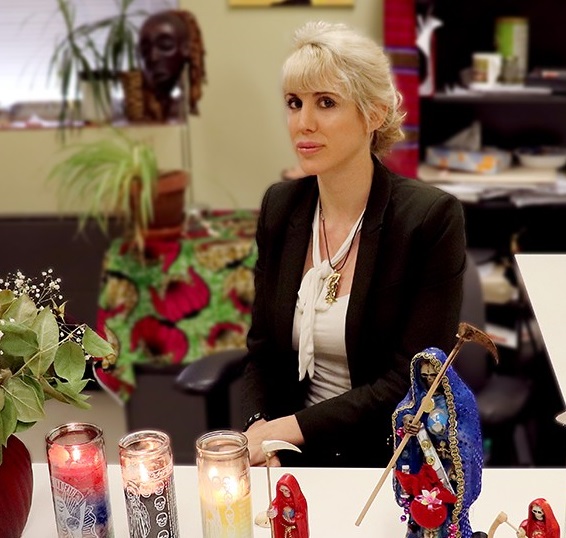
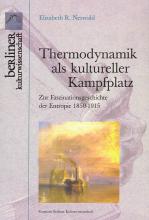
Elizabeth Neswald is an Associate Professor in the Department of History within the Faculty of Humanities at Brock University. Her academic work bridges the history of science and technology, with a focus on thermodynamics, nutrition physiology, and material culture. She teaches courses on science from Ancient Greece to the atomic age, technology since the Industrial Revolution, and specialized topics such as Science, Technology and Gender. Ph.D., Humboldt University, Berlin Postdoctoral Research Fellow, National University of Ireland, Galway Former faculty, University of Aberdeen, Scotland Dr. Neswald's research investigates the historical development of scientific concepts such as entropy and metabolic measurement, particularly in the 19th and early 20th centuries. She explores how scientific ideas intersected with cultural, economic, and gendered contexts, especially in the realms of nutrition, human experimentation, and international scientific collaboration. Her work emphasizes material culture, examining how scientific instruments and practices shape knowledge production. The trends in her publications reveal a deep engagement with the history of measurement, standardization, and the internationalization of science. Her articles span topics from dietary norms and calorimetry to the travels of metabolism researchers and the cultural meanings of entropy. She frequently analyzes how scientific knowledge moves between laboratories and public policy, and how objects in science carry epistemic and affective significance. Her notable editorial contributions include co-editing Setting Nutritional Standards (2017) and The Correspondence of John Tyndall, Vol. 8 (2021). She has authored two influential books: Medien-Theologie. Das Werk Vilém Flussers (1998) and Thermodynamik als kultureller Kampfplatz (2006). While no formal scientific awards are listed, her sustained scholarly output and editorial leadership indicate significant recognition in her field. Dr. Neswald has supervised research and contributed to collaborative projects, including work with the Max Planck Institute for the History of Science. Though specific students are not named, her involvement in editing and mentoring through publications suggests an active role in academic training. She has not received mention of external grants in the provided text, but her research projects imply institutional and possibly external funding support. Her work on international laboratory networks and scientific standardization reflects ongoing scholarly initiatives. She is affiliated with interdisciplinary research communities focused on the history and philosophy of science, contributing to dialogues on scientific instrumentation, human experimentation, and the socio-cultural dimensions of energy and nutrition. Her collaborations with scholars such as David F. Smith, Ulrike Thoms, and Michael Barton highlight her integration into transnational academic networks.