Dr. Crystal Senko is an Assistant Professor and Canada Research Chair in Trapped Ion Quantum Computing at the Institute for Quantum Computing (IQC) , University of Waterloo. Her research focuses on quantum simulations, quantum computing with trapped ions, and qudit-based systems. She holds a Ph.D. in Physics from the University of Maryland (2014) and a B.Sc. in Physics from Duke University (2009). Her research interests span Quantum Computing , Quantum Simulation , Trapped Ion Manipulation , and Photonics . Key projects include optimizing qudit-based quantum computing protocols and developing photonic crystal waveguides for atom-photon interactions. Recent work emphasizes trapped ion efficiency, laser noise mitigation, and programmable quantum simulators. Dr. Senko has authored influential papers on trapped ion systems, including studies on multi-level qudit control, nanophotonic cavity coupling, and non-thermalization in spin chains. Her work bridges theoretical quantum models and experimental advancements in scalable quantum hardware. Awards: Canada Research Chair (Trapped Ion Quantum Computing) Teaching: Courses include Quantum Physics 2 (PHYS 334), Quantum Mechanics 1 (PHYS 701), and Special Topics in Quantum Information Processing (PHYS 768/QIC 890). Labs/Teams: Affiliated with IQC and previously contributed to Harvard’s Center for Ultracold Atoms.
K. Rajibul Islam is an Associate Professor at the University of Waterloo, affiliated with the Institute for Quantum Computing (IQC) and the Department of Physics and Astronomy. He holds a joint appointment with the Perimeter Institute for Theoretical Physics and co-founded Open Quantum Design and Lightflow Optics Inc. His research focuses on quantum information processing, quantum simulation, and trapped ion systems, with applications in quantum computing and entanglement studies. Education: Ph.D. in Physics (2012, University of Maryland), M.Sc. in Physics (2007, Tata Institute of Fundamental Research), B.Sc. in Physics (2005, Jadavpur University). Postdoctoral research at Harvard University (2012–2015) and MIT (2015–2016). Research Interests : Quantum simulation of spin models, quantum computing with trapped ions, entanglement measurement, frustrated spin systems, and quantum materials. His lab, QITI (Quantum Information with Trapped Ions), develops scalable quantum simulators and open-access quantum computers like 'QuantumIon.' Awards : Fellow of the American Physical Society (2024), VAIBHAV Fellowship (2024), Excellence in Teaching Award (2024), Early Researcher Award (2019), and Distinguished PhD Dissertation Award (2012–13). Teaching : Courses include PHYS 701 (Graduate Quantum Physics), PHYS 234 (Quantum Physics I), PHYS 393 (Physical Optics), and PHYS 256 (Geometrical and Physical Optics). He emphasizes outreach via initiatives like Bigyan.org.in , a Bengali-language science platform. Lab and Collaborations : Active in developing trapped-ion quantum hardware, including ion trap designs, optical addressing systems, and holographic control methods. Collaborates on quantum algorithms, machine learning for quantum systems, and experimental quantum thermodynamics.
Dr. Chitra Rangan is a Professor in the Department of Physics at the University of Windsor and serves as the Associate Dean of the Faculty of Graduate Studies. She holds cross-appointments in Chemistry and Biochemistry (2008–2011) and has been a Visiting Associate Professor at the University of Michigan (2006–present). Her research focuses on quantum control, nanoplasmonics, and light-matter interactions, with applications in clinical diagnostics and quantum computing. She leads the BiopSys NSERC Strategic Network and contributes to Mathematics of Information Technology and Complex Systems (MITACS) . Education: Ph.D. in Physics, Louisiana State University (2000) M.Sc., Indian Institute of Technology, Madras (1993) B.Sc., University of Madras (1991) Affiliations: Ontario Physics Education Network (PI) NSERC Evaluation Committee (2018) International Day of Light Steering Committee (2018) Her research interests span quantum control theory, nanoplasmonic biosensors, and optimization in medical physics. She has advised over 40 students, many of whom pursue advanced degrees or careers in academia and industry. Notable grants include NSERC, CFI, and Mitacs funding. Publications highlight advancements in quantum state initialization, nanoplasmonic sensor design, and trapped-ion qubit control. Awards include the CAP Medal for Teaching and UWindsor Research Excellence (Emerging Scholars). Dr. Rangan actively promotes science outreach, organizing events like Science Rendezvous Windsor and delivering public lectures on quantum mechanics and medical physics. She has mentored dozens of students through co-op programs and summer projects, emphasizing hands-on learning and interdisciplinary collaboration.
Professor Hongbin Li is a Professor and Canada Research Chair in the Department of Chemistry at the University of British Columbia. His research program focuses on single molecule biophysical chemistry, biomaterials, and protein engineering. He leads an active research group investigating the mechanical properties and conformational dynamics of elastic proteins using advanced single molecule techniques. Professor Li received his B.Sc in Polymer Engineering from Tianjin University, China in 1993. He earned his Ph.D. in Polymer Chemistry and Physics from Jilin University, China in 1998 under the supervision of Profs. Jiacong Shen, Xi Zhang and Hermann E. Gaub. During his doctoral studies, he was a visiting PhD student at Ludwig-Maximilians-Universität München, Germany (1996-1997) working with Prof. Hermann E. Gaub. Following his Ph.D., he completed a Research Fellowship at Mayo Medical Center, USA (1999-2002) with Prof. Julio M. Fernandez. Professor Li's research program centers on understanding the mechanical properties and conformational dynamics of elastic proteins at the single molecule level. His laboratory combines protein engineering with single molecule atomic force microscopy (AFM) and computational approaches to rationally design and engineer proteins with tailored mechanical properties. Using AFM as their primary tool, his team directly manipulates proteins one molecule at a time to measure mechanical properties and monitor folding/unfolding trajectories in real time. His research spans four main directions: (1) Protein Mechanics and Engineering, where they design proteins with specific mechanical properties; (2) Single Protein Folding/Unfolding Dynamics, investigating folding mechanisms at the single molecule level; (3) Protein-based Biomaterials, designing biomaterials with tailored mechanical properties for biomedical applications; and (4) Polymer physical chemistry using single molecule AFM. His work bridges fundamental protein mechanics with practical applications in biomaterials design. Professor Li has received numerous prestigious awards recognizing his contributions to biophysical chemistry and protein engineering: 2020: AAAS Fellow (the American Association for the Advancement of Science) 2012: Changjiang Guest Chair Professorship (Jilin University, China) 2011: JILA Visiting Fellowship (JILA and University of Colorado, Boulder) 2011: Alexander von Humboldt Fellowship (Technical University of Munich, Germany) 2010: JILA Distinguished Short-term Visiting Fellow 2010: Charles McDowell Award for Research (UBC) 2006: Michael Smith Foundation for Health Research Career Investigator Award 2005: Peter Wall Institute for Advanced Studies Early Career Award (UBC) Professor Li has mentored numerous graduate students and postdoctoral fellows throughout his career at UBC. His research has been supported by multiple grants, including his Canada Research Chair position which he has held continuously since 2004. His work bridges chemistry, physics, and biology, attracting funding from diverse sources including the Natural Sciences and Engineering Research Council of Canada (NSERC), the Michael Smith Foundation for Health Research, and international collaborations. His laboratory maintains strong connections with research groups worldwide, particularly in China and Germany, reflecting his international research profile. Professor Li leads an active research group within the Department of Chemistry at UBC that combines expertise in protein engineering, single molecule biophysics, and biomaterials science. His laboratory is equipped with state-of-the-art atomic force microscopes and optical trapping systems, enabling cutting-edge single molecule studies. The group maintains close collaborations with researchers in the Michael Smith Laboratories and other interdisciplinary centers at UBC, fostering a highly collaborative research environment focused on understanding protein mechanics and developing novel protein-based materials.
Fritz Buchinger is a Faculty Lecturer in the Department of Physics at McGill University. He holds a Ph.D. from Johannes-Gutenberg-Universität Mainz (1981) and specializes in experimental nuclear physics. His research focuses on fundamental nuclear properties, particularly nuclear masses and charge radii, using techniques including laser spectroscopy and Penning trap mass spectrometry. Dr. Buchinger leads experiments at major facilities including the Canadian Penning Trap at Argonne National Laboratory, TITAN Penning Trap at TRIUMF, and Collinear Laser Spectroscopy Experiment at TRIUMF. His work provides critical data on nuclei far from stability, contributing to our understanding of stellar nucleosynthesis processes and refinement of nuclear models. Research interests span nuclear structure physics, experimental techniques development, and applied physics applications. Current investigations include: Precision mass measurements of neutron-rich nuclides Nuclear charge radii determination via laser spectroscopy Development of advanced ion trap instrumentation Applications in nuclear astrophysics and fundamental symmetries Recent publications demonstrate a consistent focus on advancing mass spectrometry techniques (MR-ToF, PI-ICR) and their application to nuclear structure questions, particularly in the rare-earth region relevant to r-process nucleosynthesis. His work shows growing emphasis on precision measurements for fundamental physics tests.
Paul Haljan is an Associate Professor in the Department of Physics at Simon Fraser University (SFU). He leads the Haljan Group, focusing on trapped ion quantum technology and quantum information science. His research involves manipulating quantum states of ions in ultra-high vacuum systems to explore quantum phase transitions and develop quantum computing technologies. He holds a B.Sc. (Honors) from the University of Alberta and a Ph.D. from the University of Colorado Boulder/JILA. Research Interests: Ion and atom trapping, quantum phase transitions, quantum information science, and quantum computing. Current projects include studying the quantum linear-zigzag transition in trapped ions, developing 3D Sisyphus cooling techniques, and exploring macrotrap systems for charged particles. Laboratory: Located in the SFU Burnaby campus (SCK9688), the Haljan Lab employs state-of-the-art ion trap setups and optical/microwave systems. Collaborative opportunities exist with Quantum BC and U.S. institutions. Teaching: In Fall 2025, he teaches PHYS 255 (Vibrations and Waves) and PHYS 810 (Advanced Quantum Mechanics). Group Members: Includes Ph.D. candidate Brendin Chow, M.Sc. students Mohammad Reza Mostaan and Meagan Stewart, and B.Eng. student Kais Rejaibi. The lab actively hires postdoctoral researchers and graduate students.
Peter Grutter is a Professor of Physics and James McGill Chair at McGill University's Department of Physics. His research group is internationally recognized for advancing atomic force microscopy (AFM) and its applications in nanotechnology, quantum electronics, and biomedical engineering. The group focuses on ultrafast time-resolved AFM, quantum dot behavior, electrochemical imaging, and neuronal manipulation. Key collaborations include University College London, University of Singapore, and University of Ottawa. Grutter has pioneered techniques for single-molecule and single-electron spectroscopy, with applications in energy storage, photovoltaics, and neural interfaces. Research interests include nanoscale instrumentation, quantum phenomena in nanostructures, ion transport dynamics, and AFM-based biological studies. The group has developed novel AFM tools for studying synaptic formation, lithium-ion battery materials, and organic semiconductors. Grutter’s work bridges fundamental physics with commercial applications, emphasizing translational research. Awards: Fellow of the Royal Society of Canada (FRSC), Fellow of the Australian Physics Society (FAPS) Labs: Nanoscience & SPM Group at McGill University Students: Over 20 PhD and Master’s students trained, many advancing to academic and industrial careers Recent projects include ultrafast fs-laser integrated AFM, quantum dot single-electron spectroscopy, and neuronal circuit rewiring using mechanical AFM manipulation. The group also operates an AFM user facility for interdisciplinary collaboration.
Rajibul Islam is an Associate Professor at the University of Waterloo, affiliated with the Institute for Quantum Computing (IQC) and the Department of Physics and Astronomy. His research focuses on quantum computing and quantum simulation using trapped ions, with contributions to quantum control, spin systems, and optical engineering. He leads the Quantum Information Technology and Ion Trapping (QITI) group. His work bridges theoretical models with experimental implementations in ion trap systems. Key areas of research include programmable spin simulations, qubit preservation, and quantum error correction. He has developed novel techniques for ion trap fabrication and optical addressing systems to enhance scalability. His experimental setups often involve hybrid optical cavities and advanced laser systems to achieve precise quantum control. Rajibul's recent work emphasizes scalable quantum architectures, leveraging machine learning for system optimization and holographic methods for high-precision control. His contributions span both foundational quantum physics and applied technologies for quantum information processing.
Sushanta K. Mitra is a full Professor in the Department of Mechanical & Mechatronics Engineering at the University of Waterloo, and Executive Director of the Waterloo Institute for Nanotechnology. Previously, he held leadership roles including Associate Vice-President Research at York University, Chair of Mechanical Engineering at Lassonde School of Engineering, and Assistant Vice-President (Research) at the University of Alberta. His expertise spans nanotechnology, fluid dynamics, biosensors, and sustainable engineering. Education: PhD in Mechanical Engineering (University of Waterloo), MSc in Mechanical Engineering (University of Victoria). He is a Professional Engineer of Ontario and recipient of the 2015 Engineering Excellence Medal. His research focuses on micro/nano-bio-systems, soft matter physics, and environmental technologies. Research Interests include liquid-liquid encapsulation, droplet dynamics, nanomaterials, and their applications in energy, health, and environmental sectors. He pioneered methods like liquid-liquid encapsulation and developed biosensors for waterborne pathogens and medical diagnostics. Leadership & Awards: Elected Fellow of ASME, CSME, APS, CAE, and multiple national academies. He led pan-Canadian initiatives like IC-IMPACTS (Canada-India Research Centre) and the Global Integrated Water Management Network. His work integrates engineering with societal challenges, emphasizing sustainable nanotechnology and international collaboration. Grants & Labs: Active in funding initiatives for renewable energy, water management, and nanotechnology. His lab develops low-cost diagnostics (e.g., paper-based devices for E. coli detection) and advanced materials for environmental remediation.
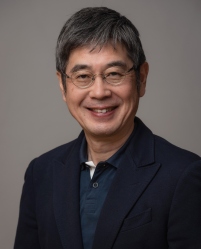
Takamasa Momose is a Professor in the Department of Chemistry at the University of British Columbia (UBC) , with a joint appointment in Physics and Astronomy. His research bridges Cold Molecules , Laser Spectroscopy , and Subatomic Physics , focusing on quantum effects in chemical reactions and fundamental symmetry violations. Supported by CFI through CRUCS and CHIROS, he operates advanced systems like Zeeman and Stark decelerators and microwave molecular traps to study molecules below 4 K. Research Themes : Cold/ultracold molecules, parity violation in chiral systems, neutron EDM for CP violation, laser cooling of antihydrogen. Key Projects : Deceleration of free radicals, matrix isolation spectroscopy in parahydrogen/superfluid helium, EDM measurements at TRIUMF, ALPHA collaboration at CERN. His work has led to 15 recent publications (2023-2025) spanning quantum superfluidity , antimatter gravity , and chiral asymmetry . Notable awards include the Killam Faculty Research Prize (2024) and the G.C. Pimentel Award (2016) . Collaborations include the University of Freiburg and institutions like CERN, TRIUMF, and the ALPHA/HAI-CU experiments. Scientific Societies : The Chemical Society of Japan, Royal Society of Chemistry. Training Legacy : Advised 15+ graduate students (PhD/MSc) and postdocs, including alumni like Brendan Moore (PhD 2023) and Hatsuki Otani (PhD 2024).