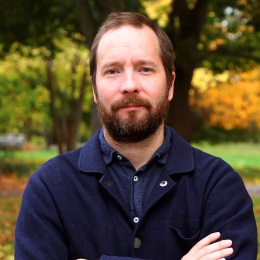
Peter Nilsson is a Professor of Economics at the Institute for International Economic Studies (IIES) , Stockholm University. He also holds a guest professorship at Linnaeus University and serves as a research fellow at IFAU , Uppsala Center for Labor Studies , CESifo , and CEPR . Previously, he was a postdoctoral fellow at Stanford University and obtained his PhD from Uppsala University (2010). Research Focus: His work bridges Labor Economics , Health Economics , and Environmental Economics , analyzing how early-life exposures (alcohol, lead), workplace dynamics, and policy interventions (unemployment insurance, congestion pricing) shape long-term socioeconomic outcomes. Key themes include Environmental Health Impacts on Cognition and Crime Labor Market Responses to Insurance Policies Peer Effects in Workplace Behavior Policy Design for Social Equity Scientific Awards: Nilsson has been recognized through research fellowships at leading institutions and editorial roles, including Associate Editor at The Economic Journal since 2021. His work has been featured in American Economic Review , Journal of Political Economy , and NBER platforms. Key Contributions: He provided testimony for Connecticut’s HB-5045 to reduce childhood lead exposure and contributed to Sweden’s Corona Commission report on pandemic responses. His empirical methods combine natural experiments with administrative datasets to identify causal relationships in health, labor, and environmental economics.
Lina Bertling Tjernberg is a Professor at the Department of Electrical Engineering, KTH Royal Institute of Technology, and Deputy Head of the School of Electrical Engineering and Computer Science (EECS) with responsibility for research conditions and impact. She served as Director of KTH's Energy Platform during 2018-2024 and holds memberships in IVA (Swedish Royal Academy of Engineering Sciences) and the IEEE Power & Energy Society. Research Focus: Applying mathematics (statistics, optimization, life cycle assessment) to enhance reliability and predictive maintenance in electric power systems, with emphasis on future electricity grids integrating microgrids, battery storage, HVDC, nuclear/pumped/hydro/wind/solar power, hydrogen, and electrified transport. Collaborations: Engaged with Comillas Pontifical University (Madrid), Addis Ababa University, Norwegian University of Science and Technology (NTNU), and IEA Wind. Key Research Trends: Recent articles highlight advancements in microgrid control (2025), SMR nuclear energy integration (2025), AI-driven asset management (2024), hydrogen sector coupling (2024), and renewable forecasting techniques (2024). Awards: 2021 Power Woman of the Year 2022 Energy Power List (Sweden’s top 20 energy influencers) Leadership Roles: Swedish Electromobility Center (SEC) board Chair of Swedish Electrical Standards (SEK Svensk Elstandard) Member, IEEE PES ISGT Europe steering committee
Filip Johnsson is a Full Professor in Energy Technology at Chalmers University of Technology, where he leads research on measures to reduce the climate impact of the energy system. His work addresses both technical issues regarding electricity and heat production and how the entire energy system can be transformed by 2050 through technical-economic studies. Professor Johnsson's research spans multiple critical areas in the transition to sustainable energy systems: Energy Systems Analysis: Comprehensive modeling of energy systems to identify cost-effective pathways for decarbonization Industrial Decarbonization: Electrification of energy-intensive industries and carbon capture technologies Renewable Energy Integration: Grid stability, storage needs, and system flexibility with high shares of variable renewables Transportation Electrification: Real-world EV usage patterns and infrastructure requirements Fluidized Bed Technology: Advanced combustion and carbon capture processes Energy Policy: Critical analysis of Swedish and European climate policies and implementation strategies Johnsson's extensive publication record demonstrates a consistent focus on practical, implementable solutions for deep decarbonization across multiple sectors. His recent work shows increasing emphasis on industrial decarbonization pathways, grid integration challenges with high renewable shares, and critical evaluation of policy mechanisms. The research often employs technical-economic modeling approaches, combining engineering analysis with economic evaluation to identify cost-optimal pathways for climate mitigation. Professor Johnsson actively engages with Swedish energy policy debates, contributing to public discourse through newspaper articles and government reports. His work frequently addresses the practical implementation challenges of Sweden's ambitious climate goals, particularly regarding industrial decarbonization and grid infrastructure requirements.
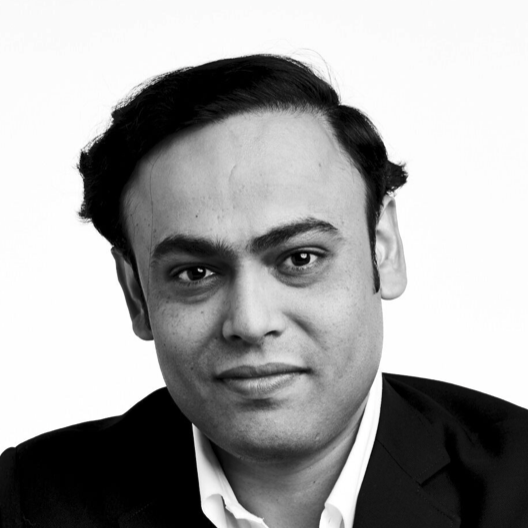
Saurabh Amin is a Professor in the Department of Civil and Environmental Engineering at the Massachusetts Institute of Technology (MIT), where he also serves as the Edmund K. Turner Professor and Undergraduate Officer. He is a Principal Investigator at the Laboratory of Information and Decision Systems and holds affiliations with the Operations Research Center and the Center for Computational Science and Engineering. His educational background includes: B.Tech. 2002, Indian Institute of Technology (IIT) Roorkee M.S. 2004, University of Texas (UT) Austin Ph.D. 2011, University of California (UC) Berkeley Saurabh Amin's research focuses on the design and control of infrastructure systems using game theory and optimization in networks. His work spans three main areas: resilient network control, information systems and incentive design, and optimal resource allocation in large-scale infrastructure systems. By concentrating on critical infrastructure domains including highway transportation, electric power distribution, and urban water networks, his research develops innovative theory and tools to enhance system performance against both stochastic and adversarial disruptions. His approach involves modeling cyber-physical interactions in infrastructures to assess vulnerabilities, developing detection and response tools for failures at various scales, and designing economic incentive schemes that improve aggregate public good while accounting for dependencies and private information among strategic entities. Amin's work bridges mathematical systems theory with practical civil engineering applications, creating a rigorous theoretical foundation for infrastructure resilience that addresses diverse failure mechanisms from natural disasters to deliberate malicious actions. His recent publications demonstrate a strong focus on decarbonization of energy systems, resilient infrastructure planning under climate uncertainty, optimization methods for complex networked systems, and game-theoretic approaches to sustainable infrastructure management. His work increasingly integrates artificial intelligence and machine learning techniques with traditional control theory to address contemporary challenges in infrastructure resilience and sustainability. The research shows a clear trajectory toward addressing climate change impacts on infrastructure systems while maintaining economic efficiency and operational reliability. Professor Amin has received numerous prestigious awards and honors: Common Ground Excellence in Teaching Award, 2025 HSCC Test-of-Time Award, 2024 MIT CEE, Distinguished Service and Leadership Award, 2023 Samuel M. Seegal Prize (SoE) – inspiring students in pursuing and achieving excellence, 2022 Earll M. Murman for Excellence in Undergraduate Advising, 2022 C3.ai Digital Transformation Institute Research Award, 2020 MIT, Ole Madsen Mentoring Award, 2020 MIT, Energy Initiative Research Award, 2020 National Academy of Engineering, China-America Frontiers of Engineering Symposium speaker, 2019 MIT, Robert N. Noyce Career Development Professor, 2015-2018 Google Faculty Research Award, 2015 National Science Foundation CAREER Award, 2015 Siebel Energy Institute Research Award, 2015 MIT, Solomon Buchsbaum AT&T Research Fund Award, 2012 Professor Amin has been actively involved in significant research projects including the C3.ai DTI project on Causal Reasoning for Real-Time Attack Identification in Cyber-Physical Systems and another on Learning in Routing Games for Sustainable Electromobility. He serves as the chief scientist on multi-institutional NSF grants, including the $9 million Foundations of Resilient Cyber-Physical Systems (CPS) project. His teaching portfolio includes courses such as 1.008 Engineering for a Sustainable World, 1.104 Sensing and Intelligent Systems, 1.020 Engineering Sustainability: Analysis and Design, and 1.208 Resilient Networks. As Undergraduate Officer, he plays a key role in shaping the educational experience for civil and environmental engineering students at MIT. Professor Amin leads the Resilient Infrastructure Networks Lab at MIT, where his team develops theoretical foundations and practical tools for infrastructure resilience. The lab focuses on the intersection of control theory, game theory, and optimization applied to cyber-physical infrastructure systems. Current research directions include pandemic-resilient urban mobility and hurricane-resilient smart grid operations, reflecting the lab's commitment to addressing pressing societal challenges through rigorous systems engineering approaches.
Jonas Eliasson is a Visiting Professor at Linköping University's Department of Science and Technology (ITN), focusing on Communications and Transport Systems. He concurrently serves as Director of Transport Access at the Swedish National Transport Administration and chairs the Planning & Construction committee of the Royal Academy of Engineering Sciences. Previously, he was Director of the Stockholm City Transportation Administration (2016–2019) and a professor at the Royal Institute of Technology (KTH) from 2007 to 2016. His research emphasizes transport policy design and evaluation, including cost-benefit analysis, transport pricing, railway capacity allocation, and public acceptability of policies. He advises governments on sustainable transport planning, congestion pricing, and socio-economic appraisals. His work bridges theoretical frameworks and practical implementation, with a focus on accessibility, equity, and climate targets. Key research themes include infrastructure cost overruns, traffic demand reduction strategies, and the integration of passenger and freight transport systems. Recent publications analyze policy impacts, forecasting methods, and carbon-neutral transportation systems. His interdisciplinary approach addresses both technical and socio-political dimensions of transport challenges. Eliasson collaborates with research groups like Railway and Public Transport and contributes to initiatives like the 'Next Generation Smart Transportation Systems' project. Despite extensive professional roles, no formal student advisees are listed. His work is disseminated through journals like Transportation Research Part A and policy reports for national and regional governments.
Sigrid Källblad Nordin is an Associate Professor at KTH Royal Institute of Technology, affiliated with the Department of Mathematics (Division of Probability, Mathematical Physics, and Statistics). Her research focuses on Mathematical Finance, Probability Theory, and Stochastic Analysis, with an emphasis on measure-valued processes, martingale optimal transport, and model uncertainty. She holds a DPhil from the University of Oxford (2014). Her work bridges theoretical advancements in stochastic control, optimization, and financial applications. Recent research includes Bayesian optimal adaptive control, robust option pricing, and dynamically consistent investment strategies under uncertainty. She teaches courses such as Financial Mathematics and Financial Derivatives, and supervises PhD students Linn Engström and Chaorui Wang. Publications span journals like Annals of Applied Probability , Finance and Stochastics , and SIAM Journal on Control and Optimization , reflecting contributions to optimal transport, stochastic processes, and financial modeling. She is currently hiring a new PhD student and welcomes inquiries about master thesis supervision.
Elina Rönnberg is a Professor and Deputy Head of Department at the Department of Mathematics, Linköping University, where she leads research in discrete optimisation and intelligent decision-making. Her work bridges theoretical method development and real-world applications in sectors such as healthcare, aviation, mining, and transportation. She is actively involved in the Wallenberg AI, Autonomous Systems and Software Program (WASP) and has collaborated with industry leaders like Saab and Scania. Her research focuses on advanced optimisation techniques including Dantzig-Wolfe decomposition, Lagrangian relaxation, column generation, branch-and-price, and logic-based Benders decomposition. She also explores hybrid methods combining mathematical programming with constraint programming and machine learning. Applications span nurse rostering, electric vehicle routing, aircraft arrival scheduling, and underground mine planning. Recent publications highlight a strong trend toward integrating AI and machine learning—particularly graph neural networks—with classical optimisation frameworks to accelerate solution methods. Her work emphasizes practical impact, robustness, and scalability in solving complex scheduling and resource allocation problems. Nurse Rostering with Strategic Planning of Skills for Sick-Leave Robustness (2024) Pricing for the EVRPTW with Piecewise Linear Charging (2024) Speeding Up Logic-Based Benders Decomposition with Graph Neural Networks (2024) Elina supervises several PhD students and has co-supervised doctoral research at international institutions including Makarere University (Uganda) and the University of Exeter (UK). She has contributed to applied projects through student theses in collaboration with Scania and Saab, focusing on electric vehicle routing and search-and-rescue optimisation. She previously served as a Specialist in Optimisation at Saab Aeronautics (2014–2020) and co-founded Schemagi, a scheduling tool aimed at improving quality in healthcare. She teaches courses such as Introduction to Optimization (TAOP07) and Project - Applied Mathematics (TATA62). Her research group, 'Mathematics and algorithms for intelligent decision-making,' operates within the Division of Applied Mathematics (TIMA) at the Department of Mathematics. The team develops decision support tools that enhance efficiency and sustainability in complex systems, particularly under the growing demands of electrification and digitalisation in transport and logistics.
Dr. Fabio Ballini is an Associate Professor specializing in Maritime Energy Management at World Maritime University. With a PhD in Electrical Engineering from the University of Genova, his research focuses on sustainable maritime solutions including port energy management, circular economy applications, and ship emission control technologies. He has led numerous EU-funded projects such as Horizon Europe's SeaNergy and CyberMar. Research Expertise: Air pollution abatement, externality cost analysis, and clean-tech solutions for maritime transport. His work bridges economic and environmental dimensions of port operations. Professional Experience: Former Adjunct Professor at the University of Genova teaching Maritime Economy and Social Cost-Benefit Analysis. Extensive project management experience across EU programs including TEN-T and Interreg.
Lina von Sydow is a Professor in Computational Science at Uppsala University's Department of Information Technology. She serves as Section Dean for the Mathematical-Computer Science Section since July 2023. Her academic journey includes becoming an Associate Professor in 2000, Senior Lecturer since 1997, and leading the Department of Information Technology from 2018 to 2023. PhD in Domain Decomposition Methods (1995, Uppsala University) Postdoctoral Fellow at Oxford University (1996-1997) Her research spans computational science with dual focuses on Computational Finance and Ice Sheet Modeling . In finance, she develops numerical methods for option pricing using PDEs, radial basis functions, and stochastic volatility models. In climate science, she contributes to ice sheet dynamics through full Stokes models and adaptive time-stepping approaches, particularly in simulating grounding line migration. Recent publications (2025) address gender disparities in IT education, including comparative analysis of admission trends and intervention studies to boost female enrollment. Earlier works (2020-2015) focus on high-order finite difference methods for financial derivatives, BENCHOP benchmarking projects, and preconditioning techniques for PDEs. Scientific awards include Excellent Teacher (2013) She actively collaborates on educational reforms, co-authoring studies like Gender-aware course reform in Scientific Computing (2013). Her leadership roles include Head of Department (2018-2023) and Section Dean (2023-present), influencing academic governance and interdisciplinary research. Labs and teams: Works with Uppsala University's Computational Science group, Elmer/ICE project collaborators (e.g., Per Lötstedt, Gong Cheng), and international partners in numerical finance and climate modeling.
Stefan Gössling is a Professor of Tourism Research at Linnaeus University and Human Ecology at Lund University. His research focuses on the sustainability of tourism, transport, and mobilities, with particular attention to climate change, carbon emissions, and policy design. Key Research Areas: Climate change mitigation in tourism, transport sustainability, environmental impact assessment, carbon management, and mobility studies. His recent publications analyze global air transport emissions, net-zero aviation challenges, decarbonization strategies, and climate risks to tourism in the European Union. Collaborative work with international colleagues explores economic, behavioral, and policy dimensions of sustainable tourism. Selected Trends: Articles reveal growing emphasis on carbon inequality, transport justice, climate policy barriers, and systemic changes in urban and aviation contexts. Many studies employ interdisciplinary methods combining environmental science, economics, and behavioral analysis.
Lars J Nilsson is a Professor and Project Manager at Lund University 's Department of Technology and Society. He serves as Head of Department for Transport and Roads, while maintaining affiliations with CIRCLE, LTH Profile Area: The Energy Transition, and LU Profile Area: Nature-based future solutions. His work focuses on energy systems analysis, climate policy, and industrial decarbonisation. Employed at Lund University since 1993 Affiliated with multiple research centers and profile areas Over 180 research outputs and 14 projects Key research themes: Energy systems transformation Climate policy instruments Green industrial transition Policy coherence across sectors Carbon neutrality pathways Sustainable feedstock solutions Current research focuses on decarbonisation of energy-intensive industries like steel and chemicals, with particular attention to policy strategies and governance mechanisms.
Daniel Johansson is an Associate Professor at Chalmers University of Technology, working in the Department of Physical Resource Theory. With approximately 20 years of experience in climate-energy-economic analysis and integrated assessment modelling, he has authored around 50 peer-reviewed articles and other research papers. His work bridges climate science, engineering, and economics to address critical environmental challenges. His research spans numerous topics including climate stabilisation scenarios, emission metrics, statistical estimation of climate sensitivity, fuel markets, negative CO 2 emissions, food vs fuel dynamics, climate impacts of aviation, and the role of autonomous vehicles in future transportation systems. Dr. Johansson actively engages with industry, policymakers, and the public through research projects, workshops, presentations, policy reports, and op-eds. His recent publications (2022-2025) reveal a strong focus on practical climate solutions across multiple domains. Key themes include methane policy and valuation, electric vehicle transitions and critical materials, autonomous transportation systems, climate justice and fair emission allocation, integrated assessment modeling, and carbon removal technologies. His work demonstrates a consistent integration of economic, engineering, and climate science perspectives to address complex environmental challenges. Among his notable scientific contributions are analyses of: The social cost of methane and appropriate climate metrics Fair allocation of national greenhouse gas emissions Sweden's electric car transition and critical material requirements Climate impacts of aviation and potential policy measures Investment decisions under carbon price uncertainty Autonomous vehicles and their implications for travel demand and emissions Dr. Johansson has led and coordinated various research activities both within Chalmers and in multinational contexts. He has developed courses on energy and environmental issues for students at Chalmers, the School of Economics at University of Gothenburg, and for employees at General Motors. Notably, during autumn 2015 to spring 2016, he took temporary leave from research to work as a regulatory expert at Volvo Cars. His current research projects (2022-2025) include: Co-created scenarios for the climate transition of passenger cars Climate impact from aviation emissions (CLIMAV) Social cost of aviation contrails Climate impacts of aviation: Policies and climate evaluation of different fuels Systems analysis of biomass and carbon capture across energy sectors MISTRA Carbon Exit Phase 2
Franck Cochoy is a Professor at the Department of Business Administration, University of Gothenburg. His research focuses on consumer culture, retail history, and the sociotechnical mediations shaping market practices. He explores price display technologies, urban mobility, and material culture of consumption through interdisciplinary lenses. Key research themes include the evolution of grocery store practices (1920s–present), price governance technologies, and the digitalization of retail systems. He collaborates with researchers like Johan Hagberg and Hans Kjellberg on projects analyzing historical and contemporary market dynamics. Recent work examines bike-sharing logistics in urban spaces and the role of electronic shelf labels in modern supermarkets. His publications span journals like Socio-Economic Review and Organization , with a focus on understanding how material devices mediate economic and social interactions.
Professor Sverker Carlsson Jagers holds a position at the University of Gothenburg's Department of Political Science and serves as a visiting professor at Luleå University of Technology. He directs the CeCAR (Centre for Collective Action Research). His research focuses on environmental policy, including public opinion dynamics, institutional frameworks for natural resource management (e.g., fisheries, marine ecosystems), and climate policy. Current projects include studying corruption in wildlife management and citizen support for environmental policies. He supervises five doctoral students and teaches courses on environmental policy, collective action theory, and institutional analysis. Education & Teaching: No explicit educational background provided, but active mentorship of doctoral students suggests prior academic qualifications. Teaches across environmental policy, institutional theory, and research design. Research Interests: Explores intersections of democracy and sustainability, climate adaptation, and global environmental governance. Key themes include fairness perceptions in policy acceptability, institutional quality's impact on trust, and the political consequences of natural disasters. Grants & Projects: Leads projects funded by the Swedish Research Council, Swedish Environmental Protection Agency, and Riksbanken Jubileumsfond. Notable initiatives include analyses of governance in Baltic Sea conservation and fair climate adaptation strategies. Labs/Teams: Head of CeCAR, fostering collaborative research on collective action challenges in environmental and societal contexts.
Peter Berling is a Lecturer in Logistics and Supply Chain Management at the School of Business and Economics , Linnaeus University. He extends his expertise to the Engineering School at Lund University and the Zaragoza Logistics Center , teaching across academic levels and serving as a guest lecturer in European institutions.