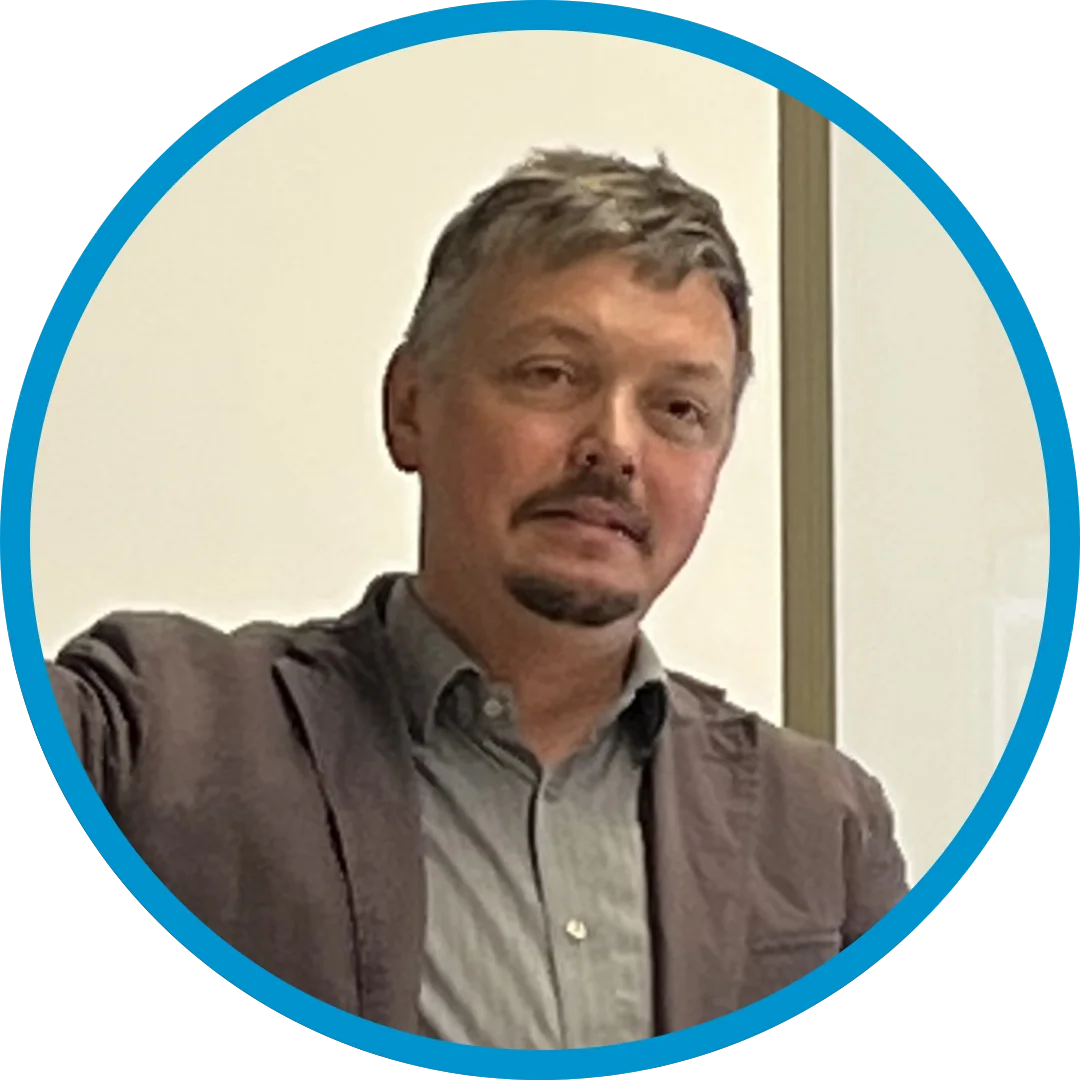
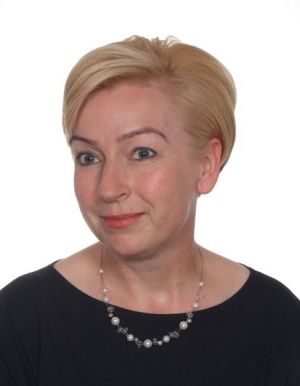
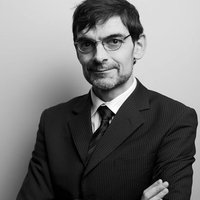
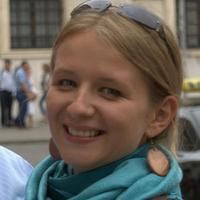
Dr. Edyta Chlebowska is an Assistant Professor at the Cyprian Norwid Research Center, John Paul II Catholic University of Lublin. Specializing in the visual art and literary legacy of Cyprian Norwid, she explores intersections between Polish Romanticism, art history, and cultural studies. Her work extends to album art analysis and interdisciplinary connections with music (e.g., Pink Floyd, Czesław Niemen). Her research focuses on Norwid's self-portraits, eschatological themes in his drawings, and comparative studies with 19th-century Warsaw painting. She reconstructs lost artworks, documents private collections (e.g., Konstancja Górska, Victor Gomulicki), and examines Norwid's reception in Florence and Odessa. Key projects include translating Studia Norwidiana and critical editing of Norwid's complete works. As editor-in-chief of multiple On Cyprian Norwid. Studies and Essays volumes and organizer of conferences like Niemen Non Stop and Colloquia Norwidiana , she bridges academic rigor with public engagement. Her publications span peer-reviewed books, journal articles, and popular science pieces, emphasizing Norwid's unpublished works and symbolic programs.
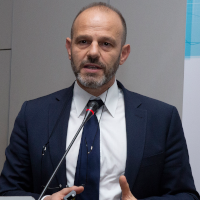
Przemysław Kordos is a Professor at the University of Warsaw , affiliated with the Faculty of Liberal Arts , where he serves as Coordinator for the Development of the Modern Greek Philology Program . He holds two PhDs in Humanities (2007, 2019) and was awarded the Loukis Papaphilippou Seat of Advancement in Modern Greek scholarship. Education: MA in Ethnology and Cultural Anthropology (University of Warsaw, 2001) MS in Sociology (University of Warsaw, 2002) PhD in Humanities (University of Warsaw, 2007) Second PhD in Humanities (University of Warsaw, 2019) His research interests span: Contemporary Modern Greek and Cypriot literature Polish-Greek cultural relations (philhellenism) Social and ethnographic issues in Greece and Cyprus Travel literature analysis Fantasy literature's cultural implications His scientific work reveals a focus on linguistic assimilation in foreign language learning (via fMRI studies), historical parallels between Polish and Greek independence movements, and critical analyses of Cypriot folk culture's politicization. Key scientific awards include: Loukis Papaphilippou Seat (University of Warsaw) Internships at EKPA and IKY (Greece) Scholarships at IMXA (Greece) and MUNI (Czech Republic) His academic contributions include cataloging 60+ Polish travel accounts to Greece, analyzing the shift from travel literature to tourism discourse, and examining the Hellene-Romios dichotomy's role in modern Greek identity construction.
Bogusława Whyatt is a Professor at the Faculty of English, Adam Mickiewicz University, Poznań. She holds a D.Litt. in linguistics (2014), Ph.D. in English (2000), and MA in English (1992) from Poznań institutions. Her academic profile spans psycholinguistics, translation studies, and cognitive approaches to translation processes. Key research themes include: Translation process dynamics and directionality effects Eye-tracking applications in translation reception studies Development of translation competence and pedagogy Psycholinguistic analysis of language processing Metacognitive skill transfer between translation and paraphrasing Recent publications focus on cognitive effort metrics, directionality impacts, and empirical methodologies combining eye-tracking and key-logging data. She leads major projects like Read Me (2021-2025) and EDiT (2016-2019), examining translated text reception and translation directionality respectively. Scientific honors include three consecutive Adam Mickiewicz University Rector's Awards for Organizational Excellence (2018, 2023, 2024). She supervises PhD research in translation cognition and has mentored four doctoral candidates to completion. Active in professional networks like the MC2 Lab and TREC consortium, she contributes to cognitive translation studies through methodological innovations and international conference organization. Her methodological expertise includes psychometrics, EEG research, and ATLAS.ti data analysis tools.
Dr. Sonia Rammer is a Professor at the University of Arts in Poznań, serving as Head of the Art Studio in an Intercultural Perspective at the Faculty of Artistic Education and Curating. She also holds significant administrative positions including Vice-Dean of the Faculty and Member of the Scientific Council. Her work uniquely bridges artistic practice with psychological insights, creating an interdisciplinary approach to art creation and education. Dr. Rammer's educational background demonstrates her dual expertise in both psychology and fine arts. She completed psychology studies at Adam Mickiewicz University (2003-2010), specializing in clinical psychology, alongside concurrent studies in painting and art education at the Academy of Fine Arts in Poznań. She earned her habilitation degree in visual arts and art conservation in 2019. Her research interests focus on the psychological dimensions of creativity, cross-cultural artistic exchange, and posthumanist perspectives. Rammer critically examines anthropocentric views through works that explore interspecies relationships and the fluid boundaries between human and non-human entities. Her art often emerges from international residencies in extreme environments like Greenland, Nepal, and Iceland, where she engages with local cultures and ecological contexts. Her recent artistic output shows a consistent exploration of Arctic themes, cultural translation, and identity transformation. The 'Woman Who Thought She Was a Dog' series (2022-2024) from her Greenland residency exemplifies her approach, using minimalist video installations to provoke reflection on species boundaries and human exceptionalism. Her work spans performance, video, photography, and installation, often incorporating cross-cultural misunderstandings as conceptual frameworks. As an educator since 2011, Rammer teaches psychology and psychology of creativity while mentoring students through her studio practice. Her leadership roles include chairing the Faculty Recruitment Committee and serving on the University Senate, demonstrating her commitment to academic development. Dr. Rammer maintains active international collaborations through prestigious residencies including Arctic Culture Lab (Greenland), Marpha Foundation (Nepal), and Baer Art Center (Iceland). She also collaborates with the Faculty of Geographical and Geological Sciences of Adam Mickiewicz University on artistic research in Spitsbergen, reflecting her commitment to interdisciplinary work.
Daria Hemmerling , PhD, Eng., is a Lecturer at the Department of Metrology and Electronics under the Faculty of Electrical Engineering, Automatics, Computer Science and Biomedical Engineering at AGH University of Science and Technology in Kraków. Her research focuses on the intersection of biomedical engineering, voice analysis, and artificial intelligence, particularly for neurological and cardiovascular disease diagnostics. Research Interests : Applying mixed reality and AI for Parkinson’s disease assessment Voice/speech biomarkers for heart failure and neurodegenerative disorders Deep learning techniques in medical imaging (e.g., skull segmentation/reconstruction) Haptic feedback systems for multisensory interaction Simulation training in electrophysiology education Unsupervised learning and modality translation in biomedical signal processing Scientific Trends : Her recent work emphasizes multimodal diagnostic systems integrating voice analysis, VR/MR visualization, and deep learning. She explores explainable AI for medical classification tasks, data augmentation strategies, and innovative haptic/gamification interfaces.
Prof. Dr. hab. Joanna Orska is a faculty member at the Institute of Polish Philology , University of Wrocław, specializing in modernism, postmodernism, and avant-garde studies. She oversees the Contemporary Critical Forms Workshop and co-founded the Textual Culture and Practice program. Her research bridges literary criticism, poetry analysis, and translation theory. Department of Post-1918 Literature (since 2004) Key focus: Avant-garde syntax, poetic constructivism, and transnational literary discourse Her publications analyze Polish poetry (1989–present), avant-garde manifestos, and intermediality in literary works. She co-edited Learning to Walk: Programmatic Texts of the Late Avant-garde (2019) and participates in international conferences on mountain humanities and literary culture. As a juror for the Wisława Szymborska and Silesius Poetry Awards, she shapes contemporary Polish literary criticism. Recent trends in her work include metalepsis in translation, retro-avant-garde movements, and intersections of politics and poetic form. She collaborates with European institutions like the German Historical Institute and Leibniz-Institut, with articles appearing in Teksty Drugie , Ruch Literacki , and Nowe Książki .
Dr. hab. Jerzy Kroczak, prof. UWr is a distinguished Professor at the Faculty of Philology of the University of Wrocław. He specializes in Polish Baroque literature, medieval texts, and cultural history, with a focus on prophecy, magic, and early modern religious practices. His work bridges traditional philology with interdisciplinary research, particularly in editing and analyzing forgotten manuscripts and exploring the intersection of literature, science, and folklore. He holds a habilitation (dr. hab.) in Polish literature and has published extensively, including critical editions of works by Benedykt Chmielowski, Marcin Bielski, and others in the Bibliotheca Curiosa series. His research interests span topics such as witchcraft in literature, symbolism in Renaissance and Baroque poetry, and the cultural context of early modern Polish texts. His articles analyze themes like the Union of Lublin in historical poetry, symbolism in Jan Kochanowski’s works, and the portrayal of Jews in Benedykt Chmielowski’s New Athens . He also investigates the role of natural philosophy in sermons and the cultural significance of early modern calendars and almanacs. Though no specific awards or grants are listed, his contributions to Polish literary studies and editorial projects highlight his academic leadership. He collaborates with institutions like the University of Wrocław Library and participates in interdisciplinary initiatives within the Faculty of Philology.
Arkadiusz Jabłoński is a Professor at the Faculty of Social Sciences, Catholic University of Lublin (KUL), currently serving as its Dean. He holds two MA degrees in Theology and Polish Philology, a PhD in Social Sciences (1994), and a habilitation in Sociology (2007). His research focuses on the theoretical and empirical dimensions of knowledge society , with a strong emphasis on Karl Popper's social theory and Stanisław Kowalczyk's philosophical legacy . Education: MA in Theology and Polish Philology, PhD in Social Sciences (1994), Habilitation in Sociology (2007) His recent publications analyze knowledge ethics , discursive controversies , and epistemological structures in modern societies. Key themes include: Knowledge-Society Interactions Epistemological Critique Personalist Social Theory Visual vs. Verbal Knowledge Popperian Open Society Postmodern Identity Fragmentation He actively participates in academic organization: Vice-Chair of NSZZ 'Solidarność' Academic Commission Co-Organizer of 'Studia nad Wiedzą' international conferences Co-Editor of the 'Studia nad Wiedzą' book series His work bridges philosophical sociology with practical knowledge analysis , addressing topics like public sphere formation , moral epistemology , and critical theory applications .
Dr. Justyna Budzik is an Assistant Professor at the Institute of English Philology, Jagiellonian University, with affiliations at the Institute of American Studies and Polish Diaspora. She holds a PhD in Literary Studies (2011) from Jagiellonian University's Faculty of Polish Studies, with MA and BA degrees in Cultural Studies and Literary Translation from the same institution. Researcher at Polish Publishing Fund in Canada (2007) Guest lecturer at Polish Consulates in Toronto (2015-2017) and New York (2017) Teaching staff member (2005-2017), research & teaching staff since 2016 Her research focuses on Polish émigré literature in North America, bilingualism, multiculturalism, intertextuality in émigré poetry, Anglo-American literary influences, dialogical nature of literature and art, and literary translation's role in diaspora works. She has presented extensively at international conferences including PIASA Annual Conferences (2019, 2018) and various Polish academic institutions. Key research projects include "The Dialogicality of Literature and Art – Poetic and Essay Ekphrases in the Works of American and Polish Writers Living in North America" (2022) and syncretism studies in Polish-American literature. Her publications include monographs like In the Theatre of the World. The Artistic Homelands of Elżbieta Wittlin Lipton (2021) and At Home and Alienated. On the Situation of Polish Writers in Canada (2013), with numerous chapters in collective works and scientific articles in journals like 'Perspektywy kultury' and 'Studia Migracyjne'.
Anna Bączkowska is a Professor at the University of Gdańsk, affiliated with the Faculty of Languages and the Institute of English and American Studies. Her work spans theoretical and computational linguistics, discourse analysis, and translation studies. Current positions: Director of the Institute of English and American Studies and Associate Professor at the University of Gdańsk Research focuses on corpus linguistics, NLP, and audiovisual translation Her research integrates corpus linguistics , computational methods , and discourse analysis , particularly in political and media contexts, alongside applications in language teaching and translation. She has participated in numerous international projects, including COST Actions like ENEOLI, PhraConRep, and DePolarisingEU. Scientific contributions and recognition include: 2024 Rector’s Award for teaching achievements 2017 Medal of the National Education Committee 2006 Bronze Cross of Merit
Professor Piotr Gąsiorowski is a University Professor of Linguistics at the Faculty of English, Adam Mickiewicz University in Poznań, Poland. With a distinguished academic career spanning several decades, he holds a D.Litt. in English linguistics and has established himself as a leading expert in historical linguistics, phonology, and Indo-European studies. His work bridges traditional philological approaches with evolutionary perspectives on language change. His academic journey includes: M.Sc. in electronic engineering, Warsaw, 1984 M.A. in English, Poznań, 1987 Ph.D. in English, Poznań, 1994 D.Litt. in English linguistics, Poznań, 1998 Professor Gąsiorowski's research focuses on phonological change, historical linguistics, and the evolution of language systems. His work particularly emphasizes the reconstruction of Proto-Indo-European phonology and morphology, with special attention to Germanic sound laws like Verner's Law. He has pioneered an evolutionary approach to language variation and change, examining how linguistic systems adapt over time through processes analogous to biological evolution. His scholarship spans theoretical phonology, historical semantics, and the comparative method, with numerous publications addressing complex problems in etymology and sound change. His extensive publication record shows consistent focus on phonological change in Indo-European languages, with particular expertise in Germanic historical linguistics. Professor Gąsiorowski frequently examines how sound changes interact with morphological systems, and his work often challenges established interpretations of complex historical developments. He has made significant contributions to understanding the phonemicization of voiced fricatives in English, the etymology of obscure lexical items, and the reconstruction of Proto-Indo-European grammatical categories. His scholarly recognition includes: Minister of National Education's Award for outstanding research results (1998) Minister of National Education's Award for outstanding research results (2004) Medal of the Commission of National Education (KEN) (2013) Professor Gąsiorowski has supervised numerous graduate students and has been actively involved in academic service, serving on editorial boards and as a reviewer for major linguistics journals. He led the NCN OPUS11 research project 'A multivalued model of stress in English' (2017-2020) as Principal Investigator. His international collaborations include guest professorships at the University of Vienna and research stays at Oxford University and UCLA. Beyond traditional academic work, Professor Gąsiorowski maintains an influential blog called 'Language Evolution' and has been an active Wikipedia contributor since 2004, creating and improving numerous articles on phonetics and historical linguistics. His interdisciplinary approach connects linguistic theory with insights from evolutionary biology and cognitive science.
Marta Kajzer-Wietrzny is an Assistant Professor at the Faculty of English, Adam Mickiewicz University in Poznań, Poland. She specializes in Translation and Interpreting Studies with a focus on corpus linguistics approaches. Her research utilizes data from the European Parliament to compare different modes of language mediation, including translation, interpreting, and non-native communication. Her educational background includes: Ph.D in English, Poznań, 2012 M.A. in English, Poznań, 2008 B.A. in English, Poznań, 2006 Birmingham Statistics for Linguists Summer School, 2019 Translation Research Summer School, Edinburgh, 2009 Zentrum für Translationswissenschaft der Universität Wien, 2007-2008 Dr. Kajzer-Wietrzny's research focuses on cognitive aspects of interpreting, particularly cognitive load, number rendition, and lexical frequency effects. She investigates cohesion patterns, formulaicity, and lexical diversity across different language mediation modes. Her work bridges corpus linguistics with translation and interpreting studies, examining how professional mediators process language under constraints. She has developed methodologies for analyzing naturalistic interpreting data and comparing it with translated and non-native language. Her publication output shows a clear trend toward empirical, corpus-based investigations of language mediation phenomena, with particular emphasis on the European Parliament data. Her research consistently explores the intersection of cognitive processing, linguistic features, and professional practice in translation and interpreting. Dr. Kajzer-Wietrzny serves as a peer reviewer for multiple academic journals including: Target Perspectives Poznan Studies in Contemporary Linguistics Studia Anglica Posnaniensia Across Languages and Cultures Intralinea Journal of Audiovisual Translation Languages in Contrast Prace Filologiczne She has secured multiple research grants including the TRINFO project at the University of Bologna (2018-2019), a PhD project grant on 'Interpreting Universals and Interpreting Style' (2010), and an ESSE Bursary (2010). She has been involved in major research projects such as 'Extreme language control' (2019-2024), ParaTrans (2013-2016), EVIVA (2013-2014), and IVY (2012-2013). Her work often involves collaboration with international research teams across Europe. She regularly presents at international conferences including the American Translation and Interpreting Studies Association, European Society for Translation Studies Congress, and Poznań Linguistic Meeting, demonstrating her active engagement with the international academic community in translation and interpreting studies.
Dr. hab. Martyna Król-Kumor serves as a Professor at the Institute of Russian Studies, Jan Kochanowski University in Kielce. She has been continuously employed at the university since 2002, progressing from assistant to assistant professor before achieving full professorship in 2018. She currently manages academic operations and serves as editor of the scientific journal Studia Rusycystyczne UJK since 2017. Graduate of Russian Philology, Holy Cross Academy in Kielce (2002) Doctor of Humanities in Linguistics (2005): Polish-Russian Lexical Quasi-Analogy. Functional-Pragmatic Analysis Habilitation in Linguistics (2015): Typology of linguistic homonymy in the onomasiological and discursive aspect Her research spans theoretical linguistics with specialized focus on lexicology, discourse structures, and Polish-Russian contrastive semantics. She examines lexical quasi-analogy, linguistic homonymy typologies, and cross-linguistic discourse patterns through both onomasiological and pragmatic lenses. Her work reveals how semantic transformations reflect cultural worldviews, particularly in Russian-Polish comparative contexts. Analysis of her 15 most recent publications shows consistent exploration of lexical semantics across multiple dimensions: homonymy patterns (40% of works), discourse structures (30%), and contrastive Polish-Russian analysis (30%). Key methodological approaches include functional-pragmatic analysis, typological classification, and cognitive-semiotic frameworks applied to specialized domains like tourism business discourse and academic writing. No scientific awards or fellowships are documented in the available materials. Professor Król-Kumor provides academic supervision and consultations as evidenced by her listed contact information for "Credits/exams/consultations." While specific grant projects aren't detailed, her extensive monograph publications and journal editorship indicate sustained research activity. She contributes significantly to the Language Clinic at the university, supporting linguistic diagnostics and interventions. The Language Clinic and Russian Studies Institute represent her primary operational environments, where she integrates research with practical language applications including discourse analysis training and contrastive semantics instruction.
Jerzy Kukuczka Academy of Physical Education in KatowicePoland
Gregory C. Bogdanis is a Professor of Sport and Exercise Training at the School of P.E. and Sport Science, National and Kapodistrian University of Athens, Greece. His research focuses on strength and power training methodologies, high-intensity training protocols, eccentric training adaptations, muscle metabolism dynamics, and muscle fatigue mechanisms. He has provided scientific support for elite athletes and teams through training load monitoring and performance optimization strategies. His research interests include: Optimizing post-activation potentiation through conditioning activities Comparative efficacy of unilateral vs bilateral plyometric training Muscle fiber adaptations to eccentric training Isometric training applications for force-angle relationships Recent publications emphasize practical applications of advanced training techniques in team sports contexts, with a focus on translating laboratory findings into field-ready methodologies.
Napoleon Waszkiewicz serves as a Professor in the Department of Psychiatry at the Faculty of Medicine with the Division of Dentistry and Division of Medical Education, Medical University of Bialystok, Poland, maintaining active research with over 375 publications documented in institutional repositories. His work bridges clinical psychiatry and biological mechanisms, emphasizing biomarker discovery across mental health conditions. Research interests center on psychiatric disorders with strong emphasis on addictions, autism spectrum disorder, depression, and inflammatory pathways. He investigates environmental interactions including seasonality effects, microplastic exposure from tobacco products, and gut-brain axis dynamics using metabolomics and biomarker analysis. Current projects explore neurodevelopmental impacts of omega-3 fatty acids, probiotic interventions for depression, and diagnostic criteria for behavioral addictions like gaming disorder. Analysis of his 2025 publications reveals thematic clustering around autism-related research (12 articles), depression-inflammation links (7 articles), and novel environmental risk factors (4 articles), demonstrating consistent focus on translational psychiatry through biomarker validation and mechanistic reviews. Methodologically, he favors metabolomics, narrative/systematic reviews, and clinical trial designs. Scientific awards: No specific honors, fellowships, or medals are documented in the provided profile information. Thesis supervision is indicated through the 'Promoted theses' section of his profile, though individual student names and grant funding details remain unspecified. Collaborative patterns show extensive co-authorship across Polish and international institutions, particularly in multi-center clinical trials and review articles spanning psychiatry, cardiology, and public health domains. Laboratory infrastructure and dedicated research teams are not explicitly described in the available text, though his metabolomics studies suggest access to biochemical analysis facilities. Current projects imply ongoing work in autism biomarker validation and microplastic toxicity assessment.