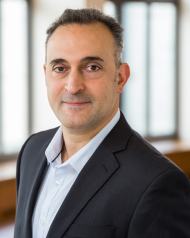
Helmut ReimitzView profile
Professor
Helmut Reimitz is the Shelby Cullom Davis '30 Professor of European History and Professor of History at Princeton University, where he also serves as Director of the Humanities Council's Program in Medieval Studies. He joined Princeton's faculty in 2008 after heading the Early Medieval Department at the Institute for Medieval Research of the Austrian Academy of Sciences, one of Europe's leading centers for early medieval studies. Professor Reimitz specializes in the history of the Early Middle Ages (5th-10th centuries), with research focusing on: Political and social transformations from the end of the Roman Empire to the Carolingian Empire Formation of Western Christian culture and European identity Ethnicity, identity politics, and social stratification History of historical thinking in late Antiquity and the medieval West Literacy and communication in early medieval societies Religious transformations during the transition from Roman to medieval Europe His scholarly work demonstrates a consistent focus on how identity formation and political structures evolved during the transition from the Roman world to medieval Europe. His publications reveal particular interest in Frankish identity as a lens for understanding broader Western conceptions of ethnicity and social organization, with significant contributions to understanding the formation of European civilization. Professor Reimitz has received significant recognition for his work, including: Election as Fellow of the Medieval Academy of America (2023) Phi Beta Kappa Chapter Teaching Award He actively mentors graduate students, with numerous PhD advisees including Merle Eisenberg, Daniel Kosasa, Meg Leja, Molly Lester, Radka Pallová, Valerie Piro, Giuseppe (Joseph) A. Ricci, Jan van Doren, Lucia Waldschuetz, and Ian S. Ward. Professor Reimitz participates in multiple international research collaborations, including projects with Freie Universität Berlin, University of Heidelberg, and the Austrian Academy of Sciences, and co-organizes an annual graduate exchange program between Princeton, Oxford, and Vienna for students of late Antique, early medieval, and Byzantine history. He leads research initiatives focused on governance, material text cultures, and social cohesion across early medieval Europe, working with international scholarly networks to advance understanding of this formative historical period through comparative analysis of political communication, identity formation, and cultural transformation.