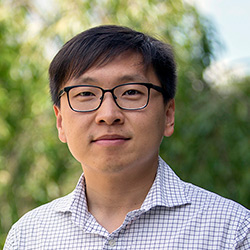
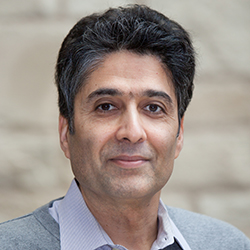
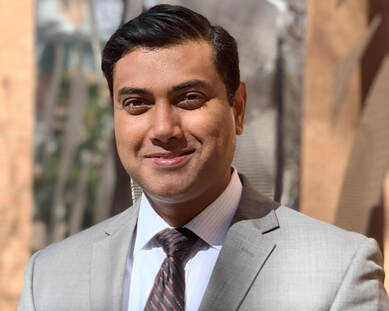
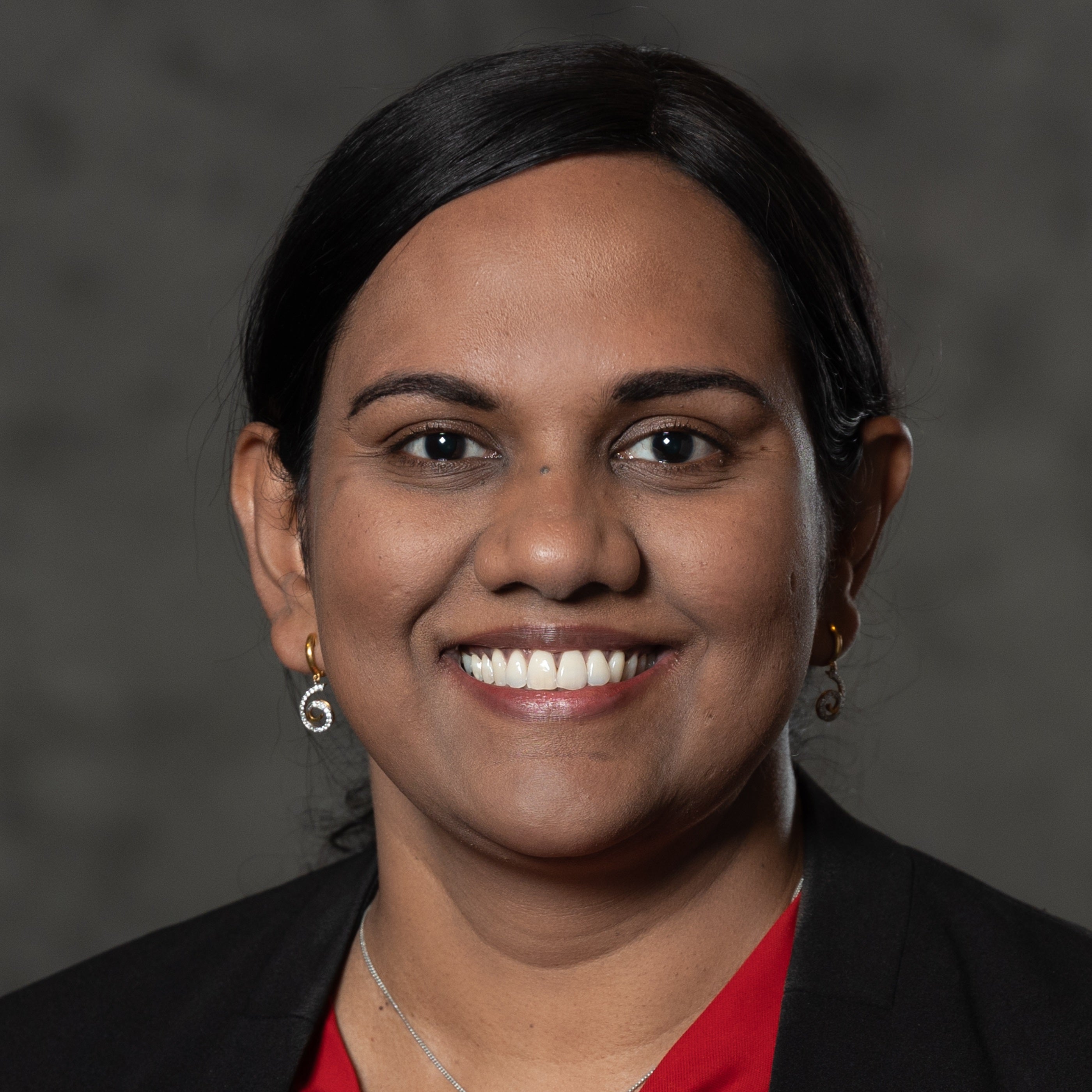
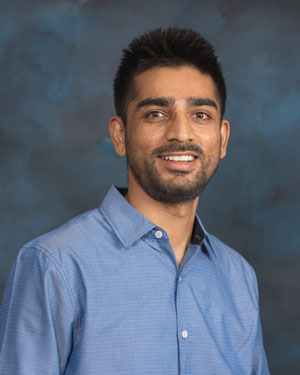
Xing Xinyu is an Associate Professor of Computer Science at Northwestern University's McCormick School of Engineering. Their research focuses on kernel security, reverse engineering, and AI security, with a strong emphasis on fuzzing techniques, adversarial machine learning, and vulnerability discovery. They hold a PhD from Georgia Institute of Technology, an MS from the University of Colorado Boulder, and a BASc from Beihang University. Research interests include advanced cybersecurity methodologies such as heap memory protection, automated exploit generation, and defense mechanisms against adversarial attacks on large language models. Their work bridges theoretical computer science with practical applications in system security and AI ethics. Publications span topics like LLM jailbreak assessments, reinforcement learning optimization, and blockchain anomaly detection. Notable contributions include frameworks like BandFuzz for collaborative fuzzing and SeaK for secure kernel allocators.
Daniel W. Apley is Professor of Industrial Engineering and Management Sciences at the McCormick School of Engineering and Applied Science, Northwestern University, where he has served since 2003. He is Editor-in-Chief-Elect of Technometrics and previously Editor-in-Chief of the Journal of Quality Technology . He is also affiliated with Northwestern’s Master of Science in Machine Learning and Data Science Program. Education PhD Mechanical Engineering, University of Michigan, Ann Arbor MS Electrical Engineering, University of Michigan, Ann Arbor MS Mechanical Engineering, University of Michigan, Ann Arbor BS Mechanical Engineering, University of Michigan, Ann Arbor Research Interests Professor Apley is an industrial statistician whose work sits at the intersection of engineering modeling, statistical analysis, and predictive analytics. His major thrusts include statistical modeling of complex engineering and enterprise systems, machine learning for manufacturing data, quality engineering and Six Sigma methodologies, and computer-experiment–based design optimization under uncertainty. Recent applications span healthcare risk modeling, credit-risk analytics, materials microstructure prediction, and autonomous process control. Scientific Awards NSF CAREER Award IIE Transactions Best Paper Award (Quality & Reliability) Wilcoxon Prize for best practical application paper in Technometrics Teaching & Advising At Northwestern he teaches undergraduate courses in Statistical Methods for Quality Improvement, Introductory Statistics, and Statistical Tools for Data Mining, as well as graduate courses in Predictive Analytics, Engineering Applications of Data Mining, and Intermediate Statistics. His research has been supported by numerous industrial partners and federal agencies, underscoring a strong record of funded graduate and post-doctoral advising. Leadership & Service Beyond editorial roles, Professor Apley has chaired the Quality, Statistics & Reliability Section of INFORMS and served as Director of the Manufacturing and Design Engineering Program at Northwestern, shaping interdisciplinary curriculum and research initiatives.
Seyed M.R. Iravani is Professor of Industrial Engineering and Management Sciences at Northwestern University's McCormick School of Engineering, with courtesy appointment at the Kellogg School of Management. His research focuses on applications of stochastic processes, queuing theory, game theory, and social networks to design and control of manufacturing, service operations, healthcare systems, supply chains, and nonprofit systems. His research interests emphasize improving flexibility, coordination, and responsiveness in complex operations systems. Professor Iravani develops mathematical optimization models to analyze optimal system behavior, provide managerial insights, and create practical implementation strategies for real-world operations challenges. His work spans manufacturing systems, healthcare operations, supply chain management, service operations, and nonprofit operations. The analysis of Professor Iravani's publications reveals a consistent focus on operations management challenges across multiple domains. His research employs analytical methods including stochastic processes, game theory, queueing theory, and social networks to address problems in capacity allocation, resource management, supply chain coordination, and service system design. A notable trend is his increasing focus on healthcare operations and nonprofit systems in recent years, while maintaining strong contributions to fundamental operations management theory. Professor Iravani has served on editorial boards of leading journals including Operations Research, Management Science, Service Science, IIE Transactions, and Naval Research Logistics. He has collaborated with organizations such as GM, Ford, Motorola, GE, Northwestern Memorial Hospital, Chicago Food Depository, Facebook, and Roti Mediterranean Restaurants to improve operational performance. He teaches courses including Production Planning and Scheduling, Service Operations Management, Operations, and Operations Management for MBA students. He has also authored the textbook 'Operations Engineering and Management: Concepts, Analytics and Principles for Improvement' published by McGraw Hill in 2020, which has become a standard resource in operations engineering education.
Teresa Vidal-Calleja is an Associate Professor and Research Director at the Robotics Institute, University of Technology Sydney (UTS). She holds a Deputy Head of School (Research) role in the School of Mechanical and Mechatronic Engineering. Her research focuses on robotics perception, alternative sensing, inertial fusion, SLAM, and applications in manufacturing, agriculture, mining, and construction. Education: B.Sc. Mechanical Engineering (UNAM, 2000), M.Sc. Electrical Engineering (CINVESTAV-IPN, 2002), Ph.D. Automatic Control (Polytechnic University of Catalonia, 2007). Postdoctoral Experience: LAAS-CNRS (France), Australian Centre for Field Robotics (Sydney). Research Interests: Teresa’s work spans robotics perception, sensor fusion, autonomous navigation, and collaborative robotics. She leads projects on next-gen infrastructure robotics (ARC Discovery Grant) and is co-lead of the Australian Cobot Centre. Her innovations target hazardous environments, infrastructure maintenance, and human-robot collaboration. Funded Research: Includes grants for robotic sensors, satellite docking systems, and multi-robot collaboration. Recent projects involve Navantia, the NSW Space Research Network, and industry partnerships. Professional Roles: IEEE Senior Member, Treasurer of the Australian Robotics and Automation Association, and Associate Editor for IEEE Transactions on Robotics and other journals. She chairs conferences like the Australasian Conference on Robotics and Automation. Labs/Teams: UTS Robotics Institute, collaborating with global institutions like ETH Zürich and DLR. Her work integrates robotics with industries such as agriculture and construction, emphasizing sustainability and safety.
Thomas Choi is a Regents Professor and the AT&T Professor at Arizona State University's W. P. Carey School of Business, specializing in supply chain management. He leads the Complex Adaptive Supply Networks Research Accelerator (CASN-RA) and has advised major organizations like LG Electronics, Samsung, and the U.S. Department of Energy. His research focuses on supply chain design, multi-tier dynamics, and complex adaptive systems. He holds a Ph.D. from the University of Michigan (1992) and a B.A. from UC Berkeley (1980). Research Interests: Supply chain design, multi-tier management, supply network complexity, and resilience. Notable contributions include theories on triads in supply networks and supply chain financing. He has co-authored the Oxford Handbook of Supply Chain Management and been recognized as a Clarivate Highly Cited Researcher. Awards: 2018 Highly Cited Researcher, 2017 Emerald Citation of Excellence, 2016 Harold Fearon Best Paper Award. Collaborations span academia and industry, including a $15M USAID project in Ghana. Grants and Labs: Principal researcher in NSF-funded studies on supply network design and environmental performance. Co-directs CASN-RA and CAPS Research. Advised doctoral students now leading academic and industry roles globally. Service: Editorships in top journals, invited talks at institutions worldwide, and leadership in global executive education programs.
Prof. Norbert Ritter is the Dean of the Faculty of Mathematics, Computer Science and Natural Sciences (MIN) at the University of Hamburg since August 2022. He holds a full professorship in the Department of Informatics, leading the Databases and Information Systems group. Previously, he served as an associate professor (2002–2005) and assistant professor (1998–2002) at the Technical University of Kaiserslautern and the University of Hamburg. His research focuses on advanced database technologies, including NoSQL systems, scalable cloud data management, big data analytics, and information integration. Key areas include service-oriented computing, federated database systems, and transaction management. He has authored over 149 publications, with recent work emphasizing polyglot data stores, spatio-temporal data processing, and web performance optimization. Education: M.Sc. (1991), Ph.D. (1997) in Computer Science from the University of Kaiserslautern Professional Activities: Dean of MIN Faculty (since 2022), former head of DBIS group Labs/Teams: Leads the Databases and Information Systems research group His advising record includes over 274 student theses, spanning PhD and master's projects in database design, data integration, and web performance engineering. Collaborative projects include Beaconnect (continuous web A/B testing) and Compaz (shared dictionary compression).
Chaitanya 'Chai' Sambhara is an Assistant Professor in the Information Systems and Operations Management department at the University of Texas at Arlington's College of Business. He researches how enterprise systems and complementary capabilities improve business processes and mitigate risks. His work integrates information systems, accounting, and operations perspectives. Education includes: Ph.D. in Information Systems, Georgia State University (2015) M.S. in Computer Science, Georgia State University (2009) B.Tech in Electronics Engineering, Biju Patnaik University (2005) Research examines IT-enabled business process innovation, enterprise system configurations, blockchain applications, and cybersecurity risks. Current projects investigate paradoxical effects of IT use on internal controls and information risk management. Publications demonstrate consistent focus on enterprise system risks, reverse auction challenges, and blockchain implications. Recent work explores unintended consequences of IT implementation and configuration strategies. Awards include: Best Conference Paper Nominee, ICIS (2018, 2016) Teaching Excellence Award, Georgia State University (2013) BNSF Spirit Award (2008) Best Speaker Award, India (2001) Teaching covers Business Programming, Database Management, IT Strategy, and Blockchain Technology. Service includes editorial roles for IS conferences and journals.
Kimberly Renk is a Professor in the Department of Psychology at the University of Central Florida and a Licensed Psychologist (PY6771). She directs the Understanding Children and Families Lab and founded the Young Children and Families Research Clinic. Specializing in Infant Mental Health, her research examines: Parent-child relationships in high-risk contexts (substance abuse, trauma) Intergenerational transmission of attachment patterns Evidence-based interventions for traumatized young children She implements trauma-informed therapies including: Circle of Security-Parenting Child-Parent Psychotherapy Community partnerships include collaborations with Florida Association of Infant Mental Health, Nemours Children's Hospital, and child welfare systems. Dr. Renk earned her PhD from University of South Florida and completed specialized Infant Mental Health fellowship training at LSU Health Sciences Center.
Oshani Seneviratne is an Assistant Professor of Computer Science at Rensselaer Polytechnic Institute (RPI), leading the BRAINS Lab. She holds a Ph.D. and S.M. from MIT (Computer Science) and a B.Sc. (Hons) from the University of Moratuwa, Sri Lanka. Her research focuses on decentralized systems, blockchain, health informatics, and federated learning. She previously directed RPI's Health Data Research division. Education Ph.D. in Computer Science, MIT S.M. in Computer Science, MIT B.Sc. (Hons) in Computer Science and Engineering, University of Moratuwa Research Interests Her work bridges decentralized technologies with clinical and financial applications. Key areas include blockchain-based frameworks for federated learning, explainable AI in healthcare, and semantic web technologies for data interoperability. She emphasizes ethical AI, data provenance, and scalable systems for real-world challenges. Recent Work Trends Recent publications highlight advancements in smart contract auditing, LLM applications in financial systems, and blockchain-enhanced data provenance. Her work often combines technical innovation with societal impact, such as improving health data sharing and combating misinformation. Awards & Grants No awards explicitly listed, but her research has been supported by grants related to blockchain, health informatics, and decentralized systems. Advising & Labs Leads the BRAINS Lab, focusing on resilient, intelligent networked systems. Collaborates on projects like the Punya platform for clinical apps and BlockIoT for health data integration. Future Work Expanding into AI explainability for clinical decision support, decentralized mental health monitoring, and blockchain interoperability solutions.
Björn Schembera is a Researcher at the Institute of Applied Analysis and Numerical Simulation (IANS) at the University of Stuttgart, focusing on Research Data Management (RDM), metadata standards, and ontologies. He holds a Dr.-Ing. (Engineering Doctorate) and a Diplom-Informatik (Computer Science) degree, with interdisciplinary training in philosophy. His current work centers on FAIR principles, knowledge graphs, and dark data in computational and mathematical sciences, particularly within the MaRDI (Mathematical Research Data Initiative) project under NFDI funding. Education and Professional Background: After completing his doctoral studies on dark data in simulations at HLRS (2011–2022), he joined IANS in 2022. His research bridges technical RDM challenges with societal implications of information technology. Research Interests: Schembera’s work emphasizes metadata models (e.g., EngMeta), ontology development for mathematics and engineering, and ethical aspects of data stewardship. He contributes to projects like bwDataArchive and NFDI4Cat, addressing interoperability and standardization in research data infrastructures. Teaching: He leads the course 'Schlüsselqualifikation Forschungsdatenmanagement' since 2023/24, promoting open science and RDM practices. Key Achievements: His 2023 Best Paper Award (MTSR Conference) recognizes contributions to metadata and semantic research. Over 50 publications span journals like Energies, IEEE Transactions, and conference proceedings on metadata, ontologies, and simulation workflows. Projects: He collaborates on MaRDI (mathematical data infrastructure), NFDI4Cat (catalysis sciences), and bwDataArchive (long-term storage).
Prof. Dr. Jana-Rebecca Rehse serves as Assistant Professor for Management Analytics at the University of Mannheim Business School, where she leads the Chair of Management Analytics within the Information Systems department. Her academic work bridges theoretical research with practical business applications, focusing on data-driven approaches to business process optimization. Her primary research interests encompass User Behavior Mining , Process Mining , and AI applications in business process management . Rehse investigates how organizations can leverage process mining techniques to extract meaningful insights from event logs, with particular attention to conformance checking, process resilience assessment, and the practical implementation challenges businesses face when adopting these technologies. Her work frequently addresses the intersection of human behavior and process execution, examining how user interactions with IT systems can be analyzed to improve process design and user experience. Analysis of her recent publications reveals a clear research trajectory toward increasingly sophisticated integration of artificial intelligence with traditional process mining techniques. Starting with foundational work on reference model mining and process discovery methodology, her research has evolved to address cutting-edge applications of generative AI, explainable AI, and predictive analytics in business process contexts. The majority of her work appears in top-tier information systems and business process management journals including Information Systems, Process Science, and ACM Transactions publications, demonstrating her significant contributions to the field. Professor Rehse actively collaborates with industry partners including Siemens and MEHRWERK, offering thesis opportunities and research projects that address real-world business challenges. Her current call for applications includes work-study programs at Siemens and master thesis topics focused on conformance checking in cooperation with MEHRWERK. She has recently introduced innovative thesis topics exploring the use of Generative AI for Emotion Identification, reflecting her forward-looking research agenda that anticipates emerging technological trends and their business implications.
Prof. Dr. Paulina Jo Pesch is an Assistant Professor in the Department of Law and Technology at Friedrich-Alexander-University Erlangen-Nürnberg (FAU), Germany. Her research focuses on Internet/IT law, data protection law, electronic payments, and decentralized virtual currencies. She has held postdoctoral positions at the University of Münster (part-time) and University of Innsbruck, alongside legal training as a Trainee Lawyer in Berlin’s judicial system, including roles at the Berlin Public Prosecutor’s Office, Berlin Commissioner for Data Protection, and law firms. Education includes a Ph.D. (Dr. iur.) in Law from the University of Münster (2016), a specialization in Information/Telecommunication Law, and legal examinations (First and Second State Examinations). Her work bridges legal and technical domains, addressing challenges posed by emerging technologies like blockchain, AI, and generative models under GDPR and cybersecurity frameworks. Publications emphasize regulatory frameworks for cryptocurrencies, AI ethics, digital forensics, and consent management in ad-tech. She co-authored the BITCRIME project’s recommendations for cryptocurrency regulation and contributed to studies on financial sector cybersecurity for Germany’s BaFin. Her research frequently intersects cybercrime prevention, intellectual property, and cross-border legal harmonization. Prof. Pesch’s career combines academic rigor with practical legal experience in tech sectors. She advises on IT security law, participates in interdisciplinary projects, and teaches at FAU. Current work explores generative AI’s legal implications, blockchain governance, and data protection in decentralized systems.
Dr. Pavan Poudel is an Assistant Professor of Computer Science at the University of Houston-Clear Lake (UHCL), part of the College of Science and Engineering. He joined UHCL in Fall 2024 after working as a Research Engineer in the software industry and completing a postdoctoral research position at Augusta University's Department of Computer and Cyber Sciences. He holds a Ph.D. in Computer Science from Kent State University (2021) and a Bachelor's in Computer Engineering from Tribhuvan University, Nepal. His research focuses on Parallel and Distributed Computing, Robotics, and Fault-Tolerance, with expertise in optimizing scheduling algorithms and designing scalable systems for distributed environments. Dr. Poudel's research includes transactional memory systems, distributed robotics algorithms (e.g., gathering, scattering, and coverage), and fault-tolerant solutions for real-time applications like medical and disaster response. His work bridges theoretical computer science with practical applications, emphasizing efficiency and scalability. He has published extensively in venues like Theoretical Computer Science (TCS) and Information, addressing topics such as time-optimal robot navigation and adaptive versioning in transactional memory. His academic awards include the Best Presentation Award at Kent State’s Graduate Research Symposium (2021) and scholarships like the John Sechrist and Hine Scholarships (2019–2020). He teaches courses such as Computer Organization and Assembly Language and Computer Game Programming. His publications demonstrate a strong focus on distributed systems, robotics algorithms, and concurrency control, reflecting his commitment to advancing scalable and reliable computing solutions.
Justin Y. Shi is an Associate Professor at Temple University's Computer and Information Science Department. His research focuses on scalable computing, blockchain protocols, software safety, and infinitely scalable systems. He holds a PhD from the University of Pennsylvania and has held roles including Interim Director of the Center for Advanced Computing and Communications (1992-1998) and CIS Department Chair (2007-2009). B.S. Computer Engineering, Shanghai Jiao-tong University (1977) M.S. Software Engineering, University of Pennsylvania (1983) PhD in Concurrent Programming, University of Pennsylvania (1984) His research explores decoupling programs and data from physical devices to achieve fault tolerance and scalability. Key contributions include the Statistic Multiplexed Computing (SMC) paradigm and foundational work on parallel algorithms and distributed systems. He has authored patents on scalable parallel computing and high-performance blockchain systems. Teaching highlights include courses on quantum computing, cybersecurity, and fullstack programming. He has advised over 15 students, many now in industry and academia. Founder & CEO of Parallel Computers Technology Inc. (2000-2017) Co-founder of SMC Labs (2022-present) Active in editorial roles for IEEE Blockchain Technology Briefs and contributor to NSF workshops on cloud computing. His work has been exhibited at Supercomputing Conferences (1991-2018).
Mark Stamp is a Professor in the Department of Computer Science at San Jose State University (SJSU), part of the College of Engineering. His research focuses on information security, machine learning, malware analysis, and cryptography, with a strong emphasis on applying these fields to cybersecurity challenges. He has authored multiple textbooks, including Information Security: Principles and Practice and Introduction to Machine Learning with Applications in Information Security . Education: PhD in Mathematics (Texas Tech University, 1992), MS in Mathematics (Texas Tech, 1988), BS in Computer Science (Morningside College, 1983). Research interests include malware detection using machine learning, cryptographic algorithms, and adversarial attack analysis. His work spans theoretical research and practical applications, such as developing tools for malware clustering, steganography analysis, and secure communication protocols. Recent projects include AI-driven precision agriculture and detecting AI-generated content. Teaching includes courses on information security (CS 166), machine learning (CS 171), and cryptography. He advises numerous graduate and undergraduate students, many of whom contribute to his research in cybersecurity and AI. Publications span over 200 papers in journals like Journal of Computer Virology and Hacking Techniques and IEEE Transactions . He has also contributed to conferences and edited several Springer volumes on AI and cybersecurity. His work often bridges academic research with real-world security challenges.