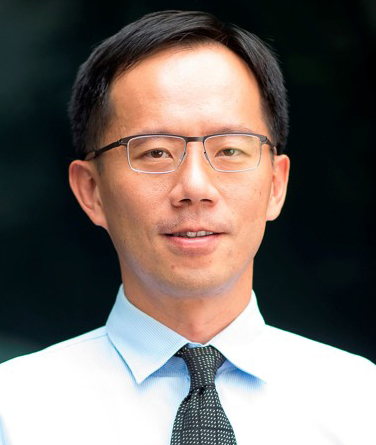
Vikrant Vaze is the Stata Family Career Development Associate Professor and Executive Director of the Master of Engineering Management Program at Dartmouth's Thayer School of Engineering. He leads research in transportation systems, aviation optimization, and healthcare analytics, developing data-driven solutions for complex logistics challenges. His work integrates game theory, statistical modeling, and large-scale optimization. Research spans sustainable urban mobility, airline disruption recovery, multimodal pricing alliances, and healthcare operations. Articles consistently focus on optimization algorithms for real-world transportation and healthcare systems, with recent emphasis on electric aerial mobility and pandemic-responsive logistics. Major Awards: INFORMS Aviation Applications Best Paper (2024, 2023) AGIFORS Best Innovation Award (2024) NSF CAREER Award (2018) President of India Gold Medal As founding co-director of the Operations Research Group, he collaborates with industry partners like Multivariate Systems to translate academic research into deployable solutions.
Md. Zoheb Hassan serves as an Assistant Professor in the Department of Electrical Engineering and Computer Engineering at Laval University, where he leads cutting-edge research in wireless communications and spectrum management. His academic role includes graduate recruitment and active participation in the university's research ecosystem, particularly through the Establishment of the Next Generation of Professors program funded by FRQNT. Dr. Hassan's research centers on spectrum sharing and management, wireless communication systems, and communications network control systems. He pioneers the integration of digital twin technology and machine learning to solve critical challenges in next-generation networks, including interference management in 5G/6G aerial corridors, Internet of Vehicles, and satellite-terrestrial integration. His work emphasizes practical implementations such as proof-of-concept demonstrations for tactical networks and proactive resource allocation in dynamic environments. Analysis of his 2024-2025 publications reveals a dominant trend toward AI-driven wireless resource optimization, with 12 of 15 recent papers featuring digital twins for interference management, spectrum sharing, and energy efficiency. Key thematic clusters include vehicular communications (4 papers), underwater IoT networks (2 papers), and hardware-impairment resilient designs (3 papers), demonstrating his focus on bridging theoretical advances with real-world deployment challenges across diverse network topologies. Dr. Hassan has secured significant competitive funding for his research initiatives: Digital Twin-Enhanced Interference Management for Next-Generation Radio Access Networks in the FR3 Band (FRQNT, 2025-2027) Center for Radio Frequency and Communications Systems, Technologies and Applications (FRQNT, 2024-2030) Context-Aware Spectrum Sharing and Management for Next Generation Wireless Networks (NSERC, 2024-2029) Development of innovative technologies for modeling predictive systems in urban mobility (MITACS, 2022-2026) Springboard to Discovery supplement for Context-Aware Spectrum Sharing (NSERC, 2024-2025) He actively mentors doctoral candidates, currently supervising Mahima Karim (PhD in Electrical Engineering, expected 2025) and Mohammadamin Parhizgar (PhD in Electrical Engineering, expected 2024). His supervisory approach combines theoretical rigor with practical problem-solving, focusing on spectrum management algorithms and digital twin implementations for next-generation networks. While specific laboratory affiliations aren't detailed in the source material, his projects indicate strong alignment with Laval University's wireless research infrastructure and the Center for Radio Frequency and Communications Systems.
Xuesong Zhou is a Professor of Transportation Systems at the School of Sustainable Engineering and the Built Environment , Arizona State University (ASU). He leads the ASU Transportation+AI Lab and develops open-source tools like DTALite, NEXTA, and OSM2GMNS with over 100,000 downloads. His research focuses on multimodal transportation planning , dynamic traffic assignment , and rail scheduling with methodological contributions to traffic flow theory and operations research . Dr. Zhou's research bridges transportation system operations , computer applications for ITS , and logistics optimization . His work on differentiable programming reformulations and state-space-time network modeling has advanced real-time traffic prediction and multi-echelon facility scheduling . Scientific awards include: 2022 Elsevier Multimodal Transportation Best Article Award 2018 Transportation Research Part C Best Associate Editor Award 2012 INFORMS Railway Applications Section Best Paper Award He has advised 9 PhD students and 6 postdoctoral researchers to completion, with mentees now at institutions like Georgia Institute of Technology and Michigan State University. Current projects include NSF CONNECT and DOE Argonne collaborations on multi-scale traffic simulation and smart campus cyberinfrastructure .
Ravi Seshadri is an Associate Professor in the Transport Division at the Department of Technology, Management and Economics, Technical University of Denmark (DTU). His research focuses on designing equitable, efficient, and sustainable mobility solutions with a focus on fiscal instruments like congestion pricing and tradable permits, as well as emerging mobility modes such as shared and demand-responsive transit. He employs methods from transportation network equilibria, dynamic traffic assignment, and agent-based simulation. His research interests span transportation economics, urban planning, and intelligent transportation systems. Key areas include evaluating the impacts of automated mobility-on-demand systems, optimizing tolling strategies using predictive control and reinforcement learning, and integrating multi-modal transportation networks through game-theoretical frameworks. His work emphasizes real-world applications in urban freight systems, e-commerce logistics, and sustainable urban mobility policies. Recent projects include studying congestion pricing schemes via agent-based microsimulation, analyzing behavioral responses to decarbonization policies, and developing frameworks for tradable credit systems with peer-to-peer trading. He has contributed to both theoretical advancements (e.g., robust traffic assignment models) and applied tools like the SimMobility simulation platform. Ravi's research demonstrates a strong focus on bridging transportation engineering with policy analysis, using cutting-edge computational methods to address complex urban mobility challenges. His work spans academic publications, industry collaborations, and policy consultations to advance sustainable transportation systems.
R. Jayakrishnan , a Professor in the Department of Civil and Environmental Engineering at the Samueli School of Engineering , University of California, Irvine, is a leading researcher in transportation systems engineering. Ph.D., University of Texas, Austin, Civil Engineering, 1992 M.S., University of Texas, Austin, Civil Engineering, 1987 B.S., Indian Institute of Technology, Madras, India, 1985 His research focuses on dynamic traffic assignment , urban traffic simulation , and real-time information systems to improve congested traffic corridors. He is developing advanced dynamic simulation-assignment models for urban traffic networks. Recent publications highlight his contributions to: Crowdsourced delivery optimization using decomposition heuristics Eco-driving algorithms with V2I communication Multi-furniture placement applications via augmented reality Subscription mobility services cost-benefit analysis Agent-based lane-changing coordination systems These works demonstrate his interdisciplinary approach combining transportation engineering, optimization algorithms, and emerging technologies like AR and connected vehicles.
Prof. Constantinos Antoniou is a Full Professor in the Chair of Transportation Systems Engineering at the Technical University of Munich (TUM), part of the TUM School of Engineering and Design. He holds a Diploma in Civil Engineering from the National Technical University of Athens (1995), an MS in Transportation (1997), and a PhD in Transportation Systems (2004) from MIT. His research focuses on transportation systems engineering, including modeling/simulation, intelligent transport systems (ITS), behavioral economics in transport, road safety, and sustainable transport systems. He has authored over 500 scientific publications, including over 210 peer-reviewed journal papers, and serves as Co-Editor-in-Chief of Transportation Research Part A . Awards include the Francquis Chair (2023), IEEE ITS Outstanding Application Award (2011), and Marie Curie Fellowship (2006–2008). He has secured over €4M in third-party funding, leading projects such as SCUDO, CulturalRoad, and PHOEBE. Currently supervising 17 PhD students, he has mentored seven graduates who now hold academic positions at institutions like UCL and UPC. Research interests span autonomous vehicles, traffic resilience, and policy-driven transport solutions. Key projects include analyzing urban air mobility, MaaS potential, and pandemic impact on transport networks. His work contributes to UN Sustainable Development Goals, emphasizing sustainable cities and communities.
Mogens Fosgerau is a Professor at the Department of Economics, University of Copenhagen, with a research focus on discrete choice theory, rational inattention, transportation and urban economics, congestion modeling, and entropy-based frameworks. He has held an ERC Advanced Grant (2017-2023) and completed a Grand Solutions project for the Innovation Fund Denmark (2016-20). Education: Mathematical Economics (Aarhus University, 1990), PhD in Mathematics (University College London, 1992). Current affiliations: Department of Economics (University of Copenhagen), Faculty of Social Sciences. Former roles: Guest Professor at DTU (2022-2023), member of the Commission for Green Transition of Passenger Cars (2019-2021). His research explores the intersection of information theory and discrete choice models, addressing complex substitution patterns and endogeneity issues through generalized entropy frameworks. He applies these models to transportation planning, urban economics, and climate policy analysis. Recent publications focus on perturbed utility models, inverse product differentiation logit, and rational inattention in spatial choice contexts. His work bridges theoretical econometrics with practical transport and environmental policy challenges. Awards: Recipient of the 2021 Transportation Science Meritorious Service Award. Former Editor-in-Chief of Economics of Transportation (2012-2020). Advising and Grants: Leads research projects funded by the European Research Council and Innovation Fund Denmark. Has participated in policy committees including the Danish Environmental Economic Council (2019-2025) and the Committee on Public Transport Mobility (2023-24).
Professor Mohammed Salamah is a distinguished faculty member in the Computer Engineering Department at Eastern Mediterranean University's Faculty of Engineering. He maintains an office in room 114 and can be contacted at +90 392 630 1149/1334 or via email at muhammed.salamah@emu.edu.tr. His academic website provides additional resources for students and colleagues. Dr. Salamah earned his BS, MS, and PhD degrees in Electrical and Electronics Engineering from Middle East Technical University in 1988, 1990, and 1996 respectively, establishing a strong foundation for his career in network communications and wireless systems. His research interests span multiple critical areas in modern networking, with particular expertise in Wireless Sensor Networks, Internet of Things (IoT) security, Mobile Communications, and Energy Efficiency in network protocols. Professor Salamah has made significant contributions to the understanding of network security mechanisms, trust management systems, and optimization of wireless communication protocols. An analysis of his recent scholarly output reveals a strong focus on security challenges in IoT communication systems, controller placement optimization in software-defined wireless sensor networks, and trust-based malicious node detection schemes. His work demonstrates consistent attention to practical network performance issues while addressing emerging challenges in next-generation communication technologies. Throughout his academic career, Professor Salamah has demonstrated exceptional commitment to student mentorship, supervising numerous graduate students through their research journey. His administrative contributions include service as an associate editor, reviewer, and session chair for academic conferences. His laboratory work focuses on practical implementations of wireless communication protocols, with emphasis on energy efficiency, security mechanisms, and performance optimization for various network architectures including cellular networks, cognitive radio systems, and wireless sensor networks.
Lenka Zdeborová is an Associate Professor at EPFL, jointly affiliated with the School of Basic Sciences and School of Computer and Communication Sciences. She leads the Laboratory of Statistical Physics of Computational Systems, where her research bridges statistical physics, machine learning, and computational biology. Education: PhD in Physics, Université Paris-Cité (2012) MSc in Fundamental Physics, École Normale Supérieure (2009) BSc in Physics, École Normale Supérieure de Lyon (2007) Her work focuses on phase transitions in learning algorithms, high-dimensional statistics, and neural network theory. Current projects investigate fundamental limits of machine learning, dynamics of graph neural networks, and applications to biological systems. Recent publications explore attention mechanisms in transformers, neural network depth advantages, and Bayes-optimal learning. Methodological innovations include cavity methods for hypergraphs and analysis of high-dimensional inference problems. Supervises doctoral students researching statistical physics approaches to machine learning and optimization. Teaches graduate courses in data science and machine learning for physicists.
Nicolas Zufferey is a Full Professor of Operations Management at the University of Geneva, Switzerland, where he has served since 2008. He leads research in optimization methods for complex systems, focusing on applications in supply chain management, production planning, inventory control, and transportation logistics. His affiliations include the Research Institute of Management and collaborations with CIRRELT (Transportation & Logistics) and GERAD (Decision Analysis). Education: PhD in Operations Research (EPFL, 2002), MSc/BSc in Mathematics (EPFL) Prior Experience: Postdoc at University of Calgary (2003–2004), Assistant Professor at Université Laval (2004–2007) Research Interests: His work emphasizes developing advanced metaheuristics (e.g., VNS, Tabu Search, PSO) for challenging optimization problems. Key domains include: Multi-objective scheduling with resource constraints Inventory deployment under uncertainty Network design for supply chains and transportation systems Publications: Over 150 peer-reviewed articles across journals like European Journal of Operational Research , Transportation Research , and INFORMS Journal on Computing . Recent work addresses electric vehicle routing, drone integration in delivery systems, and robust decision-making under uncertainty. Collaborations: Engaged with 35+ universities and 27 private companies globally. Active in applying operations research to industrial problems (e.g., Swiss railways, luxury watch production, pharmaceutical networks).
Mogens Fosgerau is a Professor in the Department of Technology, Management and Economics at the Technical University of Denmark (DTU), where he conducts research in transport policy and transportation science. His work spans econometrics, travel behavior modeling, and transport economics, contributing to sustainable urban mobility and policy design. Institution: Technical University of Denmark Department: Department of Technology, Management and Economics Email: mogens.fosgerau@econ.ku.dk ORCID: https://orcid.org/0000-0002-6452-5215 His research focuses on discrete choice modeling, travel time valuation, scheduling preferences, and congestion pricing. He develops theoretical and empirical models to understand how individuals make travel decisions under uncertainty and how these behaviors affect urban transport systems. His work integrates economic theory with data-driven methods, often using large-scale datasets and advanced econometric techniques. The recent trend in his publications highlights innovations in perturbed utility models for route choice, stochastic traffic assignment, and the analysis of induced demand for cycling. His research bridges transportation science, behavioral economics, and operations research, with applications in urban planning and policy evaluation. Scientific awards received include: The International Choice Modeling Conference (ICMC) award for Most Innovative Application (2022) Best Overall Paper Award, ITEA Conference (2015) Best Paper Awards from BIVEC-GIVET (2007), Kuhmo-Nectar (2008) Hedorfs Fonds Pris for Transportforskning (2011) Mogens Fosgerau has supervised PhD students such as Fentie Abegaz and has been involved in multiple externally funded research projects, including URBAN (Innovation Fund Denmark), IRUC (Danish Council for Strategic Research), and Horizon 2020 initiatives. He has also served on review panels, including for the Norwegian Research Council, and contributed to peer review and editorial duties. He is actively engaged in research networks and has presented his work at international conferences. His projects often involve interdisciplinary collaboration with researchers in economics, engineering, and urban planning.
Marco Nie is a Professor and Chair of the Department of Civil and Environmental Engineering at Northwestern University, where he has been a faculty member since 2006. His research focuses on Transportation Systems Analysis, emphasizing interdisciplinary approaches that integrate optimization, network science, traffic flow theory, economics, and statistics to address complex interactions between human activities, infrastructure, and urban networks. He teaches three courses: an undergraduate/graduate introduction to transportation engineering, and two graduate courses on analytical and computational tools for surface transportation systems design. Education: Marco Nie earned a BS in Structural Engineering from Tsinghua University (Beijing), followed by graduate studies in Transportation at the National University of Singapore (NUS), and a PhD in Transportation from the University of California, Davis. Research interests include improving transportation efficiency, sustainability, and equity through policy and technology. Recent work explores autonomous vehicles, modular transit systems, congestion pricing, and data-driven solutions for EV charging and ride-hail platforms. He has expressed challenges in securing research funding, noting its critical role despite inherent flaws in evaluating research impact through monetary metrics. Scientific Awards: He received the 2021 Transportation Science Meritorious Service Awards . Marco also serves on editorial boards, including Service Science (2023), and actively publishes on topics like urban mobility, freight logistics, and policy analysis. Advising & Grants: While no specific students or grants are listed, he highlights the importance of funding mechanisms for research. His work often involves collaborations with sponsors and stakeholders to address real-world transportation challenges. Labs/Teams: Affiliated with the Center for Science and Protection of Engineered Environments and engages in interdisciplinary research groups focusing on sustainable and equitable urban systems.
Massimo Poncino is a Full Professor at the Department of Control and Computer Science (DAUIN) within the Faculty of Engineering at Politecnico di Torino. He serves as Scientific Advisor for the STMicroelectronics partnership and coordinates basic engineering subjects. A Senior Member of IEEE since 2012 and Fellow since 2012, he has served on editorial boards for IEEE Transactions on Computer-Aided Design, IEEE Design & Test of Computers, and ACM Transactions on Design Automation. Education: Laurea in Electronic Engineering (1989) and PhD in Computer and Systems Engineering (1993) from Politecnico di Torino Academic Career: Visiting Scientist University of Colorado (1993-1994), Researcher at Politecnico di Torino (1995-2001), Associate Professor at University of Verona (2001-2004), Full Professor at Politecnico di Torino (2006-present) His research focuses on energy-efficient digital systems , including design automation of SoCs, hardware-aware AI, battery management, cyber-physical systems, and embedded systems. Recent publications highlight advancements in digital twins for batteries , low-power neural network deployment , and IoT privacy . Scientific Awards: Recognition of Service Award - ACM (2013) Certificate of Appreciation - IEEE Circuits and Systems Society (2006, 2008, 2009) IEEE Fellow (2012-) Research Involvement: EU H2020, VI/VII Framework Programs evaluator Scientific Director for projects: Approxim@ction, EMBAI, DISLO-MAN, DAMASCO Member of EDA research group Teaching: Course director for Energy Management for IoT (2019-2025) Lecturer for Computer Science courses (2003-2025)
Dr. Wei Song is a Professor and the Coordinator of Software Engineering at the Faculty of Computer Science, University of New Brunswick (UNB) in Fredericton, New Brunswick, Canada. She has been with UNB since 2009, after completing her postdoctoral studies at UC Berkeley, and has established herself as a leading researcher in mobile networking and wireless communications. Her office is located in room ID419 and she can be reached at wsong@unb.ca. Education Ph.D. in Electrical and Computer Engineering, University of Waterloo (2003-2007) Postdoctoral Fellow, Department of Electrical Engineering and Computer Sciences, University of California, Berkeley (2008-2009) Research Focus Dr. Song's research spans multiple cutting-edge areas in mobile and wireless networking, with a strong emphasis on integrating artificial intelligence and machine learning techniques. Her work addresses fundamental problems in mobile social networks, Internet of Things, vehicular networks, and mobile cloud computing. She explores how cooperative intelligence and distributed AI can enhance network performance while addressing practical constraints such as energy efficiency and user incentives. Her recent work particularly focuses on intelligent edge computing, mobile crowdsensing with deep reinforcement learning, and social-aware data dissemination through device-to-device communications. She investigates how to turn decentralized mobile "crowds" into coherent working groups and how social connections can be leveraged to improve data dissemination efficiency. Publication Trends Dr. Song's recent publications (2016-2023) demonstrate a clear evolution from traditional wireless networking to AI-driven approaches. While her earlier work focused on fundamental problems in device-to-device communications and resource allocation, her recent publications increasingly incorporate deep reinforcement learning, graph neural networks, and other AI techniques to solve complex optimization problems in mobile crowdsensing and edge computing. This shift reflects broader trends in the field toward intelligent, adaptive networking solutions. Scientific Recognition Best Paper Award from IEEE ICC (2018) UNB Merit Award (2014) Best Student Paper Award from IEEE CCNC (2013) Top 10% Award from IEEE MMSP (2009) NSERC postdoctoral fellowship (2008) Best Paper Award from IEEE WCNC (2007) Professional Service and Mentoring Dr. Song serves as Senior Member of IEEE and has held significant leadership roles, including Chair of the Joint Computer and Communications Chapter of IEEE New Brunswick Section (2014-2020). She has chaired symposia at major conferences including IEEE VTC Fall 2023, 2017, and 2016. As a supervisor, she mentors graduate students in areas including intelligent edge computing and deep learning for networking, and is currently recruiting students for Winter 2024 and Fall 2025.
CHENG Shih-Fen is an Associate Professor of Computer Science at Singapore Management University (SMU) and a Principal Research Scientist at Amazon. He holds a PhD in Industrial and Operations Engineering from the University of Michigan and a BSE in Mechanical Engineering from National Taiwan University. His research focuses on modeling and optimization of complex systems in urban computing, decision-making, and transportation, with notable contributions to taxi fleet management, ride-hailing systems, and sustainable logistics. Research interests include Artificial Intelligence , Decision Optimization , Machine Learning , and Urban Sustainability . Notable achievements include prestigious awards from CIKM, AAMAS, and INFORMS. He has advised students such as Qian Shao and Pang Jin Tan, who received SMU Presidential Doctoral Fellowships. Key contributions include the Driver Guidance System (DGS) for taxis and patented taxi demand prediction models. Publications span top venues like IJCAI, AAAI, and Transportation Science. He is a Senior Editor of Electronic Commerce Research and Applications and actively contributes to professional communities like INFORMS and AAAI.