Elias Athanasopoulos is an Associate Professor in the Department of Computer Science at the University of Cyprus. His research focuses on systems security and privacy, with particular emphasis on web application security, hardware-based defenses, and privacy-preserving technologies. He holds a Ph.D. in Computer Science from the University of Crete (2011) and a BSc in Physics from the University of Athens (2005). Prior to joining the University of Cyprus, he served as an Assistant Professor at Vrije Universiteit Amsterdam. His work has been recognized with awards such as the Best Paper Award at IEEE European Symposium on Security and Privacy 2020 and the DCSR Best Paper Award at the 23rd USENIX Security Symposium. His research spans topics including fuzzing frameworks, adversarial machine learning, and network security. Elias has published extensively in top-tier conferences like IEEE Security & Privacy, ACM CCS, and Usenix Security. His contributions include practical solutions like Lethe for data breach detection and auth.js for advanced web authentication. He has also held fellowships at Columbia University (Marie Curie) and collaborated with organizations like Microsoft Research and FORTH. His teaching and research interests integrate theoretical and applied aspects of security, emphasizing real-world impact. Current projects explore vulnerabilities in modern systems and developing robust defenses against emerging threats.
Reto Hofstetter is a Full Professor of Executive Education and Marketing at the University of St. Gallen, affiliated with the Institute of Marketing and Customer Insight (IMC-HSG). His research focuses on pricing strategies, preference measurement, ideation contests, and online marketing innovations. He explores cutting-edge topics such as NFT valuation, influencer marketing dynamics, e-mobility adoption, and the ethical implications of AI and augmented reality in consumer contexts. Key research interests include understanding how digital technologies reshape consumer behavior, particularly in areas like social media trends, AR/VR applications, and generative AI’s impact on creativity. Hofstetter’s work bridges academic theory with practical marketing challenges, addressing issues such as contract design in influencer partnerships and the psychological effects of NFTs on crypto-communities. His recent publications highlight trends in creator economy value chains, rural-urban disparities in e-mobility adoption, and the dehumanization risks posed by algorithms. He has contributed to debates on authenticity in social media content monetization and the clash between augmented reality and traditional brand essence. Hofstetter’s research also extends to innovation management, including idea contest design and the constraints on collaborative creativity. His work underscores the importance of precise willingness-to-pay measurements and the strategic use of defaults in product configuration systems.
Dr. Noel Murphy is an Associate Professor and Head of the School of Electronic Engineering at Dublin City University (DCU). He has held various leadership roles, including Associate Dean for Education in the Faculty of Engineering and Computing (2005-2007), Head of School (2007-2012, 2015-2018, and returning in 2021). He has been teaching at DCU since 1986 and has contributed extensively to academic governance, including roles on Academic Council and Governing Authority committees. Dr. Murphy holds a BA (Mod) in Theoretical Physics from Trinity College Dublin (TCD), a PhD from DCU (2003) on Information Theory models for Biological and Artificial Vision, and a part-time MA in Pure Mathematics from Maynooth University (2015). His research focuses on: Biological and Artificial Vision: Including Information Theoretic models and the work of Stephen Grossberg. Secure Data Analytics: Particularly leveraging SGX-enabled applications for data ownership control. Algebraic Number Theory: Exploring elliptic curves and Apéry's Constant. IoT and Edge Computing: Focusing on secure processing for IoT applications. Human Sensory Augmentation and Multimedia Information Retrieval. In addition to his teaching and leadership roles, Dr. Murphy has supervised numerous PhD and Master's students to completion. He has secured funding as Principal Investigator or co-Investigator on national and EU-funded research projects. He is affiliated with DCU's Entwine Research Centre. Outside academia, Dr. Murphy is Honorary Secretary of the Irish Light Aviation Society, holds a Private Pilot’s License, and is involved in aircraft restoration projects, including a 1940 Piper J5 and a Vans RV-8.
Sara Chaudhry is a Senior Lecturer (Associate Professor) in Management at Birkbeck Business School, Birkbeck, University of London. She holds multiple roles including Programme Director for MSc International Management and BSc International Business. Her research focuses on diversity in employment, changing employment relationships, and socio-institutional impacts on work. She has published in top journals like British Journal of Management and secured grants for studies on aging, idiosyncratic deals, and Saudi Arabian labor markets. Education: PhD from Alliance Manchester Business School (2012), MA in Industrial Relations from Warwick (2006), BSc from Lahore University (2005), and a Postgraduate Certificate in Academic Practice from Edinburgh (2018). Research interests span global gender equality, psychological contracts, and cross-cultural HRM. Over 150 citations and editorial roles at Work, Employment & Society and Group & Organization Management highlight her scholarly impact. She advises doctoral students on topics like Saudi Arabian labor inequality and Nigerian idiosyncratic deals. Awards include Fellow of the Higher Education Academy. Her teaching includes International Human Resource Management and International Business theories.
Dr. Wesley C. Lee is an Adjunct Professor in the Department of Psychology at Southwestern Christian University since 2004. His research spans health psychology, behavioral science, and cognitive development, with a focus on metacognition, motivation, and habit formation. He earned his Ph.D. in Psychology from Northcentral University (2018), M.S. in Counseling Psychology (1999), and B.S. in Biology (1997) at Southern Nazarene University. Ph.D., Psychology, Northcentral University (2018) M.S., Counseling Psychology, Southern Nazarene University (1999) B.S., Biology, Southern Nazarene University (1997) Lee's scholarly work explores intersections of behavioral science, health psychology, and cognitive development, with notable studies on Romanian infants' health patterns, virtual reality therapy for anxiety, and religious psychometrics. His recent presentations emphasize research preparation in behavioral sciences and historical child maltreatment studies. Lee contributes to professional organizations like the American Psychological Association, Association for Cognitive Psychotherapy, and Society for Pentecostal Studies. His teaching portfolio includes courses ranging from General Psychology to Substance Abuse Counseling, reflecting his interdisciplinary expertise.
Kaixiong Zhou is an Assistant Professor in the Department of Electrical and Computer Engineering at North Carolina State University (NC State). He previously held a postdoctoral position at the Institute for Medical Engineering and Science (MIT) and earned his Ph.D. in Computer Science from Rice University in 2023. His academic journey includes a Master’s in Electrical Engineering from University of Science and Technology of China (USTC, 2018) and a Bachelor’s in Electrical Engineering from Sun Yat-Sen University (2015). Awards : ORAU Ralph E. Powe Junior Faculty Enhancement Award (2025), Student Travel Award (KDD 2022), Outstanding Graduate Awards (USTC 2018), National Scholarship (2017). His research focuses on graph representation learning , language models , and AI for science & engineering , with applications in synthetic biology, drug discovery, and network analysis. Recent work spans graph neural networks, large language models (LLMs), and privacy-preserving AI, emphasizing efficiency and trustworthiness. Publications in ICML, NeurIPS, and ICLR highlight innovations in structured pruning, knowledge editing, and fairness-aware systems. He actively mentors prospective students and collaborates on interdisciplinary projects.
Martin Harrigan is a Lecturer in the Department of Computing at South-East Technological University (SETU). His research focuses on blockchain technologies, decentralized systems, and privacy in cryptocurrency networks. He has contributed to studies on smart contracts, DAO governance mechanisms, and the analysis of protocols like Bisq and Ethereum. His work often intersects computer science, financial systems, and network analysis. Key research areas include blockchain architecture, tokenomics, and the privacy implications of decentralized platforms. Harrigan has published extensively on topics such as cross-blockchain analysis, address clustering techniques, and the structural patterns of networks like Wikipedia and social media. His findings have been presented at IEEE conferences and peer-reviewed journals. Notable projects include analyzing the privacy trade-offs in decentralized exchanges (e.g., Bisq), exploring token composition using EVM logs, and investigating voting mechanisms in DAOs. His work emphasizes practical applications of blockchain technology while addressing challenges in security, scalability, and anonymization.
Kay Giesecke is Professor of Management Science & Engineering at Stanford University, where he has been on the faculty since 2005. He serves as the Founder and Director of Stanford's Advanced Financial Technologies Laboratory, Director of the Mathematical and Computational Finance Program, and is a member of the Institute for Computational and Mathematical Engineering. He has held visiting positions at Cornell, UCLA, and the International Monetary Fund, and serves on the Governing Board and Scientific Advisory Board of the Consortium for Data Analytics in Risk and the Council of the Bachelier Finance Society. Dr. Giesecke received his doctorate in 2001 from Humboldt Universität zu Berlin where he was a fellow of the Deutsche Forschungsgemeinschaft. His educational background forms the foundation for his interdisciplinary work at the intersection of finance, technology, and quantitative methods. Giesecke's award-winning research sits at the intersection of technology and finance, transforming risk intelligence, market oversight, and investment management. He pioneers stochastic models, statistical machine learning methods, computational algorithms, and software to better understand risk, identify opportunities, and support decision-making. His key application areas include risk management, market surveillance, fair lending, and sustainable investing. His work informs financial regulation, guides institutional practices, and contributes to more transparent, resilient, and equitable financial systems. His research spans blockchain technology, mortgage risk analysis, and computational methods for financial systems, demonstrating both theoretical depth and practical relevance. Professor Giesecke has been recognized with multiple prestigious awards for his research contributions: JP Morgan AI Faculty Research Award (2019) SIAM Financial Mathematics and Engineering Conference Paper Prize (2014) Fama/DFA Prize for the Best Asset Pricing Paper in the Journal of Financial Economics Gauss Prize of the Society for Actuarial and Financial Mathematics of Germany (2003) Giesecke has supervised 29 doctoral dissertations, with graduates going on to faculty positions at institutions such as UC Berkeley, Oxford, Wharton, and NYU; leadership roles at firms including Goldman Sachs, Google, JPMorgan, Amazon, and Morgan Stanley; and founding successful technology startups. His research has been supported by the National Science Foundation and several leading financial institutions including JP Morgan, Swiss Re, BBVA, Royal Bank of Scotland, State Street, and Amazon Web Services. As an academic leader, Giesecke is Editor of Management Science (Finance Area) and Associate Editor for Operations Research, Mathematical Finance, Journal of Financial Econometrics, SIAM Journal on Financial Mathematics and several other leading journals. He founded and organizes Stanford's annual AI in Fintech Forum, which brings together academic researchers and industry practitioners to discuss cutting-edge developments in financial technology. His Advanced Financial Technologies Laboratory serves as a hub for interdisciplinary research at the intersection of finance, computer science, and engineering.
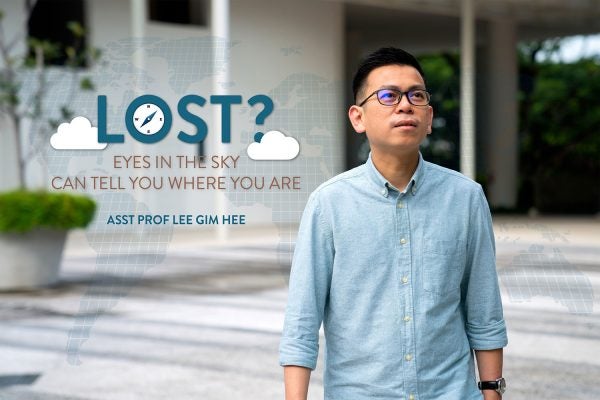
Gim Hee Lee is an Associate Professor at the Department of Computer Science, National University of Singapore (NUS) School of Computing. He heads the Computer Vision and Robotic Perception (CVRP) Laboratory and holds affiliations with the NUS Graduate School for Integrative Sciences and Engineering (NGS) and the NUS Institute of Data Science (IDS). Previously, he was a researcher at Mitsubishi Electric Research Laboratories (MERL) in the USA and worked at DSO National Laboratories in Singapore. Education Dr.sc. in Computer Science from ETH Zurich M.Eng. in Mechanical Engineering from National University of Singapore B.Eng. in Mechanical Engineering (1st Class Honors) from National University of Singapore Research Interests Professor Lee's research focuses on Computer Vision , Robotic Perception , and Machine Learning , with specialization in dynamic 3D scene reconstruction, event camera applications, and cross-view geo-localization. His work bridges theoretical advances with real-world applications in autonomous systems and augmented reality, particularly through neural scene representations and geometric computer vision techniques. Scientific Awards Faculty Teaching Excellence Award (AY 2018/19 and AY 2017/18) CVPR 2014 Doctoral Consortium Travel Award Finalist for IROS 2012 Best Paper Award Finalist for IROS 2012 Best Video Award Advising and Service Professor Lee serves as Associate Editor for IJCV and has held Area Chair positions for major conferences including CVPR, ICCV, ECCV, and NeurIPS. He chaired Program Committees for 3DV 2022 and served as Demo Chair for CVPR 2023. His research on the Cross-View Matching Network (CVM-Net) demonstrated real-time ground-to-aerial geo-localization in moving vehicles, establishing a benchmark for subsequent research in this field. Laboratories He leads the Computer Vision and Robotic Perception (CVRP) Laboratory at NUS, which develops cutting-edge solutions for 3D scene understanding, event-based vision, and robotic navigation. The lab's work includes acquiring high-quality datasets for dynamic scene reconstruction and advancing neural representations for real-world applications.
James Holly, Jr. is an Assistant Professor in the Department of Mechanical Engineering at the University of Michigan, College of Engineering. His research focuses on counteracting anti-Black racism in engineering education and practice through interdisciplinary approaches combining engineering, education studies, and Black studies. He holds a Ph.D. in Engineering Education from Purdue University (2018), an M.S. in Mechanical Engineering from Michigan State University (2014), and a B.S. in Mechanical Engineering from Tuskegee University (2011). Research interests include Black-centered design, eco-centric materials, pre-college engineering education, and sociotransformative frameworks. His work addresses systemic inequities by centering marginalized perspectives and challenging traditional epistemic foundations in engineering. Recent projects include the NSF CAREER Award-funded initiative “Learning from Black Intellectualism: Broadening Epistemic Foundations in Engineering Education to Empower Black Students and Faculty” . Holly has received notable recognition including the 2023 Provost’s Teaching Innovation Prize for his (Re)Politicizing Engineering Knowledge Through Racism-Conscious Instruction project. He actively engages with national organizations like the American Society for Engineering Education and National Society of Black Engineers. His advising style emphasizes student autonomy, weekly one-on-one meetings, and opportunities for teaching experience via GSI roles. He prioritizes annual progress reviews and encourages students to pursue internships aligned with their goals. Awards and grants include an Anti-Racism Grant from U-M’s College of Engineering (2022) and speaking engagements at the National Academy of Engineering’s Frontiers of Engineering Symposium. His work bridges critical theory with actionable pedagogical strategies, aiming to redefine engineering’s societal role through equity-centered practices.
Prof. Ryan Cotterell is an Assistant Professor in the Department of Computer Science at ETH Zürich. His research focuses on machine learning and natural language processing, particularly in transformer models, syntactic control of language systems, and computational linguistics. He teaches courses such as Neural Networks and Computational Complexity, Natural Language Processing, and Advanced Topics in Machine Learning. His work bridges theoretical foundations and practical applications, exploring topics like language model expressivity, information locality, and formal language theory. Recent publications highlight innovations in controlled generation, model evaluation, and multimodal systems. While no specific awards are listed, his contributions to the field are evident through his extensive publication record and academic roles. Advising and grant details are not explicitly mentioned in the provided texts, but his involvement in teaching and research indicates active mentorship and project leadership. No lab or team affiliations specific to Ryan Cotterell are detailed here.
Ville Eloranta is a Senior University Lecturer at the Department of Management Studies, Aalto University, School of Business. He holds a Doctoral degree in Engineering and Technology from Aalto University (2016) and a Master's degree from Helsinki University of Technology (2010). His research focuses on blockchain technology, business models in decentralized ecosystems, anti-rival systems, and complexity management in digital transformation. He has led projects such as the ATARCA initiative on anti-rival coordination and received the EIC Blockchain for Social Good Prize (2020). Eloranta's work explores how digital protocols and blockchain enable new forms of governance, value creation, and collective action in ecosystems. His recent studies include signaling mechanisms in innovation ecosystems, experiential learning in entrepreneurship education, and sNFT (shareable NFT) frameworks for incentivizing digital commons. He has collaborated internationally, presenting at conferences like HICSS and contributing to peer-reviewed journals and edited volumes. Research Themes: Blockchain, Business Ecosystems, Anti-Rival Systems, Digital Commons, Management Education Key Contributions: Frameworks for ecosystem-level business models, experimental studies on decentralized governance, pedagogical innovations in management education He has supervised one doctoral thesis and actively participates in academic governance roles, such as serving on the Board of the School of Business (2020–2021). His work bridges technical innovation with organizational strategy, emphasizing sustainability and ethical implications of emerging technologies.
John Collomosse is a Professor of Computer Vision and AI at the University of Surrey, leading DECaDE (UKRI/EPSRC Centre for the Decentralised Digital Economy) and the Centre for Vision, Speech and Signal Processing (CVSSP). He also serves as a Principal Scientist at Adobe Research, managing the Cross-Modal Representation Learning (XRL) group. His research focuses on AI, Distributed Ledger Technology (DLT), media provenance, and blockchain applications to combat misinformation and enhance data integrity. Collaborations include the Content Authenticity Initiative (CAI) and the ARCHANGEL project, which pioneered AI and blockchain for tamper-proof archives. He holds a PhD, is a Fellow of the IET, and has advised UK/EU bodies on digital economy policies. His work bridges academia and industry, with contributions to generative AI, watermarking, and decentralized systems. Publications span content authenticity, style transfer, and generative models. Awards include a 2024 prestigious fellowship. His labs include Surrey Institute for People-Centred AI (PAI) and DECaDE, fostering interdisciplinary research in AI ethics, provenance, and digital economy frameworks.
Deirdre Ahern is Professor of Law at Trinity College Dublin's School of Law and Director of the Technologies, Law and Society Research Group. She serves on Ireland's AI Advisory Council and the European Commission's Company Law Expert Group, providing policy advice on AI governance, corporate sustainability, and financial regulation. Research focuses on: Corporate governance in technological contexts AI regulation and quantum technology ethics Directors' duties in sustainability frameworks FinTech innovation and regulatory sandboxes Publications examine governance innovation during crises, corporate liability frameworks, and regulatory responses to emerging technologies. Recent work addresses generative AI governance and sustainability reporting requirements. Awards: Research Ally Award (2024) Excellence in Supervision Award (2024) Fellow of Trinity College Dublin (2012) Kevin Boyle Prize shortlist (2011) Leadership: Directs research projects on EU Corporate Sustainability Due Diligence and AI regulation. Leads PhD supervision in quantum technology ethics, AI governance, and sustainability frameworks.
Dr. Emma Hoes is a Postdoctoral Research Fellow at the Department of Political Science, University of Zurich. She holds a PhD from the European University Institute in Florence, Italy. Her research focuses on digital technologies' impact on information ecosystems, with emphasis on AI, misinformation, and content moderation. She is involved in the ERC-funded PRODIGI project and the Digital Democracy Lab. Her work challenges alarmist views on AI and disinformation, emphasizing evidence-based interventions. Key research themes include the effectiveness of misinformation countermeasures, AI governance, and the societal implications of social media. She employs experimental methods (surveys, field experiments) and computational social science approaches. Recent publications explore platform governance, media literacy, and policy U-turns. Teaching: She instructs the course Agenda Setting and the Media: Framing the Political Debate at UZH. Professional contributions include non-academic chapters on media polarization and conspiracy theories, plus media appearances in Phys , Algemeen Dagblad , and Dutch radio. Her work appears in top journals like Nature Human Behavior , Political Communication , and European Political Science Review . Ongoing projects examine AI-generated news engagement, conspiracy theory prevalence, and experimental methodological dilemmas.