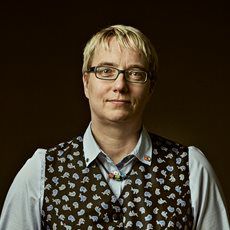
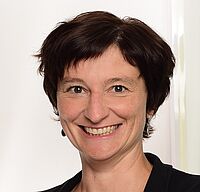
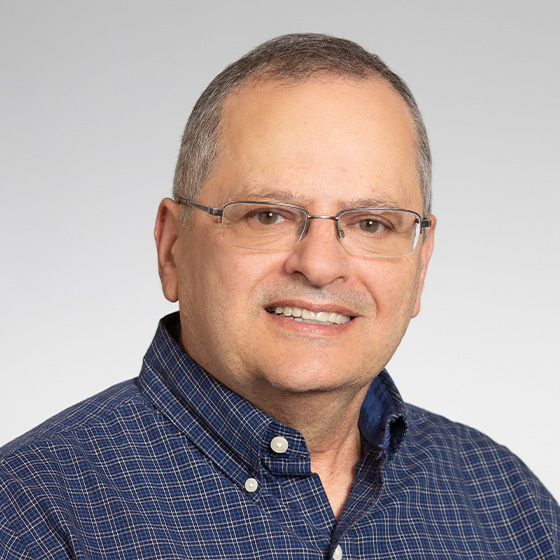
Professor Nicole Metje is a Professor of Infrastructure Monitoring at the Department of Civil Engineering, University of Birmingham, and Director of the National Buried Infrastructure Facility. She also serves as Co-director of the Institute of Quantum Technology. Her research focuses on quantum sensing, geotechnical engineering, and infrastructure monitoring, with a particular emphasis on buried infrastructure detection and sustainable urban development. Education: PhD in Civil Engineering (University of Birmingham, 2001); Dipl.-Ing. in Civil Engineering (Hannover University, Germany, 1998). Key roles and affiliations include membership in EPSRC Infrastructure Strategic Advisory Team, Chartered Institution of Civil Engineering Surveyors, and international advisory boards for Hong Kong Polytechnic University. She has authored/co-authored over 50 journal papers and a textbook on tunnel construction. Research areas include quantum sensor applications for buried asset detection, geophysical soil properties, and sensor development for infrastructure monitoring. She leads projects such as UKCRIC National Buried Infrastructure Facility and Quantum Technology Hub in Sensors and Metrology. Awards and fellowships include FICE, FCInstCES, CEng, FHEA, and multiple committee memberships in national/international bodies. Teaching includes MSc courses on underground construction and geotechnical engineering. She supervises doctoral research on quantum sensors, soil-structure interactions, and sustainable infrastructure.
Steffi Colyer is a Senior Lecturer in Biomechanics at the Department for Health, University of Bath. She is affiliated with the Centre for Health and Injury and Illness Prevention in Sport and the Bath Institute for the Augmented Human. Her research is supported by major grants from EPSRC and ESA, focusing on elite athletic performance, rehabilitation, and motion analysis technologies. Her research interests center on biomechanics of athletic performance, particularly in sports such as skeleton, badminton, and sprinting. She investigates the kinetic and kinematic determinants of elite performance, develops markerless motion capture systems for real-world analysis, and applies musculoskeletal modelling to understand internal loading and adaptation in normal and simulated gravity environments. Her work bridges sports science, engineering, and rehabilitation. The recent trend in her publications shows a strong focus on markerless motion analysis, pose estimation, musculoskeletal modelling, and the biomechanics of sprinting and racket sports. She leverages advanced computational methods, including deep learning and in silico simulations, to improve performance analysis and injury prevention. Her scientific awards include: ISBS New Investigator Award finalist (oral) (co-author), 2022 Departmental Staff Award for Innovation in Learning and Teaching, 2025 She has supervised multiple research students and projects, including PhD and postdoctoral work, and is actively involved in peer review for journals such as Journal of Sports Sciences , Scientific Reports , and Journal of Biomechanics . She leads the IAA project on markerless motion capture for skeleton push-start analysis and contributes to the CAMERA initiative, a major interdisciplinary research center focused on motion analysis and virtual reality applications. Her research is conducted within the Centre for the Analysis of Motion, Entertainment Research and Applications (CAMERA), where she collaborates with computer scientists, engineers, and sports scientists to develop and apply cutting-edge motion capture technologies in real-world settings.
Prof. Dr.-Ing. Annette Eicker is a Professor of Geodesy and Adjustment Calculations at the HafenCity University Hamburg (HCU), where she has been serving since 2016. Prior to her current position, she was an Academic Councillor at the Institute of Geodesy and Geoinformation at the University of Bonn (2014-2016), and has held visiting research positions at NASA's Jet Propulsion Laboratory in Pasadena, USA (2015) and the University of Rennes 1 in France (2014). Her research focuses on satellite gravimetry, particularly utilizing GRACE (Gravity Recovery and Climate Experiment) and GRACE-FO (Follow-On) mission data to monitor terrestrial water storage, study climate-related mass changes, and develop advanced methods for gravity field recovery. Her work bridges geodesy, hydrology, and climate science, with significant contributions to understanding global water cycle dynamics and developing next-generation gravity missions like MAGIC (Mass-change And Geosciences International Constellation). Analysis of her recent publications reveals a strong emphasis on improving the accuracy and applications of satellite gravity data for hydrological monitoring, with increasing focus on next-generation missions and daily gravity field solutions. Her research spans from fundamental method development (e.g., GROOPS software toolkit) to practical applications for water resource management and climate change monitoring. Prof. Eicker's work demonstrates leadership in the field of satellite gravimetry, with numerous publications in high-impact journals addressing critical challenges in Earth observation and climate monitoring. Though specific awards aren't mentioned in the provided materials, her extensive publication record and leadership in major projects like MAGIC indicate significant recognition within the geodetic and hydrological communities. Her research has strong implications for understanding climate change impacts on water resources, with applications in drought monitoring, flood risk assessment, and sustainable water management. She maintains active collaborations with international institutions including NASA's Jet Propulsion Laboratory and has contributed to major initiatives like the GlobalCDA Project, which integrates geodetic and remote sensing data with hydrological models.
Badi H. Baltagi is a Distinguished Professor of Economics and Senior Research Associate at the Center for Policy Research, Maxwell School of Citizenship and Public Affairs, Syracuse University. He previously served as the George Summey, Jr. Professor of Liberal Arts at Texas A&M University (1993–2005) and has held visiting positions at the University of Arizona and the University of California, San Diego. He currently holds a part-time chair position in Economics at the University of Leicester, United Kingdom. Ph.D. in Economics, University of Pennsylvania, 1979 Baltagi’s research focuses on econometrics, particularly panel data, spatial econometrics, health econometrics, and theoretical econometrics. His work has significantly advanced methodologies in fixed and random effects models, spatial dependence, and network effects in panel data. He is renowned for his authoritative textbooks, including Econometric Analysis of Panel Data and Econometrics , which are standard references in graduate econometrics courses worldwide. His recent publications (2021–2025) demonstrate a strong trend toward integrating spatial and network structures into panel data models, with applications in health, labor, and international trade. He frequently publishes in top journals such as Journal of Econometrics , Econometric Reviews , and Economics Letters , emphasizing robust estimation, specification testing, and dynamic modeling. Kuwait Prize for Economics and Social Sciences (2018) Distinguished Achievement Award in Research, Texas A&M University (2002) Multa and Plura Scripsit Awards, Econometric Theory Distinguished Authors Award, Journal of Applied Econometrics Fellow, Journal of Econometrics Fellow, Econometric Reviews Fellow, International Association for Applied Econometrics Fellow, Spatial Econometrics Association Fellow, Society for Economic Measurement Research Fellow, IZA (since 2002) Research Fellow, CESifo (since 2003) Global Labor Organization (GLO) Fellow Lifetime Fellow, Economic Research Forum (MENA region) Baltagi has held major editorial roles, including co-editor of Economics Letters (2011–present), former editor of Empirical Economics (1999–2018), and replication editor for Journal of Applied Econometrics (2003–2018). He is the series editor for Contributions to Economic Analysis (Emerald Publishing) and Advanced Studies in Theoretical and Applied Econometrics (Springer). He has advised numerous Ph.D. students and collaborates extensively with researchers globally, particularly in spatial and health econometrics. He is actively involved in organizing and presenting at major conferences such as the International Panel Data Conference and the International Association of Applied Econometrics. Baltagi is a founding member and former director of the International Association for Applied Econometrics and serves on the board of directors and advisory boards of the Spatial Econometrics Association and the Journal of Spatial Econometrics , respectively. His leadership in establishing and promoting specialized econometric fields underscores his influence in shaping modern econometric research.
Dr. Thomas Gruber is an Academic Director at the Institute for Astronomical and Physical Geodesy, Technische Universität München (TUM), where he leads research in high-resolution Earth gravity field modeling and satellite gravimetry. He is actively involved in major international projects including ESA’s GOCE, MAGIC, and QSG4EMT, as well as DFG-funded initiatives like NEROGRAV and UPLIFT. His work bridges theoretical geodesy with practical Earth observation applications. His primary research interests include: High-resolution gravity field modeling Satellite and quantum gravimetry Time-variable gravity and geophysical mass transport Sea level studies and altimetry Geodetic SAR for height system unification Future gravity mission concepts His recent publications focus on next-generation satellite missions, quantum sensors, and the integration of satellite and terrestrial gravity data. Trends indicate a strong emphasis on improving temporal and spatial resolution of gravity field models, with applications in climate monitoring, hydrology, and oceanography. He plays a key role in defining Essential Geodetic Variables (EGVs) and advancing global geodetic infrastructure through GGOS. Scientific contributions include leadership in: Development of global gravity models (e.g., XGM, GOCO) GOCE mission data processing and validation ESA and DFG project coordination International collaboration through IAG and GGOS He advises doctoral and master’s students and participates in national and international grant-funded research. He leads or contributes to teams working on: Gravity field combination and error modeling Quantum sensor simulation (CARIOQA-PMP) Geodetic SAR applications Sea level and mass transport analysis
Shaowei Wang is a Professor in the Department of Engineering Mechanics at the School of Civil Engineering, Shandong University, China. He holds a Ph.D. in Mathematics (2007) from Shandong University and completed post-doctoral research in fluid mechanics (2009) at Peking University. His research focuses on heat and mass transfer in porous media , fluid mechanics , and mathematical methods in mechanics . His recent publications highlight advancements in electro-osmotic flows, oscillatory non-Newtonian fluid dynamics, and stability analysis of bioconvection in porous media. Key themes include modeling viscoelastic fluids (Oldroyd-B, Maxwell), fractional calculus applications, and microchannel transport phenomena. First Prize in Natural Science of the Ministry of Education (2015) Second Prize of Natural Science Award of Shandong Province (2015) Du Qinghua Young Scholar Award (2016) Wang serves as Director of Shandong Society of Mechanics and editorial board member of multiple journals. His work bridges theoretical fluid dynamics with practical applications in microfluidics and geophysical systems.
Dan Wik is an Associate Professor in the Department of Physics & Astronomy at the University of Utah . His research focuses on observational X-ray astronomy, particularly galaxy clusters, inverse Compton scattering, X-ray binaries, and the X-ray background. He has extensive experience in data calibration, analysis tool development, and mission collaborations such as NuSTAR, Chandra, and XRISM. Wik holds a PhD in Astronomy from the University of Virginia (2010) and a BS in Astrophysics from Ohio University . His research interests span galaxy cluster mergers, nonthermal emission processes, high-energy astrophysics, and cross-calibration studies between X-ray observatories. Recent articles highlight his work on NuSTAR observations of galaxy clusters, X-ray binary populations in M31 and M33, inverse Compton emission constraints, and stray light background analysis techniques. His studies often integrate multiwavelength data and address cosmological implications of X-ray observations. Wik has received multiple grants from NASA for projects like Time Domain X-ray Studies of AGN and Hard Bandpass Extension of XRISM Cluster Observations . He supervises undergraduate and graduate researchers and teaches courses from general education to advanced graduate levels, including Foundations of Astronomy and High Energy Astrophysics .
Sebastian Murgueitio Ramirez is an Associate Professor in the Department of Philosophy at Purdue University, specializing in the philosophy of physics and metaphysics of natural laws. His academic journey includes a PhD in the history and philosophy of science and a master’s in physics from the University of Notre Dame, along with dual bachelor’s degrees in philosophy and physics from Universidad de los Andes (Colombia). His research focuses on symmetries in quantum mechanics, the metaphysics of physical laws, and the historical foundations of quantum theory. He has contributed to journals like The British Journal for the Philosophy of Science and Studies in the History and Philosophy of Modern Physics . His work spans empirical significance of symmetries, relativistic principles, and causation in general relativity. His recent publications examine non-relational empirical significance, shape dynamics, and the intersection of local symmetries with measurement theory. He also led the digitization of Epistemological Letters , a pivotal 1970s journal for Bell inequality discussions, and created studia.app , a free physics pedagogy resource. Postdoctoral Fellowship, University of Oxford (2021-2022) Collaborator, Event Horizon Telescope project (2023)
Claude Warnick is a Professor of Mathematical Physics at the University of Cambridge, holding a joint appointment between the Department of Pure Mathematics and Mathematical Statistics (DPMMS) and the Department of Applied Mathematics and Theoretical Physics (DAMTP). His research focuses on partial differential equations (PDEs), particularly hyperbolic PDEs with applications in classical general relativity. Notably, he studies gravitational waves, black hole dynamics, and the mathematical properties of spacetime geometries such as Anti-de Sitter (AdS) space and extremal black holes. His work has contributed to understanding quasinormal modes, stability analyses, and boundary conditions in curved spacetimes. Affiliations: DPMMS & DAMTP, Faculty of Mathematics, University of Cambridge Key Research Areas: PDE Analysis, General Relativity, Mathematical Physics His research interests include the rigorous analysis of wave equations in curved spacetime, with applications to gravitational waves and the LIGO observations, as well as the study of black hole stability and asymptotic properties of field equations in AdS. He has contributed to the understanding of quasinormal modes, which describe the ringdown phase of black holes, and their role in characterizing black hole parameters. Warnick’s publications span over 20 years, addressing topics such as the stability of AdS spacetimes, the behavior of fields near black hole horizons, and the interplay between geometry and field equations in general relativity. His work combines analytical techniques from PDE theory with geometric insights from general relativity. His academic homepage is https://www.dpmms.cam.ac.uk/~cmw50 .
Dr. Mahdiyeh Razeghi is a Lecturer in Surveying and Spatial Science at the University of Southern Queensland (UniSQ), affiliated with the School of Surveying and Built Environment. Her research focuses on integrating Earth observation satellites (e.g., GRACE, GNSS, InSAR) with hydro-climate models to study water resources, land deformation, groundwater depletion, and climate change impacts. She holds a PhD from the University of Newcastle (2020) and has held roles including Research Fellow at the Australian National University (ANU) and Postdoctoral Fellow at ANU's Research School of Earth Sciences. Her expertise spans satellite gravimetry, GNSS-IR for soil moisture, drought resilience, and groundwater storage estimation. Key projects include the Great Artesian Basin (GAB) study with Geoscience Australia and innovative methodologies published in AGU’s Eos magazine. She is affiliated with the Centre for Sustainable Agricultural Systems and the Institute for Resilient Regions, emphasizing agricultural drought adaptation. Research outputs include over 20 peer-reviewed articles since 2011, with recent work addressing Australia’s flood events, coal seam gas impacts on groundwater, and GRACE Follow-On mission analyses. Her work bridges geodesy, environmental remote sensing, and climate-driven water sustainability, with industry applications in rural resilience strategies. Professional memberships include the European Geosciences Union (EGU) and American Geophysical Union (AGU). Her teaching interests align with digital twins and GNSS technologies, reflecting her commitment to advancing geospatial education and applied research.
Rajendra Gupta is an Assistant Professor in the Department of Physics at the University of Ottawa. His research focuses on astrophysics, cosmology, and general relativity, with an emphasis on evolving physical constants, the dynamics of the universe, and observations using facilities like the James Webb Space Telescope (JWST). He holds a PhD in Physics from the University of Allahabad, India, and has been affiliated with institutions including the National Research Council of Canada, McGill University, and the University of Manitoba. His research interests include cosmological models beyond the standard framework, analysis of cosmic microwave background (CMB) data, baryon acoustic oscillations (BAO), and dark matter/energy studies. He actively explores how variations in fundamental constants (e.g., gravitational constant, fine-structure constant) impact astrophysical phenomena such as supernova luminosity, quasar spectra, and early universe conditions. His recent publications (2020–2024) investigate topics like CCC+TL cosmology, JWST observations of the early universe, and constraints on varying constants using quasars and gravitational lensing. He also contributes to metrology through experiments like inertial mass measurement with Kibble balances. Dr. Gupta teaches astrophysics at both undergraduate and graduate levels and maintains an active research program analyzing observational data from cutting-edge telescopes and theoretical models. His work bridges theoretical cosmology with experimental astrophysics, addressing longstanding questions like the lithium problem and the faint young Sun paradox.
Prof. Domenico Giulini is a Professor for Theoretical Physics at Leibniz University Hannover, affiliated with the Institute of Theoretical Physics and the Riemann Center for Geometry and Physics. He holds a PhD (1990) from the University of Cambridge and has held academic positions at institutions including the University of Freiburg, University of Zurich, and the Max Planck Institute for Gravitational Physics. His research focuses on theoretical/mathematical aspects of general relativity, including exact solutions, asymptotic symmetries, and quantum gravity applications. Education: 1981–1984: Undergraduate studies in Physics and Mathematics at University of Heidelberg 1984–1985: Part III Mathematical Tripos at University of Cambridge 1985–1990: Graduate studies and PhD at University of Cambridge 1996: Habilitation (Venia Legendi) at University of Freiburg Research Interests: Giulini's work addresses foundational questions in general relativity, such as the Hamiltonian formulation, gravitational wave dynamics, black hole thermodynamics, and the interplay between quantum mechanics and classical gravity. He also explores post-Newtonian approximations and geometric aspects of spacetime structure. Recent lectures cover advanced topics like canonical gravity, relativistic localization, and quantum cosmology. Teaching: He has taught courses on analytical mechanics, general relativity, electrodynamics, and black hole physics. Notable seminars include explorations of global black hole properties, Hamiltonian systems with symmetries, and KAM theory. Affiliations: Member of the QUEST cluster of excellence (Quantum Engineering and Space-Time Research) and collaborator with the Center of Applied Space Technology and Microgravity (ZARM). Labs/Teams: Leads the Giulini Research Group, focusing on theoretical physics and mathematical methods in relativistic field theories.
Omid Elmi is a Researcher at the Department of Geodesy within the Institute of Geodesy at the University of Stuttgart. His work focuses on advancing satellite-based remote sensing techniques for hydrological applications, particularly in monitoring global water resources and dynamics. Key areas of research include satellite altimetry, river discharge estimation, and the integration of geodetic data with hydrological models. Elmi’s research emphasizes innovative methods such as bin-space-time (BiST) retracking, probabilistic drought characterization, and automated tools for analyzing satellite imagery (e.g., Google Earth Engine). His contributions address critical challenges in water resource management, environmental sustainability, and climate change adaptation through cutting-edge geodetic and remote sensing technologies. His publications highlight advancements in satellite mission design for river monitoring, spatio-temporal data analysis, and the application of Bayesian methods to improve inland water altimetry. Elmi’s work bridges geodesy, hydrology, and environmental science, offering practical solutions for global change monitoring.
William Ward is a Professor of Physics at the University of New Brunswick (UNB), specializing in Space and Atmospheric Physics. His research focuses on advancing atmospheric models and satellite instrumentation to study planetary atmospheres, with a particular emphasis on the terrestrial middle/upper atmosphere. He leads the development of innovative optical interferometers, including a new ground-based instrument capable of capturing wind and airglow data at unprecedented speeds. Dr. Ward holds a PhD in Physics and oversees graduate student opportunities in atmospheric dynamics, remote sensing technologies, and interdisciplinary climate modeling. His work integrates data assimilation techniques to bridge observational and computational approaches, addressing pressing issues like human-driven atmospheric changes. Key research areas include: planetary atmospheric dynamics, satellite mission design (e.g., RADICALS), airglow spectroscopy, and wave interactions in polar regions. Collaborations span Canadian institutions for Mars atmosphere studies and climate-weather coupling investigations. Recent projects involve analyzing sudden stratospheric warmings and developing instruments for Martian atmospheric exploration. His lab develops cutting-edge interferometric systems and contributes to global initiatives like the Interhemispheric Coupling Study (ICSOM). Despite extensive publications and instrumentation breakthroughs, no specific awards or grants are explicitly listed in the provided texts.
Associate Professor Christian Wolf is an astronomer at the Australian National University (ANU), affiliated with the Research School of Astronomy and Astrophysics within ANU College of Science. He holds a PhD from the Max-Planck-Institute for Astronomy (1999) and has held roles at the University of Oxford until 2013. His research focuses on supermassive black hole growth, accretion discs, wide-field surveys (LSST, eROSITA, SkyMapper), and gravitational-wave counterpart detection. He leads the SkyMapper Group and has contributed to projects like the COMBO-17 survey and All-sky Astrophysics (CAASTRO). His work includes discovering ultra-luminous quasars and studying galaxy evolution. Supervised students include Neelesh Amrutha, Zachary Steyn, and Ashley Hai Tung Tan. Over 130 publications span quasar studies, black hole dynamics, and survey methodologies. Education: PhD (1999), Max-Planck-Institute for Astronomy; Postdoctoral roles at MPIA Heidelberg (until 2001) and University of Oxford (STFC Fellow 2004-2009). Research interests emphasize observational cosmology, quasar variability, and multi-wavelength surveys. Key projects include the SkyMapper Southern Survey (DR2/4) and the AllBRICQS quasar survey. His publications often address black hole accretion, galaxy evolution, and survey techniques.