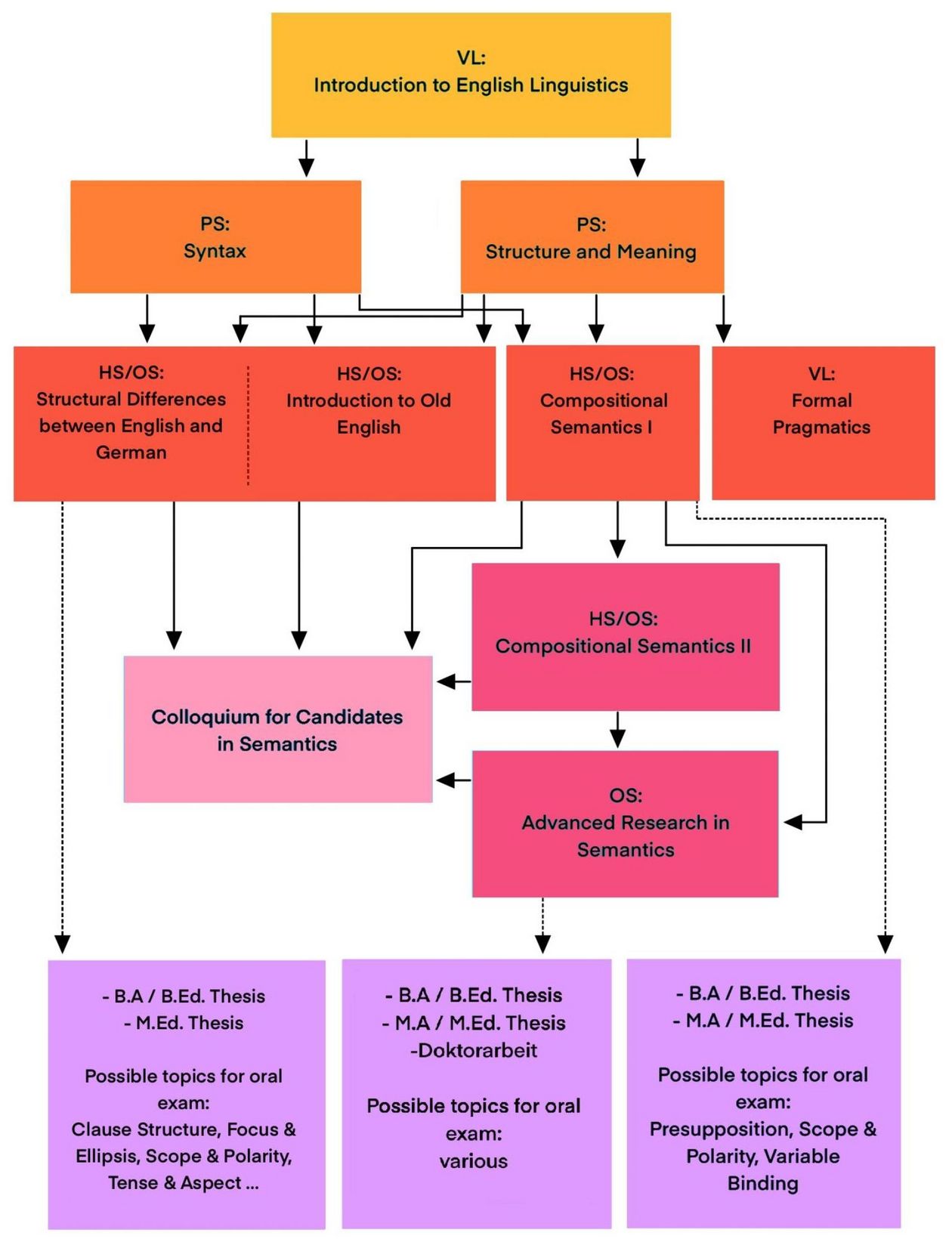
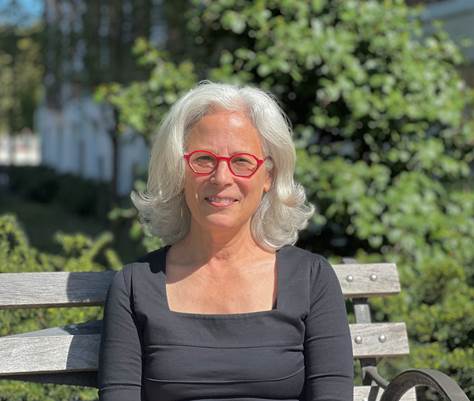
Prof. Dr. Sigrid Beck holds the Chair of Descriptive and Theoretical Linguistics at the Department of English, University of Tübingen. She is affiliated with the Faculty of Humanities and specializes in semantics, focusing on questions, focus structures, plurals, comparison constructions, and decomposition adverbs. Her research integrates crosslinguistic, diachronic, and acquisition data to inform semantic theory. Education: PhD (1996) and Habilitation (2003), University of Tübingen and Goethe University Frankfurt Key positions: Held roles at MIT, University of Massachusetts Amherst, University of Connecticut, and University of Potsdam Publications include Structure and Meaning: Contrasting English and German Grammar (2014) and foundational lecture notes on tense and modality (2011). She teaches semantics and syntax within the Department's structured program. Office hours are Tuesdays 4-5pm via secretary appointment.
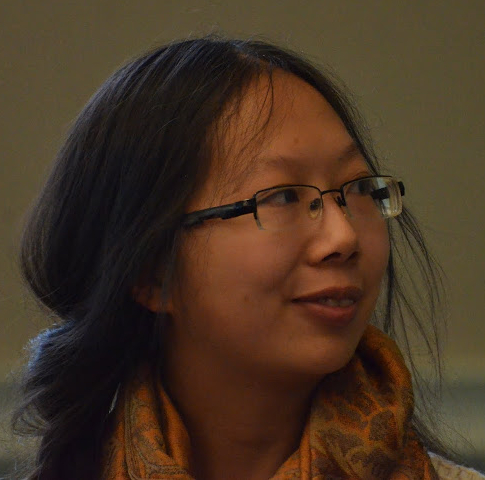
Mai Ha Vu is an Assistant Professor at the University of Toronto Mississauga , split between the Department of Language Studies and the Department of Mathematics, Computer Science, and Statistics . Her work bridges theoretical linguistics, computational methods, and biological data modeling. Ph.D. in Linguistics, University of Delaware (2020) M.A. in Linguistics, University of Delaware (2014) B.A. in Psychology and Linguistics, Grinnell College (2013) Research focuses on applying formal language theory to understand human language patterns and train biologically reliable language models . Recent work includes antibody language modeling (Nature Computational Sciences 2022) and syntax-prosody mapping via logical transductions (SIGMORPHON 2022). Key research trends in publications: interdisciplinary applications of computational linguistics to immunology, psycholinguistic modeling of neural language models, and formal syntactic analysis of negation and wh-questions across languages.
Ian Quinn is the Allen Forte Professor of Music Theory and Director of Graduate Studies (DGS) at Yale University, within the Department of Music in the College of Arts and Science. He holds a B.A. from Columbia University (1993), M.A. and Ph.D. from the Eastman School of Music (1998, 2004). Prior to Yale, he taught at the University of Chicago and University of Oregon, and was a CASBS Residential Fellow at Stanford (2008-09). His research focuses on tonal harmony, corpus studies, music cognition, and the intersections of mathematics and computation in music theory. He edited the Journal of Music Theory (2004–2011) and co-organized the 2009 Society for Mathematics and Computation in Music conference. He leads the Yale-New Haven Regular Singing (YNHRS) shape-note singing group and serves on editorial boards for Journal of Mathematics and Music and the Northeast Music Cognition Group (NEMCOG). Quinn’s work has earned awards from the Society for Music Theory, including the Emerging Scholar Award (2004) and Outstanding Publication Award (2006/2007). His research spans analytical frameworks for harmonic function, corpus-based studies of tonal systems, and empirical investigations of music perception. He has advised over 15 doctoral students, many now in academic and industry roles. Key collaborations include co-authoring the Oxford Handbook of Corpus Studies in Music (2023) and developing the Yale-Classical Archives Corpus. His work bridges theoretical, computational, and historical approaches to music analysis, with contributions to Science , Music Theory Spectrum , and Perspectives of New Music .
Yoshiko Matsumoto is the Yamato Ichihashi Professor in Japanese History and Civilization and Professor of East Asian Languages and Cultures at Stanford University, with a courtesy appointment in Linguistics. She has been a faculty member at Stanford since 1992, progressing from Assistant Professor to her current distinguished position. Matsumoto also serves as coordinator of the Japanese Language Program and has held significant administrative roles including Chair of the Department of Asian Languages (2003-2005) and Interim Chair of the Department of East Asian Languages and Cultures (2016). Matsumoto earned her Ph.D. in Linguistics from the University of California, Berkeley (1989), following M.A. degrees in Linguistics from UC Berkeley and General and Applied Linguistics from the University of Tsukuba, an M.I.A. in American Studies from the University of Tsukuba, and a B.A. in English Language & Literature from Japan Women's University. Professor Matsumoto's research focuses on linguistic pragmatics from cross-linguistic perspectives, with particular expertise in Japanese language. Her work spans structural and sociocultural aspects of language in use, including noun-modifying clause constructions, honorifics, discourse markers, and the intersection of language with gender and aging. She has pioneered research on conversational narratives of older adults, examining how ordinary framing strategies help individuals navigate difficult experiences. Her current projects explore intergenerational communication through haiku, communicative abilities of people with dementia, and noun-modifying constructions across Eurasian languages. Matsumoto's scholarship consistently bridges theoretical linguistics with practical applications for understanding human communication in diverse social contexts. Matsumoto's recent publications reveal a growing focus on practical applications of linguistic research for social benefit, particularly in intergenerational communication and dementia care. Her work increasingly integrates arts-based approaches, especially haiku poetry, to bridge generational divides and enhance communication with elderly populations. The research shows a consistent trajectory from theoretical linguistic frameworks toward applied, human-centered language studies that address real-world challenges in aging societies, with particular attention to how ordinary language practices help individuals navigate life transitions and difficult experiences. Dean's Award for Distinguished Teaching, School of Humanities and Sciences, Stanford University (2000) Richard E. Guggenhime Faculty Scholar, Stanford University (2000-2003) Violet Andrews Whittier Fellow, Stanford Humanities Center (2019-2020) Faculty Research Fellow, Michelle R. Clayman Institute for Gender Research (2014-2015) Research Fellow, Japan Foundation (2002) Internal Fellow, Stanford Humanities Center (2005-2006) Presidential Fund for Innovation in the Humanities, Stanford University (2009-2011) Professor Matsumoto has mentored numerous students through her teaching in Japanese language and linguistics courses, including specialized offerings on language and aging, points in Japanese grammar, and haiku-based communication. Her research has been supported by prestigious grants from the National Endowment for the Humanities, the Japan Foundation, and Stanford's Presidential Fund for Innovation in the Humanities. She has served on multiple editorial boards including the Journal of Pragmatics since 1992, demonstrating long-standing leadership in her field. Matsumoto has also advised students through individual studies and thesis projects in East Asian Languages and Cultures. Matsumoto leads several collaborative research initiatives including the 'Sharing Conversations' project which examines intergenerational communication through haiku, and research on communicative abilities of people with dementia. Her work often involves interdisciplinary teams spanning linguistics, gerontology, and creative arts, with fieldwork conducted in both Japan and the United States. The 'Noun-Modifying Constructions in Languages of Eurasia' project represents a major international collaboration examining linguistic structures across cultural boundaries. She also directs the 'Language, Old Age and Gender in Japan' project supported by the Stanford University/Japan Foundation, and the 'Difficult Conversations Continue: Memories of the 3.11 Disaster and Bereavement Narratives' project focused on post-disaster communication.
Marc Authier is a Professor of French and Linguistics at The Pennsylvania State University's Department of French and Francophone Studies, part of the College of the Liberal Arts. His research focuses on syntactic theory, semantic theory, and Romance linguistics, with special emphasis on French constructs. He holds a Ph.D. from the University of Southern California. His professional bio highlights expertise in clausal structure, implicit arguments, polarity, quantification, and reference in Romance and Germanic languages. His work bridges theoretical linguistics with formal semantics and mathematical logic. Authier's recent publications (2014–2025) explore French syntax phenomena such as ellipsis, exceptives, mirative focus fronting, and quantification dynamics. He engages with debates on syntactic structures, phonological overt elements, and the syntax-semantics interface. No scientific awards are explicitly mentioned, though his extensive publication record suggests significant scholarly contributions. He has no listed advisees or grants in the provided data.
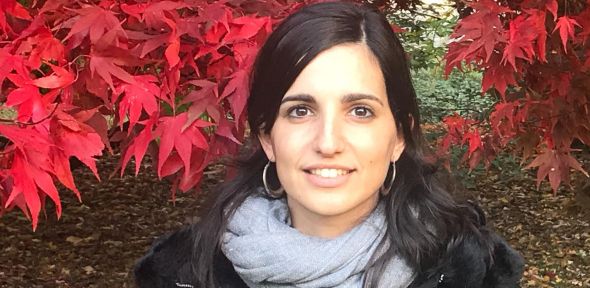
Dr Ares Llop Naya serves as an Affiliated Catalan Lecturer in the Department of Spanish and Portuguese within the Faculty of Modern and Medieval Languages and Linguistics at the University of Cambridge, while holding the Batista i Roca Fellowship at Fitzwilliam College. Her academic profile bridges theoretical linguistics with practical language pedagogy, focusing on Romance language structures and their educational applications. Her research centers on microsyntactic variation in Romance languages, particularly examining negation systems and syntactic phenomena in Catalan and Pyrenean varieties through both diachronic and synchronic lenses. She actively integrates theoretical insights into language teaching methodology, specializing in Catalan and Spanish pedagogy for both native and foreign language contexts. This dual focus manifests in her publications spanning syntactic theory, dialectology, and innovative language teaching approaches that address contemporary classroom challenges. Analysis of her publication trajectory reveals consistent thematic concentration on Romance microvariation, with recent work expanding into pedagogical applications. Her scholarship demonstrates methodological diversity—combining linguistic atlas data, corpus analysis, and classroom research—while maintaining core focus on Catalan syntax and its implications for language acquisition theory. The Pyrenean linguistic corridor remains a persistent geographical anchor across her diachronic and synchronic investigations. Dr Llop Naya's scholarly contributions have been recognized through prestigious awards: Joan Solà International Prize in Catalan Philology for her monograph on Romance negation systems Her teaching portfolio encompasses advanced courses in Romance linguistics, historical syntax, and sociolinguistics, with particular emphasis on translating theoretical frameworks into practical classroom resources. While specific grant funding details aren't publicly documented, her work consistently addresses real-world language education challenges through collaborative projects like the Microvariació.cat initiative. She contributes to the Microvariació.cat project—a digital repository documenting syntactic variation across Catalan dialects—which serves as both research infrastructure and pedagogical resource. This initiative exemplifies her commitment to creating practical applications from theoretical linguistic research while preserving endangered dialectal features of the Romance continuum.
Dr. Brigitta Mittmann is a Senior Lecturer at the Department of English and American Studies, Friedrich-Alexander University Erlangen-Nuremberg (FAU), holding the Alexander von Humboldt Professorship for Language and Cognition. Her work focuses on lexicography, phraseology, and comparative analysis of spoken English varieties.
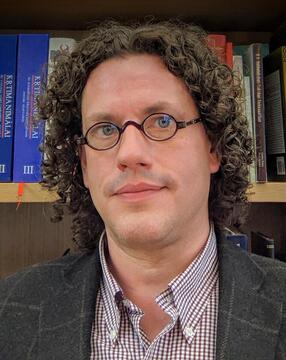
Prof. Gerhard Jäger holds the Chair of General Linguistics at the Faculty of Humanities, University of Tübingen . He serves as a Principal Investigator (PI) in the Clusters of Excellence Human Origins and Machine Learning for Science , and leads projects like Phylomilia (funded by Volkswagen Foundation) and CrossLingference (ERC Advanced Grant). His career spans multiple institutions, including Bielefeld University (2004-2009) and Stanford University (visiting scholar, 2004). Habilitation (2002) at Humboldt University Berlin with thesis on Anaphora and Type Logical Grammar PhD (1996) at Humboldt University Berlin on Dynamic Semantics His research bridges computational linguistics , phylogenetic analysis , and game theory , focusing on Bayesian models , language evolution , and cross-linguistic typology . Recent work explores phylogenetic inference from acoustic speech data and geographic influences on language trees . Key contributions include 15+ recent publications on topics spanning phylogenetic typology , cognate detection , and Bayesian language modeling . These works employ machine learning , statistical inference , and evolutionary game theory to analyze language change , typological variation , and linguistic stability . Honors include ERC Advanced Grant , Volkswagen Foundation funding , and DFG-Humanities Centre for Advanced Studies participation. He has taught courses in Computational Historical Linguistics , Phylogenetic Methods , and Bayesian Data Analysis across institutions like Tübingen, Bielefeld, and Stanford. He actively contributes to academic communities through workshop organization (e.g., Quantitative Theoretical Linguistics , Game Theory in Pragmatics ) and serves on the faculty council at Tübingen. His team collaborates with institutions like Max Planck Institute for Evolutionary Anthropology , University of Pennsylvania , and LMU Munich .
Jane Bennett is the Andrew W. Mellon Professor in Humanities at Johns Hopkins University, holding joint appointments in the Departments of Comparative Thought and Literature (CTL) and Political Science. She serves as Director of Graduate Studies for CTL and is affiliated with the Krieger School of Arts & Sciences. Her research focuses on political theory, ecophilosophy, environmental humanities, and American romanticism. Bennett has held visiting professorships at institutions including Oxford University, Birkbeck Institute for the Humanities, and the Humanities Research Centre at Australian National University. She has edited major journals like Political Theory and co-founded Theory & Event . Her influential works include Vibrant Matter (2010), translated into eleven languages, and Influx & Efflux: Writing Up with Walt Whitman (2020). Her scholarly trajectory reflects interdisciplinary engagement with new materialism, environmental ethics, and the intersections of literature and politics. Recent work addresses Anthropocene discourse, material agency, and creative approaches to ecological thinking. Bennett’s academic leadership includes seminar direction at the School for Criticism and Theory (Cornell, 2013) and global collaborations through visiting roles. Her writing bridges theoretical rigor with accessible cultural critique, emphasizing the political dimensions of nonhuman forces. Award-winning author and editor, Bennett’s contributions span academic monographs, edited volumes, and public-facing essays. Her current projects explore ‘acting amidst’ ecological crises through concepts of entanglement and material vitality. Teaching and mentorship are central to her role at Johns Hopkins, where she guides graduate studies in comparative thought and literature.
Viktória Dabóczi is a lecturer in the Department of German Studies at the University of Siegen, Faculty I. She holds a doctorate from the University of Siegen (2016) and has been actively involved in teaching and research in German linguistics since 2012. Her current academic role as AOR aZ (Akademische Oberrätin auf Zeit) began in June 2025, indicating a senior academic position. She teaches courses such as Introduction to German Linguistics, Grammatical Variation, and Language Acquisition. Research Interests: Her work focuses on word classes, spoken language, grammar theory, language acquisition, and lexical change in German, often with comparative insights from Hungarian. She investigates how words are conceptualized in speech and writing, the evolution of discourse markers, and grammatical variation in contemporary usage. The analysis of her recent publications (2005–2025) reveals a consistent focus on theoretical and applied German linguistics, with increasing attention to sociolinguistic phenomena such as pandemic-related neologisms and ideological word formations. Her research bridges empirical analysis, cognitive linguistics, and language teaching, often in interdisciplinary or contrastive frameworks. Reviewed works on German morphology and grammar Contributed to international projects like EuroGr@mm and ProGr@mm Participated in interdisciplinary conferences on ellipsis and language processing Advising and Grants: While no formal students are listed, her editorial and collaborative roles suggest mentorship and academic leadership. She has been involved in long-term research projects, including EuroGr@mm (2004–2012), indicating sustained grant-supported activity. Her current role at Siegen reflects ongoing institutional support for her research and teaching. Labs and Teams: She has collaborated with researchers at Justus Liebig University of Giessen, University of Szeged, and IDS-Mannheim. Her work with the Diskursmonitor research group and participation in interdisciplinary conferences highlight her integration into active research networks in German linguistics.
Prof. dr. Enoch O. Aboh is Professor of Linguistics at the University of Amsterdam , Faculty of Humanities, Department of Literature and Linguistics. His office is located at Spuistraat 134, room 647, and he can be contacted at e.o.aboh@uva.nl . Research Interests: Prof. Aboh’s work lies at the intersection of formal syntax, language contact, and learnability. He investigates creole formation , multilingual ecologies , Gbe and Kwa syntax , cartographic approaches to clause structure , and sign language morphosyntax . A recurring theme is the emergence and evolution of grammatical systems under contact, approached through both descriptive fieldwork and formal theoretical modelling. His publications reveal a methodological breadth spanning experimental studies with kindergarteners on statistical learning, computational detection of loanwords, and fine-grained syntactic analyses of serial verb constructions, predication patterns, and determiner systems. This spectrum underscores his commitment to integrating cognitive, typological, and formal perspectives on language. Awards & Recognition: While no specific prizes are listed in the current material, Prof. Aboh’s extensive editorial and collaborative work—evidenced by numerous co-edited volumes and Festschrift contributions—attests to his standing in the field. Students & Grants: Details on PhD advisees or funded projects are not provided in the source text. Labs & Teams: No dedicated laboratory or research group names are mentioned, yet his affiliation with the Amsterdam Center for Language and Communication (ACLC) can be inferred from the institutional context.
Haiyang Ai is an Associate Professor in the Literacy and Second Language Studies program at the University of Cincinnati's School of Education. His research applies corpus linguistics and natural language processing to investigate second language acquisition, writing complexity, and bilingual language processing. His educational background includes a Ph.D. in Applied Linguistics from The Pennsylvania State University (2015), an M.A. in Linguistics & Applied Linguistics from the University of Chinese Academy of Sciences (2006), and a B.A. in English from Shaanxi Normal University (2003). Dr. Ai's research spans corpus linguistics, natural language processing, second language acquisition, and computer-assisted language learning. He specializes in compiling and analyzing native and learner corpora to develop intelligent language learning systems and investigate lexical/syntactic complexity in L2 writing. His methodological approach integrates computational tools with theoretical linguistics to address practical language teaching challenges. His recent publications (2019-2023) demonstrate consistent focus on lexical bundles in professional communication, automating complexity measurement in Chinese, speech perception mechanisms in bilinguals, and grammatical puzzles in English learning. These works bridge corpus-based analysis with psycholinguistic experimentation across diverse subfields including morphosyntax, pragmatic competence, and cognitive processing in L2 acquisition. Dr. Ai has secured multiple University of Cincinnati grants including three CECH Faculty Development Grants ($2500 in 2017-2018 for verb-noun collocation research, $2000 in 2016-2017 for corrective feedback tools) and the NCFDD Faculty Success Program ($3250 in 2017), all supporting his development of computational language learning resources.
Dr. Weronika Mazurkiewicz is an Assistant Professor at the Department of Urban Design and Regional Planning within the Faculty of Architecture at Gdańsk University of Technology. Her work focuses on urban planning, geographic information systems (GIS), and space syntax analysis. She actively contributes to projects like DigiClimAct, addressing climate action through digital tools. Education: PhD in Architecture and Urban Planning from Gdańsk University of Technology (2019). Research interests include marketplace regeneration, elderly-friendly public spaces, hospital design for oncology patients, and sustainable urban development strategies. She has pioneered studies on outdoor gyms for seniors and spatial cognition in healthcare environments. Publications emphasize GIS integration in education, 15-minute city planning instruments, and participatory design approaches. Her work bridges theoretical urban concepts with practical policy implementation, particularly in revitalizing public spaces and enhancing urban accessibility. Grants/Projects: Project Manager for DigiClimAct (EU-funded), focusing on digital climate action in Baltic cities. Collaborates with teams on placemaking, market regeneration, and participatory urban planning methodologies. Labs/Teams: Active in the Department of Urban Design and Regional Planning, leading research groups on urban sustainability and spatial analysis techniques.
Bianca Basciano is an Associate Professor at the Department of Asian and North African Studies , Ca' Foscari University of Venice, where she has held the Director's Delegate for Research role since 2023. Her work focuses on Chinese linguistics , particularly Mandarin morphology, syntax, and second language acquisition. Research Areas: Chinese compounding, reduplication, causative constructions, resultative compounds, and language teaching methodologies. Teaching: Offers BA/MA courses in Chinese language and linguistics at Ca' Foscari University. Editorial Roles: Member of the editorial boards for Sinica Venetiana and Lingue e Linguaggio . Research Projects: Principal investigator for the PRIN 2020 project on Italian learners' acquisition of Chinese resultative verbs, with extensive corpus-based analysis. Collaborates with Giorgio Arcodia and other international scholars. Key Themes: Event structure delimitation, Vendlerian verb classes, micro-parametric syntactic variation. Publications: Over 40 works including monographs with Oxford University Press and Bologna University Press. Her methodological approach combines theoretical linguistics with corpus analysis, contributing to the understanding of Chinese as both a linguistic system and a second language acquisition challenge. She has also organized international conferences like the 31st IACL Annual Meeting.
Robert McColl Millar is a Professor at the University of Aberdeen specializing in historical linguistics and Scots language studies. His research examines language contact phenomena, dialectological variation, and sociolinguistic dynamics within Scottish linguistic communities. His primary research domains include: Historical development of Scots in relation to English and Gaelic Dialectology of Scottish regional varieties (particularly Doric and fishing community dialects) Language policy and standardization efforts for Scots Lexical variation and attrition in endangered dialects Sociolinguistic aspects of language identity and nationalism Historical sociolinguistics of Scotland Language contact-induced change Analysis of Millar's recent publications (2024-2016) reveals three dominant research trajectories: (1) Scots Language Documentation through dialect surveys, lexical studies, and orthographic analysis; (2) Language Contact Mechanisms examining borrowing, interference, and structural change in historical English; (3) Sociopolitical Dimensions exploring Scots' relationship with Scottish identity, nationalism, and language policy. His work consistently bridges theoretical linguistics with practical language planning concerns. No scientific awards are documented in the available sources. While student advising details remain unreported, his publications indicate extensive collaboration with research forums like the Forum for Research on the Languages of Scotland and Ulster. Grant funding specifics are not publicly itemized, though his edited volumes suggest institutional and conference-level support. No dedicated laboratories or research teams are specified in current public materials.