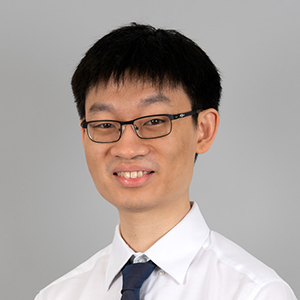
Tianyang HuView profile
Assistant Professor
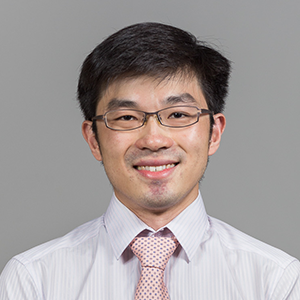
Tianyang Hu is a postdoctoral researcher at the National University of Singapore, set to join the Chinese University of Hong Kong, Shenzhen as an Assistant Professor in Fall 2025. His academic journey includes a PhD in Statistics from Purdue University under Prof. Guang Cheng, an M.S. in Statistics from the University of Chicago, and a B.S. in Mathematics from Tsinghua University. PhD in Statistics, Purdue University M.S. in Statistics, University of Chicago B.S. in Mathematics, Tsinghua University His research lies at the intersection of statistics and artificial intelligence, focusing on statistical machine learning, representation learning, and deep generative modeling . He is particularly interested in the theoretical foundations of AI, including diffusion models, large language models (LLMs), and overparametrized neural networks. His recent work explores the duality between prompting and fine-tuning, contrastive learning mechanisms, and efficient sampling in generative models. The trends in his recent publications show a strong emphasis on diffusion models , especially in conditional generation, sampling efficiency, and integration with language models. His work spans both theoretical analysis and practical algorithm design, with applications in image generation, 3D modeling, and multimodal reasoning. He has contributed to understanding the behavior of in-context learning in transformers and the role of regularization in deep networks. His scientific achievements include: Spotlight presentation at NeurIPS 2023 Spotlight presentation at NeurIPS 2022 Oral presentation at ICML Workshop 2025 Tianyang Hu is actively building his research group and is seeking PhD/MPhil students and research assistants with strong theoretical and practical AI skills. He has held research positions at Huawei Noah’s Ark Lab and is currently mentored by Prof. Kenji Kawaguchi at NUS. His work has been supported by collaborations across academia and industry, though specific grants are not listed in the text. While no formal lab name is mentioned, his future group at CUHK-Shenzhen is expected to focus on theoretical AI and generative models , with research directions in LLMs, diffusion models, and representation learning.