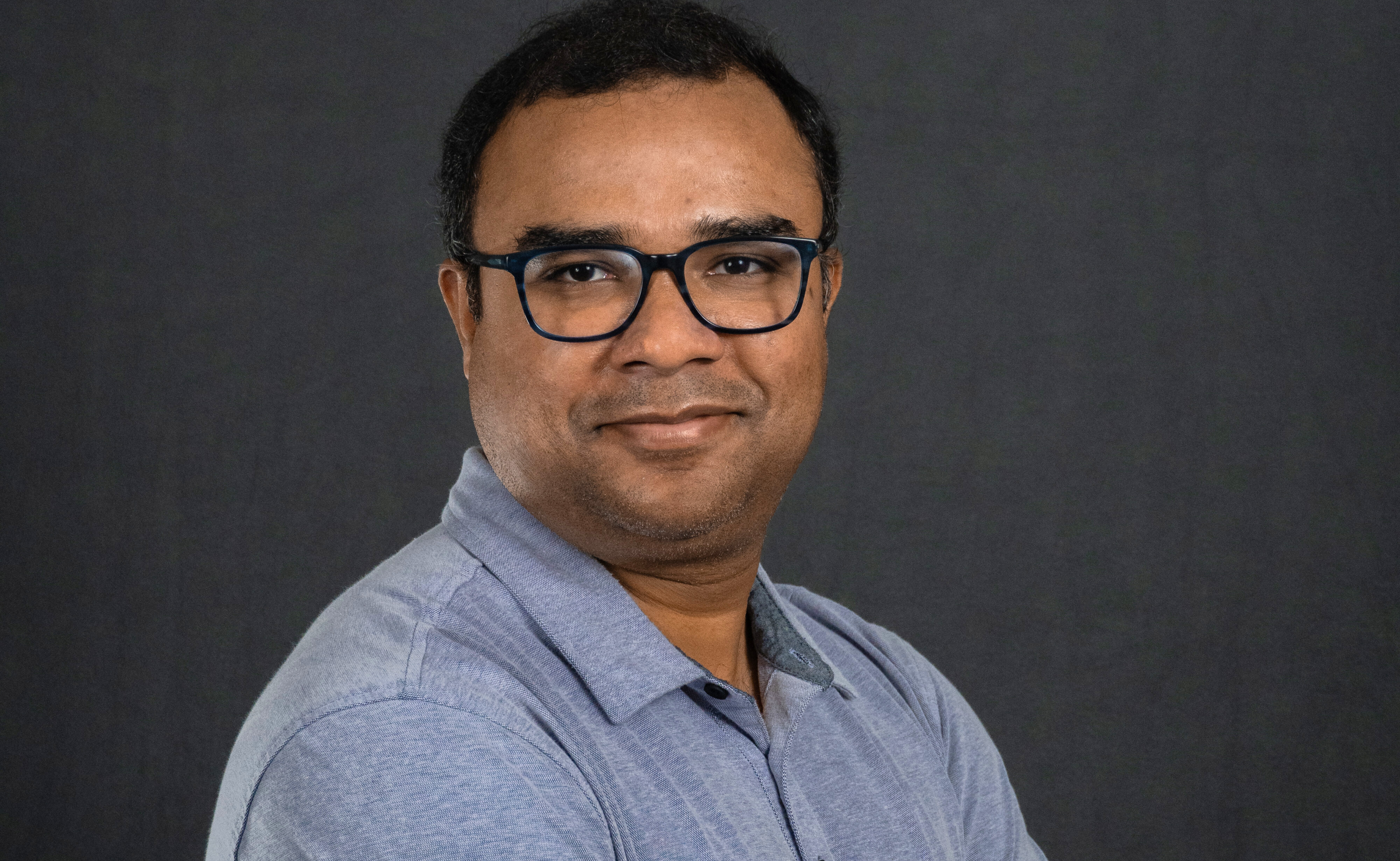
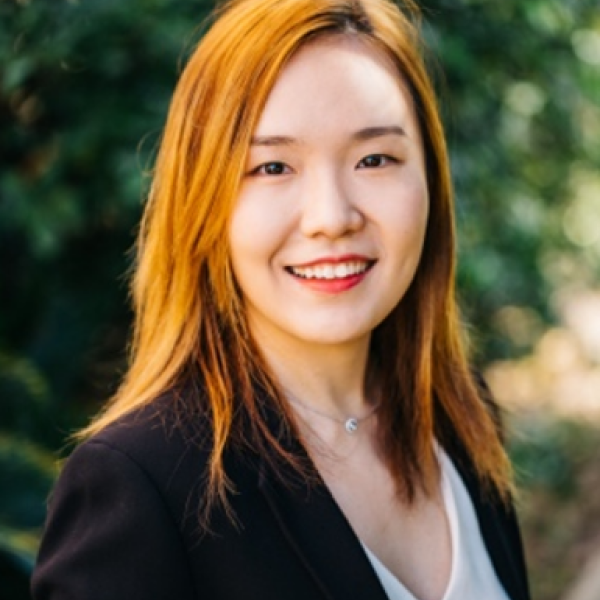
George P. Efthymoglou is a Professor at the Department of Digital Systems, University of Piraeus, Greece, since 2002. He currently serves as Department Chair and teaches courses including Advanced Topics in Wireless Communications, Signals and Systems, and Digital Signal Processing. His research focuses on digital communications with an emphasis on cellular and satellite systems, interference management, and network performance analysis. Education: B.S. in Physics, University of Athens (1991) M.S. & Ph.D. in Electrical Engineering, Florida Atlantic University, USA (1993 & 1997) Research Interests: His work spans wireless communication systems, UAV-assisted networks, 5G/6G technologies, and signal processing for interference-limited environments. He has contributed to advancing techniques for mobility management, energy efficiency, and performance evaluation in heterogeneous networks. Recent Contributions: His recent work explores joint sensing-communication in UAV systems, beacon-assisted wireless power transfer, and stochastic analysis of fading channels. His studies often bridge theoretical models with practical implementations in satellite and vehicular networks. Advising & Grants: Actively seeks student interns for research projects. Has led collaborative initiatives with industry partners like Motorola and Cadence Design Systems, focusing on 3G/5G system modeling and performance evaluation. Labs & Teams: Engages in interdisciplinary projects at the University of Piraeus, collaborating with experts in medical informatics and computer science through initiatives like the Health CASCADE Study.
Yue Guo is an Assistant Professor in the Department of Information Sciences at the University of Illinois. Her research focuses on natural language processing (NLP), biomedical informatics, and healthcare communication. She explores how large language models (LLMs) can improve lay language summarization of complex scientific content, particularly in healthcare contexts. Her work emphasizes personalized jargon detection, factuality evaluation of summaries, and accessibility of health information for diverse audiences. Guo has also conducted extensive studies on radiation oncology outcomes, including xerostomia (dry mouth) recovery in head and neck cancer patients and the impact of radiation dose patterns on patient-reported symptoms. Her interdisciplinary research bridges computational methods with clinical needs, aiming to enhance patient understanding and care through advanced NLP techniques. Her recent articles (2021–2025) highlight trends in LLM-driven biomedical communication, evaluation of health summaries, and data-driven approaches to cancer treatment optimization. Notable projects include APPLS (a summarization metric framework) and personalized jargon identification systems for interdisciplinary collaboration. Guo teaches IS 504: Sociotechnical Information Systems , integrating technical and human factors in information systems design.
Dr. Nidhi Rohatgi is a Clinical Professor of Medicine at Stanford University School of Medicine, with courtesy appointments in Neurosurgery and Anesthesiology. She serves as Editor-in-Chief of JMIR Perioperative Medicine and leads initiatives in surgical co-management, healthcare AI, and quality improvement. Her roles include Physician Lead for Readmissions Management at Stanford Medicine and Medical Director for Clinical Advice Services. Education: MD from Maulana Azad Medical College (India), MS in Epidemiology/Biostatistics from University of Texas Health Science Center. Board-certified in Internal Medicine. Research Interests: Perioperative medicine optimization, AI-driven clinical solutions (e.g., LLMs for text summarization), patient safety, and value-based healthcare models. Active in global health initiatives like telemedicine for India. Recent Trends in Publications: Focus on AI integration in healthcare workflows, surgical co-management protocols, and pandemic response strategies. Over 60 peer-reviewed articles in journals like Nature Medicine and JAMA . Awards: Nation's Top Hospitalist (2019), multiple Malinda S. Mitchell Quality Awards, and recognition for AI in patient care innovation. Leadership: Chair of Global Technical Advisory Committee for Surgical Co-management (Society of Hospital Medicine), co-director of clinical research programs, and member of NIH-funded clinical trials. Leads over 20 institutional and national committees on quality, education, and policy. Labs/Teams: Affiliate faculty at Stanford’s AI in Medicine & Imaging Center and Digital Health Initiative. Collaborates on projects like pharmacogenetics for spine surgery patients and post-COVID-19 clinical guidance.
Carlos Castillo is an ICREA Research Professor (Part-time) at Universitat Pompeu Fabra in Barcelona, where they lead the Social and Responsible Computing Research Group within the Department of Information and Communication Technologies. Dr. Castillo identifies as nonbinary and prefers they/them pronouns, and is also a Latinx migrant to Barcelona in Catalunya, Spain. Dr. Castillo received their Ph.D from the University of Chile in 2004, followed by visiting scientist positions at Universitat Pompeu Fabra (2005) and Sapienza Universitá di Roma (2006) before working as a scientist and senior scientist at Yahoo! Research (2006-2012), as a senior scientist and principal scientist at Qatar Computing Research Institute (2012-2015), and as director of research for data science at Eurecat (2016-2017). Dr. Castillo's research addresses issues of social significance through interdisciplinary computer science research, with primary focus on algorithmic fairness, crisis informatics, web content quality and credibility, and adversarial web search. Their work combines technical expertise in information retrieval with deep consideration of social implications, particularly in high-risk applications including criminal justice and recruitment. They have made significant contributions to understanding and mitigating discrimination in algorithmic systems, as evidenced by their book on Big Crisis Data and numerous influential publications. Recent publications demonstrate a strong emphasis on fairness in algorithmic decision-making, with numerous papers examining bias in hiring algorithms, recidivism prediction systems, and social media content analysis. The research shows an interdisciplinary approach that bridges computer science, social science, and policy considerations, with increasing attention to practical applications and real-world impact across domains including criminal justice, healthcare, education, and music recommendation systems. Dr. Castillo has received significant recognition for their work: Two test-of-time awards Four best paper awards Two best student paper awards ACM Distinguished Member IEEE Senior Member Accredited at the full professor level in Catalonia Dr. Castillo has served extensively in academic leadership roles, including as Program Committee or Senior PC member for major conferences (WWW, WSDM, SIGIR, KDD, CIKM), editorial committee member for ACM Transactions on the Web and ACM Transactions in Social Computing, and Executive Committee member of ACM FAccT. They were General Co-Chair of ACM FAccT (formerly FAT*) 2020, PC Co-Chair of ACM Digital Health 2016-2018, and PC Co-Chair of WSDM 2014. Dr. Castillo currently coordinates the Horizon Europe project FINDHR on detecting and mitigating discrimination in algorithmic hiring. They lead the Social and Responsible Computing Research Group, which takes an interdisciplinary approach to developing computational methods that consider social impact and ethical implications. The group works on projects involving computer scientists, social scientists, and domain experts to address societal challenges through responsible technological innovation, with current focus on algorithmic fairness in high-risk applications, crisis informatics, and understanding social dynamics through computational methods.
Valeri Nikolaev is the James H. Lorie Professor of Accounting at the University of Chicago Booth School of Business. He earned his PhD in accounting cum laude from Tilburg University (2007), an MSc in economics from Charles University in Prague (2002), and a BSc in economics with distinction from Minsk's Institute of Management (1999). His research focuses on financial reporting in capital markets, AI's transformative role in information processing, and the economic consequences of accounting standards. Education: PhD (Tilburg University), MSc (Charles University), BSc (Minsk's Institute of Management) Nikolaev's work examines accounting information's role in contracts , transparency in financial reporting , and valuation of non-financial assets . His recent studies demonstrate LLMs' superior performance in financial analysis tasks and reveal how information context affects asset pricing models. His research has produced 15+ publications since 2012, including in Journal of Accounting Research , Journal of Financial Economics , and Review of Accounting Studies . He has served as Senior Editor at Journal of Accounting Research and previously as Associate Editor at Management Science and Journal of Accounting and Economics .
Mary Konrad is an Associate Professor and holds the Jeff and Agnes McBryde Ellis Education Professorship at the University of Mary Hardin-Baylor, within the College of Education. She is actively serving in her academic role with contact information listed through the university's directory. Her research interests and scholarly activities are not detailed in the available text, so no specific fields of interest can be identified at this time. No publications are listed in the provided information, so no trends in article topics or research domains can be summarized. There are no scientific awards mentioned in the current data. There is no information available about student advising, grants, labs, or research teams associated with Dr. Konrad.
Santu Karmaker is an Assistant Professor at the University of Central Florida in the Department of Computer Science within the College of Engineering. His research focuses on democratizing AI and data science through advancements in natural language processing, information retrieval, and machine learning. He earned a Ph.D. in Computer Science from the University of Illinois Urbana-Champaign and a Master of Science in Computer Science from Bangladesh University of Engineering and Technology. Ph.D. in Computer Science – University of Illinois Urbana-Champaign M.S. in Computer Science – Bangladesh University of Engineering and Technology Karmaker's research explores semantic similarity alignment, conversational data science, infrastructure as code defects, and embedded NLP applications. His work addresses zero-shot learning, Bangla language processing, and prompt taxonomy for LLMs. He has secured over $1.4 million in grants from the NSF, AFOSR, ARO, and USDA. Recent publications span premier venues like EMNLP, ACL, TMLR, and ACM Transactions on Intelligent Systems and Technology. He actively contributes to academic service as an action editor for ACL Rolling Review and communication/tutorial chairs for conferences. Current affiliations include the Laboratory for Information and Decision Systems (MIT) postdoctoral collaboration and UCF's embedded systems research initiatives.
Chaitanya Shivade is a prominent researcher specializing in medical natural language processing with significant contributions to clinical text analysis, radiology informatics, and behavioral health documentation. His work bridges computational linguistics and healthcare applications, focusing on practical solutions for clinical documentation challenges. Shivade's research spans multiple critical areas: developing evaluation frameworks for behavioral therapy notes (TN-Eval), creating shared tasks for medical summarization (MEDIQA), advancing visual dialog systems for radiology, and pioneering synthetic clinical note generation. He has made substantial contributions to textual inference in clinical domains through the MedNLI dataset and has explored fundamental linguistic challenges like negation detection and gradable term analysis in medical text. As a workshop organizer for the NLP for Medical Conversations series, he has helped shape community standards and foster collaboration. His publication record demonstrates consistent leadership in applying NLP to real-world healthcare problems, with particular emphasis on evaluation methodologies, dataset creation, and practical clinical applications. Shivade has collaborated extensively with medical professionals and researchers across institutions to ensure clinical relevance of his technical work. Organized MEDIQA shared tasks (2019, 2021) Co-organized NLP for Medical Conversations workshops (2019, 2020) Developed TN-Eval framework for therapy note quality assessment Created MedNLI dataset for clinical textual inference Pioneered synthetic clinical note generation approaches His work consistently addresses the tension between clinical utility and technical innovation, with growing emphasis on evaluating LLM performance in healthcare contexts. The progression from foundational clinical NLP techniques to complex evaluation frameworks demonstrates his evolving research trajectory toward ensuring reliable AI deployment in medical settings.
Dr. Kyung Hun Jung is a faculty member at Kennesaw State University, affiliated with the Department of Psychology. He teaches courses including Cognitive Psychology, Engineering Psychology, Experimental Design, and Research Methods and Statistics. Ph.D. in Experimental Psychology (University of New Mexico, 2013) M.S. in Experimental Psychology (Korea University, 2006) B.A. in Psychology (Korea University, 2004) His research spans cognitive psychology, human factors, and ergonomics, with recent work focusing on automated vehicle interaction and driver training using moving-base driving simulators and virtual-reality headsets. Earlier research includes studies on attentional mechanisms, facial attractiveness, color perception, and document similarity analysis. Recent publications highlight applications of human factors in transportation technology and usability engineering. Data and code from his studies are publicly shared for replication purposes.
Dr. Ali Farzamnia is a Lecturer in Electronic and Electrical Engineering at the Department of Engineering , School of Computing and Engineering , University of Huddersfield, United Kingdom. He is actively involved in research and supervises PhD students. Research focus areas: Signal Processing, Deep Learning, and Wireless Communications His recent work demonstrates interdisciplinary applications of machine learning in diverse domains including sign language recognition, financial trading, agricultural stress detection, and software testing automation. Dr. Farzamnia employs cutting-edge techniques like third-generation transformers and few-shot learning frameworks in his research projects.
Todd Jamison is an Adjunct Instructor of Business Management and Project Management at Nebraska Wesleyan University, contributing to the academic development of students in management and organizational leadership. His professional credentials include an EdD, MBA, PMP (Project Management Professional), and PSM-I (Professional Scrum Master I), reflecting a strong integration of academic and industry expertise. His primary fields of interest include: Business Management Project Management There are no publications listed in the available information, so no identifiable research trends can be summarized at this time. He has not been recognized with any scientific awards according to the provided text. Todd Jamison advises no listed students and there is no mention of grant funding or research mentoring activities. No information is available about laboratories, research teams, or collaborative groups associated with him.
Eirini Ntoutsi is an Associate Professor at the Faculty of Electrical Engineering and Computer Science at Leibniz University Hannover and a member of the L3S Research Center. Her academic journey includes a post-doctoral position at LMU Munich with an Alexander von Humboldt Foundation fellowship, and she earned her PhD from the University of Piraeus, Athens under the supervision of Y. Theodoridis. She holds a diploma and M.Sc. in Computer Engineering & Informatics from the University of Patras, Greece. Her research lies at the intersection of Artificial Intelligence and Machine Learning, focusing on two main pillars: learning over complex data and data streams (covering adaptive learning, change detection, and model stability), and responsible Artificial Intelligence (covering fairness-aware learning, data quality, and proper evaluation of AI/ML methods). Her work addresses critical societal challenges related to bias in algorithmic decision-making systems. Dr. Ntoutsi's recent publications demonstrate a strong focus on drift-aware learning for imbalanced data streams and fairness in AI systems. Her research shows a clear progression from foundational work in pattern management during her PhD to cutting-edge applications addressing real-world challenges in social streams, sensor data, and recommendation systems. Alexander von Humboldt fellowship for postdocs Best-student paper award at ICBK 2018 1st place in the 2006 innovation competition in Greece Dr. Ntoutsi actively mentors PhD and master's students while leading major research initiatives including NoBIAS (EU-funded, as Network coordinator), BIAS (Volkswagen Stiftung-funded), and OSCAR (DFG-funded). Her interdisciplinary approach combines technical AI solutions with philosophical and legal considerations to develop more equitable algorithmic systems.
Rocco Oliveto is a Professor in the Department of Computer Science at the University of Salerno, Italy, with a distinguished research career spanning over two decades in empirical software engineering. His work bridges theoretical software engineering principles with practical applications, with recent expansion into healthcare informatics and machine learning applications. His research interests focus on code quality assessment, software maintenance practices, developer behavior analysis, and empirical studies of software engineering phenomena. He has made significant contributions to understanding code smells, bug prediction, API compatibility issues, and more recently, container technologies and smart contract analysis. His recent work demonstrates a strategic expansion into healthcare applications, leveraging software engineering techniques for medical diagnostics and rehabilitation systems. Oliveto's publication pattern shows consistent productivity with multiple high-impact publications each year across top venues including IEEE Transactions on Software Engineering, ACM Transactions on Software Engineering and Methodology, and Empirical Software Engineering journal. His recent articles (2023-2025) reveal a growing interest in applying software engineering techniques to healthcare domains while maintaining strong contributions to core software engineering topics. The research demonstrates sophisticated methodological approaches combining empirical studies with machine learning techniques. His collaborative network includes prominent researchers such as Simone Scalabrino, Gabriele Bavota, and Andrea De Lucia, with whom he has co-authored numerous high-impact publications. This collaboration spans both traditional software engineering topics and emerging interdisciplinary applications in healthcare.
Aditi Gandotra is an Assistant Professor at the Department of Personality and Health Psychology, Eötvös Loránd University (ELTE), Hungary. She is affiliated with the Emotion and Mind Integration for Neuropsychological Development Research Group . Her research focuses on motor skills development in children, executive functions, autism spectrum disorder, and the application of digital tools in mental health. She holds a doctoral degree (as indicated by the 2021 dissertation entry) and has conducted studies in both Hungarian and Indian contexts. Her work bridges developmental psychology, clinical psychology, and technology-driven mental health solutions. Key Research Themes: Motor skill-cognitive function interplay in preschoolers Neuropsychological development in neurotypical and neurodivergent populations Accessibility of mental health interventions via digital platforms Her recent publications (2017-2023) emphasize: Exploring motor skills as predictors of socio-emotional outcomes Cultural and contextual factors in mental health app usage (focusing on Indian populations) Systematic reviews on motor skill deficits in autism spectrum disorder Awards & Grants: No specific awards or grants listed in provided texts. Advising & Teams: Currently, no listed students or specific grant details. She contributes to the Emotion and Mind Integration Research Group, focusing on neuropsychological development trajectories.
Jianxin Xie is an Assistant Professor of Data Science at the School of Data Science, University of Virginia. He contributes to the academic and research mission of one of the leading data science institutions in the United States. His educational background includes advanced degrees in engineering and physics, reflecting a strong foundation in quantitative disciplines. The following summarizes his academic journey: Ph.D. in Industrial & Systems Engineering, University of Tennessee at Knoxville M.S. in Industrial & Manufacturing Engineering, Florida State University B.S. in Physics, Southeast University, China Dr. Xie's research interests lie at the intersection of data science and engineering systems. His expertise spans data analytics, modeling of complex systems, and applications of machine learning in industrial contexts. His academic work supports the development of data-driven decision-making frameworks. While no recent publications are listed in the provided text, his affiliation with the School of Data Science suggests engagement in cutting-edge interdisciplinary research involving large-scale data analysis, algorithm development, and real-world system optimization. There are no scientific awards listed in the current profile. Dr. Xie is involved in academic advising and research supervision as part of his faculty role, though specific students or funded projects are not mentioned in the available information. He is likely affiliated with research labs or collaborative teams within the School of Data Science focused on data-intensive applications, though specific lab memberships are not detailed in the current text.