Michael Lucey is the Sidney and Margaret Ancker Chair and Distinguished Professor of French and Comparative Literature at the University of California, Berkeley. His work bridges French literature from the 19th to 21st centuries with social theory, sexuality studies, and linguistic anthropology. He has authored the critically acclaimed What Proust Heard: Novels and the Ethnography of Talk (2022) and Thinking about Sexuality with Novels (forthcoming). As founding director of the Center for the Study of Sexual Culture , he has shaped interdisciplinary research in queer theory and gender studies. Current research focuses on novels as ethnographic tools Specializes in Proust, Balzac, Woolf, and contemporary French fiction Translation work includes Didier Eribon and Édouard Louis His recent articles explore phonetics in narrative, readability frameworks, and sociological implications of literary form. He actively engages with comparative methodologies and critical theory, while his teaching spans British and American literature’s intersections with French modernism. Lucey’s academic leadership includes directing Berkeley’s Center for the Study of Sexual Culture, which supports global discourse through fellowships and conferences. His office hours are held in Dwinelle Hall and via Zoom. Contact: mlucey@berkeley.edu
Ryan Heuser is an Assistant Professor in Digital Humanities at the University of Cambridge, specializing in computational approaches to literary and intellectual history, prosody, and artificial intelligence's impact on language. His work bridges data science, machine learning, and literary studies through digital methodologies. Doctoral training in Eighteenth-Century British Literature, Stanford University (2019) Founding member & Associate Research Director, Stanford Literary Lab Junior Research Fellow, King’s College Cambridge (2019-2022) Research interests span computational modeling of semantic revolutions, large-scale literary field analysis, and the intersection of digital methods with historical and intellectual studies. His book Explorations in the Digital History of Ideas (2023) co-edited with Peter de Bolla exemplifies this approach. Recent publications focus on historical semantics, metrical analysis, and digital mapping of emotions in literature, reflecting his interdisciplinary expertise in natural language processing, network theory, and literary data visualization. Currently leads teaching initiatives at Cambridge Digital Humanities and contributes to computational projects exploring textual rhythms and large language models.
Dr. Luisa Calè is a Professor of Romantic and Nineteenth-Century Literature & Visual Culture and Research Lead at Birkbeck, University of London. She holds degrees from the University of Rome 'La Sapienza' (1993), University of Genoa (1997), and the University of Oxford (M.St. 1998, D.Phil 2002). Her research explores the interplay between literature and visual/material culture, focusing on book history, intermediality, and practices of reading/collecting. Her Leverhulme Trust-funded project 'The Book Unbound' examines how works by Blake, Walpole, and Dickens subverted traditional book formats. Education: PhD in Literary Studies, University of Genoa (1997) D.Phil., University of Oxford (2002) M.St. in English, University of Oxford (1998) Letters Degree, University of Rome (1993) Her research interests include Romantic aesthetics, material texts, and critical disciplinarity. Notable publications include Fuseli’s Milton Gallery (2006) and co-edited volumes like Dante on View (2007). She edits Blake/An Illustrated Quarterly and serves on editorial boards for Word & Image and Romantic Circles Gallery . Recent awards include a Leverhulme Trust Research Fellowship (2019) and a Mercator Fellowship (2018-19). She supervises graduate students in Romantic literature, material culture, and book history.
Adam Hollowell is an Adjunct Assistant Professor in the Program in Education at Duke University, where he also serves as Senior Research Associate at the Samuel DuBois Cook Center on Social Equity and Director of the Inequality Studies Minor. His teaching spans ethics, inequality studies, and history across Duke’s Kenan Institute for Ethics, Sanford School of Public Policy, and Department of History. Hollowell holds a Ph.D. from the University of Edinburgh (2009). His research focuses on inequality, higher education, public policy, and ethics, with notable work on pandemic impacts, telemedicine in education, and reproductive health access during crises. In Inequality Studies , Hollowell emphasizes understanding policies to drive social change, as highlighted in recent media coverage. His publications explore topics like student behavior shifts during the pandemic, telemedicine adoption in universities, and James Baldwin’s ethical challenges. He is a finalist for the Judith Deckers Prize (2024). Professionally, Hollowell leads projects such as Bass Connections on college contraception access and Story+ initiatives. His work bridges academia and public engagement, addressing systemic inequities through interdisciplinary approaches.
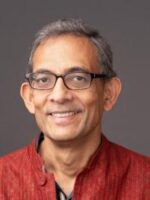
Abhijit Banerjee is a Professor in the Department of Economics at the Massachusetts Institute of Technology (MIT). His research focuses on development economics, public health policy, and social protection programs, particularly addressing poverty and inequality in low- and middle-income countries. He has conducted large-scale experiments evaluating interventions such as conditional cash transfers, universal basic income, and healthcare policies. Key areas of interest include the design and implementation of anti-poverty programs, behavioral economics, and the long-term health impacts of infectious diseases like COVID-19. His work often integrates experimental methods to assess policy effectiveness, with contributions to global health studies and economic development strategies. Notably, his research on the RECOVERY trial evaluates treatments for hospitalized COVID-19 patients, while other studies explore financial spillover effects of electronic government transfers in Indonesia and savings behavior interventions in Chile. Banerjee has collaborated on projects analyzing post-COVID-19 health outcomes, labor market dynamics in India, and the role of trusted messengers in public health communication during crises. Despite the breadth of his contributions, specific details about his educational background, grants, or lab affiliations are not explicitly provided in the source text.
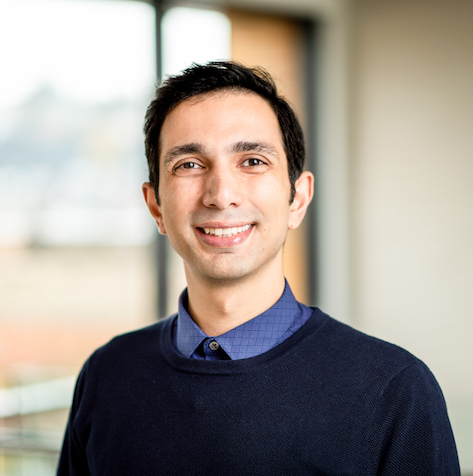
Nathan Wainstein is an Assistant Professor in the English Department at the University of Utah's College of Humanities, where he has been teaching since July 2023. His academic work bridges literary studies with contemporary digital media, particularly focusing on video game aesthetics alongside modernist literature. Wainstein maintains an active scholarly presence through publications, editorial work, and his podcast "Authors Die Twice" co-hosted with Bryan Counter. Wainstein's educational background includes: PhD from Stanford University (2013-2020) BA from Swarthmore College (2007-2011) His research interests span video game aesthetics, modernism, the novel, literary theory, narrative theory, and the intersection of literature and philosophy. Wainstein approaches these fields with a particular focus on paradox, difficulty, and aesthetic experiences that challenge conventional interpretations. His work often examines how seemingly simple literary devices like light descriptions can reveal deeper theoretical tensions within texts. Wainstein's recent publications demonstrate a consistent trajectory exploring the boundaries of literary aesthetics, from his analysis of James Joyce's photomimesis to his examination of narrative glitches in Faulkner's work. His scholarship connects historical literary theory with contemporary concerns, particularly in how he applies these frameworks to video game analysis. The upcoming book "Grant Us Eyes: The Art of Paradox in Bloodborne" exemplifies this interdisciplinary approach, bridging literary criticism with video game studies. Wainstein has held prestigious postdoctoral positions including an ACLS Emerging Voices Fellowship at the University of Utah and a Stanford Humanities and Sciences Dean's Fellowship. As an educator, Wainstein teaches innovative courses that reflect his research interests, including "On Difficulty," "Aesthetics of Violence in Video Games and Literature," "Games with Time," and "Videogame Storytelling." His teaching philosophy appears to emphasize the connections between traditional literary studies and contemporary digital media forms.
Jessica Straley is an Associate Professor in the Department of English at the University of Utah, where she has served since 2005 (Visiting Assistant Professor 2005-2007, Assistant Professor 2007-2016, Associate Professor 2016-present). She holds a PhD in English from Stanford University, an MA in Literature, Culture, and Modernity from Queen Mary and Westfield College, University of London, and a BA in English from Cornell University. Education: PhD, English - Stanford University MA, Literature, Culture, and Modernity - Queen Mary and Westfield College BA, English - Cornell University Her research focuses on intersections between Victorian literature, children's literature, animal studies, disability studies, and ecocriticism. She explores how literary imagination interacts with scientific and moral discourses, particularly in 19th-century contexts. Recent publications analyze feral child narratives, zoo representations, and evolutionary theory in children's texts. Her work bridges historical literary analysis with contemporary critical frameworks like disability rights and environmental ethics. Scientific Awards: Faculty Fellowship Award (University Research Council, 2017) Ramona W. Cannon Award for Teaching Excellence (2016) Tanner Humanities Center Fellowship (2016) University Research Committee Faculty Fellowship (2011) Newberry Library Short-Term Library Research Fellowship (2008) She teaches courses in 19th-Century British Literature, Intellectual Movements, and Honors Thesis/Project supervision. Her external grant (Animal Testing URC, 2017-2018) demonstrates institutional support for her interdisciplinary work.
Prof. Dr. Sakibe Nalan BÜYÜKKANTARCIOĞLU is a Professor at Çankaya University, Faculty of Arts and Sciences, Department of Translation and Interpreting Studies (English). She previously served as Professor (2007–2019), Associate Professor (2000–2007), and Assistant Professor (1997–2000) at Hacettepe University, Department of English Linguistics. PhD in English Linguistics (Hacettepe University, 1991) MA in English Language Teaching (Middle East Technical University, 1985) BA in English Teaching (Istanbul University, 1978) Her research spans Linguistics, Cognitive Linguistics, Discourse Analysis, Psycholinguistics, Sociolinguistics, Translation Studies , with a focus on figurative language, interjections, political discourse, and endangered languages. She received the European Language Award (2011) and has supervised numerous PhD and MA theses, including work on Turkish idioms, gender representation, and language awareness. A prolific editor and conference participant, she has contributed to interdisciplinary projects and publications on Turkish sociolinguistics.
Arman Cohan is an Assistant Professor in the Department of Computer Science at Yale University, where he leads the Yale NLP Lab since its founding in January 2023. His research spans natural language processing and machine learning with emphasis on language modeling, representation learning, retrieval systems, and specialized domain applications including scientific discovery and AI for science. His primary research interests include: Natural Language Processing Machine Learning Large Language Models Information Retrieval AI for Science Scientific Problem-Solving Recent publications (2025) demonstrate intense focus on evaluating and advancing LLM capabilities across multimodal reasoning, scientific claim verification, financial domain applications, and biological modeling. The lab consistently produces high-impact work accepted at top-tier conferences including ACL, EMNLP, and ICLR, with 11 papers at ACL 2025 alone. Scientific awards include: Best Paper Award at AI4Research Workshop (IJCAI 2024) Outstanding Paper Award at EACL 2023 Best Paper Award at ACL 2024 for Olmo language model research Professor Cohan actively advises PhD students including Kaili Liu, Jacob Dunefsky, Alan Li, Yilun Zhao, and has graduated researchers such as Linyong Nan (now at Zoom) and Ansong Ni (now at Meta). The lab maintains strong industry partnerships and receives substantial research funding as evidenced by its prolific output and conference presence. The Yale NLP Lab hosts the annual New England NLP Workshop and regularly features speakers from leading institutions including Meta AI, Allen Institute for AI, and DeepMind, fostering a collaborative environment for advancing NLP research.
Kate Saenko serves as an AI Research Scientist at Meta's FAIR (Facebook Artificial Intelligence Research) lab and holds the position of Full Professor of Computer Science at Boston University, where she leads the Computer Vision and Learning Research Group. Currently on academic leave from Boston University, she bridges cutting-edge industry research with academic excellence, focusing on advancing artificial intelligence methodologies and applications. Her educational background includes a PhD in Electrical Engineering and Computer Science (EECS) from the Massachusetts Institute of Technology (MIT), followed by postdoctoral training at the University of California, Berkeley and Harvard University. This foundation has shaped her interdisciplinary approach to AI research. Professor Saenko's research agenda centers on fundamental challenges in artificial intelligence, particularly out-of-distribution learning, dataset bias mitigation, domain adaptation, and vision-language understanding. Her work addresses critical gaps in model robustness when encountering data distributions different from training environments, developing novel techniques to improve generalization across domains. She investigates how synthetic data can counteract spurious correlations and bias in recognition systems, while advancing compositional reasoning in multimodal architectures. Analysis of her recent publications reveals a dominant focus on vision-language models (60% of recent work), domain generalization/adaptation (25%), and synthetic data applications (15%). Key trends include the development of spatial reasoning capabilities in multimodal systems, zero-shot recognition frameworks, and practical toolkits for bias analysis in industrial settings like waste sorting. Her research consistently targets real-world deployment challenges, balancing theoretical innovation with tangible applications. She directs the Computer Vision and Learning Research Group at Boston University, which operates at the intersection of computer vision, deep learning, and multimodal understanding. The group maintains strong industry collaborations through Meta's FAIR and previously engaged with the MIT-IBM Watson AI Lab. Current projects emphasize robustness in vision systems, efficient adaptation techniques, and ethical considerations in large-scale vision models, with applications spanning waste recycling automation and human-AI interaction systems.
Emily C. Bartels is a Professor of English at Rutgers University specializing in early modern literature and culture, with particular expertise in Shakespearean and non-Shakespearean drama. She has served as director, and is now dean, of the Middlebury Bread Loaf School of English since 2010, a summer Master's program designed for K-12 English teachers. Professor Bartels received her BA from Yale University and both her MA and PhD from Harvard University. Her academic background positioned her to become a leading scholar in Renaissance literature studies. Her research examines questions of race, cross-cultural relations, gender, genre, and performance in early modern English drama. Professor Bartels is renowned for her groundbreaking work on Shakespeare's Othello and Christopher Marlowe's plays, analyzing how these texts represent cultural and racial difference. She has significantly contributed to postcolonial approaches to early modern literature, revealing how English drama engaged with global encounters and representations of the 'other' during the Renaissance period. Her scholarship demonstrates how early modern writers both reflected and shaped contemporary attitudes toward difference, particularly regarding race, religion, and national identity. Professor Bartels' publications reveal a consistent scholarly trajectory examining racial and cultural representation in early modern England. Her work spans from detailed analyses of specific plays like Hamlet and Julius Caesar to broader studies of how England conceptualized Africa and non-Christian cultures during the Renaissance. A recurring theme throughout her career is the analysis of how early English drama both reflected and shaped contemporary attitudes toward difference, particularly regarding race, religion, and national identity. Roma Gill Prize for Best Work on Christopher Marlowe (1993-94) for Spectacles of Strangeness: Imperialism, Alienation, and Marlowe Board of Trustees Fellowship for Scholarly Excellence (1993) School of Arts and Sciences Award for Distinguished Contributors to Undergraduate Education (2008 & 1993) Warren I. Susman Award for Excellence in Teaching (2008) Solmsen Fellowship at the Institute of Research in the Humanities, University of Wisconsin (1995) Black Atlantic Project fellowship from the Rutgers Center for Historical Analysis Professor Bartels has demonstrated exceptional commitment to both research and teaching excellence. She has developed innovative courses exploring the intersections of literature, history, and cultural studies, including undergraduate seminars on Othello and Hamlet, and graduate courses on Shakespeare Page and Stage. Her administrative role as dean of the Middlebury Bread Loaf School of English demonstrates her commitment to education beyond traditional university settings. Her fellowships from prestigious institutions indicate successful grant acquisition throughout her distinguished career. Professor Bartels has been actively involved with the Shakespeare Association of America and has collaborated with international scholars like Emma Smith of the University of Oxford. Her work has positioned her at the forefront of conversations about early modern literature, race studies, and postcolonial approaches to Renaissance drama, influencing how scholars understand the intersections of literature, race, and cultural identity in the early modern period.
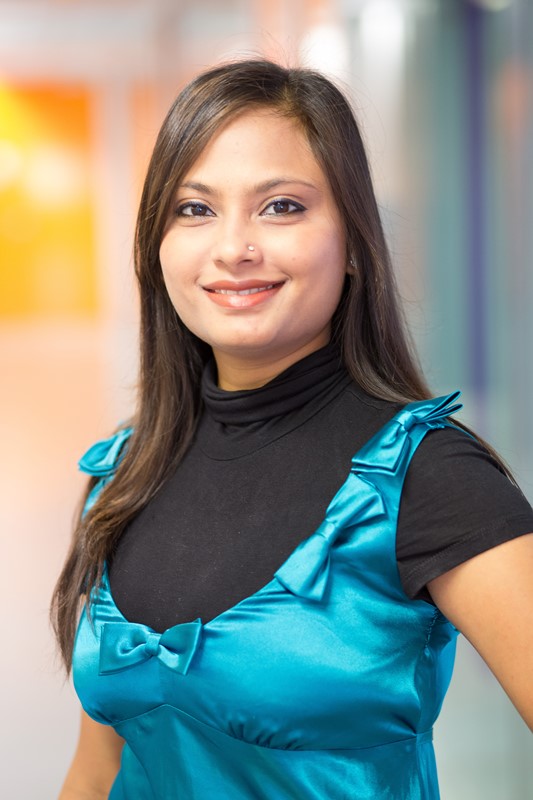
Paulami Mitra is an Assistant Professor and Academic Director of the Strategy and Sustainability track at IÉSEG School of Management in Lille, France, with prior academic experience as a Visiting Professor at the University of Southern California (2017-2018) and Teaching and Research Assistant at IÉSEG (2012-2019). Her doctoral training in Economics and Management Sciences from Université Catholique de Louvain-Mons underpins her interdisciplinary approach to business education and research. Her educational qualifications include: 2019: Ph.D. in Economics and Management Sciences, Université Catholique de Louvain-Mons, Belgium 2009: Masters in Management, Lancaster University, United Kingdom 2008: B.Tech in Information Technology (Engineering), Institute of Technology and Marine Engineering, India Dr. Mitra's research centers on entrepreneurship-sustainability intersections, with particular expertise in eco-entrepreneurship, crowdfunding dynamics for social ventures, and hybrid organizational models. Her work examines how prosocial motivations drive crowdfunding participation, the strategic advantages of hybrid structures in social enterprises, and pedagogical innovations for sustainability-focused business education. She investigates critical gaps in climate-responsive entrepreneurial frameworks and sustainable financing mechanisms. Analysis of her publication trajectory reveals a concentrated focus on social entrepreneurship evolution since 2017, with increasing emphasis on sustainability-crowdfunding synergies and educational applications. Her 2022-2024 output demonstrates methodological diversity across case studies, survey research, and conceptual frameworks, consistently targeting high-impact journals in entrepreneurship and sustainability fields. No scientific awards are documented in the provided materials. Professional activities indicate active curriculum development and executive education leadership, though specific student advisement or grant-funded research projects are not referenced in the source text. The available information does not specify laboratory affiliations, research teams, or collaborative infrastructure supporting her scholarly work.
Dr. James McDonald serves as a Lecturer and Research Fellow at the University of New South Wales (UNSW) within the School of Civil and Environmental Engineering's Water Research Centre (WRC). His work at the Vallentine Annexe (H22), Room 102, Kensington Campus focuses on advancing water treatment technologies and understanding contaminant behavior in water systems. His position bridges academic instruction with cutting-edge research in environmental engineering. McDonald's research spans multiple critical areas in water science and engineering, with particular emphasis on trace organic contaminants, membrane technologies, and advanced water treatment processes. His work investigates the fate and removal of pharmaceuticals, personal care products, and industrial chemicals in various water treatment systems. He has made significant contributions to understanding disinfection by-product formation, chiral inversion of pharmaceuticals, and the development of novel membrane technologies for improved water purification. His research combines experimental approaches with computational modeling to address complex water quality challenges. Analysis of McDonald's recent publications reveals a strong focus on emerging contaminants, particularly PFAS compounds and chiral pharmaceuticals, and their behavior in water treatment systems. His work demonstrates expertise in both conventional and advanced water treatment technologies, with increasing emphasis on sustainable approaches including green infrastructure and novel membrane processes. The interdisciplinary nature of his research connects environmental engineering, chemistry, microbiology, and materials science to address contemporary water quality challenges. McDonald actively collaborates with researchers across multiple institutions and has contributed to numerous significant studies on water quality and treatment. His work supports the development of more effective water recycling systems and safer drinking water supplies. While specific grant information isn't detailed in the available text, his extensive publication record suggests sustained research funding in water treatment technologies and contaminant fate studies. As part of UNSW's Water Research Centre, McDonald contributes to one of Australia's leading water research facilities. The WRC provides a collaborative environment for addressing complex water challenges through interdisciplinary research that integrates engineering, chemistry, and environmental science perspectives.
Rebecca Herissone is Professor of Musicology at the University of Manchester and a leading scholar in early modern English music. She co-edits the peer-reviewed journal Music & Letters and serves on editorial boards for the Purcell Society, Musica Britannica, and the Complete Works of John Eccles. Her research focuses on seventeenth-century creativity, material culture, and the ontological dimensions of music notation. Key research areas: Early Modern Music, Creativity, Source Study, Notation, Reception Major awards: Diana McVeagh Prize (2015), Westrup Prize (2007) Her recent work includes digital humanities projects on music preservation and critical editions of Purcell's operas. She has pioneered interdisciplinary approaches connecting musicology with drama, art, and literature, and currently leads research on Purcell's posthumous reception in the eighteenth and nineteenth centuries. Her teaching spans music historiography, performance practices, and advanced source analysis.
Pieter d'Hoine serves as Professor and Vice Dean of Education at KU Leuven's Higher Institute for Philosophy. He is affiliated with the Wulf Mansion Centre for Ancient, Medieval and Renaissance Philosophy and LECTIO – KU Leuven Institute for the Study of Textual Transmission. Additional institutional roles include membership on the Board of the Institute for Living Languages, HIW Faculty Council, and Philosophy Program Oversight Committees. His research centers on Ancient Philosophy with emphasis on Neoplatonism, particularly Proclean metaphysics, logical structures in Platonic/Aristotelian commentaries, and mechanisms of philosophical canon formation. He investigates knowledge transmission from Greek-Roman antiquity through medieval and Renaissance scholarship, integrating digital humanities methodologies to analyze textual evolution and conceptual continuity across historical periods. Recent publications (2024) exhibit concentrated focus on Proclus' metaphysical frameworks, including predication theory, modes of being, and theological elements within Platonic exegesis. His work bridges textual criticism with systematic philosophy, examining how ancient commentators shaped enduring philosophical paradigms through citation practices and logical innovation in works like the Elements of Theology . No major scientific awards are documented in the provided materials. He actively supervises doctoral research, including G.J. Ruz Troncoso's analysis of Proclus' argumentative structures and S-H. Yang's study of Aristotelian metaphysics. Current funding supports eight major projects: "Een nieuw model voor de editie van antieke filosofische fragmenten" (2025-2031) as Co-promotor "De filosofische canon en de citaties van Plato en Aristoteles" (2024-2028) as Promotor "Rechtvaardigheid voor dieren" (Justice for Animals, 2024-2028) as Promotor "De mechanica van Canonvorming" (Canon Formation Mechanics, 2024-2028) as Promotor His research ecosystem operates through the Wulf Mansion Centre and LECTIO institute, which coordinate international collaborations on premodern textual transmission, utilizing digital tools to map philosophical concept evolution across millennia.