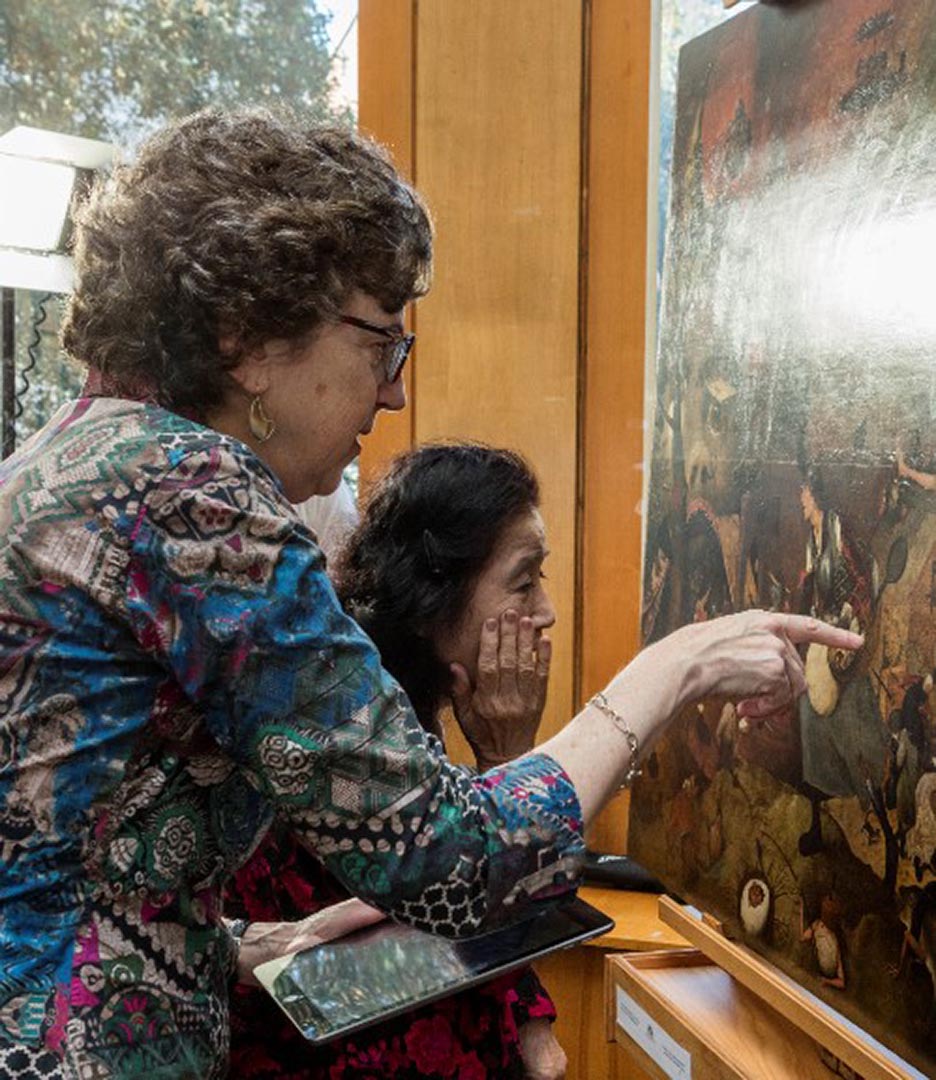
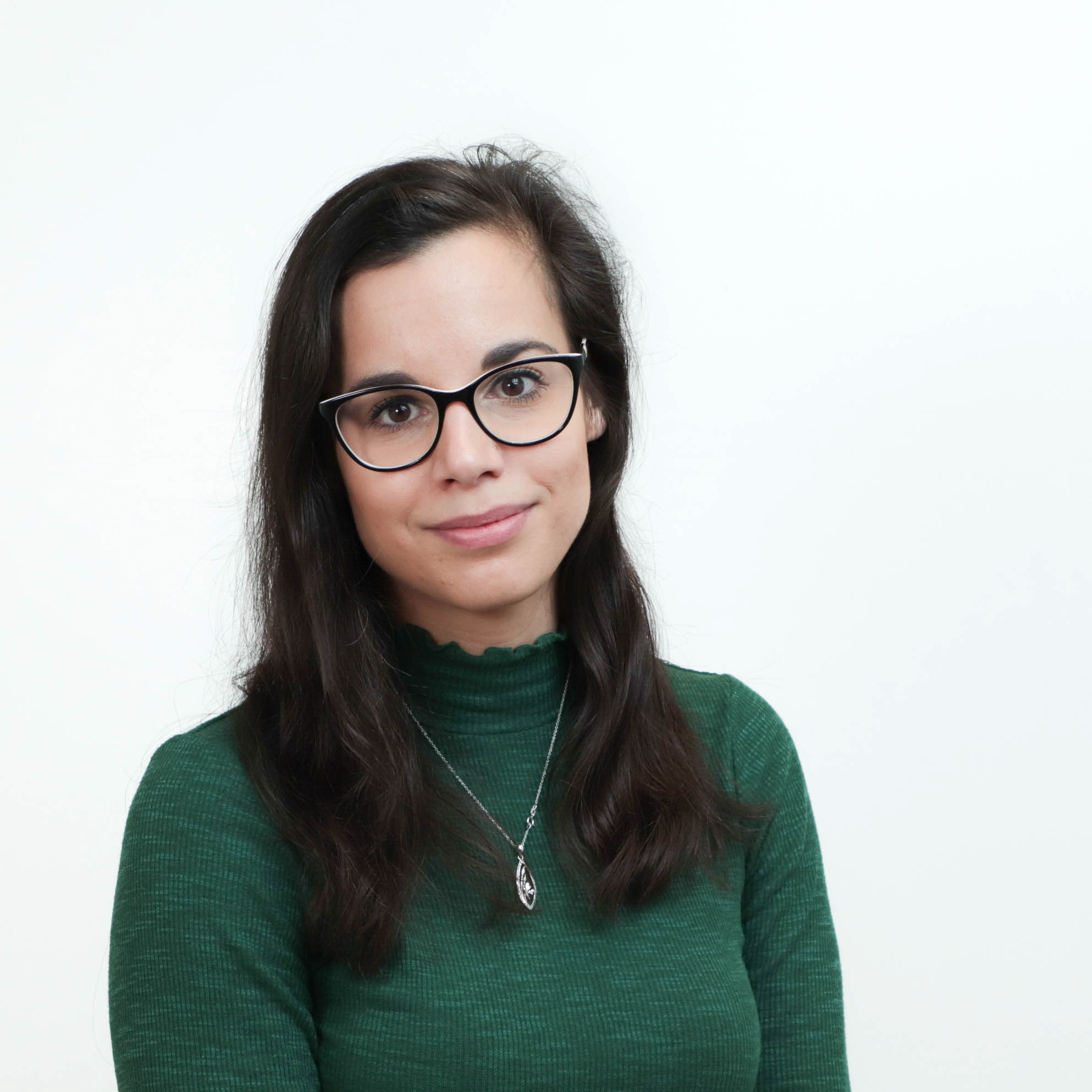
Elizabeth A. Honig is Professor of Northern European Renaissance Art in the Department of Art History and Archaeology at the University of Maryland's College of Arts and Humanities. Her office is located in room 4216 of the Parren J. Mitchell Art/Sociology Building. Honig's research spans multiple areas of Early Modern European art and culture: Digital Humanities applications in art history Early Modern Studies with focus on Northern Europe Gender Studies in visual representation Art market and collecting practices Mobility of objects and imagery Domestic material culture and ideas of dwelling Honig has authored three major books exploring different aspects of Northern European Renaissance art. Her most recent work examines Peter Bruegel and Erasmus's conceptions of human nature in the Renaissance. Previously, she published on Jan Brueghel's innovative use of scale and on the relationship between painting and market economics in Early Modern Antwerp. She also maintains janbrueghel.net, a comprehensive resource on the Brueghel family. Honig has received significant research funding from prestigious organizations: National Science Foundation (NSF) International Foundation for Art Research (IMAF) The Andrew W. Mellon Foundation Center for Information Technology Research in the Interest of Society (CITRIS) Townsend Center for the Humanities Berkeley Digital Humanities program Her teaching integrates Digital Humanities methodologies including mapping, network analysis, and digital text analysis. Before joining the University of Maryland, she taught at Tufts University and the University of California, Berkeley, and held visiting positions at universities in Leiden and Utrecht.
Dr. Sarah Lupo is an Associate Professor in the Middle, Secondary, and Mathematics Department at James Madison University’s College of Education. With over two decades of experience in K-12 education, she specializes in literacy instruction, content-area literacy, and culturally sustaining pedagogy. Her work bridges theoretical research with practical classroom applications to improve literacy outcomes for diverse learners, including English Language Learners and students from nontraditional backgrounds. B.A. in Philosophy, James Madison University M.A. and Ph.D. in Literacy Education, University of Virginia Dr. Lupo’s research examines how text complexity, prior knowledge activation, and differentiated instruction impact comprehension across content areas. Her publications emphasize culturally responsive approaches, interdisciplinary learning, and the Science of Reading, particularly in secondary education. She advocates for leveraging students’ existing knowledge and integrating technology to enhance reading accountability. Dr. Lupo has received prestigious accolades such as the Reading Hall of Fame Emerging Scholars Fellowship, AERA Division C New Faculty Fellow, and Jeanne Chall Fellowship. She co-authored the influential book Teaching Disciplinary Literacy in Grades K-6 (Routledge, 2021) and contributes regularly to journals like Reading Research Quarterly and Review of Educational Research . Media Contact: Chad Saylor ( saylorcx@jmu.edu )
Ananth V Annapragada, PhD , is a Professor of Radiology and Obstetrics & Gynecology at Baylor College of Medicine in Houston, Texas, where he also serves as Vice Chief for Research & Director of Basic Research in Radiology at Texas Children’s Hospital . He is a member of the Dan L Duncan Comprehensive Cancer Center and leads the Translational Imaging Group (TIGr) , an interdisciplinary team developing next-generation imaging technologies. Education & Training While the text does not list specific degrees, Dr. Annapragada’s extensive patent record (≈37 granted patents) and >90 peer-reviewed publications indicate advanced training in biomedical engineering and imaging sciences. Research Interests His work bridges engineering, biology, and clinical medicine: Nanoparticle Contrast Agents: liposomal and polymeric agents for CT/MRI. Molecular Imaging: targeted probes for Alzheimer’s plaques, tumor macrophages, and atherosclerotic lesions. Device Development: low-field permanent-magnet MRI systems and NIR-II fluorescence imaging platforms. Clinical Translation: 3-D printed surgical models, AI-enhanced COVID-19 diagnostics, and patient-specific stroke prediction. Scientific Awards Fellow, American Institute of Medical and Biological Engineers Fellow, National Academy of Inventors (December 2020) Laboratories & Teams The Translational Imaging Group (TIGr) comprises engineers, clinicians, biologists, and mathematicians. It is funded by multiple NIH grants, foundation awards, and corporate contracts, occupying laboratories at Texas Children’s Hospital (1102 Bates, Suite 850, Houston, TX 77030).
Rahel Micklich serves as a research associate and postdoctoral researcher at the Institute for German Philology, specifically within the Chair of German Philology, Senior Department, at the University of Würzburg's Faculty of Philosophy. She is actively engaged in the subproject "Translation Anthropology: 16th-Century German Translations of Antiquity from the Perspective of Intersectionality Studies" as part of the larger DFG-funded SPP 2130 "Translation Cultures of the Early Modern Period." Her academic profile combines expertise in German philology, Latin philology, and Middle Latin studies with a distinctive focus on translation history and cultural anthropology. Dr. Micklich's educational background includes Master's studies in Göttingen, where her engagement with challenging medieval Latin texts like those by Bernardus Silvestris and Alanus ab Insulis sparked her deep interest in medieval intellectual history and hermeneutics. Her academic development reflects a commitment to interdisciplinary medieval studies, recognizing that understanding historical worldviews is essential for meaningful scholarly engagement with textual traditions. Her research interests span the complex intersections of translation theory, cultural anthropology, and historical linguistics, with particular emphasis on how translation functions as a cultural practice that simultaneously preserves and transforms knowledge across historical periods. She approaches translation not merely as linguistic transfer but as a window into cultural mentalities, intellectual frameworks, and social structures of past eras. Her work demonstrates particular expertise in 16th-century translation practices, medieval Latin literature, and the cultural contexts of knowledge transmission. Dr. Micklich's publication record reveals a scholarly trajectory focused on medieval and early modern translation cultures, with significant contributions to understanding how religious, political, and intellectual concerns shaped translation practices. Her work spans comprehensive monographs, specialized scholarly essays, editorial projects, and critical reviews, demonstrating both depth in philological research and breadth across related disciplines. Notable among her recent works are her 2023 monograph on Silvestro Francesco da Montelupo's political-theological dialogue and her forthcoming study on Johannes de Garlandia's pedagogical theories. As an active member of the SPP 2130 research network, Dr. Micklich collaborates with scholars across disciplines to examine how translation shaped cultural and intellectual developments during the early modern period. Her specific focus on 16th-century German translations of Church Fathers provides valuable insights into the intersection of classical reception, religious thought, and cultural transformation during the Reformation era, particularly examining how translators incorporated contemporary cultural concerns into their work. Dr. Micklich maintains an active scholarly presence through multiple channels, including academic publications, blog posts for prestigious institutions like the Bodleian Library at Oxford, and interviews discussing her research methodology and theoretical approach. Her commitment to scholarly communication extends beyond specialized academic audiences, reflecting her belief in the importance of making historical research accessible while maintaining rigorous scholarly standards.
Alfred K. Cheung is a Professor of Internal Medicine and faculty member in the Division of Nephrology & Hypertension at the University of Utah School of Medicine. He currently serves as the Vice Chair for Research in the Department of Internal Medicine and is Board certified in both Internal Medicine and Nephrology by the American Board of Internal Medicine. Fellowship Research Nephrology - University of California - San Diego Fellowship Clinical Nephrology - University of California - San Diego Residency Internal Medicine - Loma Linda University Internship - Loma Linda University Medical Degree - Albany Medical College Undergraduate - State University of New York Dr. Cheung's primary research interests focus on clinical aspects of chronic kidney disease, hemodialysis, and hypertension. His work spans multiple areas including vascular access complications, mineral metabolism disorders in kidney disease, diabetic nephropathy, and blood pressure management in dialysis patients. His research has significantly contributed to understanding the pathophysiology of vascular access stenosis, the role of vitamin D and fibroblast growth factor 23 in hemodialysis outcomes, and the impact of blood pressure control strategies on renal and cardiovascular outcomes. Analysis of Dr. Cheung's recent publications reveals a consistent focus on critical issues in nephrology practice, particularly the management of hypertension in kidney disease, vascular access complications, and mineral bone disorders. His work often involves large clinical trials such as the SPRINT study and HEMO study, demonstrating his leadership in major multicenter research efforts. His publications span basic science investigations using animal models to large epidemiological studies examining racial disparities and geographic variations in kidney disease care. While specific awards are not mentioned in the provided text, Dr. Cheung's extensive publication record in high-impact journals and leadership roles in major clinical trials suggest significant recognition within the nephrology community. Dr. Cheung has been actively involved in numerous research grants, particularly as a key investigator in the Hemodialysis (HEMO) Study and the Systolic Blood Pressure Intervention Trial (SPRINT). His work has examined various aspects of dialysis adequacy, vascular access complications, and blood pressure management in kidney disease. He has also contributed to research on mineral metabolism, diabetic nephropathy, and racial disparities in kidney disease outcomes. His laboratory work has focused on understanding the mechanisms of vascular access stenosis using porcine models and developing novel therapeutic approaches to prevent these complications. Dr. Cheung's research has been conducted both within the University of Utah's Department of Internal Medicine and through extensive collaborations with other institutions. His work on vascular access complications has involved specialized laboratories studying arteriovenous graft stenosis, while his clinical research has leveraged large datasets from national studies like HEMO and SPRINT. His research program bridges basic science investigations with clinical epidemiology and outcomes research, creating a comprehensive approach to understanding and addressing challenges in kidney disease care.
Swapna S. Gokhale, Ph.D. is an Associate Professor in the School of Computing at the University of Connecticut . Her work bridges computer science and public health through innovative applications of spatial machine learning to understand how social determinants influence health outcomes across communities. Education Ph.D. in Computer Science from Duke University (1998) Research Focus Dr. Gokhale's research program centers on developing and applying spatial machine learning approaches to study how social determinants of health impact health outcomes , health risk behaviors , and preventive services . Her work represents a critical intersection between computational methods and public health research, utilizing advanced analytics to uncover patterns in health disparities and inform evidence-based interventions. Her research spans multiple domains including: Machine learning applications in healthcare and epidemiology Social media analytics for understanding public health discourse 5G network optimization and Internet of Things (IoT) applications Software reliability and cloud computing systems Network security and performance analysis Research Portfolio Analysis Dr. Gokhale's recent publications demonstrate a sophisticated research portfolio that evolved from foundational work in software reliability and network systems to cutting-edge applications in computational public health . Her 2024-2025 publications prominently feature spatial machine learning approaches applied to critical health issues including suicide mortality, chronic disease outcomes, and social deprivation effects on health behaviors. The work shows consistent application of advanced computational techniques to address pressing societal challenges. Contact & Collaboration Dr. Gokhale maintains an active research presence with her Google Scholar profile serving as a comprehensive repository of her scholarly work. She is available for collaboration through her university email and welcomes partnerships that advance the intersection of technology and health outcomes research.
Benjamin Nelson is an Associate Professor of Spanish in the Department of Spanish, School of Humanities & Social Sciences at the University of South Carolina Beaufort (USCB). He currently chairs the Courses and Curricula Committee and previously served as chair of USCB's Faculty Senate. His educational background includes: PhD in Romance Languages and Literatures (Spanish) from the University of Chicago (2007) MA in Romance Languages and Literatures (Spanish) from the University of Chicago (2001) BA in Spanish Language and Literature from Illinois Wesleyan University (1999) Dr. Nelson specializes in early modern Spanish literature with primary focus on the Golden Age period. His research examines pastoral traditions across Spanish, Italian, English, and French literatures; the Spanish Monarchy's cultural representations; textual praise and criticism of the Spanish Empire; geographical spaces within prose narratives; genre evolution (prose, poetry, drama); and comprehensive cultural history spanning Medieval Spain through Colonial Latin America. Recent notable contributions include a chapter on Jorge de Montemayor's La Diana in "Los cielos se agotaron de prodigios": Essays in Honor of Frederick A. de Armas and a chapter on Miguel de Cervantes's La Galatea in The Oxford Handbook of Cervantes. No scientific awards were mentioned in the source materials. Information regarding student advising relationships and research grants was not provided in the available text.
Dr. Viet Dao serves as Professor and Chair of the Department of Accounting and Information Systems and Analytics at Shippensburg University's John L. Grove College of Business. His leadership spans academic administration, research innovation, and curriculum development within information systems and sustainability disciplines. His educational background includes a PhD in Management Information Systems from the University of Oklahoma, an MSc in Information Systems from the University of Leeds, and a BSc in Electrical Engineering from Hanoi University of Technology. Dao's research centers on IT-enabled sustainability frameworks , where he pioneered the Integrated Sustainability Framework connecting environmental, social, and economic dimensions. His work on strategic signaling during standards wars examines how innovating firms communicate through technological, market, and standards channels to influence competitive outcomes. Recent publications increasingly integrate AI and text mining methodologies for sustainability data analysis, reflecting evolving research trajectories toward computational approaches in digital sustainability. His publication trends reveal a clear evolution from early standards war research (2004-2013) toward comprehensive sustainability frameworks (2011-present), with current work focusing on bibliometric analysis and AI-driven sustainability metrics. The 2025 article exemplifies this shift toward machine learning applications in sustainability data extraction. Dao's scientific recognition includes: Best paper award at AMCIS 2017 Green IS track Innovative Excellence in Teaching Award (2014) Most-cited article status in Journal of Strategic Information Systems (2011-2016) He actively shapes academic discourse as Associate Editor for ICIS and reviewer for top journals including MIS Quarterly and Information Systems Research. University service includes co-chairing the Emerging Technologies Subcommittee and Department Performance Assessment Committee, while coordinating the SAP ERP University Alliance program that integrates enterprise systems education with industry practice. Dao leads the SAP ERP University Alliance initiative and Emerging Technologies Subcommittee, driving curriculum innovation through ERP simulation platforms, web development tools, and real-world site visits that bridge academic theory with industry applications in information systems education.
Lisa C. Whitfield is a Teaching Professor and Department Chair in the Psychology Department at Santa Clara University's College of Arts and Sciences. Her academic work focuses on educational psychology and learning sciences, particularly self-regulated learning and instructional design. Research trends in her publications show expertise in study strategies, online learning effectiveness, and textbook technology supplements. Key themes include metacognition, cognitive load theory, and the integration of digital tools in psychology education. Her laboratory and team affiliations are not explicitly detailed in the provided texts, though her leadership role as Department Chair suggests administrative responsibilities alongside teaching-focused research.
Makoto Sumii currently serves as Professor at the School of Humanities and Social Sciences , Waseda University , where he teaches film theory and cinema studies. Previously, he held academic positions at Tokyo Metropolitan University (2017-2023), Meisei University (2020-2023), and The University of Tokyo (2019-2019). PhD in Aesthetics & Art Studies from Université Paris 1 (2010-2016) MA in Film & Audiovisual Studies from Université Paris 3 (2008-2009) MA in Arts & Sciences from The University of Tokyo (2005-2007) His research focuses on film aesthetics , French cinema , and representation culture theory , particularly examining actor direction in works by Jean Renoir, André Bazin's animation theories, and contemporary filmmakers like Ryusuke Hamaguchi. Current projects include a JSPS-funded study on the "Aesthetics and Politics of Jean Renoir's Works" (2019-2023) and a comprehensive re-examination of Bazin's film criticism (2017-2022). Sumii actively contributes to academic discourse through committee memberships in the Japan Society of Image Arts and Sciences and Japan Society of Cinema Scholars , while maintaining affiliations with the Global Education Center at Waseda University since 2024.
Zsuzsanna Havasi is a Lecturer at the Institute of Hungarian Linguistics and Finno-Ugric Studies and the Department of Hungarian Historical Linguistics, Sociolinguistics and Dialectology within Eötvös Loránd University's Faculty of Humanities. Her institutional affiliation highlights a focus on Hungarian language studies across historical, sociolinguistic, and dialectological dimensions. Her research explores: Hungarian linguistics and Finno-Ugric studies with emphasis on historical evolution Metaphor identification methodologies and computational applications Legal language discourse in historical contexts, particularly witch trials and authority structures Sociolinguistic aspects of medieval Hungarian society and gender dynamics Recent publications (2018-2025) demonstrate consistent focus on metaphor analysis, historical text interpretation, and legal linguistics. Works frequently incorporate diachronic perspectives, methodological adaptations for Hungarian language processing, and interdisciplinary approaches combining linguistics with historical jurisprudence.
Fruzsina Krizsai is an Assistant Professor at the Department of Modern Hungarian Linguistics , Eötvös Loránd University . Her academic work focuses on pragmatic features of spoken and written texts across genres, including funeral valedictions and Hungarian dialect content on social media. She serves as a research platform member for Linguistic Heterogeneity and Social Participation and contributes to the SLoW (Sociolinguistics of Writing) project (2025-2028) . Responsibilities: Institute website manager, departmental communication officer, and training manager for proofreading professional development. Teaching: Undergraduate courses in oral/written communication, stylistics, media literacy, typography, and document editing. Her research integrates functional cognitive linguistics and experimental pragmatics , with a focus on metaphor comprehension, speech act processing, and interpretive structures in Hungarian. She collaborates with the Style Research Group of the ELTE DiAGram Center and participates in civil dialectology initiatives. Article analysis reveals trends in dialectology , pragmatic theory , and multimodal discourse . Her work bridges language variation , contextual inference , and interdisciplinary genre studies . Key projects: SLoW (2025-2028), DiAGram Functional Linguistics Workshop, and collaborative citizen science dialect research. She employs methodologies from Bakhtinian theory , functional pragmatics , and cognitive development studies .
Kristine Gritter is a Professor in the Department of Curriculum and Instruction at Seattle Pacific University's School of Education, where she has worked since 2007. Her academic focus on textual discussions in English language arts classrooms emphasizes student text-to-self connections and popular culture integration. B.A. in English Education, Calvin College (1991) M.S. in Curriculum and Instruction, Florida International University (1996) Ph.D. in Curriculum and Instruction, Michigan State University (2007) Her research explores critical literacy, multimodal texts, and culturally responsive teaching, particularly through graphic novels and young adult literature. Recent publications examine translingual writing, sustainability education, and gender representation in children's media. Selected scientific awards include: the Column of the Year Award (2019) for "Not Everyone's Darling": Censorship and Knowledge Construction in Habibi. She teaches children’s literature, secondary English methods, and reading/writing strategies for both undergraduate and graduate students.
Vibeke A Pedersen serves as a Guest Lecturer in the Department of Nordic Studies and Linguistics at the University of Copenhagen. Her academic career is grounded in extensive research on Danish literary history spanning medieval, renaissance, and baroque periods, with particular expertise in folk ballads and metrics. Her research interests encompass Medieval Literature, Renaissance Literature, Baroque Literature, Folk Ballads, Danish Literature of the 1800s, Metrics and Metrical History, and Classical Ballet. Dr. Pedersen's scholarly work demonstrates a consistent focus on the evolution of Danish literary traditions, particularly examining how folk ballads transitioned into formal literature during the 19th century. Her publication record shows significant contributions to the field, primarily through book chapters in comprehensive works on Danish literary history. These publications reveal a methodical approach to analyzing literary forms across historical periods, with particular attention to the linguistic and structural elements of Danish poetry and prose. Dr. Pedersen has been actively engaged in academic discourse through numerous lectures and presentations between 2007-2009, focusing on Scandinavian literary traditions and collaborative research initiatives. Her work with Lund University indicates her commitment to international scholarly cooperation in Scandinavian studies. Her teaching supervision covers Medieval, Renaissance, and Baroque literature, Folk ballads and their afterlife in the 1800s, Metrics, and Ballet-related areas, reflecting the interdisciplinary nature of her expertise.
Kenneth J Houghton serves as Assistant Professor in the Department of Psychology at The University of Tampa, where he conducts experimental research on cognitive aspects of reading comprehension and digital communication. His work bridges theoretical cognitive psychology with real-world applications in media literacy and technology-mediated interaction. Education: 2021: Ph.D. from Binghamton University 2017: M.S. from Binghamton University 2013: B.A. from Stony Brook University Research Focus: Dr. Houghton's program investigates three interconnected domains: (1) Misinformation processing examining how readers integrate false information based on source credibility; (2) Narrative cognition exploring how readers represent story characters' knowledge and experiences; and (3) Digital communication analyzing pragmatic interpretation of linguistic elements like punctuation in text messages. His work employs controlled experimental methodologies to uncover fundamental cognitive mechanisms. Publication Trends: His research output demonstrates consistent focus on reading cognition since 2018, with increasing attention to digital contexts. Publications appear in high-impact journals spanning cognitive psychology (Memory & Cognition), discourse processing (Discourse Processes), and human-computer interaction (Computers in Human Behavior), reflecting interdisciplinary relevance. Teaching & Mentorship: He teaches core undergraduate courses including General Psychology, Biopsychology, and Statistics/Experimental Methods sequences. While specific advising details aren't published, his methodological expertise suggests opportunities for students interested in experimental cognitive psychology research. His recent publications indicate active supervision of research projects despite early-career status.