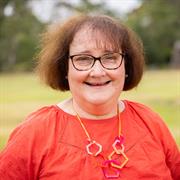
Marjorie HorneView profile
Researcher
Marjorie Horne is a researcher with extensive contributions to mathematics education, cognitive development, and educational policy. Her work spans topics such as fraction understanding, teacher training, and school climate assessment. She has collaborated internationally, contributing to studies on pharmacological adherence in osteoporosis treatment and neuroscience investigations into Parkinson’s disease. Her research emphasizes practical applications of educational theory in classroom settings and addresses challenges in low-socioeconomic regions like Kenya. Her publications highlight expertise in child cognitive development, gender studies, and innovative teaching methodologies. Education & Academic Background: No formal educational qualifications are explicitly stated in the provided text, but her sustained research output since the early 2000s suggests a doctoral-level qualification in mathematics education or a related field. Research Interests: Early mathematical concept development (fractions, place value, spatial reasoning) Teacher professional development and career transitions School-family partnerships in faith-based education systems Gender dynamics in mathematics education Neuroscience collaborations exploring dopamine pathways in Parkinsonian dyskinesia Publications Trends: Her articles primarily focus on mathematics pedagogy, cognitive development, and educational equity. Notable themes include fraction comprehension challenges, assessment of school environments in disadvantaged regions, and the application of research findings to classroom practice. The 2008 neuroscience paper represents a cross-disciplinary collaboration outside her core educational research. Grants & Awards: None explicitly cited in the text. Advising & Leadership: No student advisees listed, but her collaborative publications suggest involvement in research teams. She has contributed to international organizations like the Mathematics Education Research Group of Australasia (MERGA) and the International Group for the Psychology of Mathematics Education (PME). Labs & Teams: While no specific lab affiliations are noted, her work indicates participation in multidisciplinary research networks focusing on mathematics education and neuroscience.